When Margaret woke up to find her silver hair scattered across her bedroom floor, her daughter-in-law was standing beside the bed with a smile. Her own son watched from the doorway and told her she deserved the humiliation. Neither of them realized that their cruelest act would become the moment everything they thought they owned began to slip away.
Introduction: The Morning Everything Changed
The first thing I noticed was the cold air against the back of my neck.
For a few seconds, I lay still, confused by the unfamiliar sensation. Something felt wrong, but I was too sleepy to understand what had happened. Then I heard a small metallic sound as something struck the hardwood floor beside my bed.
Scissors.
I opened my eyes.
My daughter-in-law, Vanessa, stood beside my bed, holding a pair of scissors in one hand. She was smiling.
At first, I couldn’t understand why she was in my bedroom. Then I looked down.
Long strands of silver hair covered my pillow, the blankets, and the floor beside the bed. Some pieces were nearly a foot long. Others were short, jagged clumps scattered across the rug.
My hair.
For more than thirty years, I had worn it long, almost to my waist. It was part of who I was, a familiar piece of myself that had remained unchanged through marriage, motherhood, heartbreak, and the loss of my husband.
Now, one side fell unevenly past my shoulder while the other had been hacked almost to my ear.
I slowly raised a trembling hand to my head.
“Vanessa, what have you done?”
She tilted her head, admiring her work.
“Maybe now you’ll finally learn your place.”
My stomach tightened.
Then I noticed my son standing in the doorway.
Daniel wasn’t shocked. He wasn’t angry. He wasn’t even pretending to be embarrassed.
He was watching.
“Daniel?” I whispered.
He looked directly at me.
“You needed this lesson, Mom.”
Those five words hurt more than anything Vanessa could have done with the scissors.
I had carried Daniel in my arms when he was a baby. I had stayed awake through his childhood fevers, helped him through school, and supported him when life disappointed him. I had buried my husband while trying to remain strong enough to help my son navigate his own grief.
And now, standing in the bedroom I had shared with my husband for decades, I was looking at the same child who had once reached for my hand whenever he was afraid.
Except he wasn’t reaching for my hand anymore.
He was standing beside the woman who had deliberately humiliated me.
I felt tears gathering in my eyes, but I refused to let them fall in front of them.
Vanessa had expected me to scream. Daniel had probably expected me to cry.
Instead, I looked at both of them and said nothing.
They mistook my silence for defeat.
Three days later, they would understand just how wrong they were.
Part 1: The Son I Never Thought Would Betray Me
My name is Margaret Whitmore. I was sixty-one years old when I learned that loving someone does not guarantee that they will love you well in return.
My husband, Richard, had been gone for nearly two years. We had been married for thirty-four years, and the life we built together had been centered on our home, our family, and the quiet routines that made ordinary days feel meaningful.
Richard was the kind of man who fixed things before they broke, remembered birthdays without reminders, and made coffee for me every morning even when he had to leave for work before sunrise.
He was also the person who understood me best.
When he died, the house became painfully quiet. His reading glasses remained in the study for months because I couldn’t bring myself to move them. His favorite coffee mug stayed beside the machine, and his old armchair remained in the corner of the living room, facing the window where he used to read the newspaper.
Some people told me I needed to move on.
I knew they meant well, but grief doesn’t follow a schedule.
I learned to live with the silence. I returned to gardening, started meeting friends for lunch again, and slowly discovered that it was possible to enjoy a peaceful afternoon without feeling guilty for being happy.
My long silver hair became one of the small things I held on to.
Richard had always loved it. When we were younger, he used to stand behind me while I brushed it, gently gathering the ends in his hands.
“You should never cut it unless you want to,” he once told me. “It suits you.”
After he died, keeping it long felt like preserving one small piece of the life we had shared.
It wasn’t about vanity.
It was about familiarity, memory, and having something that still felt entirely mine.
Then Daniel called me one evening with news that changed our family arrangement.
His business had collapsed.
He had accumulated debts, lost several clients, and was struggling to keep up with his expenses. Vanessa, his wife of seven years, was equally worried about their financial future.
“Mom, I hate to ask you this,” he said over the phone, “but would you let us stay with you for a little while?”
I didn’t hesitate.
“Of course. You’re my son.”
They arrived the following week with suitcases, boxes, and enough belongings to fill the guest suite upstairs.
I gave them the larger bedroom, cleared the closet, and stocked the refrigerator with the foods they liked. I even offered to cover the groceries until Daniel found his footing again.
They promised it would only be temporary.
“Just a few months,” Daniel told me.
“Take the time you need,” I replied.
At the time, I believed I was doing what any loving mother would do.
I didn’t ask for rent. I didn’t demand explanations about his failed business. I didn’t remind him that I had spent years saving for retirement so I would never have to depend on anyone else.
I simply opened my door.
What I didn’t realize was that, little by little, the people I had invited into my home were beginning to behave as though they had rescued me by moving in.
Part 2: How My Own Home Became a Place Where I No Longer Belonged
The changes started small.
Vanessa rearranged the living room furniture without asking. When I mentioned that I preferred the original arrangement, she laughed and said the house needed a more modern look.
A few days later, I discovered that she had thrown away Richard’s favorite coffee mug.
“It was chipped,” she explained when I asked where it had gone. “Honestly, Margaret, it looked cheap.”
I stood in the kitchen, staring at the empty space beside the coffee machine.
“It belonged to my husband.”
Vanessa shrugged.
“And he’s not here anymore.”
I remember how cold the kitchen suddenly felt.
I wanted to tell her that the mug was not just a piece of ceramic, that its value had never depended on its appearance. But Daniel walked in, heard the last part of our conversation, and immediately took his wife’s side.
“Mom, it’s just a mug. Why are you making this a big deal?”
I looked at him.
“Because it wasn’t hers to throw away.”
He sighed as though I were an unreasonable child.
“Can we please have one peaceful day?”
I let the matter go.
That became my pattern.
When Vanessa criticized my cooking, I made something different the next night. When she complained about the old photographs in the hallway, I removed two of them to avoid an argument. When she began inviting friends over without telling me, I adjusted my plans so they could use the living room.
Every time I objected, Daniel accused me of making their lives more difficult.
Eventually, Vanessa began introducing me to her friends as “the older relative who lives upstairs.”
The first time I heard her say it, I assumed she was joking.
She wasn’t.
One afternoon, I walked into the living room while she was speaking to a friend on the phone.
“She’s nice enough,” Vanessa said, laughing softly, “but you know how older people get. They become attached to everything. The furniture, the rooms, all those memories.”
She glanced at me.
“Oh, Margaret. I didn’t hear you come in.”
I didn’t respond.
She continued talking as if nothing had happened.
That evening, I sat alone in the study and looked around the room Richard had loved most. His books still lined the shelves. His desk remained beneath the window, and the small wooden clock he had repaired years earlier still ticked quietly on the mantel.
For the first time, I wondered whether Daniel and Vanessa understood that this was my home.
Not a temporary shelter.
Not a family property they could begin dividing up before I was gone.
My home.
I had paid the mortgage, maintained the property, and spent decades making sure that my family would always have a place to return to.
Yet somehow, I had become the person expected to apologize for taking up space.
I told myself that Daniel was under pressure. His business had failed, and perhaps he was ashamed of his circumstances. Vanessa was worried about money, too.
I tried to be patient.
I tried to remember that people sometimes behaved badly when they were afraid.
But there is a difference between understanding someone’s struggles and allowing them to use those struggles as an excuse to mistreat you.
I was about to learn that difference the hard way.
Part 3: The Room They Wanted to Take From Me
The final argument began on a Tuesday evening.
I had gone downstairs to make tea when I noticed the door to my study standing open.
Vanessa was inside.
She was holding a measuring tape and examining the wall between the study and the dining room. A notebook lay open on Richard’s desk, filled with measurements and sketches.
“What are you doing?” I asked.
She barely looked up.
“I’m planning some renovations.”
I stepped farther into the room.
“What renovations?”
She pointed toward the wall.
“We could remove this section and create a more open layout. The dining room would feel bigger, and the study could become a proper entertainment space.”
For a moment, I thought she was joking.
“This is my husband’s study.”
“It’s a room, Margaret.”
“It’s a room he used every day. I’m not changing it.”
Vanessa dropped the measuring tape onto the desk.
“You’re clinging to a dead man and a dead life.”
The words struck me so sharply that I struggled to answer.
I looked at Richard’s desk, his books, and the framed photograph of us taken on our thirtieth wedding anniversary.
Then I looked at Vanessa.
“Get out of my study.”
Her expression hardened.
“Excuse me?”
“You heard me. You don’t have permission to make changes to this house. You’re staying here because I offered to help you, and that doesn’t give you the right to decide what happens to my property.”
Vanessa laughed, but there was no humor in it.
“You act like you’re the queen of this house.”
“I am the owner of this house.”
“Daniel is your only child,” she replied. “Eventually, it will all belong to him anyway.”
There it was.
Not gratitude. Not a misunderstanding.
An assumption.
In Vanessa’s mind, Daniel’s future inheritance already gave them authority over my present life.
I took a slow breath.
“That is not how this works.”
She stepped closer.
“You can’t expect us to live here indefinitely while you refuse to let us make the place comfortable.”
“I never asked you to live here indefinitely. You asked for temporary help.”
Her face flushed.
“You’re impossible.”
Daniel appeared in the doorway a moment later.
Instead of asking what had happened, he looked at his wife, then turned to me with visible irritation.
“What now, Mom?”
“Your wife is planning to renovate my study without my permission.”
Daniel rubbed his forehead.
“She was just making suggestions.”
“She was measuring the walls.”
“So?”
I stared at him.
“So this is my house.”
He shook his head.
“This is exactly why nobody can live with you. Everything has to be your way.”
I could hardly believe what I was hearing.
I had given them a place to live, bought their groceries, and stayed out of their personal business. I had allowed them to occupy rooms in the house that I had spent decades paying for.
And somehow, I was the problem.
“Daniel,” I said quietly, “I want you both to leave.”
His expression changed.
“What?”
“You heard me. This arrangement isn’t working anymore. You need to find somewhere else to live.”
Vanessa folded her arms.
“You can’t be serious.”
“I am.”
Daniel stepped between us.
“You’re going to throw your own son out over a room?”
“No. I’m asking two adults who refuse to respect me to stop treating my home as though it belongs to them.”
He stared at me for a long moment.
Then he turned away.
“We’ll talk about this tomorrow.”
That was the last conversation we had before I went to bed.
The following morning, Vanessa decided to teach me what she believed would be an unforgettable lesson.
She had no idea how unforgettable it would become.
Part 4: The Scissors, the Smile, and the Cruelest Words of All
I woke to find my hair scattered across the bed.
At first, I couldn’t process what I was seeing. My mind struggled to connect the familiar bedroom around me with the uneven strands of silver hair lying across the sheets.
Then Vanessa smiled.
“Maybe now you’ll stop acting like the queen of the house.”
I looked toward Daniel.
He was standing in the doorway with his arms crossed.
“You needed this lesson, Mom.”
I waited for him to laugh and admit it had been a terrible joke.
He didn’t.
I waited for him to look ashamed.
He didn’t do that, either.
Instead, he watched me as though my humiliation were something I had earned.
Something inside me went very still.
I had spent years believing that the strongest expression of a mother’s love was patience. If her child made a mistake, she forgave him. If he struggled, she helped him. If he turned away, she waited for him to come back.
But standing there, surrounded by pieces of my hair, I understood that my patience had become something Daniel expected to exploit.
I didn’t scream.
I didn’t throw anything.
I didn’t give Vanessa the satisfaction of watching me fall apart.
I reached down, picked up the scissors, and placed them on the nightstand.
Then I looked at both of them.
“You’re right,” I said.
Vanessa’s smile widened.
“Someone does need to remember who they are.”
Daniel smirked.
He thought I was talking about myself.
I walked into the bathroom and locked the door.
Only after I was alone did I allow myself to cry.
I cried for my hair, for the memories attached to it, and for the woman I had become while trying so hard to keep peace in my own home.
Most of all, I cried because my son had stood in the doorway and watched his wife humiliate me without offering even the smallest defense.
When the tears finally stopped, I washed my face.
I studied my reflection in the mirror. My hair was uneven, my eyes were swollen, and my hands were still trembling.
But beneath the shock, something else had begun to take shape.
Clarity.
I no longer needed to convince myself that the situation might improve if I were simply more patient.
I no longer needed to make excuses for their behavior.
And I no longer needed to pretend that love required me to accept whatever they chose to do to me.
I returned to the bedroom and began taking photographs.
I photographed the hair on the sheets, the scissors, the uneven cut, and the floor around the bed.
Then I remembered the security camera in the hallway outside my bedroom.
I had installed it two years earlier after a burglary in the neighborhood. The camera was positioned to monitor the hallway and the entrances to the bedrooms.
I opened the security application on my phone.
The recording was there.
I watched the footage once, then saved a copy.
I did not need to imagine what had happened or argue about whose version of events was correct.
The recording showed Vanessa entering the hallway with the scissors. It captured her movements before she went into my bedroom. It also recorded Daniel standing outside the door.
I saved the footage in two separate locations.
Then I called my attorney.
“Mr. Aldridge, I think it’s time.”
He had represented Richard and me for years. He understood our estate planning, our property arrangements, and the protections we had put in place after discussing the future of our family.
He was quiet for a moment.
“Margaret, what happened?”
I looked at the photograph of my damaged hair on my phone.
“They crossed a line I will not allow them to cross again.”
“Are you certain you want to proceed?”
I glanced toward the bedroom door.
“Completely.”
For the first time that morning, I smiled.
Not because I wanted revenge.
Because I finally knew what I needed to do.
Part 5: The Secret They Never Bothered to Ask About
The next morning, I came downstairs with my hair reshaped into a neat silver bob.
The stylist had done the best she could with the uneven cut. My hair was much shorter than it had been the previous day, but at least it looked intentional.
Vanessa stared at me over her coffee.
She had probably expected to find me devastated, hiding in my room, or begging Daniel to make things right.
Instead, I sat down at the kitchen table and poured myself a cup of coffee.
“Good morning,” I said.
Neither of them replied.
I almost laughed.
For weeks, they had behaved as though I were an obstacle to the life they wanted. Now that I had stopped reacting to their provocations, they seemed unsure of what to do with me.
Vanessa eventually broke the silence.
“I spoke to a contractor. He can come by Saturday to look at the study.”
I put down my cup.
“No.”
She looked up.
“What do you mean, no?”
“I mean no contractor is coming into my house to discuss renovations I haven’t approved.”
Daniel sighed.
“Mom, don’t start this again.”
“I’m not starting anything.”
Vanessa folded her arms.
“Daniel is your only child. Eventually, this house will belong to him anyway. You’re making everything unnecessarily difficult.”
I looked at her for a long moment.
Then I understood something I should have recognized much earlier.
They weren’t simply acting entitled because they had become comfortable.
They had started thinking of my property as something they were already entitled to control.
They had mistaken a possible future inheritance for a present-day right.
What neither of them understood was that Richard and I had planned carefully for our family’s financial future.
After his death, I worked with Mr. Aldridge to establish the Whitmore Family Trust. The house, several rental properties, and a substantial portion of my investment portfolio were placed under the trust’s ownership and administration.
I retained control as trustee, subject to the trust’s terms.
Daniel was named as a conditional beneficiary.
That distinction mattered.
Being named as a possible beneficiary did not make him the owner of my home, give him authority over my bank accounts, or allow him to make decisions on my behalf.
Richard had insisted on safeguards after witnessing the financial destruction caused by a relative who had inherited money without understanding the responsibilities that came with it.
We wanted Daniel to have security in the future, but we also wanted the assets we had worked for to be protected.
The trust documents established procedures for addressing certain forms of misconduct and financial exploitation. Any action involving a beneficiary’s rights had to follow those provisions and applicable law.
I had never hidden these arrangements from Daniel deliberately.
He simply had never shown enough interest to ask.
He had assumed that everything would eventually come to him.
And I had allowed that assumption to go unchallenged for too long.
There was another matter I had not yet discussed with him.
Two months before the haircut, my accountant had noticed three attempted transfers from one of my investment accounts.
The total was $180,000.
None of the transactions had been completed because the financial institution required additional verification.
At first, I assumed there had been a mistake.
I contacted the institution, secured the account, and asked my attorney to help determine what had happened.
The subsequent review identified account activity and transfer instructions associated with Daniel’s computer. Records also showed that copies of certain instructions had been sent to an email account used by Vanessa.
The findings raised serious questions about whether someone had attempted to access my money without authorization.
I had wanted to confront Daniel immediately.
Mr. Aldridge advised me to preserve the records and allow the financial institution to complete its review before making accusations.
So I remained quiet.
I continued living in my home and behaving as though I had not discovered anything unusual.
That silence had not been weakness.
It had been caution.
Now, after the haircut, the unauthorized activity, and the growing pattern of intimidation, I had more than enough reason to establish firm boundaries.
I looked at Vanessa.
“You have three days to find somewhere else to live.”
Her expression changed.
“Excuse me?”
“Three days. You and Daniel need to make arrangements to leave.”
Daniel pushed his chair away from the table.
“Mom, you can’t be serious.”
“I am.”
“You can’t throw us out!”
“I can withdraw permission for you to stay, subject to the applicable legal requirements. My attorney will explain the formal process.”
Vanessa let out a sharp laugh.
“Daniel has rights here.”
“Then you can discuss those rights with my attorney.”
Daniel stared at me.
“What attorney?”
“The attorney who manages the trust that owns this house.”
For the first time, he looked genuinely uncertain.
Vanessa tried to recover.
“You’re bluffing.”
“Perhaps,” I replied.
I stood up, carried my coffee cup to the sink, and left them sitting at the table.
That afternoon, I met with Mr. Aldridge to discuss the security footage, the financial review, and the steps needed to protect my property.
We made no threats.
We did not make public accusations.
We simply gathered the documents, confirmed the relevant legal procedures, and prepared to take appropriate action.
That evening, I received an alert from the security system.
Someone had entered my study.
I opened the camera feed on my phone.
Daniel was inside, pulling open drawers and searching through the filing cabinet. Vanessa stood beside him, photographing documents with her phone.
They were looking for the trust agreement.
I watched without interrupting.
Then I saved the footage.
They had spent months assuming that my home, my money, and my patience were theirs to use.
Now they were searching my private documents, apparently hoping to find something they could use to challenge me.
I had no intention of arguing with them in the middle of the night.
I simply forwarded the recording to my attorney.
His reply arrived shortly afterward.
“We will address this through the proper legal channels tomorrow.”
I turned off my phone and went to bed.
For the first time in weeks, I slept peacefully.
Part 6: The Paper They Wanted Me to Sign
The following morning, Daniel came downstairs with a noticeably different attitude.
His voice was softer. His expression seemed carefully arranged. He even asked whether I had slept well.
“Mom, can we talk?”
I looked up from my breakfast.
“About what?”
“About yesterday. Things got out of hand.”
Vanessa stood a few steps behind him, her eyes lowered.
“She feels terrible about your hair,” Daniel continued.
I looked at my son.
“Does she?”
Vanessa nodded.
“I was emotional. I shouldn’t have done it.”
There was a time when those words would have been enough to soften me.
I would have reminded her that everyone makes mistakes. I might even have apologized for my own part in the argument, despite having done nothing to justify what happened.
But I had finally learned that an apology without accountability can be another way of avoiding consequences.
“You entered my bedroom while I was asleep,” I said. “You cut my hair without my permission. Daniel watched you do it and told me I deserved it.”
Vanessa swallowed.
“I know.”
“And last night, you both searched through my private documents.”
Daniel’s face tightened.
“We were looking for information.”
“That doesn’t make it acceptable.”
He glanced at Vanessa, then turned back to me.
“Mom, we’re trying to fix this.”
He placed a document on the kitchen island and slid it toward me.
“We thought we could simplify things. Let me handle the financial paperwork for a while. You won’t have to worry about all the details.”
I looked down.
It was a temporary financial power of attorney.
If properly executed, the document would give Daniel authority to handle certain financial matters on my behalf, depending on its terms.
After the attempted transfers, the search through my study, and their sudden interest in my financial documents, I found the timing deeply troubling.
“Why do you need this?”
“Because you’re dealing with a lot,” he replied. “The trust, the house, the lawyers. Let me help.”
“I have an attorney.”
“Your attorney works for you. I’m your son.”
I looked at him.
“Exactly.”
For a moment, neither of us spoke.
Then I picked up the document and examined it carefully.
“I’ll think about it.”
Vanessa’s shoulders relaxed.
Daniel smiled as though I had already agreed.
“That’s all we’re asking.”
They left the kitchen, apparently satisfied that they had made progress.
I waited until I was alone before photographing every page and sending the document to Mr. Aldridge.
He called me within minutes.
“Do not sign anything until we’ve reviewed it fully,” he said.
“I wasn’t planning to.”
“Good. Given the earlier account activity, we need to establish precisely what authority this document would grant and why they are requesting it now.”
I looked at the unsigned signature line.
“I think we already know why.”
“Perhaps,” he replied. “But we will proceed on the evidence, not assumptions.”
That was exactly why I trusted him.
He did not encourage me to retaliate. He did not promise a dramatic victory. He reminded me to follow the law, preserve the records, and allow the appropriate institutions to investigate the financial activity.
We reviewed the trust documents, confirmed the steps necessary to revoke the couple’s permission to occupy the property, and prepared the relevant notices.
We also ensured that the financial institution had the evidence it needed to continue its review.
By late afternoon, the plan was clear.
The next morning, Daniel and Vanessa would receive formal notice of the actions being taken concerning their occupancy of the house. The financial review would continue independently, and any questions about potential misconduct would be handled through the appropriate channels.
I did not know exactly how they would react.
But I knew one thing.
I would not sign away my independence simply to make my son comfortable.
That evening, I sat in Richard’s study for nearly an hour.
I ran my fingers along the spines of his books and looked at the old clock on the mantel.
“I tried, Richard,” I whispered.
The room was silent.
“I really tried.”
Then I stood, switched off the light, and closed the door.
The following morning, everything changed.
Part 7: Three Days Later, They Were Begging Me for Forgiveness
At ten o’clock, the doorbell rang.
Daniel was sitting at the kitchen table with a cup of coffee. Vanessa was on the phone discussing plans with a contractor.
Neither of them seemed concerned when I walked toward the front door.
I opened it.
Mr. Aldridge stood on the porch with a process server and a locksmith. A representative from the financial institution had also arrived to discuss the ongoing account review.
Daniel looked up.
His smile disappeared.
“What is this?”
I stepped aside.
“Please come in.”
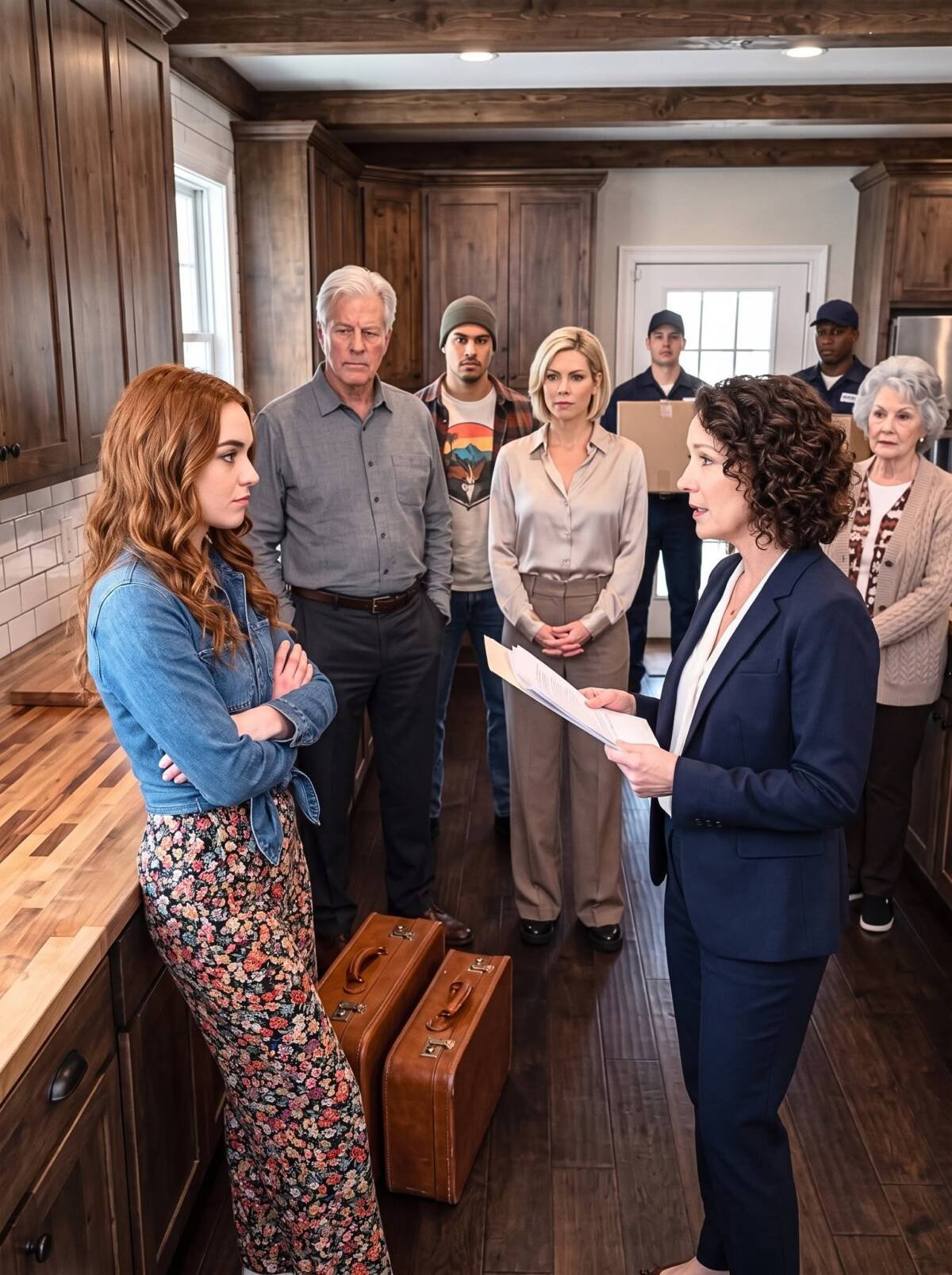
Mr. Aldridge entered first, carrying a thick folder. The process server followed, and the locksmith waited near the entrance with his equipment.
Vanessa ended her phone call.
“Margaret, what are you doing?”
I turned toward her.
“This is your lesson.”
Her face flushed.
“Are you out of your mind?”
Mr. Aldridge placed the folder on the dining table.
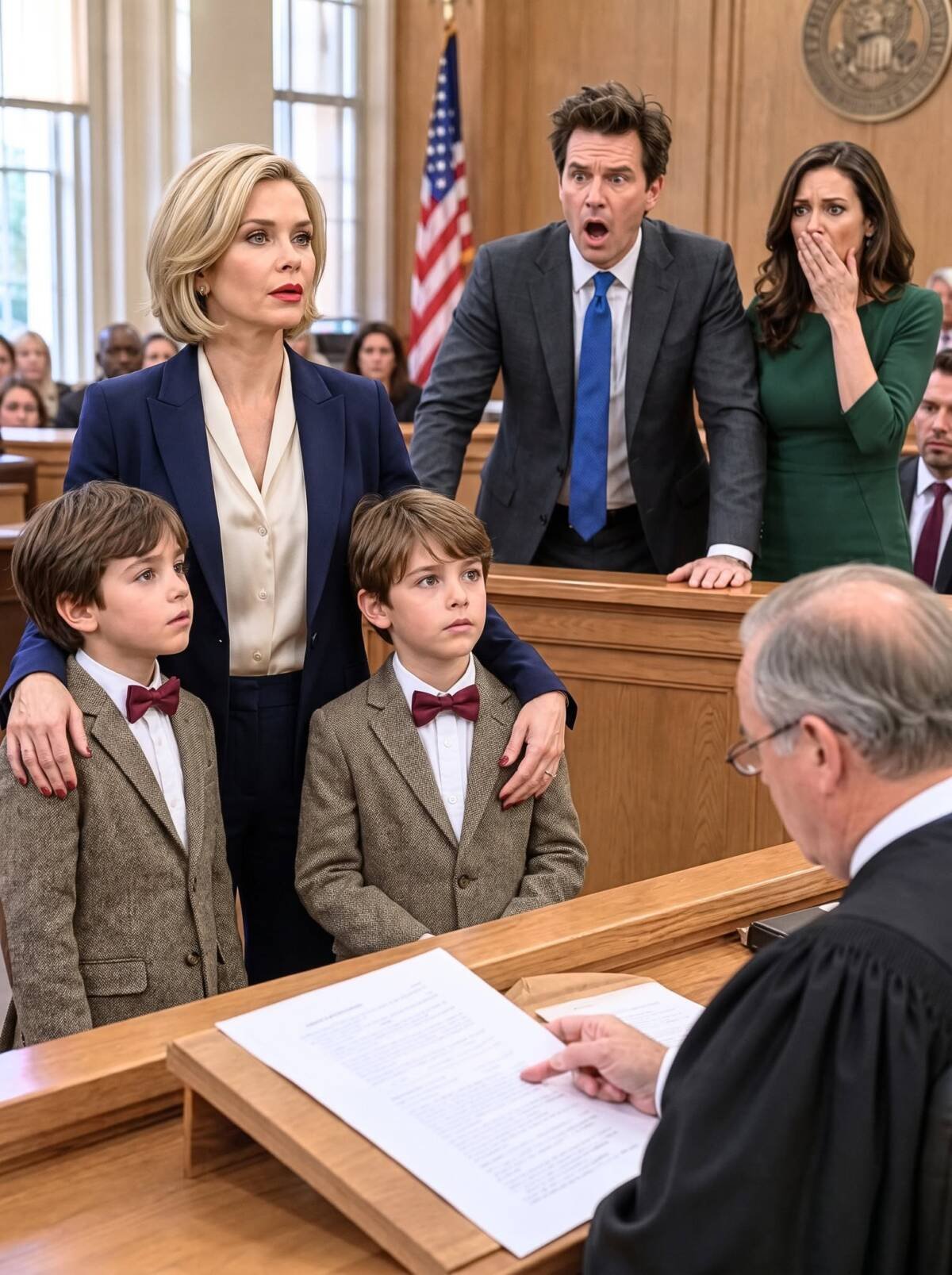
“Mrs. Whitmore, I suggest that you allow me to explain the situation before making any further statements.”
He began with the house.
The property was held by the Whitmore Family Trust, and I remained the trustee with authority over occupancy decisions, subject to the trust documents and applicable law.
Their permission to stay in the house had been formally withdrawn, and the necessary legal procedures were being followed.
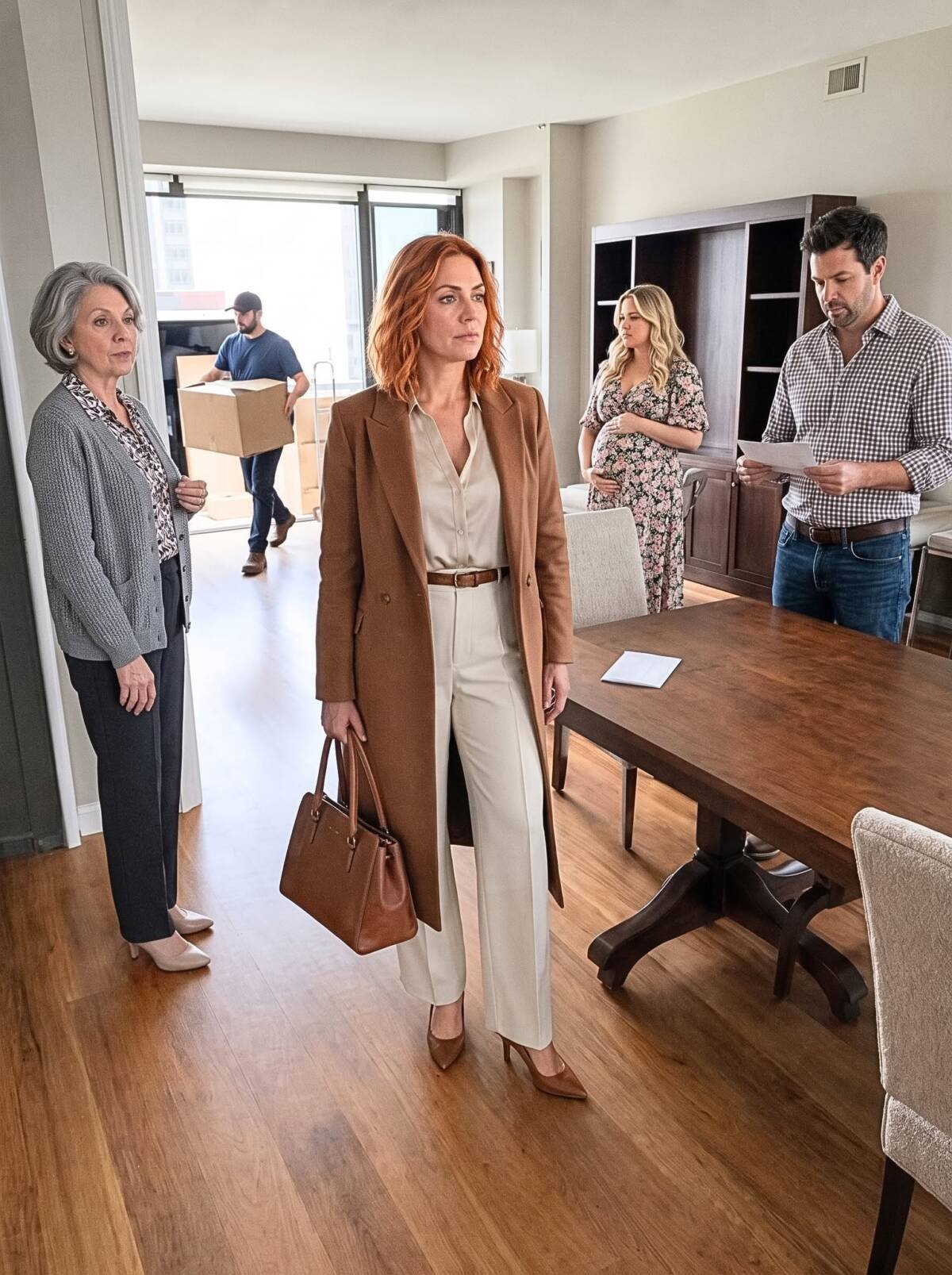
They would need to arrange their departure and collect their belongings according to the applicable requirements. Any changes to locks or access would take place only when legally authorized and appropriate.
Daniel stared at him.
“You’re evicting your own son?”
I looked at Daniel.
“No. I’m ending an arrangement that has become harmful to me.”
Vanessa pointed toward my hair.
“All this because of a haircut?”
I met her eyes.
“No. Not because of a haircut. Because you believed you could humiliate me in my own bedroom, interfere with my privacy, and treat my property as though it belonged to you.”
She opened her mouth, but I continued.
“And because your actions were part of a much larger pattern that I can no longer ignore.”
Mr. Aldridge opened the folder.
Inside were copies of the account records, the attempted transfer instructions, relevant login information, correspondence, and the security footage showing the activity in my study.
He also had the unsigned power of attorney document Daniel had presented to me.
The financial institution’s representative explained that the attempted transfers totaling $180,000 were still under review.
The documents raised serious questions about how the transfer requests had been initiated and whether authorization had been obtained.
Daniel shook his head.
“This is ridiculous.”
“Then you will have an opportunity to respond through the appropriate process,” Mr. Aldridge replied.
Vanessa tried to laugh.
“We didn’t steal anything. The transfers never went through.”
“The fact that a transfer was unsuccessful does not, by itself, resolve questions about the conduct that led to the request,” he explained.
Daniel looked at me.
“Mom, you investigated us?”
“I protected myself.”
“You’re my mother!”
“And you are my son.”
My voice trembled slightly, but I did not look away.
“You were my son when I gave you a place to live. You were my son when I paid for groceries because your business was struggling. You were my son when I woke up and found my hair on the floor.”
He lowered his eyes.
“You were my son when you stood in the doorway and watched your wife humiliate me.”
For a moment, the kitchen was completely silent.
Then Mr. Aldridge explained that the financial review could have consequences under the terms of the trust, depending on what the investigation established and how the relevant provisions applied.
Daniel’s status as a beneficiary did not give him an unconditional right to inherit the house or control the trust’s assets.
Any decision concerning his beneficiary rights would have to follow the trust’s terms and applicable legal procedures.
His face went pale.
“But the properties—”
“Are held and managed according to the trust,” Mr. Aldridge replied. “No beneficiary can simply assume that the assets belong to them today.”
Daniel looked at me as though he were seeing me for the first time.
“That’s millions of dollars.”
“Yes.”
“You’re going to take all of that away from me?”
I shook my head.
“I am not taking away something you already own. I am protecting what your father and I worked for.”
He stared at me, unable to respond.
Vanessa suddenly stepped forward.
“Margaret, please. Let’s not do this. We can work everything out.”
I looked at her.
“Yesterday, you wanted me to sign a document giving Daniel financial authority over my affairs.”
She shook her head.
“That was only to help.”
“Then why did you search my study the night before?”
Her face changed.
For the first time, she had no answer.
The evidence was not a complete determination of guilt, and I was not going to pretend that every question had already been settled. But I no longer had to rely on their promises or accept their explanations without scrutiny.
The records had been preserved.
The financial institution was investigating.
My attorney was handling the legal process.
And I was no longer alone in trying to protect myself.
Daniel suddenly walked toward me.
“Mom, please.”
His voice broke.
“I’m sorry.”
I said nothing.
He looked toward Vanessa, then back at me.
“I made a mistake. I shouldn’t have said those things.”
He took another step.
“Please don’t do this to me.”
I felt a sharp pain in my chest.
For a moment, I saw the little boy who used to run toward me after falling off his bicycle, his knees scraped and his face wet with tears.
I remembered holding him, telling him that mistakes could be repaired if he took responsibility for them.
But Daniel was no longer a frightened child.
He was a grown man who had watched his mother being humiliated and had chosen to participate in it.
“Daniel,” I said quietly, “what exactly are you asking me to forgive?”
He looked confused.
“What?”
“Are you sorry you hurt me? Are you sorry you treated my home as though it belonged to you? Are you sorry about the financial activity now under investigation?”
He swallowed.
“I’m sorry for all of it.”
“Or are you sorry because you finally understand that your actions may have consequences?”
His face crumpled.
“Mom, please. I don’t want to lose everything.”
There it was.
The truth he had been avoiding.
He was frightened of losing the future he had assumed was guaranteed.
Vanessa began crying.
“Margaret, I never thought it would go this far.”
I looked at her.
“You thought I would keep forgiving you.”
She wiped her cheeks.
“We can change. We can do better. Please give us another chance.”
Daniel lowered himself into a chair and covered his face with his hands.
“Please, Mom.”
The sight of him crying nearly broke me.
Nearly.
But I had spent too many months confusing his distress with my responsibility.
I could love him without solving every problem he created.
I could hope he changed without allowing him to continue hurting me.
And I could forgive him without pretending that nothing had happened.
“I forgive you,” I said.
Daniel immediately looked up.
Hope flashed across his face.
“But forgiveness is not permission.”
His expression fell.
“I can forgive what happened without allowing it to happen again. You are still my son, Daniel. I will always love you. But you cannot use that love as a reason to disregard my boundaries.”
Vanessa reached toward my hand.
I stepped back.
“You both need to leave my home. The legal process will determine the practical arrangements, and the financial review will continue.”
For a long moment, neither of them spoke.
Then Daniel began crying again.
This time, I did not rush to comfort him.
I let him feel the weight of the moment.
Not because I wanted him to suffer, but because I could no longer carry every consequence on his behalf.
Three days earlier, Vanessa had stood beside my bed, smiling over the damage she had done.
Now she was asking me for mercy.
Daniel, the son who had told me I needed a lesson, was pleading for another chance.
Neither of them had expected the woman they considered weak to stand up for herself.
But I wasn’t trying to defeat them.
I was finally protecting myself.
Part 8: What Happened After They Left
The days that followed were difficult, even though I knew I had made the right decision.
A family crisis does not become painless simply because the necessary boundaries have been established.
I still woke early, made coffee for two out of habit, and occasionally caught myself listening for Daniel’s footsteps upstairs.
Sometimes I would see a photograph of him as a child and feel a sudden wave of grief.
I missed the son I remembered.
I missed the family life I had imagined we would continue to share.
But I did not miss the constant tension, the insults, or the feeling that I needed permission to move freely through my own home.
The departure arrangements were handled through the proper legal channels. The locksmith changed the locks and access codes when authorized, and I secured my personal records and financial documents.
Mr. Aldridge helped me ensure that the trust’s records were complete and that the relevant institutions had received the information they needed.
The financial investigation continued for several months.
The records raised serious concerns about the attempted transfers and the preparation of financial documents, but the allegations were handled through the appropriate review and legal processes rather than through public accusations.
Eventually, the matter resulted in repayment and settlement arrangements connected to the unauthorized financial activity.
Daniel was required to address the financial consequences established through those proceedings. Vanessa’s involvement in preparing certain account documents was also examined as part of the civil process.
Their financial circumstances changed.
They moved into a smaller apartment and began paying their own expenses. They no longer had access to my home or the resources they had once assumed would always be available to them.
I did not celebrate their difficulties.
I did not drive past their apartment to see how they were living. I did not ask friends to report on their arguments or their financial problems.
Their lives were theirs to manage.
Mine was finally mine again.
The guest suite became a reading room. I filled it with books, plants, and a comfortable chair beside the window.
I returned Richard’s coffee mug to its place beside the machine. I kept the study exactly as he had left it, and I restored the family photographs to the hallway.
Little by little, I reclaimed the ordinary pleasures I had almost forgotten.
I began meeting friends for lunch again.
I took a weekend trip to a nearby coastal town, where I spent an afternoon walking along the water without checking my phone every few minutes.
I planted roses in the garden because Richard had always loved them.
And I learned to enjoy the sound of my own footsteps moving through the house.
The silence no longer felt like loneliness.
It felt like peace.
Part 9: The Letters My Son Kept Sending
Daniel began writing to me about a month after he moved out.
His first letter was short.
He said he was sorry for the way he had spoken to me. He admitted that he had allowed his frustration over his failed business to turn into anger toward the person who had helped him most.
He said he understood that I had every right to expect respect in my own home.
I read the letter twice.
Then I placed it in a drawer.
A few weeks later, another letter arrived.
This one was longer. Daniel wrote about the pressure he had felt trying to rebuild his life and how embarrassed he had been by his financial circumstances.
He described the arguments he and Vanessa had been having and admitted that he had allowed resentment to replace gratitude.
He also wrote that he missed me.
That part hurt the most.
Because I missed him, too.
But I had learned that missing someone was not a reason to abandon the boundaries that protected me.
I did not respond immediately.
When I eventually wrote back, I told him that I hoped he would use this period to reflect on his choices and rebuild his life honestly.
I also told him that trust could not be restored through apologies alone.
It would take time, consistency, and genuine accountability.
He replied that he understood.
Over the following months, some of his letters were thoughtful and sincere. Others were defensive, especially when he discussed the financial consequences of the investigation.
I read them all.
I answered when I felt ready.
Sometimes I wrote only a few sentences. Other times, I explained why certain things still hurt.
I never promised that everything would return to the way it had been.
Because I no longer believed that restoring the past was the only way to heal.
Perhaps our relationship could become something different in the future.
Perhaps Daniel would eventually understand the full extent of what he had done.
That possibility remained open.
But I would not sacrifice my peace while waiting for it to happen.
Vanessa sent one letter, too.
She apologized for cutting my hair and admitted that she had wanted to make me feel powerless during the argument over the house.
She said she had convinced herself that I was deliberately making their lives difficult and that she had begun treating my generosity as an obligation.
I appreciated the honesty.
But I did not confuse understanding her behavior with excusing it.
Her apology did not erase the humiliation I had experienced, and it did not automatically restore the trust she had destroyed.
I wished her well.
Then I returned to my life.
Part 10: Six Months Later, I Finally Understood
Six months after the morning Vanessa cut my hair, I sat in front of a salon mirror while my stylist shaped the silver strands just below my chin.
The style was different from anything I had worn before.
For years, my hair had reached almost to my waist. Now it rested neatly around my face, framing my features in a way that made me look older in some ways and younger in others.
The stylist stepped back.
“What do you think?”
I studied my reflection.
“I like it.”
She smiled.
“It suits you.”
I touched the ends of my hair.
For the first time since that terrible morning, I thought about the haircut without feeling the same sharp wave of humiliation.
Vanessa had intended to make me feel small.
Instead, the experience had forced me to confront how small I had allowed my own life to become while trying to keep my son happy.
I had given up my routines, tolerated insults, and ignored warning signs because I was afraid of damaging our relationship.
I had told myself that a good mother made sacrifices.
And she did.
But sacrifice without boundaries can become self-abandonment.
I had spent so much time protecting Daniel from discomfort that I had stopped protecting myself from harm.
That was the lesson I finally needed to learn.
Not the lesson Vanessa thought she was teaching me.
The one I discovered for myself.
When I arrived home, I walked through the front door and set my handbag on the table.
The house was quiet.
Richard’s coffee mug sat beside the machine. Sunlight fell across the living room floor. In the study, his books remained neatly arranged on the shelves.
I opened the windows and let the fresh air move through the rooms.
Then I made myself a cup of coffee and sat in the garden.
For a long time, I simply watched the roses moving in the breeze.
I thought about Daniel, about the letters he had sent, and about the possibility that we might eventually find a healthier way to be part of each other’s lives.
I hoped we would.
But I no longer believed that being a mother meant accepting every form of treatment from an adult child.
Love did not require me to surrender my dignity.
Forgiveness did not require me to surrender my safety.
And family did not give anyone the right to control my home, my finances, or my choices.
I could forgive my son and still expect him to take responsibility.
I could wish Vanessa well without allowing her back into my private life.
I could love them both without placing myself at their mercy.
Those were lessons I wished I had understood years earlier.
Conclusion: They Wanted Me to Learn My Place. Instead, I Found It.
Sometimes, I still think about that morning.
I remember waking to the unfamiliar cold against the back of my neck. I remember seeing the scissors in Vanessa’s hand and the pieces of silver hair scattered across my bed.
I remember Daniel standing in the doorway.
“You needed this lesson, Mom.”
For a long time, I believed those words represented the moment my family fell apart.
Now, I see them differently.
They were the moment I stopped pretending that everything was fine.
They were the moment I stopped confusing silence with strength and patience with an obligation to endure cruelty.
They were the moment I finally understood that I could love someone deeply without allowing them to decide how much respect I deserved.
Three days after Vanessa cut my hair, she and Daniel were the ones begging me for forgiveness.
They had believed I would remain silent because I was afraid of losing my son.
They had assumed that my generosity meant I would never establish boundaries.
They had mistaken my grief for weakness and my kindness for permission.
They were wrong.
I did not win because my son faced financial consequences or because my daughter-in-law was forced to confront her actions.
I won because I stopped allowing their behavior to determine the value of my life.
I won because I protected the home Richard and I had built.
I won because I learned that forgiveness and boundaries can exist together.
And I won because, for the first time in a long while, I no longer needed anyone else’s approval to feel secure in my own home.
Vanessa had wanted to teach me where I belonged.
Daniel had agreed that I needed to learn my place.
In the end, I remembered exactly where that place was.
Not beneath them.
Not behind them.
Not in a corner of the house, waiting for permission to speak.
I belonged in the home I had built, in the life I had earned, and in the future I still had every right to shape.
I was a mother.
I was a widow.
I was a woman who had spent decades loving her family.
But I was also Margaret Whitmore.
And I would never again mistake love for permission to hurt me.
What would you have done if your own child had treated you this way? Share your thoughts in the comments, and if you believe kindness should never come at the cost of dignity, share this story with someone who needs the reminder.