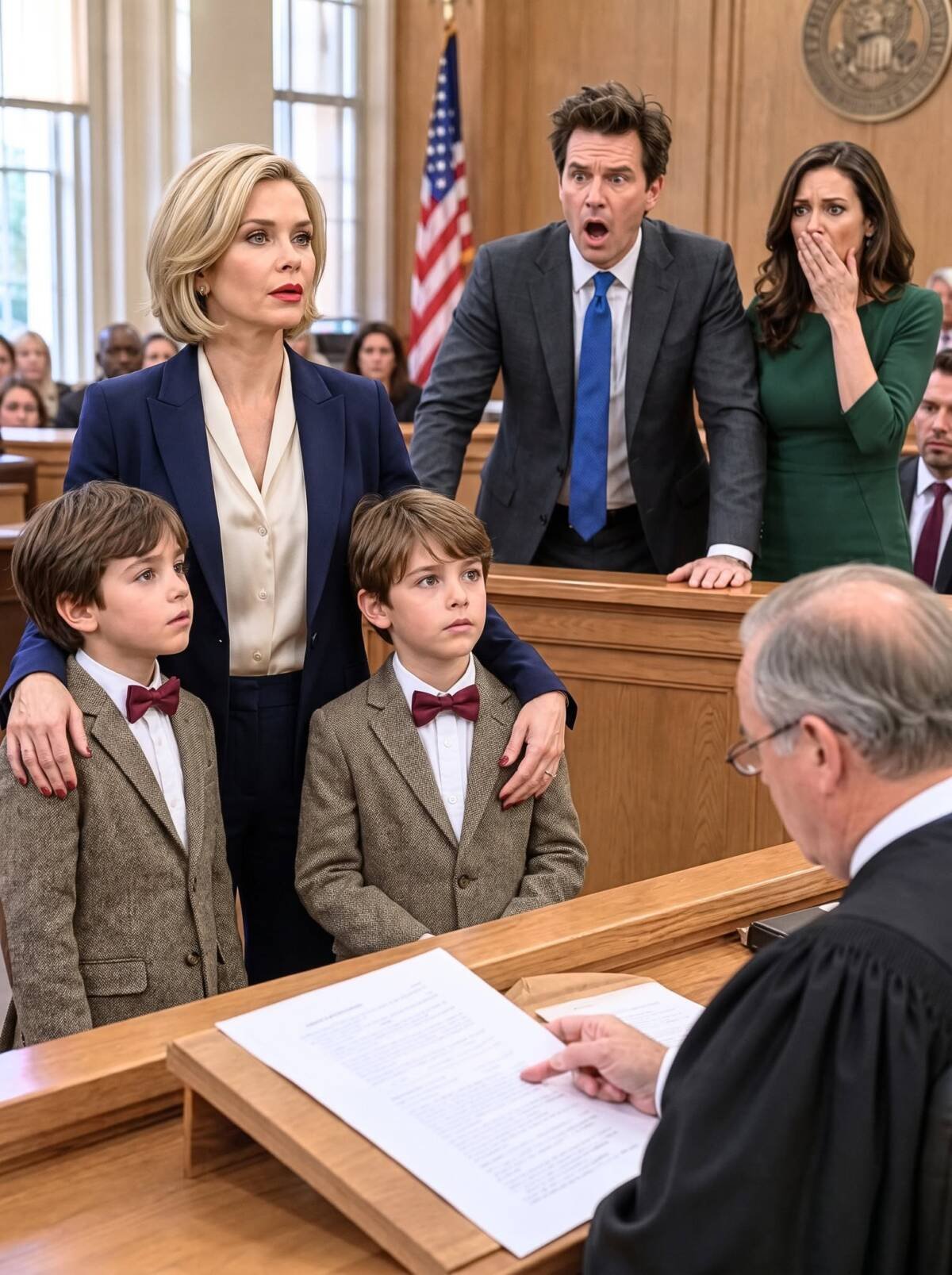
After a devastating car accident left me unable to walk, I begged my parents to care for my one-year-old twins. My mother’s response was chilling: “I still have pickleball. Your sister never dumps her problems on us.” She hung up without asking whether I would survive. But she had forgotten one crucial detail: For eight years, I had been the person paying her bills. That night, one phone call changed everything.
Introduction: The Phone Call I Will Never Forget
The first thing I remembered after the crash was the sound of metal twisting against metal.
The second was my mother’s voice.
Not the sound of her crying. Not a desperate question about whether I was alive. Not even a simple expression of concern for her injured daughter.
It was her complaint about pickleball.
I lay in a hospital bed, barely able to move, with a fractured pelvis, two broken ribs, and months of rehabilitation ahead of me. My one-year-old twins, Noah and Lily, had survived the accident because they were safely secured in their car seats. But their father had died the previous year, and I had no partner to call, no husband to come rushing through the hospital doors, and no immediate family member willing to take responsibility for my babies.
I had one request.
I needed my parents to care for their grandchildren until I could stand again.
My mother refused.
What she didn’t know was that her decision would expose years of financial dependence, reveal a disturbing family betrayal, and force me to reconsider everything I had believed about the people I had spent my life helping.
By midnight, I had made a decision that would change our family’s future forever.
And for the first time in eight years, I stopped paying for everyone else’s comfort.
The Accident That Changed My Life
The accident happened so quickly that I barely had time to understand what was happening.
One moment, I was driving with Noah and Lily safely strapped into their rear-facing car seats. The next, there was a violent impact, the screech of tires, and the crushing sound of metal folding around us.
When I finally regained consciousness, the world seemed to consist of harsh hospital lights, unfamiliar voices, and pain that radiated through every part of my body.
The doctors explained the injuries carefully.
My pelvis was fractured. Two ribs were broken. Walking would not be possible for some time, and even basic movements would require assistance. My recovery could take months, depending on how my body responded to treatment and rehabilitation.
I listened to every word, trying to remain calm.
Then I asked about my children.
Noah and Lily had survived. They were frightened but physically safe, and hospital staff had arranged temporary emergency childcare. Unfortunately, that arrangement could last only twenty-four hours.
After that, someone would need to take them.
My husband had died the year before, leaving me to raise the twins alone. I had learned how to manage sleepless nights, daycare emergencies, household responsibilities, and the emotional weight of becoming a single parent much sooner than I had ever expected.
But this was different.
I couldn’t lift my children. I couldn’t stand beside their cribs. I couldn’t even sit up without help.
For the first time since their birth, I was completely dependent on someone else.
And the only people I thought I could turn to were my parents.
I reached for my phone, wincing as the movement sent pain through my hips.
Then I called my mother.
“I Still Have Pickleball”
She answered after several rings.
“Mom,” I whispered, trying to keep my voice steady. “I need you and Dad to take Noah and Lily for a few weeks. The doctors say I won’t be able to walk for a while. I just need time to recover.”
For a moment, she said nothing.
I waited for the obvious questions.
How badly were you hurt? Are the babies okay? What do you need us to bring to the hospital?
Instead, she sighed.
“I still have pickleball,” she said. “Your sister never dumps her problems on us.”
I stared at the ceiling, convinced I had misunderstood her.
“Mom, I was almost killed.”
“And we are not built-in babysitters, Mara. You’ll have to figure something out.”
“Please. They’re your grandchildren.”
“I have plans. Your father and I have our own lives.”
Then she hung up.
I held the phone against my chest, unable to process what had just happened.
My children needed someone to care for them because their mother had been seriously injured in a car accident. I wasn’t asking my parents to abandon their lives permanently. I wasn’t asking them to become full-time caregivers. I was asking for temporary help during a medical crisis.
They had refused because they had other plans.
A few feet away, I could hear the quiet sounds of my children moving in their borrowed hospital cribs.
I wanted to reach for them. I wanted to pick them up, hold them close, and promise them everything would be okay.
But I couldn’t.
The realization hurt in a way that no broken bone could explain.
Then, as I lay staring at the ceiling, I began remembering the things I had done for my parents over the previous eight years.
And suddenly, their refusal became much more than a painful phone call.
It became the moment I finally understood the arrangement I had been living under.
Eight Years of Paying for My Family’s Comfort
My parents had always described themselves as independent people.
They enjoyed talking about their home, their vacations, their country club memberships, and the comfortable life they had built. My mother loved social gatherings, and my father enjoyed being regarded as a successful man who had everything under control.
The truth was less impressive.
Their finances were fragile, their expenses regularly exceeded their income, and they had developed a habit of turning to me whenever something went wrong.
At first, the requests seemed harmless.
A mortgage payment they couldn’t cover one month. An unexpected car expense. A bill that had arrived at an inconvenient time.
I helped because I could.
I had spent twelve years building a career in financial compliance and had become financially secure. I understood how quickly a temporary problem could become a serious crisis, and I didn’t want my parents to lose their home or struggle with expenses they couldn’t manage.
So I stepped in.
When their mortgage became difficult to maintain, I covered the payments. When they wanted to keep their SUV, I helped with the lease. When their insurance expenses became too much, I made sure their health coverage remained active.
I paid their country club dues and helped finance family vacations.
When my sister Claire’s boutique began failing, I provided money to keep it operating. I even paid for a new roof after my father joked that I was giving them an “early inheritance in reverse.”
Everyone laughed at the time.
I laughed, too.
What I didn’t understand was that every act of generosity was gradually becoming an expectation.
My help was no longer treated as a gift. It was treated as a permanent part of the family’s financial structure.
Claire, meanwhile, occupied a very different position.
She was the favored daughter, the one whose mistakes were forgiven and whose responsibilities somehow became someone else’s problem. Her business struggled, but I was expected to help. Her bills accumulated, but I was expected to contribute. Whenever she made a poor financial decision, the family seemed to believe I should be the person who made it right.
No one asked why Claire couldn’t support herself.
No one suggested that my parents reduce their spending.
And no one asked whether I was comfortable carrying the burden.
For eight years, I had quietly paid for a lifestyle my parents could not consistently afford.
I told myself I was helping the people I loved.
I told myself that family meant showing up when someone needed you.
But lying in that hospital bed, unable to care for my own children, I began to understand something I had spent years avoiding.
I had confused financial support with emotional connection.
I had believed that if I kept helping, my family would eventually treat me with the same care I showed them.
Instead, when I needed them most, they treated my emergency as an inconvenience.
And my mother had made her priorities perfectly clear.
The Nurse Who Asked the Right Question
A nurse named Elena entered my room shortly after the call ended.
She noticed the phone slipping from my hand and caught it before it fell to the floor.
“Are you okay?” she asked.
I tried to answer, but the words wouldn’t come.
She looked at me for a moment, then glanced toward the twins’ cribs.
“Who can I call?”
It was a simple question.
Yet it was the first time anyone had asked me what I needed instead of telling me what I should do.
I took a shaky breath.
“Daniel Cho,” I replied. “My attorney.”
Daniel had handled my company’s legal matters for years. He knew about my parents’ financial arrangements, the property I owned through my holding company, and the various payments I had been making on behalf of my family.
When he answered, I didn’t waste time explaining every detail.
“I need you to stop the family payments tonight,” I told him.
There was a brief silence.
“All of them?”
“All of them. The cards, the insurance payments, the club dues, the vehicle expenses, the allowances, and anything else connected to my money.”
Daniel knew better than to assume I was speaking out of anger alone.
“Do you want me to review the arrangements first?”
“No. Review whatever you need to review, but stop the payments that can legally be stopped. I am not funding another day of this.”
Then he asked about the house.
My parents had lived in a property owned by my holding company. They had never qualified for the mortgage they wanted, so I had purchased the home, paid its taxes, and allowed them to live there without paying rent under a renewable occupancy agreement.
They called it their house.
Legally, it wasn’t.
“You’re including the residence?” Daniel asked.
“Yes. Follow the agreement and handle everything properly.”
He paused.
“They’re going to panic.”
I looked toward Noah and Lily.
“They should have thought about that before refusing to help their grandchildren.”
Daniel agreed to review each financial arrangement and implement the changes within the applicable contracts and legal requirements.
For the first time in eight years, I was no longer making decisions based on what might upset my family.
I was making decisions based on what I needed to protect.
By Midnight, Everything Had Changed
The first changes took effect that evening.
Authorized payments connected to my accounts were suspended or canceled where permitted. The country club payment stopped. My parents’ vehicle expenses were no longer being covered. Claire’s monthly consulting payment from my company was removed from the payroll after Daniel confirmed the appropriate procedure.
The family credit cards issued through my company were also restricted.
None of this required a dramatic confrontation.
There were no shouting matches, no speeches, and no public announcements.
Just a series of administrative decisions that ended years of automatic financial support.
Seven minutes after the first changes took effect, my mother began calling.
Once.
Twice.
Then six times in a row.
I watched her name appear on the screen.
For years, I had answered every call because I was afraid something terrible had happened. I had become accustomed to the possibility that every ring would bring another emergency, another bill, or another request for money.
That night, I let the phone ring.
My father left a voicemail demanding that I correct what he described as a banking mistake.
My mother sent messages complaining that her country club payment had been declined in front of her friends.
Claire texted me a photograph of an overdue notice for her boutique.
Then she sent a single sentence.
“You are destroying all of us.”
I read it twice.
Not one of them asked whether I could walk.
Not one asked whether the twins were safe.
Not one asked whether I needed help getting through the next day.
They had discovered that their money was gone, and that was the emergency they cared about.
I placed the phone facedown on the bedside table.
For the first time in eight years, I allowed my family to experience the consequences of their own decisions.
I had no idea that stopping the payments would reveal something even more disturbing.
Because my mother and sister weren’t simply angry that the money had disappeared.
They had already begun planning how to get control of it back.
Part Two: The Family’s Real Plan
A Sudden Change of Attitude
By the following morning, my family’s tone had changed.
My father called again, insisting that I had made a mistake.
My mother complained that she had been embarrassed at the country club.
Claire continued sending messages about the financial damage to her boutique.
Their anger was immediate, but their concern for me remained nonexistent.
Meanwhile, Elena and the hospital’s care team helped arrange a safer plan for Noah and Lily. Daniel coordinated emergency childcare through a licensed provider associated with my company, allowing the twins to remain close while I began the first stages of rehabilitation.
The arrangement wasn’t simple.
I needed help transferring between the bed and wheelchair. Even small movements required patience, and I had to learn how to manage pain without allowing it to dictate every moment of the day.
But the twins were nearby.
I could hear Noah babbling to himself and Lily making the little sounds she made whenever she was tired. Sometimes, when I couldn’t sleep, I watched them through the glass separating our spaces.
Their presence gave me a reason to keep moving forward.
I couldn’t undo the accident.
I couldn’t bring their father back.
And I couldn’t force my parents to become the people I had hoped they would be.....