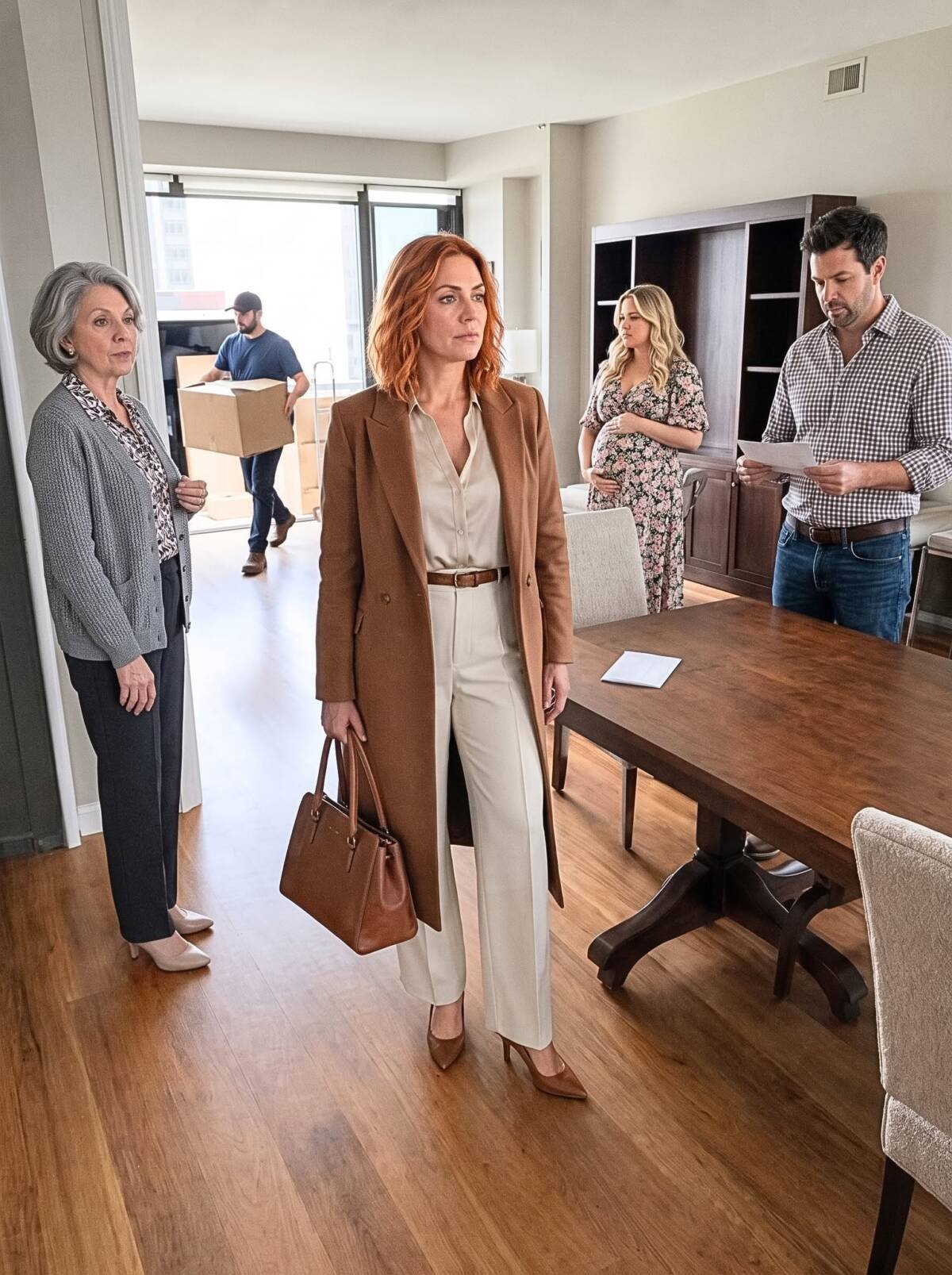
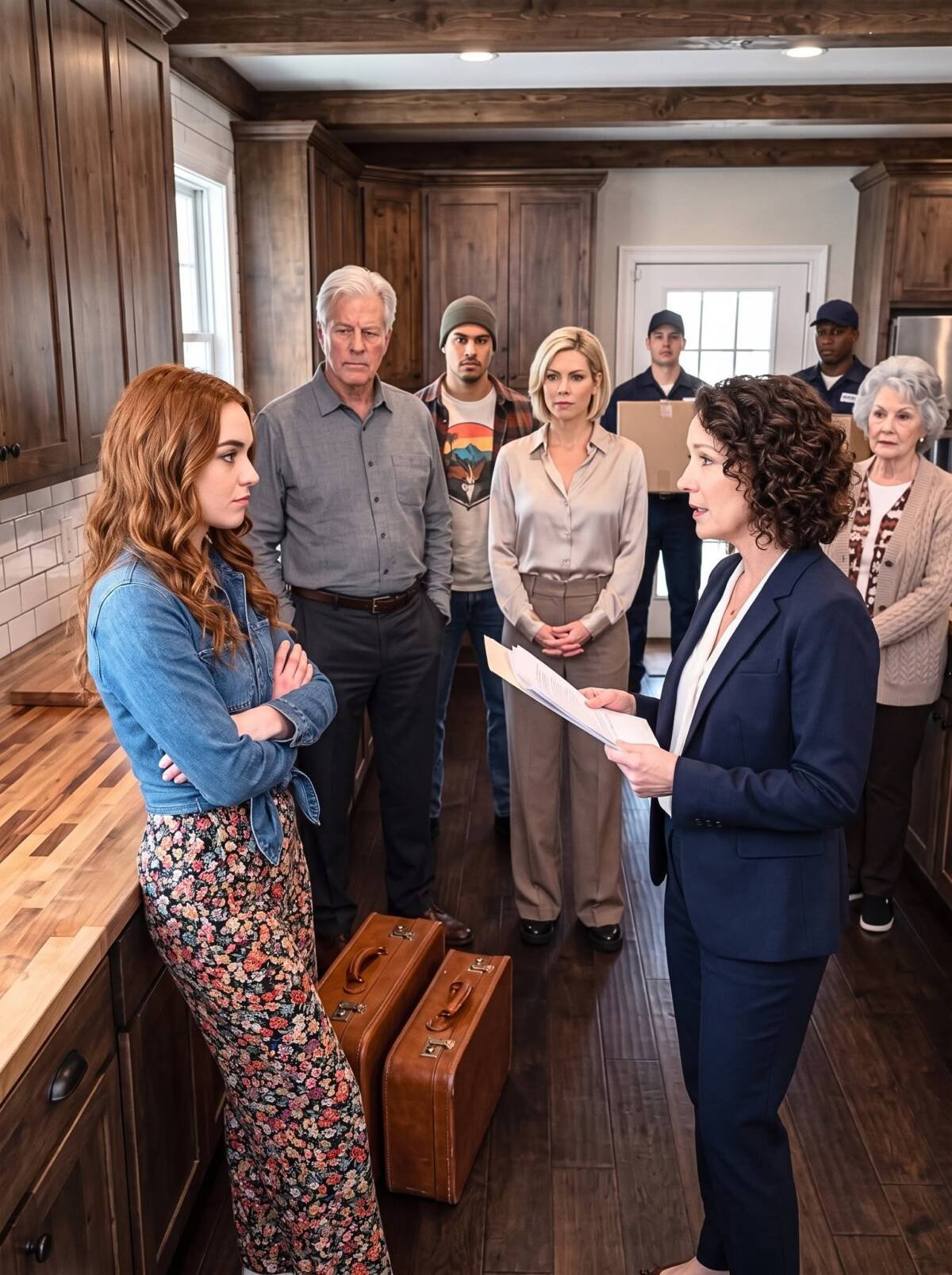
The Morning Everything Changed
When Gavin Rourke walked into divorce court with three attorneys, an ironclad prenuptial agreement, and the woman he planned to marry next, he believed the outcome was already decided.
He had money, influence, a thriving transportation company, and a legal team prepared to argue that nearly everything he owned belonged exclusively to him. He also wanted primary custody of his eight-year-old twin sons, Nolan and Parker, convinced that his wealth and professional success made him the better parent.
His wife, Cassandra Bellamy, had spent thirteen years standing quietly behind him while he built his public image as a self-made businessman. To outsiders, she was a homemaker who had abandoned her career to raise their children. To Gavin, she appeared to be a woman with no meaningful income, no significant assets, and little power to challenge him.
But Gavin had made one critical mistake.
He had confused his wife’s silence with ignorance.
And when Judge Marian Beckett opened an original company ownership document that rainy Thursday morning, the first name she read was Cassandra Bellamy.
The courtroom fell silent.
Then the judge looked directly at Gavin and asked a question that threatened to unravel everything he had spent years building.
“Mr. Rourke, why is your wife’s maiden name listed as the company’s original majority owner?”
For the first time that morning, Gavin had nothing to say.
What followed would expose the hidden history of his business empire, challenge the story he had told his children, and reveal a family secret that neither money nor legal arguments could easily bury.
Part One: The Husband Who Expected to Win
By nine o’clock on a rainy Thursday morning, Courtroom Six in Montgomery County was already filling with spectators.
Gavin Rourke’s divorce had attracted unusual attention. As the chief executive of Rourke Regional Mobility, one of the Mid-Atlantic region’s fastest-growing transportation companies, he was accustomed to public recognition.
His photograph appeared in business magazines, charity newsletters, and corporate announcements. He had attended fundraising dinners beside influential politicians and spoken at conferences about leadership, perseverance, and the importance of building a business from the ground up.
His personal life had rarely attracted the same scrutiny.
For thirteen years, Cassandra had attended company celebrations, charity events, and award ceremonies beside him. She smiled for photographs, congratulated him when he received recognition, and rarely spoke about her own ambitions.
When the couple welcomed twin boys, she devoted herself to raising them.
She managed their medical appointments, school meetings, meals, extracurricular activities, and daily routines. She remembered which foods Nolan refused to eat, which bedtime stories Parker requested, and which teachers needed to be contacted before a small problem became a larger one.
While Gavin traveled between business meetings, conferences, and corporate events, Cassandra kept their household functioning.
To the outside world, it appeared that Gavin was building an empire while his wife remained comfortably at home.
Few people understood how much of their shared history had disappeared from that picture.
By the time the divorce proceedings began, Gavin had already developed a clear narrative for the court.
He was the successful provider.
Cassandra was financially dependent.
He had built a business.
She had stayed home.
He could offer their children a luxurious lifestyle.
She would struggle to maintain it.
His lead attorney, Philip Dane, had spent weeks preparing to present that argument. The prenuptial agreement, he maintained, protected Gavin’s business interests and established clear boundaries around his assets.
The custody request was equally ambitious.
Philip intended to argue that Gavin should receive primary custody because his financial resources, professional stability, and established lifestyle would provide the boys with greater opportunities.
Gavin appeared convinced that the case would go according to plan.
He arrived wearing a tailored charcoal suit, an expensive silver watch, and the relaxed expression of a man accustomed to getting what he wanted.
At his side sat Sloane Pierce, the company’s public relations director and the woman he intended to marry once his divorce was finalized.
Sloane held his arm comfortably, appearing less like a visitor to a family court proceeding than someone already celebrating a victory.
When Judge Marian Beckett entered the courtroom, the room grew quiet.
She reviewed the case file, adjusted her glasses, and noticed that Cassandra’s seat was empty.
“Where is Mrs. Bellamy?” she asked.
Gavin glanced at his watch.
“Cassandra has never been particularly concerned about other people’s schedules.”
Sloane laughed softly.
Judge Beckett immediately looked up.
“Ms. Pierce, this is a family court hearing, not a private conversation. You will remain silent unless I address you.”
Sloane’s expression changed.
Philip continued with his opening argument, describing the family home, private school tuition, investment accounts, and the financial advantages Gavin could supposedly provide.
He presented his client as a dedicated father whose success had created a secure future for his children.
Cassandra, meanwhile, was described as a woman without a substantial career or the resources needed to support the lifestyle the boys had always known.
The argument was polished, confident, and carefully structured.
Then the courtroom doors opened.
Part Two: The Woman They Underestimated
Cassandra entered holding the hands of her twin sons.
Nolan wore a navy jacket and kept his eyes lowered. Parker gripped his mother’s hand so tightly that his fingers had begun to turn pale.
Gavin’s confident expression faltered.
Sloane leaned toward him.
“She brought the boys?”
Judge Beckett heard her.
“Ms. Pierce, I have already warned you.”
Cassandra walked to her table and apologized for arriving late.
“I apologize, Your Honor. The boys asked to come.”
The judge studied the children before explaining that family court proceedings were rarely appropriate places for young children.
“I understand,” Cassandra replied. “But their father has already told them that I abandoned our family, that I have no way to support them, and that they will soon be living with him and Ms. Pierce. I did not want them to hear only one version of the truth.”
Gavin immediately objected.
“That is an unfair accusation.”
Cassandra did not turn toward him.
Judge Beckett instructed a court officer to seat the boys nearby and allowed the hearing to continue.
For the next twenty minutes, Philip described Cassandra as though she had been a passive observer throughout the marriage.
He emphasized that she had not held a traditional full-time job since the twins were born. He pointed to Gavin’s earnings, business interests, and ability to provide expensive schooling and extracurricular opportunities.
He argued that the children would benefit from remaining primarily in their father’s care.
When he finished, he requested primary custody for Gavin and suggested that Cassandra’s parenting time should be limited until she could demonstrate greater financial independence.
Judge Beckett turned toward Cassandra.
“Mrs. Bellamy, who is representing you?”
“I am representing myself.”
Gavin leaned back in his chair.
The decision seemed to confirm everything he believed about his wife’s position. She had no legal team, no visible professional support, and apparently no strategy capable of matching his attorneys.
Judge Beckett removed her glasses.
“Mrs. Bellamy, your husband has assembled a full legal team. Do you understand the seriousness of these proceedings?”
“Yes, Your Honor.”
“Then you may respond.”
Cassandra reached into her handbag and removed a sealed envelope.
She had preserved its contents for years.
Inside were the original incorporation documents for Rourke Regional Mobility, including the company’s early ownership records.
She handed the envelope to the court clerk.
Judge Beckett broke the seal and began reading.
At first, her expression remained neutral. She reviewed the first pages, turned to the ownership section, and stopped.
Then she read the document again.
The courtroom grew quiet enough for the rain against the windows to become audible.
Finally, the judge raised her eyes toward Gavin.
“Mr. Rourke, why is your wife’s maiden name listed as the company’s original majority owner?”
Gavin stared at her.
He said nothing.
Philip turned sharply toward his client, and several sheets of paper slipped from his hand.
Sloane looked between them in confusion.
“What is she talking about?”
Judge Beckett continued reading.
“Cassandra Bellamy is listed as holding seventy-four percent of the company at the time of incorporation.”
A murmur spread through the courtroom.
Gavin finally found his voice.
“That cannot be correct.”
“This is an original filing certified by the state,” the judge replied. “Are you claiming the document is false?”
Gavin’s eyes moved from the judge to Cassandra.
“She signed those papers because we were married. The company had no value at the time.”
Judge Beckett’s expression hardened.
“So you acknowledge that the document is genuine.”
The color drained from Gavin’s face.
For years, he had presented himself as the sole architect of his business success. Now, an original public filing appeared to tell a different story.
Philip requested a brief recess.
Judge Beckett granted ten minutes.
“You may have ten minutes,” she said. “Use them wisely.”
Part Three: The History Behind the Company
The moment the judge called the recess, Gavin hurried into the courthouse hallway.
He approached Cassandra, his face tight with disbelief.
“What have you done?”
Cassandra looked at him calmly.
“I brought the truth into the room.”
Sloane followed him, visibly unsettled.
“Gavin, what does she mean by seventy-four percent?”
He did not answer.
That silence was more revealing than any explanation he might have offered.
Fifteen years earlier, Rourke Regional Mobility had been little more than a used shuttle van, a folding desk, and a stack of unpaid invoices.
Gavin had ambition, charm, and a remarkable ability to persuade people to believe in his vision. But ambition alone could not secure insurance, arrange vehicle financing, meet licensing requirements, manage payroll, or keep a new company operating through its first difficult months.
Cassandra had brought something different to their partnership.
She had administrative experience, financial discipline, and a willingness to take risks when the future remained uncertain.
After inheriting a modest townhouse in Silver Spring and a small investment account from her aunt, she sold the property and committed most of her available funds to the business they hoped to build together.
She helped complete the original registration documents, negotiated the first vehicle lease, arranged insurance coverage, secured permits, organized payroll, and managed the administrative work that allowed the company to operate.
For the first two years, she continued working in medical administration. Her salary helped cover household expenses while the transportation business struggled to become profitable.
Gavin handled much of the daily driving and worked to attract customers.
Cassandra handled the paperwork, the finances, and the operational details that made the business sustainable.
Back then, Gavin called it our company.
He spoke about their future in terms of shared sacrifices and shared success. They were young, determined, and convinced that their partnership could build something lasting.
Neither had imagined that their marriage would eventually end in a courtroom.
Everything changed after the twins were born.
Nolan required nearly a year of physical therapy, while Parker needed frequent medical appointments because of recurring breathing problems.
Cassandra reduced her involvement in the company’s daily operations, believing the arrangement would be temporary.
But temporary changes gradually became permanent.
Gavin took on a more public leadership role. He gave interviews, attended industry events, and developed relationships with investors and business leaders.
As the company grew, his public description of its origins changed.
First, he began referring to himself as the founder.
Later, he described himself as the sole founder.
Eventually, the woman who had helped finance and organize the company’s earliest operations disappeared from the story altogether.
At first, Cassandra said nothing.
She did not want to embarrass her husband. She hoped that their shared history would remain understood between them, even if outsiders knew only the simplified version.
Later, silence became a habit.....