In a glittering Washington, D.C. ballroom overlooking the Potomac River, a grieving mother lifted her champagne glass, smiled at a table full of donors and military officers, and delivered a sentence designed to break her own daughter. Six years after losing her son in Afghanistan, Meredith Whitaker had built an entire public identity around his heroism—while quietly erasing the daughter who had survived the same mission. She expected silence. She expected tears. Instead, she triggered a chain of events that would dismantle six years of carefully crafted lies in less than twenty minutes—and bring a three-star general to the microphone with a truth the family had never been allowed to hear.
A Ballroom Built on a Half-Truth
The November evening air outside was crisp, and through the floor-to-ceiling glass walls of the private ballroom, the lights of Washington shimmered across the Potomac. Inside, the room smelled of white lilies, vintage champagne, expensive perfume, and decades of quiet political influence. At the center of every linen-draped table stood a heavy silver card engraved with the name of the evening’s beneficiary: The Owen Whitaker Legacy Foundation.
Scattered beneath the crystal chandeliers were twenty-four decorated military officers, their dress uniforms pressed to perfection and their medals catching the warm light. Alongside them sat ambassadors, corporate donors, and military widows—the exact audience Meredith Whitaker had spent years cultivating.
Meredith had mastered a very specific kind of power: the ability to inflict deep wounds without ever raising her voice. She could wrap cruelty in impeccable manners and somehow emerge from every confrontation looking like the victim. It was a talent that made politicians, donors, and cameras adore her.
At the head table, my younger sister, Celeste, sat proudly beside our mother in an elegant cream silk dress, smiling warmly at guests and nodding at every cue. I, on the other hand, had been placed near the far end of the family table, partially obscured behind a thick marble column.
The seating chart was not an oversight. Meredith Whitaker did not make accidental seating arrangements. Growing up in her house had taught me early how to recognize the subtle punishments that outsiders mistook for simple coincidence.
Still, I had worn my United States Army dress uniform. I was Major Nora Whitaker, an Army aviation officer, and before leaving my hotel room that evening, I had stood in front of the mirror and made myself a quiet promise: I would not let my mother make me feel like an intruder in a uniform I had earned.
The Brother Who Never Kept Score
Celeste had always belonged effortlessly to Meredith’s world. She knew how to charm donors, compose gracious thank-you notes, and stand photogenically beside our mother whenever Meredith spoke publicly about Owen. I had always been the practical one—the daughter who preferred broken radios, ROTC drills, aircraft manuals, and uncomfortable questions.
Owen had been different from both of us. Two years younger than me, he was effortlessly warm, endlessly funny, and capable of winning over a room full of strangers in five minutes flat. Despite being the golden son of the Whitaker family, he never once treated me like competition.
We were allies. When I slipped away from foundation dinners to study for aviation exams, Owen covered for me. When he couldn’t structure a college essay to save his life, I stayed up past midnight helping him organize his thoughts. Later, when I deployed, he mailed ridiculous care packages stuffed with hot sauce, novelty airplane socks, scribbled notes, and a small plastic dinosaur he solemnly labeled a “tactical morale asset.”
Six years before that November gala, Captain Owen Whitaker was killed at the age of thirty-two during an evacuation mission in Afghanistan.
In the aftermath, Meredith transformed his death into a monument. There were fundraising campaigns, foundation boards, memorial videos, and a tightly polished public narrative. In Meredith’s version of history, Owen was the noble son who gave everything, and I was the daughter who had inexplicably walked away.
What Meredith almost never mentioned to anyone was that I had been on that same mission.
I had been the pilot.
What Really Happened in Afghanistan
Our helicopter had taken heavy fire while approaching a humanitarian convoy that had been ambushed near a remote village. The primary landing zone was compromised within seconds. The secondary zone was worse. Command ordered us to hold off while Owen remained on the ground with the security element.
Then his voice cut through the static in my headset.
“Nora, there are children down here.”
We went in anyway.
During the second extraction, an explosion tore through the perimeter near the eastern wall just as Owen was shielding a wounded medic and two children, moving them toward cover. My crew and I managed to pull fourteen wounded civilians and service members out of the kill zone before our damaged aircraft was forced to lift off. When recovery teams later brought back the remaining fallen, Owen was among them.
Because the operation involved sensitive intelligence sources, civilian contractors, and significant operational failures, large portions of the mission remained classified for nearly a year. The public was given a simplified summary: Captain Owen Whitaker had died saving civilians, and his sister, Major Nora Whitaker, had survived.
Both facts were true. Meredith filled every inch of silence between them with blame.
At first, her remarks were subtle. She would tell guests that Owen had “always been the brave one,” or sigh softly and say that some people survived combat for reasons nobody could ever truly understand. Over six years, the implication hardened into an unspoken verdict: Owen was dead because he was noble, and I was alive because I had been lucky—or worse, careful.
That night at the gala, Meredith moved gracefully from table to table with Celeste at her side. Resting against her collarbone was a silver pendant containing a small square of fabric cut from Owen’s uniform. Almost no one in the ballroom knew that six years earlier, she had refused to take Owen’s dog tags from my hands—simply because they had passed through mine.
The Quiet Warning
I sat silently through the first course and watched another professionally edited memorial video play on the large screens. Owen laughed in uniform, tossed a football with local children, stood beside helicopters, and held a stray puppy overseas. The audience chuckled and dabbed their eyes right on cue.
Beside me, a retired colonel glanced at my uniform and leaned in politely.
“You served with him?” he asked.
“Yes,” I replied.
He waited for the rest of the story.
“My brother.”
His expression shifted immediately. “Oh.”
Before he could ask another question, Meredith’s voice drifted smoothly down the table.
“Nora has always preferred not to discuss that day.”
I met her eyes across the centerpiece. “I discuss it when it’s relevant.”
Meredith’s smile didn’t flicker. “Isn’t that right, darling?”
Celeste lowered her gaze to her plate. She had never attacked me directly the way our mother did, yet for six years she had sat quietly beside Meredith while I was methodically edited out of my brother’s life.
Two tables away sat Lieutenant General Benjamin Harlan. He had known my father and Owen well, and while we didn’t socialize, he knew my service record intimately from the Army’s later operational review.
Three months earlier, Harlan had called me out of the blue.
“Nora, I’m going to be in Washington in November,” he had said.
“So I heard.”
“Your mother’s event.”
“Yes.”
“I need you there.”
I had almost laughed. “My mother does not need me anywhere, sir.”
His answer had been unusually pointed. “I didn’t say for her.”
He hadn’t explained further. When I arrived at the ballroom that night, he offered only a brief, steady nod from across the room. I returned it, completely unaware of what he was carrying in his coat pocket.
The Sentence That Stopped the Room
The breaking point arrived between the main course and dessert. A prominent donor’s wife leaned toward Meredith, praising her grace and resilience in the wake of unimaginable loss. Meredith touched the pendant at her throat and delivered a line she had clearly rehearsed dozens of times.
“One does not bear it,” she said softly. “One learns to stand with the wound.”
The woman glanced warmly toward Celeste and me, adding that Meredith’s daughters must have been a tremendous comfort.
Meredith immediately placed a hand over Celeste’s. “Celeste has been my anchor.”
The silence that followed was heavy enough that even the donor’s wife felt it. Trying to smooth over the awkwardness, she smiled in my direction.
“And Major Whitaker must be such a source of pride as well.”
For the first time all evening, Meredith turned her full attention to me. She lifted her champagne glass, her smile cool and immaculate.
“Nora has always had her own way of surviving.”
A few guests around the table offered tight, uncomfortable smiles. Then Meredith leaned slightly toward the donor’s wife, lowering her voice just enough to mimic a private confidence—while making sure every person within ten feet could hear every syllable.
“The truth is, some nights I still believe the wrong child came home.”
The table went completely dead.
Celeste’s face drained of color. The retired colonel beside me slowly set his fork down. The donor’s wife looked genuinely horrified by the cruelty she had accidentally uncovered.
For six years, I had wondered what it would feel like if my mother ever said those words out loud without hiding them behind polite phrasing. I had always assumed I would feel fury, or heartbreak. Instead, a strange, clear calm settled over me. For the first time, the accusation she had used to punish me in the dark was standing out in the open, in front of witnesses.
I folded my napkin, placed it beside my plate, and stood up.
Meredith watched me closely, her posture poised. She was waiting for tears. She was waiting for me to storm out, or lose my temper, giving her the exact emotional outburst she could later use to tell people that the war had left me unstable.
Instead, I lifted my water glass.
“To Owen,” I said, my voice carrying clearly.
Heads began turning from neighboring tables.
“My brother was brave, funny, reckless with kindness, terrible at paperwork, loyal beyond reason, and the only person in our family who ever told me not to make myself smaller just because a room preferred me that way.”
The ballroom hushed. Celeste’s eyes brimmed with tears, while Meredith’s jaw tightened.
I looked straight at my mother.
“He would have hated what grief has made you willing to say.”
Meredith set her champagne glass down with a sharp click. “Nora, this is not the time.”
Before I could respond, a deep, unmistakable voice cut across the room from two tables away.
“No. I think it is.”
Setting the Record Straight
Lieutenant General Benjamin Harlan rose from his chair.....
Related Posts
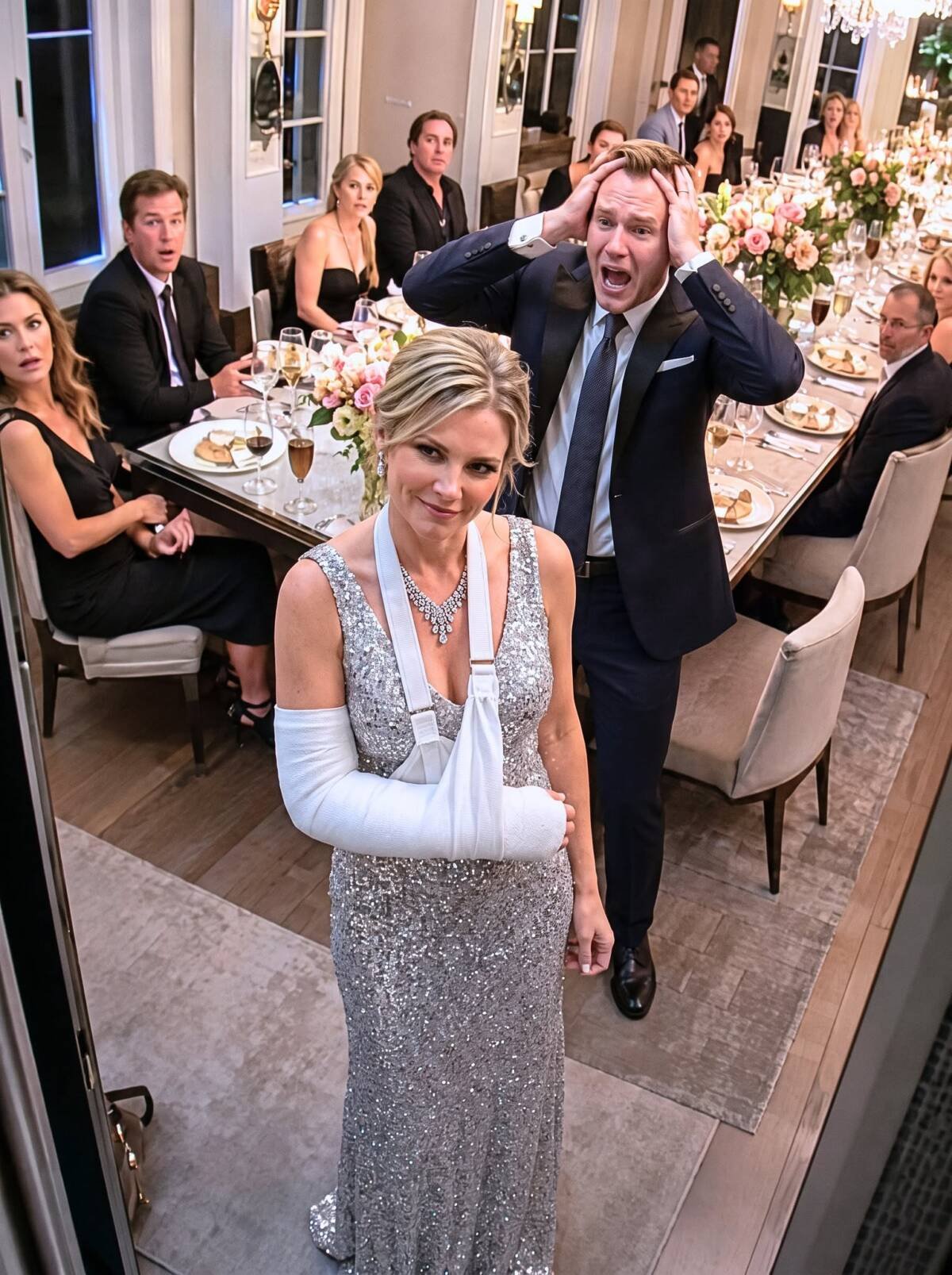
My Husband Shoved Me Onto the Frozen Porch, Broke My Arm, and Still Ordered Me to Cook His 40th Birthday Dinner—So I Gave Him a Party Nobody in That Room Will Ever Forget
When I returned from the emergency room at two o’clock in the morning with my right arm immobilized in a heavy fiberglass cast, my husband…
Read more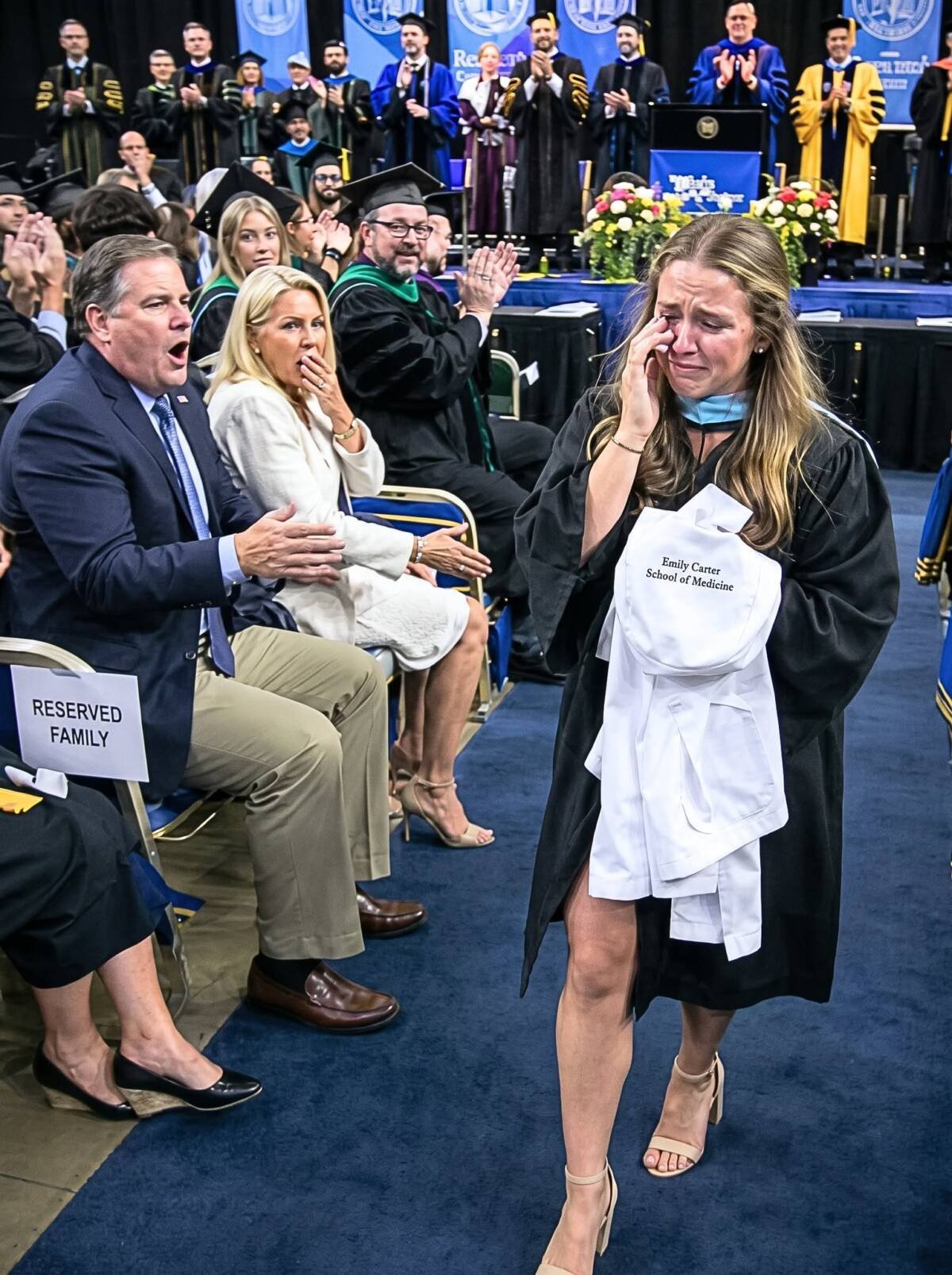
The Parents Who Abandoned Me With Cancer Showed Up at My Medical School Graduation—Then the Dean Read the Name Stitched on My White Coat
At my medical school graduation, the parents who surrendered custody of me when I was thirteen and fighting leukemia sat three rows behind me in…
Read more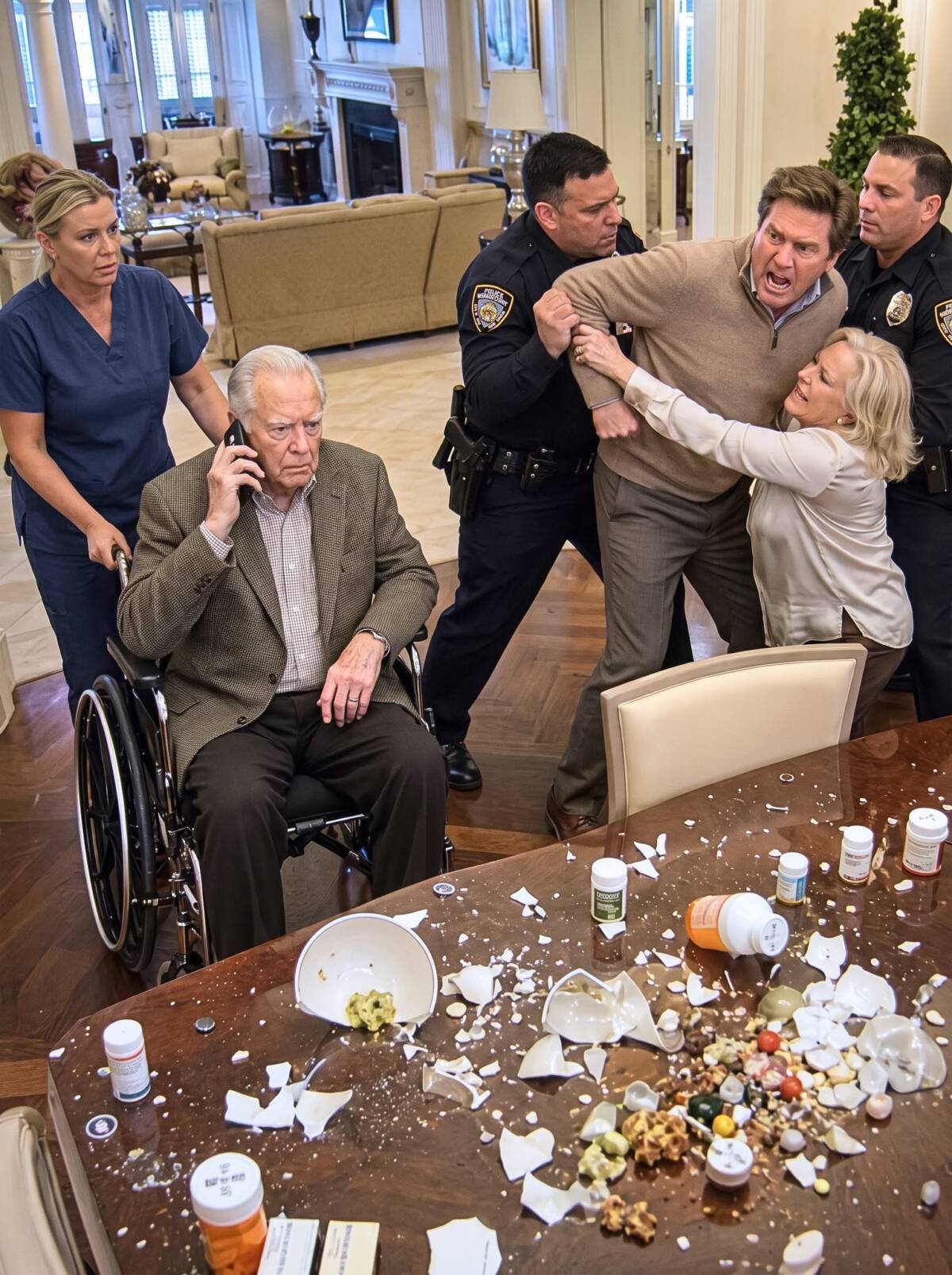
I Wrote a $500,000 Check for My Son’s Wedding—Two Days Later, the Restaurant Manager Called and Told Me, “Come Alone. Don’t Tell Your Wife.”
Two days after I signed a $500,000 check to pay for my son’s wedding—and handed his pregnant bride the deed to our family lake house—I…
Read more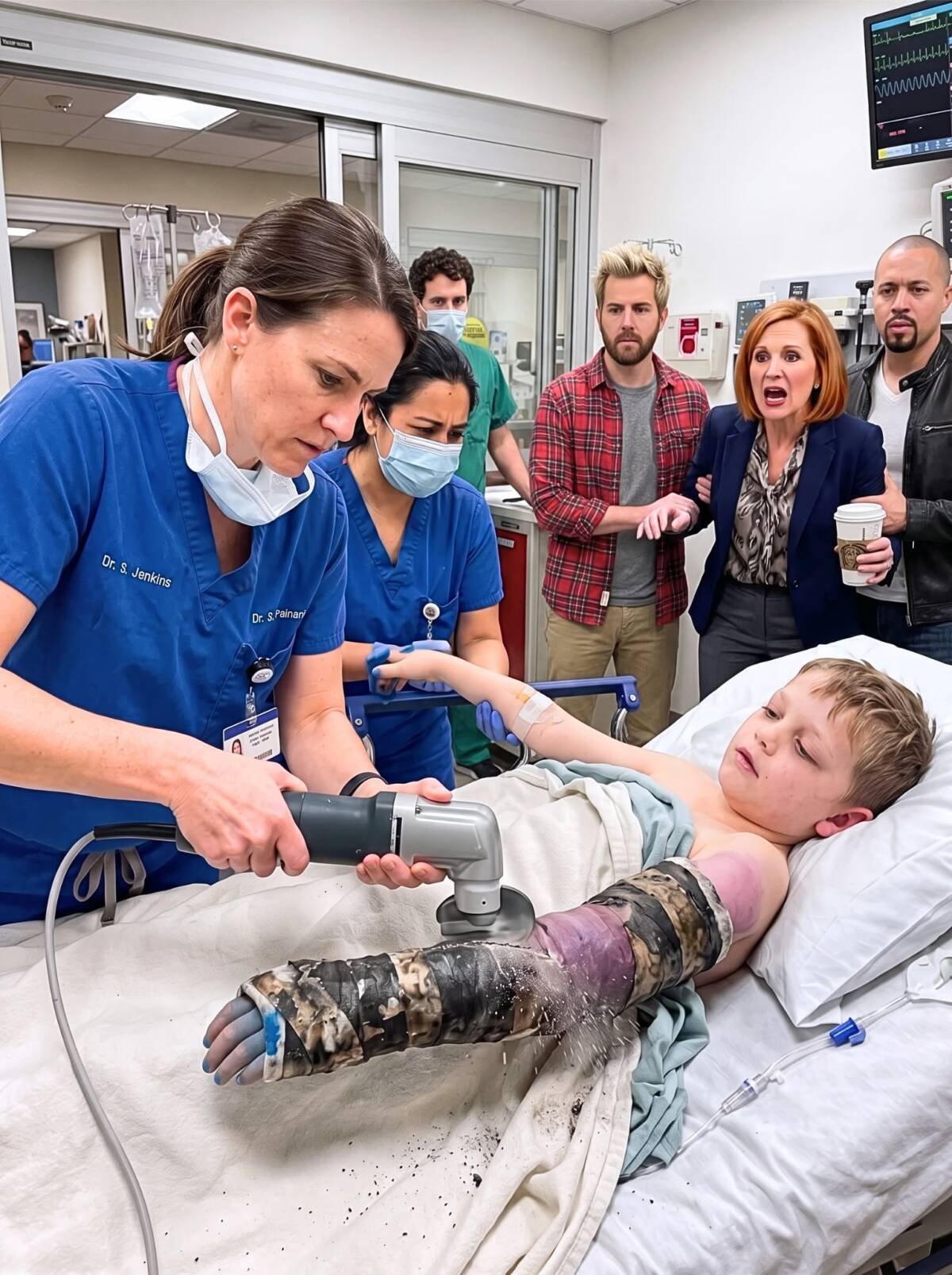
A Mother Insisted Her 8-Year-Old Son Only Had the Flu—Then Doctors Cut Off His Month-Old Cast and Discovered the Horrifying Truth
When an eight-year-old boy was wheeled into the emergency room with a dangerously high fever and a failing pulse, his mother stood calmly in the…
Read more
On Mother’s Day, My Mother Looked Me in the Eyes and Said She Wished I’d Never Been Born. By 6:17 the Next Morning, My Family Realized What They Had Actually Lost.
There are things people say in the heat of an argument that you can eventually forgive, and then there are sentences that quietly dismantle everything…
Read more
My Husband Offered Me $800,000 Not to Call the Police After His Assistant Left Our Daughter in a Locked Car—Until Officers Searched the Back Seat and Uncovered a Secret Years in the Making
When a mother walks into an emergency room corridor and hears the words unresponsive child, time does not simply slow down—it fractures. Every sound sharpens…
Read more