There are things people say in the heat of an argument that you can eventually forgive, and then there are sentences that quietly dismantle everything you have spent years holding together.
On Mother’s Day, I sat across a white-linen restaurant table in Charlotte, North Carolina, surrounded by fresh peonies, untouched slices of New York cheesecake, and a $380 brunch bill I had already placed my credit card down to cover. My mother, Diane Whitmore, looked directly at me—without a tremor in her voice or a flicker of hesitation in her eyes—and said, “I wish you had never been my daughter.”
I didn’t cry. I didn’t make a scene. I didn’t beg her to take it back.
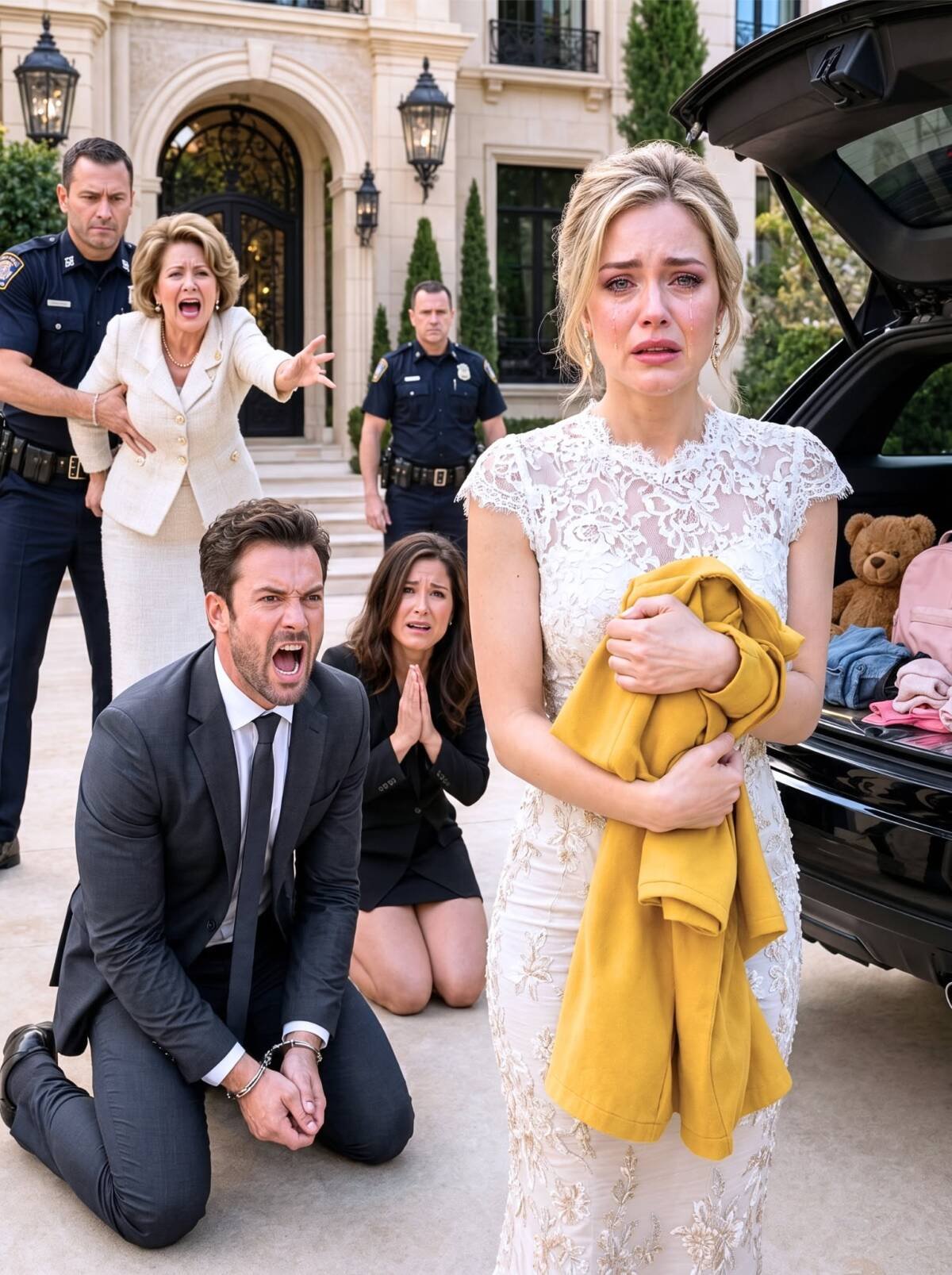
Instead, I calmly reached for my purse, stood up, and looked at the woman whose entire lifestyle I had been quietly funding for four years. “Then start living like you never had one,” I told her. Then I walked out to my black SUV and drove away.
Less than twenty-four hours later, at 6:17 the following morning, my husband’s phone was vibrating violently across our nightstand. Twenty-three missed calls. Three frantic voicemails. A string of increasingly desperate text messages from my older brother. Suddenly, the family that had spent years telling me I wasn’t doing enough couldn’t reach me fast enough.
They weren’t terrified of losing me. They were terrified of losing what I paid for.
The Brunch That Looked Perfect from the Outside
If you had walked past our table at the Magnolia Room that Sunday afternoon, we would have looked like the kind of family people envy.
The dining room was bright and airy, filled with the soft hum of conversation, the clinking of mimosa glasses, and the scent of roasted coffee and warm pastries. I had made the reservation six weeks in advance because I knew my mother loved their crab-cake benedict and the way the servers brought out a single pink rose for every mother at the table.
I had arrived fifteen minutes early with my husband, Daniel, carrying a wrapped silk scarf from a boutique in Myers Park and a handwritten card. I was exhausted—I had worked sixty-two hours that week as a regional operations manager for a freight and logistics company, managing three distribution hubs across the Carolinas—but I had still woken up at six that morning to make sure I looked put-together. I knew how my mother was. If I showed up looking tired, she would take it as a personal insult, as if my fatigue were a comment on how much effort it took to spend time with her.
My older brother, Ryan, and his wife, Melissa, arrived ten minutes late, empty-handed except for a grocery-store bouquet with the plastic still wrapped around the stems. My mother lit up the second she saw him, standing to wrap him in a long hug and fussing over the collar of his polo shirt.
When she turned to me, her smile tightened by a fraction. “You look thin, Emily,” she said, barely brushing her cheek against mine. “Still living at that office, I see.”
“Happy Mother’s Day, Mom,” I said, handing her the wrapped box. “I’m glad we could all be here.”
For the first hour, I played the role I had been cast in since I was a teenager. I ordered the appetizers. I refilled my mother’s water glass. I listened to Ryan complain about his supervisor at the dealership where he worked, and I nodded politely while Melissa talked about the kitchen backsplash they were thinking of redoing.
Every time the conversation drifted toward my life—Daniel’s promotion, the new warehouse we were opening in Raleigh, the backyard patio we had finally finished—my mother’s eyes would glaze over, or she would interrupt with a sigh about how lonely her house felt these days.
Then the dessert plates arrived.
I had already quietly handed my credit card to our server on my way back from the restroom so nobody would have to do the awkward dance of reaching for the check. I didn’t want a thank-you. I just wanted to get through the afternoon without a fight.
That was when my mother set her fork down beside her untouched cheesecake, folded her hands on the table, and looked straight at me.
“I wish you’d never been my daughter.”
The words didn’t come out in a shout. They came out flat, cold, and deliberate, cutting right through the soft jazz playing overhead.
For several seconds, my brain simply refused to process what I had heard. I stared at her, waiting for a punchline, a clarification, anything that would make the sentence make sense.
Across the table, Ryan immediately dropped his eyes to his plate, suddenly fascinated by a stray sprig of parsley. Beside him, Melissa reached for her cloth napkin and began folding and refolding it with intense concentration. Neither of them looked at me. Neither of them said, Mom, that’s out of line.
Their silence told me everything I needed to know. This was going to be another family moment where I was expected to absorb the damage quietly so nobody else had to feel uncomfortable.
“You heard me, Emily,” my mother continued, her voice sharpening. “Ever since you married Daniel, everything has become about your career, your house, your life. You barely remember this family exists.”
I felt a strange, sudden calm wash over me—the kind of quiet that settles in right before a storm breaks, or right after you finally stop fighting a current that has been dragging you under for years.
“What exactly would have made me a good daughter?” I asked quietly.
“Someone who puts family first,” she snapped.
Four Years of Quietly Carrying the Weight
To understand why that sentence landed the way it did, you have to understand what the last four years of my life had actually looked like.
When my father, Robert, died of a sudden heart attack four years ago, the floor dropped out from under all of us. Dad had been the steady one—the quiet, practical man who balanced the checkbook, fixed the gutters, and kept my mother’s moods from swallowing the whole room.
Two weeks after the funeral, I sat at my mother’s dining room table with a stack of unopened envelopes she had shoved into a kitchen drawer. She was overwhelmed, grieving, and terrified of the numbers. When I sorted through the bills, the reality was stark: Dad’s modest pension and her Social Security benefits were enough to cover groceries, utilities, and a modest living, but they were nowhere near enough to cover the mortgage on the four-bedroom colonial she refused to sell, let alone her property taxes, homeowner’s insurance, car insurance, and supplemental health plan.
I was thirty years old then, newly promoted, and Daniel and I were saving for a down payment on our own house. I looked at my mother sitting on the sofa with red-rimmed eyes, clutching one of Dad’s old flannel shirts, and I made a decision I thought was an act of love.
“Don’t worry about the house, Mom,” I had told her. “I’ll help cover the gap until you’re ready to figure out what you want to do.”
“Until you’re ready” quietly turned into four years.
Every single month, without fail, $1,460 was automatically drafted from my checking account to pay her mortgage. Another $310 went toward her homeowner’s insurance and an escrow shortage that had built up when property taxes rose. I put her on my wireless plan, covered her auto insurance, and paid for her supplemental health coverage so she wouldn’t have to worry about copays.
In total, nearly $2,400 left my bank account every single month to keep my mother comfortable in a house she couldn’t afford on her own.
I never threw it in her face. I never asked for a receipt or a thank-you. In fact, I let her keep her pride. When she told her friends at church or our relatives at Thanksgiving that she was “managing just fine on Robert’s pension,” I never corrected her.
And it wasn’t just my mother.
Two years ago, when Ryan’s first marriage collapsed in a bitter custody battle, he called me at midnight in tears because his attorney required a retainer he didn’t have. I wired $14,000 from my savings the next morning so he wouldn’t lose his weekends with his kids. He promised to pay me back “as soon as things settled down.” We both knew he never would, and I never asked.
The previous December, when a freezing rainstorm turned Interstate 85 into a sheet of black ice, my mother called me on Christmas Eve, sobbing that she couldn’t tolerate spending the holiday in an empty house. Daniel and I packed up our gifts, canceled our quiet evening at home, and drove four hours in white-knuckle conditions just to sit in her living room.
Apparently, none of it had ever counted as putting family first.
The Sentence That Ended It
At the restaurant table, Ryan finally lifted his head. I briefly wondered if he was going to defend me—just once, after everything I had done for him.
Instead, he looked at me with mild irritation. “Emily, maybe this isn’t the time.”
I let out a short, dry laugh. Because that was the unspoken rule of the Whitmore family: whenever someone hurt me, there was never an appropriate time to talk about it. If it was a holiday, I was ruining the day. If it was a birthday, I was making it about myself. If it was a random Wednesday, I was holding a grudge.
My mother pushed her chair back a few inches and stared at me with the familiar, practiced expression she wore whenever she wanted gratitude to feel like a lifelong debt.
“I sacrificed everything for you,” she said.
“And I’ve spent half my adult life paying you back for sacrifices I never asked you to keep using against me,” I replied, my voice steady.
Her face hardened instantly. There was no flicker of regret, no realization that she had crossed a line. Instead, she leaned forward and delivered the sentence that finally burned the last bridge between us.
“If I could do it again, I wouldn’t have had a daughter at all.”
Beside me, Daniel’s hand found my wrist under the table. His grip was warm and grounding, and I knew he was one second away from telling my mother exactly what he thought of her. I shook my head slightly. I didn’t want him fighting this battle, and for the first time in thirty-four years, I didn’t want to argue, either.
I reached down, picked up my purse, and stood up.
There were no tears in my eyes. My hands weren’t shaking. I simply looked down at the woman who had spent decades preaching that family came before everything else.
“Then live as if you never had one,” I said.
My mother blinked up at me, genuinely startled, as though she had never once considered that her words might have consequences. “What?”
“You wish I’d never been your daughter,” I said clearly. “Fine. Starting today, you don’t have one.”....