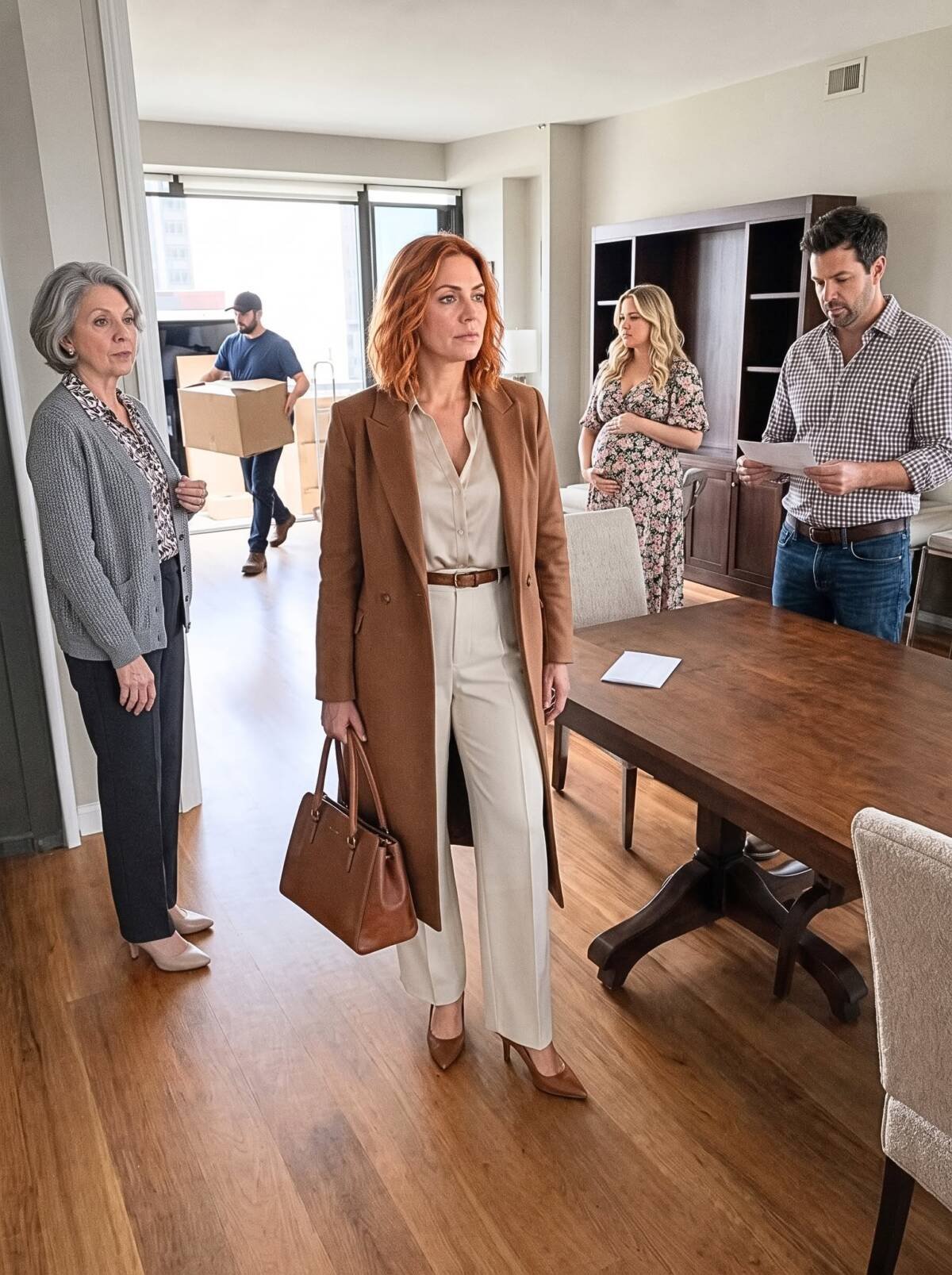
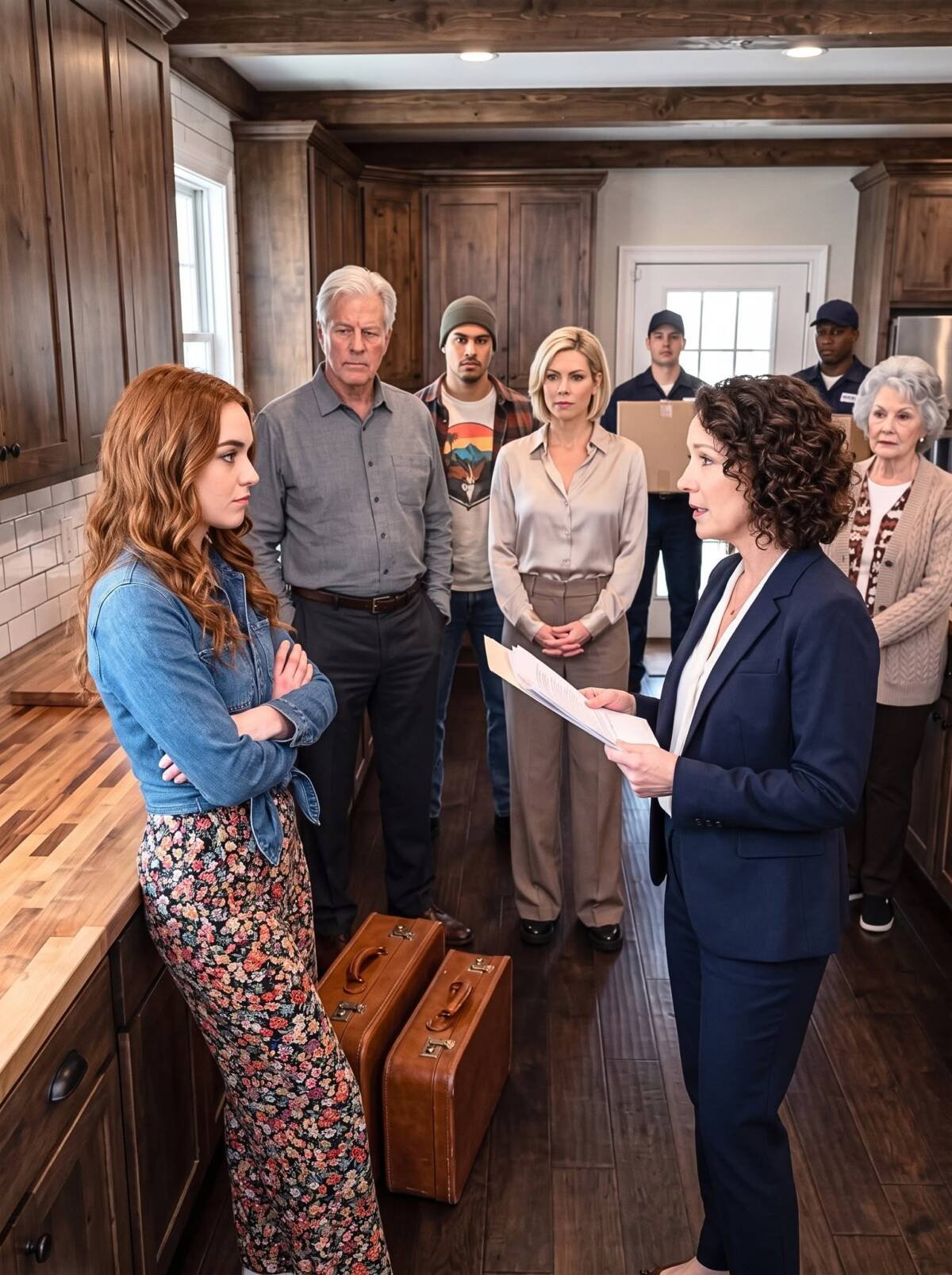
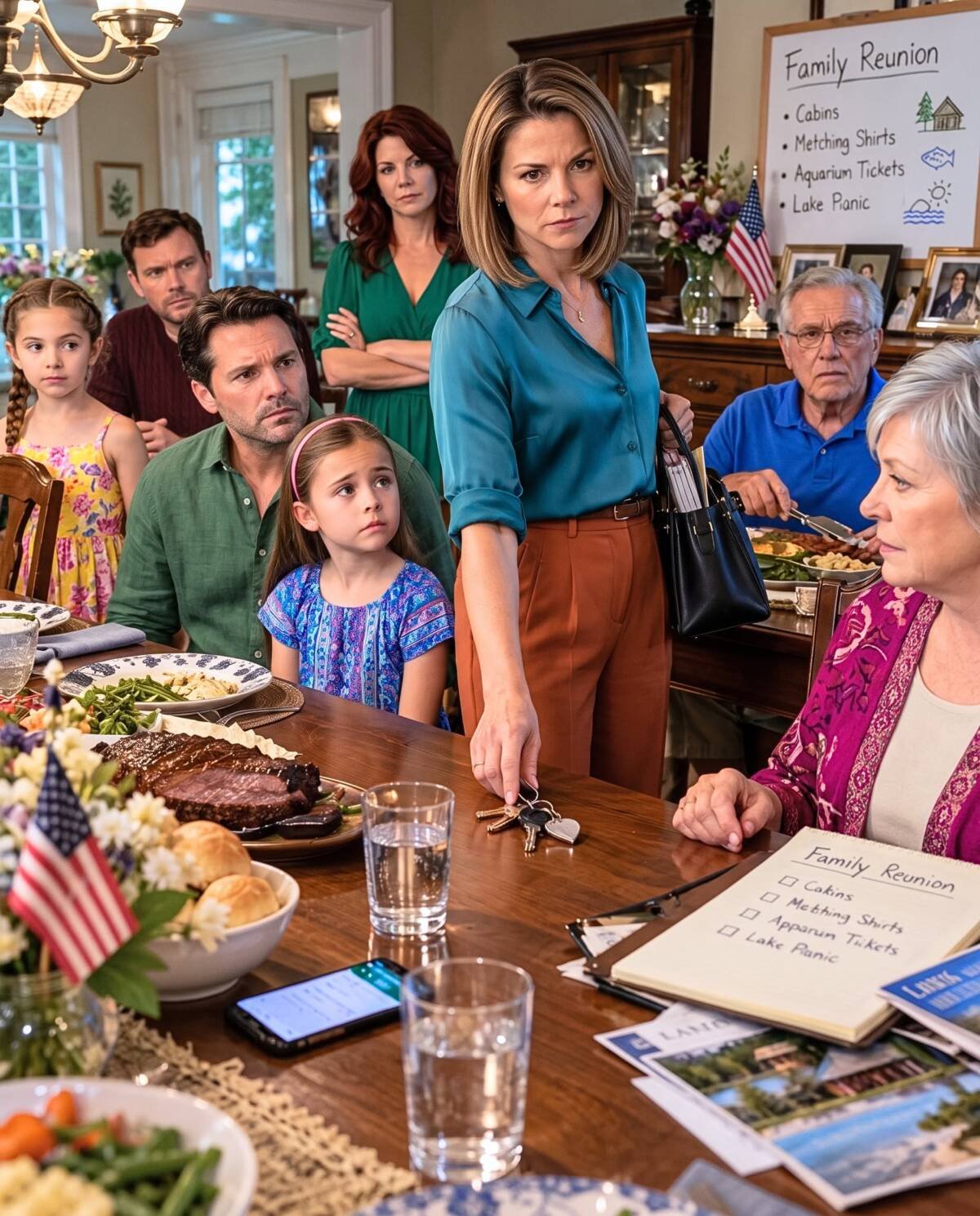
My mother opened the front door, looked at my two children standing on the porch, and quietly told us there was no room for them inside.
My nine-year-old son was holding a box containing a chocolate cheesecake. My seven-year-old daughter was clutching a handmade birthday card she had spent the entire morning decorating for her grandmother.
Inside the house, the dining table was already set.
There were white plates, folded napkins, crystal glasses, and enough food for everyone.
Everyone except us.
“There’s just no room here for any of you,” my mother whispered.
For a few seconds, I said nothing.
Then I looked at the table.
I looked at my sister and her three children sitting comfortably in their places.
I looked at my father at the head of the table.
Then I looked down at my own children.
That was the moment something inside me finally broke.
For years, I had been the responsible son. I paid bills when my parents were short. I helped with repairs. I sent money when they said the mortgage was behind. I convinced myself that helping my family was simply what a good son was supposed to do.
But my children were now standing outside a house I had helped keep financially afloat for nearly a decade.
So I took my son’s hand.
I took my daughter’s hand.
And I looked my mother directly in the eyes.
“You don’t get to turn my children away from a house I helped you keep.”
The room went completely silent.
But what my family didn’t know was that this was only the beginning.
Because within days, I would discover that the mortgage payments I had been making for years had not been used the way I thought they were.
And eventually, everyone would be forced to remember whose name was actually on the deed.
The Table That Had No Room
The words came out more calmly than I expected.
“You don’t get to make my children stand on the porch of a house I helped you keep.”
My mother stood just inside the doorway, one hand wrapped around the brass doorknob.
She was wearing the church dress she usually saved for special occasions. Her hair was carefully styled, and she had that familiar pleasant expression on her face—the expression she always wore when she knew someone might be watching.
From the sidewalk, everything probably looked perfectly normal.
A family gathering.
A Sunday dinner.
A grandmother welcoming relatives into her home.
But nothing about that afternoon felt normal to me anymore.
Behind my mother, I could see the dining room.
The table was beautifully arranged.
White plates.
Folded napkins.
Crystal glasses.
Serving dishes filled with food.
At the head of the table sat my father, Richard Thompson, still carrying himself like the construction foreman he had been for most of his life.
My sister Melissa was sitting several seats away with her three children.
They were already eating.
Comfortable.
Welcome.
Inside.
My children were outside.
Tyler, who had just turned nine, was holding the cheesecake we had picked up on the way over. He was holding it with both hands, carefully protecting the bakery box as if it contained something priceless.
Beside him stood Emma, seven years old, holding a handmade card.
She had spent the entire morning making it.
The front was covered with foam hearts and crooked stars. Inside, in large uneven letters, she had written:
“I love you Grandma.”
The first letter of one of the words was backward.
She had been incredibly proud of it.
She had talked about giving it to her grandmother all morning.
Now she was standing on the porch, staring at the woman she had made it for.
My mother leaned closer.
“Jack,” she whispered, “there just isn’t enough room.”
I looked at the dining table again.
There were plenty of chairs.
That wasn’t the point.
She wasn’t talking about chairs.
She was telling my children that there was no place for them.
And suddenly, all the memories came rushing back.
Birthdays.
Christmas dinners.
Thanksgiving.
Sunday lunches.
Family celebrations.
Every time I had driven across town because my parents needed help.
Every emergency transfer.
Every mortgage payment.
Every conversation in which my mother had told me how difficult things were.
I had always believed I was helping preserve the family home.
The house where I grew up.
The house where I had spent most of my childhood.
The house I thought belonged to my parents.
The house I thought I was helping save.
And now my children weren’t welcome inside it.
I looked toward my father.
He had been watching everything from the dining room.
He didn’t move.
He didn’t correct my mother.
He didn’t invite his grandchildren inside.
That silence told me more than any argument could have.
Behind me, Tyler spoke.
“Dad?”
His voice was so quiet that only I could hear him.
I turned toward him.
He wasn’t crying.
That somehow made it worse.
He was simply confused.
He didn’t understand why his grandmother was keeping us outside.
Emma looked down at the birthday card in her hands.
For thirty-eight years, I had been trained to smooth things over.
Apologize first.
Avoid arguments.
Keep everyone happy.
Send the money.
Fix the problem.
Be the responsible son.
And I had become so good at it that people called me easygoing.
What they really meant was that I had learned to swallow disappointment without making anyone uncomfortable.
But standing there beside my children, I suddenly realized something.
If I apologized again, I wasn’t just teaching myself to tolerate disrespect.
I was teaching my children that they should tolerate it too.
I stepped slightly in front of them.
“We’re leaving.”
My mother frowned.
“Don’t be ridiculous.”
“I’m not.”
“Jack, it’s a seating issue.”
I shook my head.
“No. It’s a pattern.”
Her expression changed.
She hated calm answers.
She preferred arguments because arguments could be dismissed as emotional.
But there was nothing emotional about what I was saying.
I was simply describing what had happened.
My daughter had been excluded.
My son had been excluded.
And everyone inside the house had watched it happen.
Emma quietly slipped her hand into mine.
Tyler tightened his grip around the cheesecake box.
From the dining room, Melissa laughed under her breath.
Then she spoke loudly enough for everyone to hear.
“Over chairs?”
I looked at the table.
Every place setting had already been prepared.
“This was never about chairs,” I said.
My father finally pushed his chair back.
The sound echoed through the dining room.
Years ago, that sound would have been enough to make me retreat.
My father had always been intimidating when he was angry.
But that day, something was different.
My son was watching me.
My daughter was standing beside me.
And for the first time, I wasn’t thinking about what my father wanted.
I was thinking about what my children needed.
My father walked toward the hallway.
“What did you just say to your mother?”
I met his eyes.
“We’re leaving.”
He stared at me.
Then I added:
“And starting today, I’m not sending another mortgage payment.”
Nobody moved.
Nobody spoke.
The entire atmosphere inside the house changed.
Because everyone knew exactly what that meant.
For years, my parents had depended on me financially.
And suddenly, I had turned off the faucet.
The Price of Being the Responsible Son
I took Tyler’s hand while Emma leaned against my side.
Together, we walked toward the car.
My mother remained in the doorway.
But what struck me most was where her attention went.
She wasn’t looking at Emma’s tears.
She wasn’t looking at the birthday card.
She wasn’t asking Tyler about the cheesecake.
She was looking toward the neighboring houses.
She seemed more worried about who might have witnessed the scene than about the two grandchildren she had just sent away.
“Come on,” I told the kids.
“Where are we going?”
“Let’s get burgers.”
Emma looked down at the card.
“Should I leave this?”
I stopped.
For one brief second, I looked back at my mother.
I wanted her to change her mind.
I wanted her to say the words every parent hopes to hear in a moment like that.
“Come inside.”
“I’m sorry.”
“Of course there’s room.”
“Grandma loves you.”
Anything.
Instead, she stood silently.
So I looked at my daughter.
“Take it with you.”
Tyler carried the untouched cheesecake to the SUV.
A few seconds later, my wife, Laura, stepped outside.
She had arrived separately because she had been helping with something earlier that afternoon.
One look at our faces told her everything.
She didn’t ask for an explanation.
She simply walked over, put an arm around Emma, and helped the children into the back seat.
As I buckled Emma in, she looked up at me.
Her eyes were filled with tears.
“Daddy?”
“Yeah?”
“Why doesn’t Grandma like us?”
That question changed my life.
Not because it was complicated.
Because it was simple.
A seven-year-old girl was trying to understand why her grandmother had decided there wasn’t enough room for her.
I brushed the hair away from her face.
“It isn’t because of you, sweetheart.”
“Then why?”
I took a breath.
“Sometimes grown-ups have problems they never learned how to fix.”
She nodded slowly.
She didn’t really understand.
Neither did I.
Not yet.
Tyler remained quiet during the drive.
He sat in the back seat holding the cheesecake box carefully on his lap.
Laura reached across the center console and rested her hand on mine.
Neither of us spoke for several minutes.
Finally, I said:
“We’re done.”
Laura didn’t ask what I meant.
She knew.
“Okay,” she said.
That one word meant more to me than any speech could have.
She didn’t say, “I told you so.”
She didn’t remind me that she had warned me for years.
She simply stood beside me while I finally made a decision I should have made a long time ago.
The kids voted for Five Guys instead of going straight home.
So we stopped.
We ate burgers in the parking lot.
Later that evening, we cut the untouched cheesecake ourselves and ate it from paper plates while watching a movie in the living room.
Emma’s birthday card ended up taped to our refrigerator.
Not my mother’s refrigerator.
Ours.
And somehow, that felt exactly right.
Then the Messages Started
My phone remained silent until Wednesday.
Then Melissa started texting.
Her first message said Mom was devastated.
The second accused me of humiliating the family.
The third claimed I had deliberately caused a scene.
By the seventh message, the story had completely changed.
According to Melissa, my children had been rude.
I had overreacted.
My parents were innocent.
And somehow, Laura was responsible for destroying the family.
I didn’t argue.
I didn’t respond emotionally.
Instead, I took screenshots.
For years, Laura had encouraged me to keep records.
She knew my family had an extraordinary ability to rewrite history whenever the truth became inconvenient.
So I created a folder on my phone.
I called it:
“Sunday Dinner.”
Inside it, I saved every message.
Every accusation.
Every demand.
Every explanation.
I also saved a photograph of Emma’s birthday card hanging on our refrigerator.
Then I opened my banking app.
For nearly ten years, I had been making monthly payments to help my parents with their mortgage.
The payments had become automatic.
I barely thought about them anymore.
They were simply part of my monthly routine.
I had always considered them my responsibility.
But now I started looking through the records.
One payment after another.
Month after month.
Year after year.
And suddenly, I realized how much money had left our household.
Money that could have gone toward our children’s education.
Our savings.
Home improvements.
Family vacations.
Our future.
Instead, I had been convinced that I was saving my parents’ home.
I canceled the payment.
My thumb hovered over the confirmation button.
For years, that money had been sent automatically.
Stopping it felt strange.
Almost wrong.
My entire identity had been built around being the person who helped.
The person who didn’t abandon family.
The person who stepped in when everyone else stepped back.
But then I remembered Emma standing on the porch.
I remembered Tyler asking me why we were leaving.
And I pressed “Confirm.”
Nothing happened.
The world didn’t collapse.
No sirens sounded.
Nobody appeared at the door.
The house didn’t disappear.
For the first time in decades, I simply stopped paying for a problem that wasn’t mine to solve.
The Brother Who Finally Told Me the Truth
The following week was strangely quiet.
My parents didn’t call.
Melissa’s messages stopped after I blocked her number.
Life at home became peaceful.
Every evening, our family gathered around our own dining table.
Every chair was available.
Nobody had to ask whether they belonged there.
One Friday afternoon, Tyler came home from school holding a drawing.
It showed our family sitting around a table.
There were four people.
Then I noticed another figure.
“Who’s that?” I asked.
“Uncle Kevin.”
I looked at him.
Kevin was my younger brother.
He had moved into our parents’ basement after his divorce, supposedly for a few months.
Two years later, he was still there.
He worked remotely and helped our parents with errands, repairs, and whatever else they needed.
“Why did you draw Uncle Kevin?” I asked.
Tyler shrugged.
“He looks sad at Grandma’s house.”
Children often notice what adults spend years pretending not to see.
That evening, I called Kevin.
“You okay?” I asked.
He was quiet.
Then he said:
“Are you?”
The question surprised me.
Nobody in our family ever started conversations by asking how I was doing.
“I think so,” I said.
“You?”
Another pause.
“Depends who’s asking.”
“Your brother.”
Kevin was silent for several seconds.
Then he said:
“Then no. Not really.”
We talked for nearly an hour.
It was probably the most honest conversation we had ever had.
Kevin told me my parents had spent the entire week calling me ungrateful.
My father had apparently insisted that I was making emotional financial decisions.
Melissa had visited twice.
And each time she left, she carried an envelope.
“What envelopes?” I asked.
Kevin hesitated.
“Cashier’s checks sometimes. Cash other times.”
“For what?”
“I don’t know everything.”
He paused.
“But Jack, I don’t think the money you’ve been sending is going where you think it is.”
I sat down.
“What do you mean?”
“The mortgage.”
“What about it?”
Kevin took a breath.
“I don’t think most of your money has been going toward the mortgage.”
My stomach tightened.
“What are you talking about?”
“I started noticing paperwork around the house.”
He explained that my father often left financial documents lying around whenever he was angry.
Kevin had started seeing patterns.
Payments.
Withdrawals.
Bills.
Transfers.
And then he began connecting them.
“The roof repair you paid for?” he said.
“Yeah.”
“That money covered part of Melissa’s car down payment.”
I didn’t speak.
“The water heater?”
“Yeah.”
“Credit card bills.”
I stared at the wall.
“What about the other payments?”
Kevin sighed.
“Some of them went toward other expenses. Some helped Melissa. Some went to bills. I don’t know every detail.”
My voice was barely audible.
“They told me the mortgage was behind.”
“I know.”
“They said they were going to lose the house.”
“I know.”
“For years?”
“I think so.”
I closed my eyes.
Everything suddenly looked different.
Every emergency.
Every urgent phone call.
Every request for money.
Every time my mother told me she didn’t know what they were going to do.
Every time my father said they were only asking because they had nowhere else to turn.
I had believed them.
I had trusted them.
And now I was beginning to understand that they had used my sense of responsibility against me.
They hadn’t simply accepted my help.
They had redirected it.
And they had kept me in the dark.
The Paperwork Changed Everything
After I hung up with Kevin, I couldn’t sleep.
I opened the folder containing my bank records.
Then I started going through everything.
One transfer at a time.
I compared dates.
Amounts.
Messages from my parents.
Receipts.
Repair requests.
Emergency explanations.
And the more I looked, the more uncomfortable the pattern became.
There were too many coincidences.
A payment for a supposed plumbing emergency had occurred shortly after Melissa purchased something expensive.
Another transfer supposedly needed for the house came shortly before she had mentioned being behind on bills.
Another payment was supposedly for an urgent home repair.
Yet I couldn’t find corresponding evidence that the repair had actually been made.
I had spent years trusting my parents’ explanations without questioning them.
Because questioning them would have meant admitting something I didn’t want to admit.
That maybe I wasn’t helping.
Maybe I was being used.
The next Monday, I began researching the property records.
And that’s when I found something I had never fully understood.
The deed.
My name was on it.
Years earlier, when my parents had been struggling financially, I had helped restructure the mortgage and had been added to the property documentation.
At the time, my father had told me it was simply a technical arrangement.
“You’re our son,” he had said.
“It’s still the family home.”
I hadn’t thought much about it.
I certainly hadn’t imagined that one day it would matter.
But now it mattered.
A lot.
The house my mother had just used to tell my children there was no room for them was not simply a house my parents had been allowing me to help pay for.
I had a legal ownership interest in it.
And suddenly, the sentence I had spoken at the front door carried an entirely different weight.
“You don’t get to turn my children away from a house I helped you keep.”....