Introduction: The Scent of Antiseptic and Betrayal
The hospital room still carried that sterile, unforgiving scent—a suffocating mix of clinical antiseptic and something faintly sweet, lingering like an uninvited ghost, probably the residue of baby formula warming under a fluorescent light. I was lying in a narrow, mechanical bed that felt far too cold, staring blankly at the empty bassinet sitting beside me. Its vacant frame mocked my grief, a cruel reminder of arms that should have been full but were now agonizingly, terrifyingly empty.
Footsteps echoed softly on the linoleum floor. The doctor stepped near the foot of my bed, his face pale and drawn, carrying the heavy burden of words no mother on earth should ever have to hear.
“I’m sorry,” he said, his voice barely above a whisper. “We did everything we could.”
My newborn son, Evan, was gone. Just like that, hours after he had taken his first breath into a world he barely had time to experience, he was taken away. My body felt hollow, echoing with a numbness that defied physics, while my arms physically ached, desperate for the weight of a child who should have been resting safely against my chest. The world outside the window kept moving, cars passing by on the highway, indifferent to the fact that my universe had just collapsed into absolute nothingness.
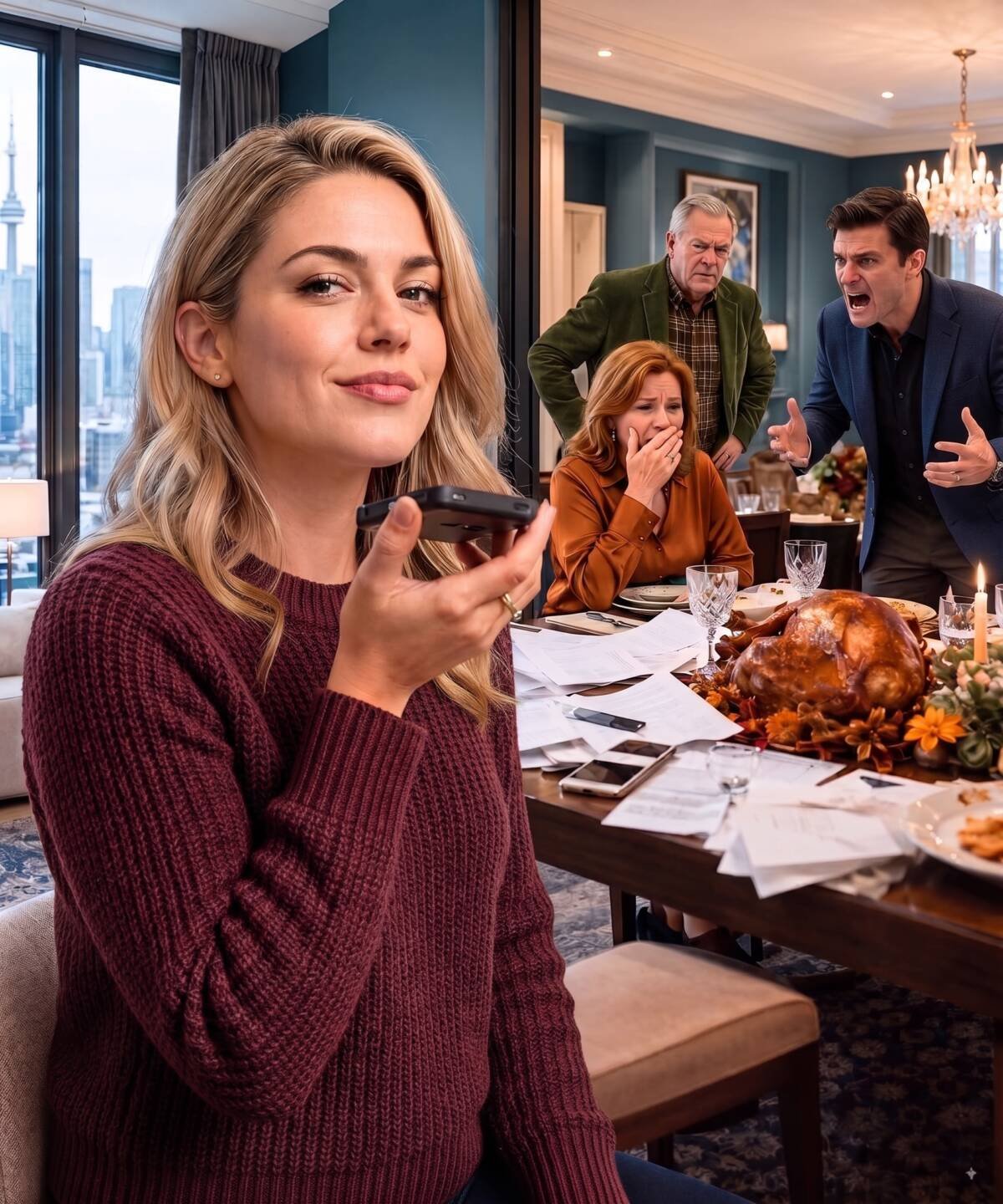
Across the room stood my mother-in-law, Margaret Collins.
While everyone else seemed paralyzed by the shock and tragedy of the moment, Margaret’s expression was disturbingly alien. There was no grief in her eyes, no sorrow, no empathy. Instead, her face held something that looked sickeningly close to profound relief—the look of a person watching a difficult task finally reach its conclusion.
She leaned slightly toward her daughter, Claire, whispering—though she pitched her voice just loud enough to cut straight through my numbness and echo in the silent room.
“God saved this world from your bloodline.”
The words struck me like physical blows. Claire didn’t recoil. She didn’t gasp, nor did she tell her mother to have a shred of decency. She simply tightened her lips into a hard line and gave a cold, small nod of agreement.
Instantly, my head snapped toward my husband, Daniel. In that moment of absolute devastation, my soul cried out for him to defend me, to stand between me and the cruel venom of his family, to prove that our vows meant something.
Instead, Daniel avoided my eyes. He turned his head slowly toward the window, fixing his gaze on the parking lot below, standing completely silent and motionless.
That silence hurt almost as much as Margaret’s vile words. Our child had just been declared dead, yet I was standing—and falling—entirely alone inside my own grief.
Then, from the corner of the room, a small movement broke the agonizing stillness.
My eight-year-old son, Noah, quietly climbed down from the plastic chair where he had been sitting, clutching a box of crayons. He walked slowly toward the nurse’s cart parked near the door, his curious eyes inspecting the medical trays and the small bottles sitting neatly upon the surface.
He turned around, holding a tiny, clear bottle in his small hand.
“Mom?” he asked, his innocent voice piercing the heavy, suffocating air of the room.
I turned my head toward him, my heart fracturing all over again.
“Should I give the doctor what Grandma hid in my baby brother’s milk?”
The entire room went dead, absolute silent. Little did any of us know in that precise second, an eight-year-old boy had just pulled the first thread on a tapestry of lies, murder, and calculated deceit that would unravel a family forever.
Part 1: The Night Everything Changed
Margaret’s face instantly lost every drop of color, turning a chalky, sickly grey. Claire gasped, clapping her hands over her mouth, while Daniel spun around from the window so quickly he nearly knocked over a metal chair behind him.
The doctor crossed the room in two long strides, stopping right in front of Noah. His voice was urgent, laced with sudden panic.
“What did you say, son?”
Noah looked up, completely confused by the sudden shift in the room’s energy. To him, he wasn’t exposing a crime; he was simply reporting something an adult had instructed him to keep secret, treating it like a harmless game or a whispered rule.
“Grandma said it was medicine,” Noah explained, tilting his head with innocent confusion. “She told me not to tell anyone. She put it in the bottle when the nurse wasn’t looking. She said it would help Evan sleep.”
“He’s lying!” Margaret shrieked, her voice suddenly losing its composed veneer, replaced by the sharp, hysterical pitch of absolute terror. “The boy is confused! He’s making things up in his grief!”
A nurse, reacting on sheer instinct, darted forward and pulled the nurse’s cart away, securing the trays. She looked directly at Noah.
“Which bottle was it, sweetie?”
Noah pointed a small, steady finger toward a specific glass bottle sitting near the back of the tray.
Within minutes, the sterile environment of the hospital transformed into a scene of absolute chaos. Hospital security guards appeared at the doorway, blocking entry and exit. Staff members began making urgent, frantic phone calls, and within half an hour, two local police officers arrived.
Margaret was escorted out into the hallway, protesting loudly, screaming that everyone had misunderstood her, that she was a respected woman, that her family was being torn apart by lies. Claire followed close behind her, weeping hysterically, insisting over and over that there had been some terrible, catastrophic mistake.
Daniel remained inside the room. His hands were shaking violently as he stared at me, repeating my name like a broken record, but his voice sounded distant, hollow, and utterly foreign. I couldn’t look at him. I couldn’t breathe.
The hospital administration immediately sealed the room, secured the nurse’s cart, and confiscated the bottle Noah had pointed out. Toxicology testing was ordered on an emergency basis. Within hours, the preliminary results identified a heavy dose of a potent prescription medication mixed into Evan’s milk—a drug that hospital records quickly confirmed Margaret Collins had been prescribed and taking for years.
For an adult, that dosage might have caused severe lethargy or dizziness. For a newborn infant, weighing barely six pounds and only hours old, investigators told us it would be catastrophic, shutting down developing organs within minutes.
It hadn’t gotten into the bottle by accident. There was no cross-contamination, no mix-up in the pharmacy. Someone had deliberately poured it in.
When interrogated by detectives that very night, Margaret dropped all pretenses of polite society. She admitted to her actions, but instead of showing remorse, she offered a chilling, twisted justification. She claimed she had been acting to “protect the family.” She pointed to my past struggles with postpartum depression from years prior—issues I had long since overcome—and weaponized them, arguing that my “tainted bloodline” meant I was unfit to raise a child, and that she had merely stepped in to prevent a disaster.
The police arrested her before dawn.
Claire was questioned separately for hours. Under pressure from investigators, she eventually admitted that she had witnessed Margaret standing by the nurse’s cart and had realized what was happening, yet she had chosen to remain entirely silent. Her silence wasn’t fear; it was complicity.
Daniel’s questioning revealed an even darker, more agonizing truth. Under intense cross-examination by detectives, Daniel broke down and confessed something that shattered whatever fragile remnants of our marriage were left.
His mother had opposed our marriage from the very first day. She had spent years whispering in his ear about my family history, warning him about “tainted genetics” and weak bloodlines. And Daniel? Daniel admitted he had known how extreme, how unhinged his mother’s beliefs had become. He had seen the warning signs mounting for months, yet he had never warned me, never protected me, and never stood up to her—hoping, cowardly, that the problem would simply manage itself.
That was when the horrifying reality set in with brutal clarity.
Evan hadn’t been lost to a tragic, unexplained medical anomaly. He had been murdered.
Someone inside our own family—someone who sat at our dinner table, smiled at our celebrations, and pretended to share in our joy—had made a calculated, deliberate choice to steal my son’s life.
And my eight-year-old son, sitting quietly with his crayons, had been the only one with the courage to expose the secret they thought would disappear forever into the silence of a hospital room.
Part 2: The Aftermath and the Trial
The days and weeks following Margaret’s arrest passed in a blur of police interviews, social workers, legal forms, and media frenzy. News vans materialized outside our home and the hospital, turning our private agony into public entertainment. Strangers online debated our family history, treating our grief as a true-crime podcast script they could dissect from the safety of their living rooms.
I spent every waking moment shielding Noah. We sat with hospital social workers who gently debriefed him, praising his quick thinking, though Noah remained mostly quiet, trying to process why adults could be so cruel.
One afternoon, while a social worker was checking on us, Noah looked up with those big, solemn eyes and asked a question that broke my heart into a million irreparable pieces.
“Is Evan cold?” he asked softly.
He wasn’t thinking about criminal charges, prison sentences, or courtrooms. He was simply an eight-year-old boy wondering if his baby brother had a blanket in the dark.
Daniel moved out of our house within a week. I didn’t ask him to stay, and he didn’t have the courage to fight for it. Every time I looked at him, I didn’t see a grieving father; I saw the man who had turned his back and stared out a window while his mother spat venom at me over the body of our dead child.
The trial began several months later, stretching across eight grueling, emotionally draining months. Margaret showed zero remorse throughout the proceedings. She sat in the courtroom with a stiff posture, completely unbothered by the testimony detailing how a newborn’s organs had failed, but she flew into quiet rages whenever her social standing, her reputation, or her family name was dragged through the mud.
The evidence was overwhelming. The jury deliberated for less than four hours before returning a verdict of guilty on all counts. The judge didn’t hesitate: Margaret Collins was sentenced to life imprisonment without the possibility of parole.
Claire accepted a plea agreement midway through the legal proceedings, trading cooperation for a reduced sentence, which ultimately landed her five years behind bars for conspiracy and concealing a felony.
Before the final paperwork was signed, Daniel approached me outside the courthouse one brisk morning. His eyes were red-rimmed, his shoulders slumped under the weight of his own cowardice. He asked me a single question, his voice trembling:
“Do you think… could you ever forgive me?”
I looked at him, feeling an overwhelming, numbing calm wash over me.
“Forgiveness and trust aren’t the same thing, Daniel,” I replied quietly. I turned away, and that was the last conversation we ever had.
Seeking distance from the suffocating memories of Virginia, Noah and I packed our lives into a few suitcases and moved across the country to a quiet, rainy town in Oregon. We found a modest house tucked away near a line of towering pine trees, featuring a spacious backyard where the afternoon sunlight filtered through the leaves.
It was here that we began the painstaking process of rebuilding.
Noah never stopped talking about Evan. On sunny afternoons, he would sit on the grass and talk out loud, imagining teaching his little brother how to ride a bicycle, or wondering what kind of superheroes Evan would have liked. I never once told him to stop. Keeping Evan’s memory alive was the anchor that kept our family from drifting away completely.
Professionally, I redirected my shattered life into advocacy. I began working closely with patient safety groups and hospital administrators, pushing for rigorous, uncompromising access protocols in newborn care units across the country. Eventually, Evan’s name became officially attached to one of the most successful pediatric safety bills passed that decade—ensuring that no nurse’s cart could ever be left unsupervised long enough for tragedy to strike again.
Daniel continued sending tentative greeting cards through lawyers for the first few years. Margaret sent dense, manipulative letters from her maximum-security prison cell.
I opened none of them. I burned them unread, letting the ashes drift away in our backyard fire pit.
People often told me I was remarkably strong. But I knew the truth: what they called strength was actually hyper-vigilance. I was permanently alert, wired to a frequency where I could never again forget how quickly trusted faces could hide monsters beneath the polite language of family.
And whenever I happened to catch sight of a medical cart in a clinic or doctor’s office, time would stutter, and I would see Noah standing beside one in a Virginia hospital, asking a question that changed the world.
None of us knew then that the truth he uncovered that night was still not finished with us.
Part 3: The Recording Noah Forgot
For nearly three years, Oregon provided a sanctuary of peace, routine, and healing. Our days were filled with school drop-offs, homework at the kitchen island, and quiet evenings listening to the steady drumming of Pacific Northwest rain against our roof.
Then, a certified letter arrived from an estate attorney in Virginia.
Daniel’s father—who had passed away years prior—had established a substantial, complex trust fund. The legal provisions dictated that if Margaret ever became legally incapacitated or imprisoned for a felony, her share of the estate would automatically bypass her and flow directly down the family line. Because Evan was gone and Daniel had been legally disinherited and divorced, Noah was now the primary, sole beneficiary of a multi-million-dollar trust.
I wanted nothing to do with it.
“We are sending it back,” I told the lawyer over the phone. “I don’t want a single dime of that money. It is stained with blood.”
The attorney sighed on the other end of the line, explaining the legal complication: outright refusal was legally complex, especially because Margaret—from her prison cell—was actively attempting to challenge the trust’s restructuring to siphon funds toward a desperate legal appeal.
The terrifying prospect of Margaret ever securing funds to fight her conviction brought the hospital room rushing back into my nightmares. I realized then that Noah’s innocent question had exposed her crime, but it hadn’t permanently severed her reach. Protecting my son meant I had to confront the past head-on.
I flew back to Virginia alone, walking into the bleak, high-security visiting room of the state penitentiary.
Margaret looked older, thinner, and worn down by the fluorescent glare of the prison, but the cold, arrogant judgment in her eyes remained entirely untouched.
“You’re teaching him to hate me, aren’t you?” she spat out before I even sat down. “You’ve taken my freedom, my daughter, my son, and now you’re trying to steal my husband’s legacy.”
“I don’t want your money, Margaret,” I replied, my voice steady and cold. “If Noah receives the trust, every single cent is going directly toward national neonatal safety initiatives. You will never see a penny of it to fund your pathetic appeals.”
Margaret slammed her hand against the thick glass partition, her face twisting in fury.
“Daniel called me!” she shouted, drawing the sharp glare of a nearby guard. “He cries every night! He begged me for the truth, and I told him what I told Noah: I did what had to be done to save our family from your poison!”
“No, Margaret,” I said softly, standing up from my chair. “You did what you wanted to do because of your own sickness. That is why you are sitting in a cage, and that is why you will die completely alone.”
I turned my back and walked out of the visiting room while she shrieked obscenities behind the glass, knowing with absolute certainty that I would never set foot in this place again.
On the flight back to Oregon, however, Noah—now ten years old, observant, and quiet—reached into his backpack and pulled out an old, beat-up plastic toy. It was a cheap children’s voice-recording gadget he had owned back when he was eight.
“Mom,” he said softly, holding up the device. “Do you remember the night in the hospital?”
“I remember every second, honey.”
“I found this in the bottom of my old storage box last week. I was playing with it right before the police came into your room. I think… I think I accidentally left it recording when Grandma was talking to Aunt Claire in the hallway earlier that evening.”
My hands began to tremble violently as I took the small plastic toy from his palm. My breath hitched in my throat. With shaking fingers, I pressed the play button.
The audio was staticky and muffled, captured through the fabric of a backpack, but Margaret’s voice cut through the background noise with terrifying clarity:
“It’s better this way, Claire. The powder will make it look like respiratory failure. Natural. Clean. No one will ever question a fragile infant.”
And then, Claire’s nervous, high-pitched whisper replied:
“Pero… Mom… what if Noah sees something? What if he talks?”
Margaret’s cold, dismissive chuckle sent ice straight down my spine:
“He’s a child. He’ll believe whatever story I tell him to believe.”
The recording clicked off. Noah stared up at me with large, sorrowful eyes, handing me absolute, irrefutable proof that he had unknowingly carried the smoking gun of a premeditated murder inside a child’s toy for nearly three years.
Within twenty-four hours of landing in Oregon, I handed the device directly to the federal prosecutors handling our case.
The new evidence blew Claire’s defense completely out of the water. Her previous plea deal was immediately set aside by the court, and she was handed a much harsher, extended prison sentence for her active participation and conspiracy in the murder. For the first time, the Collins family could no longer hide behind the comforting lie that Claire had merely been a terrified, confused bystander caught in her mother’s wake.
As for the trust fund, we executed our original plan: every single dollar was redirected into the Evan Foundation, funding state-of-the-art infant protection technology in hospitals across the Pacific Northwest.
By the time Noah turned twelve, our backyard in Oregon was flourishing. We had built a small, beautiful garden filled with wildflowers surrounding a smooth stone bench bearing Evan’s name. Sometimes, I would watch Noah sit there in the evening silence, talking softly to the brother he never had the chance to grow up with.
“I told him about my soccer game today, Mom,” he would say when he came back inside.
He never called himself a hero. To him, he was simply Evan’s older brother, doing what any brother would do.
Yet, life was not done surprising us. Because years later, another letter arrived in our mailbox—carrying a final, shocking secret about Margaret that none of us could have ever anticipated.
Part 4: The Secret Margaret Had Buried
By the time Noah reached his fifteenth birthday, the legal battles, media storms, and courtroom drama surrounding Evan’s death felt like a lifetime away. Noah had grown tall, athletic, and bore a striking physical resemblance to Daniel—though thankfully, he possessed none of his father’s cowardice. He had the same sharp, observant eyes that had noticed something deeply wrong beside a nurse’s cart when he was just an innocent eight-year-old.
One rainy evening, as the Oregon storm lashed against our windows, I found Noah sitting at our kitchen island, staring down at an unopened envelope resting under the light. It bore a Virginia postmark, but it had bypassed my screening entirely, addressed directly to him.
“Claire is being released early on mandatory supervision,” Noah said quietly, not looking up. “She wants to see me, Mom. She claims she found something in Margaret’s personal effects… something that legally and historically belongs to Evan.”
Hearing Claire’s name spiked every survival instinct I possessed. Every protective fiber in my being screamed at me to grab the letter, burn it, and slam the door on the Collins family forever. But Noah wasn’t a frightened child anymore. He was nearly a young man, grounded, wise beyond his years, and possessing a quiet, unshakable strength.
He deserved absolute control over how this final chapter of his childhood was written.
“We go together,” I said softly, resting a hand on his shoulder. “And we go strictly on our terms.”
We met Claire at a sterile, neutral community center two hours outside of Portland. Prison had aged her terribly; the polished, arrogant confidence she once wore like designer armor as a member of the Collins family was entirely gone, replaced by trembling hands, grey-streaked hair, and a hollow, defeated posture.
She pushed a small, weathered wooden box across the metal table toward us.
“I didn’t stay silent because I wanted to,” Claire whispered, her voice cracking with suppressed emotion. “I stayed silent because I was terrified she would do the exact same thing to me. Margaret wasn’t a mother; she was a monster to everyone who ever lived under her roof, even Daniel.”
“Fear is never an excuse for murder, Claire,” I replied coldly.
“I know,” she wept softly. “I will live with that every day until I die.”
Claire explained that she had discovered the locked wooden box hidden deep beneath the floorboards of Margaret’s master bedroom closet while clearing out her estate after the trial. According to Claire, Margaret had stolen its contents from the hospital room before anyone even realized Evan had passed away.
Noah reached out and slowly lifted the latch of the box.
Inside rested a tiny, hand-knitted blue cap—the very first cap put on Evan’s head—and his hospital identification bracelet, preserved like relics in a shrine. But beneath them sat something stranger: a heavy, antique hand-painted locket containing a yellowed lock of hair belonging to a woman I had never seen before in my life.
Claire looked across the table straight at me, her eyes brimming with tears.
“That wasn’t your bloodline Margaret was actually terrified of,” Claire confessed. “She was terrified of her own.”
She unspooled a dark, long-hidden family history. The hair inside the locket belonged to Margaret’s own mother—a woman Margaret had quietly institutionalized in a private psychiatric facility decades earlier, aggressively erasing her existence to protect the pristine public reputation of the Collins family.
There was a profound, hereditary history of severe, debilitating mental illness running deep through Margaret’s side of the family—a dark genetic reality Margaret had spent her entire life desperately concealing. Instead of facing her own generational trauma, she had projected her psychotic obsessions with genetic “purity” and “weakness” outward, targeting me and my children to mask her own internal rot.
The revelation changed my entire understanding of the nightmare we had survived. Margaret’s vicious crusade against me had never truly been about protecting Daniel or ensuring family strength. She had spent her entire life terrified that someone would discover the very genetic instability she accused others of carrying. Evan had simply been sacrificed on the altar of her paranoid delusion—another target in a war she believed she could win by controlling everyone around her.
Noah picked up his baby brother’s hospital identification bracelet, running his thumb over the plastic lettering. He barely gave the locket a second glance.
“She didn’t save the world from us,” Noah said, his voice entirely steady, devoid of anger, filled only with profound pity. “She tried to save herself from the truth.”
He stood up, picked up Evan’s tiny blue cap and bracelet, and left Margaret’s locket sitting abandoned inside the wooden box on the table.
“Keep your secrets, Aunt Claire,” Noah said, looking down at her without malice. “We don’t need them anymore. We have Evan’s life. You and Margaret only have her ghost.”
Outside in the parking lot, the rain had stopped, leaving behind the crisp, clean scent of wet pine. Noah walked toward our car with his head held high. He was taller than me now, and watching him stride forward, I realized with absolute clarity that he was no longer carrying the toxic history of the Collins family as though it belonged to him.
Before climbing into the passenger seat, he pulled Evan’s tiny blue cap from his pocket, pressing it briefly against his face in a quiet, private salute to his brother.
“Mom?” he asked, looking over the roof of the car.
“Yes, sweetheart?”
“I want to change my name. Legally.”
I paused, holding the car keys. “To what, honey?”
“Noah Evans. I want to carry him forward with me everywhere I go, but I don’t want to carry them anymore.”
In that single, quiet moment on an Oregon afternoon, I understood everything. He wasn’t running away from his past; he was drawing a permanent, uncrossable boundary between the history he had inherited and the magnificent future he intended to build.
Part 5: The Name Noah Chose and the Legacy We Built
Noah’s legal name change was finalized on what would have been Evan’s seventh birthday. Instead of marking the day within the sterile, gray walls of a courthouse surrounded by ghosts of the past, we drove out to the wild, sweeping Oregon coast, watching the powerful Pacific waves wash endlessly over the sand, cleansing the shore.
Noah had chosen the name Noah Evans because he refused to let his brother be forgotten, while simultaneously casting off the heavy, blood-stained cloak of the Collins name. To some outsiders, a surname change might have seemed merely symbolic; to Noah, it was an armor of self-definition.
The years that followed transformed him into a remarkable young man. The quiet, observant eight-year-old boy who had once stood beside a nurse’s cart grew into an Ivy League-bound undergraduate preparing for medical school, with a hyper-focused ambition: pediatric toxicology.
When people asked him why he chose such a specific, intense field, his answer was always the same, delivered with a calm, disarming smile:
“I want to catch the things other people miss.”
Daniel’s life, by contrast, spiraled downward into quiet obscurity. He spent years drowning in the crushing guilt of his own silence, haunted by the reality that he had recognized his mother’s deadly extremism yet lacked the spine to stop it. He isolated himself entirely, passing away quietly several years later after a prolonged battle with alcohol and self-destruction. In his final will, he left his remaining personal assets to Noah, hoping against hope that an inheritance could serve as a final, desperate apology for everything he had broken.
Noah didn’t keep a single dollar of it. Every cent was immediately redirected into establishing a state-wide scholarship program for at-risk youth and children growing up in broken, volatile homes.
“I don’t want a legacy that was bought with silence,” Noah told reporters who tried to cover the donation.
Margaret eventually died in her prison cell, a forgotten, withered shell of the imperious woman who once thought she could dictate who lived and died. When the prison authorities called to ask about arrangements, no one from our family stepped forward to claim her remains. She vanished into an unmarked pauper’s grave, swallowed by the very obscurity she had spent her life terrified of.
For years, I had wondered what I would feel when that final phone call came. Relief? Vengeance? Satisfaction? Perhaps even a strange, misplaced forgiveness?
Instead, when the news arrived, I felt almost nothing at all.
Margaret had already stolen enough years, enough joy, and enough peace from our lives. I refused to give her another second of my mental real estate simply because her breathing had finally stopped.
Evan remained woven into the very fabric of our daily lives, not through grief, but through purpose. The hospital advocacy network bearing his name continued to push nationwide safety regulations, saving countless infants from institutional negligence. And our backyard garden in Oregon became a sanctuary where wildflowers bloomed in riotous colors around the smooth stone bench.
Tonight, the weekend air is crisp, and Noah is home from university. I am sitting quietly on our front porch, wrapped in a woolen shawl, listening to the soft murmur of the wind through the pines. Through the warm, glowing window of the kitchen, I can hear Noah cooking dinner, humming a tune while pots clatter softly on the stove.
Suddenly, I hear him laugh out loud—a rich, booming, unburdened sound that fills the house with light.
That laughter stops time. It pulls me backward across the decades, landing me squarely back in that freezing hospital room in Virginia.
I remember the empty bassinet. I remember Margaret spitting venom about my bloodline while Claire silently nodded. I remember Daniel turning his back toward a parking lot when I needed him most.
But most of all, I remember Noah.
I see him standing at eight years old, pointing a small finger toward a medical cart.
“Should I give the doctor what Grandma hid in my baby brother’s milk?”
One single, innocent question had shattered a vault of lies, exposed a calculated murder, forced Claire to face justice, revolutionized hospital safety protocols across the nation, and forged the extraordinary man Noah had chosen to become.
Margaret had staked her entire existence on the belief that family legacy was an unbreakable chain forged through genetics, social status, and a respected surname. She had killed to protect that illusion, destroying the very family she claimed to cherish above all else.
Noah taught me a completely different truth.
Legacy is not something inherited in the blood; it is what we consciously choose to carry forward into the light.
He kept his brother’s memory alive while discarding a toxic name. He turned inherited blood money into educational opportunities for vulnerable children, transforming the most horrific trauma of his childhood into an unwavering shield to protect those who could not protect themselves.
Out on the horizon, the sun sinks completely behind the dark silhouette of the Oregon pines, while the wildflowers wave gently in the cool evening breeze. For the very first time in my life, the sharp, antiseptic smell of that hospital room no longer feels close enough to follow me.
I take a deep, slow breath, inhaling the scent of rain, damp earth, and the dinner cooking inside our home.
Margaret once believed the truth would destroy our family.
Instead, the truth was what finally set us free.
What Do You Think?
If you found yourself standing in the wreckage of an unimaginable betrayal, where would you find the strength to rebuild? Could you break free from the ghosts of the past, or would the shadows hold you back? Drop your thoughts in the comments below, and share this story to honor the memory of those we’ve lost and the children who show us the true meaning of courage.