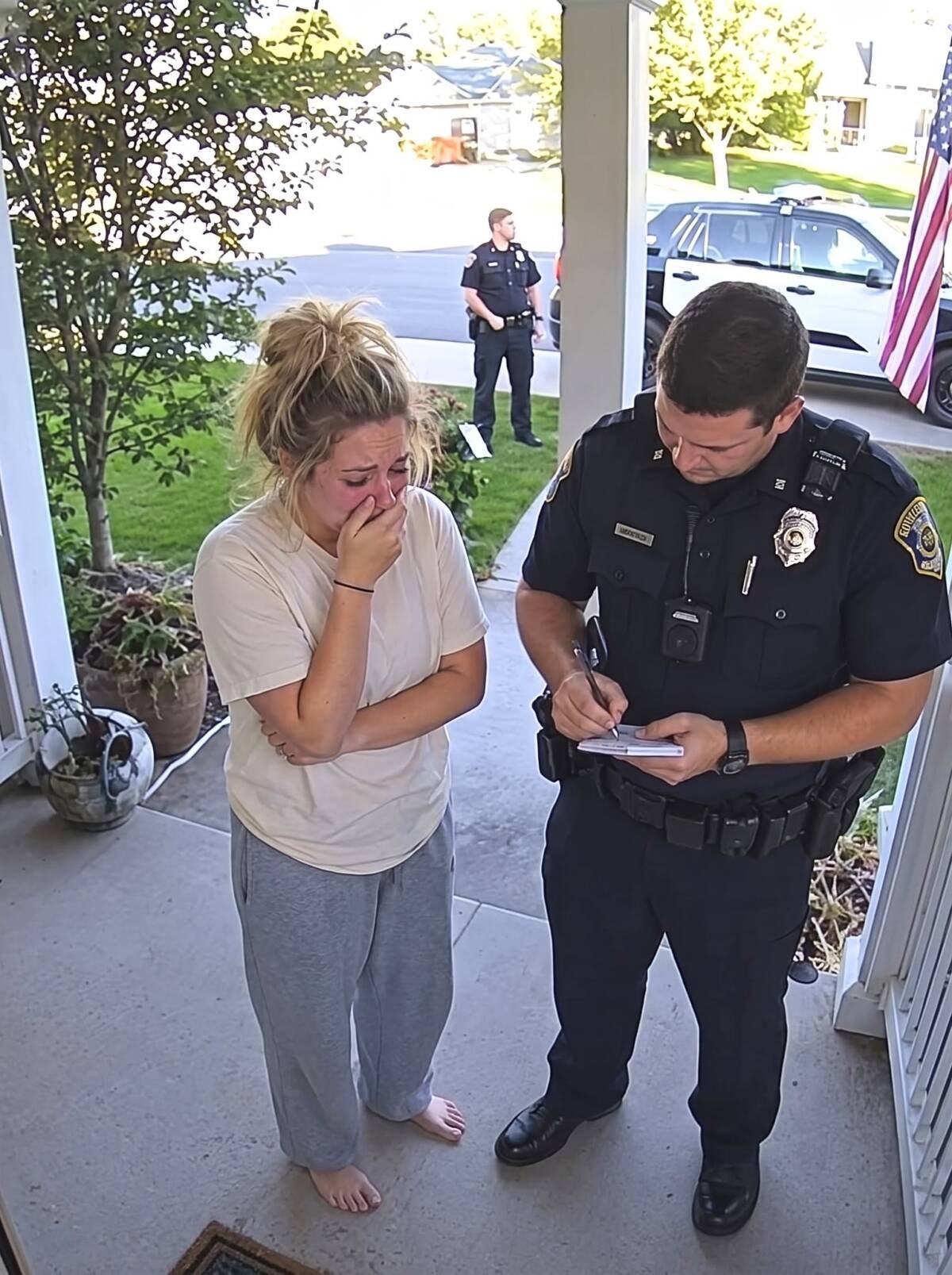
Less than twenty-four hours after the judge signed my final divorce decree, I logged into my banking portal and permanently shut down my former mother-in-law’s platinum credit card.
She found out in the most public way imaginable—standing at a luxury counter inside Bergdorf Goodman while a sales associate politely informed her that the transaction had been declined. Twice.
Before I had even finished my first espresso of the morning, my ex-husband was on the phone, shouting loud enough to rattle the speaker. He was furious that I had humiliated his mother in front of half the Upper East Side.
What neither of them realized was that they weren’t intimidating the quiet, accommodating woman who had spent five years funding their lifestyle just to keep the peace. They were threatening a senior U.S. Army officer who had spent years quietly documenting every dollar they had taken—and who was about to uncover a secret that reached far beyond a single declined card.
The Morning the Platinum Card Died
“What the hell did you do, Marissa?”
Anthony’s voice exploded through the receiver before I could even say hello. The ink on our divorce settlement was barely dry, yet somehow he still operated under the assumption that ending our marriage had not ended my financial obligations to his family.
“My mother’s platinum card was declined at Bergdorf Goodman!” he shouted, the background noise of Manhattan traffic humming behind him. “Do you have any idea how humiliating that was? Half the Upper East Side watched her get treated like a common criminal!”
I stood beside my kitchen island, watching pale morning sunlight scatter across the glass towers of Midtown. For the first time in five years, my pulse didn’t spike at the sound of his anger. I didn’t scramble for an apology or rush to smooth over a crisis I hadn’t created.
Instead, I took a slow sip of espresso and thought about the last sixty months.
Five years of designer handbags, private styling appointments, first-class flights, exclusive spa memberships, salon visits, and last-minute “emergencies” that always seemed to end at a boutique on Fifth Avenue. Eleanor Whitmore had happily spent tens of thousands of dollars of my money while telling anyone within earshot that I had never been quite polished enough for her son.
To Eleanor, I had never been a daughter-in-law. I had simply been a credit limit without a ceiling.
“They didn’t treat your mother like a criminal, Anthony,” I said evenly. “They reminded her of a very basic rule.”
He paused, thrown off by the steadiness in my voice. “What rule?”
“If your name isn’t on the account, you don’t get to spend the money.”
Silence stretched across the line. For years, I had swallowed the words that came next because keeping peace inside our marriage had always required me to surrender something first—my time, my boundaries, my patience, or my paycheck.
“The divorce was finalized yesterday,” I continued calmly. “Eleanor is your mother. She stopped being my financial responsibility the moment the ink dried. If she still wants Chanel handbags on Fifth Avenue, you’ll have to figure out how to pay for them yourself.”
I ended the call before he could launch into another tirade and blocked his number on the spot.
For the first time in half a decade, my apartment fell completely quiet. There was no passive-aggressive sigh waiting in the next room, no financial demand disguised as a family tradition, and no quiet guilt hovering over every choice I made.
That evening, I uncorked a bottle of Amarone I had been saving for a special occasion, ordered dinner from a small Italian place Anthony had always dismissed as “too casual,” and sat by the floor-to-ceiling windows watching the skyline light up. For the first time since my wedding day, freedom didn’t feel like an abstract concept. It felt solid.
The Secret They Never Thought to Question
There was one critical detail neither Anthony nor Eleanor had ever understood about me.
Anthony had spent our entire marriage believing I worked as a high-level executive consultant for private government contractors. Eleanor preferred telling her social circle that whatever financial success I had achieved was mostly a matter of lucky timing and good connections.
Neither of them knew the truth.
For more than twelve years, I had served as an active-duty officer in the United States Army. My assignment wasn’t a standard administrative post. I held the rank of Colonel inside a specialized, highly classified command responsible for strategic national-security operations.
Because of the sensitivity of my work, very few people outside senior defense leadership knew my actual rank, my clearance level, or where I went when I disappeared overseas for weeks at a time. When Anthony and I met, I gave him the approved civilian cover story—executive consulting for defense-adjacent firms—and over five years of marriage, he had never once cared enough about my career to ask a deeper question.
Sometimes, the most effective cover is simply letting arrogant people believe they already know everything about you.
At exactly 6:42 the following morning, violent pounding against my front door snapped me awake.
Twelve years of military conditioning erased the last trace of sleep before my feet even hit the hardwood floor. I slipped on a robe and walked quietly toward the entryway as another barrage of blows rattled the heavy walnut door.
Then Eleanor’s voice echoed down the corridor.
“OPEN THIS DOOR RIGHT NOW, MARISSA!”
A beat later, her tone sharpened into pure venom. “You spoiled little gold digger!”
I stepped up to the wall-mounted security monitor beside the foyer. On the high-definition feed, Eleanor stood inches from the lens, her coat slightly askew and her face flushed with fury. Anthony stood half a step behind her, staring impatiently at the door with his jaw clenched, as though sheer proximity and volume would force me to unlock it.
He still believed intimidation worked on me. Worse, he still believed I was the same woman who had spent five years apologizing just to stop an argument from escalating.
He had no idea how wrong he was.
I walked back into the dining area, where my stamped divorce decree rested beside a thick black binder. Inside that binder were five years of meticulously organized bank statements, wire confirmations, itemized credit card logs, and timestamped receipts. Every unauthorized luxury purchase Eleanor had made. Every “temporary” transfer Anthony had promised I would never miss.
I had started building that file long before either of them realized I was paying attention.
Out in the hallway, Eleanor hammered against the wood again.
“Open this door! You owe this family!”
I looked down at the black binder and allowed myself a quiet, measured smile. It wasn’t satisfaction at their panic—it was clarity. They were standing outside my home completely convinced they were cornering a helpless ex-wife.
Within hours, they were going to learn that the woman they had treated like an unlimited ATM had never been powerless at all.
Behind the Polished Walnut Door
I did not open the door.
For nearly a full minute, I stood in the stillness of my living room while Eleanor continued striking the walnut surface as if she still held a deed to my home. On the security monitor, Anthony leaned in and muttered something too low for the hallway microphone to pick up. Eleanor whipped her head toward him and snapped back.
That was when I noticed it.
Beneath the theatrical outrage, the hand clutching her designer handbag was visibly trembling. The declined card at Bergdorf Goodman hadn’t just embarrassed her.
It had terrified her.
Eleanor Whitmore had constructed her entire identity around the certainty that doors opened automatically because she deserved whatever sat behind them. One canceled piece of plastic and one locked apartment door had suddenly exposed a truth she couldn’t bear to face: the lifestyle she treated as a birthright had always depended on someone else’s paycheck.
I picked up my phone and dialed the front desk.
“Good morning, Miss Vale,” Thomas, the head concierge, answered on the first ring.
“Good morning, Thomas. My ex-husband and his mother are outside my door. They are not welcome here.”
There was a brief, professional pause. “Understood. Would you like building security to escort them off the property?”
“Yes, please. Quietly and calmly.”
“Right away, ma’am.”
I set the phone down and returned my eyes to the monitor. Anthony stepped directly in front of the camera, his expression hardening into the familiar mask of controlled disappointment he had used on me for years.
“Marissa, I know you’re standing right there,” he said evenly. “You’re only making this worse for yourself.”
I recognized the playbook instantly. Throughout our marriage, Anthony had rarely needed to shout. He had perfected a quieter method: a mixture of disapproval, subtle pressure, and carefully timed guilt that made me retreat before a disagreement could turn ugly.
This time, I didn’t retreat. I walked to the dining table and opened the black binder.
The first tab laid out five years of marriage reduced to cold, indisputable math. Eleanor’s entries followed a predictable rhythm—designer boutiques, Italian linens, private-club lunches, and custom jewelry repairs for pieces she routinely claimed were Whitmore family heirlooms.
Anthony’s section was harder to read, not because the numbers shocked me, but because of the sheer calculation behind them. There were recurring transfers into accounts I had never heard of, large cash withdrawals during supposed out-of-state conferences, monthly payments for a leased luxury sedan he claimed belonged to a business partner, and generous donations made in our names to Manhattan charities where Eleanor desperately wanted a seat on the board.
Every date carried a memory.
I saw the charge from the morning I returned exhausted from a three-week overseas deployment, only to find Eleanor hosting a catered brunch in my living room without asking. I saw the charge from the night Anthony canceled our anniversary dinner—claiming I had been “too emotionally distant”—while paying for a private suite at a downtown hotel that exact same evening.
And I saw the winter morning Eleanor criticized my posture over coffee, remarking that I didn’t carry myself like a woman of refinement. Before noon that day, she had put a $4,000 cashmere coat on my credit card.
I hadn’t kept these records out of spite. In my line of work, you learn early that documentation is the only reliable defense when people try to rewrite history.
On the monitor, the elevator doors slid open. Two uniformed security officers stepped into the hallway, with Thomas walking calmly behind them.
“Mrs. Whitmore,” Thomas said smoothly, “Mr. Whitmore. I’m going to have to ask you to leave the residential floor.”
Eleanor spun around, her eyes wide with disbelief. “Do you have any idea who I am?”
Thomas didn’t blink. “Yes, ma’am. And you are not on the approved visitor list.”
Anthony pointed sharply toward my apartment. “That is my wife’s residence.”
“Ex-wife,” Thomas corrected politely.
That single word landed harder than any argument could have. Something shifted behind Anthony’s eyes. Despite signing the settlement, sitting through mediation, and watching the lawyers finalize the decree, some stubborn part of him had clearly believed our separation was temporary—that once I cooled off, I would step neatly back into the role he had written for me.
As the security officers guided them toward the elevator, Eleanor looked straight back into the camera lens.
“This is not over,” she hissed.
I believed her.
When a Family Dispute Crosses a National-Security Line
Once the hallway cleared, I sat back down at the dining table and let the silence settle. Ten minutes later, my secure phone vibrated against the wood—a heavily encrypted device whose number was held by fewer than a dozen people.
I answered on the second pulse.
“Vale.”
“Colonel,” General Halvorsen’s voice came through, crisp and unmistakable. “You have a personal situation that may be intersecting with official concerns.”
Every muscle in my shoulders straightened. In our world, a sentence like that was never small talk.
“What kind of concerns, sir?”
“A routine financial-compliance review flagged several irregular transfers tied to accounts under your civilian profile,” Halvorsen said. “To be clear, no classified material has been compromised. However, the money trail brushes up against a private contractor we’ve had under quiet observation.”
“Which contractor?”
“Bellingham Strategic Solutions.”
My gaze snapped immediately to the black binder. Months ago, I had noticed a handful of Anthony’s supposed “consulting reimbursements” routing through an entity called Bellingham. At the time, I had dismissed it as just another prestigious-sounding firm he liked dropping at dinner parties.
“What do you need from me, sir?” I asked.
“Strict adherence to protocol. Legal will reach out to coordinate. Until they do, do not engage your ex-husband directly. Do not tip him off. Preserve every record you have.”
“Already done, sir.”
“I figured as much.”
When the line went dead, I sat motionless for a long moment. I had braced myself for a bitter post-divorce fight—nasty letters from Eleanor’s attorneys, gossip spread across Manhattan dining rooms, maybe even a petty civil claim. I had never imagined their greed would intersect with a defense contractor on the Pentagon’s radar.
At eleven o’clock, my divorce attorney, Claire, called with the next twist.
“Marissa, tell me you’re sitting down.”
“Not my favorite way to start a phone call, Claire.”
“Anthony’s legal team just reached out,” she said dryly. “They’re threatening to file a claim alleging you committed financial abuse against Eleanor by abruptly cutting off support she had ‘reasonably come to depend on.’”
I closed my eyes and exhaled slowly. Their reaction had moved past embarrassment and straight into calculated theater.
“Support she depended on,” I repeated, “by using a credit card she was never legally authorized to hold.”
“Exactly,” Claire said. “Their legal footing is paper-thin. It’s pure noise.”
“Then let them make noise.”
Claire hesitated. “There’s something else. Anthony’s attorneys are formally requesting access to certain marital financial records they claim were withheld during discovery.”
I frowned. “He wants the financial records now? He fought tooth and nail during the divorce to keep the financial audit as narrow as possible.”
“Which tells me one thing,” Claire replied. “He isn’t looking for hidden assets, Marissa. He’s terrified of what you already found.”
The Quiet Afternoon and the Cream Envelope
That afternoon, I walked into Central Park and gave myself something I hadn’t allowed in years: an hour with no schedule, no briefing, and no obligation.
Sitting on a bench near the pond, I watched a young father kneel on the pavement to zip his daughter’s winter coat, brushing her hair gently out of the zipper before she ran off laughing. The quiet, effortless care in that small moment stirred an ache I had spent years burying.
For five years, I had acted as a full-time translator for Anthony’s behavior. His impatience became “work stress.” His emotional distance became “ambition.” His blind obedience to Eleanor became “family loyalty.” His quiet cruelties became “unintended habits.”
Sitting in the cold afternoon air, the truth finally felt simple: love shouldn’t require a translator every single day.
Shortly after my wedding, my mother had pulled me aside in her kitchen in Queens and warned me gently.
“Be careful, Mari,” she had said. “Some families don’t welcome you in. They absorb you.”
I had laughed it off back then. I wasn’t laughing anymore.
When I returned to my building just before dusk, Thomas stepped out from behind the concierge desk holding a heavy cream-colored envelope. There was no stamp and no return address.
“A courier dropped this off ten minutes ago, Miss Vale. We verified the delivery service.”
“Thank you, Thomas.”
Upstairs, I sliced the envelope open with a letter opener and pulled out a single sheet of thick stationery. Written across the center in neat, slanted ink were three short sentences:
Marissa, you were always better with records than Anthony realized. But records can tell more than one story. Be careful what you open.
There was no signature, yet the refined, disciplined penmanship looked unmistakably like Eleanor’s.
I read the note twice before setting it down beside the black binder.
Be careful what you open.
It didn’t read like the impulsive outburst of a humiliated socialite. It read like a calculated warning—which meant Eleanor either knew something Anthony didn’t, or she was desperate to convince me that she did.
The $28,000 Trail and a Father’s Hidden Check
That night, Claire forwarded a batch of supplemental bank records through an encrypted link. I poured a cup of tea, spread the printouts across my dining table, and spent three hours cross-referencing dates, account numbers, and wire codes.
Just after midnight, I found something that no excuse could explain away.
Three years earlier, on March 14, exactly $28,000 had been wired from one of my personal savings accounts directly into a private charitable foundation chaired by Eleanor Whitmore. The transfer log showed my digital authorization code.
There was just one glaring problem.
On March 14 three years ago, I hadn’t been in New York. I hadn’t even been on American soil. I had been inside a classified overseas facility where personal phones were locked away and civilian internet access did not exist.
Only three people in my civilian life had known I would be completely unreachable during that window: Anthony, Eleanor, and my younger sister, Naomi.
I called Naomi immediately.
“Mari?” she answered, her voice thick with sleep. “Is everything okay?”
“I’m sorry to wake you, Nay. I need to ask you something strange. Three years ago, in March, did you tell anyone I was out of the country?”
The line went quiet for a second. “Why are you asking?”
“Please, just think back.”
“No,” she said firmly. “I didn’t even know where you were. You never give me details.”
“Did Anthony call you while I was gone?”
I heard Naomi’s breathing hitch before she spoke. “Wait—yes. He called me that week. He said you’d forgotten the login for some household utility account and asked if you ever used Dad’s birthday for your passwords. I told him that was a ridiculous question and hung up.”
My stomach dropped. I hadn’t used my father’s birthday as a password in years, but several older legacy bank accounts still had outdated security-recovery questions tied to it.
“You should have told me, Nay.”
“I know,” she whispered. “I almost did. Then Mom got sick, you were unreachable, and when you finally came home, you looked so drained I didn’t want to pile more stress on you.”
“We were all exhausted.”
“Mari… what did he do?”
“I’m about to find out.”
The next morning, I filed formal requests for archived wire logs from two banks and an investment brokerage, then drove out to Queens to see my mother. We drank coffee at her kitchen table and talked about ordinary things until she reached across the tablecloth and rested her hand over my wrist.
“Tell me what he took, Mari.”
“Money,” I said quietly. “Time. Peace of mind. And maybe more than that.”
She looked at me with the steady, unshakeable calm I had inherited from her. “Then take back what is yours carefully. Not in anger. Careful lasts longer.”
Before I left, she carried out a worn cardboard box filled with my late father’s old paperwork. While sorting through the closets a few weeks earlier, she had spotted a document with Anthony’s name on it and set it aside, unsure why it was there.
Sitting in my car outside her house, I sifted through old tax returns, insurance policies, faded family photos, and my father’s Navy commendations. Near the bottom sat a manila folder labeled Household.
Inside was a crisp photocopy of a personal check made out to Anthony Whitmore for $50,000.
It was dated two weeks before our wedding.
On the memo line, in my father’s neat block printing, were three words: Bridge loan, confidential.
I dialed Naomi before I even started the engine.
“Did Dad ever mention lending Anthony money?”
“What? No. Never.”
“Mom just gave me a copy of a check. Fifty thousand dollars, two weeks before the wedding.”
“Why on earth would Dad hide that from us?”
“He wouldn’t,” I said, staring at the paper. “Unless Anthony gave him a reason to.”
A memory surfaced with sudden, painful clarity. Two weeks before the wedding, we had all had dinner together. Anthony had spent the entire night dazzling my parents with grand talk about our future, while Eleanor praised what she called a “wonderful union.” Yet when my father hugged me goodbye on the sidewalk, he had held on a few seconds longer than usual.
“Know your own strength, Mari,” he had whispered against my hair.
Back then, I thought he was offering gentle fatherly advice about marriage. Sitting in my car three years after his death, I realized he had been trying to warn me.
The Shifted Photograph and the Midnight Call
By the time I crossed the bridge back into Manhattan, Claire had left three urgent voicemails. Anthony’s legal team had submitted a curated packet of text messages to support their claim that my money had been freely offered as “family support.”
“They submitted screenshots of old texts,” Claire explained when I called her back. “Cherry-picked to hell. One of them shows you writing, ‘Use whatever you need while I’m away.’”
“I texted that to Anthony when my mother was in surgery,” I said flatly. “I was talking about groceries and cab fare.”
“I figured. Do we have the full thread?”
“Of course we do.” I kept everything.
When I unlocked my apartment door an hour later, however, my instincts fired before I even set my keys down.
Nothing looked ransacked. The furniture was untouched. The windows were latched. Yet on the living room bookshelf, the framed photograph of my father and me at my Army commissioning ceremony was angled half an inch to the left.
I had straightened that frame myself the night before.
I didn’t touch a single surface. I stepped quietly back into the hallway, alerted building security, and made a second call through my secure channel.
Within two hours, a specialized sweep team had gone through every room. No intruder remained, and no listening devices or hidden cameras were found. My laptop hadn’t been touched. The wall safe hadn’t been disturbed. Even the black binder sitting on the dining table was untouched.
The only thing anyone had opened was the top drawer of my writing desk—the drawer where I kept my personal cream-colored stationery.
The realization hit like cold water.
Eleanor hadn’t written that warning note.
Someone had entered my apartment, taken a sheet of my own stationery, forged Eleanor’s distinctive handwriting well enough to fool me, and had it couriered back to my front desk.
Be careful what you open.
The question was no longer what Eleanor Whitmore was hiding. The question was who else was in the room—and why they wanted me pointing my anger at her instead of looking deeper.
That night, my personal phone rang from an unlisted number. Every rule of discipline told me to let it go to voicemail, yet something made me press answer.
“Marissa.”
It was Anthony. Gone was the shouting, the entitlement, and the icy superiority from the morning after our divorce. His voice sounded hollow.
“You’re not supposed to be calling me,” I said.
“I know.”
“Then hang up.”
“Wait. Please.”
That single word stopped me. In five years of marriage, Anthony had almost never said please.
“My mother is pushing this way too far,” he said quickly. “She’s terrified, Marissa. She’s embarrassed, and she thinks if she scares you hard enough, you’ll sign a mutual release and walk away.”
“Walk away from what? I haven’t even filed a civil claim.”
“Because she knows you could.”
For once, Anthony was telling the unvarnished truth.
“You treated my life like a bank account for five years and called it marriage,” I said coldly. “Now you’re panicked because I finally started counting?”
“I didn’t know all of it,” he blurted out. “There were things my mother handled on her own—accounts, transfers, people she dealt with.”
“Then tell your lawyers.”
“I can’t talk about this on the phone. Meet me tomorrow. Public place. The café across from Bryant Park. Ten minutes.”
“Why on earth would I give you ten minutes of my time?”
His next words froze every thought in my head.
“Because your father’s name is mixed up in this,” Anthony said, his voice dropping to a whisper. “And because I think someone is using both of us.”
I ended the call without answering. What I had believed was a simple story about a canceled credit card and an entitled ex-family had just fractured into something far darker—and somehow, my late father had been caught in the middle of it before I ever knew to look.
Ten Minutes Near Bryant Park
I barely slept that night.
The next morning, I arrived at the café near Bryant Park twenty minutes early and chose a corner table with a clear sightline to both exits. Anthony walked in ten minutes later, looking nothing like the polished Manhattan executive who had spent years treating confidence as a substitute for integrity. He looked pale, rumpled, and thoroughly cornered.
He slid into the chair across from me without ordering a drink.
“You came.”
“You used my father’s name,” I said, checking my watch. “You have ten minutes.”
Anthony glanced around the nearly empty café before leaning forward. “Your father loaned me fifty thousand dollars two weeks before our wedding.”
“I know.”
His head snapped up. “How?”
“I found the check.”
Anthony stared down at the tabletop, and for the first time since I’d known him, genuine shame flickered across his face. “I was in a hole with a bad investment. I told him it was a short-term business liquidity issue and swore I’d pay him back inside six months.”
“Did you?”
“No.”
“Then what happened?”
“My mother found out.”
In halting, reluctant pieces, the truth finally came out. Eleanor had discovered the private loan shortly after our honeymoon and immediately recognized its value as leverage. Instead of helping Anthony repay my father, she began cycling funds through side accounts and treating the unpaid debt as a leash she could pull whenever she wanted control over either man.
Eventually, my father realized something wasn’t adding up. He began asking pointed questions about Eleanor’s charitable foundation and uncovered irregular transfers that didn’t match what she had told her donors.
“Your father threatened to report her,” Anthony said quietly.
My fingers tightened around my porcelain cup. “And?”
“She sat him down and convinced him that blowing up the foundation would destroy our marriage and drag your name through the mud.”
“My father would never cover for your mother at my expense.”
“He wasn’t covering for her, Marissa,” Anthony said, his voice cracking slightly. “He thought he was protecting you.”
That hurt more than anything else he could have said, because I knew my father. He was a quiet, old-school Navy man who hated public scandal and would have swallowed almost any personal betrayal if he believed it spared his daughter heartbreak. And Eleanor had known exactly how to weaponize that love.
“Why tell me this now?” I asked.
“Because when you canceled that card, you didn’t just cut off her shopping,” Anthony said. “You signaled to her that you were finally reading the statements. She’s panicking.”
“What am I supposed to be looking for?”
“I swear to you, I don’t know the whole picture.”
I reached for my coat to leave, but Anthony pulled a folded white envelope from his jacket pocket and slid it across the table.
Inside was a photocopy of a handwritten ledger sheet—columns of dates, dollar amounts, account codes, and routing notes connecting Eleanor’s foundation, several unfamiliar shell accounts, and Bellingham Strategic Solutions.
Running down the margin, next to nearly half the entries, was a single pair of initials: A.W.
I looked up at him. “You expect me to believe you were kept in the dark when your initials are stamped all over this page?”
His jaw clenched. “Some of those transfers were mine. I won’t lie about that. Not all of them were.”
“Then you can explain which ones to my attorney.”
Anthony leaned back, his shoulders slumping. “You really don’t trust a single word I say anymore, do you?”
“You spent five years teaching me not to.”
He had no answer for that.
Following the Paper Trail to the End
I walked out of the café with the ledger sealed inside my bag and delivered it straight to Claire’s office. From that moment forward, I stepped out of the personal drama and let the professionals—attorneys, forensic accountants, and federal investigators—handle the rest.
That restraint made all the difference.
Within days, archived bank records exposed a scheme far larger than designer coats and spa bills. Eleanor’s foundation had been receiving steady streams of cash routed through entities linked to Bellingham Strategic Solutions, while funds from Anthony’s accounts had bounced through intermediary LLCs before reappearing as “charitable contributions.”
Some transactions bore Anthony’s legitimate authorization. Others had been pushed through using credentials tied to my name—every single one timed precisely to dates when I had been overseas on classified assignments, unable to receive fraud alerts or verify wire requests.
Then building security delivered the final missing piece.
Reviewing service-elevator footage from the afternoon my commissioning photo was moved, investigators spotted a man in a maintenance-contractor uniform stepping onto my residential floor. The building’s actual maintenance company confirmed no technician matching his description had been assigned to the property that day.
When investigators enhanced the video frame and ran it against corporate records, the match came back within hours.
The man who had broken into my apartment to steal my stationery and forge Eleanor’s handwriting was a former security consultant for Bellingham Strategic Solutions.
The entire picture snapped into focus. My civilian accounts hadn’t just been a convenient piggy bank for an entitled mother-in-law. Someone connected to Bellingham had realized that routing irregular funds through the accounts of a quiet “defense-adjacent consultant” made the transfers look ordinary enough to slip past routine banking flags—and when I started pulling the thread, they tried to frighten me off by framing Eleanor.
General Halvorsen called me that evening.
“Colonel,” he said firmly, “from this point forward, you are completely hands-off on the operational side.”
“Understood, sir.”
“I mean completely.”
“I heard you the first time, sir.”
His tone softened by a fraction. “This one is personal. That makes discipline harder, not easier.”
“I know.”
And I did. Twelve years in uniform had taught me that anger makes smart people sloppy. So I let the federal investigators follow the Bellingham trail while I focused strictly on the part of the battlefield that belonged to me: my divorce settlement, the unauthorized depletion of my personal accounts, and the family that had mistaken my quiet patience for weakness.
The moment formal subpoenas and financial inquiries landed, Eleanor’s aggressive legal strategy evaporated overnight.
Claire called me two mornings later, barely hiding her amusement. “They just withdrew their financial-abuse complaint.”
“That fast?”
“Turns out public discovery suddenly lost its appeal.”
Faced with overwhelming documentation, Anthony chose to cooperate. He formally admitted to authorizing improper transfers, concealing pre-marital debt, and giving Eleanor access to financial records she had no legal right to touch. His honesty didn’t erase five years of deception, but for the first time in our history, he told the truth before a judge forced it out of him.
Over the following months, the cases reached their conclusions. Eleanor was hit with severe civil liability for unauthorized transactions and the misuse of foundation funds, stripping away the social standing and financial cushion she had spent decades flaunting. The broader matters involving Bellingham Strategic Solutions moved into separate federal channels, far outside my apartment walls.
Anthony was ordered to pay full restitution for every improperly transferred dollar and forfeited every remaining claim he had tried to preserve against my assets. The lifestyle they had both treated as permanent collapsed far faster than either of them ever imagined.
What One Declined Card Actually Exposed
Months after the final papers were signed, Naomi came over for dinner. We opened a bottle of red wine and sat beside the living room windows as the lights of Manhattan shimmered against the glass.
She raised her glass toward mine.
“To canceled credit cards.”
I laughed, clinking my glass against hers. “To finally reading the statements.”
Her smile softened as she glanced over at the bookshelf. “Dad would be proud of you, Mari.”
I followed her gaze to the framed photo from my commissioning ceremony, resting straight and undisturbed back in its rightful spot.
“I wish he’d told me about the loan,” I admitted quietly.
“He thought he was protecting you.”
“I know. And I love him for it. People can love you with everything they have and still make the wrong call for you.”
That lesson stayed with me long after the lawyers closed their files. My father had hidden a $50,000 debt to spare me pain. I had tolerated Eleanor’s entitlement to preserve a marriage. Anthony had convinced himself that shielding his mother justified betraying his wife. Every one of us had made choices in the name of protecting someone—the only difference was who had been forced to pay the bill.
A few weeks later, I happened to walk past Bergdorf Goodman on my way to a morning meeting. Looking up at the polished glass doors, I thought back to Anthony’s furious phone call the day after our divorce.
At the time, canceling Eleanor’s platinum card had felt like the final chapter of five miserable years.
It wasn’t. It was the opening line of my real life.
That single declined card had exposed hidden wire transfers, a secret debt involving my father, forged warnings, and a network of entitlement that only survived because I had stayed quiet. More importantly, it taught me a truth I should have recognized long before I ever walked down the aisle.
Real strength isn’t measured by how much mistreatment you can silently endure. Sometimes, it begins the exact moment you decide you have endured enough.
I never reinstated Eleanor’s card. I never gave Anthony another chance to rewrite what he had done. And I never again apologized for protecting what belonged to me—my career, my privacy, my finances, and my peace.
Years ago, my father hugged me outside a restaurant and whispered, “Know your own strength.”
It took me five years too long to listen. But when I finally did, all it took to begin was one declined card.
What would you have done in Marissa’s shoes—would you have quietly walked away after the divorce, or exposed every single receipt? Share your thoughts in the comments below, and pass this story along to someone who needs a reminder to protect their peace and know their worth.