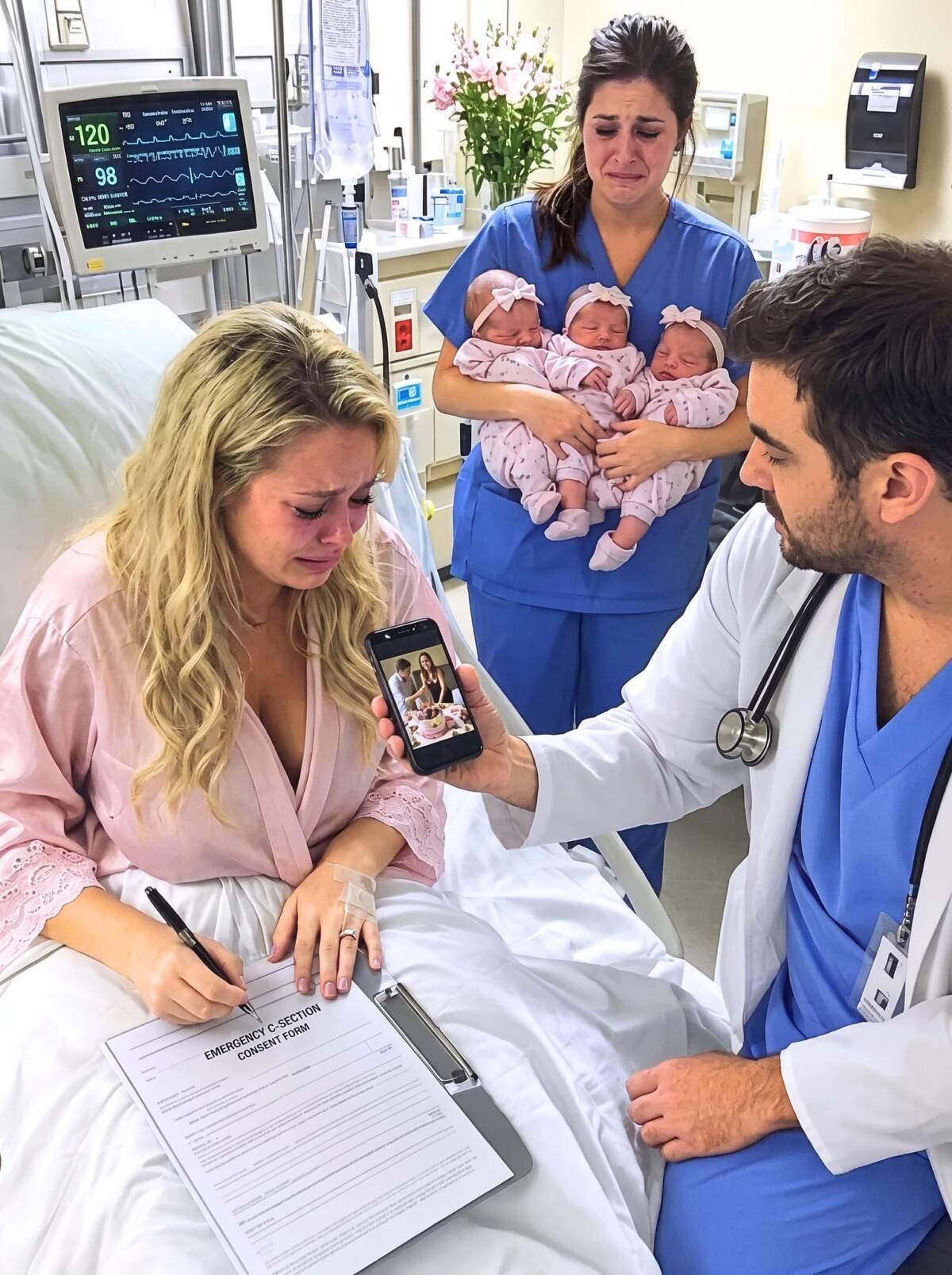
My son believed I was dead, and his wife believed it, too. Lying broken and bleeding at the bottom of a wooded ravine in Colorado, I heard them whisper above me: “She has nobody left. This way is cleaner.” I forced myself to stay completely still, barely daring to breathe, and never made a sound. I simply waited. Now, two years later, I was the one standing on their neatly swept front porch, ready to knock—and I hadn’t come alone.
The Invitation to Colorado
I was never supposed to be hiking on that trail. At sixty-two, my knees weren’t built for steep mountain ridges, and I had spent the past year mostly indoors, trying to adjust to the quiet house my late husband had left behind. When my son, Michael, called and insisted I fly out to visit him in Boulder, I hesitated. We hadn’t seen each other in nearly a year—not since the funeral—and our phone calls had grown shorter and more polite with every passing month.
Still, when he promised a peaceful family weekend, I bought the ticket. After losing my husband, loneliness had settled into my bones like a permanent chill. The chance to spend a few days with my only son and my four-year-old grandson, Aiden, felt like a lifeline.
“Come on, Mom,” Michael said that Saturday morning, flashing the easy, practiced grin that had charmed people his whole life. He helped strap Aiden into the padded child carrier on his wife’s back, checking the buckles twice. “Fresh air, good views, no cell service. It’ll be good for you.”
I agreed, partly because I didn’t want to be difficult, and partly because I hoped Michael had invited me out of genuine regret for how distant we had become.
His wife, Emily, was another matter. She had always been impeccably polite around me—her hair neatly styled, her tone measured, her smile never quite reaching her eyes. That morning, however, her usual reserve felt sharper, almost brittle. She barely spoke during the drive to the trailhead, her fingers drumming silently against the center console. I told myself not to read too much into it. In-laws didn’t always become best friends overnight, and I refused to spoil a rare family outing by imagining tension where there was only awkwardness.
The trail wound narrowly along a high ridge, with jagged rock and loose shale rising on our left and a steep, pine-choked ravine dropping sharply away on our right. Spring thaw had left the dirt damp and soft in patches. I walked a few paces behind Emily, listening to Aiden happily sing an off-key nursery rhyme from his perch on her back while Michael trailed slightly behind me, pointing out distant peaks.
Then, without a single warning, the mountain gave way.
One second, my hiking boots were pressed against solid earth. The next, the outer edge of the path sheared off beneath me. I screamed as the ground vanished and the world tilted violently sideways. For a split second, I caught a flash of Emily’s bright red jacket whipping around, followed by Aiden’s high, terrified cry somewhere close behind me. Branches snapped, rocks tumbled, and then everything went black.
The Voices Above the Ravine
When consciousness finally dragged me back, I was lying facedown among wet pine needles and jagged stones at the bottom of a deep ditch. A sharp, sickening throb radiated from my left arm with every heartbeat. Warm blood trickled from a gash on my scalp into my eyebrow, and a metallic taste coated my tongue while a high-pitched ringing echoed through my ears.
I had no idea how long I had been out—ten minutes, or an hour. Before I could even gather the strength to roll over, I heard the crunch of boots moving slowly along the loose gravel somewhere above me.
Instinctively, I froze.
My first thought was relief. Michael and Emily had scrambled down to find us. I opened my mouth to call out, to tell them I was alive, to ask if Aiden was okay. Yet something about the unhurried, deliberate pace of those footsteps made the words catch in my throat. People rushing to save their family don’t walk like that.
Then Emily’s voice drifted down through the pines, crisp and eerily calm.
“Are you sure she’s dead?”
Every drop of blood in my body seemed to turn to ice.
There was a heavy pause before Michael answered. “If she’s breathing, we can’t risk it.”
I stopped breathing altogether. The agony in my fractured arm vanished, replaced by a cold, suffocating disbelief. My own son didn’t sound like a man searching for his injured mother. He sounded like someone checking off a task.
“She has no one left,” Michael continued, his voice low and practical. “This way is cleaner. If she wakes up, she’ll ask questions. Especially about the money.”
My mouth went bone-dry. Until that exact second, a desperate part of me had still wanted to believe I was hallucinating from a concussion. Michael’s words stripped that comfort away. This wasn’t panic after a freak accident.
Then another sound reached me from a few yards away.
A soft, shaky whimper.
Aiden was alive.
Every maternal instinct in me screamed to crawl toward him, to pull him into my arms and tell him Grandma was here. Before I could twitch a muscle, something heavy shifted on the slope above us—dirt and small stones cascading down—followed by Emily’s voice, flat and decisive.
“We say they slipped. Both of them. A tragic accident.”
That single sentence answered the question I had been too horrified to form. They weren’t coming down to help us. They were already rehearsing the story they would tell the police.
Gradually, the crunch of their footsteps faded back up the ridge. I stayed pressed into the cold pine needles, barely allowing myself to blink, until the woods were completely silent save for the wind in the trees. I didn’t know how badly I was hurt, and I didn’t care. The only reason I was still alive was that my son and his wife believed I wasn’t.
So I played dead—and I listened to my own child walk away.
Crawling Out of the Grave
The official story that followed was almost flawlessly constructed. Within hours, Michael and Emily were sitting with local authorities, playing the role of shattered, inconsolable parents. They described a sudden, horrific collapse on the narrow trail, claiming loose spring footing had sent both a grandmother and her four-year-old grandson tumbling into the ravine. They swore they had scrambled down the slope, screaming our names until their voices gave out, and that the only thing they had managed to recover was one of my hiking shoes.
Search-and-rescue teams combed the gorge for days, hampered by heavy runoff from the melting snowpack. They never found a body.
Because I hadn’t stayed there.
Hours after Michael and Emily disappeared, I forced myself to move. My left arm hung uselessly at my side, my head swam with dizziness, and every breath felt like broken glass in my ribs. Still, I dragged myself through the brush toward the sound I had heard earlier.
I found Aiden wedged beside a cluster of mossy boulders, partially shielded from the ridge above. He was unconscious and pale, his breathing shallow, with a badly swollen leg and bruised ribs. When I pressed my trembling fingers to his neck and felt a steady pulse, tears finally spilled down my dirty cheeks.
Using my good arm and every ounce of strength I had left, I lifted my grandson and carried him out of the woods along the lower creek bed, staying far away from the main trailhead.
I didn’t go to a hospital in Boulder. I was terrified that the moment our names entered a medical database, Michael and Emily would find out we had survived—and finish what they had started before I even understood why they wanted us gone. Instead, I flagged down a passing trucker on a back highway, gave him a fabricated story about a domestic dispute, and paid him every dollar in my wallet to drive us toward Aspen.
There, I knocked on the door of Nina, an old college friend I hadn’t spoken to in nearly a decade. When she saw me standing on her porch—covered in dried blood, cradling an unconscious child—she didn’t ask a single question. She pulled us inside, called a retired doctor she trusted implicitly to treat us quietly at her home, and gave us a place to disappear.
Two Years in the Shadows
Recovery was slow and painful. Aiden’s leg required careful setting and months of physical therapy, and for a long time he woke up screaming in the dark, calling for his parents. On those nights, I held him until he fell back asleep, then slipped into the hallway and cried silently where he couldn’t hear me.
While we healed, I tracked every public detail about our supposed deaths from Nina’s laptop.
Within months, Michael and Emily collected $500,000 in life-insurance payouts. They sold their modest townhouse, bought a sprawling modern home in an upscale neighborhood, and even dedicated a small memorial garden in my name, complete with an engraved stone bench.
Their public performance never wavered. Emily launched a wildly popular grief blog, posting tearful, curated essays about losing her son and mother-in-law in a single heartbeat. Sponsors lined up. Thousands of strangers flooded her comment sections with sympathy and donations. Meanwhile, Michael landed a lucrative executive role at a company that prided itself on family values. Nobody seemed to question why two experienced hikers had taken a toddler and a grieving woman onto an unstable mountain ridge during the spring thaw.
Then, digging through my late husband’s estate paperwork with Nina’s help, I finally understood the full picture.
This had never been just about me. It was about Aiden.
Before he died, my husband had quietly established a substantial trust fund for our grandson, paired with secondary insurance policies that dwarfed the initial payout. As long as Aiden was alive—and as long as I was alive to oversee his interests—Michael and Emily couldn’t touch a dime of it. My death alone wouldn’t have unlocked the vault. They needed both of us erased.
Once that truth settled in, I stopped thinking about rushing to the police. If I showed up immediately, Michael and Emily would claim it was a terrible misunderstanding, hire expensive defense attorneys, and bury the truth in legal technicalities.
Instead, I decided to let them believe their plan had worked. I let them spend the money, build their brand, and grow comfortable on a foundation of lies—while I quietly gathered everything I needed to bring the entire house down.
For two years, I remained dead to the world.
The Knock at the Front Door
On a crisp autumn afternoon, I walked up the stone pathway of Emily’s new house and knocked firmly on the front door.
She opened it wearing the same polished, controlled expression I remembered from Colorado. My hair was cut short now, silver replacing the dye I used to wear, and I was twenty pounds thinner than the woman she had left in that ditch. For three full seconds, she simply stared at me without a flicker of recognition.
“Excuse me… do I know you?”
I offered her a calm, steady smile. “You buried me.”
Every ounce of color drained from her face. Her hand gripped the doorframe so tightly her knuckles turned white.
Before she could force out a sound, a car door slammed in the driveway behind me. Michael stepped out of his luxury SUV, briefcase in hand, checking his watch. He looked up, froze mid-step, and stared at me as if the ground had opened beneath his feet.
Then the back door of the car parked at the curb opened, and Nina stepped out—holding the hand of a six-year-old boy.
Aiden was taller now, his face rounder and healthier, though he still walked with a slight, lingering limp from the injuries his parents believed had ended his life. He walked up the driveway, stopped beside me, and looked straight at his father.
“Hi, Daddy.”
Michael didn’t move. He didn’t blink. For two years, he had slept soundly in a house bought with our deaths. Now, both of his ghosts were standing on his front lawn.
Unraveling the Perfect Lie
Emily was the first to find her voice, though the sharp edge of panic shattered her carefully maintained composure.
“This is insane,” she stammered, backing into the foyer. “You’re sick. You kidnapped him—I’m calling the police right now—”
I didn’t raise my voice. I hadn’t come to argue with them on a suburban porch. I reached into my handbag, pulled out a small silver flash drive, and placed it directly into Emily’s trembling palm.
“Go ahead and call them,” I said evenly. “Just make sure you play this for them when they arrive.”
On that drive were Aiden’s medical records from the night of the fall, detailed journals, financial trails, and—most damning of all—an audio recording. What Michael and Emily had never known was that my phone had been running a voice-memo app in my jacket pocket to record Aiden’s off-key singing on the trail. Even after the fall cracked the screen, the microphone had stayed active long enough to capture their exact voices above the ravine.
“You will sign over full legal guardianship of Aiden today,” I told them quietly. “Or I hand copies of that drive to the district attorney, the insurance investigators, and every reporter in Colorado.”
Neither of them spoke. For the first time in two years, they couldn’t spin the narrative or hide behind a grief blog. Their own voices tied them directly to what happened on that mountain.
Slowly, mechanically, they nodded.
By the following afternoon, we were sitting across from each other in the polished conference room of a high-powered family and estate attorney I had hired months earlier. My lawyer barely needed to say a word; the flash drive resting in the center of the mahogany table did all the talking.
Michael’s hands shook so violently he dropped his pen twice while signing the guardianship papers. Emily stared rigidly at the wall, her jaw clenched so hard a muscle twitched in her cheek.
I looked straight at my son. “Where is the insurance money, Michael?”
His voice dropped to a barely audible whisper. “It’s… it’s mostly gone. The down payment on the house, the blog promotions, the cars…”
“Then you’ll sell the house,” I said flatly. “Every cent of equity goes into an irrevocable trust for Aiden that neither of you can ever touch. You’ll keep enough for a studio apartment. Nothing more.”
Neither of them argued. They knew the alternative was a prison cell.
The Memory That Changed Everything
Six months later, Aiden and I were living peacefully in a small cottage near the coast. The ocean air seemed to do wonders for both of us. Aiden was thriving in school, his limp fading a little more each month, and the nightmares had finally begun to recede.
One quiet evening, we sat together on the porch watching the tide roll in. Aiden was absently tracing the pale surgical scar on his shin when he looked up at me with the blunt, uncomplicated seriousness only children possess.
“Grandma,” he said, his voice steady for a six-year-old. “Why did Daddy tell the man in the woods to hurry up?”
My stomach dropped. I set my teacup down slowly. “What man, sweetheart?”
“The man with the big camera,” Aiden said, blinking up at me. “Right before we fell. Daddy gave him a brown envelope. Then he pushed the dirt with his boot.”
I sat frozen in my chair as the full weight of his words settled over me.
Until that moment, I had believed Michael and Emily had simply seized a sickening opportunity after a natural trail collapse. Their voices in the woods had proved they were willing to leave us to die—but Aiden’s memory meant the fall itself had never been an accident.
There had been a third person on that ridge. There had been a camera. And my son hadn’t just abandoned us after the ground broke. He had helped break it.
I didn’t drive back to confront Michael. I didn’t need to.
Instead, I sent a concise package of verified facts—and a single audio file labeled Ravine_Post_Fall.mp3—to the board of directors at Michael’s family-values firm, and to every major sponsor funding Emily’s grief blog.
Within forty-eight hours, Michael was quietly terminated. By the end of the week, Emily’s online empire had imploded. Tens of thousands of followers who had once wept over her essays turned on her overnight, demanding answers she couldn’t give. Losing the money had bruised them; losing control of their carefully crafted image destroyed them.
A year later, I ran into Emily entirely by chance at a discount grocery store two towns away from where they used to live. The designer coats and salon-styled hair were gone, replaced by a faded gray hoodie and dark circles under her eyes. She was standing at the register, counting out loose change for a carton of milk and a loaf of bread.
When she looked up and saw me, raw panic flashed across her face. I didn’t speak. There was nothing left to say. Instead, I pulled a photograph from my purse—Aiden on his first day of second grade, grinning ear to ear, standing tall and healthy on the legs they had left broken in a ditch. I set the photo gently on the counter beside her coins and walked out.
Behind me, Emily broke down sobbing. For the first time in years, her tears were real.
The Disgraced Investigator in Nevada
Still, one question haunted me for the next five years: Who was the man with the camera?
By the time Aiden turned eleven, he had grown into an observant, remarkably resilient boy. Revenge no longer interested me, but I owed my grandson the complete truth. Quietly, using private records and old phone logs, I traced the man’s name to a small, dusty town in Nevada.
Marcus Thorne. A disgraced private investigator with a history of questionable side jobs.
After my attorney made it clear that ignoring us would lead directly to a federal subpoena, Thorne agreed to meet me in the back booth of a nearly empty diner. He looked hollowed out and nervous, his eyes darting toward the door every few seconds.
“I didn’t know they were going to push the kid,” Thorne rasped before I even ordered coffee. “Michael hired me to document your ‘instability.’ He wanted photos of you looking frail and negligent on a dangerous trail so he could challenge your control over the trust fund. But when the edge started to crumble… I saw him nudge the loose dirt with his boot. He didn’t reach for you. He just watched.”
Then Thorne slid a weathered SD memory card across the sticky tabletop.
“I kept the raw footage,” he muttered. “Used it to bleed him dry for two years. That’s why they’re broke, lady. I took every dime of that insurance money.”
Suddenly, the final piece clicked into place. Michael and Emily hadn’t just squandered their blood money on a luxury lifestyle—they had been paying off the man who caught their crime on camera.
A Confession for a Boy Who Needed the Truth
I didn’t take the memory card straight to the police. First, I drove to the cramped, rundown studio apartment where Michael was living alone.
The room smelled of stale smoke and defeat. When Michael opened the door, he looked twenty years older than his age, his shoulders stooped and his hands trembling constantly.
“Thorne talked,” I said, stepping inside.
Michael collapsed onto a sagging thrift-store couch, all fight draining out of him instantly. “I just wanted the money, Mom,” he whispered, staring at the stained carpet. “Emily kept saying we deserved a better life. That we weren’t meant to be average.”
I looked at the stranger who had once been my little boy and felt nothing but a quiet, steady resolve. “You weren’t meant to be parents.”
I placed the memory card on the coffee table. “This has the footage of you nudging that ledge and watching your own son fall. Thorne is turning himself in on extortion charges to cut a deal. If I hand this to the prosecutor, you’re looking at attempted murder and conspiracy.”
His face crumpled. “Please,” he choked out. “I have nothing left.”
“You have one thing left,” I said. “A written confession. Not for the courts—for Aiden. He deserves to know it wasn’t his fault the ground gave way. He needs to know it was his father who was broken.”
Michael wrote the letter that afternoon. It was messy and full of hollow excuses, but buried near the bottom was the single honest sentence my grandson deserved to read: I was greedy, and I let go of your hand on purpose.
I didn’t show it to Aiden right away. He had carried enough adult ugliness for one childhood. I waited until he was fourteen.
One evening on our coastal porch, I handed him the folded pages and sat silently while he read every word. Aiden didn’t cry. He didn’t ask why. When he finished, he stood up, walked to the wooden railing, tore the letter into tiny pieces, and let the ocean wind carry them away.
“Does this mean he’s finally dead to us?” he asked softly.
I watched the white scraps vanish over the water. “He’s been dead since the day he chose a check over a child. This just makes it official.”
Standing on the High Ground
Years passed, and Aiden grew into the kind of man his parents could never have imagined. He graduated at the top of his high school class, earned a scholarship to law school, and dedicated himself to family law—determined to protect children whose voices adults too often ignore.
Michael and Emily faded into quiet anonymity, trapped in the small, lonely lives they had built after their lies collapsed. I stopped keeping track of them. They no longer belonged to our story.
On the afternoon Aiden learned he had passed the bar exam, we flew back to Colorado together. The narrow trail where we had fallen had been permanently closed years earlier due to erosion, so instead we hiked up to a wide, sunlit overlook facing the same deep valley that had once nearly been our grave.
The mountain wind was crisp against our faces, but neither of us felt afraid. We weren’t victims returning to the scene of a tragedy.
Aiden stood beside me, looking out over the pines and the distant peaks.
“You saved me twice, Grandma,” he said quietly. “Once in the ravine, and once from the lies.”
I reached over and squeezed his hand. “We saved each other, Aiden.”
For a long time, I believed surviving meant crawling out of that ditch with a broken arm and a wounded child in my arms. Later, I learned that true survival meant refusing to let someone else’s greed define who we became. Standing on that high ground with my grandson beside me, I knew the fall belonged to another lifetime—and the future belonged entirely to us.
What would you have done in this grandmother’s shoes? Would you have gone straight to the police, or waited to expose the truth on your own terms? Share your thoughts in the comments below—and pass this story along to someone who loves a powerful tale of resilience and justice.