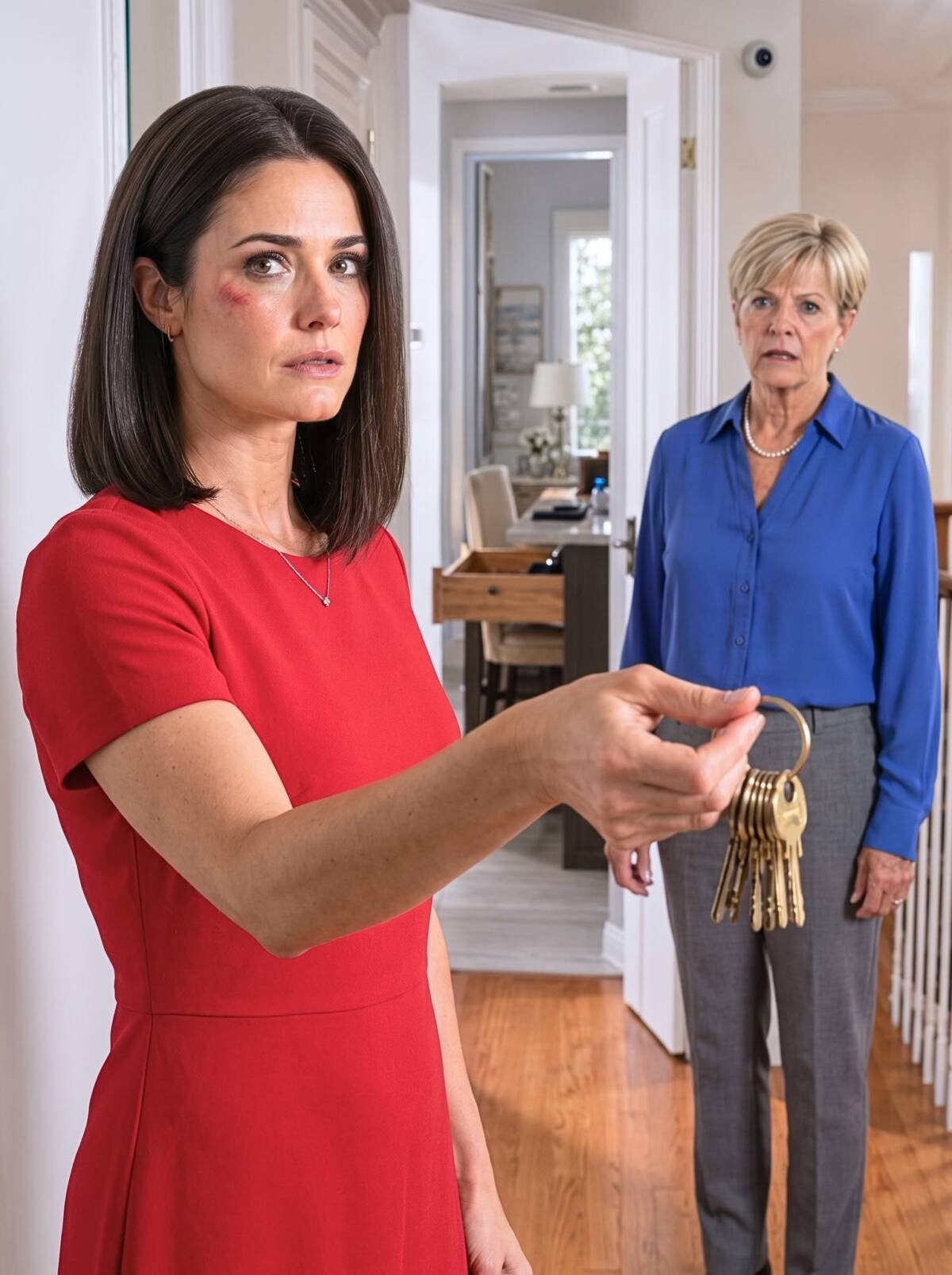
At 2:13 a.m., a glowing phone screen shattered nineteen years of marriage. Thousands of miles away at a luxury overseas resort, a husband who had just married a younger woman sent his wife a blunt ultimatum: clear out before he got back, because he was tired of “old things.”
He assumed she would quietly pack her bags and disappear, leaving behind the family home he planned to share with his new bride and their two teenagers. He had already arranged the flights, the resort, and the new life. The only detail he forgot was the one he had laughed about for years—the deed to the land beneath their feet belonged exclusively to her.
By the time his taxi pulled into the driveway a week later, the house wasn’t just empty. It was gone.
The 2:13 A.M. Text That Ended Nineteen Years
I remember the exact time my phone lit up because I was already wide awake, staring at the slow rotation of the ceiling fan and listening to the familiar settling sounds of a house my family had lived in for nearly two decades. The hum of the refrigerator downstairs, the faint creak of the hallway floorboards, the distant sound of traffic on the county road—every noise was a piece of a life I had spent nineteen years building.
For a split second, when the screen illuminated the dark bedroom, I thought Ethan might be checking in from his trip. Maybe one of the kids had forgotten something, or maybe a flight had been delayed.
Instead, two messages sat side by side on the lock screen.
“Be gone when we return. I hate old things. I work hard, so I deserve a new life.”
Before I could even process the first sentence, a second message arrived.
“Don’t embarrass yourself. The kids will be with us.”
I read both messages three times, letting the words settle in the quiet room, before setting the phone face-up on the nightstand. Somewhere across an ocean, Ethan was likely sleeping soundly in a five-star suite after dismissing his wife of nineteen years through a text message, as if he were canceling a subscription he no longer used.
Cruelty had always come easily to Ethan whenever he could disguise it as practicality. He spoke in crisp, efficient sentences and presented his personal desires as settled facts. For years, I had mistaken that certainty for confidence. It took far too long to realize that genuine confidence and an inability to imagine being wrong are two very different things.
Three weeks earlier, he had sat across from me at the kitchen island and announced that our marriage was over with the detached professionalism of a consultant delivering a quarterly review. There were no raised voices, no apologies, and no hesitation. The woman replacing me was Sienna, a twenty-six-year-old employee at his firm who, according to Ethan, made him feel alive again.
While he outlined his vision for the future, I kept my eyes fixed on an old ceramic coffee mug sitting near the sink. Our daughter, Lily, had painted it in elementary school. The handle had a small chip near the base, and the yellow flower on the side barely resembled a flower at all. Focusing on those imperfections was easier than watching my husband calmly explain that he had “already taken care of everything.”
That phrase lingered in my mind for days. Ethan genuinely believed that nineteen years of marriage, two children, and an entire shared history could be managed like an item on his calendar. Once he decided a chapter was closed, he expected everyone else to accept the memo and arrange themselves accordingly.
The destination wedding was entirely his production. He spared no expense booking a beachfront resort overseas, flying out relatives, mutual friends, colleagues, and our children. Seventeen-year-old Marcus followed his father’s lead with quiet eagerness, drawn to the glamour and the certainty Ethan projected. Fifteen-year-old Lily had grown increasingly distant over the past few months, retreating behind closed doors and seeming to blame me for the sudden collapse of her world.
I was never formally uninvited from the wedding. Ethan simply booked everyone else’s flights, hotel rooms, and itineraries while behaving as though my absence required no explanation at all.
After his 2:13 a.m. messages, I walked downstairs and sat alone in the dark living room. I thought about the early years of our marriage—when money was tight, dinner was occasionally bowls of cereal on the floor, our furniture came from thrift stores, and the future felt like something we were building side by side.
Success hadn’t changed Ethan overnight; it had eroded him gradually. He began correcting me in front of friends, brushing off my opinions as naive, and treating our home less like a partnership and more like a company where he had quietly promoted himself to management.
The Quiet Legacy My Father Left Behind
Sitting in the stillness of the living room, my thoughts eventually drifted to my father.
Six years before he passed away, my father had made a legal decision that Ethan never truly respected. He transferred the deed to the land beneath our home exclusively into my name. It wasn’t a joint title. It wasn’t placed in a shared family trust. The property belonged solely to me.
Whenever the subject came up, Ethan treated it as an amusing quirk.
“Your dad’s little paranoia,” he would laugh, shaking his head.
He even turned it into an anecdote at dinner parties, painting my father as an eccentric, overly cautious old man who didn’t quite trust his son-in-law. Guests would chuckle politely over their wine glasses, and I would smile along, because correcting Ethan in public had long ago become more exhausting than staying quiet.
That night, in the dark, I finally understood what my father had actually done. It hadn’t been paranoia. It had been foresight—a quiet layer of protection put in place years before I ever imagined I would need it.
He had left me a way out.
Turning Patience Into Strategy
The next morning, I didn’t cry, and I didn’t text Ethan back. I drank a cup of black coffee, got dressed, and drove across town to a modest law office tucked inside a quiet shopping center.
My attorney, Gloria Mendez, had the calm, unbothered expression of someone who had spent thirty years listening to bad excuses and had long since stopped being surprised by them. I sat across from her desk and slid my phone over without saying a word.
She read Ethan’s messages slowly, her eyes moving across the screen, before looking up at me.
“You want him out,” she said. It wasn’t a question.
“I want him to feel it,” I replied.
Gloria studied me for a moment, then gave a single, approving nod.....