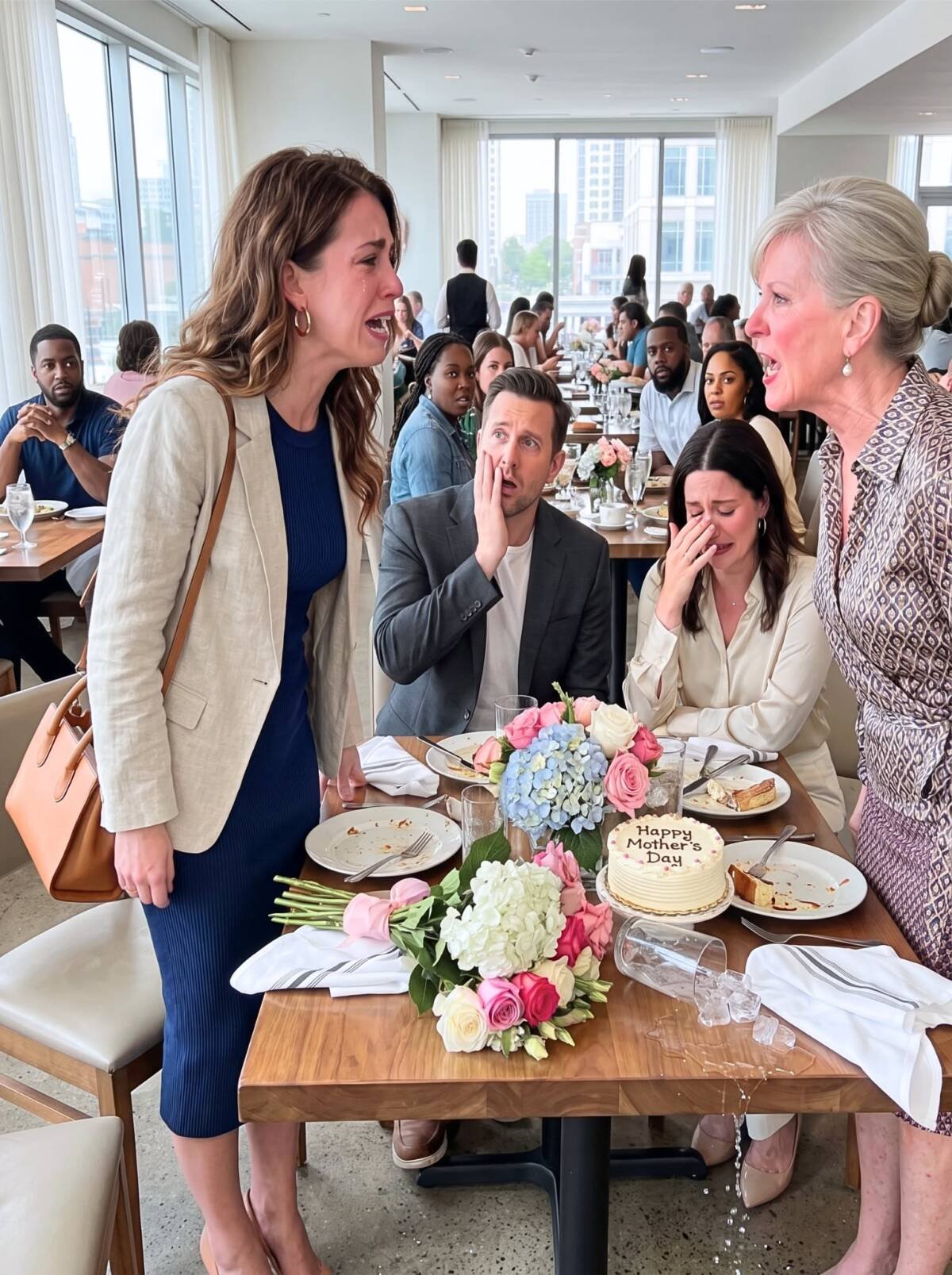
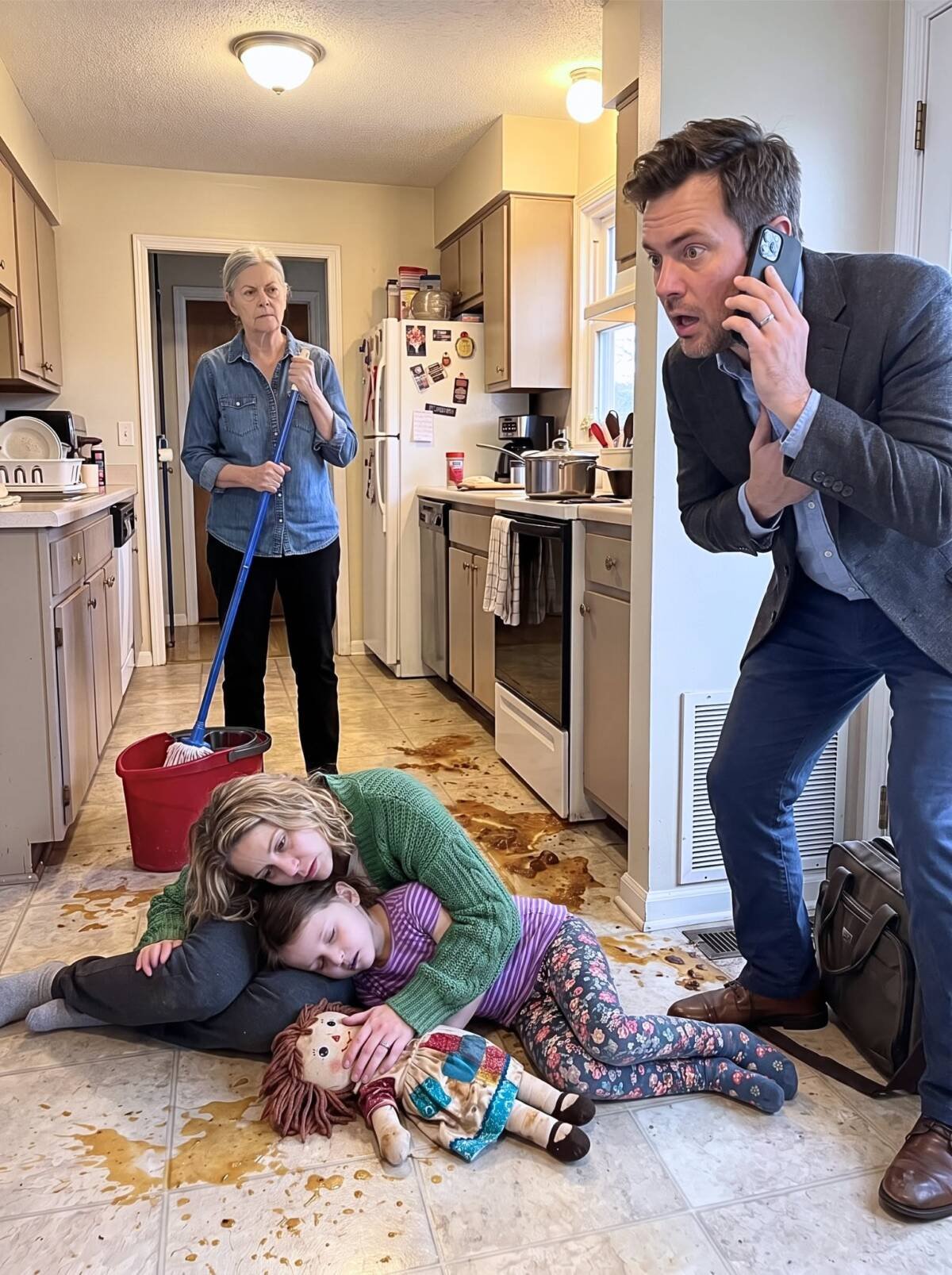
When my sister-in-law offered to take my nine-year-old son to the park, I thought she was finally trying to make peace. Less than two hours later, my eight-year-old niece called me from her smartwatch in tears: “Mom said it was only a joke… but he won’t wake up.” I found my son unresponsive in the grass while his aunt scrolled through her phone. Doctors soon discovered a powerful sedative in his system—but the real horror began when police recovered the discarded prescription bottle and read the name printed on the label.
The Invitation That Caught Me Off Guard
For months, my sister-in-law, Brenda, had made it her personal mission to critique every aspect of how I raised my nine-year-old son, Leo. In her eyes, everything about him was a reflection of my supposed failures as a mother. He was too energetic. He talked too much at the dinner table. He asked too many questions, interrupted conversations, and didn’t sit still long enough during family gatherings.
“Children today simply don’t understand discipline,” Brenda would say at nearly every holiday dinner, glancing pointedly at Leo while smoothing the collar of her own daughter’s dress. “You’ve spoiled him, Sarah. You let him run the house.”
Her eight-year-old daughter, Maya, was the exact opposite—at least on the surface. Maya was extraordinarily quiet. She never raised her voice, never argued, and rarely left her mother’s side. At family barbecues and Thanksgiving dinners, while the other kids ran through the yard, Maya would sit neatly on the living room sofa, often curling up and falling asleep before dessert was even served. Brenda wore her daughter’s silence like a badge of honor, frequently boasting that Maya was proof of what “proper parenting” looked like.
That was why I was genuinely surprised one crisp Saturday afternoon when Brenda pulled into the driveway of my suburban Columbus home.
When I opened the front door, she was standing on the porch with an unusually warm smile. Behind her, her SUV was idling in the driveway, and I could see Maya sitting quietly in the back seat, her small purple backpack resting on her lap.
“Hey, Sarah,” Brenda said brightly. “I’m taking Maya over to the county park for a couple of hours. It’s too nice to stay inside. Why doesn’t Leo come along? Let them burn off some of that energy.”
I hesitated for a second. Brenda and I had been walking on eggshells around each other for nearly a year. Yet Leo was already bouncing behind me in the hallway, his sneakers half-laced, begging to go. Looking at Brenda’s relaxed posture and friendly tone, I foolishly convinced myself that she might finally be extending an olive branch. Maybe she realized our tension was keeping the cousins apart.
“Sure,” I said, grabbing Leo’s light jacket from the coat rack. “Just make sure he stays hydrated. He forgets to drink water when he’s playing.”
“Don’t worry,” Brenda replied smoothly. “I already packed drinks and snacks for both of them. We’ll be back before dinner.”
I waved from the porch as the SUV backed out of the driveway, feeling a brief flicker of relief. I had no idea that in less than two hours, my entire world—and the carefully constructed illusion of Brenda’s perfect family—would shatter completely.
The Phone Call Every Mother Dreads
I was folding laundry in the living room when my cell phone vibrated against the coffee table. The caller ID showed Maya’s smartwatch—a device Brenda had bought her for emergencies, though Maya had never once used it to call me.
The moment I answered, the sound of frantic, ragged crying hit my ear.
“Aunt Sarah… Come fast. Please come fast. Leo won’t wake up.”
My stomach dropped so violently I nearly lost my breath. I dropped the clothes I was holding and bolted toward the kitchen for my keys.
“Maya, slow down, honey. What happened? Did he fall?”
“No,” she sobbed, her voice trembling with pure terror. “Mom said it was a prank to get him to calm down… she gave him a drink… and now he’s not moving anymore.”
A cold wave of dread washed over me. I ran out to my car, started the engine, and put the phone on speaker as I backed out of the driveway.
“Maya, listen to me. Stay right next to him. Do not leave him alone. Where are you right now?”
Through her tears, she described the wooded walking trail on the north side of the county park, just past the playground and near a large cluster of oak trees. Then, right before the line went quiet, she whispered something that made my blood run cold.
“Mom told me not to call you.”
I ended the call and immediately dialed 911, giving the dispatcher my son’s name, age, and the exact location Maya had described. My hands were shaking so hard on the steering wheel that I could barely keep the car steady as I sped toward the park.
When I reached the parking lot, I didn’t even bother pulling neatly into a space. I threw the car into park, jumped out, and sprinted toward the wooded trail.
“Just Something to Help Him Relax”
I saw them before I even reached the clearing.
Leo was lying completely motionless on the grass beneath the oak trees. One of his sneakers had come partially off his foot, and his head was tilted awkwardly to the side. Maya was kneeling beside him, her hands clutched over her mouth, tears streaming down her face.
Several yards away, leaning casually against a wooden picnic table, stood Brenda. She was looking down at her phone, scrolling with one thumb as though she were waiting in line at a grocery store.
I dropped to my knees beside Leo, my heart hammering against my ribs.
“Leo! Baby, wake up! Open your eyes!”
He didn’t stir. His skin felt cool and clammy. I pressed two fingers to his neck and felt a pulse that was frighteningly weak and irregular. His chest rose and fell in slow, dangerously shallow breaths.
Panic instantly crystallized into fury. I whipped my head around toward Brenda.
“What did you give him?!” I screamed.
Brenda didn’t even walk over. She let out an exaggerated, impatient sigh and locked her phone.
“Oh, don’t start, Sarah.”
“What did you give my son?!”
“Just something to help him relax!” she snapped, crossing her arms. “He was being utterly unbearable—running around screaming, refusing to listen. I couldn’t take another minute of it.”
I stared at her in disbelief, my hands still cradling Leo’s limp shoulders. “Was it medicine? Did you give him drugs?!”
“It’s not like it was poison!” Brenda shot back defensively.
Beside me, Maya began crying harder. Brenda immediately glared at her daughter, her voice dropping into a sharp, familiar warning.
“Be quiet, Maya. Stop making a scene.”
I turned back to Brenda, my voice shaking with rage. “Tell me right now what was in his drink. The ambulance is on the way. Tell me what you gave him!”
“Just a little something to sleep!” she insisted, waving a dismissive hand. “He’ll sleep it off in an hour. You’re acting like he’s dying.”
“He’s not sleeping, Brenda! He is completely unresponsive!”
Instead of showing even a shred of concern, Brenda rolled her eyes. “Because you turn everything into a tragic drama, Sarah. Leo’s just used to you running to him every time he throws a fit.”
Minutes later, the wail of sirens cut through the park. As paramedics sprinted down the trail with a stretcher and medical bags, Brenda’s demeanor shifted almost instantly. Gone was the irritated, dismissive aunt. Suddenly, she was calm, cooperative, and eager to control the narrative.
When the lead paramedic asked what Leo had ingested, Brenda claimed she had given him an “all-natural herbal syrup” to calm his stomach. When pressed for the brand name, she said she couldn’t remember. When asked where the bottle was, she shrugged and said she must have thrown it away somewhere along the trail.
As the paramedics lifted Leo onto the stretcher, his right arm slipped off the edge and dropped limply against his side. That lifeless movement seared itself into my memory, following me all the way to the emergency room.
The Truth in the Emergency Room
For nearly two hours, I sat in a sterile hospital room watching monitors track my son’s sluggish heartbeat while nurses ran blood panels and IV fluids. Leo had never taken sedatives in his life. He had no allergies, no chronic conditions, and I had certainly never given Brenda permission to administer anything to him.
Finally, the attending emergency physician stepped into the room with a clipboard in his hand and a grave expression on his face.
“Ms. Miller,” he said quietly. “The toxicology screen just came back. Your son has a dangerously high concentration of a powerful prescription central nervous system depressant in his bloodstream, combined with alcohol.”
The room seemed to tilt. “Alcohol? And a prescription sedative?”
“Yes. It’s a heavy-duty medication—far too strong for a child his size. He’s stable for now, and we’re monitoring his respiratory rate closely. But I need to be honest with you: if you hadn’t gotten him here when you did, his breathing could have stopped entirely.”
A wave of overwhelming relief hit me first, immediately followed by a cold, blinding anger.
When I stepped out into the hallway to speak with the police officers who had arrived at the hospital, I saw Brenda sitting in the waiting area, loudly complaining to a nurse that the entire staff was overreacting.
“He’s going to wake up in a few hours,” Brenda scoffed, “and Sarah is going to look completely ridiculous.”
A few minutes later, while a uniformed officer pulled Brenda aside to take her formal statement, I noticed Maya sitting alone on a plastic chair just behind her. She had pulled her knees up to her chest, her arms wrapped tightly around her legs, staring silently at the floor.
I walked over and crouched down in front of her so we were at eye level.
“Aunt Sarah…” she whispered, her voice barely audible. “I’m sorry.”
My heart ached for her. I gently placed my hand over hers. “You didn’t do anything wrong, sweetie. Not one single thing.”
“I should have called you sooner,” she said, fresh tears spilling onto her cheeks.
“No, Maya. You called when Leo needed help. You were so brave, and you did the absolute right thing.”
Maya stared down at her sneakers, swallowing hard. “Mom said he was just faking it.”
Something in the way she flinched when she glanced toward her mother made my instincts flare. I lowered my voice.
“Maya… did you see what your mom put in Leo’s drink?”
She hesitated, her eyes darting toward the hallway where Brenda was talking to the officer. Slowly, she nodded.
“She took a little glass bottle out of her purse,” Maya whispered. “She poured liquid from it into his juice box.”
“And what did she do with the bottle afterward?”
Maya gripped the strap of her purple backpack. “When I picked up my watch to call you, she got mad. She wrapped the bottle in paper towels and threw it in the blue trash can by the trail.”
I didn’t waste a second. I stood up and walked straight to the lead officer, repeating every word Maya had told me.
Within forty minutes, patrol units had returned to the county park, searched the blue trash receptacle near the oak trees, and recovered a small glass prescription vial tightly wrapped in paper towels.
The moment Brenda learned the police had found it, her story fractured all over again. First, she claimed Leo must have rummaged through her purse and taken the medication himself. When the officer pointed out that the vial had been intentionally hidden in paper towels and thrown away, Brenda pivoted wildly—suggesting that the bottle actually belonged to me, and that I must have spiked Leo’s drink before they left the house.
I stood there, speechless. Brenda hadn’t just nearly killed my son; she was now trying to frame me for it.
The Name on the Prescription Label
An hour later, Detective Ramirez from the county sheriff’s office entered the hospital consultation room where I was waiting. He was holding a manila folder, and the look in his eyes told me this was no longer just about what had happened to Leo.
He sat down across from me and slid a high-resolution photograph across the table. It showed the small glass vial recovered from the park trash can.
“The primary label was partially torn off before it was thrown away,” Ramirez explained. “But our forensics team was able to trace the pharmacy serial number and reconstruct the patient information.”
I leaned forward, bracing myself. “Is it in Brenda’s name?”
“No,” Ramirez said.
I frowned. “Then whose name is on it?”
Ramirez tapped the edge of the photograph. Beneath the jagged tear in the white paper, one name remained clearly printed in bold black ink:
MAYA HERNANDEZ.
I stared at the letters until they blurred. “The prescription belonged to Maya?”
“It appears so,” Ramirez said evenly.
“Why on earth would an eight-year-old girl be prescribed a heavy central nervous system depressant?”
Ramirez was quiet for several heavy seconds. “That is exactly what we are investigating right now.”
Suddenly, years of quiet, unremarkable family memories began rearranging themselves in my mind like pieces of a horrifying puzzle. Maya sitting silently on the couch at Thanksgiving. Maya never interrupting, never arguing, never running through the yard with the other cousins. Maya falling into a deep, unshakeable sleep in the middle of loud holiday parties while Brenda smiled proudly and praised her for being so exceptionally disciplined.
Then Detective Ramirez delivered the next blow.
“We pulled the pharmacy records,” he said. “This specific controlled substance has been filled three separate times over the last four months.”
“Three times?!” I whispered.
He nodded. “We just got off the phone with Maya’s pediatrician. He never wrote a single one of those prescriptions. He had no idea she was taking anything.”
I sat back in my chair, a wave of nausea rolling over me as the horrifying truth finally sank in.
The medication Brenda had poured into my son’s juice box had never been bought for Leo.
Whatever she had done to my boy in that park was something she had already been doing to her own daughter for months.
The Secret Behind “Sleeping Juice”
Once investigators confirmed that the vial carried Maya’s name, the prosecutor’s office stepped in immediately. Strict protocols were put in place: no family members were permitted to question Maya directly. Instead, a forensic child psychologist conducted a recorded interview with Child Protective Services present.
Downstairs in the precinct lobby, Brenda erupted when she realized she was being barred from speaking to her daughter, loudly accusing authorities of manipulating a child and fabricating a case against her.
Meanwhile, I stayed by Leo’s bedside at the hospital, holding his warm hand as the IV fluids slowly flushed the sedative from his system. Nearly an hour later, Detective Ramirez returned to the room. His face was grim.
“Maya just finished speaking with the specialist,” he said softly. “She told them that her mother routinely gives her what she calls ‘sleeping juice.’”
I closed my eyes, feeling physically sick. “How long has this been happening?”
“She’s eight, so she can’t pinpoint exact dates. But she described dozens of occasions. Before family visits. Before long car rides. Whenever your sister-in-law felt Maya was being ‘too loud’ or ‘too demanding.’”
According to Maya’s account, Brenda would either crush pills into sweet beverages or measure liquid from small glass bottles whenever she wanted her daughter to become quiet and compliant. Whenever Maya complained that the drinks tasted bitter or made her feel dizzy and sick, Brenda would soothe her with the exact same sentence until the little girl learned to stop questioning her:
“Good girls trust their mothers.”
And Brenda had drilled a second rule into her daughter’s head—a phrase I had heard her repeat casually at family dinners for years without ever understanding its sinister weight:
“Family business stays inside the family.”
Maya told the psychologist that she frequently woke up on the living room sofa or strapped into the back seat of the car with no memory of falling asleep or how she had gotten there. Because it had happened so often, she had grown up believing it was completely normal.
As detectives dug deeper into the pharmacy trail, the picture grew even darker. Investigators discovered that Brenda had obtained the prescriptions through an unverified offshore telehealth service, using Maya’s personal identity and health insurance information. She had submitted falsified medical forms claiming her daughter suffered from severe, treatment-resistant pediatric insomnia.
Maya had never appeared on a single video call. Worse yet, medical experts reviewing the records determined that the dosage Brenda had acquired was calibrated for an adult male—not an eight-year-old child.
The Spiral Notebook in the Kitchen Drawer
Armed with the pharmacy records and Maya’s statement, police secured a search warrant for Brenda’s home.
Inside the master bathroom, investigators found a second glass vial, several plastic liquid droppers, and multiple boxes of brightly colored, sugary drink mixes used to mask the taste of the medication.
But the most damning piece of evidence wasn’t hidden in a safe or locked in a cabinet. It was sitting in plain sight inside an ordinary kitchen drawer, tucked beneath a stack of takeout menus.
It was a cheap spiral notebook.
Sandwiched between grocery lists, dry-cleaning reminders, and utility bill due dates were neat, handwritten entries documenting exactly when Brenda planned to drug her daughter:
“Maya: Half dose before dinner party.”“Road trip: Full dose.”“Company coming over: Keep her quiet.”
My hands trembled as Detective Ramirez showed me photographs of the pages. Brenda hadn’t treated what she was doing as a secret crime or a moment of desperation. She had reduced drugging her own child to a mundane household chore, recorded right alongside buying milk and paying the electric bill.
Child Protective Services immediately obtained an emergency protective order barring Brenda from taking Maya home. When officers informed her in the precinct hallway, Brenda completely lost control.
“She is my daughter!” Brenda shrieked, lunging forward before officers stepped in.
Detective Ramirez stood firmly between her and the doorway. “Which is precisely why CPS is stepping in, Ms. Hernandez.”
Brenda whipped around, pointing a shaking finger straight at me. “You did this! You ruined my life! You took my child from me!”
I didn’t flinch. I looked her dead in the eye. “Maya called me because Leo wouldn’t wake up.”
“He wasn’t dying!” Brenda screamed.
The entire hallway fell dead silent. Several uniformed officers exchanged sharp glances. Brenda froze, her mouth slightly open, realizing a second too late what she had just admitted out loud in front of law enforcement.
The Missing Pieces Fall Into Place
The next morning, as pale sunlight filtered through the hospital blinds, Leo finally stirred. I had been dozing in the chair beside his bed when I heard the single word I had been praying for.
“Mom…”
Tears instantly spilled over my lashes. I stood up and gently brushed the hair off his forehead. “I’m right here, baby. You’re okay.”
His eyes were still slightly unfocused as he fought through the lingering chemical fog. He blinked slowly and looked around the room.
“Where’s Maya?”
“She’s safe, Leo. She’s completely okay.”
He frowned, his brow furrowing as he tried to piece together the afternoon before. “She told me not to drink the juice.”
My entire body went still. “What do you mean, sweetheart?”
“At the park,” Leo murmured. “When Aunt Brenda wasn’t looking, Maya whispered to me not to drink it. She said it makes you go to sleep.”
Later that afternoon, with a certified child advocate present, Leo remembered another chilling detail. Brenda had personally handed him the juice box, and when he hesitated because of Maya’s warning, Brenda had used her own daughter as reassurance.
“Maya drinks this all the time,” Brenda had told him. “Don’t be a baby.”
That single memory dismantled whatever remained of Brenda’s defense. Maya hadn’t just been a frightened bystander at the park—she had recognized the exact danger in that juice box because she had lived through it herself.
Then investigators pulled the county park’s security footage. The timestamps told an undeniable, heartbreaking story. At 1:18 p.m., Brenda was seen removing a small vial from her purse. Two minutes later, she handed Leo the juice box. By 1:47 p.m., Leo was visibly stumbling before collapsing onto the grass.
The footage showed Maya immediately tugging at her mother’s sleeve, begging her to help. Brenda pushed her hand away, turned her back on Leo, and began scrolling through her phone. Six minutes later, Maya stepped away from her mother, raised her wrist, and broke the biggest rule she had ever been taught.
Even then, investigators weren’t finished. Forensics recovered deleted text messages from Brenda’s phone, including an exchange with a friend just three days before she showed up on my porch.
“Sarah lets that boy run wild everywhere he goes,” Brenda had written. “Give me one afternoon with him and I’ll show her how a well-behaved child actually acts.”
Her friend had clearly assumed she was exaggerating: “What are you gonna do, tie him to a chair?”
Brenda’s reply was cold, calculated, and completely devoid of humor:
“Nothing so dramatic. I already know what works.”
Reading those words, the final piece of the puzzle locked into place. Brenda hadn’t invited Leo to the park to mend our relationship. She hadn’t wanted the cousins to bond. She had wanted to prove a point—to reduce my bright, energetic nine-year-old son into the same silent, compliant shadow she had forced Maya to become.
The Little Girl Who Finally Spoke
By the time Brenda stood before a judge, the prosecution’s case was airtight. The recovered vial, the falsified telehealth prescriptions, the spiral notebook, the park surveillance video, the toxicology reports, the deleted text messages, and the statements from both children left no room for her attorney’s claims of a “well-intentioned mistake.”
In the courtroom, the prosecutor projected Brenda’s deleted messages onto a large screen. Sitting in the gallery, I felt my chest tighten as I watched her try to explain away the notebook entries.
“Those were just reminders,” Brenda insisted from the stand. “Maya had trouble sleeping.”
The prosecutor didn’t blink. “Then why does this entry say, ‘Company coming over: Keep her quiet’?”
Brenda had no answer.
“And this one: ‘Road trip: Full dose’?”
Silence.
Finally, the prosecutor stepped closer and asked the simplest, most devastating question of the entire proceeding.
“Ms. Hernandez, if Maya had obeyed you at the park that afternoon—if she had never called Sarah—what would have happened to Leo?”
For the first time since this nightmare began, Brenda had nothing to say. Because everyone in that courtroom already knew the answer. According to the emergency room doctor, another prolonged delay could have cost my son his life.
While the legal proceedings moved forward, Maya was placed with relatives approved by Child Protective Services. The transition was heartbreaking to watch at first. For weeks, Maya asked permission for the smallest, most ordinary things.
“Can I finish all my juice?” “Yes, sweetheart.” “Can I talk during dinner?” “Of course you can.” “Am I being too loud?”
That question broke something inside me every time she asked it.
“You’re allowed to be loud sometimes, Maya,” I told her gently.
She looked up at me, genuinely bewildered. “Mom says loud girls make people angry.”
Leo’s recovery took time, too. For weeks after leaving the hospital, he refused to drink anything he hadn’t personally watched me pour. I never pushed him to “get over it.” Surviving a trauma physically doesn’t mean the fear disappears the moment the hospital bracelet comes off.
One quiet afternoon, Leo and Maya were sitting together at my kitchen table coloring. Out of nowhere, Leo looked up at his cousin and asked the question none of the adults had known how to put into words.
“Why did your mom give me that stuff?”
Maya paused, her crayon hovering over the paper. “She wanted you to behave.”
Leo frowned. “I was behaving.”
“I know,” Maya said softly. She stared down at the crayon between her fingers. “She thinks being quiet means being good.”
Leo thought about that for a long moment. “But you’re quiet.”
Maya lowered her eyes. “I didn’t want to be.”
I had to step out of the kitchen so neither of them would see me cry.
The Sound of Childhood
Months later, after the criminal and child-protection cases concluded, Brenda was stripped of unsupervised access to both children. Maya began working with trauma-informed therapists who helped her unlearn years of fear—teaching her that medicine is meant to heal, never to silence, and that a child’s voice is never a burden.
Slowly, miraculously, the real Maya began to emerge.
She started laughing—a loud, bright, contagious laugh none of us had ever heard before. She interrupted people when she was excited about a book she was reading. She complained when she didn’t like the vegetables on her plate. She argued about bedtime.
One evening, she and Leo were playing a board game in my living room when an argument broke out loud enough to rattle the kitchen windows.
“That’s mine!” “You already had two turns!” “You cheated!”
I walked to the doorway. The moment they saw me, both kids froze, their eyes wide. Maya immediately shrank back, her voice dropping to a whisper.
“Sorry.”
I leaned against the doorframe and shook my head. “You don’t have to apologize for disagreeing, Maya.”
She studied my face carefully, testing whether it was safe to believe me. “You’re not mad?”
“Not at all.”
Leo grinned. “See? I told you.”
A slow, radiant smile spread across Maya’s face—and three seconds later, the loud debate over the board game resumed at full volume.
A year earlier, I might have called that noise exhausting. Standing in the doorway that night, listening to my son and my niece argue over a plastic game piece, it sounded like the most beautiful thing in the world.
It sounded like childhood.
The day Brenda took Leo to the park, she thought she was going to teach me a lesson about discipline. Instead, she exposed the dark secret behind the “perfectly behaved” daughter she had paraded in front of our family for years.
Brenda had spent eight years trying to silence her daughter. She never imagined that when a life was on the line, Maya would choose courage over fear.
Leo is alive today because an eight-year-old girl picked up her smartwatch and disobeyed her mother. And in saving her cousin, Maya finally gave the rest of us the chance to save her, too.
What are your thoughts on Maya’s bravery and how this family handled the aftermath? Share your reaction in the comments below—and if this story moved you, pass it along to someone who needs a reminder that children’s voices should always be heard.