When Tessa Palmer’s mother locked her out of her grandfather’s house just days after his funeral, she believed the family’s most devoted granddaughter had been left with nothing. But a hidden compartment inside a childhood keepsake, a mysterious bank key, and a carefully preserved trail of financial records would expose a shocking betrayal—and reveal why her grandfather had trusted her with his entire legacy.
Introduction: The Granddaughter They Thought Didn’t Matter
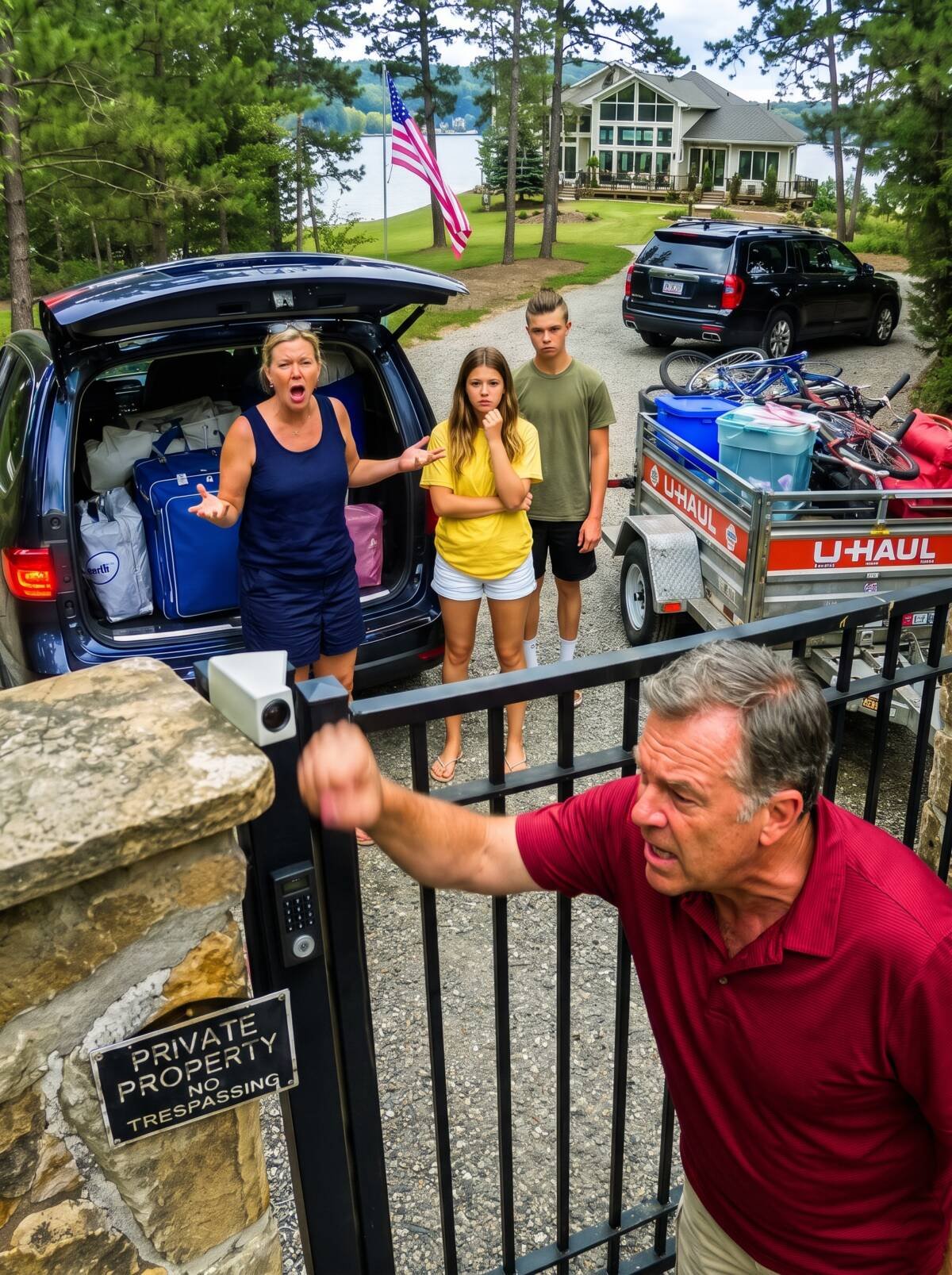
The morning after my grandfather’s funeral, my mother made it clear that I was no longer welcome in the house where I had spent so much of my childhood.
She had already changed the locks.
A cardboard box containing my clothes, a few books, old notebooks, and a wooden chest my grandfather had built for me sat beside the front door. My mother, Linda, stood on the porch with her arms crossed, watching as I tried to understand how quickly grief had turned into a fight over property.
“The house is part of the estate now,” she said. “Your father and I are handling everything.”
Then she added the words that hurt more than the locked door.
“It’s what your grandfather would have wanted.”
Behind her, my father, Robert, stood silently with a coffee mug in his hand. He would not look me in the eye.
For three years, I had been the person who showed up for my grandfather, Harold Palmer, when Parkinson’s disease gradually took away his independence. I helped him manage his appointments, organized his finances, reviewed his bills, and stayed beside him through the most difficult days of his life.
My parents had always found reasons to be somewhere else.
Yet now that Grandpa was gone, they seemed determined to claim everything he had built.
My mother believed she had won. She assumed I was simply the granddaughter who had spent too much time helping an old man and had received nothing in return.
She had no idea that six months before his death, Grandpa had taken me into his workshop and revealed a secret that would eventually change the entire family.
He had established an irrevocable trust fifteen years earlier.
It contained nearly $20 million.
And I was its sole beneficiary.
But the money was only part of the story. Grandpa had also spent his final years quietly documenting suspicious financial transactions, questionable property transfers, and evidence that could expose the people he had once called family.
He had left instructions with his longtime attorney, Margaret Caldwell, and hidden one final clue inside the wooden chest I had carried away from his house.
My mother thought she had locked me out of my inheritance.
In reality, she had just given me the reason to uncover everything my grandfather had spent years protecting.
1. The Man Who Taught Me to Read the Numbers
My grandfather built his construction company from the ground up.
He started with a small crew, a few used trucks, and an old office made of cinder blocks along Route 250. Over the years, he expanded the business, bought additional land, and earned a reputation for keeping his word.
When he sold the company at seventy-two, he kept the land and the old office.
His name remained painted above the entrance in letters he had stenciled himself.
I practically grew up there.
When I was fourteen, Grandpa began letting me spend summers at the metal desk in the back room. At first, my responsibilities were simple: sorting receipts, organizing invoices, and checking totals.
Eventually, he taught me how to balance accounts, review payroll records, and recognize inconsistencies in financial statements.
“Measure twice,” he would tell me. “Because mistakes cost money, and broken trust costs even more.”
I never forgot those words.
As I grew older, the work became more complicated. I learned to examine lumber receipts, concrete invoices, equipment expenses, and contractor payments. Grandpa expected accuracy, but he also expected honesty.
If a number did not make sense, he wanted me to find out why.
He believed that a person’s character often became visible in the details everyone else ignored.
Years later, when Parkinson’s disease began affecting his mobility and coordination, those lessons became unexpectedly important.
I was the one who started visiting him every morning.
I helped him organize his medications and appointments, prepared meals when he struggled to feed himself, reviewed his bills, filed tax documents, and kept track of the financial records he still insisted on maintaining.
I watched a man who had spent his life building things slowly lose control over his own body.
Some days were harder than others. His hands trembled, his movements became increasingly difficult, and ordinary tasks required more patience than either of us had imagined.
But Grandpa remained sharp-minded for much of that time.
He still wanted to know what was happening with his accounts. He still asked about the business. And he still expected me to explain every expense that did not look right.
My mother, Linda, rarely visited.
My father, Robert, usually appeared on Sundays, stood in the doorway, and left after a short conversation.
They always had an explanation for why they could not do more.
I stopped asking them to help.
Three years passed that way.
Then, the day before Grandpa died, he called me to his bedside.
He placed his old silver pocket watch in my hand.
“Keep time for me, kiddo,” he whispered.
I closed my fingers around it.
I did not understand that he was saying goodbye.
The next morning, he was gone.
2. The Funeral That Revealed My Family’s True Priorities
Nearly two hundred people attended Grandpa’s funeral.
Former employees, longtime neighbors, friends, and people who had worked with him throughout his career filled the church.
I sat in the third row.
My mother had arranged the seating, and somehow, the granddaughter who had spent three years helping Grandpa through his illness had been placed outside the immediate family’s section.
Nobody asked me to speak.
Linda stood near the front, accepting condolences and thanking people for coming. My cousin Derek, a real-estate agent, moved through the crowd shaking hands and discussing the family’s plans with anyone willing to listen.
During the reception downstairs, I stood near the coffee urn when I overheard my mother speaking to a relative.
“Grandpa only kept Tessa around because he felt sorry for her,” she said.
The comment was delivered casually, as though my years of caring for him were nothing more than a convenient arrangement.
I gripped the pocket watch inside my jacket.
I wanted to confront her. I wanted to remind her who had been there when Grandpa needed someone and who had repeatedly found reasons to stay away.
Instead, I remained silent.
A few minutes later, Derek approached me near the coat rack.
“The family has plans for the house,” he said. “You should probably start packing your things from Grandpa’s room.”
I stared at him.
“His funeral was this morning.”
He shrugged.
“We have to deal with the estate.”
Two days later, I drove to Grandpa’s house.
The deadbolt had already been replaced.
My mother was waiting on the porch beside a cardboard box containing my belongings and the wooden chest Grandpa had built for me when I was ten.
“The house is part of the estate now,” she repeated. “Your father and I are handling everything.”
Behind the screen door, Robert held a coffee mug. His hand trembled slightly, but he said nothing.
I looked at him, hoping he would intervene.
He lowered his eyes.
That was the moment I realized I could not depend on either of my parents to tell me the truth.
Across the street, our neighbor, Mrs. Bowden, watched from her front yard while watering her hydrangeas.
She had seen me arrive at Grandpa’s house almost every day for three years.
She knew who had been there.
I loaded the box into my car and drove back to my small apartment in Harrisonburg.
I had lost my grandfather, been excluded from his funeral in every meaningful sense, and been locked out of the house where I had grown up.
But I still had the silver pocket watch.
And I still had the wooden chest.
Neither seemed particularly valuable at the time.
I would soon discover that one contained a clue, while the other carried the truth my family had tried to bury.
3. The Secret Grandpa Had Kept for Fifteen Years
Six months before his death, Grandpa had asked me to meet him in his workshop.
He waited until we were alone before speaking.
“Tessa, there’s something you need to know.”
His hands rested on the workbench. The tremors had become more noticeable, but his eyes remained focused.
He told me that fifteen years earlier, he had established an irrevocable trust.
The trust contained nearly $20 million in assets, and I was its sole beneficiary.
I struggled to process what he was telling me.
“Grandpa, why me?”
He looked at me as though the answer should have been obvious.
“Because you understand what it takes to build something. And because you know the difference between owning something and being responsible for it.”
I told him I did not need that kind of money.
He raised one trembling hand.
“This isn’t about what you need today. It’s about what you will do with it tomorrow.”
Then he explained that his attorney, Margaret Caldwell, would contact me after his death.
Until then, I was not to tell anyone about the trust.
He specifically warned me not to discuss it with my parents.
I wanted to ask why, but he changed the subject.
Instead, he pointed toward the wooden chest he had built for me years earlier.
“You’ll understand the rest when it’s time.”
I thought he was simply being sentimental.
Now, sitting in my apartment with that chest beside me, I began to wonder whether he had been preparing me for something far more serious.
Three days after the funeral, I received another reason to worry.
My mother had filed a petition with the Augusta County Circuit Court, claiming that Grandpa had effectively died without a valid will. She asserted that she knew of no trust or supplemental estate documents.
My father had signed the same filing.
Meanwhile, Derek was already involved in the family’s real-estate plans.
Court records would later reveal that two parcels of land worth more than $400,000 had been transferred from Grandpa into Linda’s name months before his death.
Mrs. Bowden called me after seeing my mother at the courthouse.
“Honey, your mother filed some papers today. I thought you should know.”
I thanked her and hung up.
Every instinct told me to act immediately.
But Grandpa had given me specific instructions, and I decided to wait for Margaret Caldwell.
While I waited, I began reviewing the financial records I had kept from my years helping Grandpa.
That decision would expose a pattern no one in my family had expected me to recognize.
4. Seventeen Payments That Did Not Make Sense
A year before Grandpa died, I had questioned two charges labeled as Medicare supplemental processing fees.
My mother had produced invoices and explanations that appeared convincing at the time. I accepted them reluctantly and moved on.
Now, with my grandfather gone and my mother attempting to control his estate, I returned to the records.
I searched every transaction containing the word “processing.”
Seventeen payments appeared over eighteen months.
Their amounts varied, and the descriptions were inconsistent. Together, they totaled $167,000.
I checked the invoices.
I checked the dates.
Then I checked the authorization forms.
Every form carried my father’s signature.
But something about those signatures bothered me.
Robert’s hands had trembled noticeably for years. Yet the signatures approving the payments were unusually smooth and controlled.
I remembered Grandpa’s lessons.
A number that did not make sense deserved a second look.
A signature that did not match the circumstances deserved one, too.
I organized the documents and began comparing them against the bank statements.
On the sixth day after the funeral, my phone rang.
The caller had a Virginia area code.
“Tessa, I’m sorry for the delay,” a woman said. “Your grandfather instructed me to wait seven days after his death before contacting you.”
It was Margaret Caldwell.
“Is this about the trust?” I asked.
“The trust is only the beginning.”
She instructed me to meet her in Richmond the following morning and asked me to bring the wooden chest.
When I mentioned my mother’s court filing, Margaret paused.
She already knew.
Her office occupied the second floor of an old townhouse filled with bookshelves and leather chairs. After I sat down, she placed a thick folder on the table.
Inside was a forty-seven-page forensic accounting report.
“Two years before Harold died, he asked me to hire an investigator,” she explained.
The report traced $342,000 from Grandpa’s accounts into three destinations controlled by Linda and Robert.
The transactions involved fake vendors, questionable invoices, fictional medical fees, and payments disguised as nursing expenses or estate-planning costs.
One account belonged to Palmer Family Holdings LLC, a company in which Linda was listed as the sole member.
Several suspicious payments also went to a post-office box connected to Derek’s real-estate office.
I read the report twice.
The pattern was unmistakable: money had been moving out of Grandpa’s accounts through transactions designed to look ordinary.
Margaret explained that Grandpa had discovered the irregularities but had struggled to pursue the matter as his illness progressed.
Rather than confronting everyone immediately, he had preserved the records and instructed his attorney to investigate.
Then she handed me a second folder.
Inside was a DNA report.
According to the report, Robert Alan Palmer was not Harold Palmer’s biological son. The stated probability of paternity was 0.01%.
I stared at the page.
Margaret explained that Grandpa had known the truth for decades.
My grandmother, Gloria, had been pregnant when she married Harold. He had chosen to raise Robert as his own son.
But the secret had eventually become a source of leverage.
Robert had learned the truth when he was eighteen. Linda discovered it years later and, according to the evidence Margaret described, used it to pressure him whenever he resisted signing financial documents.
“She convinced your father that exposing the truth would destroy his place in the family,” Margaret said.
I thought about the man standing behind the screen door while my mother locked me out.
Suddenly, his silence seemed more complicated, though it was no less painful.
Then Margaret asked about the wooden chest.
“Have you checked the bottom panel?”
I shook my head.
“Not yet.”
“Then you should.”
5. The Hidden Compartment Inside the Cedar Chest
That evening, I emptied the wooden chest onto my living-room floor.
It contained old photographs, childhood papers, and a few small keepsakes Grandpa had saved over the years.
I ran my fingers across the cedar base, searching for anything unusual.
At first, I found nothing.
Then I noticed a narrow seam running against the grain.
I pressed one side of the panel.
It shifted.
Beneath the false bottom lay a sealed envelope and a small brass key.
My hands trembled as I opened the envelope.
Inside was a handwritten note containing four short lines:
“Bank of Clark County.
Staunton Branch.
Box 1147.
Use the key.”
I read it again.
Grandpa had hidden something in a bank vault and left me the means to retrieve it.
I called Margaret.
She was silent for a moment after I read the note aloud.
“Bring the key to my office tomorrow,” she said. “We’ll make arrangements to access the box properly.”
The following morning, Margaret introduced me to Diana Walsh, an estate-litigation attorney.
Diana reviewed the forensic accounting report and the suspicious property transfers. Within half an hour, she had identified several legal issues that required immediate attention.
“This is not simply a family disagreement,” she said. “If these records are accurate, we may be looking at financial exploitation, forged documents, and fraudulent property transfers.”
She explained that we needed to establish the trust’s validity, protect the remaining assets, challenge the disputed deeds, and trace the missing money.
The key could contain evidence that strengthened the case.
We arranged access to the bank box.
Inside the vault, the brass key fit perfectly.
Box 1147 opened.
A thick envelope rested inside, along with several carefully organized documents.
The first was the original irrevocable trust.
It confirmed the terms Grandpa had described and identified me as the sole beneficiary.
The second was a certified copy of the DNA report.
The third was a handwritten letter.
I recognized Grandpa’s handwriting immediately.
His words were direct, careful, and unmistakably his.
He explained that he had always known Robert was not biologically his son.
He had raised him anyway because he believed fatherhood was a choice, not a blood test.
Then he addressed the financial transactions.
“She has been taking from me for years,” he wrote.
He described his growing concerns about Linda’s activities and admitted that he had delayed confronting her because he feared forcing Robert to choose between his wife and the man who had raised him.
By the time Grandpa understood how extensive the scheme might be, his Parkinson’s disease had already weakened his ability to defend himself physically.
He had chosen to preserve the evidence rather than risk a confrontation that could destroy the records or leave the remaining assets vulnerable.
His final instruction was written at the bottom of the page.
“Use everything in this box to protect what I built. Not for revenge. For truth.”
I read those words several times.
For days, I had been imagining what I would say to my mother if I ever had the chance to confront her.
Now I understood that the real task was not to make her suffer.
It was to establish what had happened, protect the assets, and prevent the truth from disappearing.
Grandpa had not left me a weapon.
He had left me a responsibility.
6. The Property Transfers That Raised More Questions
The next stage of the investigation focused on two parcels of land that had been transferred into Linda’s name months before Grandpa died.
My mother claimed the transfers reflected his wishes.
The documentation told a different story.
Medical records showed that, on the dates the deeds were supposedly signed, Grandpa’s tremors were severe enough that his neurologist had documented his difficulty performing fine motor tasks independently.
Yet the signatures on both deeds were smooth and controlled.
Diana hired a forensic handwriting examiner to compare them with authentic signatures from the same period.
The examiner concluded that the disputed signatures did not match Grandpa’s known handwriting.
We then investigated the notarizations.
The notary, Kevin Rudd, worked at the same real-estate company as Derek.
Financial records also showed that Derek had received a $42,000 consulting payment from Linda’s company during the same quarter.
Those facts did not, by themselves, establish every detail of what had happened. But together with the suspicious transfers and the handwriting analysis, they raised serious questions about how the deeds had been prepared and executed.
Diana added the findings to our evidence file.
The suspicious financial activity now involved several overlapping pieces:
- $342,000 transferred from Grandpa’s personal accounts.
- Another $78,000 routed through Palmer Family Holdings LLC.
- Seventeen payments labeled as processing fees totaling $167,000.
- Two disputed property transfers involving land worth more than $400,000.
- Authorization forms bearing signatures that required further examination.
- A notary whose professional connection to Derek raised additional concerns.
We had to be careful not to confuse suspicious evidence with a final legal finding.
But we now had enough information to challenge the transactions and ask the court to protect the disputed assets.
Linda, meanwhile, continued telling relatives that I was trying to steal the estate from my own parents.
She apparently believed that if she repeated the accusation often enough, people would stop asking questions about the money.
Then Diana called me with an update.
“The trust is stronger than your mother thinks,” she said. “And the records are becoming increasingly difficult for her to explain.”
I looked at Grandpa’s pocket watch on my desk.
For the first time since his funeral, I felt that the situation was moving in the right direction.
7. The Conversation With My Father
I drove to Grandpa’s old construction office one afternoon and found Robert sitting alone beneath faded photographs of himself working beside Harold.
The walls had barely changed.
The old desk was still there. So were the shelves where Grandpa had stored construction records, business ledgers, and boxes of receipts.
Robert looked older than I remembered.
“I know about the transfers, Dad,” I said.
He stared at the floor.
“I signed what she told me to sign.”
“Did you know what you were signing?”
A long silence followed.
“I didn’t know how much.”
The answer unsettled me.
He had not said he knew nothing.
“Did you ever ask where the money was going?”
He rubbed his hands together.
“Linda said she was handling things. She told me it was all legitimate.”
“Then why were the signatures so different from your usual ones?”
He looked up briefly before looking away again.
I could see that he was frightened, but I could not tell how much he had understood at the time.
“Grandpa trusted you,” I said. “He raised you. He gave you a place in his life even after he knew the truth about your biological father.”
Robert’s expression changed.
“He knew?”
“Yes.”
He looked around the old office at the photographs on the walls.
For years, he had apparently believed that the secret of his paternity was something that could destroy his place in the family.
But Harold had known the truth and chosen him anyway.
That did not erase the questions surrounding Robert’s signature on the disputed documents.
Nor did it excuse his decision to remain silent while I was locked out of Grandpa’s house.
Before I left, I looked at one of the old photographs.
It showed Grandpa standing beside Robert at a construction site, both of them covered in dust and smiling at the camera.
I understood then that my grandfather had lost more than money.
Someone had tried to undermine his decisions, move the property he had built, and take control of the legacy he had spent decades creating.
Back at Diana’s office, we organized the evidence and prepared for the next stage of the case.
The strategy was straightforward: validate the trust, challenge the disputed property transfers, trace the missing money, and submit relevant evidence to the appropriate authorities.
Diana warned me that the proceedings could expose painful personal information.
“The financial records are one thing,” she said. “But the DNA report will affect your father. Once it becomes part of the proceedings, you cannot control who learns about it.”
I thought about Grandpa’s letter.
Truth, not revenge.
“I understand,” I told her.
And I knew I could not turn back.
8. The Legal Fight My Mother Never Expected
Two weeks before the hearing, Diana and I reviewed the evidence again.
The binder contained the original trust, bank records, the forensic accounting report, disputed property deeds, handwriting analysis, the notary’s statement, the DNA report, and Grandpa’s authenticated letter.
Linda had hired an estate attorney, Philip Brock, who argued that I had manipulated Grandpa during his final years.
His filing claimed that the trust reflected undue influence by the granddaughter who had become his primary caregiver.
The argument was serious, but it faced a major obstacle.
Grandpa had established the trust fifteen years earlier, long before his illness had progressed to the stage where I became his primary caregiver.
Independent witnesses had signed the original documents, and the available medical records supported his capacity when the trust was created and later updated.
Diana believed the chronology was important.
“This trust was not created on his deathbed,” she explained. “We have to make sure the court understands that.”
Meanwhile, Linda continued spreading her version of events.
She told relatives and neighbors that I had used Grandpa’s illness to secure his money.
Mrs. Bowden called me after hearing the rumors.
“I watched you drive to Harold’s house every day for three years,” she said. “I barely saw your mother there.”
Then she recalled something else.
She had seen Linda arrive at Grandpa’s house twice carrying file boxes.
On both occasions, Linda left without them.
Mrs. Bowden had also noticed Derek measuring the property line months before Grandpa died.
Those observations did not establish wrongdoing on their own, but they could help establish a timeline and explain why the disputed transfers deserved scrutiny.
Mrs. Bowden volunteered to testify.
Derek called me shortly afterward.
“You really want to do this, Tessa?” he asked. “Think about Uncle Robert. Think about what comes out.”
I understood what he meant.
He was referring to the DNA report.
He seemed to believe that the possibility of embarrassing my father would persuade me to abandon the case.
But Grandpa had never treated Robert as less of a son because of biology.
I had no reason to treat the truth as something shameful.
The night before the pretrial conference, Robert called me.
“If this goes to court, everything comes out,” he said.
“I know.”
After a long silence, he asked, “Grandpa knew, didn’t he?”
“Yes.”
“He knew about me?”
“He knew from the beginning. And he chose you anyway.”
My father struggled to respond.
“He didn’t have to do that.”
“No,” I said. “He chose to.”
Robert went quiet.
For the first time, I wondered whether he was beginning to understand what Grandpa’s love had meant—and how much he had risked by allowing fear to dictate his decisions.
9. The Hearing That Changed Everything
The evidentiary hearing began in October.
The courtroom was quieter than I had expected.
Linda sat beside her attorney, maintaining the composed expression she had worn at the funeral. Derek sat several rows behind her. Robert appeared withdrawn, his hands clasped tightly in front of him.
Margaret testified first.
She explained how Harold had established the irrevocable trust fifteen years earlier, identified me as the sole beneficiary, and maintained the necessary documents through his attorney.
She also described the instructions he had left regarding the investigation and the preservation of evidence.
Next, forensic accountant Ray Mitchell presented the financial findings.
He walked the court through twenty-eight months of transactions involving $342,000 from Grandpa’s accounts and another $78,000 routed through Palmer Family Holdings LLC.
The records showed payments to questionable vendors, invoices that could not be adequately substantiated, and transactions linked to accounts controlled by people close to Linda.
The seventeen processing-fee payments drew particular attention because they totaled $167,000 and lacked a convincing explanation in the records presented.
Linda’s attorney challenged portions of the accounting, but the broader pattern remained central to the case.
Then came the property deeds.
The handwriting examiner explained the differences between the disputed signatures and authenticated samples from the same period.
Medical records provided additional context about Grandpa’s physical limitations when the deeds were supposedly signed.
Kevin Rudd, the notary, was questioned about the notarizations. His testimony raised further concerns about whether the required procedures had been followed.
Derek’s confident expression began to fade.
Then Diana submitted the DNA report.
The courtroom fell silent.
“Robert Alan Palmer is not the biological child of Harold James Palmer,” she read from the report.
My father lowered his head.
“He knew,” Robert whispered. “He always knew.”
Linda immediately reached for his arm.
“Don’t say another word.”
Her attorney argued that the DNA evidence did not change Robert’s legal status as Harold’s son.
Diana agreed that biology alone did not determine legal parentage.
“We are not asking the court to erase that relationship,” she explained. “We are showing that Harold Palmer understood the difference between biological connection and family responsibility. He raised Robert as his son, and he made his own independent decision about who would inherit the assets protected by this trust.”
That distinction mattered.
The case was about the validity of the trust, the disputed property transfers, and the alleged financial misconduct—not whether Robert deserved to be considered Harold’s son.
Linda suddenly stood.
“That girl turned him against us!” she shouted. “She sat in his house while he was sick and poisoned him against his own family!”
The judge ordered her to sit down.
For years, I had imagined confronting my mother.
I had imagined telling her how much it hurt to be excluded from Grandpa’s funeral, how humiliating it was to be locked out of his house, and how deeply her comments had wounded me.
But standing in that courtroom, I realized I did not need to repeat the history.
The evidence was already speaking.
Still, when the judge allowed me to address the court, I stood.
“He didn’t feel sorry for me,” I said.
Linda turned toward me.
I held her gaze.
“He trusted me.”
Then I added the words I had carried since the day she changed the locks.
“And I believe he knew exactly why.”
For the first time since Grandpa died, my mother had no immediate response.
Judge Hensley looked down at the documents before her.
The court had heard the testimony, reviewed the evidence, and examined the competing claims.
Now it was time for a decision.
10. The Ruling That Dismantled My Mother’s Plans
Judge Hensley ruled that the irrevocable trust was valid.
The evidence established that Grandpa had created it years before his final illness and that the documents supported his intention to designate me as the sole beneficiary.
The judge also ruled that the disputed property transfers were invalid because of forged signatures and fraudulent notarization.
The court ordered the appropriate assets restored and directed that the financial evidence be referred to the Augusta County Commonwealth’s Attorney’s Office for further investigation.
The decision did not resolve every possible criminal question, but it established the legal foundation for protecting Grandpa’s assets and pursuing the disputed transactions.
Linda sat motionless while the ruling was read.
Derek left the courtroom before the proceedings had fully concluded.
I walked into the hallway carrying the wooden chest.
“Tessa.”
I turned.
Robert stood several feet behind me.
His tie was loose, his eyes were red, and he looked exhausted.
“I signed everything she gave me,” he said.
His voice cracked.
“I didn’t ask enough questions. I just signed.”
“Why?”
He stared at the floor.
“Because Linda said that if I refused, she would tell everyone the truth about me.”
I waited.
He finally looked up.
“I was afraid of losing everything.”
I thought about the photographs in Grandpa’s workshop, the documents bearing Robert’s signature, and the silence behind the screen door when my mother had locked me out.
“Grandpa knew, Dad,” I said. “He always knew.”
Robert’s face tightened.
“And he still called you his son.”
That broke through whatever composure he had left.
My father began crying in the courthouse hallway.
I did not hug him. I was not ready to forgive him, and I could not pretend that his choices had caused no harm.
But I stayed until he had regained enough control to leave.
The months that followed brought additional legal consequences.
Linda eventually accepted a plea agreement requiring full restitution of the $420,000 identified in the case and resulting in a felony record.
Derek surrendered his real-estate license after resolving the charges connected to the disputed documents.
Kevin Rudd lost his notary commission.
Robert cooperated with investigators and was not charged. He later divorced Linda, moved into a small apartment, and began working maintenance jobs.
None of those developments erased what had happened.
But the disputed assets were protected, the financial records were preserved, and Grandpa’s intentions were no longer being obscured by my mother’s claims.
For the first time since the funeral, I could begin to think about what came next.
11. What I Did With the Inheritance
Grandpa’s house and the two disputed parcels of land were returned to the trust.
I could have moved into the house immediately.
I could have bought a larger home, changed my lifestyle, and spent years enjoying the financial security he had left me.
Instead, I stayed in my six-hundred-square-foot apartment above the dry cleaner.
It was the place I had called home before the trust, before the court proceedings, and before anyone in my family knew how much money Grandpa had set aside.
I needed that stability.
I also needed time to decide what responsibility came with the inheritance.
Six months after the hearing, I established the Harold Palmer Community Foundation.
Using part of the trust, the foundation began offering scholarships to students pursuing trade-school training in carpentry, electrical work, plumbing, and other practical skills.
Those were the kinds of careers Grandpa had respected throughout his life.
He had believed that people deserved the opportunity to build something with their own hands, regardless of where they came from or how much money their families had.
The foundation began operating from his old workshop along Route 250.
I renovated much of the building, updated the equipment, and repaired the offices.
But I left one wall untouched.
The wood paneling remained scratched and stained, with decades of sawdust embedded in the grain.
That was where Grandpa had taught me to review invoices, question unexplained expenses, and understand that a person’s integrity was often revealed by the smallest decisions.
Mrs. Bowden attended the foundation’s opening carrying a peach pie.
She walked through the renovated workshop, paused beside the old wall, and smiled.
“Your grandfather would be proud.”
I looked around the building.
“He’d probably say I spent too much on the renovations.”
She laughed.
For a moment, the weight of the previous year lifted.
I could almost picture Grandpa standing at the old desk, examining a stack of receipts and asking me to explain why one of the totals did not match.
His silver pocket watch now sits on my desk beside the cedar chest.
I keep both close.
The watch reminds me of the man who taught me patience.
The chest reminds me that the truth can remain hidden for years without disappearing.
And the foundation reminds me that an inheritance can become something greater than money when it is used to create opportunities for others.
Conclusion: The Legacy My Grandfather Really Left Me
For years, my family treated me as though I mattered only when Grandpa needed someone to help him.
My mother dismissed my contributions. My cousin assumed I had no place in the family’s plans. My father allowed fear to silence him when I needed him to speak.
They believed that controlling the house, the paperwork, and the public story would give them control over Grandpa’s legacy.
They were wrong.
The trust protected the assets he had chosen to leave me. The financial records exposed transactions that demanded answers. The hidden documents gave the court a clearer picture of his intentions.
And the man who had raised my father as his own son left behind a lesson that none of us could ignore.
Family was never simply about biology.
It was about the choices people made when nobody was watching.
Linda believed family gave her the right to take what she wanted. Robert allowed fear to override his judgment. Grandpa, even as his illness progressed, took steps to preserve what he had built and protect the person he trusted to carry it forward.
I inherited nearly $20 million.
But that was not the most valuable thing he left me.
He left me the opportunity to build something meaningful, to help people who might otherwise be overlooked, and to honor the principles he had taught me since childhood.
He taught me that money should be accounted for, promises should be kept, and trust should never be taken lightly.
Most importantly, he taught me that love is not measured by what someone claims to feel.
It is measured by what they do.
I did not need to win my family’s approval to prove that I had mattered to my grandfather.
He had already shown me.
And every time I hear the silver pocket watch ticking beside my desk, I remember the final responsibility he placed in my hands.
Not simply to protect the money.
But to become the kind of person he believed I already was.
What do you think matters more in a family: blood, loyalty, or the choices people make when it counts? Share your thoughts in the comments, and share this story with someone who believes that integrity is worth more than money.