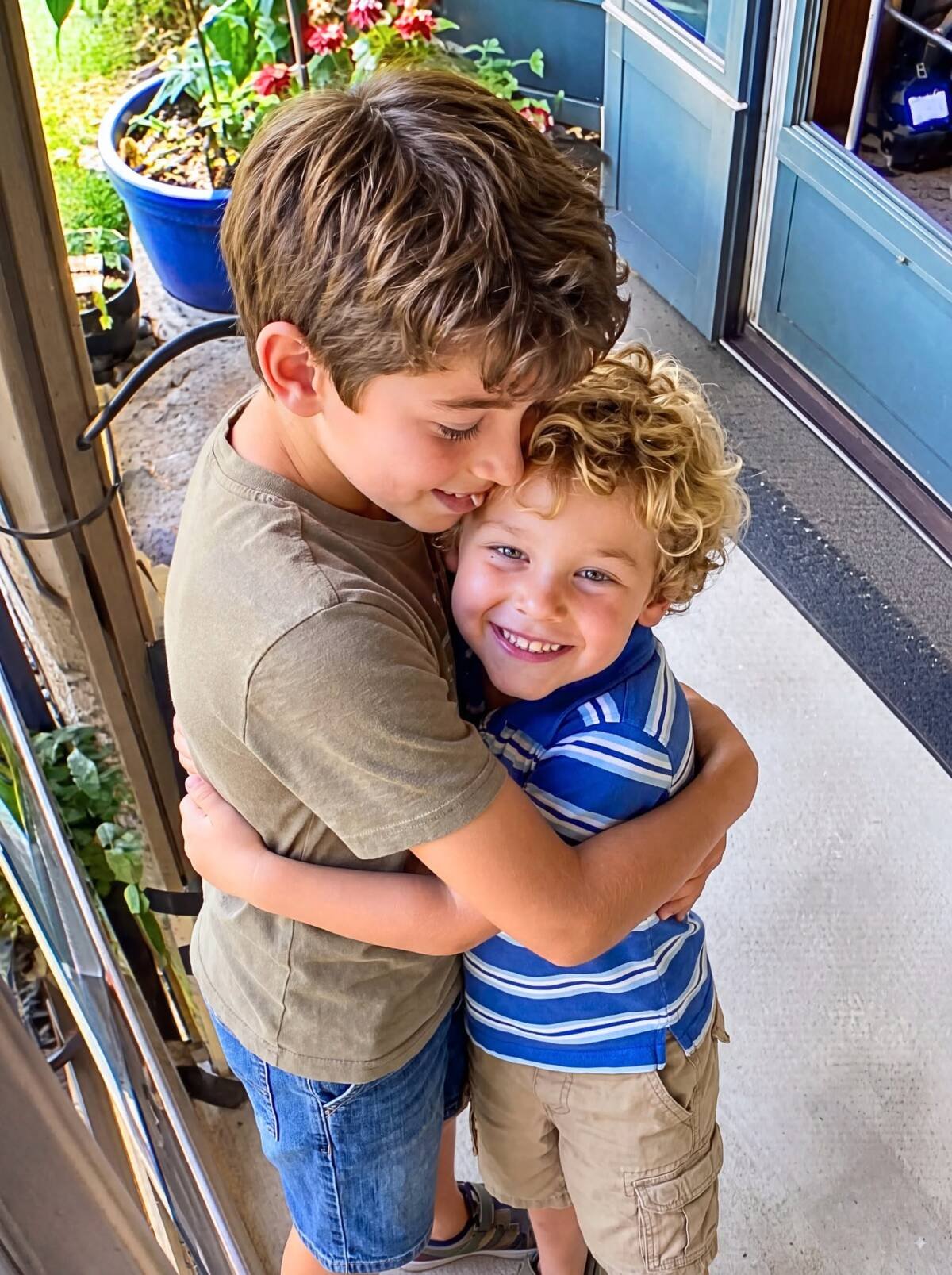
Introduction: The Ritual of the Brown Paper Bag
For twelve years, my morning began precisely at 6:00 AM in the dim, yellow warmth of our suburban kitchen. The routine was sacred: two roasted turkey sandwiches on multigrain sourdough, crisp honeycrisp apple slices soaked in lemon water so they wouldn’t brown, a stainless steel thermos of piping-hot black roast, and a single folded 3×5 index card tucked beneath a cloth napkin.
The apples were an homage to his childhood; Edward had once mentioned that his mother packed them during his elementary school years in western Pennsylvania. The handwritten index cards began during the first week of our marriage. I had looked at his rugged, oil-stained construction lunchbox sitting on the granite counter and decided it needed something soft—a tangible reminder that before he stepped foot onto cold scaffolding or swung a framing hammer beneath the summer sun, someone had held him in her thoughts.
“Stay safe up there today. Love you always.”
That was likely the sentiment on the very first card. Over the next decade, as our family grew, our ten-year-old son, Jamie, added his own scribbled contributions with Crayola markers: “BE SAFE DAD,” “BRING HOME PIZZA,” “YOU ARE MY HERO.” Every evening at 6:15 PM, Edward walked through our back door wearing dusty steel-toed boots, heavy canvas Carhartt overalls, and a tired, sun-weathered smile. The lunchbox on the kitchen island was always bone-dry and completely empty. I never questioned it. Why would I? In a solid, working-class marriage built on honest labor and mutual devotion, an empty lunchbox is simply the quiet proof of an honest day’s appetite.
Until a rainy Tuesday morning in late October.
Jamie was sitting on the breakfast bar, kicking his heels against the cabinetry while munching on toasted waffles. I had just finished slicing the turkey and was reaching for the brown paper bag when my son looked up, squinted his hazel eyes, and said something that sounded like an innocent joke:
“Mom, you really don’t need to pack Dad’s lunch anymore.”
I chuckled softly without turning around. “And why is that, kiddo? Your dad burns about four thousand calories framing walls all day. He’d starve by noon.”
Jamie shrugged, swinging his legs harder. “Because he throws it away by the corner trash can every single morning, Mom. He never eats it.”
My ceramic knife stopped dead against the wooden cutting board. The kitchen went deathly quiet, save for the rhythmic drip of the coffee maker.
“What did you say, Jamie?”
“Our school bus stops at the corner of Maple and 4th,” Jamie said matter-of-factly, as though reporting the weather. “Yesterday, while we were waiting for the light to change, I saw Dad pull his truck over. He walked up to the big municipal bin, put your brown bag on the concrete ledge, and then he pulled a duffel bag out of his truck bed. He took off his muddy work clothes and put on his shiny dark wedding suit. Then a fancy silver car pulled up, he hugged some lady with dark hair, and he got into her passenger seat.”
The smile on my face didn’t merely fade; it collapsed. The air turned thin, suffocating, and metallic.
Twelve years of marriage. Hundreds of handwritten cards. Thousands of packed lunches. And in thirty seconds, my ten-year-old child had dismantled the entire foundation of the life I thought I was living.
Act I: The Stakeout at 4th and Maple
Parental instinct urges you to rationalize the unthinkable. Jamie was confused. He saw another man in a similar pickup. Children conflate dreams with reality.
Yet as Edward came down the stairs at 6:45 AM, smelling of pine tar soap, wearing his faded canvas work jacket and scuffed work boots, my chest ached with a physical sickness. He smiled warmly, kissed my cheek, grabbed the packed lunchbox from the counter, and whispered his customary, “See you at six, sweetheart.”
I stood frozen by the window, watching his white Ford F-150 rumble down our suburban driveway.
The moment his taillights cleared the cul-de-sac, I grabbed my keys, threw on an overcoat, and walked to my sedan. I didn’t take the primary thoroughfare toward the downtown commercial developments where Edward claimed his framing crew was erecting mid-rise apartments. Instead, I took the winding access road parallel to 4th Street, parking sixty yards back beneath the sprawling branches of an overgrown weeping willow.
The morning mist clung to the asphalt. At 7:08 AM, Edward’s pickup pulled onto the shoulder adjacent to the municipal park’s service entrance.
Through my windshield, I watched the man I had shared a bed with for twelve years step out of his cab. He carried the brown paper bag in his right hand. He walked toward the public waste receptacle, but Jamie had been remarkably observant: Edward did not discard the lunch.
He placed the bag gently on the clean wooden slats of a park bench directly adjacent to the bin.
Then, Edward unzipped the bag. He reached inside, bypassed the sandwiches, ignored the crisp apples, and retrieved the small, folded white index card I had written only forty-five minutes earlier.
Through my telephoto lens, I watched his face. He unfolded the paper. He read it once. He lowered it, took a deep breath, raised it again, and read it a second time. Then, with an almost reverent tenderness, he carefully pressed the creases flat, slipped the card into his breast pocket, and zipped it secure.
What followed made my blood turn to ice water.
Edward walked to the bed of his truck, unlocked the diamond-plated toolbox, and pulled out a tailored garment bag. Right there on the quiet, wooded shoulder, he stripped off his soiled Carhartt overalls, his muddy work boots, and his thermal work shirt.
Beneath the rough garments, he was clean-shaven and freshly groomed. From the garment bag, he produced a bespoke, midnight-blue three-piece wool suit—the exact tailored cut he had worn on the day we exchanged vows in a modest chapel in Savannah twelve years prior. He slipped into hand-burnished oxblood leather dress shoes, adjusted a silver tie clip, and smoothed his lapels.
At 7:22 AM, a sleek silver Audi A6 sedan pulled smoothly onto the shoulder.
A woman in her late thirties with sharp, chin-length dark hair, wearing an elegant camel-hair coat and designer sunglasses, stepped out. She did not act like an illicit lover; she walked with the crisp, efficient authority of a corporate executive. She greeted Edward with a warm, familiar embrace, handed him a leather portfolio, and held open the passenger door.
Edward climbed inside. The Audi accelerated smoothly into the morning commuter traffic heading downtown.
My hands were shaking so violently against the steering wheel that the keys rattled in the ignition. I pulled out into the flow of traffic, maintaining a five-car buffer.
We were not heading toward an industrial construction zone. We were heading straight into the financial heart of the city.
Act II: Meridian Architecture Group
The Audi turned into the subterranean executive parking deck of 400 Grand Avenue—a soaring, thirty-story monolith of architectural glass, polished black granite, and brushed steel.
I parked along the street meter outside, my heart hammering against my ribs like a trapped bird. I pulled my coat collar high around my neck and pushed through the heavy revolving glass doors into the main lobby.
The atrium was a cathedral of high commerce: limestone floors, twenty-foot indoor bamboo installations, and a directory board listing private equity funds, corporate law firms, and engineering consultancies.
I walked toward the security desk, my eyes scanning the high-gloss directories until they locked onto Suite 2400:
MERIDIAN ARCHITECTURE GROUP
Principal Partners: E. Vance, AIA | M. Chen, RA
My breath hitched. E. Vance. Edward Vance.
I stepped into the elevator behind a group of attorneys, riding the silent car up to the twenty-fourth floor. When the brass doors slid open, I emerged into an expansive, light-filled architectural studio. The walls were lined with breathtaking three-dimensional scale models: sprawling children’s medical complexes, civic cultural centers, cantilevered suspension bridges, and cutting-edge municipal libraries.
Behind a minimalist reception desk of white Italian marble sat a poised receptionist speaking quietly into a headset. Behind her, carved into backlit frosted glass, was the firm’s motto: Designing the Bridges of Tomorrow.
To the left was a prominent glass exhibition wall showcasing regional and national design accolades. Featured prominently in half a dozen framed architectural journals, ribbon-cutting ceremonies, and governor’s awards was my husband.
Edward was pictured shaking hands with the mayor, holding blueprints beside state senators, and receiving the prestigious American Institute of Architects Gold Medal for Urban Design.
He was not holding a framing hammer. He was not hauling concrete blocks. He had never been an hourly laborer on a commercial crew.
He was the founding principal and majority owner of one of the most celebrated architectural firms in the tri-state area.
At that exact moment, down the wide corridor lined with drafting tables, a conference room door swung open. Edward and the dark-haired woman—Margaret Chen—walked out, reviewing a stack of architectural vellum.
I heard Margaret’s clear, exasperated voice carry down the hallway:
“Twelve years, Edward. Your firm employs sixty-five architects, you just secured the multi-million-dollar municipal riverwalk commission, and your wife still thinks you’re framing townhouses in the mud? You’re insane.”
Edward stopped, his voice dropping into a tense, pained whisper:
“You don’t understand, Margaret. It started as a small lie when we had nothing, and then it snowballed into a monster. She fell in love with a working man. If I tell her who I really am now, it will destroy her trust completely.”
I stepped out from behind the marble display pillar, my voice cutting through the open-concept studio like a razor:
“Then why don’t you start by telling me right now, Edward?”
Act III: The Architect in the Corner Office
Edward spun around on his polished leather heels so fast he nearly knocked over a pedestal holding a balsa-wood scale model of a university amphitheater.
Every drop of color drained from his face. His lips parted, but no sound came out. Behind him, Margaret Chen froze, looked from Edward to me, and closed her eyes in immediate, intuitive recognition.
“Rachel,” Edward whispered, taking a staggered step forward, his hands raised in instinctive surrender. “Rachel, please. It isn’t what it looks like.”
“Don’t you dare say that to me,” I replied, my voice shaking with a terrifying mixture of grief, shock, and mounting fury. “Jamie saw you. He saw you dump my food by the trash can. He saw you strip into this suit. He saw you get into her car. Who are you? Who the hell have I been married to for twelve years?”
Margaret Chen stepped between us, her hands open in a calm, professional de-escalation posture.
“Mrs. Vance, my name is Margaret Chen. I am Edward’s business partner and senior design director. There is no affair. There has never been an affair. I drive him from that park bench because he parks his pickup out of sight every morning like a fugitive. Please, come into his office. You deserve the complete truth.”
I followed them down the glass-walled corridor. Passing drafting stations where junior architects stopped clicking their CAD mice to stare, I felt completely unmoored from reality. The man walking in front of me had the broad shoulders and posture of the construction worker I kissed goodbye every morning, yet he moved through this multimillion-dollar enterprise with absolute authority.
We entered a massive corner office wrapped in floor-to-ceiling glass, offering a panoramic view of the city skyline.
The room was stunning: drafting boards littered with charcoal sketches, leather Mies van der Rohe lounge chairs, and a large mahogany desk. But what stopped me in my tracks were the personal artifacts decorating the space:
Our framed wedding photograph from twelve years ago, sitting prominently beside his computer monitors.
A framed crayon drawing of a blue fire truck signed by Jamie in kindergarten.
A candid, sun-drenched photograph of me laughing on our back patio, taken during a family barbecue two summers ago.
I sank into a leather armchair, my legs trembling so severely I could no longer stand.....