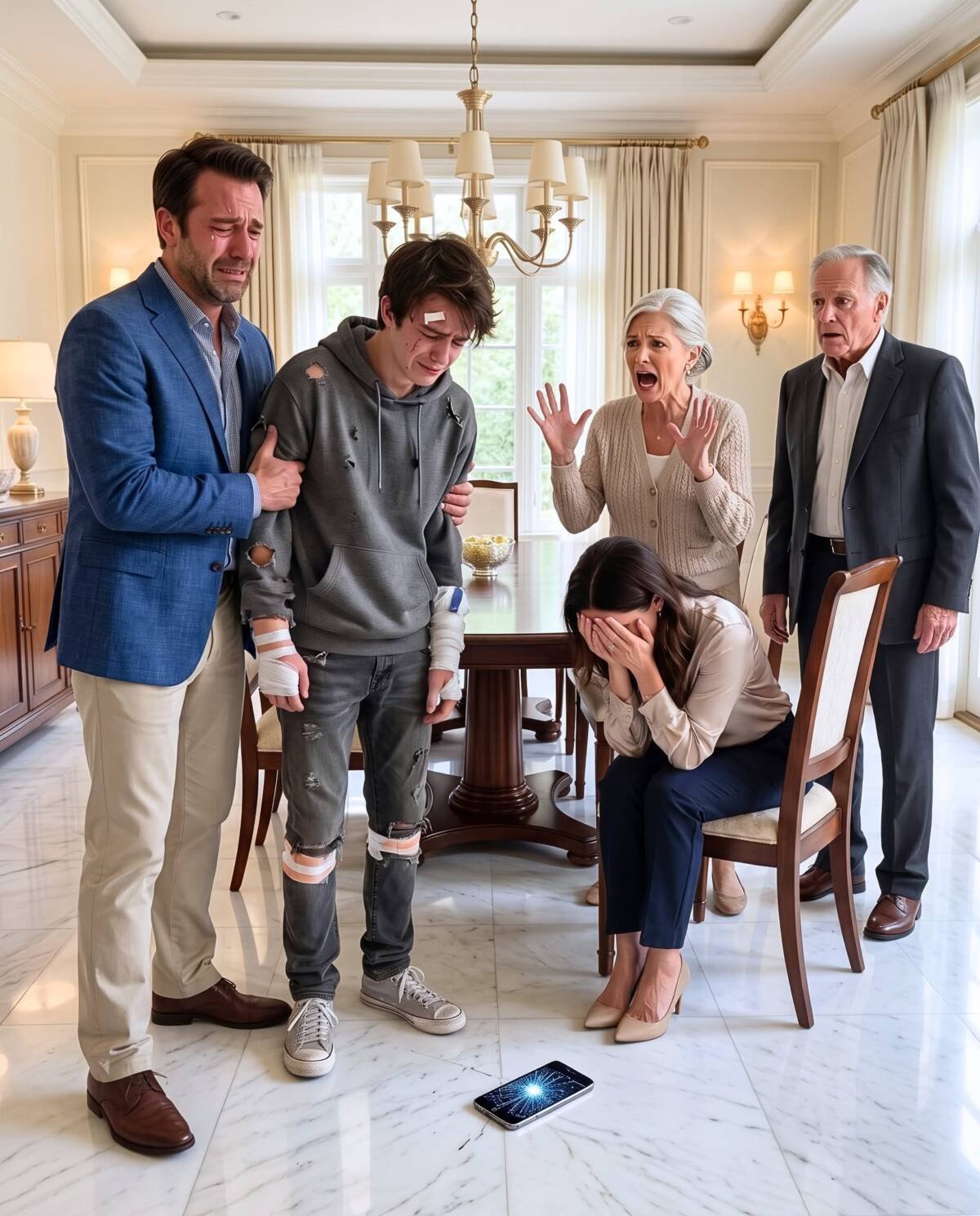
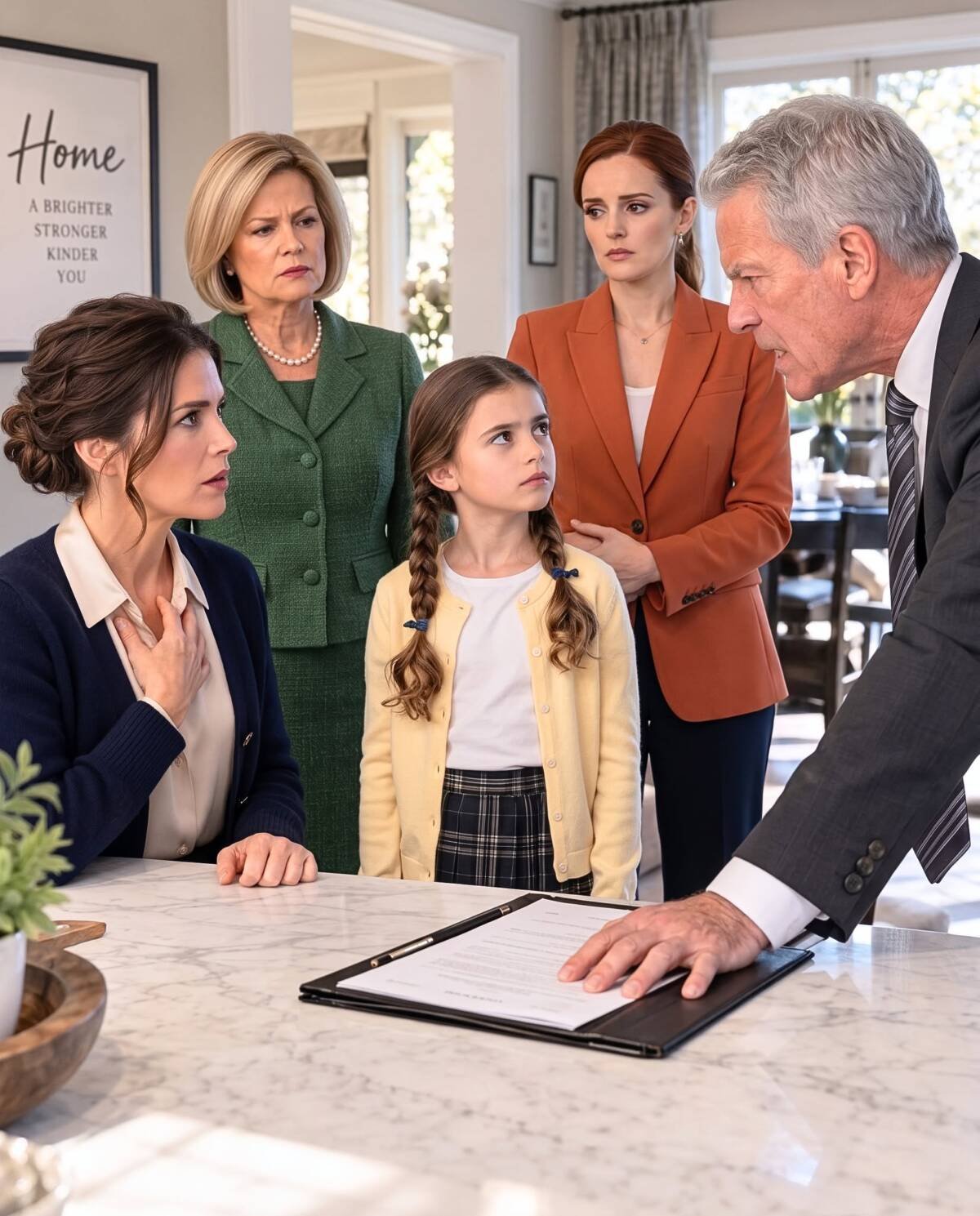
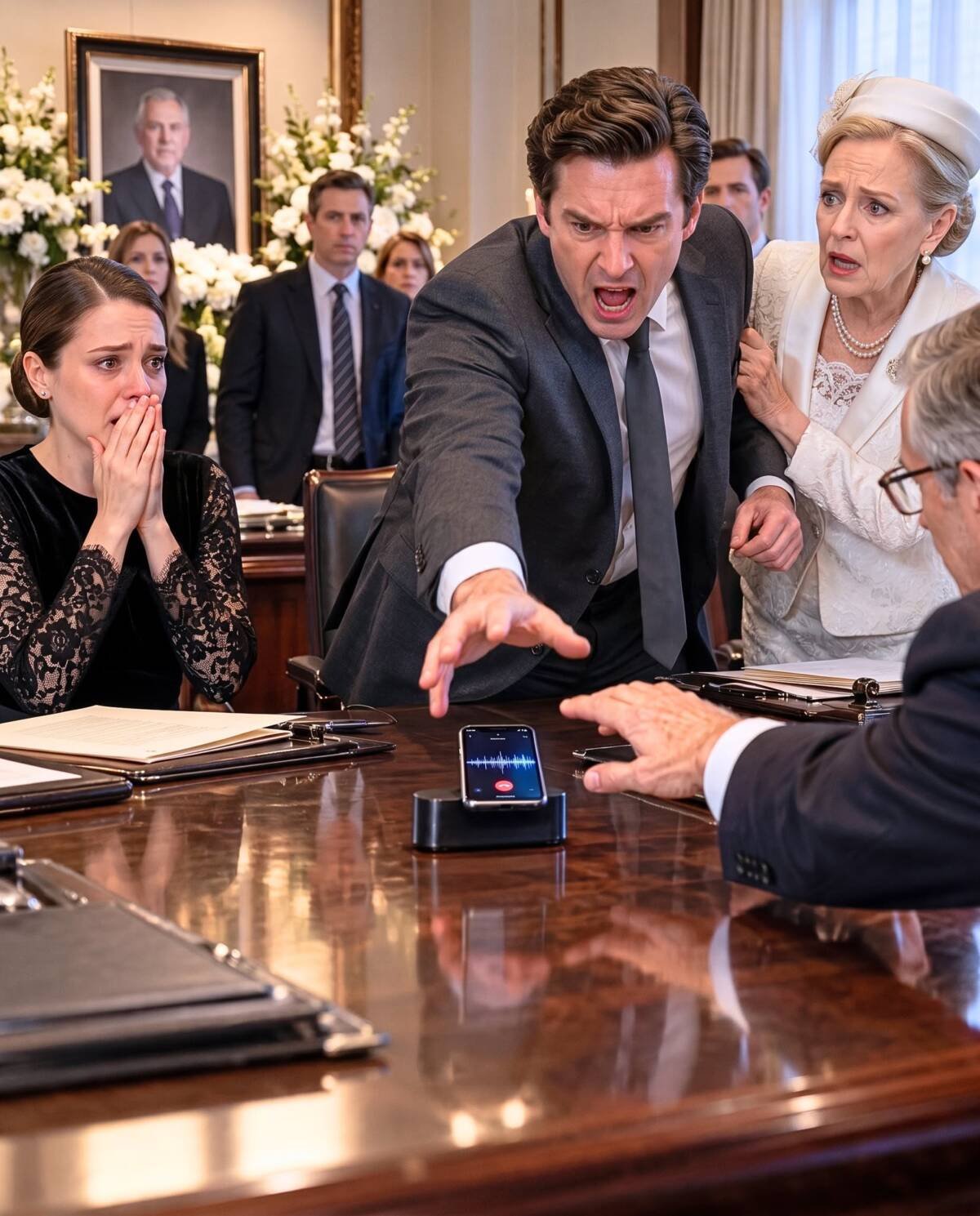
After years of being dismissed as the family disappointment, Mary White faced her father in court when he challenged the inheritance her grandmother had left her. He arrived confident that money, influence, and a carefully constructed story would be enough to win. But when Mary submitted a file containing records he had never expected to see, the courtroom fell silent—and the man who had spent a lifetime underestimating his daughter finally began to understand his mistake.
Introduction: The Daughter He Never Believed In
“You’ll never be someone I’m proud of.”
Those were the words my father used when he dragged me into court, convinced he could take the house my grandmother had left me.
He sat across the courtroom in an expensive suit, wearing the same confident expression I had seen throughout my childhood. Beside him sat his attorney, a man who seemed to believe the case was already decided. They spoke about me as though I were an ungrateful child who had somehow manipulated an elderly woman into changing her will.
I sat alone at the defendant’s table.
My father had spent years telling our family that I was difficult, selfish, and incapable of building a successful life. He had dismissed my achievements, mocked my military service, and made sure that anyone who might have supported me heard his version of the story first.
Now he intended to take the one thing my grandmother had deliberately left in my hands.
He believed I would become frightened, lose my composure, and eventually surrender.
I did none of those things.
I waited until the appropriate moment, opened my briefcase, and handed the judge a carefully prepared file.
She began reading.
At first, her expression remained neutral. Then she turned a page, paused, and read the information again. Her pen stopped moving. She looked toward my father, then back at the documents in front of her.
Finally, she raised her eyes.
“Sir,” she asked slowly, “do you understand who your daughter is?”
For the first time in my life, my father had no immediate answer.
To understand how we reached that moment, you need to understand the family I grew up in, the grandmother who refused to believe my father’s version of me, and the years I spent building a life he never bothered to understand.
Because the courtroom confrontation was not the beginning of our story.
It was the moment his version of it finally began to fall apart.
Part One: Growing Up in the Shadow of My Sister
My father was a man who understood the value of appearances.
He knew how to dress for an occasion, how to shake hands with the right people, and how to tell a story that made him look generous, responsible, and respectable. After my mother died when I was nine, he presented himself to the world as a devoted widower who had sacrificed everything to raise two daughters alone.
Relatives praised him. Neighbors admired him. Friends at his country club described him as a man who had put his family first.
Inside our home, however, the atmosphere was very different.
My older sister, Lauren, quickly learned how to live within the rules he created. She agreed with him in public, laughed at his jokes, and rarely challenged his decisions. She depended on his money, and he rewarded her willingness to follow his lead.
Lauren received expensive clothes, credit cards, and gifts that appeared without warning. At family gatherings, Dad proudly described her as his greatest accomplishment.
I usually sat a few chairs away, listening.
My relationship with him was different because I kept asking questions. I wanted to understand why rules applied to me but not to Lauren. I wanted to know why my achievements were dismissed and why even ordinary childhood expenses became evidence of a debt I supposedly owed him.
He treated every question as a personal insult.
Over time, he developed a strategy that was far more effective than simply arguing with me. He began shaping what other people believed about me.
When relatives asked why I rarely attended family dinners, he told them I preferred being alone. When neighbors wondered why I seemed distant, he explained that I had always been difficult. When someone questioned why I was not closer to the family, he presented himself as the patient father who had tried everything.
The more he repeated his version of events, the more people accepted it.
By the time I reached my teenage years, I had learned that defending myself often made matters worse. If I protested, I was disrespectful. If I remained quiet, I was cold. If I succeeded, I was showing off. If I failed, I was proving him right.
There was no response that could satisfy someone who had already decided what kind of person I was.
When I turned sixteen, I began working after school, bussing tables at a local restaurant. I wanted to save money, become independent, and eventually pay for my own education.
My father responded by charging me thirty dollars a week to live in my bedroom.
He recorded the payments in the household budget and described them as a lesson in responsibility. Lauren, who was older and still living under the same roof, paid nothing.
At Christmas, the difference between us became impossible to ignore.
Lauren received jewelry in front of the family. I received an envelope containing a photocopy of my grocery bill and a handwritten note.
“Merry Christmas. Balance due.”
I remember holding that paper and wondering whether he understood what he was doing.
Perhaps he did.
Perhaps making me feel indebted was the point.
I kept the envelope for years, not because I wanted revenge, but because I needed a reminder that my childhood had not been as ordinary as he later claimed.
I was not asking him for luxury. I wanted encouragement, fairness, and the simple feeling that my father was glad I existed.
Those things never came easily.
The Achievements He Refused to Celebrate
School became the first place where I discovered that my father’s opinion did not have to determine my future.
I worked hard. I earned good grades, made the honor roll, and collected track trophies. I learned to organize my time, meet deadlines, and keep going even when I was exhausted.
My father rarely acknowledged any of it.
If I received recognition, he found a way to minimize it. If I won something, he suggested that the competition had been easy. If I talked about my plans, he warned me that I was being unrealistic.
Eventually, I stopped bringing my achievements home.
I learned to celebrate quietly.
At eighteen, I committed myself to a military career. I knew it would require discipline, sacrifice, and years of hard work, but I wanted a future that did not depend on my father’s approval.
He did not congratulate me.
Instead, he told relatives that I had chosen the military because I lacked the intelligence to succeed in the civilian world.
According to him, I would spend my career answering phones, following orders, and doing work nobody else wanted.
I did not argue.
I had finally begun to understand that some people interpret every explanation as an invitation to criticize you further.
So I left.
And I built my life one decision at a time.
Part Two: The Day My Father Mocked My Uniform
Four years after beginning my military career, I stood on a parade ground at Fort Benning as I received my commission as a second lieutenant.
Families gathered around the ceremony. Parents carried flowers, siblings took photographs, and proud relatives embraced the newly commissioned officers.
For many of us, the occasion represented years of effort and a major step toward a future we had worked hard to earn.
My father arrived late.
He wore an expensive navy suit, and Lauren stood beside him, looking at her phone. Neither appeared particularly interested in the ceremony.
I hoped, despite everything that had happened before, that seeing me in uniform might change something.
Perhaps he would recognize the work behind the moment. Perhaps he would finally offer a few words of encouragement.
Instead, he looked down at my dusty boots and laughed.
“She joined the Army because a brainless fool would starve in the real world.”
His words carried across the small group standing near us.
The officers around me fell silent.
For a moment, I felt the familiar heat of humiliation rise in my chest. I wanted to explain what I had accomplished, how hard I had worked, and how much his words hurt.
Then I remembered something I had spent years learning.
I did not have to answer every insult.
I straightened my posture, gave a precise salute toward the reviewing stand, and walked away.
I did not look back.
That afternoon did not make me stop caring about my father’s opinion. Years of wanting approval do not disappear because someone finally understands that approval may never come.
But it changed the way I responded to him.
I began to understand that my future could not be built around convincing one person to see me differently.
I had a career to build, responsibilities to fulfill, and a life waiting beyond the boundaries of our family home.
My father could keep his opinion.
I would keep moving.
Part Three: The Grandmother Who Saw Me Clearly
During my first deployment, there was one person in my family who never made me feel that I had to prove my worth.
My grandmother, whom we called Gran, lived on a substantial property in Winston-Salem, North Carolina. She had watched my father grow into a man who valued control and appearances, and she had never been particularly impressed by the image he presented to the outside world.
Gran noticed things other people overlooked.
She noticed when I was excluded from family conversations. She noticed how quickly my father changed the subject when someone praised me. She noticed that Lauren’s mistakes were forgiven while mine became evidence of a supposed character flaw.
Most importantly, she never accepted the idea that I was ungrateful simply because I wanted independence.
Before I left for a deployment, she sent me a short message.
“You are ready. Come back.”
It was not a long speech. It was not an elaborate declaration of pride.
It was enough.
While my father treated my military service as a disappointment, Gran understood what it meant to commit myself to something difficult and continue despite the obstacles.
When I returned home, I continued my education and pursued legal training. My military career developed in ways my father had never imagined. I eventually entered the Judge Advocate General’s Corps, where I served as a military attorney and took on increasingly demanding legal responsibilities.
Later, I worked in military prosecution, handling complex cases that required careful analysis, sound judgment, and an ability to distinguish evidence from accusation.
My father continued telling relatives that I was a low-ranking soldier who answered phones.
I eventually stopped correcting him.
Gran, however, made an effort to understand.
When I received new insignia, she drove several hours to attend the ceremony. She arrived with an oak cane in her hand and pride in her eyes.
Afterward, she held both my hands.
“I see you, Mary,” she said.
I had spent much of my life waiting to hear something like that from my father.
Instead, I heard it from the person who had never needed convincing.
Those four words stayed with me long after the ceremony ended.
The Inheritance Nobody Expected
Gran died fourteen months later.
Her death left a silence that felt different from the grief I had experienced as a child. I had lost someone who understood me without requiring an explanation, someone who had offered support without attaching a price to it.
The family gathered at a lawyer’s office in Winston-Salem for the reading of her will.
My father arrived expecting to inherit most of the estate. He was her only surviving son, and he had spent years assuming that the property would eventually become his.
Lauren sat beside him, dressed in black and visibly upset.
I sat across the table, trying to prepare myself for another family gathering in which my father’s expectations would determine the conversation.
The attorney opened the file and began reading.
Gran had left the Winston-Salem property, including the house and surrounding land, exclusively to me.
My father and Lauren received smaller cash bequests.
For several seconds, nobody spoke.
Then my father lifted his tea and took a slow sip.
“Your grandmother always had a foolish soft spot,” he said. “You think you can keep it, little soldier?”
I looked directly at him.
“The will is a legal document. Her decision needs to be respected.”
He gave me a thin smile.
“We will see.”
I knew that expression. I had seen it throughout my childhood whenever he encountered something he could not immediately control.
He was not considering accepting the decision.
He was already planning how to challenge it.
Gran had anticipated that possibility. Her will included detailed provisions documenting her intentions and supporting her capacity to make decisions about her estate. She had taken steps to ensure that her wishes were clear.
I believed those precautions would be enough.
I was wrong.
My father was about to turn an inheritance dispute into a campaign against my property, my professional reputation, and the career I had spent years building.
Part Four: The Lawsuit That Threatened Everything
Not long after the will was read, my father hired Gerald Foss, an attorney known locally for his aggressive approach to litigation.
Together, they filed a civil lawsuit challenging Gran’s estate plan.
Their argument was straightforward: Gran had allegedly suffered from cognitive impairment, and I had supposedly manipulated her into leaving me the property.
They suggested that my military background gave me unusual ways to influence people and that I had used those skills against a vulnerable elderly woman.
The accusation was offensive, but it was also serious.
The property was valuable, and the case threatened to become expensive. Even if I ultimately prevailed, I could spend months or years defending myself against claims that would follow me beyond the courtroom.
Then my father persuaded Lauren to support his case.
Her financial life was closely tied to him. He helped cover her mortgage, paid portions of her credit card bills, and contributed toward expenses connected with her children.
She knew what refusing him could cost.
Under pressure, she signed an affidavit claiming that I had prevented the family from visiting Gran during her final years.
The allegation was false.
But it gave my father something he had been seeking: a family witness whose testimony appeared to support his version of events.
He had spent decades creating the conditions that made the statement possible. Lauren had learned to depend on him, and he knew that financial dependence could be more persuasive than an argument.
The lawsuit now rested on two central claims: that Gran had lacked the capacity to make an informed decision and that I had improperly influenced her.
My father believed he had found a way to take the property without admitting that he simply disliked her choice.
But he did not stop at the civil case.
Anonymous accusations began arriving at my military command.
The letters alleged elder abuse, financial exploitation, and misconduct connected to Gran’s estate. They were detailed enough to trigger a formal review.
My security clearance was temporarily suspended while the allegations were examined. My access to certain cases was restricted, and my professional responsibilities were reassigned pending the investigation.
Colleagues who had worked beside me for years suddenly became careful about what they said.
I understood why. Allegations involving elder abuse and professional misconduct could not simply be dismissed because the person accused denied them.
Still, the experience was devastating.
I had built my career around evidence, procedure, and accountability. Now I found myself defending my own reputation against claims that seemed designed to damage it before the facts could be fully examined.
The stakes were no longer limited to a house.
If the civil lawsuit succeeded, I could lose Gran’s estate. If the military investigation uncovered credible evidence of wrongdoing, my career could also suffer lasting damage.
My father had opened a second front.
And he appeared determined to win both battles.
Part Five: The Threat Behind the Birthday Party
Three months before the scheduled court hearing, an invitation arrived for the birthday party of Lauren’s youngest daughter.
Under ordinary circumstances, I might have declined. I had little desire to spend an afternoon around people who had accepted my father’s accusations without asking whether they were true.
But I decided to attend.
Part of me wanted to see my niece. Another part suspected that my father wanted an opportunity to measure how much the investigation had affected me.
The backyard was crowded with relatives, children, neighbors, and caterers. My father moved through the gathering as though nothing unusual had happened.
He laughed, poured drinks, and posed for photographs beside Lauren. Anyone who knew nothing about the lawsuit might have mistaken him for a generous grandfather enjoying a family celebration.
I stayed near the edge of the gathering.
When the guests moved outside for cake, I slipped into the kitchen to get a glass of water.
My father was waiting there.
The friendly expression disappeared as soon as we were alone.
He stepped closer, lowering his voice.
“Has your commander received my letters yet?”
I did not answer.
“Sign the papers giving up the house,” he continued, “and I will withdraw the complaint. Otherwise, I will make sure you regret fighting me.”
He smiled as though he had offered a reasonable solution.
“Where is someone like you going to find the money to fight me?”
For a moment, I was sixteen again, standing in the house where every expense had been used to remind me of my dependence.
But I was not sixteen.
I was an adult with a career, a record of professional service, and the ability to recognize a threat disguised as a negotiation.
As my father shifted his jacket, I noticed a rigid shape beneath the fabric. It appeared that he was carrying a recording device.
Suddenly, his behavior made sense.
He wanted a reaction.
He wanted me to raise my voice, threaten him, or lose control. If he could record an angry exchange, he might be able to present it to others as evidence that I was unstable or aggressive.
Whether the recording would help him legally was another question. But he clearly believed he could use it to his advantage.
He waited for me to respond.
Instead, I met his eyes.
“Thank you for the advice, Mr. White.”
I deliberately did not call him Dad.
For a moment, confusion crossed his face.
Then I walked out of the kitchen and returned to the party.
I did not confront him in front of the guests. I did not send an angry message afterward. I did not give him the emotional reaction he had come looking for.
That night, I sat in my truck outside my apartment and let the anger pass before deciding what to do next.
I had learned that discipline was not the absence of emotion. It was the ability to keep emotion from making decisions on your behalf.
The next morning, I returned to the case.
I reviewed the evidence, organized the records, and worked with the appropriate professionals to prepare a response to the allegations. I focused on documentation that could establish dates, communications, and the actual circumstances surrounding Gran’s final years.
I also made sure the legal process would determine what the evidence proved.
My father had spent years relying on the assumption that I would react emotionally and make mistakes.
This time, I intended to let the record speak for itself.
Part Six: The Morning We Faced Each Other in Court
On the morning of the hearing, I arrived at the courthouse forty-five minutes early.
I wore a charcoal suit and carried a leather briefcase containing the materials I had spent weeks organizing.
My father arrived with Gerald Foss. Both appeared confident.
Foss greeted the court staff, arranged his papers, and spoke to his client in a low voice. My father looked in my direction and gave me a small, dismissive smile.
It was the same expression he had worn when I brought home a report card he refused to sign.
Judge Patricia Okafor took the bench at eight o’clock.
The proceedings began with Foss presenting the arguments against the inheritance. He referred to Gran’s medical records and emphasized the diagnosis of mild cognitive impairment that had appeared in her later medical history.
He argued that the diagnosis raised questions about whether she had fully understood her estate decisions.
He also repeated the allegation that I had used my military training to influence her.
The presentation was polished. Foss spoke confidently and selected language that made the accusations sound alarming.
But a diagnosis alone does not automatically establish that someone lacked the legal capacity to make a will. The circumstances, the person’s actual abilities, the relevant legal standard, and the available evidence all matter.
That distinction would become central to the case.
Then Foss called Lauren.
She walked to the witness stand with her hands clasped tightly in front of her. My father watched from the plaintiff’s table.
Lauren described the family’s relationship with Gran and repeated the allegation that I had discouraged visits.
“She told me that if I came to see Gran, she would use her military connections to ruin my husband’s business,” Lauren said.
I listened without interrupting.
Her words hurt, but I understood the pressures surrounding her. Understanding those pressures did not make her statement true, nor did it remove her responsibility for what she had said.
When she finished, Foss returned to his table looking satisfied.
My father leaned back in his chair.
He believed that the medical records and Lauren’s testimony had created the picture he needed: an elderly woman who could not protect herself and a granddaughter whose ambition had crossed a line.
For years, he had described me as dangerous whenever I refused to obey him.
Now he wanted the court to accept that description as evidence.
When my turn came, I opened my briefcase.
I submitted records documenting my communications with Gran over the relevant period, including available military communication logs, deployment information, and records that could be independently verified through the appropriate channels.
The documents established when I had been overseas, when I had been in contact with Gran, and how those communications had continued during my service.
They did not require the court to accept my word alone.
They provided a way to test the allegations against dates and records.
I explained that the evidence showed consistent contact between Gran and me, including communications and welfare checks during periods when I was away from home.
The records challenged the suggestion that I had simply disappeared from her life or secretly controlled her access to other people.
Judge Okafor began reviewing the material.
My father’s expression changed.
At first, he watched the judge with mild impatience. Then he leaned forward. His eyes moved between the documents and my face.
Finally, he stood abruptly.
“She fabricated those records,” he declared. “She is just a low-level soldier who answers phones. She must have stolen official seals to make them look legitimate.”
Foss immediately requested that the evidence be excluded and questioned its authenticity.
Neither man seemed prepared for what happened next.
I reached into my briefcase and removed a separate folder containing documentation supporting the authenticity of the records and identifying the appropriate channels through which they could be verified.
“Your Honor,” I said, “the plaintiff has accused me of falsifying official records. I respectfully request that the court review the authentication information and verify the relevant credentials through the proper authorities.”
Judge Okafor opened the folder.
She read the first page, then turned to the second.
Her expression became more serious as she examined the documentation.
The courtroom grew quiet.
My father shifted in his chair. Foss stopped speaking.
The judge looked toward me, then back at the papers.
Finally, she raised her eyes.
“Mr. White,” she said, “do you understand who your daughter is?”
My father blinked.
“Of course,” he replied. “She is a deceitful liar.”
Judge Okafor placed the documents on the bench.
“Your daughter is a commissioned military officer with substantial legal experience in military prosecution. The records she has submitted include material that can be independently authenticated. Your allegations about their authenticity will need to be supported by evidence, not simply repeated.”
The silence that followed was unlike anything I had experienced in my father’s presence.
He had spent years treating my military career as a joke because he had never taken the time to understand it.
Now, in a courtroom, his own assumptions had become a liability.
The judge continued reviewing the evidence.
For the first time, my father seemed uncertain about the outcome.
Part Seven: The Letter Gran Left Behind
The records were important, but they were not the only evidence I had prepared.
I submitted another document: a letter Gran had written before her death as part of her efforts to explain her intentions regarding the estate.
It described her relationship with me, her reasons for leaving me the property, and her concerns that her son might challenge her decision.
The letter was not a substitute for the legal requirements governing a valid will. It was additional evidence that had to be considered alongside the will, the relevant medical information, and the circumstances surrounding her decision.
But its contents made one thing clear.
Gran had not made her choice casually.
She had considered the possibility of a dispute and wanted her intentions documented.
The letter read:
“I know my son may challenge this decision. I want it understood that I have made my choice freely and after careful consideration. Mary has shown me consistency, responsibility, and kindness. I trust her to care for this property and preserve what it represents.”
I paused after reading the passage.
For a moment, I was no longer sitting in a courtroom.
I was back in Gran’s kitchen, listening to her talk about the land, the old house, and the memories connected to every room. I remembered the way she made tea, the way she asked about my work, and the way she listened to the answers.
She had not left me the estate because of my rank.
She had left it to me because she trusted me.
That distinction mattered more than anything my father had said.
Foss appeared increasingly uncomfortable. He reviewed his notes, spoke quietly with my father, and returned to the documents.
My father was no longer smiling.
He pointed toward me.
“You planned this,” he said. “You hid everything from me so you could humiliate me.”....