When my mother told me my health problems wouldn’t change the family’s vacation plans, she assumed I would eventually give in. Eleven days later, 12 relatives arrived at my property with suitcases, coolers, and enough groceries for nine days. They expected free rooms, unlimited access to my pool, and a house they believed belonged to the entire family. They never expected to find a locked gate, a legal notice, and a professional production crew already working inside. But the biggest shock came when my mother finally saw who was sitting in my house. She immediately started screaming.
Introduction: The Hospital Bracelet They Chose to Ignore
I was still wearing my hospital wristband when my mother informed me that my recovery would not interfere with the family’s vacation.
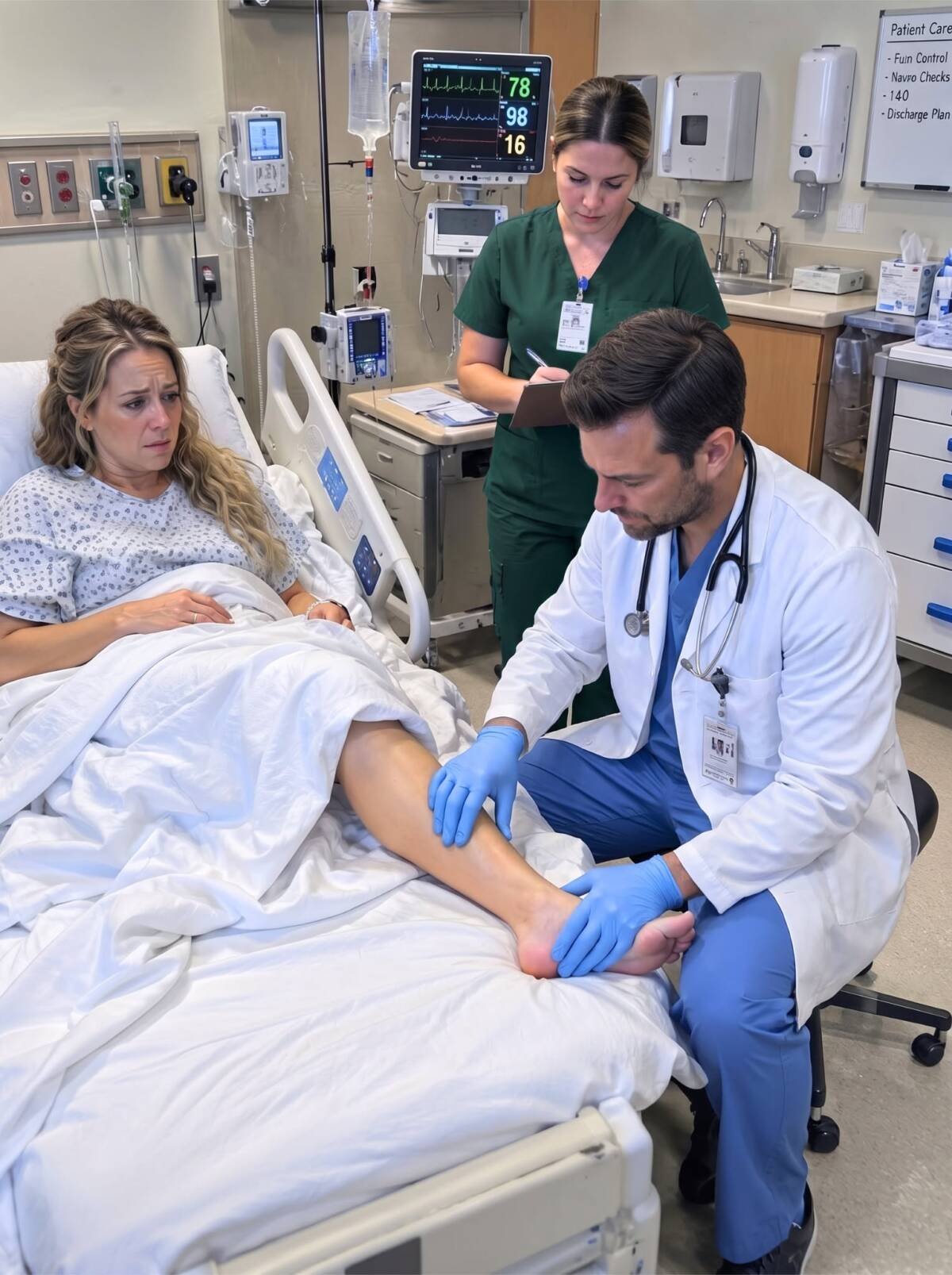
Eleven days earlier, I had collapsed at work and been hospitalized in Querétaro, Mexico. After examining me, the doctors instructed me to take my medication, get plenty of rest, avoid unnecessary stress, and give my body several weeks to recover before attempting to return to my normal routine.
My family, however, had already made other plans.
“What does nearly ending up in intensive care have to do with our vacation?” my mother asked. “We already took the days off.”
My name is Karla Mendoza. I’m 34 years old, and at the time, I was beginning to understand something painful about the people closest to me: they considered my boundaries optional whenever respecting them would inconvenience someone else.
My father, Ernesto, sat beside my hospital bed and announced that 12 relatives would be arriving at my home in San Miguel on Friday. They planned to stay for nine days.
My older sister, Lorena, smiled as though she were bringing me wonderful news.
“Having everyone around will be good for you,” she said.
I looked at both of them, exhausted and still recovering.
“No. I need to rest. I don’t want visitors.”
My mother immediately reminded me that everyone had already arranged time off work, booked their travel, and organized the trip.
“Then rearrange it,” I replied.
They laughed.
To them, my refusal was not a decision. It was an obstacle they expected me to abandon once they applied enough pressure.
Two hours later, my father posted a photograph of me in the family group chat. I looked pale, with an IV attached to my arm and a hospital wristband clearly visible around my wrist.
My mother’s caption announced that everyone would finally be together at “our house in San Miguel.”
That phrase bothered me more than almost anything else.
It wasn’t our house.
It was mine.
Six years earlier, I had purchased the land with my own savings and financed the construction through a combination of personal funds, a loan, and nearly four years of working weekends. Every major expense had been documented. Every payment had come from accounts I controlled.
My father had helped supervise part of the concrete pour for the terrace for three days. I appreciated his help, but over time, his version of events had expanded until he described himself as the man who had built my home.
My mother rarely corrected him.
My sister had begun treating the property as though it were a family resort.
And now, while I was still recovering from a medical emergency, they had decided to bring 12 people into my home for more than a week.
I thought the problem was simply that they refused to listen.
I was wrong.
The vacation was only part of a much larger plan.
Part 1: The House My Father Claimed as His Own
After I was discharged from the hospital, I returned to my home in San Miguel alone.
I wanted quiet, clean sheets, medication, and enough uninterrupted sleep to recover. Instead, I discovered that my sister had been using photographs of my property to promote her upcoming engagement.
Lorena had created a page featuring my garden, swimming pool, terrace, and the tree I had planted years earlier. Even the photographs of the outdoor dining area had been taken without asking me.
The headline read:
“Mendoza Family Residence — Built by Ernesto Mendoza.”
My backyard was also listed as the proposed location for her engagement dinner.
I stared at the page, trying to understand how my private property had become the centerpiece of an event I had never agreed to host.
I called my brother, Diego, and asked whether he knew anything about it.
At first, he hesitated. Then he sent me screenshots from a second family group chat, one that deliberately excluded me.
The messages made the situation much worse.
Lorena had written that I would complain initially but eventually surrender. Another message suggested that the family could use an old gate remote if I happened to be sleeping.
They were not making arrangements based on permission.
They were making arrangements based on the assumption that I would be too exhausted, too sick, or too intimidated to stop them.
I kept reading.
The real reason for the visit soon became clear.
My father’s plan was to present the property to Rodrigo’s parents as one of his construction projects. Lorena wanted her future in-laws to believe she came from a wealthy family with a beautiful residence available for private celebrations.
My mother had already promised nine days of free accommodation to relatives and guests without consulting me.
The house wasn’t simply a convenient place to stay.
It was part of the image they wanted to sell.
My father wanted recognition. My sister wanted to impress her future in-laws. My mother wanted the family vacation to proceed exactly as planned.
And all three expected me to provide the property, the bedrooms, the pool, the kitchen, and the hospitality without having a meaningful say in any of it.
I sent a message to the family group chat.
“The house will NOT be available. Do not travel expecting to stay here.”
My mother responded almost immediately.
“You can’t change everyone’s plans at the last minute.”
“I already told you no.”
“But we’re family.”
I looked down at the hospital bracelet still circling my wrist.
“That’s exactly why you should have listened.”
Lorena replied with a laughing emoji.
“See you Friday.”
That was the moment everything became clear.
My family hadn’t misunderstood me.
They simply didn’t believe my answer had any authority.
For years, I had been the person who made things easier. If someone needed a room, I found one. If someone wanted to organize a celebration, I opened my home. If a relative made an unreasonable request, I tried to find a compromise.
They had mistaken my willingness to help for a permanent obligation.
They assumed that because I had said yes in the past, I would eventually say yes again.
This time, I decided not to argue.
I would not send another long explanation. I would not spend hours trying to convince people who had already decided that my opinion didn’t matter.
Instead, I began making arrangements to protect my property.
And I did it quietly.
Part 2: Three Calls That Changed Everything
On Thursday morning, I made three important calls.
The first was to my lawyer, Patricia Salgado.
I explained what had happened, including my family’s messages, my father’s claims about the house, and my sister’s plans to use the property for her engagement celebration.
Patricia reviewed the deed, property records, and relevant subdivision rules.
Her conclusion was straightforward: the house belonged to me, and my relatives had no automatic right to enter simply because they were family members.
She recommended that I document my refusal clearly, preserve the messages, and take appropriate steps to prevent unauthorized access.
“The most important thing is to make your position unmistakable,” she told me.
I asked her to prepare a formal notice for the entrance.
My second call was to the security company.
I deactivated every old remote, changed the gate access code, and removed my parents’ and Lorena’s vehicles from the automatic entry list.
I also asked the company to confirm that the previous access credentials would no longer work.
I wasn’t interested in creating a confrontation.
I wanted to prevent one.
My third call was to an architectural photographer I had worked with several months earlier.
His production team had been searching for a suitable property for a ten-day editorial shoot. I had previously declined because my schedule was too busy.
Now, the arrangement made sense.
The crew needed a location. I needed my home to remain occupied by people who had a legitimate reason to be there and a written agreement authorizing their use of the property.
After reviewing the details, I accepted the proposal.
The team would arrive before my relatives and work under an agreement identifying me as the property owner.
The next call came from an event rental company.
They wanted to confirm an order for tables, 20 chairs, and two portable refrigerators for nine days.
The reservation had been made using my credit card information.
Lorena had saved those details after I had previously allowed her to make a purchase on my behalf.
I had never authorized her to arrange an event at my house.
I immediately canceled the order, contacted my card issuer, and took steps to secure the account.
By then, I was no longer dealing with a simple family disagreement. I was documenting a series of decisions that had been made using my property, my name, and financial information that had never been provided for this purpose.
That afternoon, I sent one final message.
“I am repeating this for the last time. No one has permission to enter or stay at my house. The property will be occupied for work.”
Lorena replied almost instantly.
“You’re so dramatic.”
I didn’t respond.
There was nothing left to explain.
My relatives were free to travel to San Miguel if they wanted to. They could book hotel rooms, rent another property, or change their plans.
What they could not do was assume that my home would be available simply because they had decided it would be.
For the first time in years, I allowed myself to consider the possibility that the family might be angry with me.
And I accepted that possibility.
My health, my home, and my right to make decisions about both were more important than keeping everyone happy.
Part 3: Twelve Suitcases at the Gate
At 10:42 a.m. on Friday, my security camera detected the first vehicle approaching the property.
A second followed.
Then a third.
Soon, all 12 relatives were gathered outside the entrance with suitcases, coolers, grocery bags, and enough belongings for the nine-day vacation they had planned despite my explicit refusal.
I watched the camera feed from inside the house.
My mother approached the keypad and entered the old access code.
A red light appeared.
She tried again.
The gate remained closed.
My father took out his remote and pressed the button several times. Nothing happened.
Lorena tried her own code, then looked toward the other relatives as though the security system had malfunctioned.
It hadn’t.
Every old credential had been deactivated.
The most revealing detail was the wooden sign strapped to the roof of my father’s vehicle.
It read:
“Casa Mendoza: Work of Ernesto Mendoza.”
He had brought a sign claiming the property as his accomplishment.
I watched him turn toward the gate and begin arguing with the security camera.
Then he noticed the production van parked inside.
A professional crew was already working throughout the garden, setting up cameras, lights, and equipment for the scheduled shoot.
Six crew members were moving between the terrace and the outdoor areas.
My father marched toward the entrance.
“Who authorized you to be here?” he demanded.
The producer approached calmly and explained that the team had a signed agreement with the property’s owner.
He showed my father the contract.
My name was clearly identified as the owner.
The agreement also documented the team’s authorized use of the property for the scheduled ten-day production period.
My father stared at the paperwork.
“This is a private family residence,” he insisted.
The producer did not argue about family history. He simply pointed to the contract.
Nearby, Beatriz, Rodrigo’s mother, had stopped in front of the laminated notice beside the keypad.
She read it carefully.
“Access permitted only with written authorization from the owner.”
Then she turned toward my father.
“Ernesto, didn’t you tell us this house belonged to you?”
For several seconds, no one answered.
My father began talking about the construction work he had supposedly managed. Lorena interrupted to explain that the entire situation was a misunderstanding.
My mother, meanwhile, was becoming increasingly angry.
She finally demanded that I speak to them.
I activated the gate’s speaker.
“I told you not to come.”
“We drove almost four hours!” my mother shouted.....