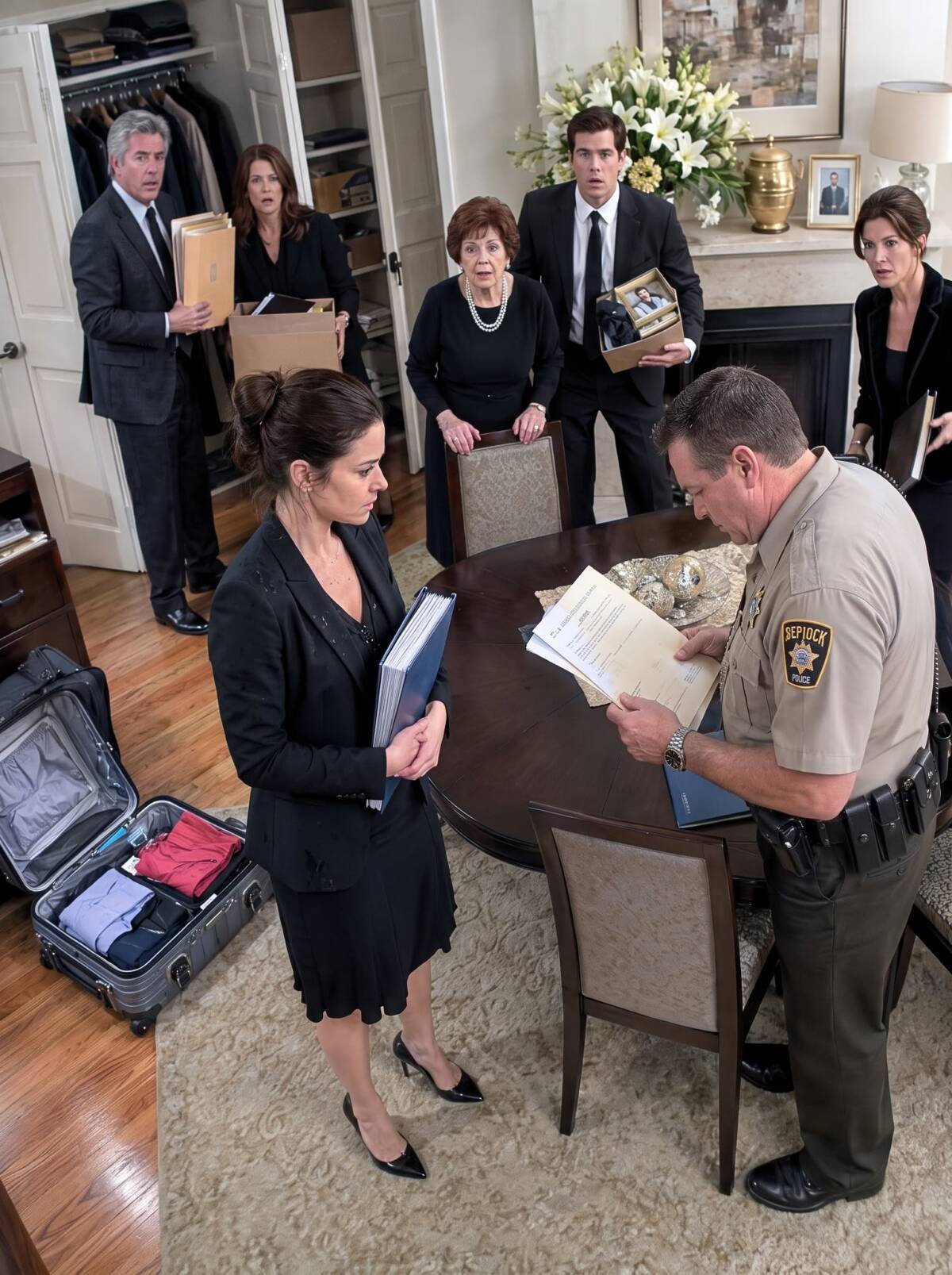
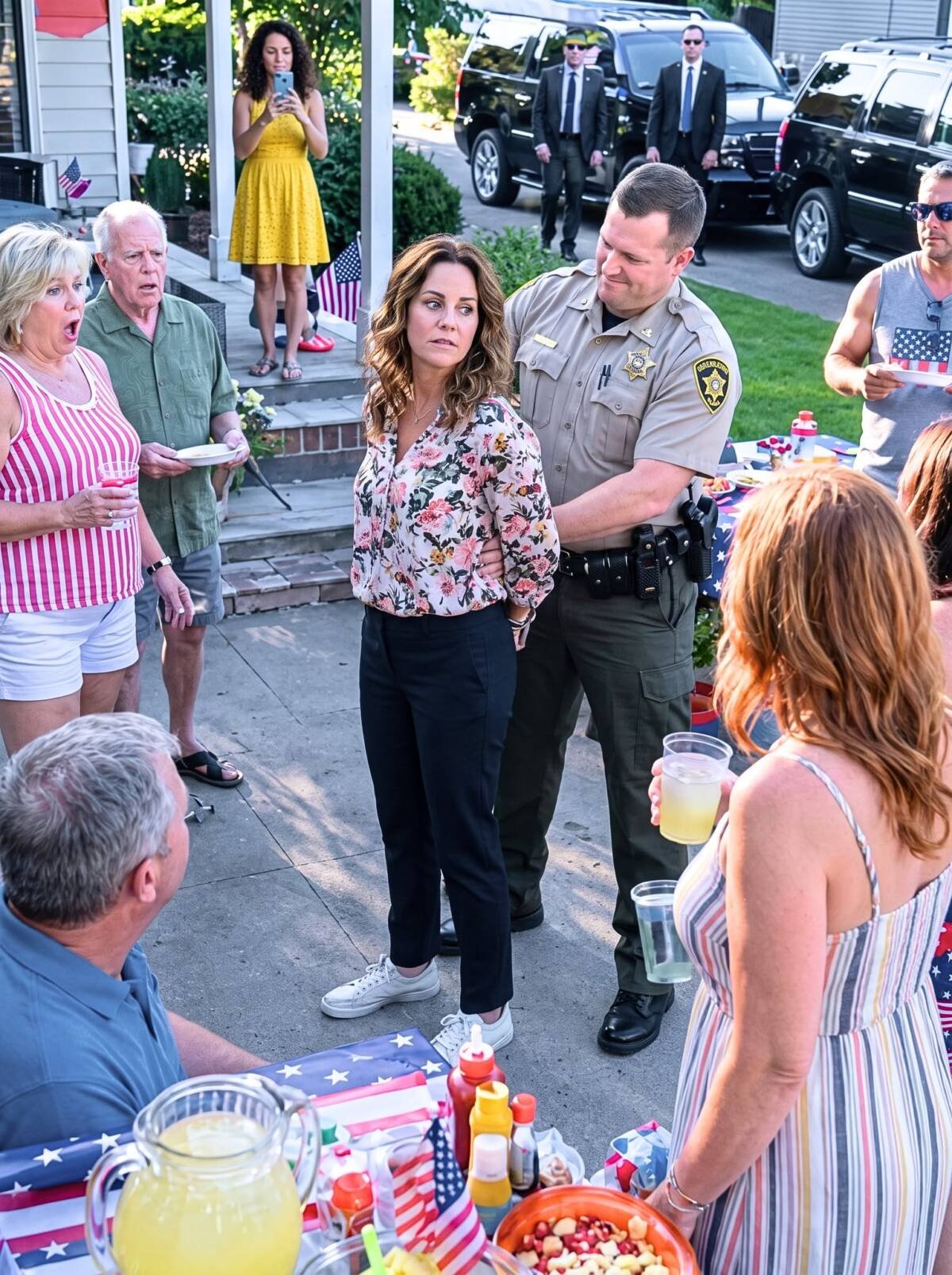
They mistook my grief for weakness, my silence for dependence, and my kindness for permission. They had no idea that while they were deciding I didn’t deserve a bedroom in the house my late husband bought, I was finalizing a defense contract that would change all of our lives forever.
At 5:12 on Thanksgiving morning, the house was still dark and silent, save for the hum of the refrigerator and the steady, rhythmic buzz of my phone vibrating across the granite kitchen counter.
I didn’t need to check the screen to know who it was. My younger sister, Chloe, had a habit of treating every minor inconvenience in her life like a five-alarm emergency. Still, I picked up the phone, wrapping my other hand around a mug of lukewarm coffee.
There was no greeting. No Happy Thanksgiving. Not even a half-hearted inquiry about how I was feeling at seven months pregnant.
“Mom and Dad need the upstairs guest rooms for the weekend,” Chloe said, her voice brisk and clipped. “Move your things out to the garage tonight. Ryan needs a quiet, private office while we’re here.”
I stood beside the sink, pulling Daniel’s faded Navy hoodie tighter around my shoulders. My husband had been gone for nine months, killed during an overseas operation, and his oversized clothes were the only thing left that still felt like a shield against the world.
“The garage?” I asked quietly. “Chloe, it’s twenty-eight degrees outside.”
Across the kitchen, my mother didn’t even look up from her mug. She kept stirring artificial sweetener into her coffee, the clink of the spoon against ceramic loud in the quiet room. At the dining table, my father lowered his newspaper just enough to glare at me over the top of his reading glasses.
“You heard your sister, Ava,” he said, his tone already frayed with irritation. “Stop acting like the whole world owes you special treatment.”
The sheer absurdity of the statement almost made me laugh.
Almost everything in that house existed because of Daniel. When he returned from his second deployment, he had used his savings and bonuses to pay off my parents’ mortgage so they wouldn’t lose the property. When my father needed emergency surgery and his insurance balked at the specialist fees, Daniel wrote the check without hesitation. When Chloe decided she wanted to attend a private law school she couldn’t afford, Daniel co-signed and covered the gap.
Nine months. That was all it had taken for my family to rewrite history and forget whose sacrifices had built the comfort they were currently enjoying.
The Quiet Before the Storm
A moment later, Chloe breezed into the kitchen wearing silk pajamas, cradling her miniature designer dog against her chest. Her husband, Ryan, trailed behind her with the effortless arrogance of a man who had spent his entire adult life failing upward in corporate finance.
“It’s temporary, Ava,” Chloe said, not bothering to meet my eyes as she poured herself a glass of orange juice. “Ryan has high-level remote meetings with his partners. He needs a door that closes.”
Ryan leaned against the doorframe and offered a thin, patronizing smirk. “Besides, the whole grieving-widow vibe in the main house is honestly a little exhausting. We’re trying to enjoy the holiday.”
My mother finally looked at me, though there was no warmth in her expression—only the anxious calculation of a woman determined to keep her favored daughter happy.
“Just make sure you keep your boxes stacked neatly against the back wall,” she instructed. “Ryan parks the Mercedes in there, and we don’t want anything scratching the paint.”
Ryan chuckled.
I looked from Chloe to Ryan, then to my mother, and finally to my father. Not a single one of them looked uncomfortable. Nobody hesitated. Nobody offered a space heater, an apology, or even the pretense that sending a seven-month-pregnant widow into an unheated concrete garage in late November was cruel.
They were waiting for me to cry. My father had already complained twice that week that my “mood” was ruining the holiday atmosphere. They expected tears, pleading, or a dramatic argument that would allow them to paint me as unstable and ungrateful.
Instead, I set my mug in the sink, looked at all four of them, and smiled.
“Okay,” I said.
They took my calm compliance as surrender. They had no idea it was simply the moment I stopped protecting them from the consequences of who they really were.
A Night in the Cold—and a Message That Changed Everything
I didn’t pack much. I gathered two heavy winter coats, a small duffel of maternity clothes, my laptop, and Daniel’s dog tags. Everything else in that bedroom suddenly felt like dead weight.
The garage smelled of damp concrete, stale gasoline, and old cardboard. Someone had dragged a rusted folding cot into the narrow gap between towering stacks of holiday storage bins and a lawnmower. There was a single thin fleece blanket folded at the foot of the mattress. No heater. No bathroom. Just a bare lightbulb overhead and the biting chill seeping under the aluminum door.
I lowered myself carefully onto the cot, pulling both coats over my legs, and rested a palm against my stomach. Beneath my hand, my baby shifted and gave a firm kick—a quiet reminder that even in the coldest corner of that house, I was not alone.
At 11:45 PM, my encrypted satellite phone vibrated against the concrete floor beside me.
I picked it up and watched the screen illuminate the dark garage with a series of incoming dispatches:
TRANSFER COMPLETE.
PROJECT ORION AUTHORIZED.
DEPARTMENT OF DEFENSE CONTRACT APPROVED.
SECURE TRANSPORT ETA: 0800 HOURS.
WELCOME TO STRATIX DEFENSE SYSTEMS, MRS. CARTER.
I stared at the glowing text for a long moment before letting out a slow breath, my exhalation turning to a faint white mist in the freezing air.
For nine months, my family had watched me sit behind a laptop late into the night and assumed I was simply hiding from the world, scrolling through old photos and wallowing in grief. Not once had any of them asked what I was actually working on.
Before his final deployment, Daniel had been obsessed with a critical vulnerability in battlefield communications. During high-risk extractions, enemy electronic warfare could jam conventional radio channels, severing contact between ground units and incoming rescue aircraft. He had filled notebooks with theoretical architectures for an adaptive, jam-resistant comms relay—a system that could keep soldiers connected when everything else went dark.
He never lived to build it. In a cruel twist of irony, that exact failure contributed to his death. When his unit was ambushed during an evacuation, their communications were disrupted, the rescue helicopters lost lock on their position, and the extraction failed.
I had a background in systems engineering before I married Daniel, and when his personal effects were returned to me, I inherited his research, his diagrams, and his unfinished code. Night after night, fueled by sleeplessness and a quiet refusal to let his work die with him, I built what he couldn’t finish. I turned his notebooks into a fully functional, military-grade communications platform: Project Orion.
Forty-eight hours before Thanksgiving, Stratix Defense Systems—one of the largest and most powerful defense contractors in the United States—had finalized the acquisition of the platform. The buyout had secured my financial future for generations and placed me in the executive suite as their new Chief Technology Officer before my thirty-third birthday.
My family knew none of it. Because in their eyes, I was still just the inconvenient widow sleeping beside the storage boxes.
0800 Hours: The Convoy Arrives
At 7:58 the next morning, a low, steady vibration began to roll through the concrete floor of the garage.
It wasn’t the sound of a delivery van or a neighbor’s car. It was the heavy, unmistakable rumble of armored diesel engines approaching down the quiet suburban street.
I stood up, slipped on my boots, grabbed my duffel bag, and pressed the wall button to raise the garage door.
Gray November light spilled across the concrete as three matte-black military SUVs pulled into the driveway in tight formation, their tires crunching over the frosted gravel. The lead vehicle came to a crisp stop, and the passenger door opened.
Colonel Nathan Hayes stepped out in full dress uniform, followed immediately by four broad-shouldered men from Daniel’s former Special Operations unit. They moved with disciplined, silent precision, taking up positions along the perimeter of the driveway.
Colonel Hayes walked straight toward the open garage, stopped six feet in front of me, and snapped his right hand up into a sharp, formal salute.
“Mrs. Carter,” he said, his voice carrying clearly in the crisp morning air. “Department clearance came through at 0600. We’re ready to move.”
Before I could respond, the front door of the house flew open.
My mother hurried out onto the porch first, still wearing her silk robe and fuzzy slippers, her face pinched with confusion. Chloe followed right behind her, clutching her robe closed, with Ryan peering over her shoulder. My father came out last, already scowling at the disruption on his lawn.
“Ava!” my father barked, stepping onto the porch steps. “What the hell is going on? Why are there military vehicles in my driveway?”
Colonel Hayes didn’t even glance in his direction. His focus remained entirely on me. “Secure transport is confirmed, ma’am. Whenever you’re ready.”
Ryan frowned, his eyes darting from the black SUVs to the armed men standing at attention. “Transport? What are you talking about?”
I stepped out of the garage, leaving the cold concrete behind me, and faced my family.
“Good morning,” I said evenly.
Chloe stared at the convoy, then back at me, her usual composure fracturing into disbelief. “Ava, what did you do?”
“I finalized a defense partnership,” I replied.
My father let out a sharp, dismissive scoff. “With who? For sitting in your room playing on a laptop all day?”
I met his eyes without flinching. “Stratix Defense Systems acquired my communications platform yesterday. As of tonight, I am their new Chief Technology Officer.”
For several seconds, the only sound on the driveway was the low idle of the SUVs.
Ryan was the first to react. Working in finance, he didn’t need anyone to explain what Stratix Defense Systems was—or what kind of wealth and influence came with a C-suite title there.
“Stratix?” Ryan whispered, the arrogance draining from his voice.
Colonel Hayes offered a single, crisp nod. “The very same.”
My mother’s hand flew to her mouth. Chloe’s face went pale, her eyes darting nervously between the Colonel and me. My father opened his mouth, closed it, and for the first time in my memory, had no sarcastic remark to offer.
Slowly, my mother’s gaze drifted past me into the open garage—to the rusted folding cot wedged beside the storage bins.
“Ava…” she stammered, her voice suddenly thin and uncomfortable. “You actually slept out there?”
“Yes,” I said.
“You should have told us about the job,” she said quickly, as if my net worth were the only factor that made treating me with basic humanity worthwhile.
I let out a quiet, humorless laugh. “You should have cared enough to ask.”
One of Daniel’s former teammates stepped forward, gently took the duffel bag from my hand, and stowed it in the back of the middle SUV. Another opened the rear passenger door for me.
I didn’t yell. I didn’t lecture them. I didn’t wait for an apology that I knew would only be motivated by their sudden realization of what I was worth. I simply stepped into the warm leather interior of the SUV and pulled the door shut.
As the convoy backed out of the driveway and pulled onto the street, I watched the house shrink in the side mirror. None of them chased after the car. None of them waved. They just stood frozen on the porch, finally realizing they had pushed away the one person who had been holding their world together.
The Dinner at Boston Harbor
My new residence was a glass-and-steel penthouse overlooking Boston Harbor. It was vast, sunlit, and wonderfully quiet—a stark contrast to the suffocating tension I had endured for months.
At 6:00 PM that evening, my newly assigned chief of staff, Miranda, arrived with a black garment bag draped over her arm.
“General Whitmore is hosting a private welcome dinner for you tonight,” she said efficiently. “He’s looking forward to formally introducing you to the Pentagon liaison team.”
Inside the bag was a tailored, dark emerald evening gown designed to accommodate my pregnancy with understated elegance. After I changed, Miranda handed me a printed copy of the evening’s guest list.
My eyes scanned the names of defense executives and senior military officials—until I reached the bottom of the page and stopped.
Michael and Susan Reed.
Chloe and Ryan Mitchell.
I looked up at Miranda. “You invited my family?”
Miranda’s expression remained cool and professional. “General Whitmore made the request personally. He knew your husband well, Ava. He believes certain lessons deserve witnesses.”
At 8:00 PM sharp, the private elevator doors slid open into the penthouse dining room, and my family stepped out.
They looked completely out of their depth. The floor-to-ceiling views of the harbor, the quiet security personnel, and the room full of high-ranking military officers and defense executives seemed to shrink them on the spot. For once, Ryan’s tailored suit and Chloe’s designer handbag carried zero weight.
My mother hurried forward, a nervous smile plastered on her face. “Ava, sweetheart—”
“Take your seats,” I said calmly.
They obeyed without a word.
The dinner felt less like a holiday gathering and more like a formal tribunal. Ryan tried desperately to insert himself into conversations with the executives, name-dropping his firm, Sterling Capital, at every opportunity. Chloe barely touched her wine, her eyes darting anxiously around the room. My father sat rigidly in his chair, silent through the entire first course.
Halfway through the evening, a senior Pentagon official raised his glass and smiled warmly at my parents.
“You two must be extraordinarily proud,” he said. “Your daughter has engineered a system that is going to bring thousands of American service members home alive.”
My mother didn’t miss a beat. She beamed, reaching for my father’s hand. “We always knew she was brilliant. We’ve supported her every step of the way.”
I slowly set my fork down against the edge of my porcelain plate.
The quiet clink was enough to silence the entire table.
“Did you?” I asked softly.
The smile froze on my mother’s face.
I turned my gaze directly to my father. “Less than twenty-four hours ago, you ordered your seven-month-pregnant daughter to sleep in a freezing, unheated garage on Thanksgiving so my sister’s husband could have a private office.”
Chloe rolled her eyes, her defensiveness flaring out of sheer habit. “Oh, my God, Ava, are we seriously still talking about this? It was one night!”
General Whitmore—a decorated four-star officer who had attended Daniel’s funeral—didn’t even bother turning his head to look at her.
“Mrs. Mitchell,” the General said, his voice dropping an octave into a tone that had silenced entire briefing rooms. “I would strongly advise humility tonight.”
He then shifted his gaze to Ryan.
“Mr. Mitchell, I believe Sterling Capital terminated your employment at 4:00 PM this afternoon.”
Ryan blinked, a confused laugh escaping his throat. “What? No, I haven’t—I’m a senior partner there. Nobody terminated me.”
Miranda, seated at the far end of the table, spoke calmly. “Check your phone, Mr. Mitchell. Sterling Capital was acquired by a holding group earlier today.”
She paused just long enough for the room to hold its breath.
“A holding group owned by Stratix.”
The color drained completely from Ryan’s face. He fumbled for his phone, his hands trembling as he unlocked the screen and saw the string of missed calls and the formal HR termination notice sitting at the top of his inbox.
“Wait,” Ryan stammered, looking up at me in panic. “I just closed on a new house last month. You can’t—”
I leaned back in my chair and looked at him with absolute calm.
“Then I hope you left enough room in the garage.”
Chloe choked on her water. My mother’s hand trembled so badly she had to set her wineglass down. And my father just stared at me across the table, the realization finally dawning on him that the quiet, accommodating daughter he had spent years taking for granted was gone.
The Consequences They Never Saw Coming
Ryan’s shock quickly curdled into anger. He slammed his phone onto the tablecloth.
“So that’s what this is?” he snapped, forgetting where he was. “You bought my firm just to get back at me?”
“Don’t flatter yourself, Ryan,” I said evenly. “Stratix was already in the final stages of acquiring Sterling Capital weeks before Thanksgiving. Your termination had nothing to do with me. It was triggered by a mandatory pre-merger compliance audit.”
His expression flickered—just a fraction of a second of pure dread.
“I don’t know what you’re talking about,” he muttered.
Miranda slid a thin manila folder across the table, stopping it right in front of his plate. “The audit flagged multiple unauthorized disclosures of confidential client data. For the past eight months, you’ve been leaking private portfolio information to outside investors to pad your own commissions.”
Chloe stared at the folder, then whipped her head toward her husband. “Ryan? What is she talking about?”
“It’s nothing,” Ryan said, his voice cracking. “She’s twisting it.”
“The compliance department has the archived messages and timestamps,” Miranda replied smoothly. “And the SEC has already been notified.”
That ended the conversation.
The rest of the evening passed in heavy, suffocating silence. When the dinner concluded and my family walked back toward the private elevator, my mother lingered behind, catching my arm just before the doors opened.
“Ava, please,” she whispered, tears welling in her eyes. “Don’t throw away your family over one mistake.”
I looked down at her hand on my sleeve, then back up at her face.
“It wasn’t one mistake, Mom,” I said gently, stepping back so her hand fell away. “It was years of choices. Years of me giving, excusing, and shrinking myself so you would love me the way I wanted you to. The garage was just the night I finally stopped pretending.”
My father stepped beside her, looking suddenly much older than he had that morning. “What do you want from us, Ava?”
“Nothing,” I said.
That single word seemed to frighten him more than any threat or outburst ever could have. For years, their leverage over me had depended on my desperate need for their approval. Now, there was nothing left for them to withhold—and nothing left for them to demand.
Building a Legacy
I reported to Stratix headquarters the following Monday.
The company gave me an entire engineering division dedicated to bringing Daniel’s vision to life. For the first time since his death, working on Project Orion didn’t feel like an exercise in grief—it felt like a promise being kept.
Three months later, we ran the platform’s first major military field trial. I stood inside the secure operations center beside Colonel Hayes, watching encrypted green signal lines hold steady across massive wall displays while defense technicians threw simulated electronic jamming at the network.
Every conventional channel dropped. Project Orion never flickered.
Colonel Hayes looked over at me, a rare, genuine smile softening his expression. “Daniel would have been proud of you, Ava.”
I kept my eyes on the steady green lines, my throat tight. “I hope so.”
“I know so,” he said quietly.
Six weeks later, I gave birth to a healthy baby girl. I named her Danielle.
My mother sent an extravagant bouquet of white roses to the hospital. My father mailed a long, handwritten letter. Chloe called six times in two days.
I had the nurses donate the flowers to the hospital’s front desk. I placed my father’s letter in a drawer to read when I was ready. And I let Chloe’s calls go to voicemail. I had learned a hard truth over the past year: forgiveness does not require immediate access.
Accountability and Coming Home
Nearly a year after that Thanksgiving, I agreed to meet my parents at a small, quiet café near the harbor.
They looked different—quieter, humbled, stripped of the rigid certainty they had once worn like armor. My mother spoke first, her hands clasped tightly around her coffee cup.
“We were cruel to you, Ava,” she said.
There was no but. No attempt to blame stress, grief, or Chloe. Just the plain, unvarnished truth. That was the only reason I didn’t get up and leave.
My father stared down at the table for a long moment before meeting my eyes. “I spent my whole life believing that strength meant never showing pain,” he said quietly. “When Daniel died, I saw you grieving and I convinced myself you were weak. I was wrong. I was completely wrong.”
“Yes,” I said softly. “You were.”
He nodded slowly. “I know.”
We didn’t fix everything in an hour over coffee. Deep fractures don’t heal overnight, and trust isn’t restored simply because people finally admit they broke it. But for the first time in my adult life, we were standing on honest ground.
As for Chloe, her marriage didn’t survive the fallout of Ryan’s SEC investigation. Once the luxury cars, the country club memberships, and the illusion of effortless wealth vanished, there was nothing left holding them together. For months, she blamed me for ruining her life.
Then, one rainy Tuesday evening, a text from her appeared on my phone. It was different from all the others.
I keep thinking about the garage, she wrote. I don’t know why I ever thought that was okay.
I stared at the message for a long time before typing back.
You thought it was okay because everyone expected me to accept it.
Three dots appeared, vanished, and reappeared.
I’m sorry, Ava.
I didn’t invite her over for dinner. I didn’t pretend the past hadn’t happened. But I didn’t block her number, either.
Two years after that freezing Thanksgiving morning, Project Orion went fully operational overseas. During a high-risk extraction in hostile territory, enemy jamming wiped out standard military communications—but our system held, keeping the ground team linked to the rescue helicopters until every single soldier was safely in the air.
Colonel Hayes called me personally that night.
“Your system brought them home, Ava,” he said, his voice thick with emotion. “Every last one of them.”
I couldn’t speak for a moment. For years, I had carried one unbearable question in the back of my mind: If this technology had existed sooner, would Daniel still be here?
I could never rewrite what happened to my husband. But together, Daniel and I had rewritten the ending for someone else’s family.
That night, I stood by the floor-to-ceiling windows of my apartment, holding Danielle against my chest as the lights of Boston Harbor shimmered across the dark water. Daniel’s dog tags rested against my collarbone, and my daughter reached up, wrapping her tiny fingers around the cool metal.
For the first time, thinking about that freezing garage didn’t make me feel small or humiliated. It reminded me of the exact moment I stopped waiting for the people around me to recognize my worth.
They had looked at a pregnant widow sleeping beside cardboard boxes and thought they were putting me in my place. Instead, they gave me the final push I needed to step into the life I had built—and I never needed their permission to rise.
What would you have done if your own family treated you like this during your hardest moment? Would you have given them a second chance, or walked away for good? Share your thoughts in the comments below—and if this story moved you, pass it along to someone who needs a reminder of their own strength today.