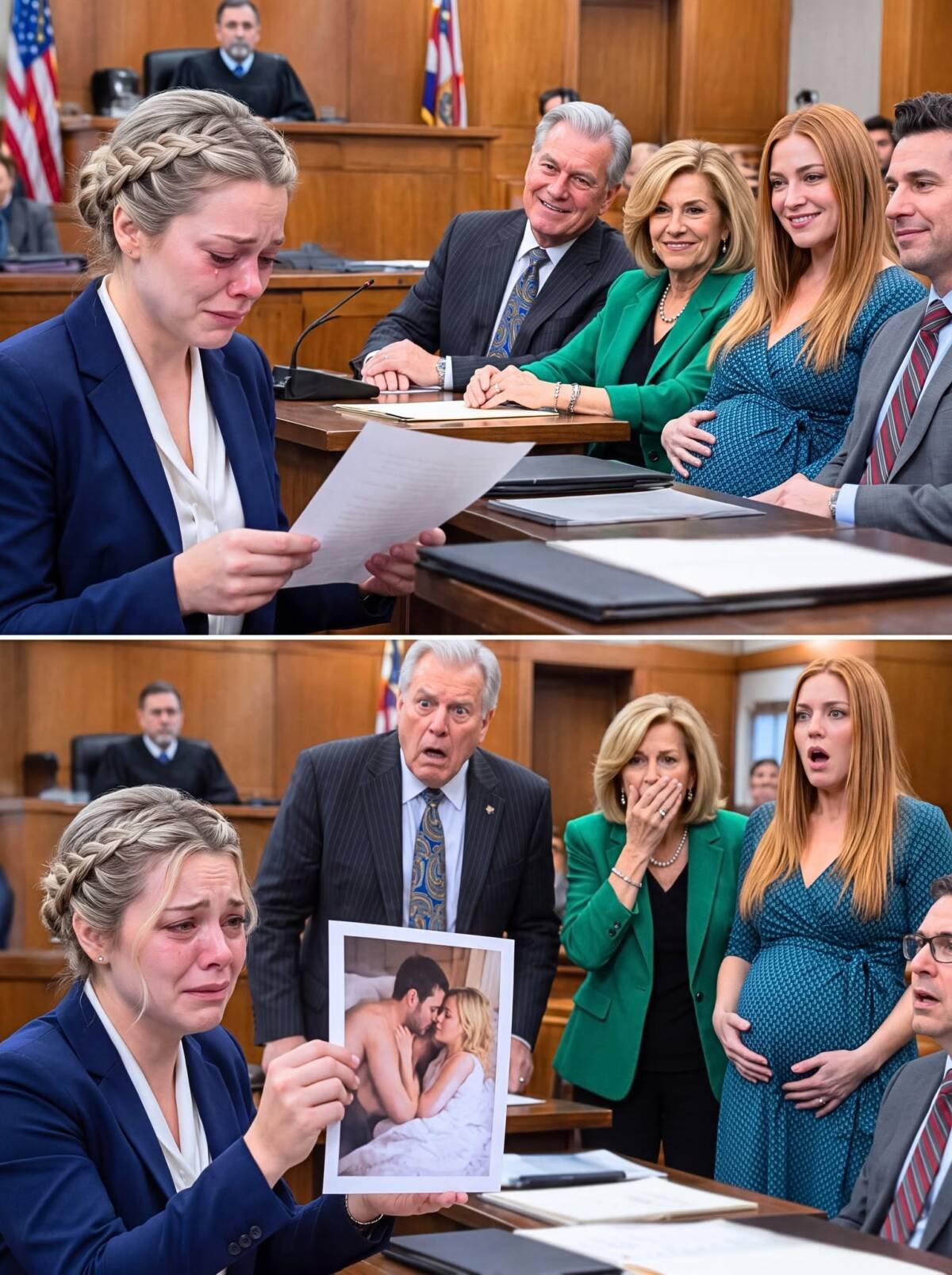
A 72-year-old retired nurse believed her family was protecting her finances. But when her daughter found her sitting alone in a dark house with almost nothing to eat, one question changed everything: Where had all her money gone?
Introduction: The Night Everything Changed
The house was dark when my daughter walked through the front door.
I was sitting alone in the living room, wrapped in an old cardigan, listening to the refrigerator hum weakly in the kitchen. The heater had been unreliable for weeks, and I had grown accustomed to wearing extra layers instead of asking for another repair.
I heard the door open.
“Mom?”
My daughter, Emma, stepped inside and reached for the light switch.
When the room brightened, she stopped.
I could see the concern spread across her face as she took in my worn clothes, the unopened mail on the coffee table, and the cold cup of tea beside me.
“Mom, why are you sitting here in the dark?”
I tried to smile.
“I was just resting.”
But Emma knew me too well to believe that answer.
She walked into the kitchen, opened the refrigerator, and stood motionless.
There was a bottle of water, half a lemon, and almost nothing else.
She opened the freezer. Empty.
Then she turned toward me.
“Mom, what is going on? You receive ten thousand dollars a month. Where is your money?”
I opened my mouth, but no answer came.
Before I could speak, my daughter-in-law, Rachel, appeared in the doorway. She wore the same composed expression she always seemed to have whenever someone questioned how she managed my life.
“I control every dollar she receives,” Rachel said calmly.
Emma turned toward her.
For several seconds, neither woman spoke.
Then Emma slowly removed the small gold earrings I had given her for her college graduation. She placed them on the kitchen table, looked Rachel directly in the eyes, and spoke in a voice so steady that I knew she had made up her mind.
“Then that control ends today.”
I did not know it yet, but the conversation that followed would expose more than missing money. It would reveal how easily concern could become control, how trust could be manipulated, and how a woman who had spent her life caring for others could find herself afraid to buy groceries with her own money.
My name is Margaret Thompson. I was seventy-two years old, a retired nurse, a mother, and a grandmother.
And until that evening, I had been convinced that my family was helping me.
I was about to discover just how wrong I had been.
Part 1: How I Lost Control of My Own Money
For thirty-five years, I worked as a nurse.
I spent long nights caring for patients, comforting frightened families, and making decisions when other people were too overwhelmed to think clearly. I learned to remain calm during emergencies and to keep going even when I was exhausted.
My work was not glamorous, but it gave me something I valued deeply: independence.
I saved carefully. I avoided unnecessary debt, contributed to my retirement accounts, and planned for the day when I would finally be able to stop working.
By the time I retired, I had built a financial cushion that allowed me to live comfortably. My monthly retirement income was substantial, and I owned the house where I had raised my children.
I never expected to live extravagantly.
I wanted a warm home, decent food, occasional lunches with friends, and enough money to visit my family without worrying about every expense.
For years, that was exactly the life I had.
Then, two years before Emma found me sitting in the dark, I fell while working in my garden.
The fall was minor. I bruised my hip, visited my doctor, and recovered without serious complications.
But the incident frightened my son, Daniel.
“You can’t afford to take chances with your finances, Mom,” he told me. “What if someone scams you? What if you forget to pay a bill? What if something happens and you don’t know what to do?”
I reminded him that I had managed my finances for decades.
He nodded, but he continued talking about the risks of getting older.
His wife, Rachel, soon joined the conversation.
Rachel worked in accounting and presented herself as the organized, practical person in the family. She explained that she could consolidate my accounts, organize my bills, monitor suspicious transactions, and make sure I never missed an important payment.
“It will give you peace of mind,” she said. “You won’t have to worry about all those details anymore.”
Daniel agreed.
At the time, their concern felt like love.
I did not want to be a burden to my children. I did not want them to think I was stubborn or incapable of accepting help.
So I agreed to let them assist me.
Rachel began setting up online accounts and organizing financial paperwork. Daniel brought documents to my house and explained that some signatures would make everything easier.
I remember sitting at my kitchen table while he pointed to different lines.
“Just sign here, Mom. This lets us take care of the administrative side.”
I asked what some of the documents meant.
He told me not to worry.
“Rachel understands all this stuff. She’s good with numbers.”
I trusted him.
He was my son.
I believed that if something important needed my attention, he would explain it honestly.
That trust became the opening through which I gradually lost control of my financial life.
At first, the changes seemed harmless.
Rachel began receiving my bank statements electronically. She changed some of my account settings and told me she would handle the bills.
Then the paper statements stopped arriving.
When I asked about them, she explained that electronic banking was safer and more efficient.
When I wanted to check my balance, she said she would look it up for me.
When I needed cash, she brought me an envelope.
Sometimes it contained fifty dollars. Sometimes one hundred.
“Make this last until next week,” she would say.
I remember feeling embarrassed the first time she handed me one of those envelopes.
I had worked for decades. I had paid taxes, supported my children, and saved for retirement.
Yet there I was, accepting spending money from my own daughter-in-law.
I told myself it was temporary.
I told myself I was being overly sensitive.
Most painfully, I began telling myself that perhaps my children knew better than I did.
After all, I was getting older.
Maybe I really was becoming forgetful.
Maybe managing money had become too complicated.
Those thoughts slowly weakened my confidence.
And while my confidence diminished, Rachel’s control expanded.
Part 2: The Small Things I Was Told I Could No Longer Afford
The first thing I gave up was Sunday lunch with my friends.
We had met regularly for years. We talked about our children, shared memories from work, and complained about the aches and pains that seemed to arrive with every birthday.
The lunches were inexpensive, but Rachel said I needed to reduce unnecessary spending.
“Restaurants add up quickly, Margaret. You have to be realistic about your budget.”
I canceled one lunch.
Then another.
Eventually, I stopped going altogether.
When my winter coat became too worn to keep me warm, I considered buying a replacement. Rachel told me to wait.
“You already have coats. There’s no reason to spend money on something you don’t absolutely need.”
When the heater began making strange noises, I asked whether we could arrange a repair.
Rachel said the cost was not justified.
“Just wear another sweater. We can deal with it later.”
Later never came.
I started keeping the thermostat low and wearing layers inside my own home.
I stopped buying certain groceries because Rachel said food prices had become unreasonable. I stretched meals, drank tea instead of eating a proper lunch, and tried not to complain.
When I wanted to visit Emma, who lived far enough away that the trip required planning and transportation expenses, Rachel discouraged me.
“Traveling isn’t in the budget right now.”
I accepted that explanation, although something about it bothered me.
I was not taking expensive vacations or buying luxury goods. I was asking to see my daughter.
Still, whenever I questioned the budget, Rachel responded with the same calm confidence.
“I’m trying to protect you.”
That sentence became difficult to challenge.
If I disagreed, I felt ungrateful.
If I insisted, I worried that I was proving her point about my judgment.
If I stayed quiet, the problem continued.
Eventually, I stopped asking questions.
That was when I became truly vulnerable.
Financial control does not always begin with someone openly taking money. Sometimes it begins when another person convinces you that you should no longer make decisions for yourself.
A password changes.
A statement stops arriving.
A signature is requested.
A small amount of cash becomes a favor instead of something you can access independently.
And before you fully understand what has happened, your own financial life feels like someone else’s property.
I did not realize how far things had gone until Emma came to visit.
She had called earlier in the week and said she wanted to spend the evening with me. I was delighted, although I did not tell her how lonely I had become.
I wanted to appear well.
I wanted her to believe that I was doing fine.
But when she entered the kitchen and opened the refrigerator, there was no way to disguise the truth.
“Mom, why is there nothing to eat?”
I looked down at my hands.
“I’ve been trying to save money.”
Emma turned toward me.
“Save money? You receive ten thousand dollars a month.”
Her voice was not angry yet. It was confused, as if she were trying to solve a problem that made no sense.
Then Rachel spoke.
“I control every dollar she receives.”
Emma stared at her.
And the room changed.
Part 3: My Daughter Asked the Question No One Else Had Asked
Emma pulled a chair beside mine and sat down.
“Mom, I need you to tell me the truth. How much money do you receive every month?”
“Ten thousand dollars,” I whispered.
Rachel immediately interrupted.
“That is not the amount available for spending. There are taxes, investment allocations, and other financial obligations.”
Emma turned toward her.
“What investment allocations?”
“Private ventures. Daniel and I are building something for the family.”
“What ventures?”
Rachel hesitated.
For the first time that evening, her composure began to slip.
Emma opened the pantry and examined the shelves. Then she checked the freezer again, as though she hoped she had missed something the first time.
“You’re telling me that my mother has substantial retirement income, but she has almost no food in her house?”
Rachel folded her arms.
“Your mother agreed to the arrangements.”
Emma looked at me.
“Mom, did you understand what you were signing?”
The question seemed simple, but it reached a place inside me that I had spent months trying to avoid.
I thought about the papers Daniel had placed in front of me.
I remembered asking what they meant.
I remembered being told that Rachel understood the financial details.
I remembered signing because I trusted my son.
“No,” I said.
Emma leaned closer.
“What do you mean, no?”
“I didn’t understand all of it. I told them I didn’t understand.”
Rachel’s face went pale.
“I explained everything,” she insisted.
“No,” I replied, surprised by the firmness in my own voice. “You told me not to worry.”
For a moment, the kitchen was silent.
Emma stood up.
“If she didn’t understand what she was signing, you had a responsibility to explain it clearly. You don’t get to use her trust as permission to do whatever you want.”
Rachel began talking about paperwork, legal authority, and the difficulty of managing an older person’s finances.
Emma listened without interrupting.
Then she asked the question that changed the conversation.
“How much money is left in her account?”
Rachel did not answer immediately.
She looked toward the hallway, then at her phone.
Finally, she said, “Almost nothing.”
My stomach tightened.
“What does that mean?” I asked.
Rachel looked at me but did not speak.
Emma repeated the question.
“How much is left?”
“I don’t have the exact figure in front of me.”
“Then we’ll get it tomorrow.”
Rachel insisted that Daniel would explain everything. Emma said we would speak directly to the bank instead.
“You cannot just interfere in our financial arrangements,” Rachel protested.
Emma pointed toward me.
“She’s your mother-in-law. This is her money, her home, and her future. She has every right to understand what happened.”
Then Emma turned to me.
“Mom, do you want to see your account?”
I looked around the kitchen.
I saw the empty refrigerator.
I saw the unopened mail.
I remembered the cold house, the canceled lunches, and the envelopes containing small amounts of money that I had once earned through decades of work.
“Yes,” I said. “I want to see my account.”
It was the first clear financial decision I had made in months.
And once I said those words, I felt something I had nearly forgotten.
I felt entitled to ask questions.
Part 4: The Phone Call That Made Everything Worse
Emma’s phone rang before Rachel could respond.
The caller was Daniel.
Emma answered and placed the call on speaker.
“What are you doing at Mom’s house?” he demanded.
“Talking to her about her finances.”
Rachel stepped closer.
“She’s making this into a huge problem.”
Emma ignored her.
“Daniel, Mom has almost no food in her refrigerator. She receives ten thousand dollars a month, and Rachel says she controls every dollar. Where is the money?”
There was a pause.
Then Daniel’s voice hardened.
“You don’t understand the situation.”
“Then explain it.”
“It’s complicated.”
“Where is Mom’s money?”
He did not answer.
Instead, he told Emma to stop interfering.
“The account is locked, and if you interfere, there will be consequences.”
The words sent a chill through me.
I had spent two years trying to convince myself that my son was simply helping me manage my finances. Now he was threatening his own sister because she wanted to see a bank statement.
Emma’s expression remained steady.
“Tomorrow morning, we’re going to the bank.”
“You are not going anywhere.”
“Mom is an adult. She can go wherever she wants.”
Daniel ended the call.
For several seconds, none of us moved.
Rachel said he was under enormous pressure and that Emma had no idea how much responsibility he was carrying.
Emma shook her head.
“His responsibilities do not give him the right to hide our mother’s money.”
Then she turned toward me.
“Mom, did you ever receive complete bank statements after Rachel took over?”
“No.”
“Have you logged in to your account yourself?”
“No.”
“Did you personally authorize the transfers to Daniel’s company?”
I felt ashamed answering each question.
“I don’t know.”
Emma took my hand.
“That’s okay. We’re going to find out.”
Rachel insisted that everything had been done legally.
She said I had signed the necessary documents, that Daniel’s company was experiencing temporary difficulties, and that the money would eventually be repaid.
Emma asked her to be specific.
“How much has been taken?”
Rachel looked away.
“Almost all of it has been used to support the business.”
“Whose business?”
“Daniel’s.”
“And how much is left?”
Rachel’s silence was the only answer we needed.
I began to understand that this was not simply a disagreement about household expenses.
My retirement income had become a source of money for a business I did not own, understand, or control.
And while that business used my money, I had been told that I could not afford groceries.
That night, Emma ordered food and cooked a simple dinner.
She made soup, warmed bread, and placed a bowl in front of me.
I began eating and suddenly realized how hungry I was.
It was not just physical hunger. It was the exhaustion of having lived in a situation where I felt I needed permission for ordinary things.
Emma stayed overnight.
Before going to bed, she helped me check my email.
My password had been changed.
I did not remember authorizing the change.
She also asked whether I remembered signing a power of attorney.
I recalled several documents, but I could not say exactly what they contained.
Emma explained that a power of attorney can authorize someone to act on another person’s behalf, depending on the document’s terms and applicable law. It does not automatically give that person permission to use the other person’s money for personal benefit.
“If Daniel used your money to support his own company, an attorney needs to examine whether he violated his duties,” she said.
I was frightened, but for the first time I understood that there were people outside my family who could help me determine what had happened.
The next morning, Daniel and Rachel arrived before Emma and I could leave.
Daniel looked tired and angry.
“Mom, please don’t go to the bank.”
I looked at him.
“Why not?”
“Because the bank could freeze the accounts. The company could collapse. People could lose their jobs.”
For a moment, I felt the old instinct to comfort him.
He was my son. I had spent his entire life wanting to protect him from pain.
But then I remembered the empty refrigerator.
“What do I lose, Daniel?” I asked.
He stared at me.
“What happens to me if the money is gone? What happens if I cannot pay my bills? What happens to my house?”
He had no answer.
Emma picked up her purse.
“We’re leaving.”
Daniel stepped in front of the door.
“If you go, don’t expect things to stay the same.”
Emma met his eyes.
“They already aren’t the same.”
He finally moved aside.
As we walked toward Emma’s car, my phone buzzed.
The message came from an unknown number.
If you go to the bank today, you will regret it.
Emma read it twice.
Then she looked at me.
“Mom, this is serious.”
I was beginning to understand that whatever we discovered at the bank might be much worse than either of us had imagined.
Part 5: The Bank Manager Looked at Me and Said, “You Need to See This”
The bank looked ordinary when we arrived.
Customers waited in line, employees answered questions, and people moved through the lobby carrying folders and purses. Nothing about the building suggested that my entire financial future might be at risk.
But my hands were shaking.
Emma stayed beside me as we approached the service desk.
“I need to speak with a manager about my accounts,” I said. “I want a complete record of my transactions for the past two years.”
The employee asked for identification and arranged for us to meet with a manager named Mr. Lewis.
He brought us into a small office with a glass wall overlooking the lobby.
After confirming my identity, he asked what had prompted the request.
I explained that my daughter had discovered I was struggling to afford food despite receiving substantial monthly retirement income.
I told him about the missing statements, the small cash allowances, and my concerns about transfers to my son’s company.
Mr. Lewis listened carefully.
Then he began reviewing my account.
At first, his expression was neutral.
He typed, opened several screens, and examined the transaction history.
Then he stopped.
He leaned closer to the monitor.
He checked something again.
Finally, he looked at me.
“Mrs. Thompson, you need to see this.”
My heart began pounding.
“What is it?”
He turned the monitor slightly so Emma and I could see the figures.
Large transfers had been leaving my pension account and moving into an external business account associated with Thompson Construction Group.
The transactions were not occasional small payments.
They were substantial transfers.
Emma leaned forward.
“How much money are we talking about?”
Mr. Lewis reviewed the records again.
“Approximately $237,000 over the period we’re examining.”
I stared at him.
The number seemed impossible.
Two hundred thirty-seven thousand dollars.
That was money I had earned, saved, and depended on to support myself during retirement.
I thought about every time I had hesitated before buying groceries.
I thought about the heater I had been told not to repair.
I thought about the coat I had continued wearing because Rachel said a replacement was unnecessary.
All that time, hundreds of thousands of dollars had been moving through my accounts without my meaningful understanding of what was happening.
Emma asked the question I was afraid to hear answered.
“How much is left?”
Mr. Lewis hesitated.
Then he turned back toward me.
“One hundred twelve dollars.”
I felt as though the room had tilted.
“One hundred twelve?” I repeated.
“That’s the available balance shown in the account we reviewed.”
I covered my mouth.
I had spent two years believing that I was being careful with money. I had blamed rising prices, unexpected expenses, and my own supposed inability to manage finances.
But the account told a different story.
My money had not disappeared because I bought too many groceries.
It had been transferred elsewhere.
Mr. Lewis explained that a power of attorney was on file granting Daniel financial authority. He also explained that the bank would need to examine the scope of that authorization, the circumstances surrounding the transfers, and any relevant restrictions before drawing conclusions.
The existence of a power of attorney did not, by itself, establish that every transaction had been proper.
Emma asked whether the bank had noticed anything unusual.
Mr. Lewis explained that several transfers had been flagged for review because of their size and pattern. The accompanying information described them as family investments and business-related transactions.
The records did not establish that I had personally understood or approved the arrangements.
I looked at him.
“Did anyone ever contact me directly?”
He reviewed the available notes.
“I don’t see documentation showing that you personally confirmed your understanding of these transfers.”
My throat tightened.
I had spent years believing that financial institutions would contact me if something important happened. Instead, I had been relying on a family arrangement that left me without independent access to my own financial information.
Emma took my hand.
“Mom, we’re going to fix this.”
I wanted to believe her.
But I also knew that $237,000 could not simply be restored by wishing for it.
Mr. Lewis explained the next steps, including opening a formal review and preserving the relevant records. He warned that further review could affect access to accounts associated with the transactions.
Emma asked whether we should proceed.
The manager turned toward me.
“Mrs. Thompson, do you want us to open the review?”
I thought about Daniel’s warning that his company could collapse.
I thought about the workers he had mentioned, the business he wanted to save, and the family reputation he seemed so desperate to protect.
Then I thought about myself.
For two years, I had made myself smaller to avoid upsetting anyone.
I had stopped asking questions because I feared being difficult.
I had accepted restrictions because I thought they were proof that I was aging.
I had allowed other people to decide what I could afford.
But I was still the person whose name was on the account.
I was still the person who needed food, heat, and financial security.
“Yes,” I said. “Open the review.”
Mr. Lewis began the process.
I signed the required forms, requested copies of the available statements, and asked that future communication about my accounts be directed to me.
For the first time in two years, I was participating in decisions about my own money.
Then my phone buzzed again.
Another message appeared from the unknown number.
You should have stayed home.
Emma showed the message to Mr. Lewis.
He documented it as part of the information we provided and advised us to preserve the original message and contact the appropriate authorities if we felt threatened.
We left the bank with copies of the records and a formal review underway.
I had expected answers.
Instead, I had discovered a financial disaster.
And we had not yet uncovered the full extent of the danger.
Part 6: Someone Had Been Inside My House
We had barely left the bank parking lot when Daniel called Emma.
His voice was furious.
“What did you do? The accounts are frozen!”
Emma kept her voice controlled.
“We asked the bank to investigate the transfers.”
“You’ve destroyed everything!”
“You used Mom’s pension money without making sure she understood what was happening.”
“You don’t understand the business.”
“Then explain it.”
Daniel said there was more at stake than we knew.
Before Emma could ask another question, he ended the call.
I looked through the car window, trying to process everything.
I wanted to believe that Daniel had made a terrible mistake and that we could find a way to repair the damage.
But his reaction was not the reaction of someone who simply needed more time to explain a complicated financial decision.
He seemed terrified of what the records might reveal.
When we arrived at my house, Emma noticed that the front door was slightly open.
She stopped immediately.
“Mom, stay here for a second.”
She approached cautiously and called out, but no one answered.
We entered together.
The living room looked familiar, but the hallway was a mess.
Several drawers had been pulled from the filing cabinet. Papers were scattered across the floor, and folders I kept in a small desk had been opened and emptied.
My jewelry was still where I had left it.
The television was untouched.
Nothing obvious appeared to have been stolen.
Emma looked around.
“Someone was searching for documents.”
I felt a wave of fear.
My house had always been my refuge. It was where I raised my children, celebrated birthdays, and cared for my husband before he died.
Now I was standing in the middle of it, wondering whether someone had entered because I had asked a bank to investigate my own money.
Emma called the police.
We avoided disturbing the remaining paperwork while we waited for assistance. An officer documented what we found and asked who might have access to the property.
Daniel had a key.
Rachel had a key.
I also remembered that Daniel had once requested spare keys for contractors who needed to inspect part of the house in connection with his business.
I could not say who had entered.
Neither could Emma.
But the uncertainty was frightening.
After the police left, we began gathering the documents that had been scattered across the room.
Under the edge of the couch, Emma found a business card.
The name was Martin Hail.
Beneath it were the words Financial Consultant.
I had never met him.
I had never heard his name.
Yet the card had been inside my house, among the papers someone had apparently searched.
Emma photographed it and showed it to the attorney she had contacted for an initial consultation.
Then she made several calls to people who could help her understand Daniel’s company’s financial position.
What she learned was deeply troubling.
Thompson Construction Group had not completed a major project in two years. The company faced substantial debts, unpaid obligations, and liens that threatened its remaining assets.
The business was not experiencing a brief cash-flow problem.
It was struggling to survive.
Emma also found information suggesting that Martin Hail had previously attracted scrutiny in connection with financial arrangements involving struggling businesses.
That information alone did not prove he had committed wrongdoing in Daniel’s case, but it gave us another reason to ask questions about his role.
Emma put the business card on the table.
“Mom, Daniel wasn’t simply borrowing your money to get through a difficult month.”
I looked at her.
“What do you mean?”
“I think someone helped him structure these transactions.”
I remembered Rachel’s references to private ventures and investment allocations.
I remembered Daniel’s refusal to explain the transfers.
I remembered the unknown messages warning me to stay home.
The pieces were beginning to fit together, but we still lacked crucial information.
Someone had been inside my house.
Someone had wanted access to documents.
And someone appeared determined to discourage me from finding out where my money had gone.
Part 7: The Truth About Daniel’s Company
The next morning, Daniel called me directly.
His voice sounded exhausted rather than angry.
“Mom, can we talk?”
I looked at Emma, who was sitting beside me at the kitchen table.
“You can talk now,” I said. “Emma is here.”
He paused.
“I need you to understand what is happening.”
“Then tell me the truth.”
Daniel began explaining that Thompson Construction Group had been struggling for months. Projects had been delayed, payments had not arrived when expected, and creditors were demanding money the company did not have.
He had hoped that a major municipal contract would provide enough revenue to stabilize the business.
But the contract had not materialized as expected.
Instead of admitting that the company was in serious trouble, Daniel had tried to keep it operating.
At first, he said, he believed he could repay the money taken from my account within a few months.
Then the debt increased.
The transfers continued.
And eventually, he became too frightened to stop.
“Why didn’t you tell me?” I asked.
“Because I didn’t want you to worry.”
I closed my eyes.
“You let me sit in a cold house and worry about groceries.”
“I thought I could fix it before you found out.”
“You took money that I needed to live.”
He did not answer.
I asked about Martin Hail.
Daniel admitted that Martin had advised him on ways to move funds through the business and present a stronger financial position to potential lenders and investors.
Daniel insisted that he had never intended to permanently deprive me of my money.
But intention could not erase what had happened.
The transfers were real.
The balance was real.
And my financial security had been placed at risk.
Emma asked about the loan connected to my home.
Daniel went quiet.
“What loan?” I asked.
He took a long breath.
“Mom, I need to explain something else.”
My stomach tightened.
He admitted that a loan had been secured using my house as collateral.
For a moment, I could not speak.
My home was not simply a building. It was the place where I had raised Daniel and Emma, where I had cared for my husband, and where I had built a life over four decades.
It was the one thing I had believed was safe even when my finances became confusing.
“You used my house?”
“It was supposed to be temporary.”
“Did I understand that I was risking it?”
Daniel did not answer immediately.
“No,” he finally admitted.
Emma stood up.
“You cannot put someone’s home at risk and then call it temporary.”
Daniel said he had expected the company to recover before the loan became a serious problem.
But the business had continued to deteriorate.
Now the lender could potentially pursue remedies under the loan agreement if the debt was not addressed.
I looked at my son and struggled to reconcile the man speaking to me with the child I had raised.
I had taught him to be honest.
I had taught him that money should be earned, obligations should be honored, and other people’s trust should never be treated carelessly.
Yet here we were.
“Daniel,” I said, “I want you to answer one question honestly.”
He waited.
“Did you ever think about what would happen to me if your plan failed?”
His silence told me more than any explanation could.
Part 8: The Man Who Wanted Us to Stop Asking Questions
Two hours later, Daniel arrived at my house with Rachel and Martin Hail.
Martin looked exactly like the kind of person who expected to be taken seriously.
He wore a tailored suit, carried a leather folder, and spoke in measured sentences that made every financial arrangement sound routine.
He introduced himself as a consultant who had been helping Daniel manage the company’s difficulties.
Emma asked him to explain his involvement in the transfers from my pension account.
Martin said the money had been used as part of a broader financial strategy designed to keep the company operating.
He described the transactions as temporary business advances.
Emma interrupted.
“Did Margaret personally understand that her retirement money was being transferred to Daniel’s company?”
Martin glanced at the documents in his folder.
“A power of attorney was in place.”
“That wasn’t my question.”
He explained that Daniel had been authorized to handle certain financial matters on my behalf.
Emma repeated the question.
“Did she understand the risks?”
Martin looked at me.
“Mrs. Thompson, do you remember signing the documents?”
“I remember signing papers. I did not understand that my money would be used this way, and I did not understand that my house could be put at risk.”
Martin’s expression remained controlled.
“Understanding can be subjective.”
Emma immediately responded.
“Consent is not meaningful when material risks are hidden or not adequately explained.”
Martin attempted to return the discussion to the paperwork.
He argued that the documents established Daniel’s authority and that the family had been acting in good faith.
I listened carefully.
I was beginning to recognize the pattern.
Whenever I asked what had happened, someone redirected the conversation toward what I had signed.
Whenever I described my lack of understanding, someone suggested that my memory was unreliable.
Whenever I asked about my money, someone reminded me that the situation was complicated.
But none of those explanations changed the fact that I had been left without adequate food while my retirement money supported a business I did not control.
Emma asked Martin what he proposed to do.
He suggested that I withdraw the bank review and allow Daniel to regain access to the funds. He claimed that another pending transaction could provide enough liquidity to stabilize the business.
“If the investigation continues,” he warned, “the company may collapse, and creditors may pursue the collateral.”
I looked at him.
“You are asking me to stop investigating my own money so that the business that used it can continue operating?”
He paused.
“I’m trying to prevent a worse outcome for everyone involved.”
Emma shook her head.
“You are asking her to accept more risk without independent advice.”
Rachel finally spoke.
She denied sending the threatening messages and said she knew nothing about anyone entering my house.
Daniel also denied being responsible.
I could not establish who had sent the messages or entered the property, and I refused to accuse someone without evidence.
But I knew that the situation was no longer something I could resolve through a family conversation.
I needed independent legal advice.
I needed the records preserved.
And I needed decisions about my home and my retirement to be made with full information.
“We are not withdrawing the investigation,” I said.
Martin’s expression hardened.
“Then you should prepare for serious consequences.”
Emma stepped beside me.
“We are preparing. That’s why we have an attorney.”
For the first time, Martin seemed uncertain about how to proceed.
His phone rang.
He looked at the screen, excused himself, and answered in the hallway.
We could hear only fragments of the conversation.
“The transfers are under review.”
A pause.
“Yes, I’m handling it.”
Another pause.
“No, they haven’t agreed to stop.”
When he returned, his polished confidence had diminished.
It was becoming clear that the investigation was affecting more than Daniel’s immediate financial problems.
Martin had interests of his own.
And whatever those interests were, they were no longer hidden from our questions.
Part 9: An Independent Attorney Reviews the Documents
Emma helped me arrange a meeting with an attorney who had experience in elder financial exploitation, fiduciary disputes, and property-related financial matters.
He did not promise that everything would be recovered.
He did not tell me that the case would be simple.
Instead, he asked to see the documents.
We provided the available bank statements, the power of attorney, the loan paperwork, the messages sent from the unknown number, and the records documenting the transfers.
He spent hours reviewing the information.
Then he explained what concerned him most.
First, the transfers from my pension account appeared to have benefited Daniel’s company rather than directly serving my needs.
Second, the available records raised questions about whether I had understood the purpose and risks of the transactions.
Third, the loan documents indicated that my house had been used as collateral.
Fourth, the threatening messages and the apparent entry into my home created additional safety and documentation concerns.
He was careful not to make final conclusions before the evidence had been fully examined.
But he made one point absolutely clear.
“Even when someone holds a power of attorney, that authority is not unlimited. The document, the circumstances, and the applicable law determine what the agent may do. An agent generally has duties to act within that authority and in the principal’s interests.”
I asked whether Daniel could be held responsible.
The attorney explained that the answer would depend on the documents, the transactions, the evidence of consent, and the applicable law.
If the money had been misused, possible remedies could include financial recovery, court orders, or other legal action, depending on the facts.
I asked the question that mattered most to me.
“Can I lose my house?”....