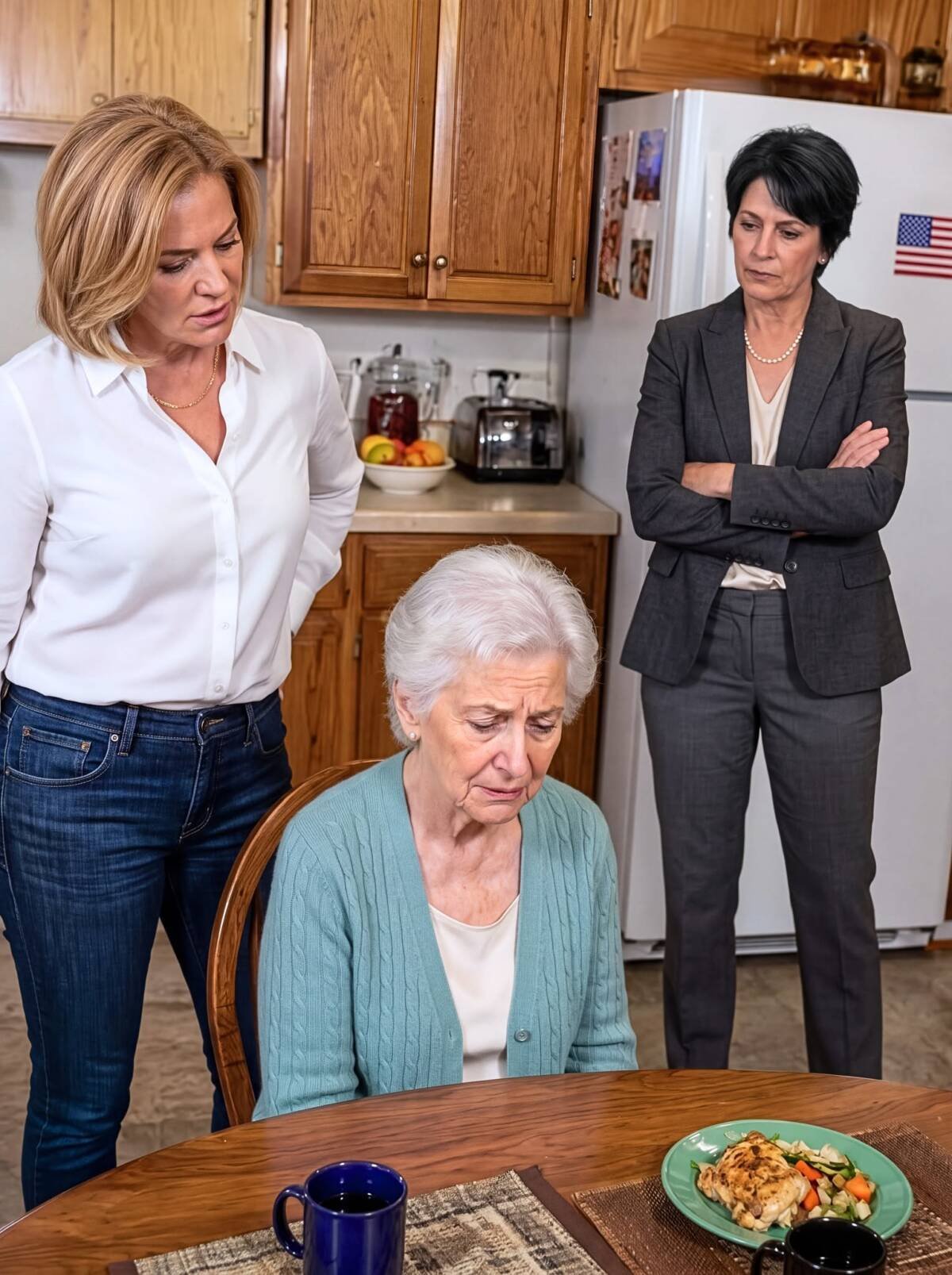
For more than three decades, an old, stained mattress remained untouched in my parents’ bedroom. I thought they were simply stubborn. Then two movers lifted it during a move, revealing a heartbreaking secret that had been hidden beneath it for 31 years. What we discovered that day changed everything I thought I knew about my family.
Introduction: The Secret Beneath an Old Mattress
For 31 years, my parents refused to replace the same old, stained mattress.
It did not matter how worn it became, how uncomfortable it looked, or how many times I suggested buying a new one. Every time I brought it up, my mother found a reason to refuse. My father rarely argued with her, and eventually, I stopped asking.
I assumed it was an old habit. Perhaps they were attached to familiar things, or perhaps they simply did not want to spend money replacing something that still served its purpose.
I never imagined that their refusal had anything to do with a tragedy that had shaped our family long before I was born.
Then came moving day.
Two movers entered my parents’ bedroom and began preparing the furniture for transport. When they finally lifted the old mattress, they discovered something hidden beneath it.
Less than three minutes later, my mother came running back into the house in a panic.
I had never seen her look so frightened.
What followed was not simply the discovery of old photographs and forgotten keepsakes. It was the revelation of a family secret that had been buried for more than three decades, a loss my parents had never learned how to discuss, and the story of a little girl whose name had almost disappeared from our family.
Her name was Grace.
She was my sister.
And until that day, I had never truly known she existed.
Part 1: The Day Everything Changed
The move was supposed to be an ordinary family event. My parents were preparing to leave the home where they had spent many years, and I had come to help them pack their belongings.
The house was filled with cardboard boxes, furniture waiting to be carried outside, and the familiar disorder that comes with leaving a place full of memories.
The movers worked efficiently, moving from room to room as they prepared everything for transport.
Then they reached my parents’ bedroom.
The mattress was old, its surface marked by years of use. I had seen it countless times throughout my life, and I had never given it much thought beyond wondering why my parents insisted on keeping it.
One of the movers took hold of one side while the other lifted the opposite end.
That was when they noticed something unusual beneath it.
I was not in the room when they first discovered the hidden belongings. I only knew that something had happened because the atmosphere changed almost immediately.
A few moments later, my mother rushed back into the house.
Her face had lost its color. Her breathing was uneven, and she looked as though she had just been confronted with something she had spent her entire life trying to avoid.
She hurried toward the bedroom.
I followed her, asking what was wrong.
She did not answer.
When I entered the room, I saw the mattress had been moved. Beneath it were photographs, letters, drawings, and small personal belongings that appeared to have been carefully preserved.
The items were old, but they had not been carelessly discarded. They had been kept together, protected from the outside world, and hidden in a place where nobody would think to look.
My mother stood over them, trembling.
For several seconds, nobody spoke.
Then she began to cry.
I had seen my mother cry before, but never like that. This was not the kind of sadness that passes after a difficult conversation or a painful memory. It was the kind of grief that seemed to come from somewhere much deeper.
My father entered the room shortly afterward.
He stopped when he saw what had been uncovered.
Unlike my mother, he did not appear surprised by the existence of the belongings. Instead, he looked at her with an expression that suggested he understood why she was struggling to breathe.
That was when I realized the items beneath the mattress were not ordinary keepsakes.
They belonged to someone important.
Someone my parents had never told me about.
Part 2: The Little Girl in the Photographs
I crouched beside the scattered belongings and picked up one of the photographs.
It showed a little girl with a bright smile. She looked happy and carefree, the way children often do when they have not yet learned how complicated life can become.
There were other photographs, too.
In one, she was playing at the beach. In another, she was holding a stuffed rabbit. Several showed her sitting at a table, drawing pictures or looking toward the camera with an expression of unmistakable curiosity.
I looked at my mother.
“Who is she?”
My mother pressed her hand against her mouth.
My father lowered his eyes.
The silence that followed was almost unbearable.
Finally, my mother whispered a name.
“Grace.”
I waited for her to explain.
Instead, she began crying harder.
My father moved closer and placed a hand on her shoulder. For a moment, I thought he might answer the questions forming in my mind, but he seemed unable to find the words.
I looked back at the photograph.
The little girl could not have been more than four years old.
“Who is Grace?” I asked again.
My mother finally looked at me.
“She was my daughter.”
The room seemed to become completely still.
My mind struggled to understand what she had said. I knew my parents had experienced difficult times before I was born, but I had never heard of another child in our family.
Then my mother added the words that changed everything.
“She was your sister.”
I stared at her, unable to respond.
I had grown up believing I was an only child. There had never been photographs of another child on our walls, no stories about an older sister, and no family conversations that hinted at a daughter who had died before I was born.
Yet here she was.
A little girl whose photographs, letters, and drawings had been carefully preserved for 31 years.
A child who had once lived, laughed, played, and been loved by my parents.
And a sister I had never been given the chance to know.
Part 3: Why My Parents Never Spoke About Grace
My mother eventually sat down on the floor beside the belongings.
She held one of Grace’s photographs between her fingers, staring at it as though she were seeing her daughter again for the first time.
My father sat beside her.
Neither of them seemed ready to explain everything at once, so I listened as they slowly began telling me what had happened.
Grace had died when she was only four years old.
Her death had devastated my parents. They had been young, and the loss of their little girl had left them facing a kind of pain they had neither expected nor known how to handle.
In the years that followed, they had struggled to find a way to continue living with the absence of a child who had once been the center of their world.
My father responded by throwing himself into work. He focused on responsibilities, routines, and the practical demands of daily life.
My mother withdrew into herself.
She continued caring for the household, but a part of her remained trapped in the grief of losing Grace.
They did not know how to talk to each other about what had happened.
Every conversation about their daughter brought back memories they were struggling to survive. Eventually, they began avoiding the subject altogether.
At first, the silence may have seemed necessary.
They were trying to get through the days without being overwhelmed by their loss.
But as the years passed, that silence became a habit. The longer they avoided talking about Grace, the more difficult it became to break the pattern.
When I came along, my parents were already living with that silence.
They wanted to build a family again. They wanted to experience happiness, watch their child grow, and find some sense of normality after the tragedy that had changed their lives.
But they never found a way to include Grace in the story they told about our family.
Instead, they kept her memory separate.
My mother preserved her photographs, drawings, letters, and personal belongings beneath the mattress. My father knew that she had kept something there, although he had never searched through it or asked her to explain every detail.
He understood that the hidden collection belonged to a part of her grief he could not simply take away.
“I knew she had kept something,” he eventually told me. “I didn’t know exactly what.”
He paused before continuing.
“I knew Grace was there somehow.”
His words helped me understand something I had never considered before.
My father had not forgotten his daughter. He had simply chosen not to disturb the private memorial my mother had created.
He knew she was grieving, and he had allowed her to hold on to Grace in the only way she seemed able to manage.
For years, that arrangement had remained untouched.
Until the movers lifted the mattress.
Part 4: The Real Reason They Kept the Old Mattress
For most of my life, I had thought my parents were being unreasonable about the mattress.
I had suggested replacing it several times. Each time, my mother resisted, and my father rarely challenged her decision.
I assumed they were attached to the furniture.
Now, standing in the bedroom surrounded by Grace’s belongings, I finally understood.
The mattress was not simply a place where my parents slept.
It had become the hiding place for the only memorial my mother had allowed herself to keep.
Replacing it would have meant exposing everything she had spent 31 years protecting.
It would have meant confronting photographs she could not bear to display, letters she could not bring herself to share, and memories she had kept hidden even from her own child.
To someone else, the mattress was old furniture.
To my mother, it was a barrier between her grief and the rest of the world.
As long as Grace remained hidden beneath it, Mom could preserve her memories without having to explain them, defend them, or risk watching someone else react to her pain.
She could visit those memories privately, whenever she needed to, without opening a conversation she did not know how to handle.
But there was a cost.
For 31 years, my mother had carried the memory of her daughter almost entirely alone.
My father had respected her privacy, but that did not mean he had escaped his own grief. He had simply found a different way to live with it.
And I had grown up without knowing an entire part of my family’s history.
The discovery forced me to reconsider years of seemingly ordinary decisions.
Every refusal to replace the mattress had been connected to something deeper than stubbornness. Every unexplained attachment to that worn piece of furniture had concealed a loss my parents had never learned to discuss openly.
I looked at my mother, who was still holding one of Grace’s photographs.
“You kept all of this for her?”
She nodded through her tears.
“I couldn’t let her go.”
My father reached for her hand.
“You never had to let her go,” he said quietly.
It was the first time I understood that both of my parents had been trying to protect something precious, even though neither had known how to protect it without hiding it.
Part 5: The Letters Written to a Daughter Who Was Gone
As we continued sorting through the belongings, we discovered that the photographs were only part of what my mother had preserved.
There were letters, too.
Dozens of them.
Some were short. Others filled several pages. They had been written over many years, each one addressed to Grace.....