When you wake up from a two-week coma, you expect the people who love you to be waiting by your bedside. You expect tears of relief, gentle hands, and a quiet promise that everything is going to be okay.
I didn’t get any of that.
Instead, the first time my mother walked into my hospital room after I regained consciousness, she didn’t ask if I was in pain. She didn’t ask if I remembered what had happened. She walked right up to the edge of my bed, looked straight into my eyes, and spat in my face.
“I’d rather put you in the ground than believe a liar like you,” she hissed, her voice shaking with a hatred I couldn’t even comprehend.
At that moment, I had no idea why she was so angry. Fourteen days of my life had been completely erased from my mind. I didn’t know how I had ended up with a fractured jaw, broken ribs, and a severe concussion. I didn’t know why the police were involved.
What I certainly didn’t know was that a woman I had never spoken to in my life was about to walk through that hospital door with a flash drive—one containing security footage of my own father admitting to the exact reason he tried to silence me forever.
Waking Up to a Missing Two Weeks
The last ordinary memory I had was standing in the produce aisle of my local grocery store, staring at two plastic containers of strawberries and debating whether to buy the organic ones or save three dollars on the regular brand. It was a Tuesday afternoon. The fluorescent lights were humming overhead, and a pop song was playing softly through the ceiling speakers.
The next thing I knew, everything around me was white.
The air smelled sharply of antiseptic. A heart monitor beeped in a slow, steady rhythm beside my ear. When I tried to open my eyes, the light felt like needles. A nurse standing near the IV pole froze, then leaned in and whispered my name as if speaking at a normal volume might shatter me.
“You’re awake,” she said softly. “Don’t try to move. You’re safe. You’re in the hospital.”
Pain didn’t arrive all at once; it introduced itself one injury at a time. First came the deep, pulsing ache in my jaw, which felt wired tight and swollen. Then came the sharp stab in my ribs every time I tried to draw a full breath. My right wrist was encased in a heavy cast, and the back of my skull throbbed with a relentless, blinding pressure.
When the attending physician came in, he shone a small penlight into my eyes and asked me simple questions. What is your name? What is your birthday? What is your address? Who is the president? I answered them slowly, my voice raspy from weeks of intubation.
Then he asked me what day it was. When I guessed Tuesday, he gently corrected me. Fourteen days had vanished. I had been in a medically induced coma for two weeks.
“Was it a car accident?” I whispered, staring at the X-rays he had pulled up on the wall monitor.
The doctor hesitated. He glanced briefly toward the closed door before looking back at me.
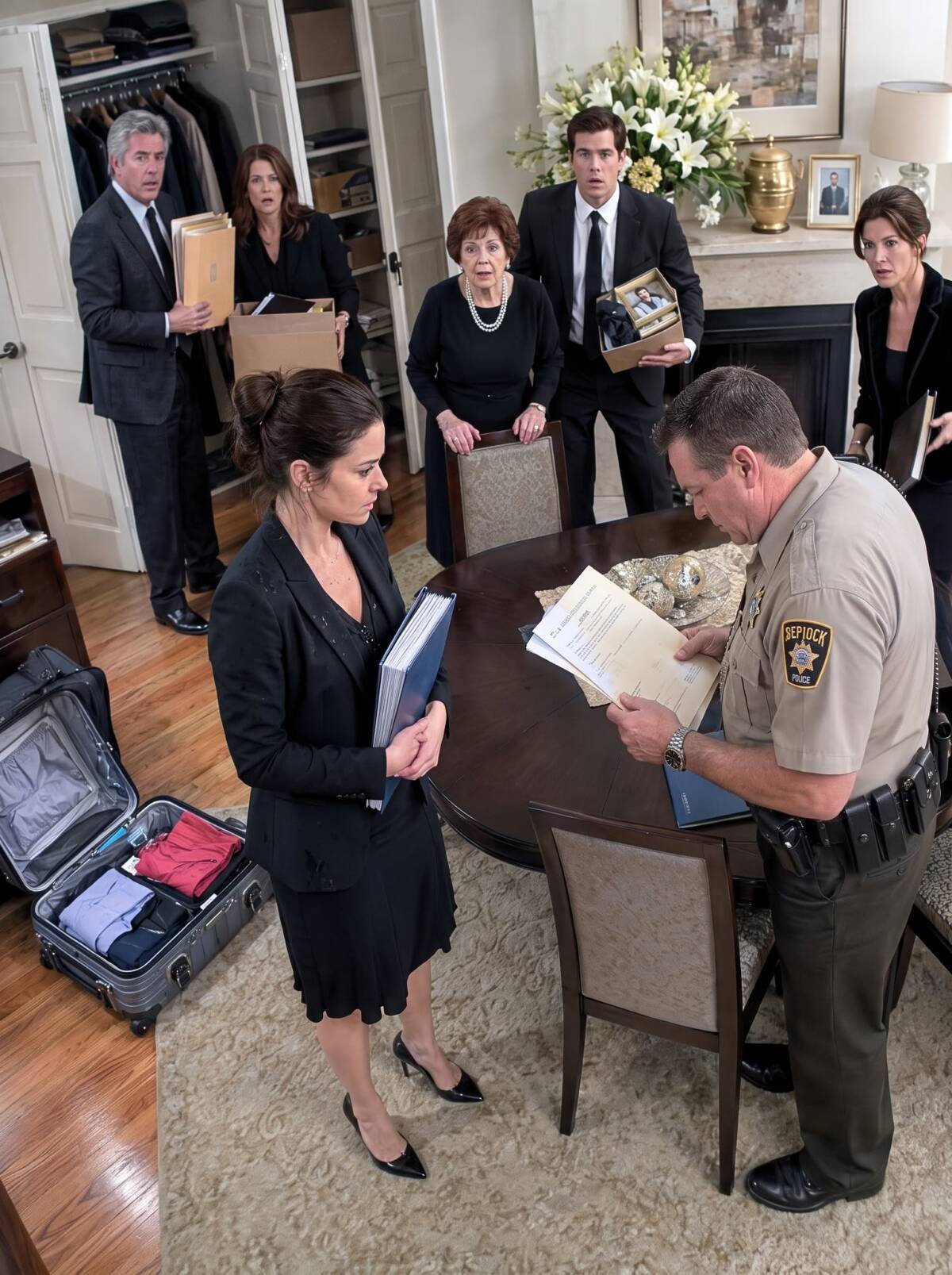
“No,” he said quietly. “The police believe you were assaulted. They found you inside your parents’ garage.”
I actually tried to laugh, though it immediately sent a jolt of agony through my ribs. The idea sounded absurd. My parents lived in a quiet suburban neighborhood with manicured lawns and matching mailboxes. People didn’t get beaten into a coma in their garage. I searched my mind for any memory of driving over there, of arguing with someone, of calling for help—anything at all. There was nothing. The last time I could remember seeing my parents was at Sunday dinner, and even that felt like a faded photograph.
The Cruelty I Didn’t See Coming
Less than an hour later, the door swung open and my mother stepped inside.
For one fragile second, relief flooded my chest. My mother was here. She would explain the misunderstanding. She would tell me that the police had it wrong, that I had slipped on the concrete, or that some intruder had broken in.
She didn’t rush to my side. She walked slowly, her purse clutched tightly against her ribs, her face set in a cold, rigid mask I had never seen before. She stopped beside the railing of my bed, looked down at my bruised face, and spat directly onto my cheek.
Before I could even flinch, she leaned in close.
“I’d bury you before I’d ever believe a liar like you,” she spat, her voice dripping with venom.
The room went dead silent. The nurse gasped and hit the call button. Within seconds, two hospital security officers rushed through the door and grabbed my mother by the arms. As they dragged her backward into the hallway, she thrashed against their grip, screaming at the top of her lungs that I had tried to ruin our family, that I was sick, that I had brought this on myself.
When the door finally clicked shut, I lifted my uninjured hand and wiped my face with trembling fingers. Tears burned my eyes—not just from the humiliation, but from the terrifying confusion. I didn’t even know what I was supposed to have lied about.
A Shattered Phone and a Message From Myself
That afternoon, Detective Ethan Cole from the local precinct came to see me. He was a calm, methodical man in his late forties who carried a worn leather notebook and spoke without rushing. He didn’t press me for answers I didn’t have. Instead, he pulled a clear, sealed evidence bag from his briefcase and placed it on my bedside tray.
Inside was my cell phone.
The screen was completely spiderwebbed with deep cracks, and the metal frame was bent slightly out of shape. Yet somehow, the battery had held just enough charge when technicians powered it on to display a single, frozen notification on the lock screen—a draft memo I had pinned to my own display.
If anything happens to me, watch this.
“We found this underneath your body on the garage floor,” Detective Cole explained quietly. “Your left arm was curled tightly around it. Based on the defensive wounds on your hands and forearms, you weren’t just trying to block the blows. You were trying to keep whoever attacked you from taking this phone.”
My stomach twisted into a tight knot. Looking at that cracked screen, I realized that the version of myself from two weeks ago—the woman I could no longer remember—had known she was in danger.
The next morning, another piece of the puzzle arrived. A plain cardboard box with no return address was left at the nurses’ station with my name written on the top in neat black marker. Security checked it before bringing it up. Inside were a few personal items that had been left in my car: my sunglasses, a spare hair tie, a half-empty pack of gum, and a small brass lighthouse keychain.
The moment my fingers closed around that keychain, a sharp, blinding flash of memory tore through the fog in my mind.
I had bought that lighthouse for my father on Father’s Day three years earlier.
“Truck,” I whispered aloud, my heart suddenly pounding against my bruised ribs. “I followed his truck.”
The images came in jagged, disorienting bursts. Rain streaking across my windshield. The red taillights of my father’s dark blue pickup turning off the highway onto a quiet service road. A faded neon sign buzzing outside a low-slung roadside motel. A woman with shoulder-length brown hair stepping out of room 14, looking around the parking lot before walking straight into my father’s arms.
And me, sitting thirty yards away in the shadows, holding my phone up to the glass.
The Trail Outside Maple Ridge
When Detective Cole returned later that day, I told him everything I had just remembered. He didn’t look surprised. In fact, he opened his folder and laid three printed photographs across my blanket.
They were grainy stills pulled from the security cameras of the Pinecrest Motor Lodge, just outside Maple Ridge. The timestamp was from two weeks ago—the exact afternoon I had disappeared. In the first photo, my father’s pickup was parked behind the building. In the second, he was walking toward a motel room door, his hand laced through the fingers of a woman I had never met. In the third, parked near the treeline at the edge of the lot, was my silver sedan.
“A waitress from the diner across the highway came forward this morning after seeing the local news report about an assault in your neighborhood,” Cole said. He slid a plastic-sleeved paper receipt beside the photos. “She recognized your car. She said you’d been coming in every Thursday afternoon for almost a month, ordering black coffee and sitting by the window facing the motel.”
He turned the receipt over. On the back, written in my own hurried handwriting, were six words: Blue pickup. Room 14. Every Thursday.
I stared at my own handwriting, a cold dread settling in my chest. I hadn’t stumbled onto my father’s affair by accident. I had suspected something was wrong for weeks, and I had quietly tracked him until I had undeniable proof.
“If I already had the video,” I asked softly, looking up at the detective, “why did I go to my parents’ house?”
Cole pulled out one more photograph. It was a still from a neighbor’s doorbell camera on my parents’ street, timestamped forty-five minutes after the motel footage. It showed my car pulling into my parents’ driveway.
That single image broke the dam.
The Kitchen Confrontation
Suddenly, I was back in my mother’s kitchen. The afternoon sun was slanting through the blinds, catching the dust motes in the air. The kettle was whistling softly on the stove. I remembered walking through the back door, my hands shaking so badly I could barely hold my phone.
“Mom,” I had said, my voice tight. “I need to show you something.”
I remembered placing the phone on the granite island in front of her and pressing play. I had stood there, bracing myself for her to cry, to scream, to drop her coffee mug on the tile floor. I had prepared myself to hold her while her world fell apart.
Instead, she watched the entire thirty-second clip in complete silence. Her expression never changed. Not a single tear fell. When the video ended, she calmly reached out, pressed the side button to lock my screen, and looked up at me with eyes as cold as stone.
“Did anyone else see this?” she asked.
I remembered the floor feeling like it had dropped out from beneath my feet. She wasn’t shocked. She wasn’t heartbroken. She was calculating.
She already knew.
She had known about the motel, about the Thursdays, about the other woman—and she had made a silent bargain with herself to ignore it so she could keep her comfortable house, her social standing, and the illusion of a perfect marriage. To her, my father’s betrayal wasn’t the problem. My refusal to pretend it wasn’t happening was.
Later that afternoon, Detective Cole’s forensic team managed to recover nearly three minutes of damaged video from the internal memory of my shattered phone. Cole set his laptop on my tray table and pressed play.
The video showed me sitting alone in the driver’s seat of my car, parked on a quiet side street just blocks from my parents’ house. My eyes were red, and my voice trembled as I spoke directly into the front-facing camera.
“If you’re watching this, something went wrong,” my past self said. “I’m going to talk to Dad. I’m giving him one chance. If he walks into that house and tells Mom the truth himself—if he just owns up to it—I’ll delete this. I don’t want to ruin anyone’s life. I just want him to be honest.”
Watching that video hurt worse than any broken bone. My mother had screamed in the hallway that I was a liar trying to destroy our family. Yet there I was, recorded in my own voice, begging for a way to keep my family intact through honesty.
Locked Inside the Garage
That night, I couldn’t sleep. Every time I closed my eyes, the final missing pieces of that afternoon pushed their way to the surface, until I couldn’t hold them back anymore.
I remembered leaving the kitchen after my mother’s chilling question. I remembered walking out into the attached garage just as my father pulled his pickup into the driveway and hit the button to lower the heavy overhead door. The fluorescent tube lights flickered on, casting harsh shadows across the concrete floor.
I didn’t yell. I simply held up my phone, the screen still glowing, and looked him in the eye.
“I know everything,” I told him. “I followed you to Pinecrest.”
He didn’t deny it. He didn’t stammer or make excuses. The warm, jovial man who had taught me how to ride a bike vanished in an instant, replaced by a stranger whose eyes went completely flat.
“You should have minded your own business,” he said softly.
I remembered taking a step back toward the side door, my heart hammering in my throat. I told him that if he didn’t come clean—if he and Mom were just going to sweep it under the rug—I was going to drive straight to my grandfather’s house and show him the video.
My grandfather was the patriarch of the family. He had built the family business from the ground up, funded my father’s lifestyle, and held one rule above all others: integrity. If Grandpa found out, my father wouldn’t just lose his reputation; he would lose everything.
That was when my father lunged for my wrist.
I tried to bolt for the interior door leading back into the kitchen, clutching my phone to my chest. I reached for the handle—and froze. My mother was standing right in front of it, blocking my exit.
She didn’t reach out to pull my father off me. She didn’t scream for him to stop.
She reached behind her back, turned the deadbolt with a sharp, metallic click, and looked straight at me.
When Detective Cole arrived the next morning, I told him everything. My voice was steady, though my hands were shaking.
“He didn’t attack me because I found out,” I said, staring at the blank white wall. “He attacked me because I refused to stay quiet. And my mother didn’t just watch. She locked me in there with him.”
Cole didn’t interrupt. He wrote every word down in his notebook. Just as he finished, a soft knock sounded at the door. A young nurse stepped inside, holding a clipboard from the front desk. She looked hesitant, glancing between me and the detective.
“I’m sorry to interrupt,” she said quietly. “There’s someone downstairs at the visitor desk asking to see you. She says her name is Rebecca.”....