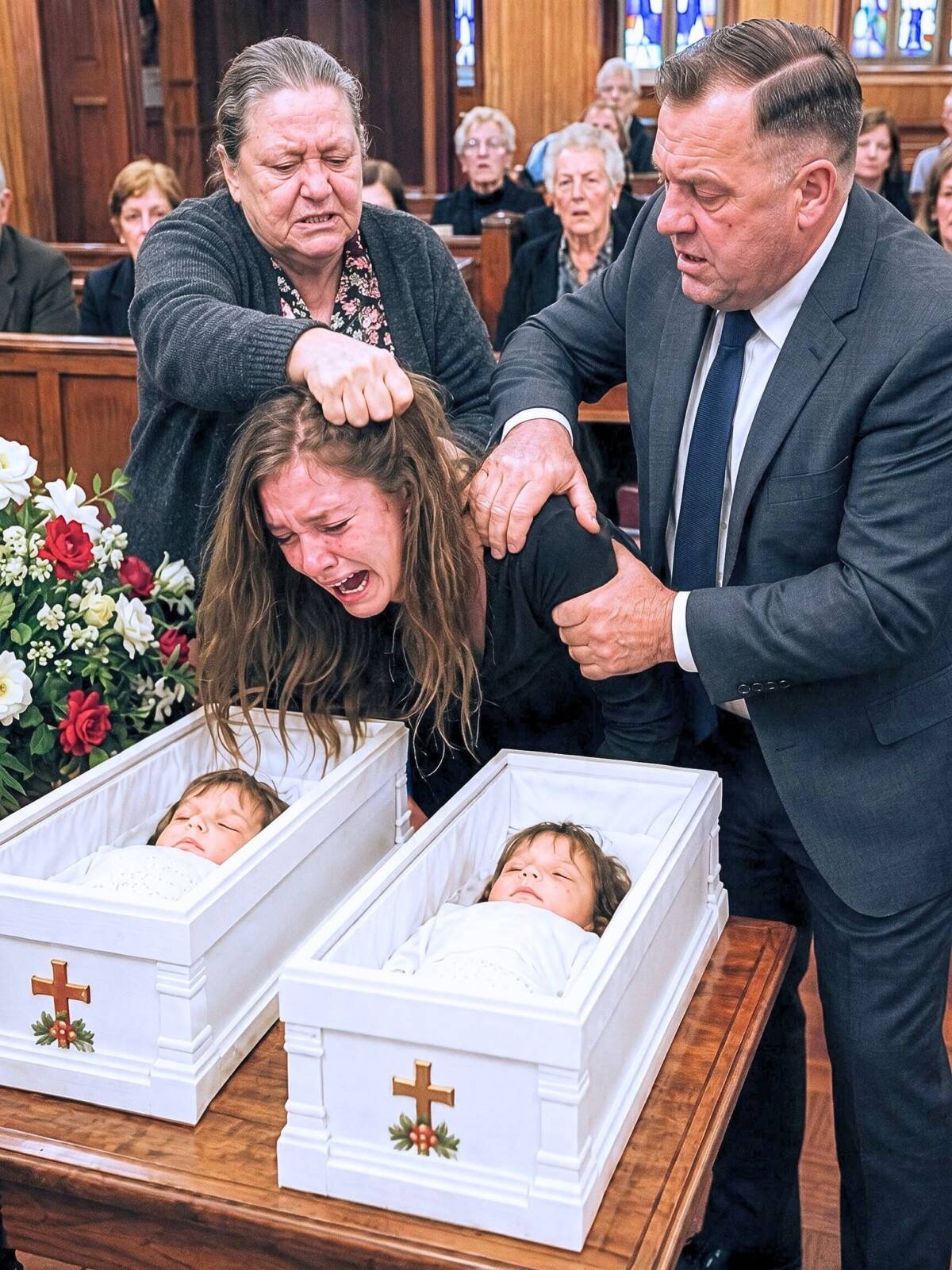
I came home late from work expecting nothing more than a quiet dinner and a chance to rest my aching feet. Instead, my husband struck me across the face in front of his mother, leaving my lip split and bleeding. Ten minutes later, I was on the kitchen floor, terrified I was losing our baby while the two of them stood over me and watched. When my father’s voice came through the speaker of my phone, my husband didn’t hesitate to lie: “She got hysterical and fell on her own.” I didn’t argue. I simply lifted my eyes toward the tiny black lens tucked above the refrigerator and whispered, “It uploads to the cloud.” The color drained from his face—and he had no idea what was coming next.
The Night Silence Finally Broke
The evening had started like dozens of others before it. I had worked a long shift, my lower back ached from the weight of the pregnancy, and all I wanted was to kick off my shoes, warm up something simple, and sit down for twenty minutes of peace.
When I stepped through the front door, the house was too quiet. Mason was standing near the kitchen island with his arms crossed, his jaw tight. His mother, Mrs. Teresa, sat at the dining table with a cup of tea, watching me with the familiar, pursed-lipped disapproval she wore whenever I was five minutes behind her schedule.
Before I could even set my purse down, Mason started in on me about the time. I tried to explain that traffic had been backed up on the highway, that my supervisor had asked me to finish a file before leaving. I barely finished the sentence before his hand came across my face.
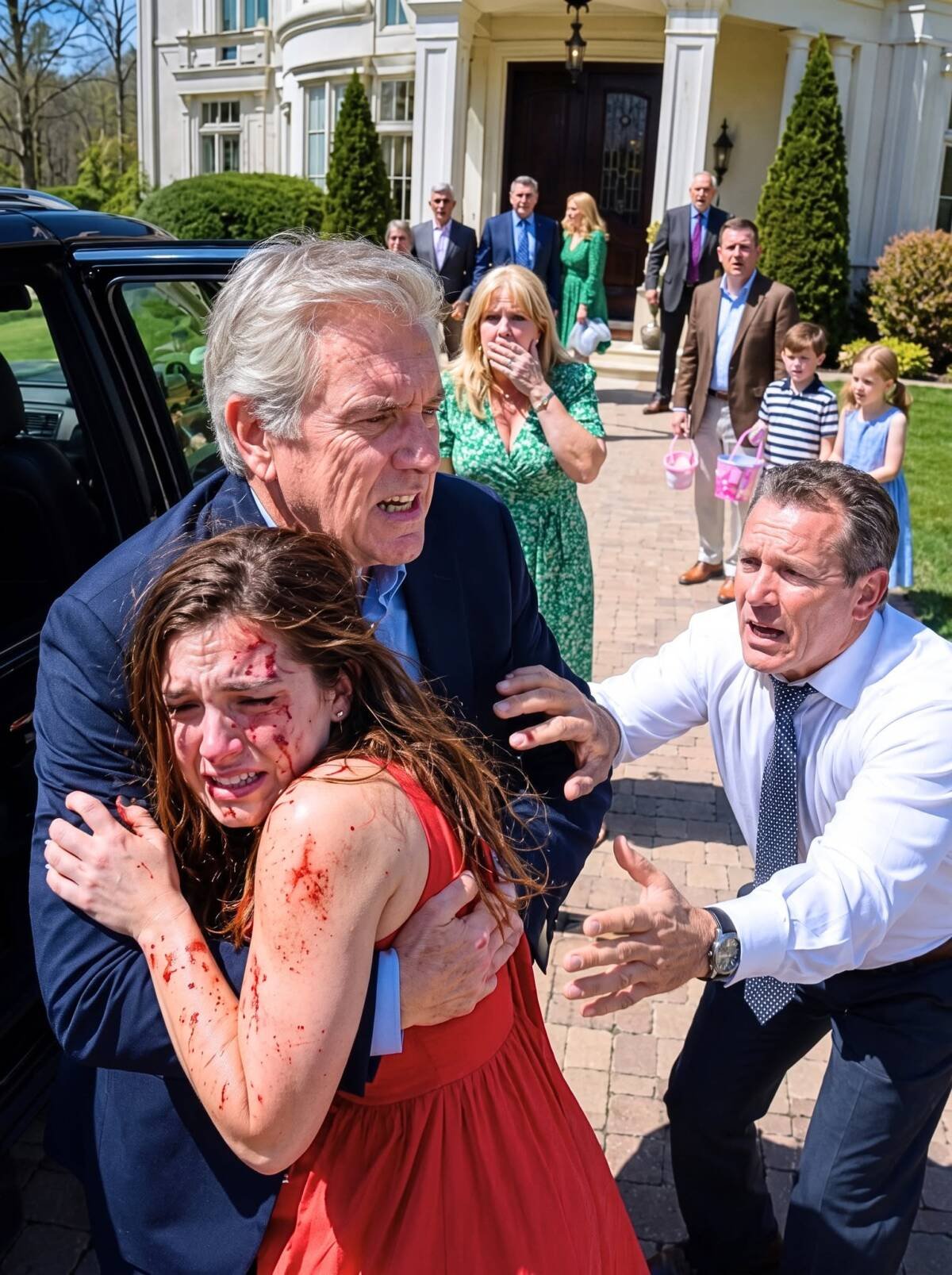
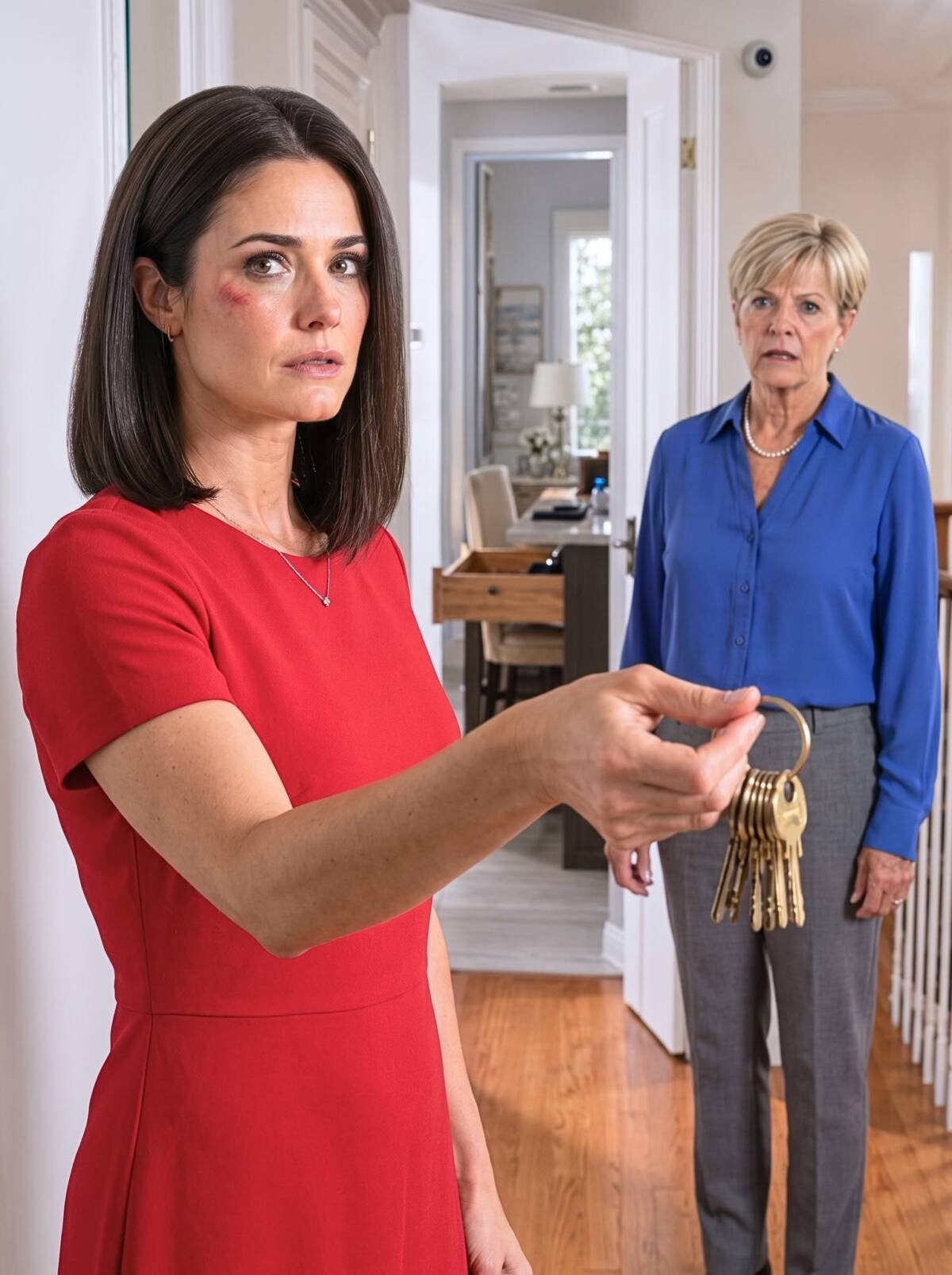
The force of the slap snapped my head to the side. The metallic taste of blood filled my mouth instantly, my bottom lip splitting against my teeth. I stumbled back against the counter, clutching my face in shock, and looked toward Mrs. Teresa. She didn’t flinch. She didn’t stand up. She simply watched, as if she were witnessing a routine correction.
I was pregnant with our son, yet neither of them seemed the slightest bit frightened by what had just happened.
Within ten minutes, the shock gave way to something far more terrifying. A sharp, tearing pain ripped through my lower abdomen, so sudden and violent that it stole the breath from my lungs. A moment later, I felt warmth running down my legs and pooling onto the kitchen tile.
Somewhere in the frantic blur of trying to reach the counter, my phone—which I had been gripping in my coat pocket—connected to my father’s number. I don’t even remember hitting the call button, only hearing the faint crackle of the speaker as the phone slipped from my fingers.
“Sweetheart?” my father’s voice came through, warm and slightly distracted. “Where are you?”
Mason stared down at the phone as though touching it had suddenly become dangerous. Beside the table, Mrs. Teresa went completely rigid. The smug composure she had worn only minutes earlier vanished, replaced by the sudden, creeping realization that someone outside these walls was listening.
I opened my mouth to answer, to beg him to help me, but another wave of pain tore through my stomach. My knees gave out beneath me, and I collapsed onto the cold tile as red spread across the floor.
“Dad…” I gasped, fighting for air. “They pushed me. I’m bleeding. They won’t let me call for help.”
The Voice on the Other End of the Line
For less than a second, the line went dead silent.
When my father spoke again, the gentle warmth was gone. In its place was the calm, surgical precision of a man who had spent decades in the legal system—a man who had questioned dangerous people for a living and never once needed to raise his voice to command a room.
“Do not hang up,” he ordered. “Mary Ellen, listen to me. Breathe. Is the baby moving?”
I pressed both trembling hands over my stomach, praying for the familiar flutter, the small kick that had reassured me every night for weeks. Seconds stretched into an eternity. There was nothing.
“I don’t know,” I whispered, tears spilling over my cheeks. “I can’t feel him.”
Mason finally stepped forward, the gravity of the situation finally breaking through his arrogance. Yet even then, he didn’t kneel beside me. He didn’t reach for a towel or ask if I could breathe. His first instinct was damage control.
“Sir, this is a misunderstanding,” Mason said smoothly, leaning toward the phone in his polished courtroom voice. “She got hysterical and fell on her own.”
My father didn’t yell. He didn’t curse. The quiet, controlled ice in his voice rattled Mason far more than shouting ever could have.
“Counselor Mason Aranda,” my father said evenly, “if you touch my daughter again, you won’t need your connections at the District Attorney’s office. You’ll need a miracle.”
Every drop of blood drained from Mason’s face. Mrs. Teresa pressed a hand to her chest and stared at the phone on the floor as though my father had just materialized in the kitchen.
“How does he know his full name?” she breathed, her voice shaking.
My father heard her clearly.
“Because my daughter married him,” he replied without hesitation. “She didn’t bury herself with him.”
In the background of the call, I heard sudden movement—chairs scraping, urgent voices, someone repeating my street address. I caught fragments of words: ambulance dispatched, local precinct notified, units en route.
Mason’s eyes darted toward the front door. For the first time since I had married him, he looked like a man calculating an escape route. Everything in the room had shifted. The kitchen was no longer his private kingdom where he dictated the narrative; it was rapidly becoming a documented crime scene.
My father brought his voice back to me, softer now, steady as an anchor.
“Mary Ellen, stay with me. Don’t fall asleep.”
Another contraction-like cramp seized my body, doubling me over.
“It hurts so much,” I sobbed.
“I know, honey. I know. Listen to my voice. Count with me.”
I tried. I counted one, two, three, four—but by five, the pain overwhelmed everything, and I threw up onto the floor beside me.
Mrs. Teresa took two quick steps backward, wrinkling her nose as if my suffering were an offensive inconvenience. Even with her pregnant daughter-in-law bleeding on the tile, her only concern was the pristine reputation she had spent years polishing.
“This can’t be happening,” she muttered, wringing her hands. “We are a decent family.”
I lifted my head from the floor and looked straight at her. For years, I had swallowed every jab, every humiliation, every quiet cruelty because I had convinced myself that keeping the peace meant staying silent. Lying there in my own blood, terrified for my child, that illusion finally shattered.
“Decent isn’t a word,” I told her, my voice raw. “It’s what you do when no one is recording you.”
“It Uploads to the Cloud”
Mason’s head snapped toward me.
“Recording?”
I didn’t waste my breath explaining. I simply shifted my gaze upward, toward the small, matte-black lens tucked neatly into the shadow above the refrigerator.
I had bought and installed it three months earlier, the week after Mason shoved me into a bedroom closet and then calmly insisted I had tripped over a pair of shoes. He had never noticed it. Men like Mason rarely imagine that the woman they have spent years intimidating might quietly begin keeping receipts.
Mason lunged across the kitchen, knocking a chair aside. He ripped the camera off the top of the fridge, slammed it onto the tile, and crushed it beneath his heel until plastic and wires scattered across the floor. He stood there breathing hard, convinced he had just erased the only proof of what had happened in that room.
Through my swollen, split lip, I managed a small smile.
“It uploads to the cloud.”
Something in Mason’s posture collapsed. The realization that he could no longer rewrite the truth—that his charm, his law degree, and his mother’s rehearsed lies couldn’t undo a timestamped video—terrified him more than my father’s warning ever could.
“You bitch…” he hissed.
He took a step toward me, his hands clenched, but before he could close the distance, the front door burst open.
Two uniformed police officers rushed in first, followed closely by paramedics wheeling a stretcher. Behind them stood our neighbor from across the street, wearing a bathrobe and clutching her cell phone, tears streaming down her face.
“I called too,” she told the officers, her voice trembling. “I heard the thud. I heard her screaming.”
Almost instantly, Mason slipped back into his professional mask. He straightened his posture, smoothed his shirt, and addressed the officers in the calm, measured tone he used when persuading strangers to trust him.
“Officers, I’m glad you’re here. My wife is agitated—she has a history of anxiety and she lost her footing.”
One of the officers looked down at the blood pooled across the tile. His eyes moved to my split lip, then to the smashed plastic camera pieces scattered near Mason’s shoes, and finally to Mrs. Teresa, who had retreated behind the kitchen table.
“Sir, step back,” the officer ordered.
Mason blinked, genuinely offended that his status hadn’t immediately shifted the room in his favor.
“I’m an attorney.”
The officer didn’t miss a beat.
“Then you understand a lawful order even better. Turn around.”
The paramedics carefully lifted me onto the stretcher. The movement sent a blinding spike of pain through my abdomen, and I cried out before I could stop myself. One of the medics slipped an oxygen mask over my face and leaned in close so I could hear her over the commotion.
“Ma’am, we’re getting you to the hospital right now. Stay awake for me. You and your baby are our only priority.”
I wanted desperately to ask if my son was still alive, if there was any chance he had survived this, but the question caught in my throat. A part of me believed that if I asked and heard the answer I feared most, I wouldn’t have the strength to keep breathing.
As they wheeled me toward the front door, I caught sight of Mason standing near the counter in handcuffs. It wasn’t my father’s influence that had put him there. It wasn’t a favor or a phone call. It was the undeniable evidence of his own hands.
Mason stared at me with the exact same cold, venomous glare that used to make me drop my eyes and apologize for existing. This time, I didn’t look away.
“This is all your fault,” he spat.
Every breath hurt, but I refused to let him have the last word.
“No,” I said through the mask. “This time, there are witnesses.”
Behind him, Mrs. Teresa erupted as an officer tried to guide her away from the doorway. Even surrounded by paramedics and police, she clung to the only script she knew—making herself and her son the victims.
“I didn’t touch her! She was always weak! My son isn’t to blame because she can’t even carry a pregnancy!”
Before she could finish the sentence, my father stepped through the front door. I later learned he had been at a meeting less than twenty minutes away and had driven straight through traffic with a police escort. His coat hung open, his face was pale, and there was an intensity in his eyes I had never seen before.
Yet he didn’t even glance at Mason or Mrs. Teresa. Neither of them existed to him in that moment.
He walked straight to the stretcher, knelt beside me, and took my hand with the same careful gentleness he had used when I was a little girl with a splinter in my finger.
“I’m here,” he said softly.
Those two words broke the dam I had been holding back all night.
“Dad, I can’t feel the baby.”
His jaw tightened once, a flicker of pure grief crossing his face, before he leaned down and pressed a kiss to my forehead.
“They’re going to save him,” he promised. “And they’re going to save you, too.”
The Longest Wait in the Emergency Room
Inside the ambulance, red emergency lights pulsed across the ceiling while fragments of medical terminology flew between the paramedics. Dropping blood pressure. Active hemorrhaging. Blunt trauma. High-risk pregnancy. Every phrase felt like another heavy door slamming shut inside my chest.
My father followed directly behind us in a patrol car so the medics would have room to work. I couldn’t see him, but knowing he was right behind those doors gave me something solid to hold onto as the siren wailed through the dark streets.
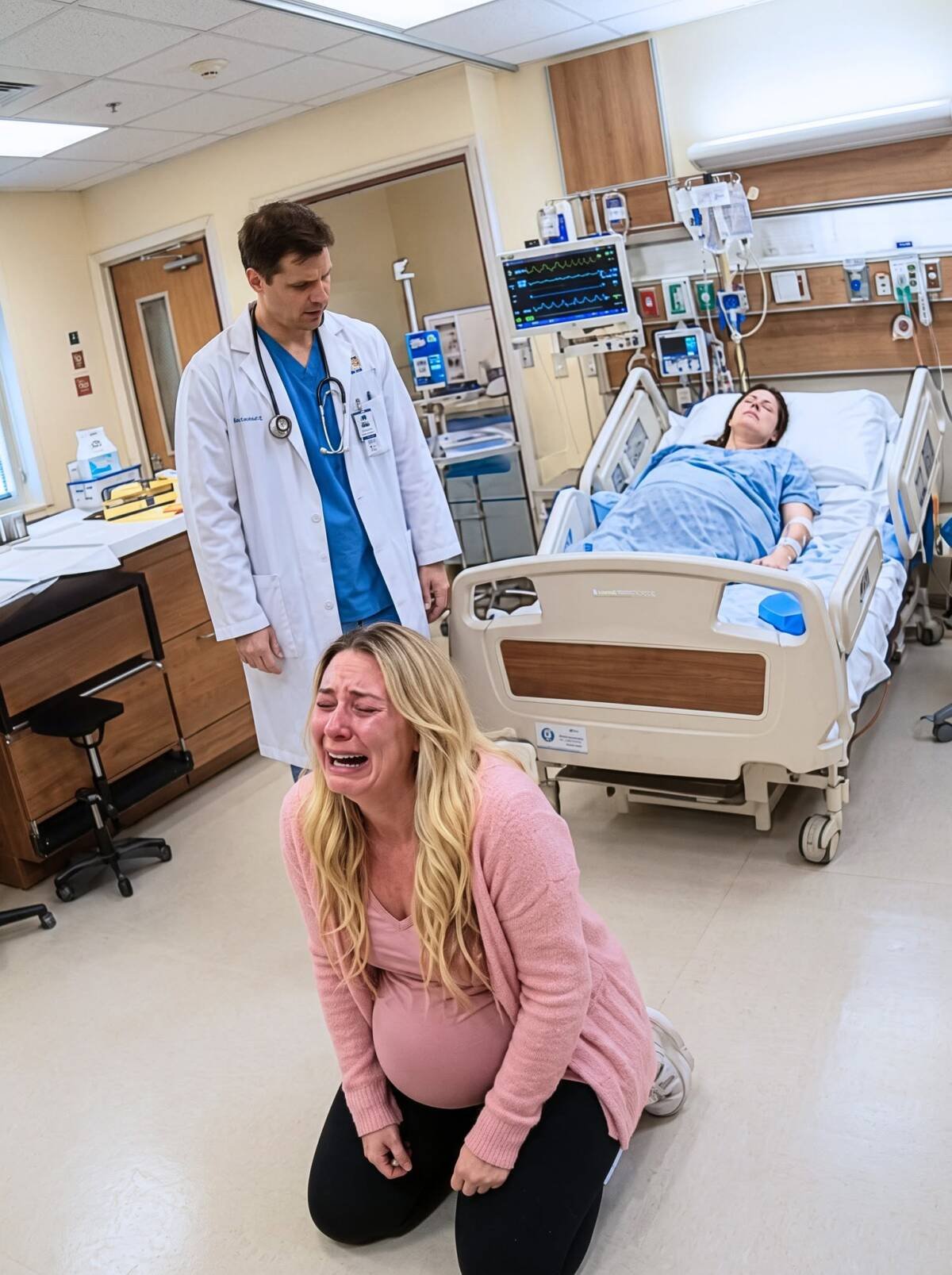
At the hospital, everything moved in a blur of bright lights and urgent hands. Nurses cut away my bloodstained clothes, IV lines were taped into my arms, doctors fired rapid questions I could barely answer, and then a cold ultrasound wand was pressed firmly against my stomach.
I squeezed my eyes shut and waited.
The silence in that room was the loudest thing I had ever heard.
Then, cutting through the static, came a rapid, rhythmic thump-thump-thump.
“There’s a heartbeat,” the doctor announced.
A sob tore out of me so violently that my ribs ached.
“My baby…”
The doctor didn’t sugarcoat the reality. Her voice was brisk and focused.
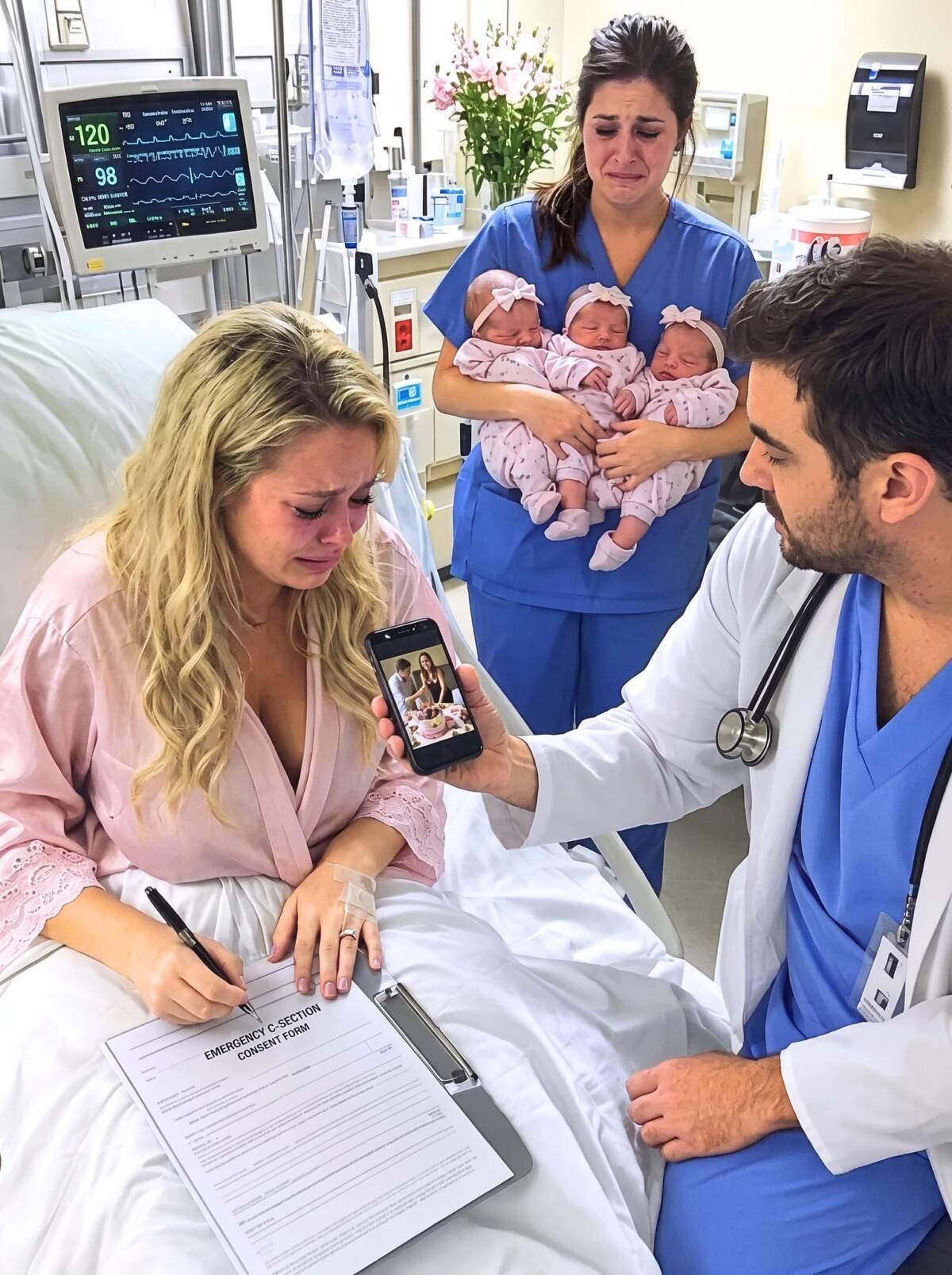
“He’s in distress,” she said. “We need to perform an emergency C-section right now.”
Clipboards appeared in front of my face. Signatures were scribbled—whether mine or my father’s, I couldn’t later recall. All I remember clearly are the blinding surgical lights overhead and an anesthesiologist’s calm voice asking me to count backward from ten as the darkness began to pull me under.
As consciousness slipped away, memories surfaced uninvited. I saw Mason’s hand raised, Mrs. Teresa’s smug smile, and all the lonely nights I had curled protectively around my stomach, whispering to my unborn son that things would get better someday.
Before the darkness took me completely, I whispered a silent plea for forgiveness.
Not from Mason. Not even from God.
I asked my baby to forgive me for waiting so long to leave.
When I finally woke up, my throat felt like sandpaper and a heavy ache sat across my abdomen. My father was slumped in a vinyl chair beside my bed, still wearing the same wrinkled dress shirt from the night before, now streaked with coffee stains. For the first time in my life, he looked old.
There was only one question in the world that mattered.
“My son?” I croaked.
My father was on his feet instantly, leaning close.
“He’s alive.”
Air rushed back into my lungs. Nothing was fixed, and the road ahead was still terrifying, but suddenly there was a tomorrow.
“He’s early, Mary Ellen. He’s in the NICU. He’s tiny, but the doctors say he’s a fighter—just like his mother.”
I pressed my hands over my face and cried silently. My surgical incision burned, my lip throbbed, and every muscle in my body felt bruised, yet none of it mattered next to that single, miraculous truth.
My son was alive.
“Can I see him?”
“As soon as the nurses clear you to move.”
I swallowed hard, forcing myself to ask the next question.
“And Mason?”
My father’s expression turned to stone.
“In custody.”
“And his mother?”
“Giving a statement,” he said. “She tried to tell detectives you slipped on your own. Then we handed them the video.”
I closed my eyes, picturing the little black camera above the refrigerator. Mason had crushed the plastic shell under his shoe, but the truth was already sitting safely where his hands could never reach it.
“Could they see everything?”
My father wrapped his hand warmly around mine.
“Enough,” he said quietly. “The slap. His mother shoving you. The smashed phone. Both of them standing there while you bled and refusing to call 911. All of it.”
For years, I had pictured justice as something massive and distant—marble courthouses, heavy gavels, and powerful people making speeches. Lying in that hospital bed, I realized justice often starts much smaller than that.
Sometimes, it begins the moment a frightened woman realizes nobody is going to believe her bruises anymore, and she quietly presses record.
Part II: Finding a Voice in the NICU
Two days after the surgery, a nurse finally wheeled me down the quiet hallway toward the Neonatal Intensive Care Unit. The entire ride, my heart hammered against my ribs. I was terrified that seeing my son—Mateo—so small and fragile would shatter whatever strength I had left.
The nurse stopped beside an incubator, and there he was.
Mateo was impossibly tiny beneath a miniature blue knit cap, wires taped gently across his chest, his microscopic fists clenched stubbornly near his chin. Looking at him filled me with a fierce, aching love—and a wave of guilt so sharp it nearly doubled me over. This tiny boy had been fighting for his life inside me while I was still trying to survive a marriage I should have walked out of months ago.
“You can reach in and touch him with one finger,” the nurse encouraged gently. “Talk to him. He knows your voice.”
I slid my hand carefully through the port in the plastic wall and rested my fingertip against his tiny foot.
“Hi, my love,” I whispered, tears slipping down my cheeks. “It’s Mommy. I’m so sorry it took me so long, baby. We’re out now.”
Beneath my finger, Mateo’s tiny toes curled slightly.
It was the smallest movement imaginable, yet it felt like something inside my own chest had just woken up again.
A few steps behind me, my father stood quietly, giving me space. This was a man who spent his life confronting powerful figures, signing off on high-stakes decisions, and holding his ground in tense rooms. Yet standing in front of his premature grandson, he was just a grandfather trying—and failing—to hide the tears in his eyes.
“He has your grit,” he murmured.
I didn’t take my eyes off Mateo.
“I hope he has better luck.”
“No,” my father replied firmly. “He’s going to have a mother who is free. That’s not luck, Mary Ellen. That’s protection.”
On the fourth day, an investigator from the District Attorney’s office came to my room to take my formal statement. I had expected telling the truth to feel like a relief, like setting down a heavy weight. Instead, every detail felt like peeling back a layer of shame.
I told her about the first time Mason called me useless. I told her about the first time he gripped my arm hard enough to leave fingerprints. I described the afternoon Mrs. Teresa hid my car keys so I would “learn to ask permission,” and the month Mason took my debit card because he decided wives shouldn’t handle household finances.
With every sentence, I felt as though I were confessing to my own weakness for staying. The investigator must have seen it on my face, because she paused, set her pen down, and looked me squarely in the eye.
“The shame doesn’t belong to you,” she said.
I nodded, even though believing it would take much longer than hearing it. The abuse hadn’t started the night Mason split my lip. It had started years earlier, piece by piece, as they trained me to believe that speaking up about what happened behind closed doors would make me the problem.
My father waited out in the hallway while I spoke. I was grateful for that. I didn’t want his title, his reputation, or his connections to be the reason anyone took me seriously. For once, my own voice—even if it shook—needed to be enough.
Legal consequences moved swiftly. A restraining order was issued first, followed by preliminary hearings while my surgical scar was still healing and Mateo remained in the NICU. Mason faced serious charges: domestic violence, aggravated assault, failure to render aid, and making terroristic threats.
Mrs. Teresa wasn’t spared either, though she continued telling anyone who would listen that I had blown a “family disagreement” out of proportion just to keep her away from the baby. She referred to Mateo as her grandson with a possessive entitlement that made my skin crawl, as if he were an heirloom rather than my child.
One afternoon, while I was sitting exhausted and sore in the hospital lactation room trying to pump milk for Mateo, my phone buzzed with a text from an unknown number.
Drop the charges. Mason is ruined. Don’t be a cruel woman.
She didn’t even need to sign her name. Mrs. Teresa had never apologized for anything in her life; even her pleas were just commands wrapped in guilt.
I didn’t get angry. I opened my photo gallery, selected a picture of Mateo lying in his incubator surrounded by tubes and monitors, and hit send. Then I typed the only reply she would ever get from me:
This is what the two of you almost destroyed. This is what I’m going to protect.
I blocked the number. My hand didn’t shake once.
A Bowl of Bland Soup and a Locked Door
After a long month in the hospital, Mateo was finally strong enough to come home. He was still tiny, but he was breathing entirely on his own. Holding him against my chest without a single wire or alarm attached to him felt like carrying a miracle out of a burning building.
My father offered to renovate a permanent suite for us in his home. I loved him deeply for it, and I stayed with him for a few weeks while I regained my strength. But after years of living under someone else’s rules, I knew I couldn’t build a new life by trading one roof of dependence for another.
A few weeks later, I signed the lease on a modest two-bedroom apartment. It wasn’t fancy, but the living room window overlooked a blooming jacaranda tree—and most importantly, it had a kitchen where no one would ever scream at me.
On our first night there, I boiled a simple pot of chicken noodle soup. I was so tired I forgot to add enough salt, and it came out completely bland. I sat alone at my small dining table while Mateo slept peacefully in his bassinet nearby, lifted the first spoonful to my mouth, and suddenly burst into tears.
No one insulted my cooking. No one demanded to be served first. No one watched me waiting for a mistake. I cried over that tasteless bowl of soup as if it were the finest meal I had ever eaten, because for the first time in years, an ordinary evening belonged entirely to me.
The next time I saw Mason was in the hallway outside a courtroom after a pretrial hearing. He looked gaunt, his eyes hollow, his suit hanging loosely on his frame. His defense attorney lingered several paces behind him, looking deeply uncomfortable.
“Mary Ellen,” Mason called out softly. “We need to talk. As a family.”
I stopped walking, keeping a deliberate distance between us.
“My family is at home.”
A flash of hurt crossed his face.
“I’m Mateo’s father.”
For years, I had cushioned the truth around Mason to avoid triggering his temper. I had no reason left to protect him from the weight of his own choices.
“You’re the man who almost killed him,” I said calmly.
He flinched as if I had struck him. Perhaps no one had ever stripped away his legal jargon and stated it that plainly.
“I never meant for that to happen,” he murmured.
“No,” I replied. “You just wanted me to obey. You wanted me afraid. You wanted me to bleed quietly so I wouldn’t stain your reputation.”
His eyes dropped to the floor.
“My mother put those ideas in my head.”
I almost laughed at the sheer cowardice of it, but there was nothing funny left between us.
“Your mother pushed me. You smashed my phone. Stop hiding behind the woman you used as a shield.”
He stood silent for a long moment. Then he spoke the two words I once would have given almost anything to hear.
“Forgive me.”
It was too late. His apology had arrived the same way the ambulance would have if he’d gotten his way—far too late to matter. His remorse hadn’t been born out of love; it had been born out of handcuffs, cloud footage, and the collapse of his career.
I looked at the man I had once promised my life to and realized I didn’t need anything from him anymore. Not an explanation, not an apology, and certainly not another empty promise.
“I’m going to spend the rest of my life learning to forgive myself,” I told him. “I don’t have time for you.”
Then I turned and walked down the hall.
My father was waiting near the exit, but he didn’t step in or say a word to Mason. He simply let me walk toward him on my own, because he knew I didn’t need rescuing anymore.
Part III: The Woman Who Saved Herself
Six months later, Mateo had found his smile—a wide, gummy grin that somehow made our small apartment feel like a palace. A faint scar remained on his tiny heel from the endless blood draws in the NICU, yet when he wrapped his chubby fingers around mine, his grip was astonishingly strong.
I was in therapy twice a week, learning to call things by their real names. Abuse. Control. Violence. Boundaries. They were no longer clinical words from other people’s stories; they were realities I could finally name without softening them.
I also learned to reclaim a much simpler word: life.
Life was stumbling out of bed at 3:00 a.m. to warm a bottle while Mateo fussed. It was drinking lukewarm coffee, hauling a diaper bag to pediatric checkups, and feeling bone-tired without anyone treating my exhaustion as a personal failure. Life was paying the rent with my own paycheck and feeling a quiet sense of pride every time I turned the deadbolt at night. For years, a locked door had meant being trapped inside someone else’s rules. Now, it meant I decided who was allowed in.
The legal cases dragged on in the background, but I refused to let them become the center of my world. In the courthouse hallways, Mrs. Teresa’s venomous arrogance slowly withered away, and Mason’s reputation as an untouchable attorney dissolved as former colleagues quietly distanced themselves from him.
By the time I saw Mason again, Mateo was a year old. The court was reviewing a motion for strictly supervised, limited visitation pending psychological evaluations.
Mason stood several feet away while Mateo sat happily on my hip, chubby-cheeked, alert, and drooling through a bright smile—blissfully unaware of the dark history tied to the man staring at him.
Mason’s eyes filled with tears.
Mine stayed dry. It wasn’t that I had turned cold; I had simply spent too many years crying in kitchens where my tears were treated as proof that they still owned me.
Mason gazed at our son for a long moment.
“He looks like me,” he said quietly.
I looked down at Mateo’s bright, fearless face, then met Mason’s eyes evenly.
“No,” I said. “He has your eyes. But he looks like someone who survives with dignity.”
Mason had no reply.
I turned and carried Mateo out of the courthouse into the warm afternoon sun. My father was leaning against his car in the parking lot. When he saw us walking toward him, he opened the passenger door without asking a single question about what had happened inside.
Before climbing in, I paused and looked at him.
“Dad.”
“Yes, honey?”
There were a hundred things I could have thanked him for—the phone call, the police, the nights in the hospital, the quiet support through every hearing. Yet only one thing felt big enough to say.
“Thank you for answering.”
A shadow of pain crossed his face.
“Forgive me for not seeing it sooner.”
I shook my head gently. I knew better than anyone how useless that kind of guilt was.
“I didn’t know how to ask for help either.”
My father leaned down and kissed Mateo softly on the forehead.
“Now you know.”
I looked down at my son. He was tilting his head back, laughing out loud at a cloud drifting across the blue sky as if it were the greatest show on earth. He knew nothing about the blood on the kitchen floor, nothing about a husband who thought a law degree made him untouchable, and nothing about a mother-in-law who believed a quiet woman could be broken without consequence.
They had both been wrong.
Conclusion
For a long time, I thought my father was the one who saved me that night. And in many ways, he did—his voice shifted the room, his urgency brought help faster, and his presence kept me anchored when I was terrified I was losing everything.
But the truth is, my escape started before a single siren sounded on our street.
It started on that kitchen floor, when I stopped lowering my eyes and finally looked up. It started when I stopped begging cruel people to be kind and realized that surviving them meant refusing to protect their lies. Most of all, it started when I understood what my son truly needed from me.
Mateo didn’t need a mother who endured mistreatment in silence just to keep up the appearance of a family. He needed his mother alive. He needed a woman who could stand tall after years of being taught to shrink—a mother who knew how to protect him by protecting herself first.
Because sometimes, freedom doesn’t begin when someone powerful shows up to rescue you. It begins the exact second you stop asking permission to save yourself—and look the people who tried to silence you in the eye with the one word they never expected to hear: Enough.
What do you think of Mary Ellen’s courage and the way she handled everything after that night? Have you or someone you know ever had to find the strength to walk away from a toxic situation? Share your thoughts in the comments below—your story might be the exact encouragement someone else needs to read today.