Introduction: The Sentence We Never Spoke Aloud
There are marriages that end with the violent slam of a door, the bitter division of assets in fluorescent-lit conference rooms, and shouting matches that spill onto suburban driveways.
And then there are marriages that simply fossilize.
When my infidelity came to light in the late spring of 2008, my husband, Michael, did not scream. He did not shatter dinner plates against our kitchen backsplash, curse my name, or pack his bags to disappear into a motel. Instead, he chose a retribution far more enduring, quiet, and insidious: he stayed.
He remained in our four-bedroom colonial outside Columbus, Ohio, faithfully mowing the lawn every Saturday, paying his half of the property taxes, repairing dripping sink traps, and rolling the green recycling bins back from the curb every Friday morning. To our neighbors, our church group, and our extended family, we were the picture of suburban stability—a quiet, dependable couple weathering the empty-nest years.
Behind our closed front door, however, our marriage was reduced to a penal colony of two.
For eighteen years—6,574 consecutive nights—I slept in the drafty, north-facing guest bedroom at the end of the second-floor hallway, while Michael slept alone in the master suite we had once shared. He never invited me back. I never knocked on his door. When our shoulders accidentally brushed near the pantry, Michael would step aside with the measured, defensive polite reflex of a stranger avoiding an unwashed commuter on a crowded subway train. When I placed a plate of roasted chicken and vegetables before him at dinner, he murmured, “Thank you, Susan,” in the exact detached cadence one reserves for a cafeteria worker.
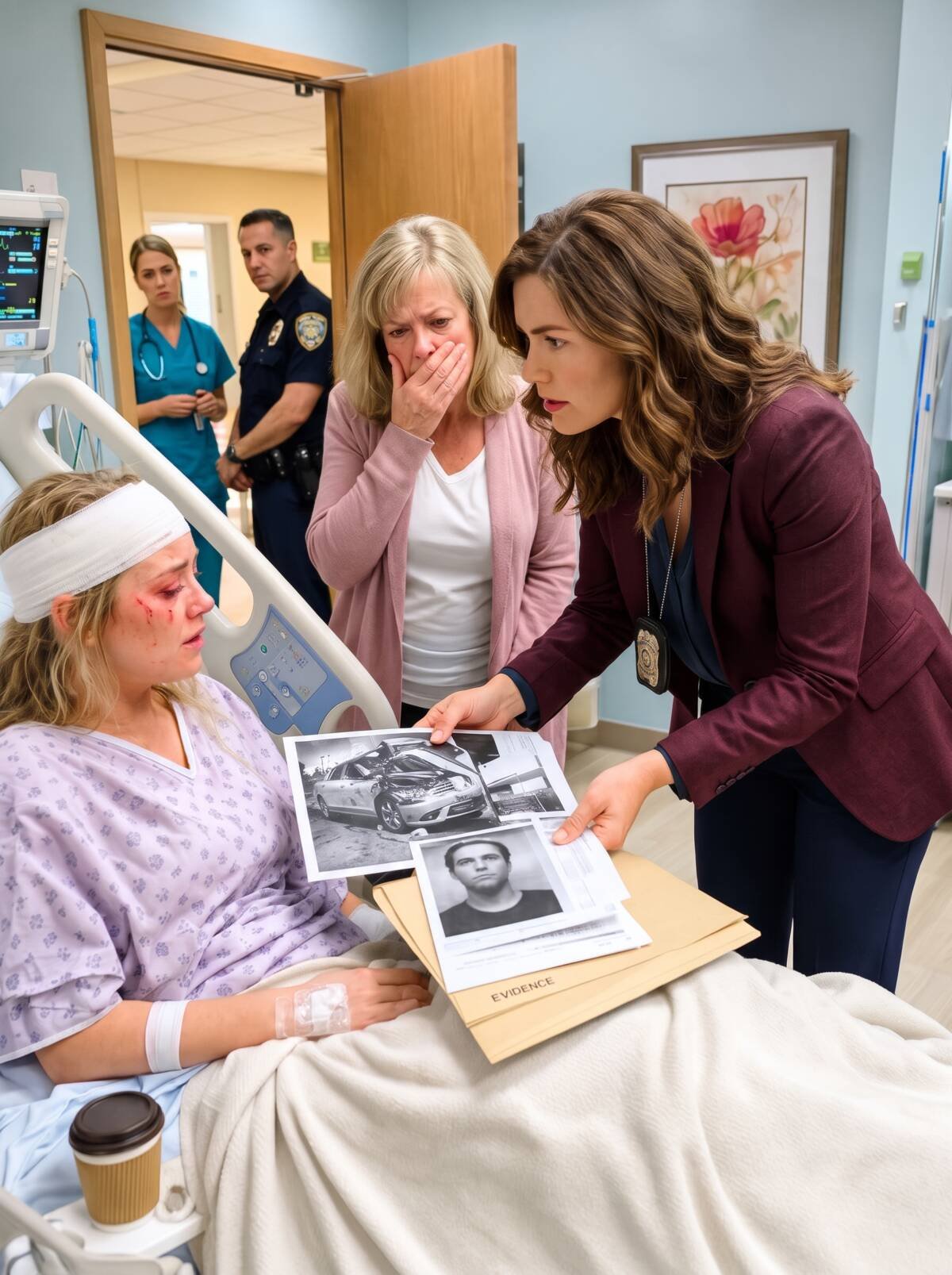
I endured every second of it. I swallowed the isolation because I believed I had earned it. I had committed the cardinal sin of our vows: I had stepped outside our home, sought comfort in the arms of another man during a season of crushing domestic neglect, and lied about it. When the affair was discovered, my guilt was so all-consuming that when depression dragged me into an abyss that led to an overdose of prescription sleeping pills that same year, I woke up in an emergency room believing my survival was a debt I would have to spend the rest of my natural life repaying.
When Michael sat beside my hospital bed in 2008, holding my trembling hand while my throat burned from charcoal and gastric lavage, he whispered that the deep, sickening ache in my lower abdomen was “just trauma from the stomach pump.”
I believed him. For nearly two decades, I looked at his cold eyes across the breakfast table and told myself: You broke this family. You pay the bill.
It was not until a crisp October morning in 2026—during a long-delayed, routine post-retirement pelvic examination—that the architecture of my entire adult life collapsed.
My gynecologist, Dr. Sharon Evans, froze the ultrasound wand, stared in dead silence at the gray-and-white topography of my pelvic scans, and leaned over the exam table. Her voice was not clinical; it was shaken, cautious, and grave.
“Susan,” she asked, removing her latex gloves, “are you absolutely positive you never had abdominal surgery?”
“Never,” I whispered, pulling the paper sheet higher over my waist. “Only a natural delivery with our son thirty-two years ago.”
Dr. Evans turned the high-resolution monitor directly toward my face, pointing a trembling pen tip at a dense band of calcified fibrous tissue running along the internal lining of my uterus.
“Then you need to go home today,” Dr. Evans said, “and ask your husband what was done to your body while you were unconscious in 2008.”
Act I: The Prison of Penance
Guilt is an exceptional anesthetic; it numbs a person to cruelty that would otherwise be intolerable.
In the spring of 2008, our marriage was already fracturing along silent faults. Michael was an associate director at a regional commercial logistics firm, regularly working fourteen-hour days, leaving before dawn and returning home reeking of burnt office coffee and sheer exhaustion. Our son, Jake, was sixteen—independent, driving his own car, and gradually drifting away from the orbit of the home.
In that echoing silence, I met a landscape contractor named David while coordinating a municipal garden restoration project. The affair was brief—lasting fewer than seven weeks—and it was born not out of grand passion, but of a pathetic, desperate hunger to be seen. It was the catastrophic cliché of a neglected housewife mistaking attention for salvation.
When Michael found the text messages on my phone on an unseasonably warm Tuesday in May, he did not raise his voice. He simply placed the phone face-up on the dining room table, looked at me with eyes that had turned entirely dead, and said:
“I will not divorce you. We have a son entering his junior year of high school. We have elderly parents. We have a reputation in this town. But you and I are finished.”
The days that followed were a waking nightmare. Michael’s silence was not an absence of sound; it was an aggressive, suffocating presence that filled every corridor of the house. He moved my clothes, my toiletries, and my pillows into the small guest bedroom that afternoon. When Jake came home from soccer practice, Michael smiled, asked about his classes, and passed the potatoes across the table as if the woman sitting opposite him were made of glass.
Within three weeks, the weight of my own shame mutated into clinical, psychotic depression. I stopped eating. I could not sleep for more than forty minutes at a time. Every time I looked in the mirror, I saw a monster who had destroyed the only family she had ever known.
On a rain-slicked night in late June, after Michael went to work an overnight inventory shift and Jake was sleeping over at a friend’s house, I walked into the bathroom, uncapped a bottle of temazepam, and swallowed forty-two tablets with a glass of tap water.
My memory of that night is fragmented: the cold porcelain of the bathtub floor against my cheek; the terrifying realization that I did not actually want to die; the frantic, dialing of 911 with numb fingers; and the blinding, strobing red lights reflecting across the ceiling of an ambulance.
I woke up forty-eight hours later in the intensive care unit of St. Jude Memorial Hospital.
My vocal cords felt raw and bleeding from the endotracheal tube. My extremities were strapped down with soft medical restraints. But what dominated my senses was an agonizing, deep-seated burning pressure in my lower pelvis—a sharp, throbbing ache that felt as though someone had dragged a heated blade across my internal organs.
Sitting in the vinyl armchair beside my bed was Michael.
His eyes were bloodshot, his tie loosened, his hair disheveled. When he saw my eyes flutter open, he stood up, leaned over the metal bed rail, and took my trembling right hand in both of his. It was the first time he had touched my skin in over a month.
I began to weep, the tears soaking into the rough cotton pillowcase. “Michael… I’m so sorry… my stomach hurts so bad… what did they do to me?”
Michael reached up, gently brushing a strand of damp hair from my forehead. His touch was terrifyingly tender.
“Hush, Susan,” he murmured, his voice calm, steady, and paternal. “You’re safe now. The doctors had to pump your stomach with activated charcoal and saline. The lavage tube irritated your abdominal lining and diaphragm. It’s just cramping from the poisoning. It will pass.”
I believed him. Why wouldn’t I? A woman who has just attempted to end her own life does not question the husband who drove through the night to sit by her hospital bed.
Three days later, I was discharged. Michael carried my duffel bag into the house, led me directly to the guest bedroom, and helped me into bed.
“You need rest,” he said, pausing at the threshold of the room. “We will maintain separate quarters while you recover your mental health. For Jake’s sake.”
That door stayed shut for eighteen years.
Act II: The Routine Ultrasound
Time has a way of turning the bizarre into the mundane.
Jake graduated from high school, went on to Ohio State University, graduated with honors, married a wonderful girl named Claire, and moved twenty minutes away to start a career in civil engineering. During every graduation dinner, every holiday gathering, and every family barbecue, Michael and I played our assigned roles:
We sat beside each other in church pews, sharing a hymnal without our fingers ever touching.
We posed for Christmas card photographs with our arms resting stiffly behind each other’s backs.
We split the household chores with corporate efficiency: I did the grocery shopping, laundry, and cooking; Michael managed the investments, exterior maintenance, and automotive bills.
Whenever a friend asked why we took separate vacations or why I looked so weary, I blamed my chronic insomnia or Michael’s demanding corporate schedule. Inwardly, I accepted the guest room as my cloister. I was a penitent nun living out a lifetime sentence for forty-nine days of betrayal.
In September 2026, at age fifty-nine, I officially retired from my position as an administrative assistant at the county water district.
With time finally on my hands, I scheduled a series of routine medical evaluations I had neglected for over a decade. During my initial intake with Dr. Sharon Evans, a renowned gynecological specialist who had taken over the practice of my retired physician, I offhandedly mentioned an intermittent, dull pelvic ache that had flared up occasionally over the years—a sensation of dragging weight in my lower abdomen that I had always dismissed as early-onset osteoarthritis or residual gastrointestinal distress.
“Let’s run a transvaginal ultrasound just to establish a clear post-menopausal baseline,” Dr. Evans said, adjusting her stool. “It takes ten minutes.”
The room was dim, illuminated only by the soft, blue-gray glow of the ultrasound terminal. At first, the exam was quiet, accompanied only by the rhythmic, mechanical hum of the machine.
Then, Dr. Evans stopped moving the transducer.
She zoomed in on a specific transverse section of my uterine fundus. She adjusted the contrast, measuring a dense, reflective acoustic shadow spanning across the myometrium.
“Susan,” Dr. Evans asked, her eyes fixed on the display, “have you had an ablation? Or an operative hysteroscopy?”
“No,” I replied, staring at the ceiling tiles. “I’ve never had any procedures down there. Jake was a completely uncomplicated vaginal birth in 1994.”
Dr. Evans remained silent for nearly thirty seconds. She clicked a button, capturing multiple still frames, then withdrew the probe, stripped off her gloves, and swung the secondary LCD monitor around so it was facing me directly.
“Look here,” Dr. Evans instructed, pointing her finger at a stark, bright white band running horizontally through the dark muscular tissue. “This is dense, calcified scar tissue consistent with mechanical instrumentation and electrocautery. Furthermore, look at the cornual regions leading to your fallopian tubes. They aren’t patent. There is clear evidence of bilateral surgical interruption and micro-occlusion clips.”
The medical terminology sounded like an alien language. “Dr. Evans, what are you saying?”
“I’m saying that you have undergone an invasive, surgical sterilization and bilateral tubal destruction,” she said plainly, looking directly into my eyes. “Someone performed an intra-uterine surgical procedure on you. And based on the calcification density and tissue remodeling, this was done between fifteen and twenty years ago.”
The room seemed to tilt sideways. The fluorescent lights overhead buzzed like a hive of hornets.
“That’s impossible,” I stammered, my mouth bone-dry. “I would know if I had surgery! I have never signed a surgical consent in my entire life, except for my wisdom teeth in college!”
Dr. Evans leaned in closer, her voice dropping into a solemn whisper:
“Susan, think very carefully. Between 2005 and 2010, were you ever hospitalized? Were you ever placed under general anesthesia, heavy sedation, or admitted through an emergency department for an extended period?”
The memory hit me with the concussive force of an explosion:
The blinding ICU lights.
The burning agony in my pelvis that Michael swore was a stomach pump.
The strange tenderness between my thighs that I had been too terrified and drugged to investigate.
The way Michael had insisted on driving me home, managing all my discharge paperwork, and disposing of every hospital pharmacy bag himself.
“2008,” I whispered, tears blurring my vision. “June of 2008. An overdose.”
Dr. Evans set her clipboard down on the counter. Her face was grim, her expression a mix of professional outrage and deep maternal sorrow.
“Susan, hospital emergency rooms do not perform tubal surgeries during a psychiatric stabilization following an overdose without extensive, documented surgical justification. Under Ohio law, a spouse cannot simply authorize non-emergency reproductive alteration on a patient without extraordinary fiduciary declarations. If this happened while you were comatose… something catastrophic occurred in that operating room.
“Go home. Demand your records from St. Jude Memorial. And ask your husband what happened to you while you were asleep.”
Act III: The Yellow Envelope in the Crawlspace
The drive home along State Route 315 was a blur of asphalt and autumn leaves.
My hands gripped the steering wheel so tightly that my knuckles turned ivory. Every conversation, every cold stare, every single night spent shivering in that guest bedroom over eighteen years began to reconfigure itself in my mind.
I had spent nearly two decades crawling on my knees through our marriage, begging for crumbs of Michael’s forgiveness. I had accepted his disgust as the natural consequence of my sin.
What if his coldness was never about grief?
What if his silence was an alibi?
When I unlocked the front door at 2:15 PM, the house smelled of lemon furniture polish. Michael was sitting in his leather wingback armchair in the formal living room, reading the physical copy of The Wall Street Journal, a porcelain mug of black coffee resting on the slate coaster beside him. He looked like an elder statesman—distinguished, gray-haired, impeccably groomed, the very picture of moral rectitude.
He lowered the newspaper an inch. “Did the doctor go smoothly?”
I stood in the entryway arch, still wearing my wool overcoat, my purse hanging from my elbow.
“Michael,” I said, my voice eerily calm, possessing a chilling clarity I hadn’t felt in twenty years. “Dr. Evans found extensive surgical scar tissue and bilateral ligation clips inside my uterus this morning.”
The newspaper did not flutter. But Michael’s index finger—resting against the top margin of the financial page—twitched. A microscopic tremor.
“She says I had an invasive surgical procedure performed on my body roughly eighteen years ago,” I continued, taking two slow steps into the room. “She asked me if I remembered having surgery in 2008. The night you told me my pelvic pain was from a stomach pump.”
Michael lowered the paper completely, setting it on his lap. The color did not instantly leave his face; instead, his jaw set into that familiar, unyielding concrete line that had terrorized me into submission for eighteen years.
“You’re letting your imagination run wild again, Susan,” he said, his tone smooth, condescending, and icy. “Dr. Evans is a clinician looking for billable anomalies. You had a severe gastric lavage. You tore abdominal muscles when they inserted the tubes. We discussed this nearly two decades ago.”
“Do not lie to me!” I screamed—a sound so loud and violent that it startled both of us. It was the first time I had raised my voice inside that house since George W. Bush was president.
Michael stood up, his height towering over me, his voice adopting that sharp, disciplinary edge: “Lower your voice in this house! Have you forgotten who you are speaking to? Have you forgotten what you did to this family?”
“Who authorized it, Michael?” I demanded, stepping directly into his personal space, my eyes boring into his. “What did you sign while I was unconscious in that ICU?!”
For six long seconds, Michael stared at me. Then, for the first time in eighteen years, the mask slipped. His eyes darted—not to me, not to the doorway, but toward the built-in mahogany bookcase in the library corner, specifically toward the baseboard access panel that led to our fireproof utility safe.
I didn’t wait.
I turned on my heel, marched into the library, dropped to my knees on the oriental rug, and ripped the wooden baseboard cover away from the wall.
“Susan, stop!” Michael yelled, his footsteps pounding behind me. “Get away from that! Those are private family legal files!”
Before he could reach me, I pulled open the heavy steel door of the Sentry safe—a safe whose combination had been our anniversary date since 1991. Inside were property deeds, auto titles, tax returns, and behind them all, tucked between two dusty commercial insurance folders, was a thin, legal-sized yellow envelope.
Written across the front, in Michael’s neat, architectural block lettering, was a single label:
ST. JUDE – JUNE 2008: CONFIDENTIAL SETTLEMENT & CONSENT
Michael grabbed my left forearm, attempting to yank me away from the floor.
I whipped around, swinging my heavy leather purse with all the momentum in my core, striking him squarely across the chest. He stumbled backward against the mahogany desk, knocking over a brass reading lamp that shattered against the hardwood floor.
I tore the envelope open.
Inside were twelve pages of crisp, carbon-copied medical documentation, bearing the blue institutional seal of St. Jude Memorial Hospital, dated June 28, 2008.
My eyes scanned the medical jargon, the words burning themselves into my retina like branding irons:
================================================================================
PATIENT: HAYES, SUSAN M. | DOB: 05/14/1967 | RECORD ID: #774-098-B
ATTENDING SURGEON: DR. HAROLD G. KAUFMAN, MD, FACOG
EMERGENCY MEDICAL PROXY / SPOUSAL DESIGNEE: HAYES, MICHAEL R.
================================================================================

PROCEDURAL TITLE:
EMERGENCY EXPLORATORY LAPAROSCOPY, HYSTEROSCOPIC RESECTION,
AND BILATERAL PARTIAL SALPINGECTOMY (PERMANENT SURGICAL OCCLUSION).

CLINICAL INDICATION & SURGICAL RATIONALE:
Patient admitted via emergency transport following intentional overdose of
benzodiazepines (acute suicide attempt secondary to severe domestic crisis).
Following gastric evacuation, attending obstetrical consult noted acute pelvic
hemorrhage and uterine wall pathology.

EMERGENCY CONSENT PROTOCOL:
Spouse and legal proxy, Michael R. Hayes, executed emergency authorization
under institutional fiduciary statute §3701.34.

PROXY DECLARATION (VERBATIM RECORD):
"Spouse explicitly states patient has demonstrated persistent psychological
instability, acute depressive decompensation, and possesses an active history
of domestic infidelity. Spouse attests that further pregnancy constitutes an
unacceptable psychiatric risk to the marital unit and the minor child.
Spouse requests permanent, irreversible surgical cessation of reproductive
capacity while patient remains under general anesthesia."

SIGNATURE: Michael R. Hayes (Spouse / Legal Proxy)
DATE: 06/28/2008 - 03:14 AM
================================================================================
The paper rattled in my hands. The room ceased to exist.
I looked down at the signature at the bottom of the page. It was Michael’s distinctive, elegant cursive—the exact same signature that was on our wedding certificate, the deed to our home, and Jake’s birth certificate.
While I lay comatose on a ventilator, fighting for my life after an act of absolute despair, my husband had walked into a hospital conference room in the dead of night, looked a surgeon in the eye, and signed an order to have my reproductive organs surgically mutilated.
He had not saved my life. He had neutered me like an animal to ensure that I could never bear another man’s child.
And then he had brought me home, placed me in a guest room, and let me spend eighteen years believing that his cold, sexless silence was a moral punishment I deserved.
I looked up from the floor. Michael was standing against the desk, his head bowed, his hands shaking violently.
He wasn’t an angry patriarch anymore. He was a small, terrified monster cornered in his own study.
“You signed this,” I choked out, the words tearing from my throat. “You had them cut me open while I was asleep.”
“Susan,” Michael sobbed, dropping to his knees on the floor across from me, burying his face in his hands. “You don’t understand what you did to me! You broke my heart! You destroyed our world! The doctor said you were unstable… he said you might try it again if you got pregnant… I thought I was protecting this family!”
“Protecting the family?!” I shrieked, the tears blinding me. “You let me wake up in agony and told me it was a stomach pump! You let me live in a bedroom down the hall for eighteen years like a disgraced servant!”
At that exact moment, the heavy oak front door swung open.
“Mom? Dad? Claire said your car was in the driveway—”
Jake walked into the foyer, his keys jingling in his hand. He stopped dead in the doorway of the library, looking from the shattered brass lamp to his father kneeling on the floor, and finally to his mother clutching a stack of medical records with tears streaming down her face.
“What the hell happened here?” Jake demanded.
Act IV: The Poison in the Well
There are moments when the protective instincts of motherhood dissolve under the sheer, unendurable weight of reality. For eighteen years, I had shielded Jake from the ugliness of our marriage. I had told him that his father was a good man, that parents simply grow apart, that our separate bedrooms were merely an eccentricity of middle age.
I did not shield Michael that afternoon.....