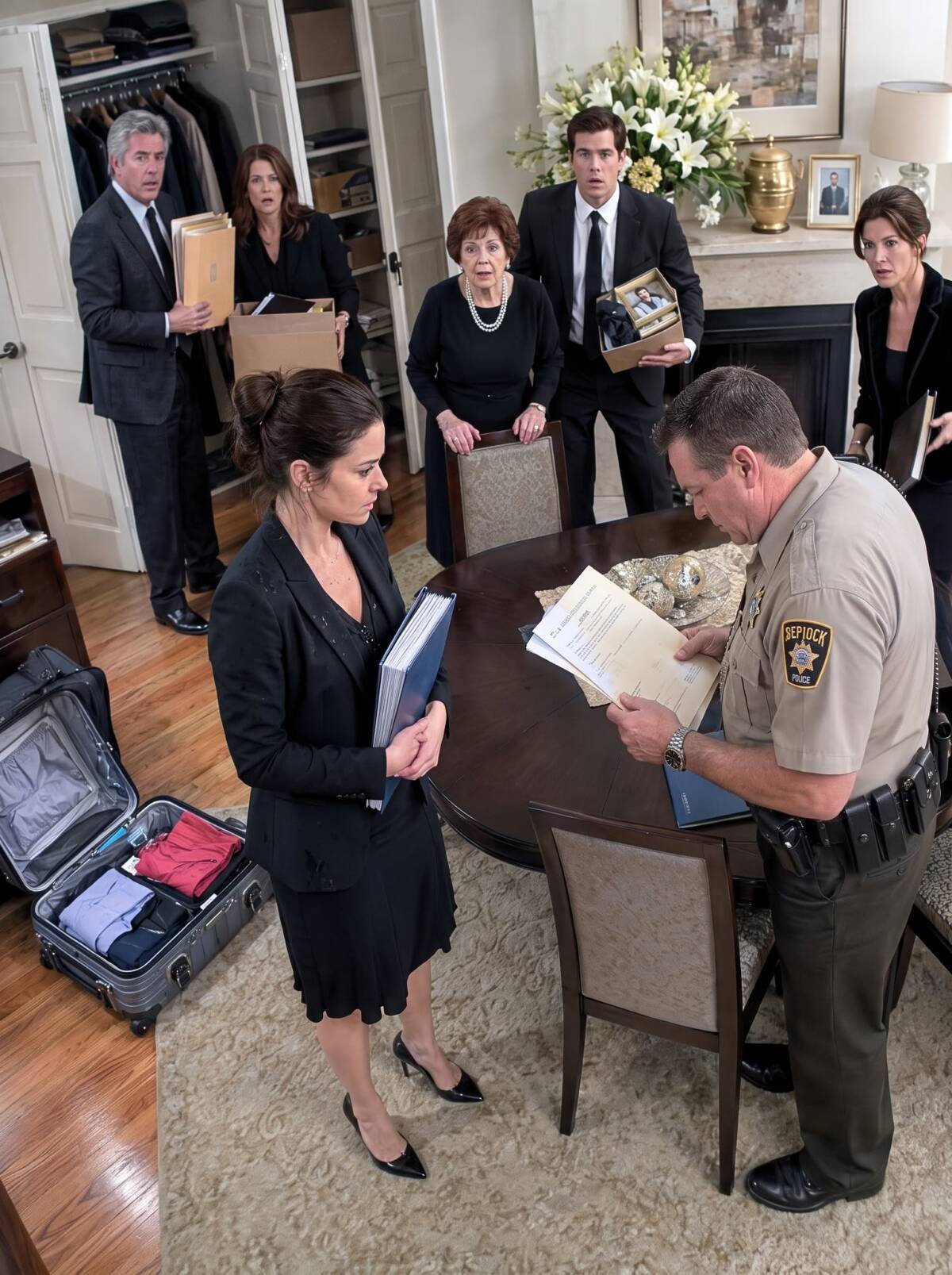
When you wake up from a two-week coma, you expect the people who love you to be waiting by your bedside. You expect tears of relief, gentle hands, and a quiet promise that everything is going to be okay.
I didn’t get any of that.
Instead, the first time my mother walked into my hospital room after I regained consciousness, she didn’t ask if I was in pain. She didn’t ask if I remembered what had happened. She walked right up to the edge of my bed, looked straight into my eyes, and spat in my face.
“I’d rather put you in the ground than believe a liar like you,” she hissed, her voice shaking with a hatred I couldn’t even comprehend.
At that moment, I had no idea why she was so angry. Fourteen days of my life had been completely erased from my mind. I didn’t know how I had ended up with a fractured jaw, broken ribs, and a severe concussion. I didn’t know why the police were involved.
What I certainly didn’t know was that a woman I had never spoken to in my life was about to walk through that hospital door with a flash drive—one containing security footage of my own father admitting to the exact reason he tried to silence me forever.
Waking Up to a Missing Two Weeks
The last ordinary memory I had was standing in the produce aisle of my local grocery store, staring at two plastic containers of strawberries and debating whether to buy the organic ones or save three dollars on the regular brand. It was a Tuesday afternoon. The fluorescent lights were humming overhead, and a pop song was playing softly through the ceiling speakers.
The next thing I knew, everything around me was white.
The air smelled sharply of antiseptic. A heart monitor beeped in a slow, steady rhythm beside my ear. When I tried to open my eyes, the light felt like needles. A nurse standing near the IV pole froze, then leaned in and whispered my name as if speaking at a normal volume might shatter me.
“You’re awake,” she said softly. “Don’t try to move. You’re safe. You’re in the hospital.”
Pain didn’t arrive all at once; it introduced itself one injury at a time. First came the deep, pulsing ache in my jaw, which felt wired tight and swollen. Then came the sharp stab in my ribs every time I tried to draw a full breath. My right wrist was encased in a heavy cast, and the back of my skull throbbed with a relentless, blinding pressure.
When the attending physician came in, he shone a small penlight into my eyes and asked me simple questions. What is your name? What is your birthday? What is your address? Who is the president? I answered them slowly, my voice raspy from weeks of intubation.
Then he asked me what day it was. When I guessed Tuesday, he gently corrected me. Fourteen days had vanished. I had been in a medically induced coma for two weeks.
“Was it a car accident?” I whispered, staring at the X-rays he had pulled up on the wall monitor.
The doctor hesitated. He glanced briefly toward the closed door before looking back at me.
“No,” he said quietly. “The police believe you were assaulted. They found you inside your parents’ garage.”
I actually tried to laugh, though it immediately sent a jolt of agony through my ribs. The idea sounded absurd. My parents lived in a quiet suburban neighborhood with manicured lawns and matching mailboxes. People didn’t get beaten into a coma in their garage. I searched my mind for any memory of driving over there, of arguing with someone, of calling for help—anything at all. There was nothing. The last time I could remember seeing my parents was at Sunday dinner, and even that felt like a faded photograph.
The Cruelty I Didn’t See Coming
Less than an hour later, the door swung open and my mother stepped inside.
For one fragile second, relief flooded my chest. My mother was here. She would explain the misunderstanding. She would tell me that the police had it wrong, that I had slipped on the concrete, or that some intruder had broken in.
She didn’t rush to my side. She walked slowly, her purse clutched tightly against her ribs, her face set in a cold, rigid mask I had never seen before. She stopped beside the railing of my bed, looked down at my bruised face, and spat directly onto my cheek.
Before I could even flinch, she leaned in close.
“I’d bury you before I’d ever believe a liar like you,” she spat, her voice dripping with venom.
The room went dead silent. The nurse gasped and hit the call button. Within seconds, two hospital security officers rushed through the door and grabbed my mother by the arms. As they dragged her backward into the hallway, she thrashed against their grip, screaming at the top of her lungs that I had tried to ruin our family, that I was sick, that I had brought this on myself.
When the door finally clicked shut, I lifted my uninjured hand and wiped my face with trembling fingers. Tears burned my eyes—not just from the humiliation, but from the terrifying confusion. I didn’t even know what I was supposed to have lied about.
A Shattered Phone and a Message From Myself
That afternoon, Detective Ethan Cole from the local precinct came to see me. He was a calm, methodical man in his late forties who carried a worn leather notebook and spoke without rushing. He didn’t press me for answers I didn’t have. Instead, he pulled a clear, sealed evidence bag from his briefcase and placed it on my bedside tray.
Inside was my cell phone.
The screen was completely spiderwebbed with deep cracks, and the metal frame was bent slightly out of shape. Yet somehow, the battery had held just enough charge when technicians powered it on to display a single, frozen notification on the lock screen—a draft memo I had pinned to my own display.
If anything happens to me, watch this.
“We found this underneath your body on the garage floor,” Detective Cole explained quietly. “Your left arm was curled tightly around it. Based on the defensive wounds on your hands and forearms, you weren’t just trying to block the blows. You were trying to keep whoever attacked you from taking this phone.”
My stomach twisted into a tight knot. Looking at that cracked screen, I realized that the version of myself from two weeks ago—the woman I could no longer remember—had known she was in danger.
The next morning, another piece of the puzzle arrived. A plain cardboard box with no return address was left at the nurses’ station with my name written on the top in neat black marker. Security checked it before bringing it up. Inside were a few personal items that had been left in my car: my sunglasses, a spare hair tie, a half-empty pack of gum, and a small brass lighthouse keychain.
The moment my fingers closed around that keychain, a sharp, blinding flash of memory tore through the fog in my mind.
I had bought that lighthouse for my father on Father’s Day three years earlier.
“Truck,” I whispered aloud, my heart suddenly pounding against my bruised ribs. “I followed his truck.”
The images came in jagged, disorienting bursts. Rain streaking across my windshield. The red taillights of my father’s dark blue pickup turning off the highway onto a quiet service road. A faded neon sign buzzing outside a low-slung roadside motel. A woman with shoulder-length brown hair stepping out of room 14, looking around the parking lot before walking straight into my father’s arms.
And me, sitting thirty yards away in the shadows, holding my phone up to the glass.....