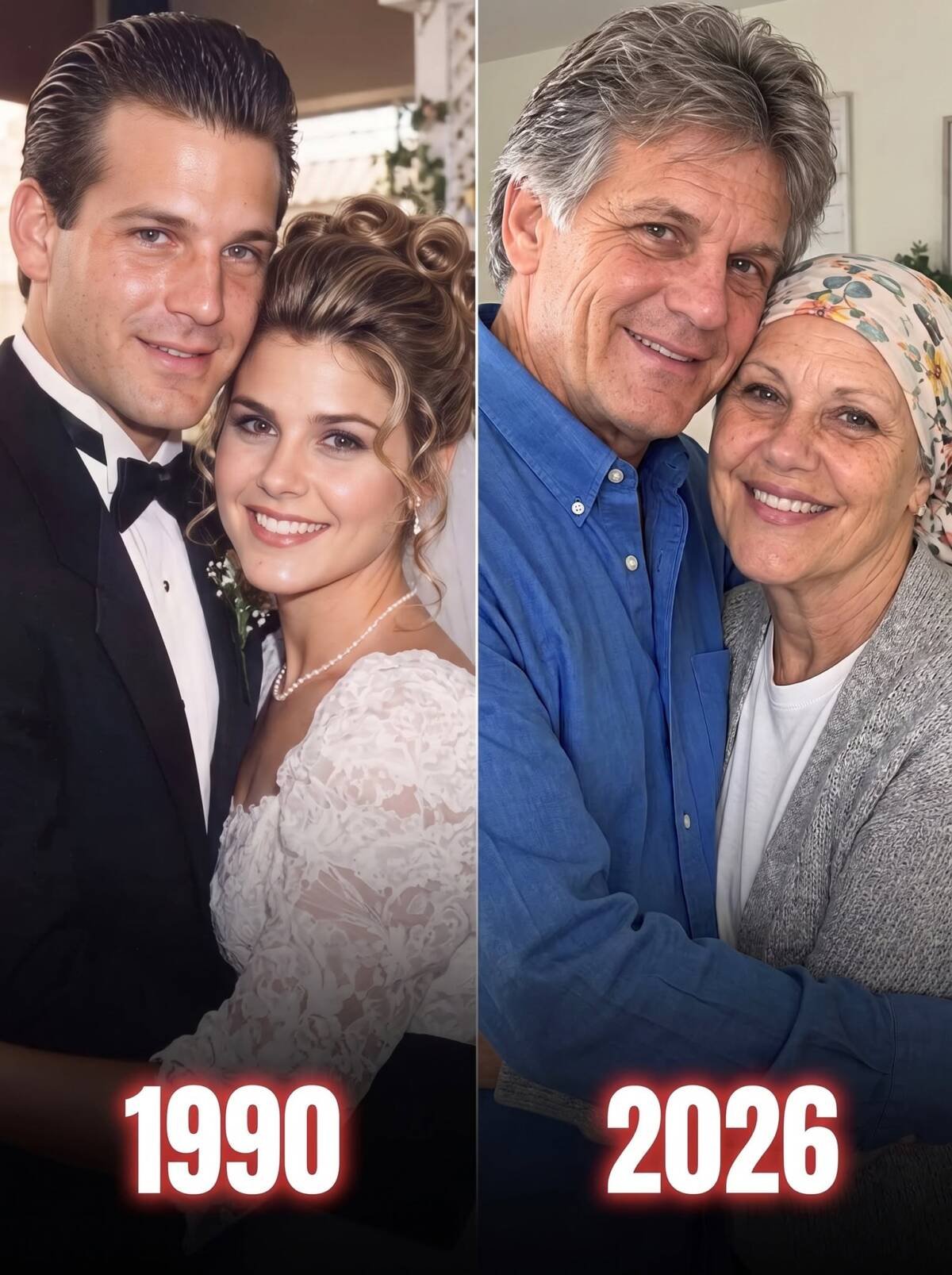
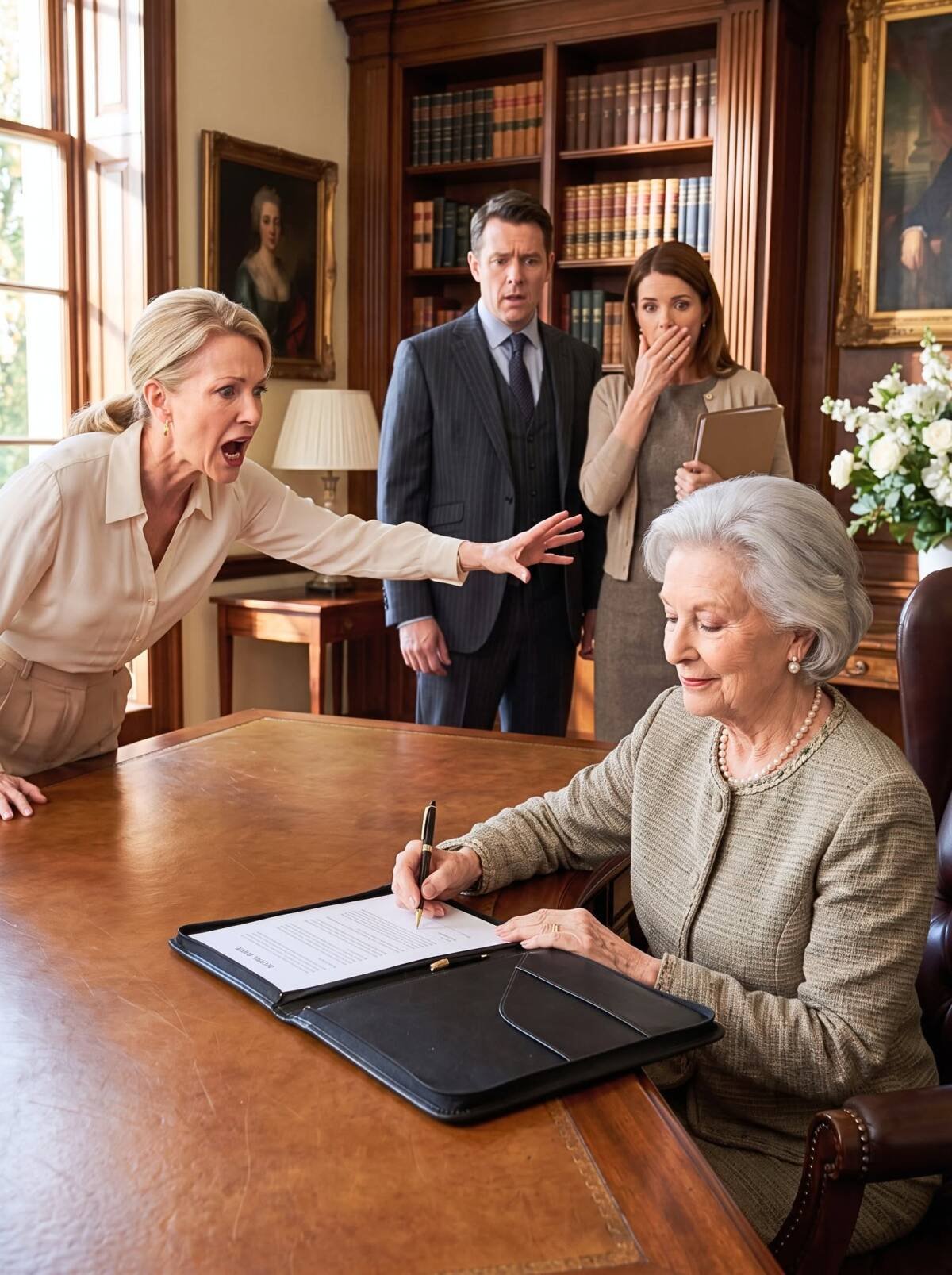
The Phone Call That Changed Everything
Two days before my wedding, I overheard my fiancé discussing my house, my savings, and even the money I had protected for my nieces.
His mother asked a simple question.
“Did she sign the property agreement?”
Grant laughed.
“Not yet. Once she does, the house and savings are ours.”
I stood in my laundry room, holding one of my son’s freshly folded shirts, listening to the man I was supposed to marry explain how he intended to gain access to everything I had spent years building.
Then his mother asked about my children.
And Grant said something that changed the way I saw him forever.
I could have confronted him immediately. I could have canceled the wedding, called my family, and demanded an explanation before the day was over.
Instead, I made a decision that surprised even me.
I kept the wedding plans.
On Saturday morning, I put on my ivory wedding dress. My 12-year-old son took my arm and prepared to walk me down the aisle. Nearly 100 guests gathered beneath a wooden arch, expecting to witness the beginning of a marriage.
Grant stood at the front, smiling confidently.
He believed I still knew nothing.
What he did not understand was that I had already made my decision. I was not going to marry him, and I was not going to let him turn my love for my family into a financial opportunity.
Before the afternoon was over, every guest would hear the conversation that had ended our future together.
But first, I had to discover how much of the life Grant had promised me was real.
Part 1: The Conversation I Was Never Supposed to Hear
I was folding laundry when I realized Grant had forgotten to hang up our phone call.
At first, I barely paid attention. We had been discussing the final wedding arrangements earlier, and I assumed he had simply put his phone down without ending the conversation.
Then I heard his mother, Colleen, speak.
“Did she sign the property agreement?”
My hands stopped moving.
For a moment, I wondered whether I had misunderstood the question. The washing machine hummed beside me, and the ordinary sounds of the house continued as if nothing had changed.
Grant answered with a laugh.
“Not yet. Once she does, the house and savings are ours.”
I stared at the shirt in my hands.
Our wedding was less than 48 hours away. My dress was hanging in the guest room, the place cards were arranged across the dining table, and the refrigerator was filled with food my mother had brought for the wedding weekend.
Everything around me represented a future I believed we were building together.
Meanwhile, Grant was discussing my property as though my agreement were merely a formality.
I stayed quiet and listened.
Colleen wanted to know why I had involved Rebecca, my attorney, in reviewing the agreement.
Grant dismissed her concern.
“She’s cautious. That’s all.”
His mother was not convinced.
“She didn’t build a successful company by signing whatever someone puts in front of her.”
Grant laughed again.
“Don’t worry. She wants the family more than she wants to fight about paperwork. She’ll sign.”
My stomach tightened.
He was not simply hoping I would agree to a financial arrangement. He was counting on my desire to build a family to keep me from asking difficult questions.
I had purchased my five-bedroom home outside Charlotte before I met him. It was worth close to $900,000 and nearly paid off, but its value meant far more to me than a number on a property appraisal.
It was where my son, Caleb, had learned to ride a bicycle. It was where my sister, Lily, had spent her final Christmas before she and her husband died.
After their deaths, Lily’s daughters, Maisie and June, came to live with me.
My home became the one place where all three children could begin rebuilding their lives together.
Grant knew that.
He had sat at my kitchen table while the twins told stories about their parents. He had watched Caleb practice for school events in the backyard. He had listened to me explain why keeping the house secure mattered so much to the children.
I had believed those conversations brought us closer.
Now I wondered whether he had been listening for entirely different reasons.
Then Colleen asked what would happen after I signed the agreement.
“We restructure things,” Grant replied.
“The house first?”
“Probably.”
He explained that a credit line secured by the property could help resolve his business debt.
Until that moment, Grant had always described his financial problems as temporary. He spoke about delayed payments, difficult clients, and a business that would recover as soon as a few outstanding deals came through.
I had offered to help him think through his options, but he had always insisted that everything was under control.
The conversation suggested otherwise.
His business debt was more serious than he had admitted, and he appeared to be counting on my assets to help him manage it.
Colleen then asked about my investment accounts.
Grant told her he intended to persuade me to combine more of our finances after the wedding.
“She’s sentimental,” he said. “People like that are easy once you know which promise they need to hear.”
I felt a sharp pain in my chest.
It was not only the financial deception that hurt. It was the way he spoke about me, as though the affection I had offered him were a weakness he could study and exploit.
Then the conversation moved to something even more troubling.
Colleen mentioned the trusts belonging to Maisie and June.
Their parents had left them money, and I had taken great care to protect those funds for their future. The money was intended for the girls, not for my household expenses, my business, or anyone else’s financial difficulties.
Grant knew that.
He had always said he respected my decision to keep the trusts separate.
Yet now I heard him say he would work on me.
Colleen asked how he intended to approach the subject.
“Slowly,” Grant replied. “If I push too hard, she’ll shut down. I’ll make it about simplifying the family finances.”
My fingers went numb.
I had spent years making decisions with one question in mind: Would this protect the children who depended on me?
Grant appeared to be planning how to turn that responsibility into another way of persuading me.
Then Colleen asked whether he was sure he could tolerate living in my house with the children.
His answer came with a tired sigh.
“Honestly, I’m tired of pretending I enjoy that noisy little household. I just need to get through Saturday.”
I closed my eyes.
The words hurt in a way I could not fully explain. I might eventually have understood a partner who was struggling financially or even one who had become overwhelmed by the responsibilities of a blended family.
But I could not accept someone who concealed the truth, discussed my assets with his mother, and treated the children’s financial protections as another obstacle to overcome.
I had believed Grant wanted to become part of our family.
Now I understood that he might have wanted the benefits of that family without accepting the responsibilities that came with it.
When the call finally ended, I checked my phone.
Nine minutes and 27 seconds had been recorded automatically.
I copied the recording to separate locations and emailed one version to Rebecca.
Call me as soon as possible.
Then I looked through the window.
Caleb was sitting in the driveway, struggling with the chain on his bicycle. He was twelve, old enough to notice when adults were upset but still young enough to believe that the people we invited into our homes generally meant us well.
He had been looking forward to the wedding.
So had Maisie and June.
I stood there for a long time, trying to understand how I had reached this point.
Grant still believed I knew nothing.
For the first time since hearing his voice, I understood why I needed to keep it that way until I had a clear plan.
Part 2: The Attorney’s Warning
Rebecca called 12 minutes after I sent her the recording.
The moment she heard my voice, she told me to find somewhere private.
Then she gave me one instruction.
“Do not sign anything.”
I sat down at the kitchen table and listened as she explained what the property agreement might mean.
She was careful not to make promises about what the document could or could not accomplish without reviewing its exact language. Signing it would not automatically transfer my house to Grant, but depending on its provisions, it could affect future financial arrangements and make it easier for him to pressure me into granting access to assets.
The trusts belonging to Maisie and June were governed by their own legal protections. Marriage alone would not give Grant automatic control over those funds.
That distinction mattered.
Grant did not already own my home or control my investments. He was counting on the possibility that I would cooperate with arrangements that benefited him after we married.
Rebecca asked whether I had already signed anything.
“No.”
“Has he accessed any of your accounts?”
“Not that I know of.”
“Has he been authorized to act on behalf of your company?”
“No.”
She paused.
“Good. We need to keep it that way while we review everything.”
I told her about the debt he had discussed with Colleen and his intention to use my property to help resolve it.
Rebecca explained that we should establish what he actually owed before drawing conclusions about the full extent of his financial situation.
She also advised me to preserve the original recording, avoid altering it, secure my accounts, and document any relevant financial communications.
Then she asked the question I had been avoiding.
“What do you want to do about Saturday?”
I looked toward the schedule pinned beside my desk.
The rehearsal was planned for Friday. The ceremony was scheduled for four on Saturday. Nearly 100 guests were expected, including relatives who had traveled considerable distances.
My mother had spent weeks preparing. The children had practiced their roles, and the twins had been talking about their flower baskets for days.
“I know I’m not marrying him,” I said.
Rebecca waited.
“But I haven’t decided what to do about the wedding.”
“Do you want to cancel it privately?”
I considered the question.
Part of me wanted to end everything immediately. I wanted to call Grant, tell him what I had heard, and demand that he explain himself.
Another part of me feared that he would deny the conversation, claim I had misunderstood, or turn the situation into an argument about my reaction rather than his conduct.
I also worried about the children.
They had already experienced a devastating loss when their parents died. I did not want them to become unwilling witnesses to an explosive confrontation between the adults they trusted.
Finally, I said, “I think I’m still going.”
Rebecca went quiet.
“You’re planning to attend the ceremony?”
“Yes.”
“Mara, I need you to be certain about what you’re doing.”
“I am certain about one thing. There won’t be a marriage.”
I explained that I wanted Grant to hear his own words before he had the opportunity to rewrite the conversation.
Rebecca warned me that a public confrontation could have consequences. We discussed preserving the recording in its original form and making sure the children would not be present for the most difficult part.
That last point changed my plan.
Caleb, Maisie, and June would not be forced to sit through the details of Grant’s financial intentions or hear every cruel word he had spoken about their home.
Whatever happened at the ceremony, they would have a safe place to go.
After the call, I began quietly securing my affairs.
I changed passwords for my investment accounts and architecture firm. I reviewed access to my home-security system and checked the permissions associated with my business records.
I confirmed that Grant had no ownership interest in my house or company and no authority over the children’s trusts.
I also made sure the original recording was preserved.
I did not want to rely on memory alone. If I was going to confront Grant, I needed to know exactly what had been said and what I could substantiate.
That night, he came home after one in the morning.
I was sitting in bed pretending to read.
He kissed my forehead and asked whether I was nervous about Saturday.
“Yes,” I replied.
“Don’t be. Everything is going to be perfect.”
I looked at him.
For months, I had imagined that sentence being spoken by the man I loved on the eve of our wedding. I had pictured the ceremony, our promises, and the moment we would begin living as a married couple.
Now the same words sounded hollow.
Grant went to the bathroom, brushed his teeth, complained about a difficult day, and climbed into bed beside me.
Within minutes, he was asleep.
I lay awake, wondering how many times I had mistaken his confidence for honesty.
The next morning, I made breakfast for the children and helped June find a missing shoe. Caleb asked whether Grant would be joining us for the rehearsal later.
“He has some things to take care of,” I told him.
It was not the answer I wanted to give, but I was not ready to explain the truth.
Friday afternoon, Rebecca called again.
She had reviewed the information available to us and confirmed that Grant’s business debt appeared substantially greater than he had disclosed. Some of his obligations were personally guaranteed.
There was still no evidence that he had taken money from me.
But the recording made it clear that he expected marriage to create opportunities to use my financial resources to address problems he had concealed.
Rebecca and I agreed on a simple principle: any recording played at the ceremony would remain unaltered and would not be presented in a misleading way.
We selected the relevant continuous section of the conversation, beginning with Colleen’s question about the property agreement and ending with Grant’s comments about the children.
I listened to it once more.
I did not need to hear it again.
That evening, Grant sat beside me on the couch and discussed the wedding schedule. He asked whether I had remembered the final payment for the reception and whether I had packed the paperwork he wanted me to bring.
The property agreement.
For a moment, I thought about asking him why he needed it so urgently.
Instead, I told him I had everything organized.
He smiled and squeezed my hand.
“You always take care of everything.”
I wondered whether he understood how much that sentence revealed.
He had come to rely on my competence, my planning, and my willingness to protect the people I loved.
What he had failed to understand was that those same qualities had helped me build a life that did not depend on him.
Part 3: Saturday Morning
Saturday arrived beneath a clear spring sky.
The weather was almost offensively beautiful.
Sunlight streamed through the bedroom windows, illuminating the ivory wedding dress hanging in the guest room. My shoes were lined up beneath it, and a small box containing my jewelry sat on the dresser.
Everything looked exactly as it should have looked on the morning of my wedding.
Except that I no longer intended to marry the man waiting for me at the end of the aisle.
I stood before the mirror and studied my reflection.
I did not look like a woman who had been abandoned. I did not look like someone who had lost control of her life.
I looked like a woman who had nearly signed away her judgment because she believed trust required her to prove she was not suspicious.
That realization hurt almost as much as the recording.
I had spent months trying to be a good partner. I had listened to Grant’s worries, supported his ambitions, and tried to make room for him in the lives of my children.
I had believed that love meant giving someone the benefit of the doubt.
I still believed in generosity, but I no longer believed that generosity required me to ignore evidence.
A knock came at the bedroom door.
Caleb stood there wearing a navy suit.
He looked me up and down.
“You look expensive.”
I laughed for the first time that morning.
“That’s the idea.”
His expression softened.
“You look really pretty, Mom.”
I reached out and adjusted his tie.
“Thank you.”
He watched me for a moment before asking, “Are you scared?”
I could have told him everything was fine. I could have smiled and reassured him that the day would go exactly as planned.
Instead, I gave him an honest answer.
“Yes.”
He nodded.
“Good. You always tell me courage isn’t the same thing as not being scared.”
My eyes filled with tears.
I pulled him into a hug and held him longer than I normally would have.
He did not ask why.
Outside, Maisie and June were waiting in their flower-girl dresses, holding their baskets and arguing about which one of them had the better ribbon.
My mother was checking the schedule. My brother was helping arrange the last details, and the first guests had already begun arriving at the venue.
Grant was standing beneath the wooden arch, greeting people with a confident smile.
He looked entirely at ease.
He believed he was about to marry a woman who trusted him.
He believed the property agreement would eventually be signed.
He believed the house and savings represented opportunities waiting for him after the ceremony.
And he believed that I would continue placing the family’s stability ahead of my own doubts.
At noon, I stood alone for a few moments and looked at the wedding dress.
I had imagined wearing it while promising to build a future with someone who would protect my children and respect the home we shared.
I had not imagined wearing it while preparing to end that future in front of our guests.
Yet I knew I could not go through with the marriage simply because so many people expected it.
The cost of canceling a wedding was painful.
The cost of entering a marriage built on concealed debt and calculated persuasion could be far greater.
I put on the dress.
Not because I had changed my mind.
Because I had decided that Grant would not determine how I handled the truth.
Part 4: The Walk Down the Aisle
By four o’clock, nearly 100 guests had gathered at the venue.
The ceremony space was decorated with flowers, wooden chairs, and a simple arch beneath which Grant and I were supposed to exchange vows.
Music began playing.....