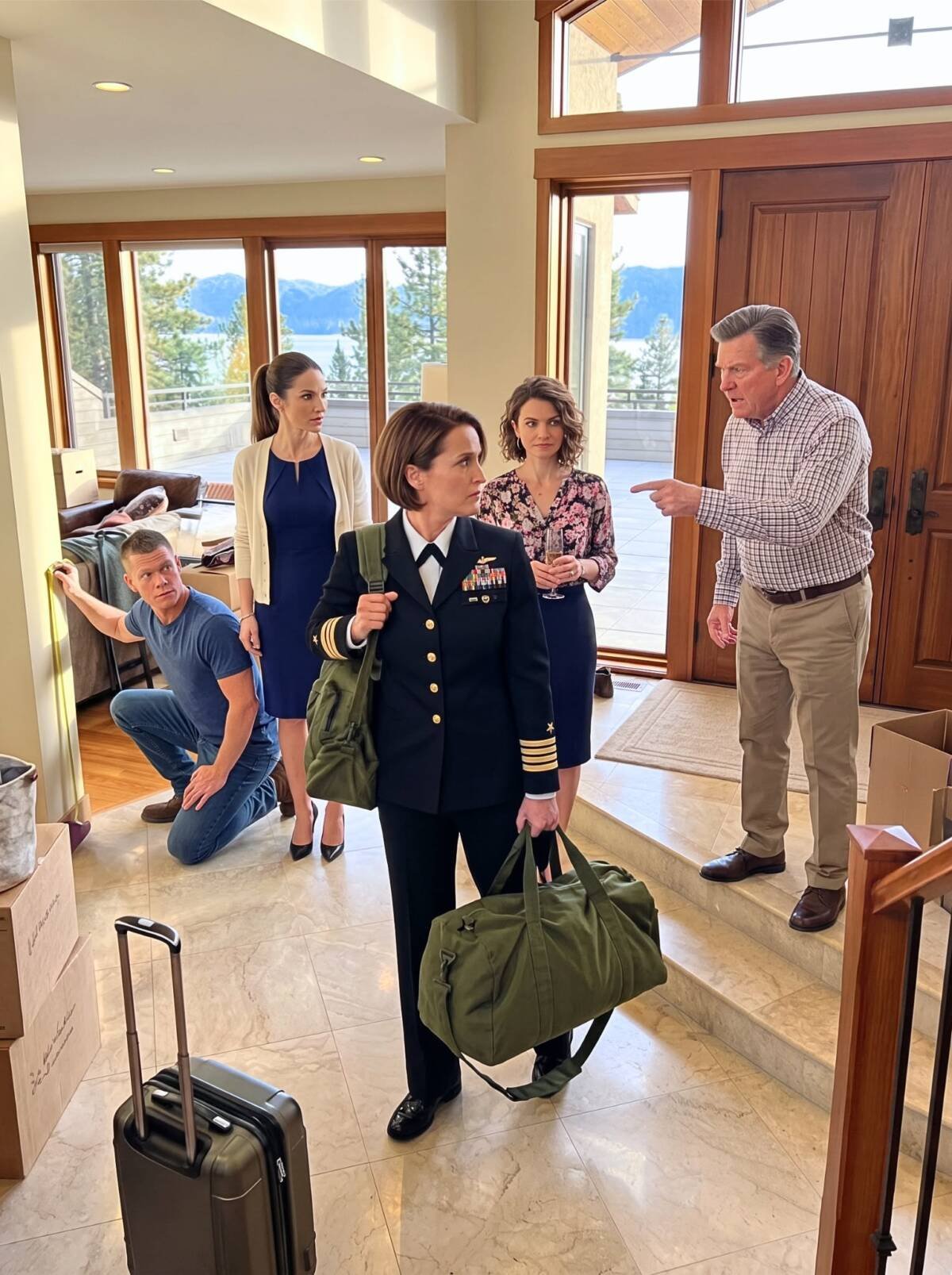
Three hours after saying “I do,” Claire witnessed her father-in-law strike his wife. When she stepped in to protect the older woman, her new husband turned on her, slapped her, and called her a useless outsider. He expected her to apologize, obey, and remain silent. Instead, she fought back, took his mother to the hospital, and began uncovering a financial secret that would change the entire family’s future.
Introduction: The Wedding Night That Changed Everything
Three hours after my wedding, I discovered that the man I had promised to spend my life with was not the person I thought he was.
I was standing inside a luxurious penthouse at the St. Regis when I saw my father-in-law, Harold Mercer, strike his wife, Evelyn, with such force that she stumbled backward into a marble console. My new husband, Daniel, was standing nearby. Rather than rushing to help his mother, he watched with the detached expression of someone who had witnessed the same scene many times before.
“Dad.”
That was all he said.
No outrage. No attempt to protect her. No concern about whether she was injured.
I crossed the room toward Evelyn, but Harold stepped between us and warned me not to interfere in what he called a private family matter.
I had been married into the Mercer family for exactly three hours, yet I already understood something that would take years for some people to recognize: their wealth had taught them to believe that ordinary rules did not apply to them.
“I married into this family three hours ago,” I told him. “That makes it my concern.”
Daniel grabbed my arm.
“Claire, let it go.”
When I pulled away and tried to reach Evelyn again, my husband slapped me across the face.
“Know your place, you useless outsider.”
For several seconds, I stared at him in disbelief. This was the same man who had spent eighteen months convincing me that he was nothing like his controlling father. The same man who had promised that our marriage would be a partnership built on trust, respect, and honesty.
Then he raised his hand again.
He expected me to lower my eyes.
He expected me to cry.
He expected me to remember his family’s money, their influence, and their reputation—and to understand that challenging them would be a mistake.
He had made one serious miscalculation.
He knew I worked in financial compliance. He knew I investigated complicated business transactions for banks and wealthy clients. What he had never bothered to understand was that my profession had taught me to recognize people who believed themselves untouchable.
And he had no idea how prepared I was to defend myself.
Part One: The Bride Who Refused to Stay Silent
The moment my marriage fell apart
When Daniel moved toward me again, I caught his wrist and reacted instinctively, using techniques I had learned during years of self-defense training.
The confrontation lasted only moments. Daniel lost his balance, cried out in pain, and dropped to his knees, clutching his injured hand. Three of his fingers were broken during the struggle.
Harold immediately advanced toward me.
I stood my ground.
“Touch me, and you can explain your actions to a police officer before sunrise.”
He stopped.
For the first time that evening, the two men seemed uncertain about what to do next. They had expected a frightened bride who would be too embarrassed to challenge her husband or risk damaging the family’s reputation.
Instead, I turned away from them and helped Evelyn leave the penthouse.
She was trembling so badly that she struggled to walk without assistance. I supported her as we made our way out of the building and arranged for medical care.
Hours later, we were sitting in an emergency room beneath bright fluorescent lights. A doctor examined the injury to her face and asked how she had been hurt.
Evelyn looked down at her hands.
“I tripped over a rug,” she whispered. “I fell against a marble table.”
The explanation was painfully familiar. She was protecting the person who had hurt her, even when that person was not present to hear her answer.
When the doctor left, I sat beside her and waited.
I did not pressure her to tell me everything. I simply wanted her to understand that she did not have to face the situation alone.
My phone began vibrating repeatedly.
Harold sent a message ordering me to return to the hotel. He promised that the incident could be resolved privately if I stopped making trouble.
Daniel’s message was more direct.
“You assaulted me. Sign the postnuptial agreement, keep your mouth shut, and we won’t press charges.”
I read the message twice.
The agreement, apparently, had already been prepared. Daniel’s family wanted me to sign a document that would limit my financial rights, require me to accept responsibility for the confrontation, and prevent me from discussing private family matters.
They had spent less than one evening revealing who they really were, yet they were already trying to control the story.
I turned toward Evelyn.
“How long has he been treating you this way?”
She did not answer immediately. Her fingers tightened around the hospital blanket, and she seemed to struggle with whether she could trust me enough to speak honestly.
Finally, she whispered five words that changed my understanding of everything.
“Thirty-two years. Since our honeymoon.”
I sat quietly beside her.
Thirty-two years of fear. Thirty-two years of excuses. Thirty-two years of a woman being taught that preserving her marriage and protecting her husband’s reputation mattered more than her own safety.
That night, I made a decision.
I would not help the Mercers bury what had happened.
The agreement that revealed their desperation
By noon the following day, a fourteen-page postnuptial agreement had arrived from the Mercers’ attorney.
The document was written in formal legal language, but its purpose was unmistakable. It demanded that I surrender claims to marital assets, accept blame for the confrontation with Daniel, and agree not to disclose confidential family or business information.
They wanted my signature by five o’clock.
I forwarded the document to my own attorney and instructed him to handle all further communications.
Then Daniel called.
“Sign it by five,” he said. “My father has friends everywhere. If you refuse, no bank in this city will ever hire your firm again.”
He hung up before I could respond.
His threat should have frightened me. Instead, it made me think about a professional engagement that had begun six weeks before our wedding.
Harold’s company, Mercer Development, had hired my firm to conduct a limited financial risk review connected to a major refinancing package.
The proposed financing was worth approximately $180 million.
At the time, the assignment had appeared routine. Mercer Development owned commercial properties and operated through a network of vendors, contractors, and investment entities. My role was to identify potential compliance issues and determine whether the company’s records supported the representations it had made to prospective lenders.
I had not yet completed the review.
Now I began to wonder why the Mercers were so desperate to silence me.
Their threats were no longer simply about protecting their family’s reputation. They might also have been about protecting their business.
I opened my laptop.
And I began following the money.
Part Two: The Financial Trail Behind the Mercer Fortune
Three companies, millions of dollars, and too many unanswered questions
With authorization from my managing partner, I returned to the financial records associated with the Mercer Development engagement.
The first inconsistencies appeared within hours.
The company had made substantial payments to three entities: Apex Holdings, Crescent Logistics, and Meridian Advisory. The payments were described as consulting fees, procurement expenses, and project-related services.
On paper, the transactions appeared legitimate.
The supporting documentation told a different story.
Several invoices lacked convincing evidence that the services had actually been delivered. Some expenses were associated with construction projects that had not yet begun. Other payments appeared unusually large compared with the work described in the accompanying records.
I compared the invoices against development schedules, vendor documentation, and the company’s internal approval logs.
The pattern became increasingly difficult to dismiss.
Mercer Development appeared to have transferred millions of dollars to entities whose business activities did not adequately explain the amounts they received.
That did not, by itself, prove fraud. Financial investigations require more than suspicious timing or incomplete paperwork. But the inconsistencies were significant enough to justify further examination.
Then I reviewed the refinancing application.
Mercer Development was seeking approximately $180 million from a group of lenders. The proposed financing relied heavily on the reported value of the company’s commercial property portfolio.
Several properties had been assigned valuations that appeared substantially higher than comparable market data supported.
In some cases, the reported figures approached three times the estimated value suggested by similar properties.
If the valuations were materially inaccurate, the lenders could have been making a decision based on a distorted picture of the company’s financial position.
The problem was no longer limited to questionable vendor payments.
The entire refinancing package required closer scrutiny.
The records bearing Evelyn’s name
Then I found something that made the investigation personal.
Several assets connected to Evelyn’s marital estate had been transferred, pledged, or used as collateral through structures associated with Harold’s companies.
The records included investment accounts, properties, and trust assets. A series of electronic authorizations bearing Evelyn’s name appeared to show that she had approved the transactions.
I began comparing the authorization dates with the supporting documentation.
One transaction immediately caught my attention.
On October 14, an electronic authorization attributed to Evelyn had supposedly approved a $4 million transfer from an IP address in downtown Chicago.
However, travel records provided earlier for wedding arrangements indicated that Evelyn had been in Geneva, Switzerland, on that date.
Her location alone could not conclusively establish that the authorization was fraudulent. Remote access is possible, and travel records must be verified before they can support a definitive finding.
But the discrepancy was serious.
I expanded the review to include other transactions.
The same executive account appeared repeatedly in approval records associated with transfers involving Evelyn’s assets.
The account belonged to Daniel Mercer, the company’s chief financial officer.
My husband.
I stared at the screen, trying to reconcile the records with the man I had married.
Daniel had not simply stood by while his father mistreated his mother. The financial documents suggested that he had also used his position inside Mercer Development to approve transactions involving her assets.
I continued examining the records, preserving relevant documents and documenting each discrepancy for the authorized review.
The more I found, the less the wedding-night confrontation looked like an isolated family incident.
The same pattern appeared in both places: Harold exercised control, Daniel helped maintain it, and Evelyn was expected to remain silent.
I began to suspect that the family’s private behavior and its financial affairs were connected by something more than coincidence.
The hospital confrontation
At approximately 6:30 that evening, the hospital room door opened.
Daniel entered with a medical splint supporting his injured hand. Harold followed him, accompanied by their attorney.
They looked as confident as they had the previous night.
Daniel dropped a printed copy of the postnuptial agreement onto Evelyn’s blanket.
“The deadline passed, Claire. This is your last chance. Sign it, or I make the call that ends your career.”
I closed my laptop.
“No.”
Harold’s expression hardened.
“You think breaking my son’s fingers makes you dangerous?”
“No,” I replied. “What makes this dangerous for you is the $180 million refinancing package Mercer Development is trying to close next Tuesday.”
For the first time, Harold stopped talking.
I continued.
“I’ve identified questionable payments involving several related entities, property valuations that require independent verification, and electronic authorizations connected to Evelyn’s assets that do not match the supporting records.”
Daniel’s face changed.
“You have no idea what you’re talking about.”
“Then you won’t mind if the lending syndicate receives a formal notice that the financial records require further review.”
Neither man answered.
Their silence did not prove wrongdoing, but it confirmed that they understood the seriousness of the questions I was raising.
Then Evelyn reached beneath her blanket and pulled out a manila envelope.
Inside were documents prepared with the assistance of her attorney, including an emergency protective-order filing and a petition for divorce.
Harold stared at her.
“What is that?”
Evelyn’s hands were still shaking, but she met his eyes.
“For thirty-two years, you taught me to be afraid.”
She paused.
“But Claire taught me to keep the receipts.”
For the first time since I had met the Mercer family, Harold had no immediate response.
And I knew the real confrontation was still ahead.
Part Three: The Boardroom Showdown
The meeting Harold never expected
Three days later, Mercer Development called an emergency board meeting.
Harold and Daniel intended to terminate my firm’s engagement, portray me as an unstable new wife acting out of revenge, and discredit the financial review before the lenders could investigate further.
They expected the usual group of directors to support them.
Instead, they walked into a boardroom where representatives of the lending syndicate, independent directors, my managing partner, Evelyn’s divorce attorney, and an outside forensic accountant were already waiting.
Harold stopped in the doorway.
“What is this?”
One of the independent directors asked him to take his seat.
Harold refused.
He demanded that my firm leave the building and accused us of violating the terms of our engagement.
I remained seated and placed a thick binder on the conference table.
“Before anyone makes a decision about our engagement, we should review the financial questions that brought everyone here.”
Daniel opened the binder.
Inside were organized schedules of payments involving Apex Holdings and Crescent Logistics, supporting documents for questionable invoices, comparisons between reported property values and independent market information, and a timeline of electronic authorizations associated with Evelyn’s assets.
Each finding was documented with its source and the reason it required further investigation.
The purpose was not to declare anyone guilty. It was to establish what the records showed, what remained unexplained, and what independent investigators needed to verify.
Daniel turned several pages before looking up.
“You went through my personal phone?”
“No,” I replied. “The relevant messages were preserved in a Mercer Development corporate cloud account.”
The company’s systems contained communications that appeared to discuss moving assets connected to Evelyn before she became aware of the company’s financial difficulties.
Those messages were now subject to a formal evidence-preservation process, and the appropriate investigators would determine their meaning and authenticity.
Daniel looked as though he wanted to argue, but he could not immediately explain why the records existed.
“I didn’t steal your secrets,” I said. “You stored those messages in a company system that is now part of the investigation.”
Harold slammed the binder shut.
He accused the board, the lenders, and my firm of conspiring against him. He threatened lawsuits and insisted that the entire review was motivated by personal hostility.
The lenders’ attorney waited until he finished.
Then he delivered the announcement that changed the meeting.
“As of nine o’clock this morning, the proposed $180 million refinancing package has been suspended pending further review.”
Harold stared at him.
The financing was no longer moving forward on the original timetable. The lenders wanted independent verification of the company’s financial position before considering any further commitment.
The consequences followed quickly.
The independent directors announced that Harold would be placed on administrative leave while the allegations were investigated. Daniel was informed that his employment as chief financial officer was being terminated, subject to the company’s formal procedures and the findings concerning undisclosed related-party transactions.
Evelyn’s attorney also confirmed that a temporary court order had been obtained to preserve disputed assets while the divorce and financial proceedings continued.
Harold had entered the room expecting to control the conversation.
Instead, he was being asked to explain the records.
The evidence that changed everything
Then Harold tried to shift attention away from the financial investigation.
“She attacked my son!” he shouted. “Daniel, tell them what she did to you. She broke your fingers!”
I had expected the accusation.
That was why I had reported the wedding-night incident to the authorities and provided a complete account of what happened.
My attorney had warned me that injuring Daniel could create legal complications, even if I believed I had acted defensively. I had no intention of hiding the confrontation or pretending that it had never occurred.
I placed my police statement and the available medical documentation on the table.
Then I explained that the hotel had security cameras covering the hallway outside the penthouse.
The footage had been preserved for review.
When the relevant recording was presented, the sequence of events became clearer. It showed Harold confronting Evelyn, Evelyn stumbling into the marble console, me moving toward her, and Daniel striking me before I reacted.
The room fell silent.
The recording did not eliminate every legal question surrounding the confrontation, but it provided independent evidence that could be considered alongside the statements and medical records.
Daniel had assumed I would be too embarrassed to report him. Harold had assumed that the family’s reputation would protect them from scrutiny.
Neither assumption had survived the evidence.
Authorities subsequently reviewed the incident and declined to pursue charges against me, concluding that the available evidence supported my account that I had acted defensively during the confrontation.
Daniel, meanwhile, faced growing scrutiny over both the incident and the financial transactions associated with his executive role.
He stared at the screen, unable to restore the confident expression he had worn when he entered the room.
The meeting continued without him controlling the narrative.
The refinancing remained suspended. The company’s financial records were under independent review. Evelyn’s disputed assets were protected by court order, and the board had begun taking steps to separate the investigation from the family members whose actions were under scrutiny.
Harold and Daniel had lost control of the room.
But the investigation was only beginning.
Part Four: The Fall of the Mercer Empire
When the financial records became a much bigger problem
The boardroom meeting marked a turning point for Mercer Development.
Once the lenders suspended the refinancing package and the company’s records became subject to broader scrutiny, the family could no longer determine which questions would be asked or which documents would be examined.
Independent investigators began reviewing the suspicious payments, questionable authorizations, and property valuations identified during the initial assessment.
Their work uncovered additional transactions requiring explanation.
Some involved altered records. Others concerned vendor payments and transfers connected to offshore entities. Several transactions appeared to stretch back years before Daniel and I had met.
The investigation expanded beyond Evelyn’s assets and the original refinancing application.
Mercer Development’s financial position was reconstructed transaction by transaction. Accountants examined payments, approval logs, supporting invoices, and communications to determine whether the company’s reported activities matched the available evidence.
As the review progressed, the authorities began examining potential financial misconduct.
The consequences for the Mercer family were severe.
Daniel was formally charged in connection with alleged fraudulent offshore transfers and documents submitted during efforts to obtain financing. The charges represented allegations that would have to be addressed through the legal process, not proof of guilt in themselves.
Daniel began cooperating with investigators and argued that his father had pressured him into participating in the transactions.
Whether Harold had influenced him was a question for investigators and the courts. The records nevertheless indicated that Daniel had personally approved certain transactions and exercised authority over the company’s financial controls.
His claim that he had simply followed his father’s instructions did not erase the need to account for those decisions.
Harold faced mounting legal and financial pressure of his own.
The lending syndicate pursued civil remedies, investors demanded explanations, and business partners began questioning whether they had received an accurate picture of Mercer Development’s finances.
The company that Harold had treated as an extension of his personal authority was now operating under extraordinary scrutiny.
The refinancing remained in jeopardy, and the potential financial exposure continued to grow.
Evelyn finally told her story
The financial investigation was only one part of the collapse.
Evelyn’s divorce proceedings brought years of alleged abuse and financial control into a legal setting where they could be documented and challenged.
For decades, she had attended charity events, posed for photographs, and appeared beside Harold as though their marriage were stable.
Behind that public image, she had learned to measure every word.
Now she began telling her attorneys what had happened during their marriage.
She described the threats, the physical confrontations, and the financial restrictions that had gradually reduced her independence. Her account became part of the divorce proceedings, alongside medical documentation, financial records, and other evidence.
Her attorneys also traced assets connected to the marital estate that had been transferred, pledged, or placed under the control of Harold’s business structures.
Some transactions required further legal review. Others became the subject of formal challenges intended to prevent the disputed property from disappearing while the case proceeded.
Through asset tracing and court proceedings, Evelyn gradually regained control of substantial property connected to her estate.
For the first time in more than three decades, she could make financial decisions without seeking her husband’s approval.
One of her first major decisions was to sell the St. Regis penthouse.
The property had become a reminder of the night when her husband’s behavior could no longer be hidden behind wealth and social status.
She did not want to preserve it as a symbol of the family she had spent years trying to protect.
She wanted to move forward.
The marriage that lasted less than four days
My own marriage ended almost as quickly as it had begun.
Seventy-nine hours after Daniel and I exchanged vows, the process of ending the marriage was already underway.
The future we had discussed for eighteen months had collapsed before we had even begun building a life together.
For a long time, I wondered how much of Daniel’s personality had been genuine.
He had always presented himself as the reasonable son of an unreasonable father. He claimed to be embarrassed by Harold’s temper and insisted that he wanted a marriage very different from his parents’ relationship.
I had believed him because his words sounded convincing.
But the wedding night revealed the difference between what Daniel said he valued and what he was willing to do when challenged.
When I tried to protect his mother, he chose his father’s authority over her safety.
When I refused to remain silent, he tried to frighten me into obedience.
And when the financial records threatened the family business, he attempted to use legal threats and professional pressure to make the problem disappear.
He had not escaped his father’s system.
He had learned to operate within it.
The marriage ended, and Daniel lost his position at Mercer Development. His professional reputation suffered as the allegations became public within business and legal circles.
The family’s influence also began to fade.
People who had once competed for invitations to Mercer events became difficult to reach. Former business associates distanced themselves from Harold, and individuals who had praised his judgment began emphasizing how little they knew about his private affairs.
Watching the change was instructive.
For years, Harold’s power had depended on people believing that opposing him would cost more than obeying him.
Once that belief began to disappear, so did much of his influence.
Part Five: The Woman Who Finally Owned Her Own Home
A new beginning on the California coast
Six months later, I was sitting on the wide porch of a quiet house in Carmel-by-the-Sea, looking out at the Pacific Ocean.
The sound of the waves was a welcome contrast to the tense hospital rooms, legal offices, and corporate boardrooms that had dominated the months following my wedding.
Evelyn had purchased the house three months earlier with assets that were legally available to her. The property was titled solely in her name.
That detail mattered more to her than the size of the house or the view from the porch.
For thirty-two years, she had lived in a marriage in which even ordinary decisions could become sources of conflict. Now she had a home where she could choose how to spend her time, how to decorate the rooms, and whom she wanted to invite inside.
When she walked up from the beach that afternoon, I barely recognized the woman I had helped leave the St. Regis.
Her hair was cut into a short silver bob. She wore simple linen pants and a sweater instead of the elaborate designer outfits she had once worn to satisfy the expectations surrounding the Mercer name.
But the greatest difference was not her appearance.
It was the way she moved.
She no longer glanced toward the door whenever someone raised their voice. She no longer lowered her own voice before saying something she wanted to express. When something amused her, she laughed without first checking whether anyone might disapprove.
Her life was becoming her own.
Meanwhile, the legal and financial proceedings involving Mercer Development continued. The company was undergoing restructuring and independent supervision while investigators examined years of financial activity.
Harold remained occupied with the consequences of the transactions and allegations under investigation. Daniel was dealing with the criminal case, the collapse of his career, and the end of his marriage.
Neither man had returned to the life they had expected to continue after my wedding.
But their circumstances were no longer the center of my attention.
The most important change had happened to Evelyn.
“Do you ever regret it, Claire?”
Evelyn returned from the beach carrying two glasses of iced tea.
She handed me one and settled into the chair beside mine. For several minutes, we watched the water without speaking.
Then she turned toward me.
“Do you ever regret it, Claire?”
“Regret what?”
“That wedding night. Everything that happened afterward.”
I thought about Daniel’s slap, Harold’s threats, and the agreement they had expected me to sign. I remembered the hospital room, the financial records, and the boardroom meeting where the family’s carefully maintained image began to unravel.
I also remembered Evelyn’s expression when she finally admitted that her husband had been hurting her for thirty-two years.
“No,” I said. “I regret that it took so long for the truth to come out. But I don’t regret discovering it.”
Evelyn studied me for a moment.
“Not even Daniel?”
I shook my head.
“The man I thought I married was not the man who stood in that penthouse.”
For months, people had described what happened as revenge.
From the outside, I understood why. Daniel lost his position, Harold lost control of his company, and both men faced consequences that threatened the life they had built around their wealth and influence.
But I had never set out to destroy the Mercer family.
I had responded to an assault, helped an injured woman receive medical attention, preserved evidence, and refused to lie when powerful people demanded that I remain silent.
The financial investigation followed because the records contained questions that required answers.
The legal consequences followed because the evidence had to be examined.
And Evelyn’s independence followed because she finally had the opportunity to make decisions without being controlled by her husband.
“They made their own decisions,” I told her. “I just stopped helping them hide those decisions.”
Evelyn smiled and looked back toward the ocean.
For years, I had thought winning meant proving that Daniel and Harold had underestimated me. I believed it meant exposing the financial irregularities and forcing the family to confront the truth.
Those things mattered.
But they were not the most important outcome.
The real victory was watching Evelyn live without fear.
The key that belonged to her alone
One afternoon, Evelyn reached into her pocket and pulled out a small metal key.
She held it in her palm for several seconds, studying it as though she were still getting used to the idea that it belonged to her.
“Still getting used to this,” she said.
“To what?”
She smiled.
“Knowing nobody else can decide whether I’m allowed through my own door.”
I looked at the key.
It was an ordinary object, something most people carried without thinking about it. For Evelyn, it represented a kind of independence she had been denied for most of her adult life.
She could leave the house without asking permission.
She could return whenever she wanted.
She could lock the door and know that her home was hers.
No one could use the property as a way to control her, and no one could threaten to take it away simply because she had refused to obey.
The house was more than a place to live.
It was proof that her future no longer depended on Harold’s approval.
Evelyn stood, crossed the porch, and unlocked the front door.
Then she walked inside.
There was no hesitation, no anxious glance over her shoulder, and no need to ask anyone whether she was allowed to enter.
I remained outside for another moment, listening to the waves.
The legal proceedings were not finished. The financial investigation would take time, and the consequences of the Mercer family’s decisions would continue unfolding long after the headlines faded.
But the most important part of Evelyn’s story had already changed.
For thirty-two years, she had been told that her security depended on remaining obedient.
She had been made to believe that leaving would cost her everything.
Instead, she had found a way to reclaim her independence, protect her assets, and begin again.
Daniel and Harold had spent years confusing control with power. They controlled money, business decisions, public appearances, and the people around them until they believed no one could challenge them without losing everything.
They were wrong.
The woman they had tried to silence was no longer living under their roof. The assets they had tried to control were being examined through legal proceedings, and the company they had treated as their private kingdom was under independent scrutiny.
And I was no longer Daniel Mercer’s wife.
I was simply Claire, a woman who had refused to pretend that violence was a private matter and refused to ignore financial records because the people involved were wealthy.
The wedding that was supposed to begin my future had instead revealed the truth about the family I had married into.
It was painful, frightening, and far more complicated than I could have imagined.
But it also brought me to that quiet porch in Carmel, where Evelyn could finally breathe without fear.
As I watched her disappear into her own home, I understood something that had taken both of us too long to learn.
Sometimes, freedom does not arrive with a dramatic speech or a public victory.
Sometimes, it begins with a woman holding a key.
And sometimes, the most powerful thing a person can do is stop being afraid of the people who have spent years convincing them they should be.
Conclusion: The Real Cost of Power
The Mercer family’s downfall began with a moment of violence that someone had expected everyone to ignore.
What followed was a series of decisions: a woman choosing to tell the truth, a professional refusing to overlook suspicious records, and a family discovering that wealth could not guarantee control over every outcome.
The financial allegations required investigation, and the legal proceedings would determine responsibility for the disputed transactions. But the personal consequences were already clear.
Evelyn had begun reclaiming her independence. Claire had walked away from a marriage built on a false promise. And the men who once believed that money and influence could silence everyone around them were finally being forced to answer questions they could no longer dismiss.
The story was never simply about a wedding that ended in disaster or a business empire facing collapse.
It was about what happens when fear stops working.
Harold had spent decades using intimidation to control his wife. Daniel had expected his new bride to accept the same treatment. Both men underestimated the consequences of believing that other people existed to protect their power.
In the end, Claire did not need to become like them to challenge them.
She needed to document the truth, stand by her decisions, and refuse to participate in the silence that had protected the family for so long.
And Evelyn did not need to prove herself to anyone.
She only needed the freedom to live her life on her own terms.
The key in her hand was small, but it represented something the Mercers had never understood: a person’s independence cannot be measured by the wealth they control or the people they command.
Sometimes, the greatest victory is simply being able to close your own front door and know that no one has the right to decide whether you belong inside.
What do you think mattered most in this story: Claire’s courage to stand up to her new husband, or Evelyn’s decision to finally reclaim her freedom? Share your thoughts in the comments, and share this story with someone who believes that no one should have to remain silent about abuse.