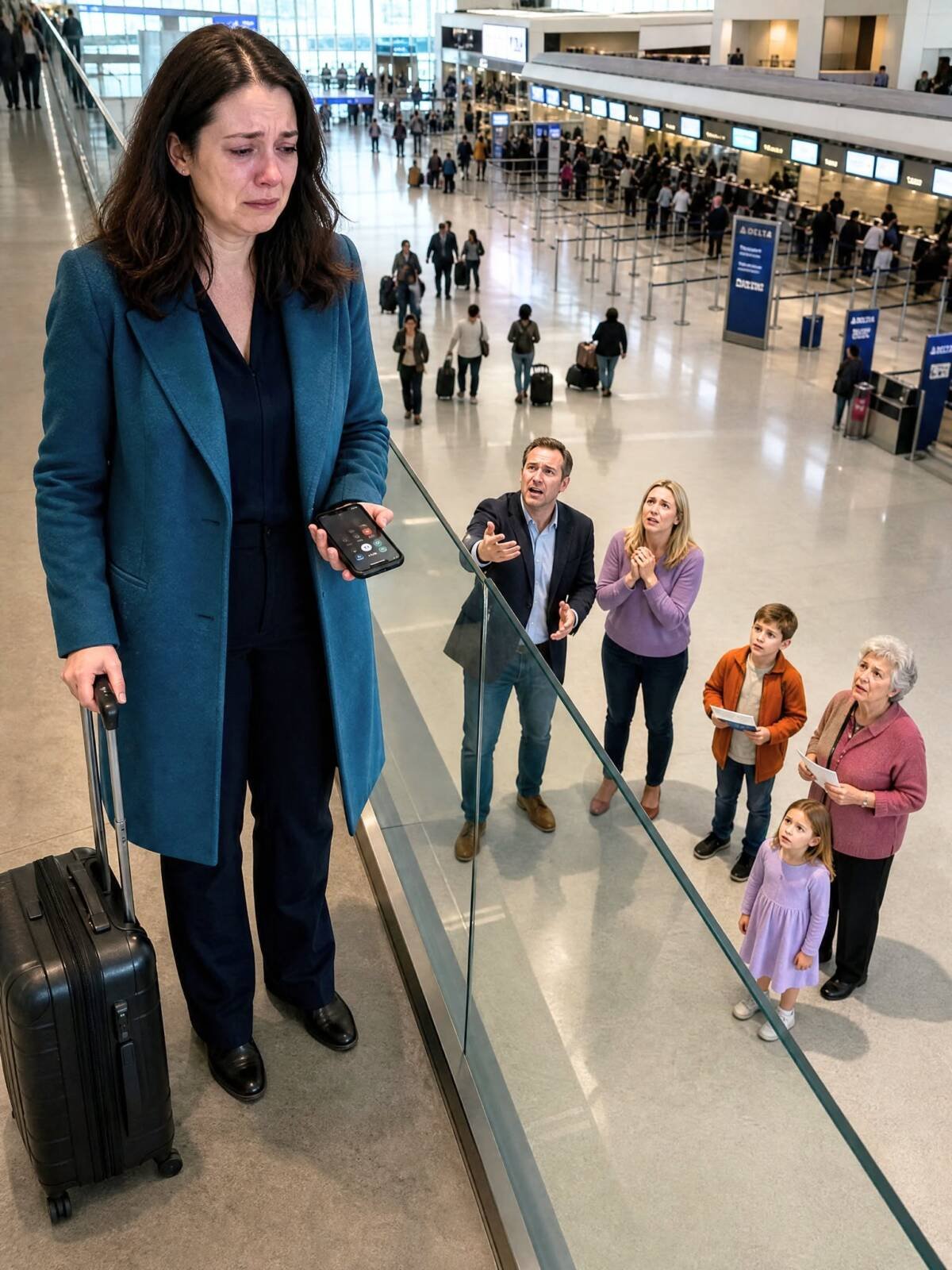
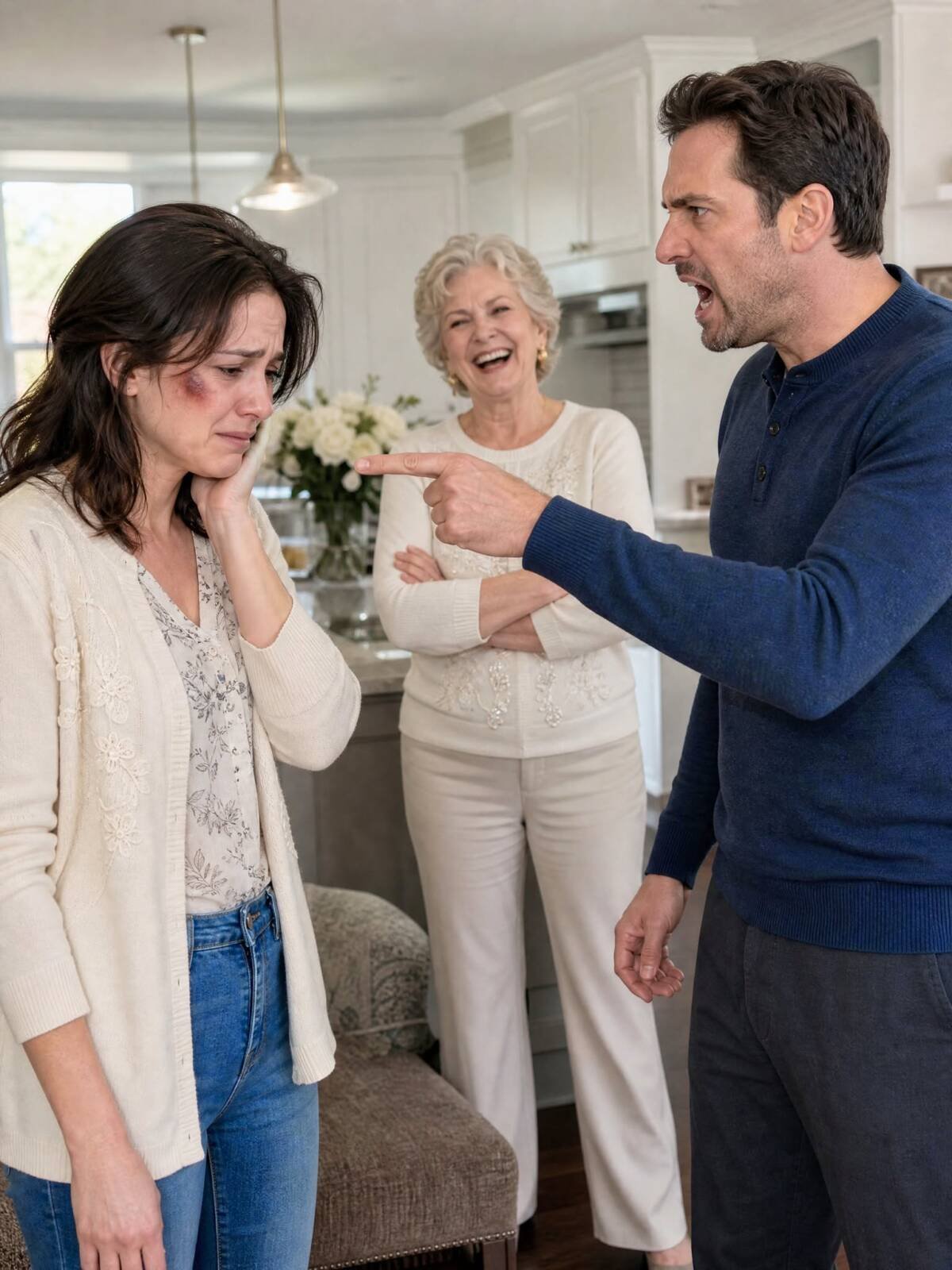
Three days after giving birth, I came home expecting exactly what my husband and I had planned: a quiet house, clean sheets, pain medication, and enough privacy to recover from an emergency C-section and learn how to care for our newborn daughter.
Instead, I found the front door wide open.
Music was shaking the windows. More than twenty of my husband’s relatives were inside the house, eating, drinking, laughing, and singing karaoke. Eleven cars crowded the street, and people I barely knew were carrying overnight bags into rooms I had spent weeks preparing for my recovery.
I stood on the porch holding my three-day-old daughter, Grace, against my chest.
Every movement pulled painfully at my incision.
And when I looked at my husband, Caleb, I immediately knew one thing:
This was not a surprise to him.
“Just let me explain,” he said.
Inside, balloons covered the foyer. Food covered nearly every available surface. A large banner announced Grace’s arrival home.
My father-in-law, Ron, emerged from the kitchen holding a red plastic cup.
“Momma’s home!”
Everyone applauded.
Grace stirred in my arms.
I asked them to keep their voices down.
Ron laughed.
“She’ll learn to sleep through anything.”
At the time, I thought I was dealing with an inconsiderate family and a husband who had made a terrible mistake.
I was wrong.
The party was only the beginning.
What I discovered over the next several weeks would reveal a secret involving my husband’s childhood, a woman who had disappeared from his life more than three decades earlier, a hidden DNA connection, and a plan that appeared to have been prepared long before my daughter was even born.
Most disturbing of all, I eventually discovered that my family had been connected to theirs for decades.
And my father-in-law had not chosen me by accident.
The Agreement My Husband Broke
Three days earlier, Caleb and I had agreed that there would be no large gatherings during the first week after Grace’s birth.
I had just undergone an emergency C-section after a long and difficult labor. I was exhausted, sore, overwhelmed, and still trying to understand the strange mixture of happiness and fear that comes with bringing a newborn home.
We had agreed that our parents could stop by briefly.
My sister could visit and help.
Everyone else could wait.
It was a simple boundary.
“Caleb, we said no visitors,” I reminded him as I stood inside the doorway.
“I know.”
His answer was quiet.
Too quiet.
Before I could say anything else, Ron approached us.
“This is small for our family,” he said.
I looked around.
More than twenty people were inside.
“This is not small.”
Ron laughed as if I were making a joke.
Several relatives had traveled from Knoxville and Raleigh. Some were already drinking. Others were preparing food in my kitchen.
Then I learned that several of them planned to spend the night.
Ron explained it casually, as though it were the most natural arrangement in the world.
“They drove a long way. We’re not going to send them back after celebrating.”
I didn’t care how far anyone had driven.
I needed rest.
I needed privacy.
And most importantly, I needed a safe, quiet environment for my newborn daughter.
I mentioned the downstairs guest room.
That room had been specifically prepared for my recovery.
My sister and I had spent days getting it ready.
There was a recliner where I could sleep without lying completely flat. There was a bassinet beside the bed. My medications were organized on a small table. Bottled water, snacks, postpartum supplies, extra blankets, and diapers were all within arm’s reach.
Because I had just had surgery, the entire purpose of the room was to prevent me from repeatedly climbing stairs.
When I asked Caleb about it, he suddenly stopped talking.
“I moved your things upstairs.”
I stared at him.
“What?”
“I thought we’d need the room.”
“For what?”
He didn’t answer.
I walked toward the guest room.
When I opened the door, my stomach dropped.
The recliner was gone.
My recovery supplies were gone.
Grace’s bassinet was gone.
In their place was an inflatable mattress, several suitcases, a child’s sleeping bag, and a large duffel bag.
Someone had apparently decided that my recovery room was now a guest room for visiting relatives.
Aunt Melissa stood nearby.
The expression on her face changed immediately.
“I thought this room was empty.”
“It wasn’t.”
Ron shrugged.
“She can use the master bedroom.”
I looked at him.
“The master bedroom is upstairs.”
“You’re thirty-one.”
For several seconds, nobody said anything.
Then Melissa turned toward Ron.
“Ron, shut up.”
It was the first time anyone had openly challenged him.
And it would not be the last.
The Moment I Realized Caleb Had Helped
I turned toward my husband.
“Did you move all of this?”
Caleb nodded.
“When?”
“Before I picked you up from the hospital.”
The words hurt more than I expected.
Until then, I had been telling myself that perhaps Caleb had simply been too afraid to confront his father.
Maybe Ron had planned everything.
Maybe Caleb had been caught in the middle.
But now I knew something different.
He had participated.
He had physically moved my recovery supplies.
He had helped prepare the house for a gathering he knew I had not agreed to.
And then Ron said something that made the betrayal even worse.
“Caleb told me to keep everything downstairs so you could rest.”
I looked at my husband.
“He told you that?”
Caleb opened his mouth.
Nothing came out.
Ron continued.
“He said once you got home, you’d be too tired to care.”
I felt something inside me change.
Not anger.
Not exactly.
Something colder.
A realization.
They had made a decision about my home, my recovery, and my child while I was still in the hospital.
And they had assumed that because I would be exhausted, I would not have the strength to object.
I looked around the room.
At the balloons.
The food.
The relatives.
The overnight bags.
The people drinking in my kitchen.
Then I looked at Grace.
She was sleeping against my chest.
I made my decision.
“Everybody leaves.”
Ron immediately protested.
“You cannot throw family out over a misunderstanding.”
“This isn’t a misunderstanding.”
He raised his voice.
“This family has welcomed you since day one.”
“You’re standing in my house refusing to respect what I asked for.”
Ron pointed toward my daughter.
“That baby is a Bailey.”
I tightened my arms around Grace.
“She’s my daughter. That doesn’t give you ownership.”
The room became silent.
For the first time, several relatives stopped looking at me and started looking at Ron.
Melissa began collecting her things.
Others followed.
The music stopped.
People began apologizing.
Within minutes, the celebration had turned into an awkward evacuation.
But Ron refused to move.
He stood near the fireplace as if he were the one who had been wronged.
Finally, even Caleb told him to leave.
Ron looked at his son.
“Don’t call us when she makes you choose.”
Then he walked out.
Twenty minutes later, the house was almost completely silent.
But I didn’t feel relieved.
I felt betrayed.
That night, Caleb slept on the couch.
The following morning, my phone buzzed.
It was a message from Melissa.
Call me when Caleb isn’t around.
I waited.
Then I called.
Her first words were quiet.
“There was another reason Ron wanted everyone there.”
Part Two: The Papers Hidden in My Office
I waited until Caleb left for the pharmacy before calling Melissa again.
She answered immediately.
“Is he gone?”
“Yes.”
She took a breath.
“Erin, I need to tell you something. There was another reason Ron wanted everyone there.”
She explained that earlier that morning, Ron had told her husband, Joe, that once Grace came home, things would finally be “settled properly.”
Melissa had asked him what he meant.
He told her it was none of her business.
Then she gave me a second instruction.
“Check your office.”
I went upstairs.
My office was across from the nursery.
I opened the filing cabinet.
At first, everything appeared normal.
Then I opened the bottom drawer.
Inside was an unlabeled manila folder.
I pulled it out.
The first documents were photocopies of my driver’s license.
Then Caleb’s.
Then our homeowners insurance.
Then Grace’s hospital birth record.
My hands began to shake.
At the bottom was a document that made my stomach turn.
PETITION FOR TEMPORARY GUARDIANSHIP
The petitioners were Ronald Bailey and Sherry Bailey.
The child listed was Grace Elizabeth Bailey.
It had not been filed yet.
But much of the document had already been completed.
One section described me as suffering from “severe postpartum instability.”
Another suggested that Caleb had concerns about my ability to care for our daughter.
I stood there staring at the document.
I couldn’t breathe normally.
Three days after giving birth, someone had already prepared paperwork suggesting that I was incapable of caring for my own child.
And then I heard the front door open.
Caleb came home carrying a pharmacy bag.
The moment he saw the folder in my hands, he froze.
The bag slipped from his fingers.
Medication bottles rolled across the floor.
He didn’t look confused.
He looked frightened.
“You knew.”
“No.”
“You knew.”
He stared at the floor.
Eventually, he admitted that Ron had mentioned preparing paperwork in case something happened to me during childbirth.
“I thought it was just an emergency plan.”
“Then why does this document say I’m mentally unstable?”
He had no answer.
“I didn’t write that.”
“But you knew there was paperwork.”
“I knew Dad was preparing something.”
That was when the entire situation began to look different.
The party.
The relatives.
The overnight guests.
The recovery room.
The guardianship papers.
The sudden concern about my emotional state.
The plan had apparently been bigger than one badly timed family gathering.
I looked at Caleb.
“You told him I was struggling.”
“I needed someone to talk to.”
“About me?”
“He’s my dad.”
During my pregnancy, I had confided in Caleb about my fears.
After thirty hours of labor and an emergency surgery, I had cried in a hospital bathroom and admitted that I was terrified I might not know how to be a good mother.
Those were private fears.
Normal fears.
The kind of things people say to their spouse when they trust them.
Caleb had shared them with Ron.
And Ron had apparently turned those vulnerable moments into evidence.
“I want you out.”
This time, Caleb didn’t argue.
Protecting Myself and My Daughter
My sister came over immediately.
I contacted an attorney.
I also called the police non-emergency line and explained what I had found.
Because the guardianship petition had not yet been filed, the police told me there was limited action they could take at that point.
My attorney gave me a list of instructions.
Document everything.
Save every message.
Change the locks.
Install security cameras.
Keep copies of all paperwork.
Do not allow unsupervised access to Grace.
I followed every instruction.
For the next two weeks, Ron demanded to see Grace.
Sherry sent repeated apologies.
Caleb asked to begin counseling.
I agreed to counseling because Caleb was Grace’s father, but I made it clear that rebuilding trust would require more than apologies.
For a short time, I thought perhaps the worst had passed.
I was wrong again.
Three weeks later, a process server appeared at my door.
Ron and Sherry had filed for emergency grandparent visitation.
Their petition claimed that I was irrationally isolating Grace from her paternal family following childbirth.
My attorney read the document.
Then he looked at me.
“This is weak.”
But there was something else.
Something much more important.
The metadata on the original guardianship document showed that the file had been created six weeks before Grace was born.
Six weeks.
Before the emergency C-section.
Before I came home.
Before I had ever shown anyone that I was exhausted from childbirth.
Before the party.
Someone had been planning this long before my daughter was born.
Part Three: The Woman Ron Had Erased
I confronted Caleb about the guardianship document during our next counseling session.
When I told him that the file had been created six weeks before Grace’s birth, his face went pale.
“I didn’t know.”
Then he said something that changed everything.
“When I was little, Dad tried to do this to my mom.”
I assumed he meant Sherry.
He shook his head.
“Sherry isn’t my biological mother.”
His biological mother was a woman named Laura.
According to the story Ron had told Caleb throughout his childhood, Laura had abandoned the family when Caleb was six because she was unstable and did not want to be a mother.
Sherry entered his life two years later.
Caleb had never seriously questioned the story.
But now, after seeing Ron use similar accusations against me, he began questioning the version of his childhood he had been taught.
My attorney located Laura in Colorado within forty-eight hours.
The records told a very different story.
Laura had not abandoned Caleb.
Years earlier, Ron had obtained temporary custody after accusing her of being mentally unstable following treatment for depression.
He then moved Caleb out of state.
Laura spent years fighting through the courts.
Eventually, the financial and emotional burden became too much.
She lost the ability to continue the fight.
When I spoke to her, she began crying.
“He’s doing it again.”
Laura sent us boxes containing old court filings, letters, legal records, and other documents she had preserved for decades.
Among them was a cassette tape from 1992.
The recording contained Ron discussing how he planned to deal with Laura.
His strategy was chillingly familiar.
He believed that if she became exhausted enough, she would eventually give up.
The same basic pattern appeared to be repeating decades later.
Different mother.
Different baby.
Same strategy.
Exhaust the woman.
Isolate her.
Question her stability.
Then present the resulting exhaustion as proof that she was incapable of caring for her child.
The old records significantly changed the legal picture.
Ron and Sherry’s emergency visitation request was dismissed, and several issues raised by the historical and current records were referred for further investigation.
For the first time, I believed the situation might finally be ending.
Then Sherry called.
She asked to meet privately.
“There’s something about Grace you need to know.”
The DNA Report
We met in my attorney’s office.
Sherry looked exhausted.
She placed an envelope on the table.
Inside was a DNA report.
I looked at her.
“I don’t understand.”
She began crying.
“Ron isn’t Caleb’s biological father.”
I couldn’t speak.
She explained that Laura had already been pregnant when she became involved with Ron.
Ron eventually learned the truth.
But he chose to raise Caleb as his own.
According to the information Sherry provided, that decision later became part of a much larger conflict involving Laura and another man.
Then she showed me another document.
Caleb had taken an ancestry DNA test years earlier.
Three months before, a close paternal match had appeared in the system.
The name on the report was:
Joseph Mercer.
Joe.
Melissa’s husband.
The same man who had been standing inside my house on the afternoon I came home from the hospital.
I looked at Sherry.
She nodded.
“Joe is Caleb’s biological father.”
Part Four: The Secret That Rewrote Caleb’s Life
Once the DNA connection became known, many things surrounding Melissa suddenly made more sense.
She had recognized what Ron was doing.
She had been visibly uncomfortable during the party.
She was the person who told me to search my office.
And she knew something about Caleb’s history that he had never been told.
The truth reached back decades.
Before Melissa married Joe, Joe had been involved with Laura.
Caleb had been conceived during that relationship.
Ron eventually discovered the truth.
Instead of walking away, however, he raised Caleb as his own and later became involved in the custody dispute that separated Laura from her son.
The old records suggested that keeping Caleb in his household became more than a question of parenthood.
It became part of a larger struggle over control, identity, and the story Caleb would believe about his own mother.
Ron had spent decades telling Caleb that Laura had abandoned him.
Now Caleb had evidence suggesting that the truth was very different.
Grace’s birth appeared to reopen that old obsession.
The large gathering at my home suddenly looked different.
The relatives had not simply been there to celebrate a newborn.
They could become witnesses.
They could later describe me as exhausted.
Overwhelmed.
Hostile.
Possessive.
Unstable.
A room full of people can create a powerful story if everyone remembers the same version of events.
Ron seemed to understand that.
But he had underestimated Melissa.
Once she understood that he was repeating the same pattern, she told Joe the truth about Caleb.
Joe completed additional DNA testing.
The results confirmed what Sherry had revealed.
For Caleb, the discovery shattered thirty-four years of his identity.
The man he had called Dad had raised him while telling him that his biological mother had abandoned him.
Now Caleb had to confront the possibility that the story he had grown up believing had been deliberately constructed.
Then Laura came to town.
Thirty-Four Years Later
Laura and Caleb stood in the same room for the first time in thirty-four years.
Neither seemed to know what to say.
Then Caleb began crying.
Laura walked toward him.
She placed both hands against his face.
“I never stopped looking for you.”
Caleb closed his eyes.
For years, he had defended Ron.
Now he was forced to reconsider almost everything he believed about his childhood.
He also began to understand something else.
Ron had not only manipulated the people around him.
Caleb had unknowingly helped him do it to me.
The realization changed Caleb.
Six months later, Caleb and I were still separated.
We were learning how to co-parent Grace carefully.
He attended therapy every week.
He stopped asking me to forgive him.
He stopped explaining Ron’s behavior.
Instead, he began acknowledging his own decisions.
He admitted that he had betrayed my trust.
He admitted that he had shared private information.
He admitted that he had helped move my recovery supplies.
And he admitted that he had allowed his father’s influence to override the boundaries we had established for our daughter.
I still didn’t know whether our marriage could survive.
Some wounds heal.
Others change the shape of a relationship permanently.
But Grace was safe.
That mattered more than anything.
One Sunday afternoon, Laura sat on my porch holding her granddaughter.
Caleb sat beside her.
Joe stood nearby, still trying to understand the family connection he had only recently discovered.
Melissa brought lemonade outside.
It was complicated.
It wasn’t the family picture any of us had imagined.
But for the first time, it was honest.
Then my phone buzzed.
The number was unknown.
The message contained six words:
You still don’t know why Ron chose you.....