Family expectations can form an invisible cage, constructed over years of subtle dismissals, unexpressed fears, and carefully guarded secrets. For Major Emily Carter, an Army physician who had spent twelve years dedicating her life to military medicine, the friction between her chosen profession and her parents’ polished corporate ambitions had long since become a quiet estrangement. But when her mother crossed a line by destroying her service uniform the day before her brother’s wedding, she inadvertently triggered a chain reaction of revelations that would dismantle twelve years of deception—and introduce her family to a reality they had actively tried to avoid.
Part I: The Shredded Fabric and the Three-Star Arrival
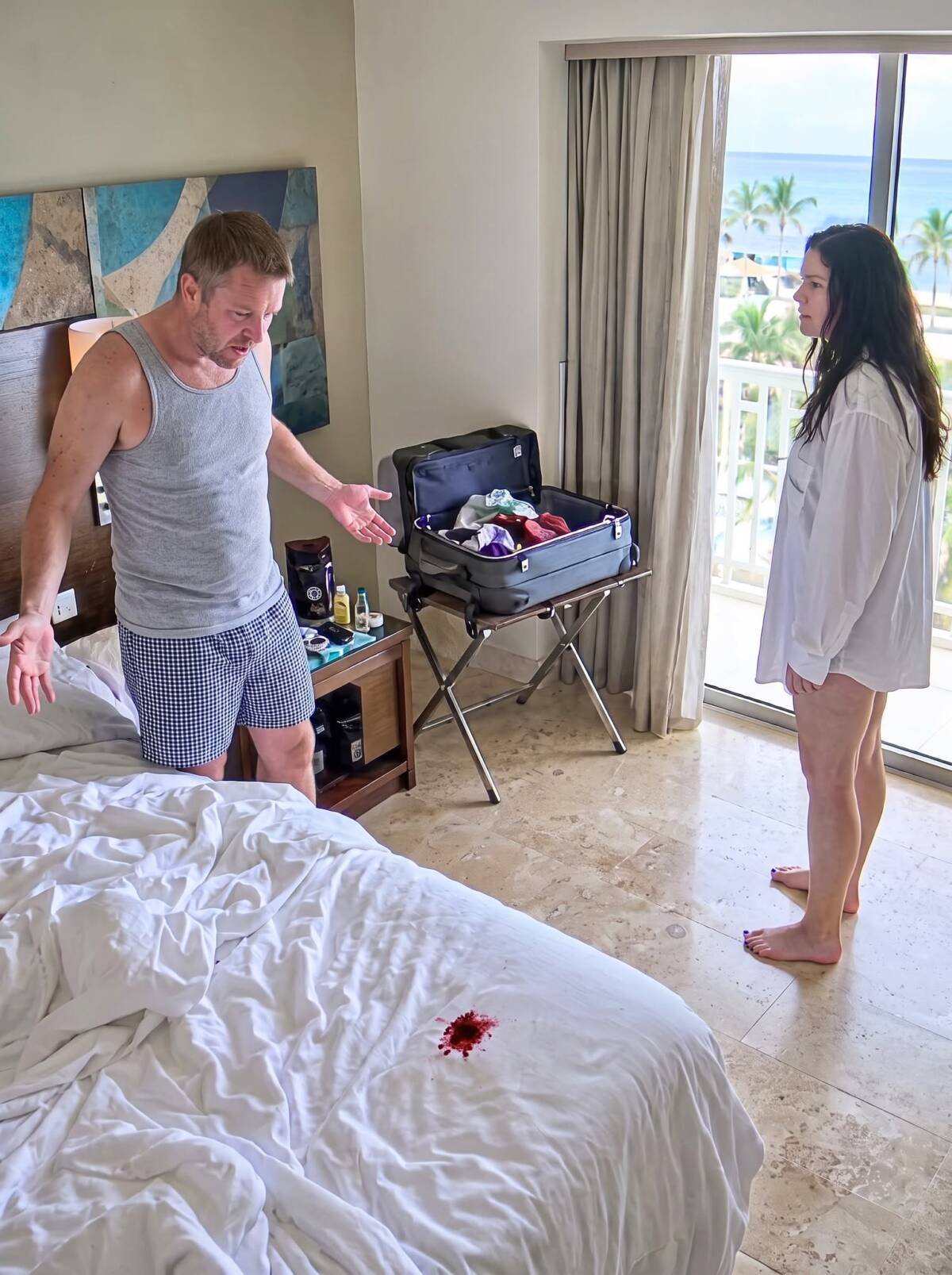
The day before my brother Lucas’s wedding, I stood in the guest room of my parents’ Virginia home, staring in disbelief at the remains of everything I had packed for the weekend. My Army dress jacket had been sliced clean through, my civilian dresses were shredded, and even the garment bag containing my rehearsal outfit had been brutally cut open.
My mother stood in the doorway beside Aunt Marlene, who casually sipped her wine while looking at the destroyed clothes scattered around my feet. Neither woman appeared remotely ashamed.
“You’re not seriously upset over that ugly thing?” my mother asked, her tone dripping with casual disdain.
“Why would you do this?” I demanded, struggling to comprehend how she could look so entirely satisfied with the wreckage.
“This weekend is about Lucas. I’m tired of you showing up in uniform expecting everyone to be impressed.”
Aunt Marlene laughed, adding her own sharp insult: “Maybe without it, some desperate man will finally take you.”
Their contempt for my career was nothing new. For twelve years, my family had mocked my decision to enlist and pursue military medicine instead of stepping into a predictable executive role at Carter Medical Systems, my father’s company. Even after I earned my medical degree and rose through the ranks—recently achieving the rank of Major—my mother continued to dismiss my profession as though I were merely playing at a hobby she expected me to abandon eventually.
They knew almost nothing of the soldiers I had treated, the harrowing shifts in military hospitals, or what each ribbon and decoration on my service uniform actually represented. They certainly didn’t know about my promotion, having long ago stopped sharing my achievements with relatives who only sought to diminish them.
Looking at my destroyed uniform hurt, but I refused to grant my mother the satisfaction of tears. Instead, I quietly photographed the damage and sent the images to the one person my family knew nothing about: my husband.
For eighteen months, I had been quietly married to Lieutenant General Alexander Hale. Our marriage was not a military secret, but I had deliberately kept it private from my relatives, knowing full well that they would weaponize his rank, reputation, and connections to turn our personal lives into another family spectacle.
Alexander’s response arrived in less than sixty seconds: “Send me the address.”
Four hours later, the doorbell rang while the family gathered downstairs. My mother called out lazily from the living room, without bothering to stand: “Emily! Answer that! At least make yourself useful.”
I walked down the grand staircase and swung open the front door to find Alexander standing on the porch in his full Army service uniform. Three golden stars gleamed on his shoulders, rows of ribbons spanned his chest, and the steely official demeanor in his eyes instantly melted into profound warmth the moment he saw me.
“Are you all right, Major?” he asked softly.
My throat tightened, the heavy wall I had maintained between my military career and my family life dissolving in a single breath. “I am now.”
Alexander kissed my forehead and stepped across the threshold. Behind me, Aunt Marlene dropped her wineglass with a sharp crash, my father slowly rose from his armchair mid-conversation, and Lucas fell silent as everyone in the foyer recognized the senior officer standing before them.
“General Hale,” my father murmured, his composure visibly cracking.
My mother stared back and forth between Alexander and me, visibly struggling to process why one of the United States Army’s most senior leaders had just appeared at her front door. “Emily… why is Lieutenant General Hale here?”
Alexander answered before I could speak. “Because someone destroyed my wife’s uniform.”
The revelation left the room utterly breathless. My mother stared at me with wide eyes, while my father seemed to rapidly recalculate every assumption he had made about my life during the years none of them had bothered to investigate.
“Your… wife?” my father whispered.
“Emily is my wife,” Alexander replied calmly.
With measured grace, Alexander opened a garment bag he had carried inside, revealing a pristine replacement dress uniform in my exact size. Every ribbon, insignia, and qualification badge had been meticulously restored, turning what my mother had attempted to use as a tool of humiliation into an undeniable testament of my service.
“You earned every piece of this,” Alexander told me, his voice carrying clearly across the quiet room. “Nobody gets to take that away from you.”
Then, he turned his gaze directly toward my mother, maintaining absolute composure. “You don’t have to understand your daughter’s service. But you will respect it.”
My mother had no answer. Without another word, Alexander picked up my suitcase, and as we headed toward the exit, Lucas hurried after us, looking genuinely distressed that the confrontation might overshadow his wedding weekend.
“Emily… you’re still coming tomorrow, right?”
I paused and looked back at my younger brother. Whatever bitter resentment existed between my mother and me belonged strictly to us, not to Lucas or his fiancée. I had always intended to celebrate his wedding as his sister, and I refused to punish him for a conflict he hadn’t created.
“Oh, absolutely,” I replied softly.
My family assumed that my secret marriage to a three-star general was the most dramatic surprise awaiting them that weekend. But they were about to discover how remarkably little they actually understood about the world I inhabited—or the secrets buried in their own past. Among the high-ranking military guests scheduled to attend Lucas’s wedding due to my father’s corporate defense contracts was an officer holding a sealed document bearing my father’s handwriting.
A document that had been waiting for me for twelve years.
Part II: The Letter No One Wanted Me to See
Before Alexander and my departure for a quiet hotel, Lucas pulled me aside into the kitchen, amidst half-wrapped wedding favors and floral arrangements. Visibly shaken, he admitted that while he had known our mother disliked my military service, he never could have imagined she would stoop to destroying my personal property.
What disturbed him most was the realization that our mother had known weeks in advance that I planned to wear a modest green civilian dress to the actual wedding ceremony. I had told Lucas explicitly that my uniform was strictly for the rehearsal dinner, meaning her destructive actions had never been about protecting wedding photographs.
“Then this was never about the photos,” Lucas realized aloud, the pieces falling into place.
“Probably not,” I said quietly.
Lucas finally offered an admission he should have made years earlier. He confessed that he had watched our family ridicule my ambitions without actively participating, but he had rarely defended me because keeping the peace with our parents had always felt easier than confronting their rigid expectations.
“I should have asked twelve years ago,” he said, looking away.
An apology could not instantly rewrite twelve years of passive silence, but I believed his remorse was genuine. I reassured him of my attendance the next day, though Alexander and I would spend the night off-site.
At the hotel, Alexander revealed a second garment bag. Inside hung a stunning dark blue evening dress that my close friend and colleague, Colonel Naomi Bennett, had helped him procure upon receiving the photographs of my ruined clothes.
Alexander explained that Naomi hadn’t worked alone; several physicians and administrative officers from our military hospital had scrambled to verify my records, secure the correct insignia and awards, and reconstruct my uniform down to the millimeter. Seeing their collective effort fundamentally shifted my perspective on what my mother had done.
She had destroyed fabric, which remained a malicious act—but she could never touch the career behind it. My twelve years of service were forged in the soldiers I had stabilized, the exhausted colleagues who shared brutal night shifts with me, and the husband who had driven four hours instantly upon hearing I needed him.
“I spent years wanting them to understand,” I admitted quietly to Alexander in the dim hotel room.
“And now?”
“I’m not sure understanding is something I can force. I think I’d settle for basic respect.”
The following morning, I wore the dark blue evening dress to Lucas and Sophie’s ceremony at a historic estate just outside Alexandria, Virginia. Leaving my uniform at the hotel was not a retreat; it was a deliberate choice to attend as a sister rather than a Major, refusing to let yesterday’s hostility dictate my family role.
Unexpectedly, my father approached me shortly after our arrival and offered a direct apology for my mother’s actions. While it wasn’t an apology for the dozen years of dismissive commentary that preceded it, he acknowledged that destroying my property was entirely inexcusable. For the moment, I accepted that small, overdue step.
Midway through the pre-ceremony gathering, a convoy of official government vehicles pulled onto the estate grounds. Retired Lieutenant General Samuel Reed stepped out first, followed closely by Major General Priya Shah and Brigadier General Thomas Wynn—all distinguished guests tied to the broader defense medical community and Carter Medical Systems’ federal contracts.
I recognized General Reed by professional reputation, but the visceral reaction between him and my father caught my attention instantly. Their handshake carried the heavy history of two men who shared a complicated past, and when Reed turned his gaze toward me, my father visibly tensed.
“Emily,” General Reed said, stepping forward with an unreadable expression. “I’ve wanted to speak with you for a very long time.”
My mother materialized at my father’s side instantly. “Samuel, this really isn’t the appropriate time.”
Her nervous urgency only deepened my suspicion, especially when Reed noted that both of my parents were well aware of what he had come to discuss. He reached inside his tailored suit jacket and produced a thick, cream-colored envelope bearing my full legal name, penned in handwriting I instantly recognized.
It belonged to my father. And beneath my name were three handwritten words: “When she is ready.”
“What is that?” I asked, my heart quickening.
“A letter your father entrusted to me twelve years ago,” Reed answered smoothly.
Twelve years. The exact duration of my service—the precise span of time that had driven a wedge between my parents and me.
My father stared at the envelope in horror. “I thought you destroyed it.”
“You asked me to hold it until Emily came back,” Reed replied evenly.
Dad’s expression hardened. “That was before.”
“Before what?”
Neither of my parents answered. With Lucas’s wedding ceremony moments away, General Reed tucked the envelope back into his pocket, promising we would speak in detail afterward. But the uniform no longer held my singular focus; someone had actively intercepted a message from my father at the exact moment my military career began.
And based on the pale panic in my mother’s eyes, she knew precisely what secrets the envelope contained.
Part III: What My Father Had Hidden for Twelve Years
Lucas’s wedding ceremony offered a fragile grace period, postponing the inevitable confrontation. He cried as Sophie walked down the aisle—a fact he would undoubtedly deny later—and for a few hours, I allowed myself to simply be a sister watching her younger brother marry the love of his life.
The reception that followed provided a semblance of normal celebration: Alexander danced with me, my parents shared a polite waltz, and Lucas proved that matrimony had done nothing to improve his rhythm. Even Penny, their Labrador retriever and honorary assistant flower girl, contributed by successfully liberating an unattended dinner roll.
Roughly ninety minutes into the reception, Samuel Reed tapped my shoulder and gestured toward the manicured gardens outside. We stopped beneath the sprawling canopy of an ancient oak tree, where he finally revealed the history connecting him and my father back to 1998, when my father had assumed leadership of Carter Medical Systems following my grandfather’s passing.
Reed recalled how my father used to speak of me with immense pride during my childhood—recalling the time I systematically dismantled a household blood-pressure cuff just to understand its mechanical valves. I remembered being severely grounded for that experiment; Reed remembered my father telling the story with undisguised fondness.
“You and I apparently knew two very different versions of Robert Carter,” I murmured.
“Perhaps,” Reed agreed.
Then came the revelation that shattered my understanding of the past. During my final year of undergraduate studies, my father had secretly approached Reed to establish an anonymously funded fellowship designed specifically for civilian physicians entering military medicine.
“My father spent my entire adult life telling me the Army was a waste of my education,” I countered, frowning.
“I know.”
Reed explained that my father’s hostility had been rooted in terror, not malice. My grandfather had returned from active service carrying psychological scars he rarely discussed, and my father had spent decades operating under the conviction that shielding his children from military life was the ultimate form of protection.
Beneath that fear lay another, darker anxiety: my father suspected I was enlisting partly to escape his shadow and the corporate destiny he had mapped out for me at Carter Medical Systems. While that wasn’t my sole motivation, he hadn’t been entirely wrong.
Eventually, Reed produced the twelve-year-old envelope. My father’s original instruction had been simple: deliver it to me if I ever sought Reed out for professional mentorship. But just two weeks later, my father had abruptly rescinded the instruction, claiming he had been informed that I flatly rejected the fellowship and wanted nothing to do with him or his company.
“I never even knew there was a fellowship,” I breathed, my stomach dropping.
“I realize that now.”
Only one question remained, burning like acid in my chest. “Who told him I rejected it?”
Reed glanced back toward the glowing windows of the reception hall before answering. “Your mother.”
The pieces violently locked into place. For twelve years, General Reed had assumed I rejected my father’s olive branch out of spite, while I spent those same twelve years believing my father considered my medical career an embarrassment.
When I finally broke the heavy wax seal and pulled out the contents, I found more than just a letter. Enclosed was the original legal charter of the Carter-Reed Military Medicine Fellowship. Reed revealed that although Carter Medical Systems had officially withdrawn its corporate sponsorship years prior, my father had quietly continued funding the entire program out of his own private accounts.
“For how long?” I asked softly.
“Twelve years. Every single year.”
I unfolded my father’s letter, dated the week I first put on my uniform. He confessed that he had spent so much time dictating what my future should look like that he had completely failed to ask what I truly desired for myself.
“If you choose the Army, I will be afraid. I need to admit that,” he had written. “Not ashamed. Not disappointed. Afraid.”
He detailed the generational trauma left by my grandfather’s wartime experiences, but a single sentence anchored the page: “But fear is mine to manage. It should not become a fence around your life.”
He explained that the fellowship was his clumsy attempt to understand military medicine rather than control me through financial leverage. If I carved out a different path, he wanted to learn enough about it to ensure that leaving his company did not mean losing his daughter.
Subsequent documentation proved that sentiment had endured: the fellowship had been renewed annually, with the most recent administrative amendment bearing my father’s signature from just six weeks prior.
Dad found me beneath the oak tree shortly after I finished reading. He admitted that he had continued funding the program because he eventually realized I had been entirely right—there were lives worth living far beyond the corporate blueprint he had drawn up.
“Did you know Mom told General Reed I rejected it?” I asked, holding up the letter.
His heavy silence answered before his voice did. He admitted learning the truth three years earlier, yet keeping it buried because I rarely visited anymore—while I reminded him that I stopped coming home precisely because I believed my family despised who I had become.
“Why didn’t you call me?”
“Pride,” he muttered.
“And after that?”
“Time.”
“That’s not a reason.”
“No,” my father whispered, staring at the grass. “It’s an excuse.”
I pressed him on why my mother had lied, but he refused to speak for her. Instead, he looked toward the ballroom windows where his wife of thirty-eight years stood talking with guests, offering an insight I never expected to hear.
“I think your mother has spent twelve years believing that if she told you the whole truth, she’d lose you completely.”
Across the room, my mother picked up her small evening purse and slipped out through a side terrace exit. My father gave me a quiet, solemn nod. This time, I followed her.
Part IV: The Truth My Mother Was Running From
I caught up with my mother just as she reached the edge of the manicured gardens, away from the music and laughter of the reception. She heard my footsteps crunching on the gravel and stopped, finally turning to face me. The haughty armor she typically wore around my military career was entirely gone, replaced by a defensive vulnerability that proved my father’s warning true.
“You told General Reed I rejected the fellowship,” I said, keeping my voice level.
She tightened her grip on her designer handbag, refusing to offer an immediate denial. “You were leaving anyway.”
“I didn’t even know it existed, Mom.”
“You didn’t need their money.”
“That was never your choice to make.”
For a decade, I had shouldered the bitter assumption that her hostility stemmed from pure snobbery—disappointment that I had rejected the pristine corporate track she had curated. Now, the reality was far more twisted: she had actively sabotaged my father’s attempt to bridge the divide, weaponizing deceit to preserve her own control. Her destruction of my uniform the previous day was merely an extension of that same desperate compulsion.
When I demanded an explanation, she initially retreated behind familiar platitudes, insisting that military medicine was inherently unstable and dangerous for someone with my academic pedigree. But none of her safety arguments explained why she had lied to both her husband and her daughter.
“You could have just told me you were afraid,” I said, exhaustion bleeding into my voice.
“You wouldn’t have listened.”
“You never gave me the opportunity to try.”
That single truth landed like a physical blow. I reminded her that she hadn’t simply tried to encourage a secure lifestyle; she had manufactured a complete fiction—convincing my father I wanted nothing to do with him, while ensuring I believed my own father considered my service a disgrace.
Eventually, my mother broke, her voice dropping to a harsh whisper. When I enlisted, she became consumed by the terror that she was losing absolute control over the family dynamic she had meticulously engineered. Lucas had stayed close to home, joined the family enterprise, attended every Sunday dinner, and built the predictable suburban life she understood. I, on the other hand, had chosen a path that could station me anywhere on the globe overnight.
“I thought if your father encouraged you, you’d never come back home,” she confessed, tears finally pooling in her eyes.
“So you made damn sure I thought he despised me?”
“I thought eventually you’d realize how hard you were making it and choose something closer to us.”
Instead, every single microaggression, every minimized promotion, and every mocking comment had driven me further away. With each cynical remark, I shared a little less of my life until they woke up one day knowing nothing about my promotions, my daily life, or my marriage to a three-star general.
“You were terrified of losing me, Mom,” I said quietly. “So you spent twelve years engineering the exact distance you feared.”
Her face crumbled, stripped of defenses. I didn’t expect a miraculous personality transformation in the shadows of a wedding reception, but she needed to understand that maternal fear did not excuse manipulating my relationship with my father, nor did it justify vandalizing the physical symbols of a life she refused to accept.
The bitter irony was staggering. My father had initially tried to dictate my future, but he had ultimately evolved, recognizing that his anxieties belonged to him—quietly funding a fellowship year after year while mourning a rejection that never actually happened. My mother, meanwhile, had maintained our isolation through active sabotage.
That isolation was precisely why I had kept Alexander a secret.
“I didn’t invite you to my wedding, and I didn’t tell you about Alexander, because I knew you’d care infinitely more about his three stars than whether he actually makes me happy,” I told her plainly.
My mother glanced back toward the grand ballroom, where my husband was engaged in a relaxed conversation with Lucas. Her expression acknowledged a sobering realization: while my family had spent twelve years treating my career as an embarrassment, I had quietly built a life surrounded by people who honored my strength, my sacrifices, and my character.
“I truly didn’t know you felt so far away from us,” she whispered.
“You didn’t know because you stopped asking who I was,” I replied. “You were too busy waiting for me to become who you wanted me to be.”
For the first time in my memory, my mother offered an unreserved apology, untethered from self-justifying explanations. I accepted her words without pretending they instantly erased twelve years of collateral damage; forgiveness and trust are entirely different constructs, and repairing our foundation would require sustained, deliberate effort far beyond a single conversation in a garden.
When we returned to the reception hall, my father offered an inquiring look, but I simply offered a quiet nod. Lucas and Sophie were still dancing, Alexander was waiting for me with a reassuring smile, and I decided the remainder of the evening belonged to the newlyweds, leaving our family’s deep-seated scars to heal another day.
Part V: The Life They Never Tried to Understand
The weeks following the wedding did not magically rewrite our history, but the tectonic plates of our family dynamic had permanently shifted. True to his word, my father began calling to check in on my patients and medical research rather than grilling me on when I might transition to a civilian corporate hospital. My mother, visibly subdued, made a conscious effort to bite her tongue whenever my military commitments entered the conversation.
The most transformative development centered around the Carter-Reed Fellowship. Recognizing the damage caused by a dozen years of miscommunication, my father moved quickly to restore Carter Medical Systems as an explicit public sponsor of the program—and formally asked me to help overhaul its administrative framework.
“I don’t want you to join the company, Emily,” he clarified during a working dinner at our home, where Alexander sat quietly across from us. It was a sentence my younger self would have considered impossible. “I want you to help us design a program that genuinely serves the physicians entering military service.”
For the first time, I could collaborate with my father without feeling like cooperation required compromising my independence. I agreed to serve as an active advisory board member while maintaining my active-duty status, and my father accepted those boundaries without attempting to manipulate them.
My mother’s reconciliation was slower, anchored in quiet accountability. Weeks after the wedding, she visited our home and asked to see my replacement dress uniform. Standing in our hallway, she traced her fingers over the service ribbons she had once dismissed as meaningless metal, asking what each award represented. Instead of offering the brief, dismissive summaries I used to offer casual acquaintances, I walked her through every deployment, every austere hospital setup, and every patient whose life we fought to save.
This time, she listened without interrupting.
The uniform she had tried to destroy had been replaced within hours, but repairing the human architecture surrounding it required months of uncomfortable honesty. In the end, I understood that the deepest wounds were never inflicted with scissors; they were forged through twelve years of institutionalized fear, defensive pride, and the stubborn refusal to have difficult conversations.
My mother had once sneered that she wanted me to look like a “proper woman.”
Instead, I remained precisely who I had fought to become: a physician, an officer, a wife, and an unyielding advocate for my own path. And for the first time in my life, my family stopped asking me to apologize for it.
A Journey Worth Sharing
Every family carries its own unexpressed fears and unspoken expectations, but true respect begins the moment we stop trying to shape the people we love into reflections of our own comfort zones. If this story resonated with you, share it with someone who values resilience, truth, and the courage to stand tall in your own uniform.