A week after my grandmother passed away, I hired a crew to begin renovating her aging home. Seven days into the demolition, the foreman called. His voice was barely above a whisper. “Ma’am, we found something. You need to come here right away, but whatever you do, don’t tell your parents or your sister.”
When I pulled up to the house, police cruisers were already blocking the driveway. And the moment I saw what they had pulled from behind the dining room wall, my hands began to shake uncontrollably.
Introduction: The House on Juniper Lane
Inheriting the house on Juniper Lane felt less like receiving a gift and more like accepting the heavy responsibility of preserving the last remaining piece of my grandmother’s life. Evelyn Hart was a force of nature. She was a woman who stubbornly kept her backyard garden alive through brutal Ohio droughts and maintained a sprawling, two-story suburban home with a fierce, quiet pride.
When she passed away, she left the property solely to me. The will was ironclad, leaving no room for confusion. I had been the one driving her to endless medical appointments, patching up the leaky roof, and sitting with her through long, painful nights when her arthritis flared up.
My parents, Diane and Mark, immediately began referring to it as “the old place,” dismissing its sentimental value. My younger sister, Chloe, went a step further. Before the funeral flowers had even wilted on the grave, she was already flooding my phone with property listings, aggressively calculating the exact dollar amount we could walk away with.
“You’re going to sell, right?” Chloe had pushed, cornering me in the kitchen during the wake. “It’s only fair. We all helped take care of her.”
I didn’t want my grandmother’s legacy to devolve into a bitter family war. Instead of putting a “For Sale” sign on the lawn, I decided to restore the house to its former glory. I hired Beacon Ridge Remodeling to repair the extensive water damage in the kitchen and replace the deteriorating lath and plaster in the formal dining room. I hoped that once the dust settled, the house would feel like Grandma’s sanctuary again, rather than a prize my family was fighting to liquidate.
I had no idea that the real fight hadn’t even begun.
Part 1: The Discovery Behind the Plaster
The call came while I was sitting in my probate attorney’s office, reviewing the final estate taxes. Sam Alvarez, the lead foreman for the renovation crew, was usually a jovial, loud man. On the phone, however, his voice was tight, controlled, and deeply serious.
“Ms. Hart? It’s Sam. Ma’am, we found something. I need you to come here immediately.”
My heart spiked. “Is someone hurt? Did a wall collapse?”
“No one is hurt,” Sam replied carefully. “But… it’s serious. Please, just get here. And do not tell your parents or your sister about this.”
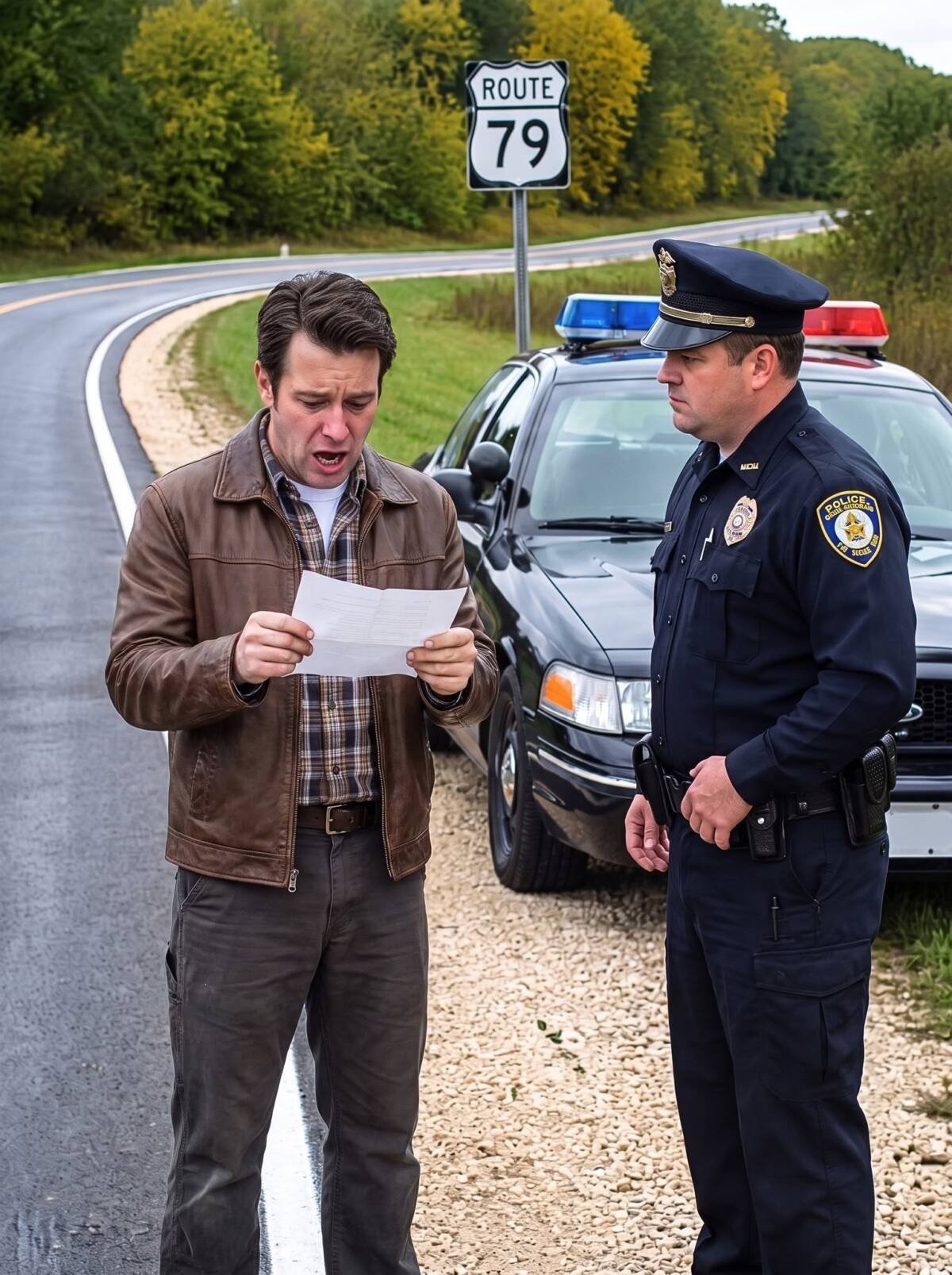
I drove the four miles to Juniper Lane in a daze, cycling through every possible catastrophic scenario. Had they found asbestos? A structural failure? But when I turned onto the familiar tree-lined street, the sight of two police cruisers and an unmarked detective’s sedan parked on the lawn shattered all my mundane theories.
Detective Russell Gaines, a veteran from the county’s financial fraud unit, met me on the wraparound porch. Inside, the house smelled of century-old dust and exposed pine.
Sam walked me into the dining room, pointing to a massive, jagged hole in the wall right beside where Grandma’s antique hutch used to sit. The crew had been stripping away the rotted plaster when their pry bars hit something solid.
It was a heavy metal lockbox, bolted directly into the wooden wall studs.
The box itself was bizarre, but the envelope heavily taped to the top of it made the breath catch in my throat. I recognized the sharp, elegant cursive instantly.
FOR EMILY ONLY. DO NOT LET ANYONE ELSE TOUCH THIS.
Sam hadn’t opened it. He explained that beneath the tape, Grandma had left explicit, notarized instructions demanding that the police be contacted immediately if anyone other than me attempted to access the box.
Detective Gaines pulled me aside, the floorboards creaking under his boots. “Ms. Hart, before we proceed, I need to share some context. Last year, an anonymous complaint was filed with adult protective services and the fraud bureau regarding Evelyn Hart. The complaint detailed severe financial exploitation, forged legal documents, and unauthorized access to her retirement accounts.”
Memories I had previously dismissed as harmless began rushing back with sickening clarity. I remembered my mother, Diane, insisting on “helping” Grandma with her online banking because the iPad was “too confusing.” I remembered Chloe aggressively volunteering to organize Grandma’s bills, and an incident where Evelyn’s checkbook had mysteriously vanished, only to be found days later at the bottom of Chloe’s tote bag.
Before I could even process the detective’s words, tires screeched in the driveway. Chloe’s SUV slammed into park on the curb. She jumped out, ignoring the police tape, and stormed up the front steps, immediately yelling at the uniformed officers.
“What the hell did you do?” she screamed, glaring at me through the screen door. “That house is supposed to be ours! You have no right to do this without us!”
Her sudden arrival sent a chill down my spine. Neither I, nor the police, nor the contractors had called her.
“Why are you here, Chloe?” I asked, my voice trembling. “How did you know to show up?”
She scoffed, crossing her arms defensively. “Mom saw you racing out of your lawyer’s office. She got worried and told me to follow you.”
My stomach tightened into a hard knot. My mother had been watching me.
Behind us, an evidence technician carefully sliced open the envelope taped to the box. He briefly held up the first page of a handwritten letter, just long enough for me to read the opening line before he bagged it for processing.
Emily, if you’re reading this, they’ve already tried to take what isn’t theirs.
Until that exact moment, I had believed my family was furious simply because Grandma had left me the house. Now, standing in the dust of her torn-down walls, I realized the terrifying truth. They weren’t mad about the inheritance. They were terrified because Grandma had caught them trying to steal it while she was still alive.
Part 2: Building the Case from the Grave
The next 48 hours were a blur of fluorescent lights and sterile interrogation rooms. At the county fraud office, I sat with Detective Gaines, desperately trying to reconstruct the final year of my grandmother’s life.
I recounted the missing bank statements. The sudden changes in her mail delivery. The bitter, whispering arguments Chloe would start whenever Grandma mentioned updating her will. At the time, whenever Evelyn misplaced a document or noticed a discrepancy, my mother and sister were quick to act deeply concerned. They would exchange knowing, pitiful looks and whisper about Grandma’s “deteriorating memory.” They gaslit her so effectively that even I had started to wonder if dementia was setting in.
Two days later, the lockbox was officially forced open by the authorities. What investigators found inside transformed my vague, lingering suspicions into a devastating, documented reality.
“Your grandmother was a very smart woman, Ms. Hart,” Detective Gaines said, sliding a thick stack of photocopies across his metal desk. “She had exactly what we needed. Account printouts, copies of legal paperwork, and a master timeline.”
I picked up the first page. It was a letter addressed to me, outlining a nightmare.
Evelyn wrote that she had noticed thousands of dollars being quietly siphoned from her savings accounts. When she confronted my mother and sister, their masks slipped. They didn’t apologize. Instead, they doubled down, telling her she was confused and losing her mind. When she threatened to go to the bank, the psychological abuse escalated. They explicitly threatened to have her legally declared incompetent and placed in a state-run facility so they could assume total control over her estate.
She was an 82-year-old woman, terrified that the authorities would believe her well-spoken daughter and granddaughter over her. So, she realized a single complaint wouldn’t save her. She needed a bulletproof paper trail.
At the bottom of her letter, she had underlined a single sentence twice in black ink:
Emily, do not let them rewrite my life after I’m gone.
Inside a secondary folder labeled RECEIPTS, Grandma had operated like a forensic accountant. She created a meticulous, day-by-day timeline. She noted every unauthorized withdrawal, matched it with the exact date, the amount, and recorded handwritten transcripts of the lies Diane and Chloe had told her when confronted.
There were printed emails she had somehow intercepted from my mother’s account. In them, Diane was actively soliciting quotes from local moving companies and estate liquidators to empty Grandma’s house—while Grandma was still alive and living in it.
“She gave us probable cause,” Gaines said quietly.
Within hours, search warrants were executed. The investigation spilled out of the house on Juniper Lane and directly into my parents’ suburban home. Forensics seized their electronics and documents. They quickly discovered that the printer in my father’s home office had been used to print heavily altered pages of a Power of Attorney document. The notary stamps had been backdated.
Chloe’s iPhone was a goldmine for the prosecution. Detectives recovered deleted photographs of forged beneficiary forms. Worse, they found draft emails Chloe had sent to real estate agents, attempting to pre-list the house, referring to it as “our upcoming inherited property.”
That evening, my phone rang. It was an unknown number, but the voice was unmistakably my mother’s.
“Emily,” Diane hissed, her voice dripping with venom. “Do you understand what you’ve done? You are tearing this family apart. You are destroying us over an old woman’s paranoia.”
For a fleeting second, the ingrained habit of a lifetime almost kicked in. I almost apologized. I almost tried to smooth it over. But I looked down at the photocopy of Grandma’s letter resting on my kitchen island.
“I understand exactly what you did, Mom,” I said, my voice eerily calm.
“You’re burning us down!” she cried.
“No,” I replied. “You already did that.”
I hung up and blocked the number. Even with the police raiding her home, my mother was only concerned about her reputation and the family image, utterly devoid of remorse for the psychological terror she had inflicted on the woman who raised her.
Part 3: The Collapse of the Family Facade
As the district attorney began weaving Grandma’s hidden evidence together with the hard drives seized from my family, the narrative became impossible to deny. This wasn’t a misunderstanding. It was a calculated, predatory conspiracy.
The strategy had been insidious: change a beneficiary form here, wire a few thousand dollars there, disguise total financial control as “caring family assistance,” and constantly plant the seed in everyone’s mind that Evelyn was going senile.
My father’s role was the most painful pill to swallow. Mark had always been the quiet, passive peacekeeper. But the fraudulent documents were printed in his office. He had sat at Sunday dinners, chewing his roast beef in silence, while his wife and daughter systematically dismantled his mother-in-law’s independence. His silence wasn’t conflict avoidance; it was total complicity.
Because Detective Gaines had ordered me not to speak to anyone involved, my family lost their greatest weapon: the ability to isolate and pressure me in private.
Chloe resorted to sending me unhinged emails from dummy accounts. She accused me of being a greedy opportunist, claiming Grandma wanted them to have the money, and that I was weaponizing the police just to hoard the inheritance.
I never replied. I didn’t need to. Grandma’s voice echoed in my head: Do not let them rewrite my life.
For years, my parents and sister held the ultimate trump card. Whenever Evelyn fought back, they just shook their heads sadly and told the world she was losing her grip on reality. But Evelyn had anticipated their exact defense.
She kept the bank statements. She kept the emails. She kept the forged signatures. And she buried them inside the very bones of the house they were trying to steal from her.
Part 4: Justice and the Empty Hallway
Four weeks after Sam’s crew pulled the lockbox from the wall, the criminal justice system finally cornered them. Facing an insurmountable mountain of forensic evidence, the district attorney offered plea deals.
My parents were the first to fold. The reality of a trial and public humiliation broke my mother’s resolve. They accepted a brutal plea arrangement involving heavy financial restitution, years of probation, and a permanent, legally binding no-contact order protecting me.
Chloe, arrogant to the bitter end, fought it for another month. She maintained she was just trying to “help manage” the estate. But the timestamped metadata on her phone proved her malicious intent. She eventually pleaded out to reduced felony fraud charges, forever stripping her of the legal right to manage anyone else’s finances or act as a fiduciary.
When the final hearings concluded, I stood in the echoing marble hallway of the county courthouse. I expected to feel a profound sense of triumph. Instead, I felt a hollow, crushing grief.
These were not faceless scammers operating out of a boiler room overseas. This was my mother, who had braided my hair. My father, who had taught me to drive. My sister, who I had shared a bedroom with for ten years. The realization that Evelyn had spent the last year of her life terrified of her own flesh and blood was a tragedy no court could fix.
I watched them walk out of the courtroom. My mother looked aged, her haughty posture completely deflated. My father stared firmly at the floor tiles, unable to look in my direction.
But Chloe stopped. She locked eyes with me from down the hall. Her gaze was pure, unadulterated hatred. She still believed I was the villain who had stolen her money.
I didn’t flinch. I just turned my back and walked out into the sunlight. I no longer needed to win an argument with people who had lied so frequently they began to believe their own delusions.
Part 5: What Grandma Really Left Me
Six months later, the renovations on Juniper Lane were finally finished.
The house looked magnificent—restored, not replaced. The rotting plaster was gone, the damp smell was eradicated, and Sam’s crew had meticulously preserved the original oak banisters and the heavy built-in bookshelves Grandma had loved so much.
On my final walkthrough with Sam, we ended up in the formal dining room. The wall where the lockbox had been discovered was smoothly drywalled and painted a warm cream color. But right beside the antique hutch, Sam had installed a small, discrete access panel in the baseboard, just as I had requested.
There was nothing hidden behind it anymore. But I needed it there. I needed a physical monument to the exact spot where a terrified but brilliant 82-year-old woman had successfully defended her life, her legacy, and her truth.
For my entire life, my family’s dynamic relied on a toxic cycle: someone did something awful, someone else got hurt, and we were all pressured to aggressively sweep it under the rug to “keep the peace.”
Grandma had flatly refused to play the game anymore.
When they tried to break her, she didn’t just scream into the void. She operated in the shadows. She gathered the evidence, bided her time, and built a steel trap that only sprang long after she was safely out of their reach.
That evening, after the contractors had packed up their trucks and left, I unpacked my boxes. I took my favorite framed photograph of Evelyn—showing her kneeling in her beloved garden, dirt smudged on her cheeks, laughing uproariously at something out of frame—and placed it perfectly on the center of the mantle.
I finally understood the true nature of my inheritance.
For months, I thought Grandma’s greatest final gift to me was the financial stability of the house. I was wrong.
She left me undeniable proof when everyone else offered gaslighting and excuses. She gave me absolute clarity when my family tried to drown me in confusion. Most importantly, she gave me the permission I had sought my entire life: the permission to stop confusing silence with loyalty.
The house was completely quiet. There were no manipulative phone calls from my mother. There were no toxic text messages from my sister. The property was legally, financially, and spiritually mine.
The wall had hidden her proof, but it hadn’t buried her voice. In the end, the woman they tried to silence managed to have the final, echoing word.
What would you do if you uncovered a secret like this in your own family? Would you take it to the police, or try to handle it privately? Share your thoughts and experiences in the comments below—some secrets are just too heavy to carry alone.