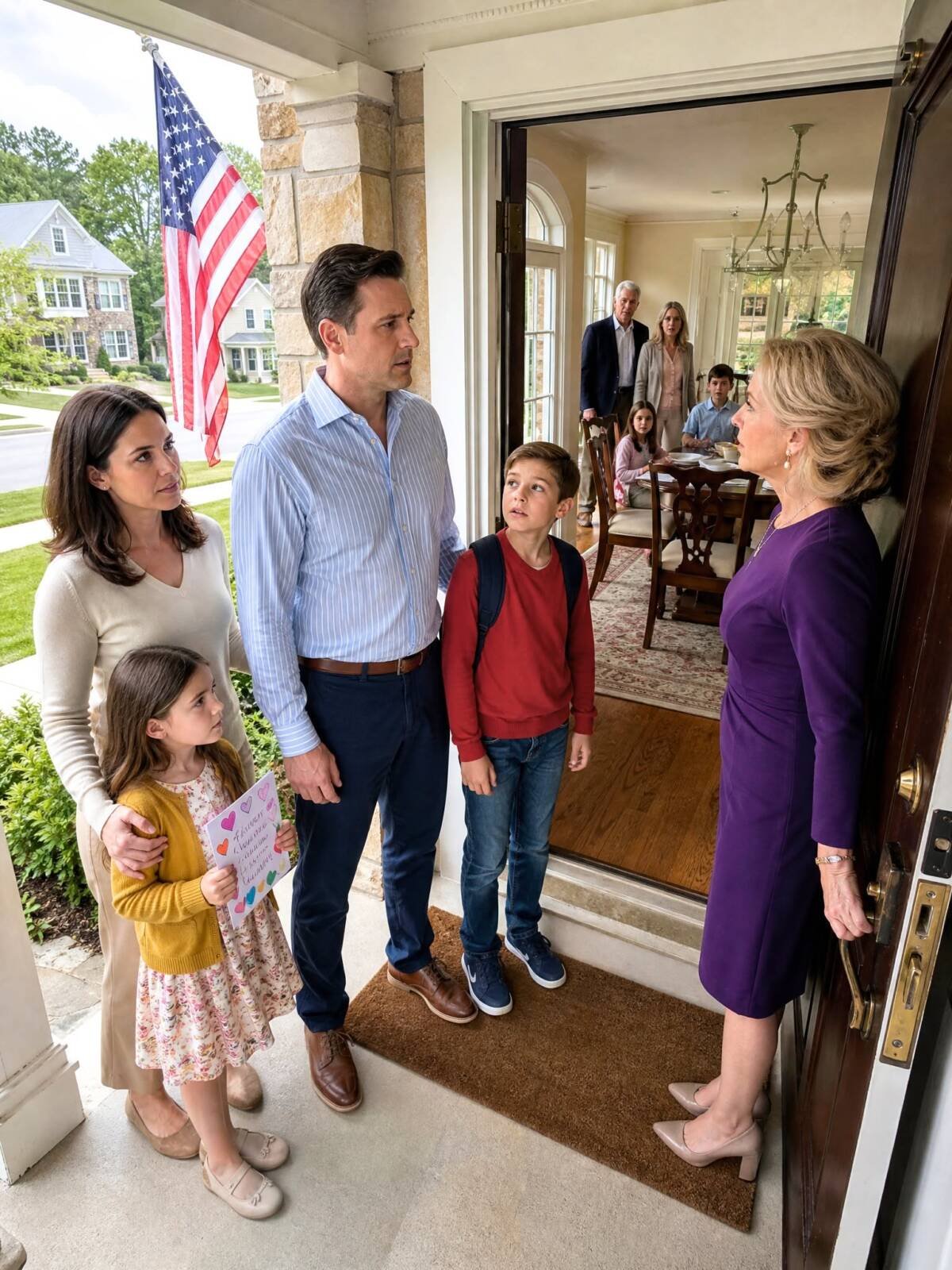
At 62, she thought she had only two choices: stay with a husband who was openly cheating, or risk losing the health insurance that was keeping her alive.
After 40 years of marriage, she had spent decades putting her family first. She had raised their children, supported her husband’s career, managed their home, and quietly accepted sacrifices that once felt like the natural cost of building a life together.
Then her husband, David, told her he was in love with another woman.
He did not ask for forgiveness.
He did not promise to end the affair.
Instead, he told his wife that he intended to continue seeing the woman—and expected her to accept it.
Terrified of losing the insurance that covered her expensive medical treatment, she made a decision she would later describe as the most painful bargain of her life.
She begged him to stay.
What happened next would force her to confront a truth she had spent more than a year avoiding: she wasn’t staying because she wanted the marriage. She was staying because she was afraid she could not survive without it.
And then, unexpectedly, someone handed her a business card.
That small piece of paper would become the beginning of a completely different life.
The Marriage She Thought Would Last Forever
At 62, she had been married to David for four decades.
For most of those years, she believed they had built the kind of life people were supposed to be proud of.
They had children.
They had grandchildren.
They had a home filled with decades of memories.
They had traditions, family photographs, holidays, birthdays, and countless ordinary mornings that slowly became the fabric of their marriage.
But there was another part of their story that became increasingly difficult to ignore.
Her entire financial future was tied to David.
She had left a promising administrative career after their first child was born. She intended to return to work eventually, but life kept moving the goalposts.
There was another child.
Another move for David’s job.
Another family responsibility.
Another reason to put her own career on hold.
Over the years, those decisions seemed reasonable.
She had never thought of herself as making a mistake.
She was building a family.
She was supporting her husband.
She was doing what millions of spouses do every day—putting someone else’s needs ahead of their own.
But there was one consequence she had never anticipated.
At 62, she had very little independent income and limited retirement savings.
More importantly, she depended on David’s employer-sponsored health insurance to pay for the treatment she needed to control a serious autoimmune disease.
Her medication was expensive.
Her biologic infusions were expensive.
Without adequate insurance coverage, maintaining her treatment could have become financially devastating.
She knew what that could mean for her health.
Her condition could become much harder to control.
Even simple tasks could become painful or difficult.
She feared that eventually her lungs and kidneys could be affected.
Every insurance statement arriving in the mail reminded her of the same frightening reality:
Staying married wasn’t simply an emotional decision anymore. It had become a financial and medical calculation.
Then David told her he was seeing someone else.
“I Can’t Stop Seeing Her”
The confession happened over dinner.
There was no dramatic confrontation.
No screaming.
No broken dishes.
No warning that the conversation would permanently change their lives.
David simply told her that he had been seeing another woman for eight months.
Her name was Paige.
And David said he had fallen in love with her.
The most painful part wasn’t just the affair.
It was what came next.
David told his wife he had no intention of ending the relationship.
He still enjoyed their home.
He still valued their family traditions.
He still wanted the comfortable life they had created together.
But he wanted Paige, too.
He wanted both lives.
For a moment, his wife could barely process what she was hearing.
She remembered looking at him across the kitchen table and realizing that the man sitting in front of her—the man she had married forty years earlier—was asking her to accept a completely different definition of marriage.
Eventually, she slid from her chair onto the kitchen floor.
She wasn’t thinking about pride.
She wasn’t thinking about betrayal.
She wasn’t thinking about what her friends would say.
She was thinking about survival.
“Please don’t destroy everything we built,” she pleaded. “Tell me what you need to stay.”
David’s answer was devastatingly simple.
“I can’t stop seeing her.”
That was when fear took control.
She could have told him to leave.
She could have called a lawyer.
She could have contacted her children.
She could have demanded that he choose.
Instead, she made a compromise that would haunt her.
She told him he could continue seeing Paige—as long as he didn’t leave her.
David agreed.
And their marriage changed forever.
When the Affair Became Part of the Household Routine
At first, she thought the arrangement might somehow make things easier.
Perhaps if David remained financially responsible for the household, she could tolerate the emotional pain.
Perhaps she could ignore what happened outside the house.
Perhaps she could convince herself that the arrangement was temporary.
But people rarely become comfortable with betrayal.
They simply become accustomed to it.
Every Thursday, David packed an overnight bag.
“Back Sunday night,” he would say casually.
Then he would leave.
Sometimes he came home the next morning.
He would shower.
Eat the breakfast she prepared.
Change into clean clothes.
And leave for work.
There was no visible shame.
No apology.
No hesitation.
The affair had become routine.
Eventually, David stopped hiding Paige entirely.
He talked about her in front of his wife.
He praised how well she listened.
He talked about how easy it was to spend time with her.
One morning, while David was in the shower, his phone rang.
It was Paige.
A video call appeared on the screen.
When his wife told him someone was calling, David simply answered.
He stood there wrapped in a towel, laughing with Paige and telling her he would arrive within the hour.
The humiliation was no longer private.
It had become part of her daily life.
Then came the weekend shopping trip.
Her sister Naomi happened to see David and Paige together at a department store.
They were holding hands.
When the wife confronted David, he didn’t deny it.
Instead, he reminded her of the agreement she had made.
“You accepted this,” he said. “I never said I would hide it.”
Those words stayed with her.
Because technically, he was right.
She had accepted it.
But he knew why she had accepted it.
She had been afraid.
Thanksgiving Was the Moment Everything Changed
The breaking point came during Thanksgiving.
Their children and grandchildren filled the house.
The kitchen was crowded.
The smell of turkey and homemade food filled the rooms.
For a few hours, everything looked normal.
David carved the turkey.
He laughed with the family.
He posed for photographs.
To anyone looking from the outside, he appeared to be the devoted husband and father he had always claimed to be.
Then dinner ended.
The dishes were still on the table when David put on his coat.
Paige was waiting for him.
And he walked out.
No explanation.
No embarrassment.
No concern about what the family might think.
She stood at the kitchen sink surrounded by dirty dishes while the rest of the family sat in stunned silence.
That night, something finally became clear.
She wasn’t staying because she believed in the marriage anymore.
She wasn’t staying because she had forgiven David.
She wasn’t even staying because she wanted him.
She was staying because she was afraid.
Afraid of losing her insurance.
Afraid of losing access to her medication.
Afraid of becoming financially dependent on her children.
Afraid of being 62 years old and suddenly having to rebuild a life she had spent four decades helping someone else build.
For the first time, she admitted the truth to herself.
She had confused fear with loyalty.
And she had allowed that fear to become a prison.
The Woman Who Asked One Simple Question
A month later, David invited his wife to a company dinner.
His explanation was blunt.
“It would look better if my wife came.”
So she went.
She wore a navy dress and pearl earrings.
She smiled for photographs.
She answered questions about their 40-year marriage.
Every time she said, “We’ve been married for forty years,” she felt as though she were describing a life that no longer existed.
Near the end of the evening, she slipped into the restroom.
She stood alone in front of the mirror, trying to keep herself together.
Then another woman walked in.
Her name was Linda.
She was married to one of David’s coworkers.
Linda looked at her reflection for a moment before quietly asking:
“Are you all right?”
It was such a simple question.
But after months of silence, it broke through everything.
She finally told someone the truth.
“My husband has another life,” she said. “And I can’t afford to leave him because I need his insurance.”
Linda didn’t laugh.
She didn’t judge her.
She didn’t tell her what she should have done months earlier.
Instead, she reached into her purse.
She pulled out a business card.
“My sister thought the same thing,” Linda said. “Talk to this attorney before you decide you’re trapped forever.”
Then she added something the woman would never forget:
“Men like that count on women not asking the next question.”
The Business Card That Changed Her Life
For three days, the business card stayed in her coat pocket.
She looked at it repeatedly.
She almost threw it away.
She was terrified that calling a lawyer would make everything real.
Eventually, she made the call.
The attorney’s name was Ellen Duarte.
From the beginning, Ellen was different from what she expected.
She wasn’t dramatic.
She wasn’t judgmental.
She didn’t tell her to leave immediately.
Instead, she listened.
The woman spent nearly ten minutes crying while explaining what had happened.
When she finally finished, Ellen folded her hands and said:
“First, your husband cannot simply terrify you with assumptions and call them facts. Second, we need numbers, not fear.”
Those words changed everything.
Ellen brought in a benefits specialist.
Together, they began examining the situation piece by piece.
The woman learned that divorce did not necessarily mean she would immediately lose all access to health coverage.
Depending on the circumstances and applicable law, temporary court orders could potentially address insurance coverage and financial support during the divorce process.
She also learned that continuation coverage could be an option after divorce, and that the financial settlement could potentially account for those costs.
Her age mattered.
The length of the marriage mattered.
Her employment history mattered.
The years she had spent raising their children mattered.
Her financial dependence mattered.
Her husband’s retirement assets mattered.
Suddenly, the future didn’t look like a cliff.
It looked like a complicated road.
But roads could be traveled.
She looked at Ellen.
“So I don’t have to choose between medicine and dignity?”
Ellen gave her a measured answer.
“You may still have to fight for both. But no, he does not get to hold your health over your head and call that consent.”
For the first time in more than a year, she felt something she had almost forgotten existed.
Hope.
“Say Little. Gather Everything.”
Before leaving the attorney’s office, Ellen gave her a list.
Bank statements.
Tax returns.
Retirement records.
Insurance documents.
Mortgage information.
Credit-card statements.
Financial transfers.
Anything that could show where marital money had been spent.
“Say little,” Ellen told her. “Gather everything.”
So she did.
And what she found shocked even her.
There were receipts for expensive jewelry.
A designer handbag.
Hotel stays described as business conferences.
Restaurant bills from weekends when David claimed he was golfing.
Electronic transfers from their joint account.
Expenses connected to trips and gifts.
The more she looked, the more evidence she discovered.
The records eventually showed that tens of thousands of dollars in marital funds had been spent supporting David’s relationship with Paige.
The total was staggering.
More than $80,000.
For years, she had believed she was financially trapped.
Now she realized something else.
David had been using their shared finances to support a second relationship while telling her that money was too tight for some of her medical expenses.
The evidence didn’t erase the betrayal.
But it gave her something she had been missing.
Leverage.
Telling Their Children the Truth
The next step was one of the hardest.
She invited their three children over while David was away with Paige.
They sat around the dining room table where so many family conversations had taken place.
Then she told them everything.
Amy couldn’t stop asking why she had never said anything.
Ben looked physically ill.
Lauren reached across the table and took her mother’s hand.
Finally, Lauren said something that changed the atmosphere completely.
“Because she thought she had no choice.”
The children didn’t blame her.
They didn’t ask why she had tolerated it.
Instead, they began thinking about how to help.
Amy offered her a place to stay.
Ben volunteered to organize the financial documents.
Lauren, who worked in hospital administration, immediately understood why losing health coverage had terrified her mother.
For the first time in more than a year, she wasn’t carrying the burden alone.
She had spent so long believing that asking for help meant admitting weakness.
Instead, she discovered that asking for help could be the beginning of becoming strong again.
Choosing Dignity Over Fear
Six weeks after her first meeting with Ellen, the divorce papers were filed.
David came home one Thursday afternoon carrying his familiar overnight bag.
He was preparing to leave for another weekend with Paige.
But this time, his wife was waiting for him.
A sealed envelope sat on the bed.
He opened it.
At first, he laughed.
He apparently assumed it was another emotional protest.
Then he saw the court papers.
The laughter disappeared.
“You cannot do this,” he said.
“You need my insurance.”
She looked at him.
Her knees were trembling.
But her voice was steady.
“No, David.”
“I needed information.”
“There is a difference.”
For perhaps the first time in their marriage, David realized that she wasn’t asking him for permission.
She had stopped negotiating for basic respect.
She was protecting herself.
The Legal Battle
Ellen immediately sought temporary orders addressing financial support, health insurance, household expenses, and the preservation of marital assets.
The legal process was complicated.
It wasn’t quick.
It wasn’t painless.
There were arguments.
There were negotiations.
There were difficult conversations about money, retirement accounts, the house, medical expenses, and years of financial decisions.
David attempted to portray the situation differently.
He argued that his wife had willingly accepted their unusual arrangement.
He suggested she was now changing her mind because she had become jealous.
But Ellen had documentation.
There were messages showing how frightened her client had been about losing medical coverage.
There were employment records.
Financial records.
Medical expenses.
Evidence of decades of economic dependence.
And there were the records documenting tens of thousands of dollars spent on the affair.
The story was no longer simply:
A wife doesn’t like her husband’s girlfriend.
It was:
A financially dependent spouse had been placed in an impossible position and had finally sought independent legal advice.
That distinction mattered.
When the Fantasy Collapsed
The mediation lasted all day.
David arrived believing he could control the conversation.
But once every financial record was placed on the table, the situation became much less romantic.
The affair had looked exciting when it existed outside the consequences of real life.
Weekend trips were easy.
Restaurants were easy.
Gifts were easy.
Hotel rooms were easy.
But lawyers, financial statements, retirement accounts, court orders, and legal fees were different.
Reality had finally arrived.
And the relationship with Paige reportedly began to lose some of its shine.
The final settlement gave the woman substantially more financial security than she had believed possible.
She received a significant share of the proceeds from the sale of their home.
She received a share of the retirement assets accumulated during the marriage.
She received spousal support.
Her health-insurance costs were addressed as part of the settlement.
David was also ordered to contribute toward her legal expenses.
The exact details mattered less to her than what the settlement represented.
She had spent an entire year believing she had no options.
She had been wrong.
A New Home and a New Kind of Silence
The divorce became final eleven months after she first called Ellen.
By then, she had sold the family home.
She moved into a quiet two-bedroom condominium near her daughter Amy.
It was smaller.
There was less furniture.
Fewer rooms.
Fewer possessions.
But there was something the old house had not provided for a very long time.
Peace.
On her first Saturday morning there, she woke at six.
For years, that hour had meant listening for David getting ready to leave.
She expected to hear drawers opening.
The bathroom door.
Footsteps.
An overnight bag being carried toward the front door.
Instead, there was nothing.
Just the refrigerator humming.
Birds outside the balcony.
Morning sunlight.
She made breakfast for herself.
Halfway through the meal, she began to cry.
But these tears were different.
They weren’t tears of humiliation.
They weren’t tears of fear.
They weren’t tears because someone had chosen another woman.
They were tears of relief.
The Apology She Didn’t Need
Several months later, she heard that Paige had ended her relationship with David.
The excitement of sharing a man had apparently become less appealing once lawyers, finances, and consequences entered the picture.
Eventually, David sent his former wife a long email.
He apologized.
He explained.
He made promises.
He talked about the past.
He said things he probably should have said much earlier.
She read the email once.
Then she deleted it.
Some apologies are sincere.
Others arrive only after the person realizes they have lost access to you.
She didn’t need to determine which kind David’s apology was.
She simply knew the door was closed.
Building a Life That Belonged to Her
Her life didn’t transform overnight.
Healing rarely works that way.
But gradually, the small pieces began falling into place.
Her health remained stable because she continued receiving treatment.
She joined a patient support group.
She began working part-time from home doing bookkeeping.
This time, the income belonged entirely to her.
She didn’t need to ask permission to spend it.
She didn’t have to justify it.
She didn’t have to worry that someone else’s choices could suddenly take it away.
Her grandchildren began spending afternoons at her condominium.
Colored pencils appeared on the dining-room table.
Snacks filled the kitchen.
Laughter replaced the silence.
And slowly, her children stopped looking at her with concern.
They started looking at her with admiration.
The Card That Meant More Than It Seemed
The day her Medicare card arrived, she sat at the kitchen table holding it in both hands.
To anyone else, it was just a piece of mail.
To her, it represented something much bigger.
For more than a year, she had lived under the shadow of one question:
What happens to me if I leave?
Now she knew the answer.
She would survive.
She would adapt.
She would build something new.
She would receive help.
She would find resources.
She would learn.
And she would keep going.
That evening, Naomi came over with takeout and a small grocery-store cake decorated with uneven blue flowers.
They ate dinner together on the balcony as the sun disappeared below the horizon.
Before leaving, Naomi raised her plastic cup.
“To the woman who thought she was trapped.”
She smiled.
Then raised her own cup.
“To the woman who learned she was not.”
The Price of Staying
After Naomi left, she locked the front door herself.
The apartment was quiet.
There was no overnight bag beside the bedroom door.
No Thursday-night dread.
No footsteps belonging to a man preparing to spend another weekend with someone else.
No fear that someone else’s decisions controlled her future.
For years, she had believed survival meant accepting whatever scraps of dignity remained after another person had taken what they wanted.
Now she understood something very different.
Survival was not the same as surrender.
Sometimes survival means asking questions.
Sometimes it means gathering documents.
Sometimes it means admitting that fear has been controlling your decisions.
Sometimes it means accepting help from the person who reaches out at exactly the right moment.
And sometimes it means walking through a door you never realized was there.
She had spent years believing David held the key to her future.
He didn’t.
The key had always been in the information she had never known to ask for.
In the people willing to help her.
In the evidence she gathered.
In the courage to finally believe that her life had value beyond the role she played in someone else’s.
That night, she stood alone in her living room.
She listened to the silence.
For the first time, the silence didn’t feel empty.
It felt safe.
She smiled.
And then she laughed.
Not because her marriage had ended.
Not because David had lost.
Not because Paige was gone.
She laughed because, after all those years, she finally understood something simple.
Peace was not something her husband had the power to give her.
It was something she could choose for herself.
And for the first time in forty years, the life waiting for her belonged entirely to her.
Final Thought
Walking away from a long marriage can be terrifying, especially when finances, health, family, and years of shared history are involved.
But fear does not always tell us the truth.
Sometimes the most important step is not making an immediate decision. It is learning what options actually exist.
The woman in this story thought she had only two choices: endure betrayal or risk losing everything.
Then she asked one more question.
And that question opened a door.
If this story made you think about the choices people make when fear controls their lives, share it with someone who may need to hear that they are not as trapped as they think.