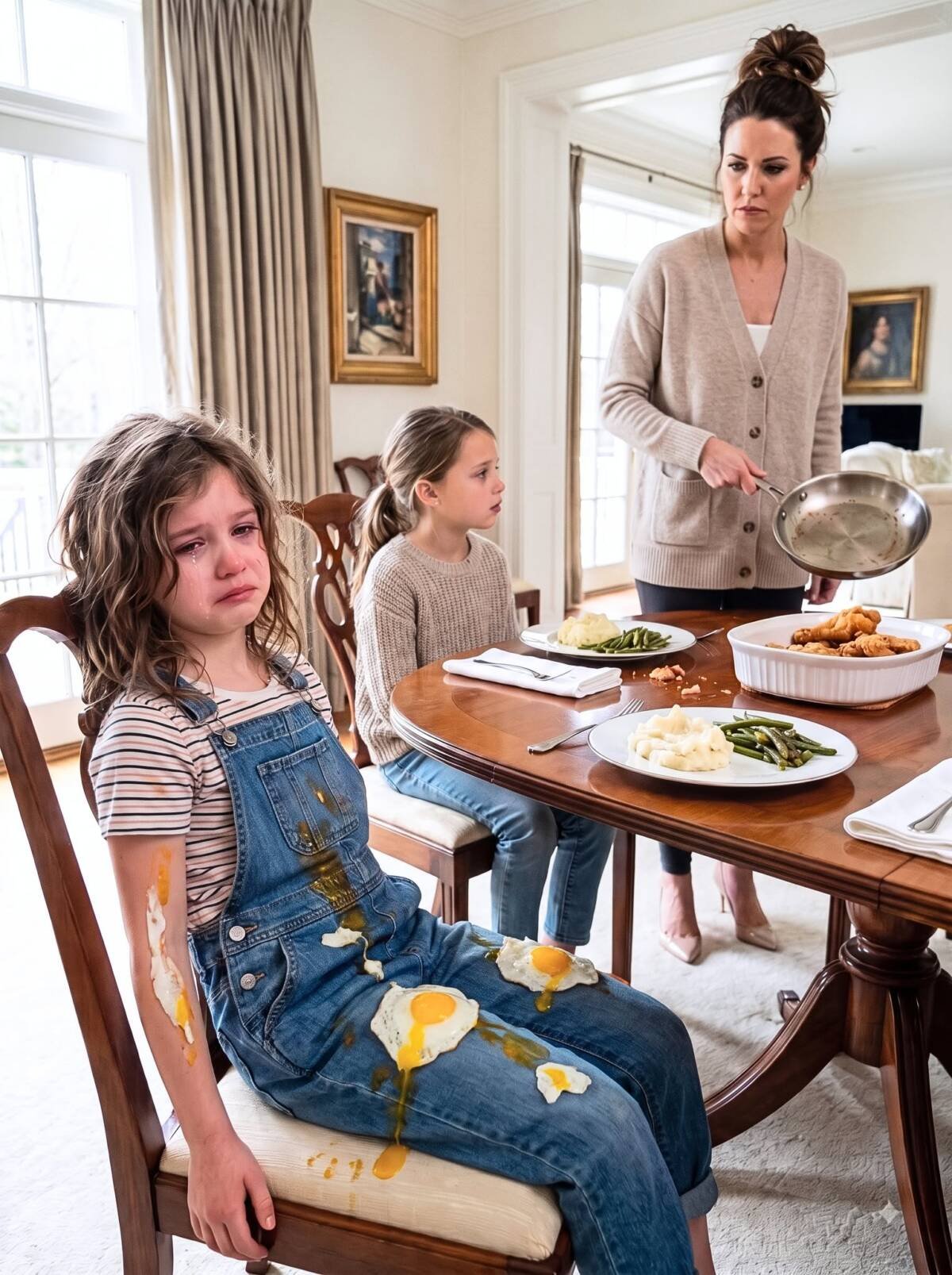
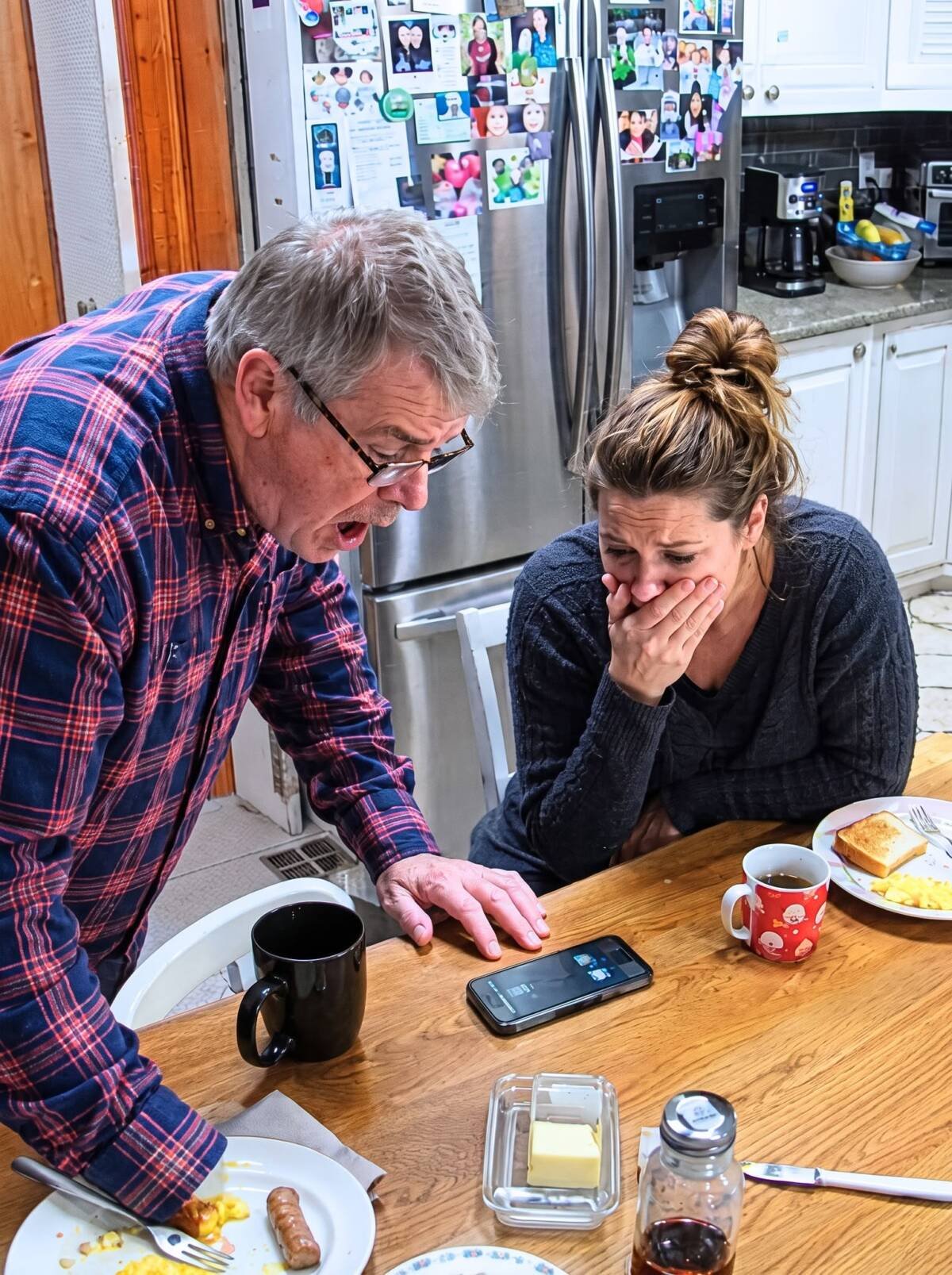
When the crystal wine glass shattered against the oak cabinet just inches from my head, the dining room went dead silent. The warm scent of roasted lamb and spring vegetables—a meal I had spent two days preparing—was suddenly overpowered by the sharp, metallic smell of copper as a thin line of blood trickled down my temple.
My son yelled, “You’re being selfish!” while his wife screamed about my empty bedrooms. But I didn’t yell back. I didn’t argue. I calmly pressed a linen napkin to my forehead, walked out the front door, drove myself to the emergency room, and sent a pre-arranged, three-word text message to my attorney: “Phase one is complete.”
Minutes later, the police arrived. What my family didn’t know was that the shattered glass was merely the catalyst for exposing a devastating financial betrayal they had been secretly orchestrating behind my back.
Here is the story of how an Easter dinner forced me to protect the home my late husband and I built, and the painful but necessary lesson I taught my son about boundaries, entitlement, and the true meaning of family.
Part 1: The Shattered Glass and the Silent Alarm
My name is Margaret Lawson. I am sixty-two years old, and since my husband, Richard, passed away six years ago, I have lived alone in a spacious four-bedroom house just outside Columbus, Ohio. Richard and I spent three decades paying off this mortgage. Every hardwood floor we installed, every garden bed we planted, and every room we painted was an investment in our shared future. Today, the house belongs entirely and unequivocally to me.
However, for three grueling months, my thirty-five-year-old son, Daniel, and his wife, Vanessa, had been relentlessly pressuring me. Their demand? To let Vanessa’s parents, Frank and Linda, move into my home.
What began as a casual suggestion for a “temporary arrangement” quickly escalated into a bizarre sense of entitlement. Without ever securing my permission, Daniel and Vanessa began discussing which guest bedrooms Frank and Linda would occupy. They even debated how Frank could convert Richard’s old garage into a personal woodworking shop.
Whenever I firmly said no, I was met with the same manipulative arguments: It’s just temporary. It’s a waste of space. It’s ridiculous for one widow to live alone in a house with three empty bedrooms. I soon realized that to them, “temporary” meant indefinitely.
Easter dinner was supposed to be a final, peaceful holiday gathering before I gave my son the ultimate refusal—an answer he had already heard seven times. But when I brought the main course to the table, Frank and Linda were already sitting there, chatting casually about their upcoming move.
Daniel cleared his throat. “Mom, their lease expires next month. They need somewhere affordable to stay. We’re doing this.”
I placed the serving dish on the table, looked him in the eye, and calmly repeated the boundary I had set weeks ago. “They need to find an apartment.”
Vanessa immediately dropped her fork. It clattered loudly against her porcelain plate. “You have empty bedrooms!” she snapped, her face flushing with anger.
“They are my bedrooms,” I replied, my voice steady but firm.
Daniel’s frustration boiled over. “You’re being incredibly selfish, Mom!”
I looked directly at the son I had raised. “You do not get to volunteer my house.”
Vanessa pushed her chair back violently and stood up. She accused me of being heartless, of refusing a minor inconvenience despite everything her parents had supposedly done for our extended family. I didn’t debate her. After three months of emotional exhaustion, there was nothing left to discuss.
“I said no,” I finalized.
In a flash of blinding rage, Vanessa grabbed her half-full wine glass. For a fraction of a second, I assumed she was just gesturing wildly. Instead, she hurled it directly at me. The heavy base of the glass struck the side of my forehead before exploding into shards against the cabinetry behind me.
Linda screamed. Blood instantly began pooling over my eyebrow, running hot down my temple. Daniel rushed toward me in a panic, but Vanessa immediately began backpedaling. “I didn’t mean to hit her! I was just throwing it!” she shrieked, as though the trajectory of the glass somehow negated the fact that she had violently assaulted me in my own dining room over property that didn’t belong to her.
I didn’t scream. I didn’t retaliate. I calmly picked up a cloth napkin, pressed it firmly against my bleeding forehead, collected my purse from the entryway, and walked toward the door.
Daniel followed, grabbing my arm. “Mom, come on, you’re overreacting!”
That single sentence—you’re overreacting—flicked a switch inside my soul. It settled something deep within me more effectively than a thousand apologies ever could.
I pulled away, got into my car, and drove to the emergency room. While stopped at a red light, I took a photograph of my blood-soaked face and the crimson napkin. Six weeks earlier, my attorney, Rachel Kim, had warned me that my family’s aggressive interest in my property was escalating. She had instructed me to document everything.
At the hospital, while a nurse cleaned the laceration and prepped me for four stitches, I pulled out my phone and sent Rachel the exact phrase we had agreed upon if the situation turned hostile.
“Phase one is complete.”
Rachel’s reply came through in seconds: “Do not discuss the house with them. Save all communications. The police should be notified immediately.”
Moments later, two police officers walked into my treatment cubicle. My neighbor, Thomas, a retired firefighter who had heard the shattering glass and Linda’s screams, had seen me walking to my car covered in blood. He had proactively called 911. This was a blessing in disguise—it meant Daniel and Vanessa couldn’t spin my police report as a vindictive move after a family squabble. An independent witness had initiated it.
When the officers asked if I wanted to formally press charges for the assault, I didn’t hesitate. “Yes.”
Vanessa probably thought the worst thing she had done that evening was throw a wine glass in a fit of temper. She had no idea that I was already onto them. The glass simply handed us the first undeniable piece of evidence we needed.
By the next morning, phase two of our plan was set in motion, and it would reveal exactly how deep their betrayal truly ran.
Part 2: The Paper Trail of Betrayal
The morning after the Easter disaster, Rachel arrived at my house carrying the same thick, leather portfolio she had used when handling Richard’s estate years earlier.
Six weeks prior to the glass-throwing incident, I had hired Rachel because Daniel and Vanessa’s behavior had shifted from annoying family pressure to something far more sinister. It started subtly. Daniel would casually mention that I was becoming “too isolated” and suggested he should be added to my bank accounts “just in case of an emergency.” A week later, Vanessa presented me with a printed power-of-attorney form, brushing it off as “routine paperwork to make things easier.”
I had refused to sign it.
Then, Daniel boldly suggested adding his name to the deed of my house to “simplify his future inheritance.” That was the exact moment I realized I wasn’t dealing with a concerned son; I was dealing with a coordinated campaign to siphon my assets.
Rachel had reviewed the timeline and explained that while no single request proved malicious intent on its own, the aggregate pattern was alarming. We agreed I would stop negotiating privately.
But neither of us expected violence. When Vanessa threw that glass, the legal landscape shifted dramatically.
Rachel spread three pristine legal documents across my kitchen table.
The Revocation: This immediately stripped Daniel of the limited financial authorization I had granted him years ago for medical emergencies.
The Notice to Vacate: A formal 30-day notice ending Daniel’s permission to store his belongings or reside in my home in any capacity.....