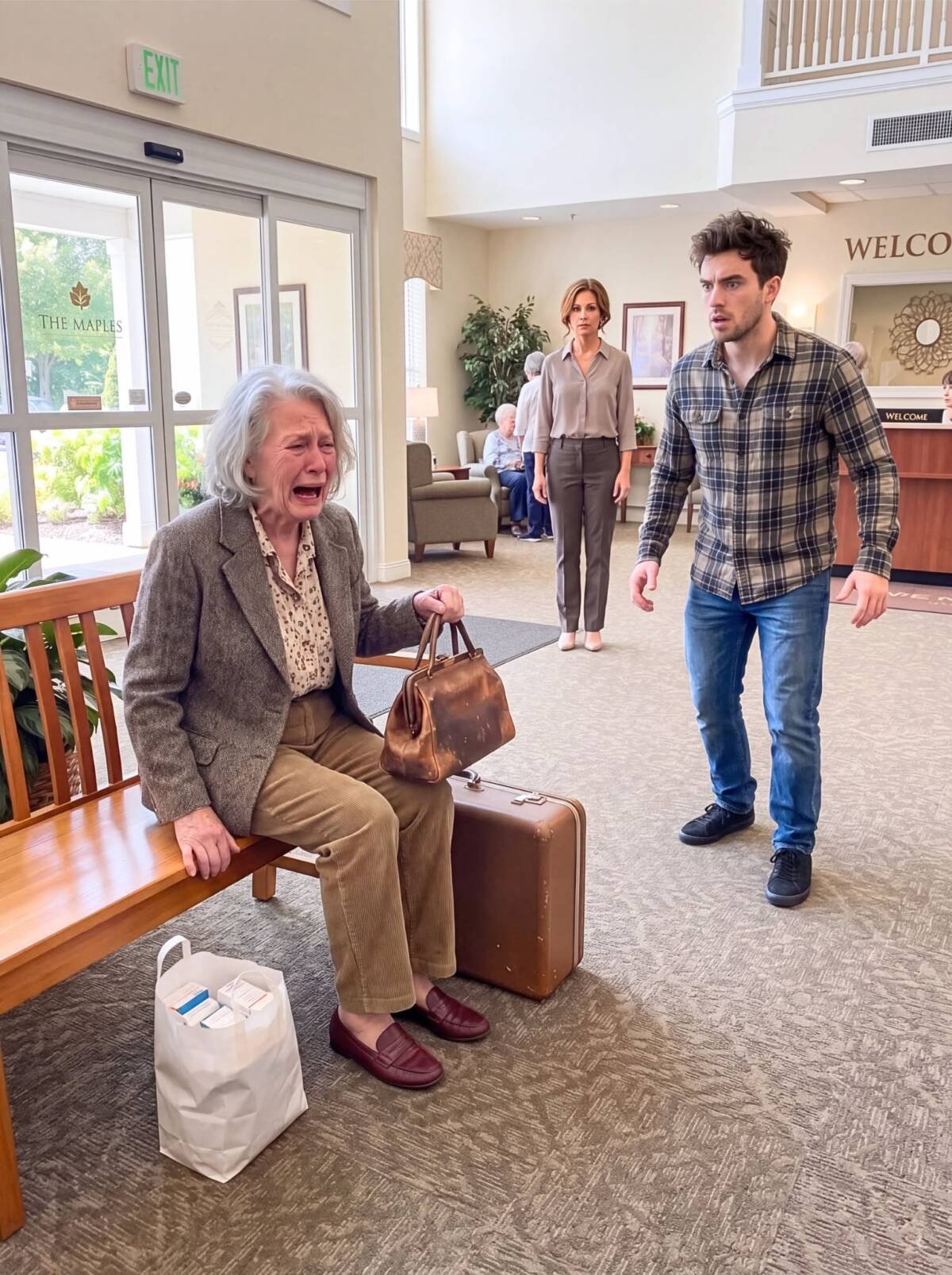
Introduction: The Brutal Atlanta Sun
Less than thirty minutes after our divorce was finalized, my ex-mother-in-law brought the entire family together for an extravagant lunch to celebrate what she smugly called my “defeat.”
My attorney, Daniel Reyes, had repeated the same warning so many times that morning that I could still hear his voice while standing outside the Fulton County Courthouse beneath the brutal Atlanta sun. He had said it before we entered the building, repeated it in the elevator, and reminded me again moments before we walked into the courtroom:
“Whatever they say, whatever they do, keep your expression neutral. Keep looking forward. Let me handle the rest.”
I had nodded each time, although I didn’t fully understand why his advice mattered until I saw my former mother-in-law, Patricia Monroe, standing on the courthouse steps and clapping as though she had just watched a performance end exactly the way she wanted.
The performance she was celebrating was the collapse of my marriage.
I had been married to Grant Monroe for eight years, and now those eight years had been reduced to a judge’s signature on a divorce decree. The judge handled it with the weary efficiency of someone who processed broken marriages every day, but for me, it marked the end of nearly a decade of my life—a decade spent trying to mold myself into someone acceptable to a family that viewed me as a temporary fixture.
“Well, at least the Monroe house is safe now.”
Patricia said it loudly enough for everyone nearby to hear. Around a dozen members of Grant’s family had gathered outside, including his sister Vivian, his uncle Douglas, several cousins, and their spouses, all dressed more like guests at a celebration than people attending the end of a marriage.
That was exactly why they had come. They wanted to witness the moment the outsider was finally removed from the Monroe family, and I knew this would eventually become another story they repeated at Thanksgiving and Christmas about Allison, the woman Grant had foolishly married and finally managed to escape.
I stood several feet away holding my purse, a manila folder, and the freshly stamped divorce papers while forcing my expression to remain neutral. Then Patricia approached me, carrying the same overpowering floral perfume I had learned to associate with every occasion when she wanted to remind me how little she thought of me.
“You should be grateful Grant put up with you for as long as he did. Some women simply don’t know when they’ve been replaced.”
Replaced. She had finally said it openly, although I had known about Grant’s affair for almost a year.
It had started with a hotel receipt I discovered in his blazer, followed by unfamiliar perfume and an increasing number of supposed client dinners that lasted until two in the morning. Her name was Brooke, a twenty-six-year-old employee at the same firm where Grant worked as a junior partner, and from what I eventually learned, she hadn’t even realized at first that the man she was seeing still had a wife waiting at home.
I looked toward Grant, hoping that after eight years he might finally tell his mother to stop. He stood nearby adjusting the gray suit I had once helped him choose, but when our eyes nearly met, he simply looked away.
That tiny movement answered every question I had spent years refusing to answer for myself. Grant had never truly chosen me when choosing me required standing against Patricia, and even on the day our marriage ended, he still couldn’t defend me once.
Patricia jingled her car keys and announced that lunch was on her. Within minutes, the entire Monroe family was moving down the courthouse steps, laughing, congratulating Grant on becoming a free man, and heading toward Patricia’s favorite steakhouse in Buckhead to celebrate what they believed was my defeat.
I watched their two black SUVs disappear into traffic without shedding a single tear. Then I climbed into Daniel’s sedan, where he waited with the air conditioning running against the July heat.
“You did well. That was harder than it looked.”
I placed the folder across my lap and looked at him.
“How long before they get home?”
Daniel checked his watch and estimated that Patricia would hold court over lunch for at least two hours, probably three. Then he pulled away from the curb with the calm confidence of a lawyer who already knew how the next part of the day would end.
“Are you absolutely sure about this?”
Daniel glanced toward me.
“Allison, I’ve practiced law for twenty-six years. I have never been more certain of anything.”
Then a slight smile appeared on his face.
“That house is yours. It has always been yours. And in roughly three hours, the Monroe family is going to discover something the state of Georgia has known for more than a year.”
I looked down at the manila folder resting on my lap. Inside it was the truth Patricia had never bothered to investigate, and the reason Daniel had told me to remain silent while the Monroes celebrated outside the courthouse.
They thought the divorce had left me with almost nothing.
What they didn’t know was that the most valuable thing in their entire family already belonged to me.
Part 2: The House Patricia Never Owned
To understand what happened next, you need to understand the house on Habersham Road. It was a brick colonial in Buckhead built in the 1920s, with white columns, a slate roof, and a full acre of carefully maintained grounds that the Monroe family treated as though it were a monument to their own importance.
Patricia spoke about the property constantly. Grant and Vivian had grown up there, generations of Monroes had celebrated holidays beneath its roof, and from the first Thanksgiving I attended as Grant’s fiancée, Patricia made it clear that I was entering sacred territory as a guest rather than a member of the family.
She watched how I arranged my silverware and praised the dishes I brought with the faintly insulting tone of someone complimenting hired help. Over the years, she repeatedly referred to the house as the Monroe legacy, as though its ownership proved something about who belonged and who didn’t.
There was only one problem with that story.
Patricia had never owned the house.
It had belonged to her husband, Walter Monroe, Grant’s father. Walter was quiet, gentle, and almost completely unlike the rest of his family, and over time he became the only Monroe who consistently treated me as though my presence actually mattered.
At family gatherings, while Patricia dominated conversations in the living room, Walter and I often escaped to the back porch. He told me stories about the house, including how he had built the treehouse for Grant, the winter the pipes froze, and how his own father had purchased the property during the Depression for an amount that would barely cover a year of taxes today.
Walter also noticed the way Patricia treated me and how rarely Grant defended me. He never confronted them directly, at least not in front of me, but I sensed that their behavior embarrassed him more than he ever admitted.
Four years into my marriage, Walter suffered a sudden heart attack while tending the roses he insisted on pruning himself. His death devastated the family, and Patricia publicly mourned him with the intensity of someone determined to show everyone how deeply she had loved him.
Within weeks, however, she began taking control of everything Walter had left behind.
Most importantly, the house.
Patricia started referring to it as “my home” almost immediately. She spoke as though Walter had transferred the entire property to her and as though Grant and Vivian would eventually inherit it automatically.
For years, nobody questioned her.
Then, about a year before my divorce, Patricia ordered me to help clear the remaining paperwork from Walter’s study. It was exactly the kind of tedious family responsibility she routinely passed to me, so I spent an afternoon sorting through old files, tax documents, and personal records.
That was when I found a copy of Walter’s will. Attached to it was another document.
I read the first page, then started again because I was certain I had misunderstood what it said. Patricia had not inherited the house outright.
Walter had granted her a life estate.
That meant Patricia could live in the house for the rest of her life, provided she followed certain conditions, but she did not actually own the property itself. The remainder interest had been transferred into a trust.
I kept reading until I reached the name of the beneficiary.
It wasn’t Grant. It wasn’t Vivian. It wasn’t any Monroe by blood. It was me. Allison Reeves Monroe.
Walter had signed the documents eighteen months before his death. They had been properly witnessed, notarized, and prepared by his own estate attorney, leaving little doubt about what he had intended.
Then I found the letter.
Walter had written it specifically for me.
He explained that he had watched the way Patricia and Grant treated me and admitted that he regretted not speaking up more often. Leaving me the house, he wrote, was the only meaningful way he knew to correct something he should have addressed while he was alive.
A house was only a house, Walter said, but it was also the most valuable thing he had left to give. He wanted it to belong to the person who had consistently treated others with kindness, and he hoped I would never find myself in a situation where I needed that protection.
I sat alone in his study for several minutes before carefully returning every document to the exact place where I had found it. Then I left the room and told no one what I had discovered.
Not Grant. Not Patricia. Not even my closest friend, Renata.
For more than a year, I carried Walter’s secret by myself. Part of me still couldn’t believe it was real, and as long as my marriage remained intact, I told myself there was no reason to disturb something that might never matter.
Then I found the hotel receipt. Then came Brooke.
Then months of watching Grant slowly abandon our marriage while Patricia became increasingly confident that I would eventually disappear without taking anything with me.
That was when I finally called Daniel Reyes.
I placed Walter’s will and trust documents on his desk and watched him read every page carefully. By the time he reached the final document, his entire expression had changed.
“Do they know?”
“No.”
Daniel looked up at me.
“They genuinely believe Patricia owns the property outright?”
“Yes.”
“And Grant believes he’ll inherit it someday?”
“Yes.”
Daniel leaned back in his chair and removed his glasses. For several seconds, he simply stared at the documents, almost as though he had been handed the answer to a question nobody else realized existed.
Then he looked at me.
“Mrs. Monroe, I think I’m going to enjoy this case.”
At the time, I thought Walter’s trust was already the biggest secret the Monroe family had failed to uncover.
Daniel was about to discover something even more important.
Because Patricia hadn’t simply misunderstood what she owned.
She had been borrowing against it, neglecting it, and quietly violating the exact conditions that allowed her to remain there …
Part 3: The Clause Patricia Violated
Grant’s attorney approached our divorce like a demolition project. Their goal was simple: leave me with as little as possible while allowing Grant to walk away believing eight years of marriage had cost him almost nothing.
Grant earned excellent money, but I didn’t. After we married, I had stopped working as a paralegal because Patricia strongly believed that “Monroe wives” didn’t need careers, so I spent eight years managing Grant’s household, social obligations, appointments, and the endless demands of his family.
During mediation, his attorney used that decision against me. Because I had contributed relatively little direct income during the marriage, they argued that I deserved very little afterward, conveniently ignoring the fact that I had sacrificed my career partly because the Monroe family had encouraged me to do exactly that.
Their settlement offer was insulting. They proposed a lump sum barely sufficient to cover two years of rent, almost no meaningful alimony, and no proper compensation for the retirement savings and career advancement I had sacrificed.
Daniel listened without interrupting. Then, to my complete shock, he accepted.
“My client accepts.”
I nearly jumped out of my chair. Once we were in the hallway, I immediately confronted him and demanded to know why he had agreed to an offer designed to leave me with almost nothing.
“Because they think they’re winning.”
Daniel explained that Grant’s legal team wanted both sides to keep their property separate while I surrendered any further claims against Grant’s assets. They believed Patricia’s house had nothing to do with our divorce and assumed I possessed nothing significant enough to make the arrangement dangerous.
“They have no idea the most valuable asset in the family already belongs to you.”
Then Daniel explained the part of Walter’s trust that I hadn’t fully understood. Patricia possessed a life estate, but Walter had attached specific conditions to her right to remain in the house.
She was required to maintain the property, keep the taxes current, maintain homeowners insurance, and avoid any action that could damage the interests of the remainder beneficiary. That beneficiary, of course, was me.
During discovery, Daniel’s team uncovered financial records that Patricia’s own attorney apparently hadn’t considered important. She had opened a substantial home-equity credit line against the Habersham Road property, despite the fact that she didn’t actually own it outright.
The borrowed money had helped finance the lifestyle Patricia refused to give up. Luxury vehicles, expensive restaurants, trips, charity galas, and other costs continued even as her finances deteriorated.
But the credit line was only the beginning. Patricia had also allowed the homeowners insurance to lapse for several months and had stopped paying the property taxes, leaving them delinquent while a lien accumulated against the house.
She had done all of it without notifying the trust or obtaining permission from the person who actually held the remainder interest. Walter’s trust documents were unusually precise about what happened if the life tenant endangered the property.
Daniel called Patricia’s conduct “waste.” More importantly, Walter had included a specific remedy allowing the remainder beneficiary to ask a court to terminate Patricia’s life estate if she materially violated its conditions.
That meant I could potentially end Patricia’s legal right to live there.
I asked Daniel whether pursuing it would make me cruel. After everything Grant and Patricia had done, I didn’t want bitterness to transform me into the kind of person they already claimed I was.
“No.”
Daniel leaned forward and explained that revenge would mean hurting them simply because I wanted them to suffer. What we were doing was enforcing Walter’s documented wishes while protecting a property Patricia was actively placing at financial risk.
“That isn’t revenge. It’s enforcement. And perhaps, in Walter’s own way, justice.”
So while the Monroe family celebrated my divorce over an expensive lunch in Buckhead, Daniel and I drove toward Habersham Road. What none of them knew was that another legal proceeding had already been moving quietly alongside the divorce.
Earlier that morning, almost immediately after my divorce became final, a judge had signed an order terminating Patricia’s life estate. Her attorney hadn’t been watching the case closely because the Monroes didn’t even know Walter’s trust existed.
By the time the ink dried on my divorce decree, Patricia’s legal right to occupy the house had ended. I was no longer merely the person who would inherit the property someday.
I had full possession.
The house was mine.
When Daniel and I turned onto Habersham Road, six professional movers were already waiting outside with a locksmith and a sheriff’s deputy. Daniel had arranged everything so carefully that nothing belonging to the Monroes could be lost, damaged, or later described as stolen.
Every piece of furniture would be photographed, inventoried, wrapped, and cataloged. Patricia’s antiques, Grant’s golf clubs, boxes, china, clothing, and personal belongings would all be protected.
“We give them nothing to complain about. When Patricia tells this story, and believe me, she will, she will never be able to say we stole or destroyed anything.”
I stood on the front lawn watching the movers begin their work, expecting to feel triumphant. Instead, I found myself looking at Walter’s neglected roses and remembering all the afternoons we had spent together on the back porch.
The garden had deteriorated, the lawn service had apparently been canceled, and the property Patricia treated as the sacred Monroe legacy was quietly falling apart under her care. Daniel stood beside me and assured me the taxes could be resolved, the insurance reinstated, and the damage repaired.
“It’s yours to save now.”
Those words meant more to me than being told the house was mine to own. Walter’s home wasn’t simply valuable property; it contained the porch, the treehouse, his roses, and memories of the only Monroe who had ever made me feel that I belonged.
By the time the movers finished arranging the last belongings, the afternoon had begun to settle over Habersham Road. Then two familiar black SUVs appeared at the end of the street.
Patricia’s vehicle slowed when she saw the furniture covering the lawn.
For a moment, it almost stopped.
Then it accelerated directly toward the driveway.
The doors opened, and Grant stepped out wearing the same gray suit he had worn while divorcing me only hours earlier. His eyes moved from the boxes to the furniture and finally toward the locksmith installing the new lock on the front door.
“What the hell is going on?”
Patricia climbed out behind him and stared across the lawn at everything she believed belonged inside her house.
Then she saw me.
For the first time in eight years, there was no superiority in Patricia’s expression. There was only disbelief. And fear.
“You.”
Her eyes locked onto mine.
“What did you do?”
Part 4: The Truth Waiting on the Lawn
I didn’t answer Patricia. Daniel had warned me repeatedly not to get drawn into an argument, and after eight years of defending myself against people who had already decided I was beneath them, I was finally willing to let the documents speak for me.
The sheriff’s deputy stepped forward and asked Grant to remain calm. He explained that a valid court order had been issued regarding the property, that the removal of their belongings was lawful, and that every item had been carefully inventoried and protected.
“This is my mother’s house. What are you people doing?”
Patricia barely seemed to hear him. Her attention remained fixed on me until Daniel stepped forward holding the folder containing the documents the Monroe family had never known existed.
“Mrs. Monroe, I’m Daniel Reyes. I represent Ms. Reeves.”
Ms. Reeves. Hearing my own name again after eight years as Allison Monroe affected me more deeply than I expected.
Daniel calmly explained that my divorce from Grant had become final that morning, but the property dispute was separate. Patricia had never owned the Habersham Road house outright because Walter had granted her only a life estate, while ownership had been placed into a trust.
“The beneficiary of that trust is my client, Allison Reeves.”
Silence spread across the driveway. Even Vivian, who had been halfway out of the second SUV, stopped moving.
“That’s impossible. Walter left this house to me.”
“He left you the right to live here, subject to specific conditions.”....