I came home to Connecticut three days before Christmas expecting the usual family chaos.
I imagined my mother arguing with the oven timer, my father wrestling with a tangled string of Christmas lights, and my younger brother Caleb pretending he was too old to be excited about presents.
Instead, I found the house almost completely dark.
There was no music playing. No television. No smell of Christmas cookies coming from the kitchen.
Only a single lamp was glowing in the living room.
And beside the fireplace, sitting quietly in his old rocking chair, was my eighty-two-year-old grandfather.
Theodore Whitaker looked thinner than I remembered. He wore a brown cardigan, his hands resting on the silver handle of his cane. Beside him, on the coffee table, was a folded piece of paper written in my mother’s unmistakable handwriting.
I already knew something was wrong.
I just didn’t know that by the time Christmas was over, I would discover that my family had been lying to me—and stealing from my grandfather—for years.
I unfolded the note.
I read it once.
Then twice.
Then a third time because I couldn’t believe what I was seeing.
“Avery,
Mom, Dad, and Caleb went to Europe for Christmas. You stay and care for Grandpa. He has medication, meals, and appointments. Don’t be dramatic. We’ll be back after New Year’s.
Mom.”
I stood there staring at the paper.
They had invited me home for Christmas.
They had told me they missed me.
They had made it sound as though this would be a normal family holiday.
Instead, they had flown to Europe and left me behind with Grandpa as though I had been hired to care for him.
No discussion.
No warning.
No apology.
Just a note.
I slowly looked toward my grandfather.
He had been watching me the entire time.
“Shall we begin?” he asked.
At the time, I thought he meant Christmas preparations.
I couldn’t have been more wrong.
The Christmas They Left Me Behind
For several minutes, I simply stood there.
Part of me wanted to walk out the front door.
I could have called a rideshare, gone straight to the airport, and booked the first flight back to Boston. I could have left my parents a message explaining exactly what I thought of their little Christmas arrangement.
But then I looked at Grandpa.
He didn’t look angry.
He didn’t even look surprised.
He looked tired.
So I put the note down.
“Are you okay?” I asked.
“I’ve been better.”
“Did they tell you they were leaving?”
He gave a quiet laugh.
“They told me you were coming.”
That answer bothered me more than it should have.
“They didn’t tell you I was supposed to stay?”
“No.”
I looked at the note again.
Something about the whole situation felt deliberate.
Still, I convinced myself not to overreact.
Maybe my parents had panicked.
Maybe they thought Grandpa needed someone around the house and assumed I would agree.
Maybe they believed I would understand.
I didn’t.
But I stayed.
That decision would change everything.
Over the next two days, I began noticing small things that didn’t fit the picture my parents had painted.
Grandpa was supposed to be frail.
At least, that’s what they had told me.
They had said he couldn’t safely move around the house without assistance. They had warned me that he sometimes forgot things. They had made it sound as though I needed to monitor him constantly.
But Grandpa didn’t behave like someone who was helpless.
He made his own coffee every morning.
He remembered exactly when he needed to take his medication.
He knew every appointment on his calendar.
And twice, I caught him walking through the hallway without his cane.
The first time, he noticed me watching.
The second time, he didn’t.
“You’re not as helpless as they told me,” I said one evening.
He smiled.
“No.”
“Why do they say you are?”
His smile disappeared.
“Because it benefits them.”
I didn’t understand what he meant.
Not yet.
The Locked Filing Cabinet
On the third evening, I went looking for Grandpa because I couldn’t find him downstairs.
I checked the kitchen.
Nothing.
The living room was empty.
Then I noticed a thin line of light underneath the door to my father’s office.
I knocked.
No answer.
I opened the door.
Grandpa was standing beside the filing cabinet.
The cabinet had always been locked.
Now it was open.
Several folders were spread across the desk.
“Close the door, Avery.”
His voice was calm.
I did exactly what he asked.
Then I walked toward the desk.
“What is all this?”
“Documents.”
“I can see that.”
“Then start reading.”
I picked up the first folder.
Bank statements.
The next one contained property records.
Then retirement account statements.
Then copies of checks.
I kept turning pages.
The numbers became larger.
The signatures became more familiar.
And then I saw my father’s name.
I looked at Grandpa.
“What am I looking at?”
He sat down slowly.
“For years, they have been taking money from my retirement accounts.”
My stomach tightened.
“How much?”
“Enough.”
“Grandpa…”
He looked at me.
“They told everyone I was confused.”
I said nothing.
“They told my doctor that I was becoming incapable of managing my finances.”
My hands began to shake.
“They were preparing to have me declared incompetent.”
I stared at the documents.
There were medical forms.
Authorization papers.
Financial records.
Copies of signatures.
Some of those signatures looked almost identical to Grandpa’s.
But they weren’t.
“They forged these?”
“Yes.”
“Why?”
“Because if they could convince a court that I couldn’t manage my own affairs, they could control my money.”
“And the house?”
He looked toward the office window.
“They wanted that too.”
I suddenly understood why my parents had been so eager to convince me that Grandpa needed constant supervision.
It wasn’t about his health.
It was about control.
“Why are you showing me this?” I asked.
Grandpa leaned back.
“Because they think you’re weak.”
I frowned.
“And?”
“That makes you useful.”
The room became completely silent.
For the first time, I realized that my parents hadn’t accidentally left me behind.
They had underestimated me.
And Grandpa knew it.
The Plan They Never Expected
That night, I barely slept.
I kept thinking about the note.
Don’t be dramatic.
Those three words suddenly felt different.
My mother knew exactly what she was doing.
She expected me to complain.
She expected me to get angry.
She expected me to leave.
What she didn’t expect was for me to stay.
And what she certainly didn’t expect was for Grandpa to trust me.
The next morning, we began making a plan.
Not a revenge plan.
Not anything illegal.
We were going to protect Grandpa legally and document everything.
Grandpa already had an attorney, a man named Morris who had represented him for years.
I drove him to Hartford.
There, in a private meeting, Grandpa explained everything.
His attorney reviewed the records.
He contacted the appropriate financial institutions.
Several accounts were frozen pending investigation.
Grandpa also changed his estate plan.
The house was placed into a protected trust.
His financial arrangements were updated.
His medical and financial powers of attorney were reviewed.
And the forged documents were turned over to the appropriate authorities.
The more we uncovered, the more serious the situation became.
There were questionable withdrawals.
Suspicious checks.
Medical forms that Grandpa said he had never authorized.
Financial documents that appeared to have been prepared without his knowledge.
And evidence suggesting that my father had been using his consulting business to move some of the money.
Grandpa didn’t celebrate any of it.
He wasn’t smiling.
He wasn’t angry.
He simply looked exhausted.
“These are my children,” he said quietly.
“I know.”
“I spent my whole life believing I raised them better than this.”
I didn’t know what to say.
So I put my hand on his shoulder.
“You still did.”
He looked at me.
“Maybe.”
Grandpa’s Christmas Gift
Christmas morning was quiet.
There were no presents beneath the tree.
No family breakfast.
No laughter coming from the kitchen.
Just Grandpa and me.
I made coffee.
He prepared breakfast.
For a few minutes, everything felt almost normal.
Then he reached beneath the table and pulled out a thick red folder.
He placed it in front of me.
“What is this?”
“Your Christmas gift.”
I opened it.
Inside were legal documents.
Property records.
Letters from his attorney.
Copies of the updated estate plan.
And one document that made me stop breathing for a moment.
Grandpa had made me his financial and medical power of attorney.
I looked up.
“Are you sure?”
“I’ve never been more sure of anything.”
“Why me?”
He smiled.
“Because you came when they called.”
He paused.
“And you stayed after you realized why they called.”
I closed the folder.
That was the first Christmas gift I’d received in years that actually meant something.
When They Came Home
One week later, my parents returned from Europe.
They arrived expecting the house to be exactly as they had left it.
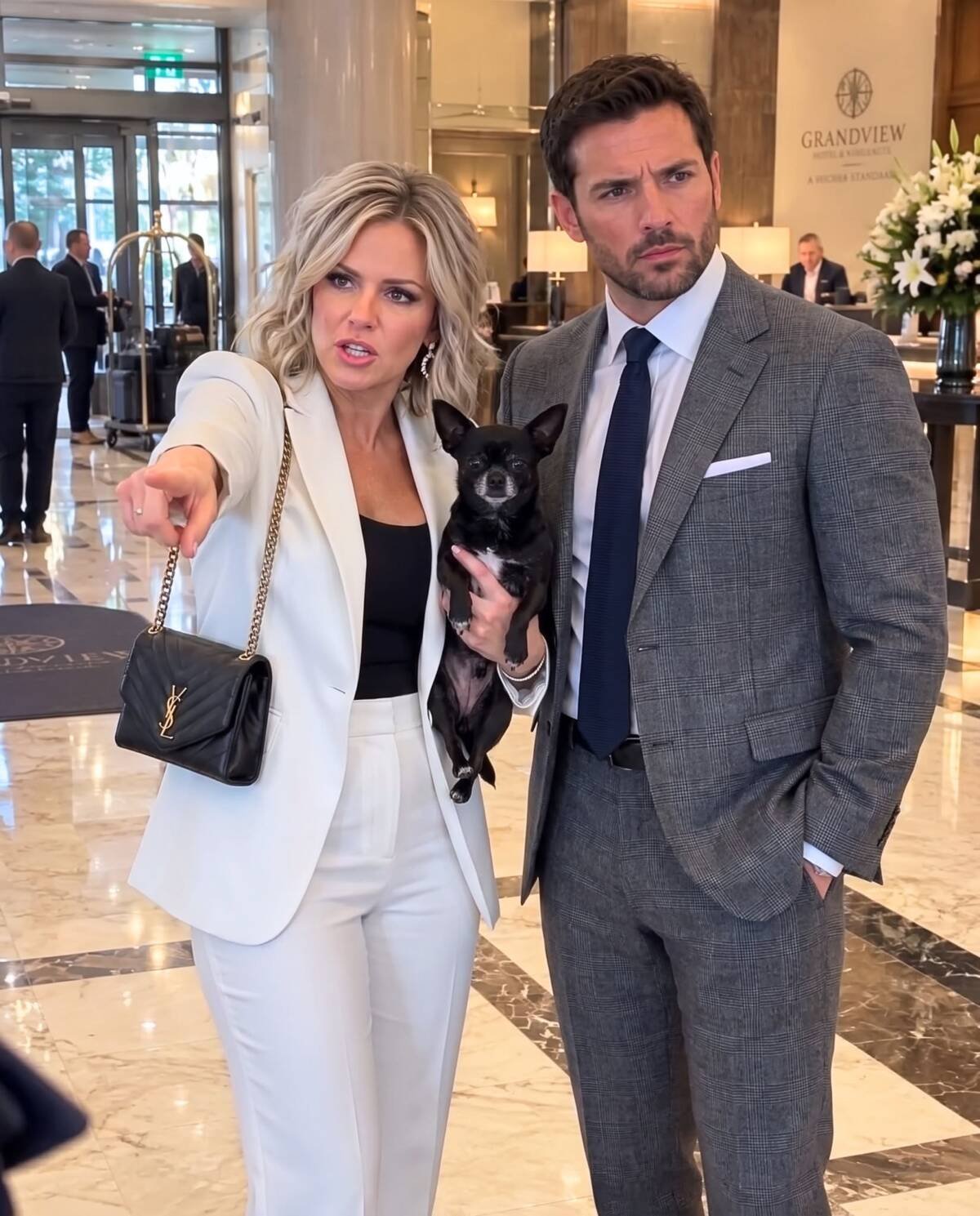
Instead, the first thing my mother saw was a sheriff’s notice attached to the front door.
Her scream echoed through the hallway.
“What is this?”
Dad stood behind her with two rolling suitcases.
Caleb came through the doorway carrying several designer shopping bags.
“What the hell happened?” he asked.
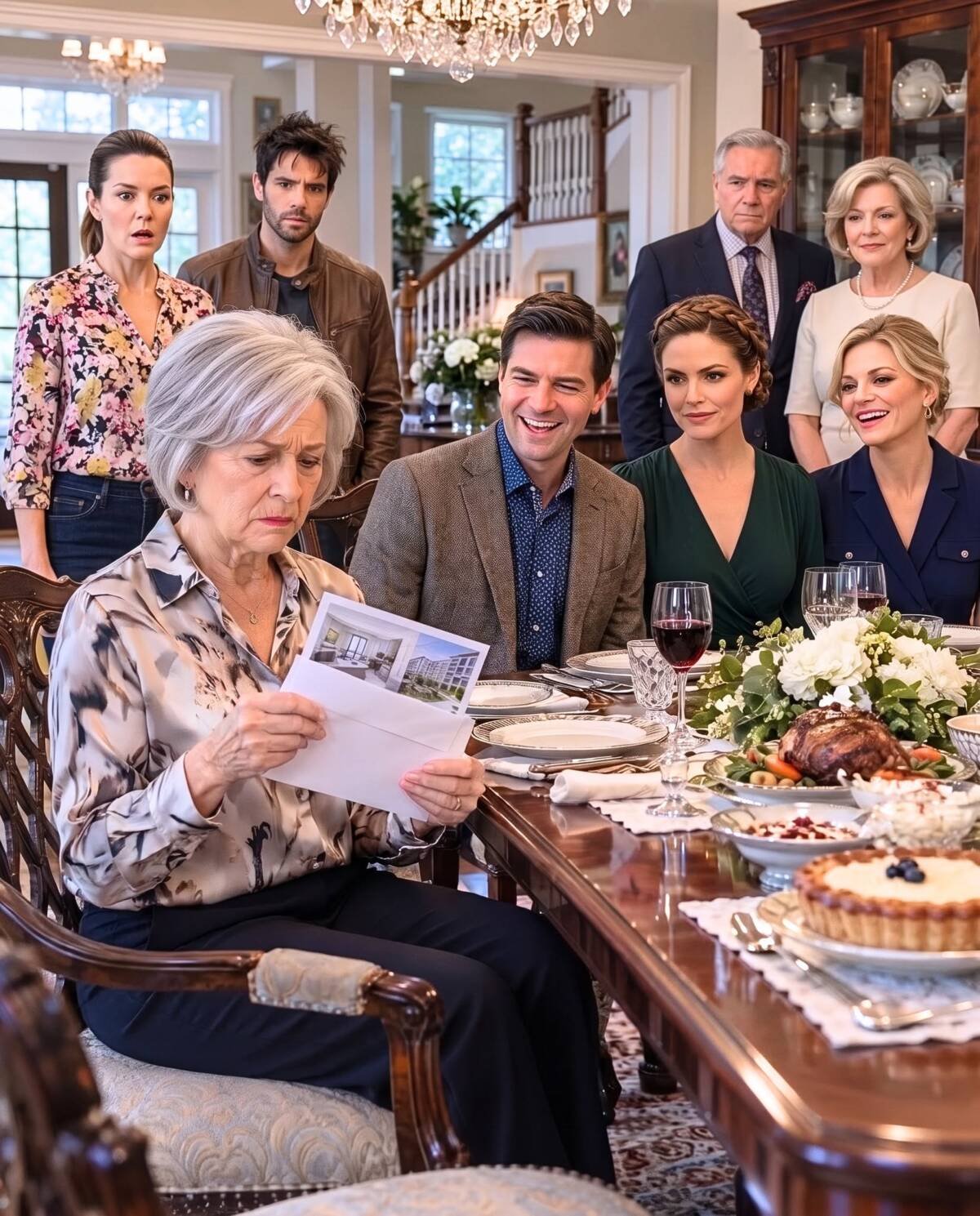
Grandpa was sitting in his rocking chair.
I stood beside the fireplace holding the red folder.
Mom’s eyes immediately landed on me.
“You.”
Her voice was cold.
“What did you do?”
I opened the folder.
“Your joint accounts are frozen because the bank found suspicious withdrawals from Grandpa’s retirement accounts.”
Dad’s expression changed.
I continued.
“Your company received a subpoena because some of the checks appear to have passed through your consulting business.”
Then I looked at Mom.
“And your name appears on medical authorization forms submitted to Dr. Ellison’s office.”
Mom’s face went pale.
“That is private family business.”
Grandpa answered before I could.
“No.”
Everyone turned toward him.
“Fraud is not private.”
The room fell silent.
Mom tried a different approach.
“Dad, you’re confused.”
Grandpa smiled.
“No.”
“You don’t understand what Avery is saying.”
“I understand perfectly.”
“We were managing things for you.”
“You were stealing.”
Dad stepped forward.
“Careful.”
Grandpa slowly leaned forward in his chair.
“I was careful for forty years.”
He paused.
“I was careful when you spent money you hadn’t earned.”
“I was careful when you convinced your mother to refinance this house.”
“I was careful when you told my doctor I couldn’t remember my own address.”
His voice became quieter.
“But I’m finished being careful.”
The Truth About Caleb
Caleb had been standing near the Christmas tree, watching everything unfold.
Finally, he laughed nervously.
“This is insane.”
He looked at Grandpa.
“You’re old. You don’t know what you signed.”
I answered.
“He knows exactly what he signed.”
Caleb stared at me.
I continued.
“Attorney Morris recorded the meeting. Two witnesses were present. A medical evaluator was there.”
Mom’s face changed.
Dad looked furious.
Then Dad suddenly reached for the folder.
I stepped backward.
Before he could take another step, Grandpa struck his cane against the hardwood floor.
Two police officers entered the room.
Mom froze.
Dad stopped moving.
Caleb nearly knocked over the Christmas tree.
“I invited them,” Grandpa said.
One of the officers introduced himself and explained that they had questions concerning the financial records, suspected forged signatures and allegations of elder financial abuse.
Mom immediately began crying.
“Avery…”
I looked at her.
“Please.”
She wiped her face.
“We’re your family.”
I held the folder tightly.
“You left me here to be useful.”
Grandpa looked toward the front door.
“And she was.”
The Investigation
The officers didn’t immediately arrest anyone.
Instead, they separated my parents and began taking statements.
One officer spoke with my mother in the dining room.
Another questioned my father in the kitchen.
Caleb remained in the living room, pacing nervously.
I sat across from Grandpa.
Through the walls, I could hear fragments of conversations.
“I had authorization,” Dad insisted.
“Then show us the original documents,” the detective replied.
My mother tried a different strategy.
“My daughter is manipulative.”
“She has always been angry with us.”
“She was upset because we wouldn’t pay for graduate school.”
I almost laughed.
I had paid for graduate school myself.
I had worked overnight shifts at a hotel reception desk in Boston while my family assumed I would somehow manage.
But apparently, that was the story they preferred.
I was difficult.
I was dramatic.
I was emotional.
I was the problem.
Then Caleb stopped pacing.
He looked at me.
“You ruined everything.”
I shook my head.
“No.”
“They did.”
He folded his arms.
“You don’t care what happens to us.”
I looked at him for a long moment.
“Did you know they were leaving Grandpa alone?”
He looked away.
“They said you agreed.”
“I didn’t.”
“You could have said no.”
That sentence hit harder than he probably intended.
It explained my entire childhood.
Whenever my parents made a bad decision, somehow it became my responsibility to stop them.
When Dad lied, I was supposed to confront him.
When Mom cried, I was supposed to comfort her.
When Caleb got into trouble, I was supposed to fix it.
And now, when my parents had decided to exploit Grandpa, they expected me to quietly handle the consequences.
But I was done.
The Money Caleb Took
Grandpa suddenly called my brother’s name.
“Caleb.”
Caleb turned.
Grandpa’s voice was calm.
“You had access to my debit card last summer.”
Caleb shrugged.
“So?”
“Four thousand six hundred dollars was withdrawn in Atlantic City.”
Caleb’s expression changed.
“It was a loan.”
“You never asked.”
“You weren’t using it.”
Grandpa stared at him.
For a moment, I saw something in his eyes that looked like heartbreak.
He hadn’t been angry because of the money.
He was angry because he had hoped Caleb was different.
Apparently, he wasn’t.
The detective eventually gathered everyone together.
He explained that the investigation was active and that everyone involved should preserve documents and communicate through attorneys regarding the financial allegations.
No dramatic arrests happened that afternoon.
No handcuffs.
No shouting match outside.
Real investigations don’t always look like television.
But something much more important had already happened.
The truth was now documented.
And my parents could no longer pretend it didn’t exist.
The House Was Never Theirs
After the officers left, Dad removed his coat.
“We need to talk as a family.”
Grandpa looked at him.
“That ended when you tried to take my house.”
Dad’s expression hardened.
“This house was supposed to be mine.”
“No.”
Grandpa’s answer was immediate.
“It was your mother’s home until she died. Then it was mine. After that, I intended to divide my estate fairly.”
Mom laughed bitterly.
“Fairly?”
She looked at me.
“Avery left. Caleb stayed close.”
I couldn’t believe she was still trying.
“Caleb stayed close because you paid his rent.”
Caleb looked at her.
“Mom?”
She ignored him.
Grandpa tapped his cane against the floor.
“No one tells her to shut up in my house.”
Dad stepped toward Grandpa.
“You think you can manage this place alone? You can barely climb the stairs.”
Grandpa smiled.
“I don’t need to.”
Then he looked at me.
“Avery has power of attorney now.”
Dad’s face changed.
“Medical and financial.”
For the first time, I saw genuine fear in my father’s eyes.
“You gave her control?”
Grandpa didn’t hesitate.
“I gave it to the only person who came when called—and stayed after being used.”
Mom shook her head.
“She manipulated you.”
Grandpa answered quietly.
“I showed her documents. She made her own decision.”
The Email That Changed Everything
Dad turned toward me.
“You have no idea what you’re involved in.”
I looked directly at him.
“I know about the forged checks.”
“I know about the medical forms.”
“I know about the home equity loan.”
His face tightened.
“And I know you planned to move Grandpa into Green Hollow Assisted Living by February and sell this house before summer.”
Mom’s expression changed instantly.
Dad said nothing.
Caleb looked from one parent to the other.
“How did she know that?”
I didn’t answer immediately.
Two nights earlier, I had found an email on Dad’s laptop.
He had forgotten to delete it.
I had printed it.
I handed the document to Caleb.
He read it slowly.
The email was addressed to a real estate agent.
The message explained that once Grandpa was moved into assisted living, the family could proceed with selling the house.
It also mentioned me.
My daughter will resist emotionally, but she has no legal authority.
Then Caleb saw his own name.
He looked up.
“You used my name.”
Dad said nothing.
“You told them I understood the plan?”
Still nothing.
Caleb’s face fell.
“You said I could have the guesthouse.”
“There is no guesthouse,” I said quietly.
“There is a garage apartment with black mold and a broken heater.”
Caleb looked at our parents.
For the first time, he understood something he had never considered before.
He wasn’t part of their plan.
He was part of their strategy.
One Hour To Leave
Grandpa slowly stood from his rocking chair.
“You have one hour.”
Mom stared at him.
“For what?”
“To pack.”
Dad laughed in disbelief.
“You can’t throw us out on Christmas.”
Grandpa looked at the calendar.
“This is December 28.”
Dad’s face tightened.
“And yes,” Grandpa continued, “I can.”
The next hour was filled with slammed drawers, hurried footsteps and angry silence.
Mom packed jewelry and expensive coats.
Dad gathered documents and clothes.
Caleb packed two duffel bags.
No one apologized.
No one admitted what they had done.
They were angry that they had been caught—not necessarily sorry for what they had done.
Before Caleb walked out, he stopped at the front door.
He was carrying a framed baseball photograph of himself and Grandpa.
“You’ll get tired of taking care of him,” he said.
I looked at him.
“Probably.”
He seemed surprised by my answer.
“But I won’t steal from him because I’m tired.”
Caleb lowered his eyes.
Then he walked outside.
Dad was the last one to leave.
He stopped beside me.
“You think this makes you powerful, Avery?”
I looked around the house.
At the fireplace.
At the Christmas tree.
At Grandpa’s rocking chair.
At the photographs on the walls.
Then I looked back at my father.
“No.”
He waited.
“It makes me awake.”
Grandpa stepped beside me.
Snow was falling outside.
He looked at my father one final time.
“And you,” he said quietly, “were always so predictable.”
Dad walked away.
The door closed.
I locked it.
For the first time, I felt like the house was actually quiet.
Not empty.
Not abandoned.
Quiet.
The Christmas That Changed Everything
I had come home expecting Christmas to be about family.
Instead, I discovered what my family had become.
For years, I had believed that being the “difficult daughter” meant something was wrong with me.
Maybe I asked too many questions.
Maybe I noticed too many things.
Maybe I refused to pretend everything was fine when it wasn’t.
But that Christmas, I finally understood something.
Sometimes being the person everyone calls difficult simply means you’re the person who refuses to participate in the lie.
My parents had thought leaving me behind was a punishment.
They thought they were assigning me a responsibility.
They believed I would complain, care for Grandpa for a few days, and then quietly return to my own life.
Instead, they accidentally placed me beside the one person who had been waiting for someone to believe him.
Grandpa hadn’t needed a servant.
He needed an ally.
And I hadn’t needed another reason to fight with my family.
I needed the truth.
Weeks later, the investigation continued.
There were lawyers, financial reviews, interviews and documents to examine.
There would be consequences, but those consequences would come through the legal system—not revenge.
Grandpa never celebrated what happened to his children.
He didn’t want them destroyed.
He wanted his property, finances and dignity protected.
And more than anything, he wanted the truth to stop being treated like a family secret.
One evening, several weeks after Christmas, I sat beside him in the living room.
The same fireplace was burning.
The same rocking chair stood beside it.
The same cane rested against the arm.
Grandpa looked over at me.
“Do you remember the first night?”
I smiled.
“When you asked, ‘Shall we begin?’”
He nodded.
“I wasn’t sure you would stay.”
“I wasn’t sure either.”
He laughed.
Then he looked toward the window.
“Your family thought leaving you behind was the end of something.”
I looked at him.
“What was it?”
“The beginning.”
I thought about that.
One year earlier, I believed my family had abandoned me.
They had.
But in doing so, they left me beside the only person who was willing to tell me the truth.
And sometimes, the people who leave you behind don’t realize what they’re giving you.
They gave me the chance to see my family clearly.
They gave Grandpa the chance to protect himself.
And, unexpectedly, they gave both of us something neither of us had known we needed.
A second chance at family.
Not the family we had been born into.
The family we chose.
Grandpa reached for his cane.
“Coffee?”
I smiled.
“Always.”
He stood slowly.
This time, I didn’t try to help him.
I simply watched.
Because now I knew something my parents had never understood.
Grandpa wasn’t helpless.
He had never been helpless.
He had simply been surrounded by people who benefited from making him look that way.
And when they finally left him behind, they unknowingly left him with the one person who would stay.
Me.
The Christmas they intended to ruin became the Christmas that changed both our lives.
And when Grandpa looked at me that first night and asked,
“Shall we begin?”
I had answered with the only word that truly mattered.
“Yes.”
Conclusion
Sometimes betrayal doesn’t arrive with a dramatic announcement. Sometimes it comes disguised as a family favor, a handwritten note, or an ordinary Christmas plan.
And sometimes, being left behind is not the ending you think it is.
For Avery, being abandoned by her family forced her to uncover the truth about the people she trusted most. For her grandfather, it meant finally having someone willing to stand beside him instead of taking advantage of him.
The family expected Avery to be useful.
Instead, she became the person who helped Grandpa reclaim control of his life.
And perhaps the biggest lesson of all is this:
The person your family underestimates may be the person who eventually sees everything they tried to hide.
If this story made you think about the people you trust—or the family members who have stood by you when it mattered most—share it with someone who might need to read it today.