I used to believe that cruelty always gave itself away before it struck. I imagined there would be a warning, a subtle shift in the atmosphere, a change in someone’s voice, or at least a fleeting moment to recognize the danger before it arrived. I was wrong. At my grandfather’s eightieth birthday celebration, my father threw my eight-month-pregnant body down a flight of granite stairs because I refused to surrender my seat to my sister, who was recovering from a cosmetic tummy tuck. As I lay bleeding on the floor, my mother screamed, “Stop faking it! You’re embarrassing us!” Minutes later, an emergency room doctor looked at the fetal monitor and quietly delivered a sentence that destroyed my world forever, forcing me to rebuild it from the ground up.
The story truly began years before that terrible night, inside the sterile, quiet waiting rooms of a fertility clinic where hope slowly transformed into a grueling routine. Five years of failed treatments filled my husband Mark’s and my lives with rigid medication schedules, endless blood tests, and agonizing waiting periods. Every negative result carved away another piece of our optimism. Yet, Mark never stopped believing in us. He held me during the moments when I cried silently after friends’ baby showers, and he gently guided me away from store aisles filled with tiny clothes that only reminded us of the family we were fighting so hard to build.
My mother, Evelyn, knew every painful detail of that journey. She knew the name of the clinic, the dates of our failed embryo transfers, and even the details of a pregnancy I had lost before I was ready to tell anyone. Back then, I believed her intimate knowledge meant she cared. I eventually realized she was simply collecting my vulnerabilities, cataloging them for future use.
My father had mastered the art of appearing generous to the outside world while making our home feel suffocatingly small every time he walked through the door. He could charm the neighbors, impress community leaders, and write massive checks to every local fundraiser, only to return home and reduce one of his daughters to silence with a single, calculating look. My younger sister, Chloe, learned early on that playing the fragile victim earned his endless protection and financial backing. Meanwhile, I became the dependable daughter—the one expected to organize family events, solve everyone’s problems, absorb the emotional impact of their outbursts, and never ask for anything in return.
When Mark and I finally conceived after five exhausting years, I didn’t expect miracles from my family. I simply hoped they would treat the baby with a fraction of the profound joy Mark and I carried every day. Even that small expectation proved to be too much.
My grandfather’s birthday gala was held in an elegant, sprawling event hall characterized by polished marble floors, sweeping granite staircases, glowing crystal chandeliers, and velvet furniture. Mark helped me zip my pale silk maternity dress before we left our home, smiling as he told me I looked beautiful. I laughed, brushing off the compliment by saying I looked like a cream-colored parade float. He kissed my forehead and replied, “Then you’re my favorite parade float.” It was exactly the kind of quiet, steady love that had carried us through years of heartbreak.
By the time we arrived at the venue, my lower back already ached severely beneath the weight of eight months of pregnancy. My grandfather warmly touched my cheek and whispered, “Almost time, sweetheart.” For one hopeful, fleeting moment, I believed the evening might pass peacefully.
Then, Chloe made her entrance.
She had recently undergone an expensive tummy tuck that my father had happily financed, and she carried herself like a soldier recovering from a catastrophic battlefield injury. Every slow, calculated movement invited sympathy as relatives rushed to bring her sparkling water and ask whether she was comfortable. I didn’t resent her pain—pain is real regardless of how it originates—but I knew my sister well enough to recognize when genuine discomfort transitioned into theatrical performance.
After standing for nearly half an hour, the pressure in my lower back became unbearable. I carefully lowered myself onto a plush velvet sofa in the grand foyer. Relief spread through my body almost instantly. I rested one hand beneath my belly while my daughter shifted comfortably inside me. That peaceful moment lasted only seconds before I saw my parents approaching, with Chloe trailing closely behind.
My mother stopped directly in front of me, offering no greeting.
“Get up,” she ordered.
I glanced around the massive foyer. There were empty chairs everywhere, lining the walls and filling nearby sitting areas. There was absolutely no shortage of places to rest, yet my mother stared at me with icy, unwavering certainty.
“Your sister is recovering from major surgery,” my mother said coldly, her voice sharp enough to cut glass. “She needs to sit on this sofa.”
Mark was speaking with one of my grandfather’s old business associates a few feet away, but he turned immediately when he caught her tone. I kept my hand protectively over my stomach, trying to keep my voice steady.
“I’m eight months pregnant, Mom,” I said. “I’m not moving.”
Chloe gasped, reacting as though I had reached out and struck her. My father’s expression instantly darkened into the terrifying glare I had feared my entire childhood, while my mother leaned in uncomfortably close.
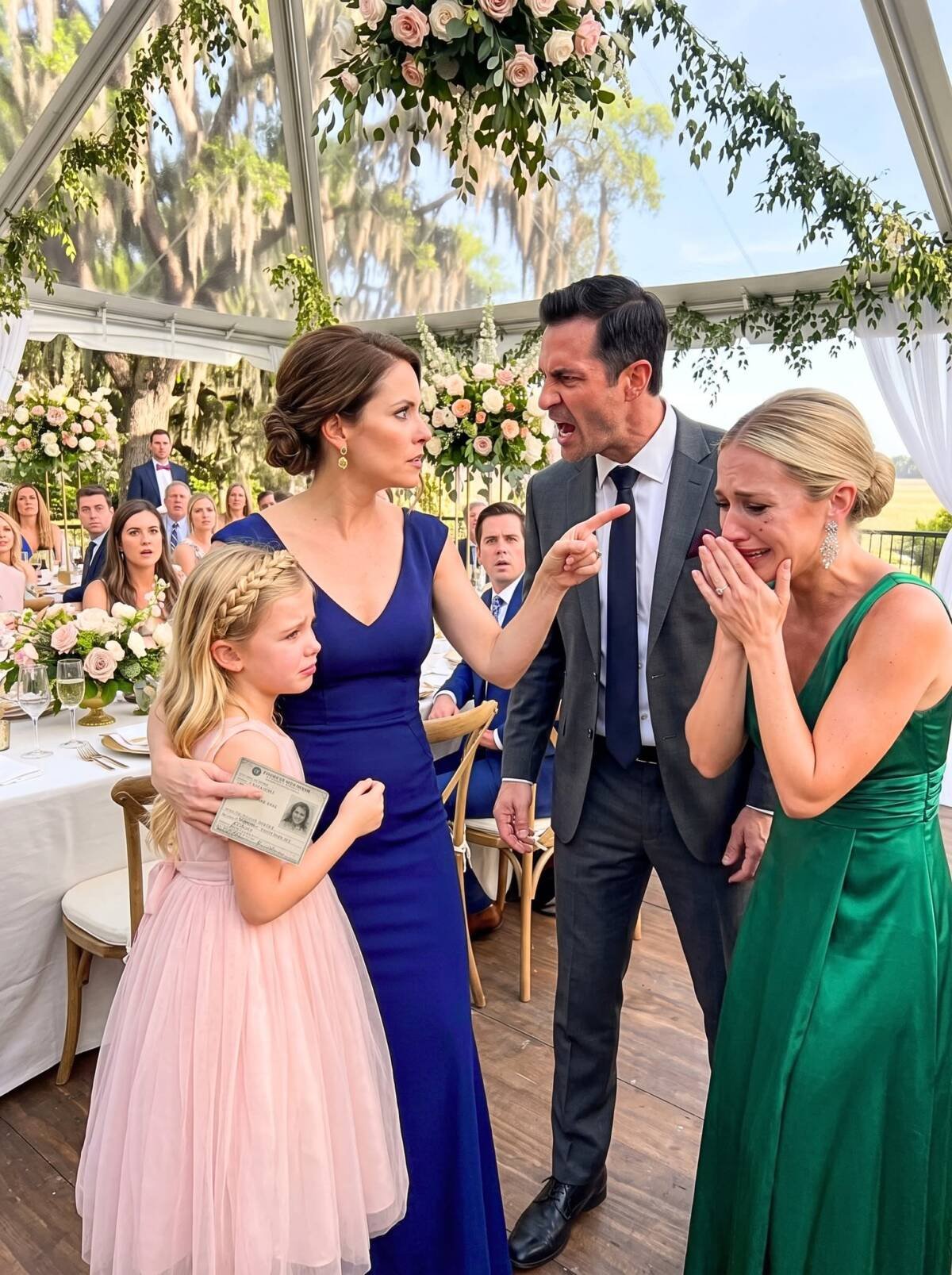
“You always have to be so selfish,” she hissed, her voice vibrating with venom. “Get off the sofa, Sarah. Now.”
In that instant, decades of deep psychological conditioning collided with my new reality as a mother. I thought about every frantic apology I’d offered simply to preserve a toxic peace. I thought about every time I’d made myself smaller so someone else could feel important, and every unfair sacrifice I’d accepted because society dictates that family requires endless forgiveness. But my back throbbed, my long-awaited daughter pressed against my ribs, and something primal inside me finally refused to bend.
“No,” I said.
The entire foyer seemed to freeze. Conversations stopped mid-sentence. Champagne glasses hung motionless in the air. The string quartet in the background kept playing, entirely disconnected from the suffocating tension that had just swallowed the room.
Nobody moved except my father.
He crossed the distance between us so aggressively that my brain couldn’t process the threat in time. His large hand clamped onto the shoulder of my delicate maternity dress, twisting the silk tightly against my skin until it burned.
“Don’t disrespect your mother,” he growled.
I heard Mark shout my name just before my father violently yanked me upward. Pregnancy had completely shifted my center of gravity, and for one horrifying second, my feet searched desperately for solid ground before slipping helplessly across the highly polished marble. My fingers clawed at the velvet sofa, finding no purchase. Behind me waited nothing but the steep drop of the granite staircase.
The first impact drove blinding, white-hot pain through my lower back, quickly followed by the brutal crushing of my hip, shoulder, and ribs as I tumbled down the stone steps. Instinct took over; I twisted my body into a tight curve around my stomach, taking the devastating blows against the granite in a desperate bid to shield my baby. When I finally landed on the hard floor below, my vision blurred, but my mind focused on a single, terrifying priority.
“My baby,” I gasped, struggling to draw oxygen into my bruised lungs. “Mark, my baby.”
Mark dropped to his knees on the hard stone beside me, his hands shaking violently as he fought his natural urge to scoop me into his arms.
“Don’t move,” he choked out, his voice breaking completely. “Sarah, don’t move. Somebody call 911 right now!”
A sickening rush of warm liquid suddenly spread beneath my body. When I forced my heavy head up and saw bright, arterial red soaking through my cream-colored dress and pooling on the granite, absolute terror swallowed every other rational thought.
“No,” I whispered into the silence of the room. “No, no, no.”
I looked up toward the top of the stairs, desperately searching my mother’s face for shock, regret, or even a basic human flicker of concern. There was absolutely nothing. Her face was a mask of furious indignation.
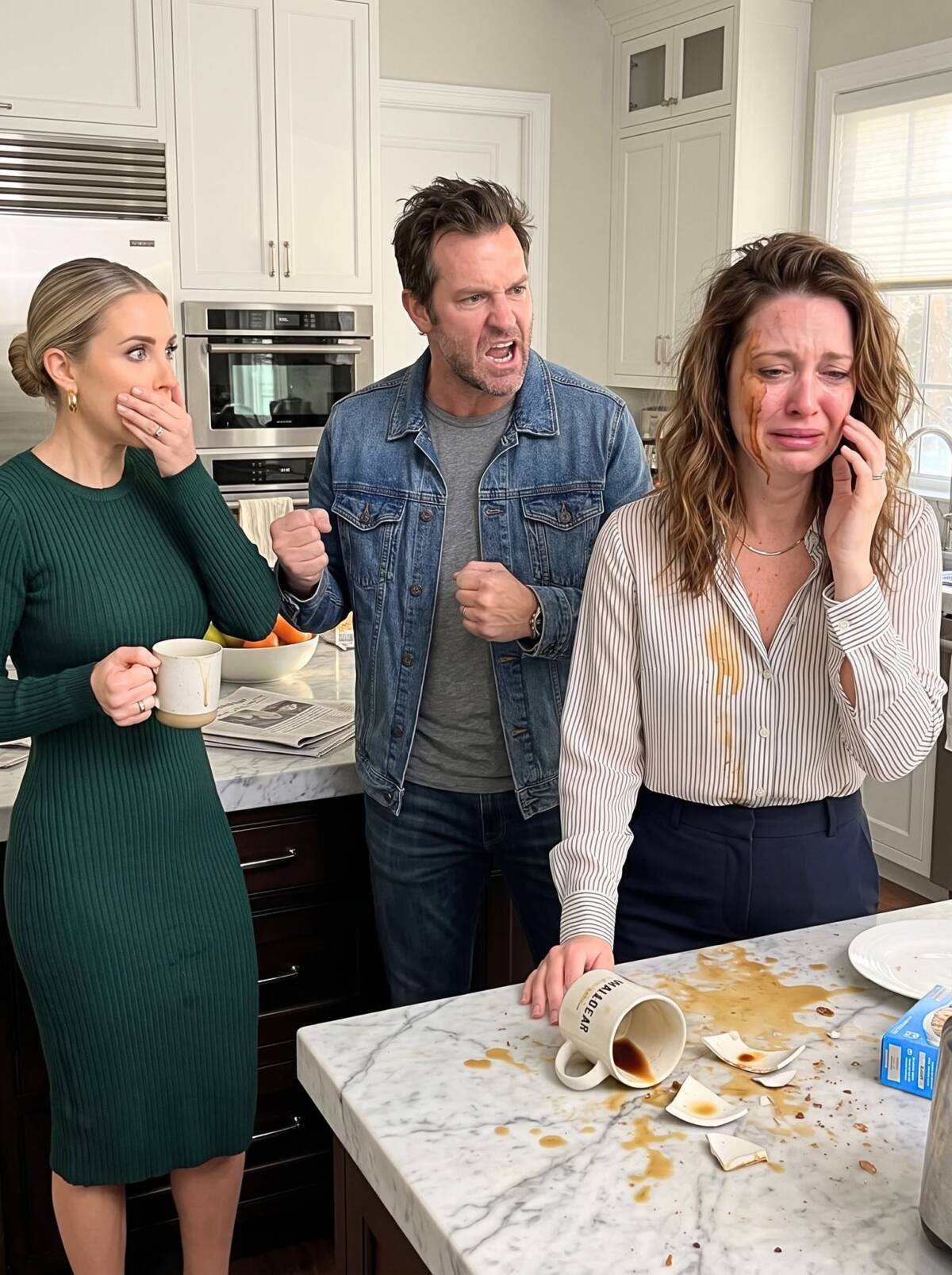
“Are you happy now?!” she screamed down at my broken body. “Are you faking this just to ruin your grandfather’s party?! Get up, you’re embarrassing us!”
Not a single person from my blood family rushed down those stairs. Chloe remained exactly where she stood, gripping the railing. My father stared down, never speaking my name. Dozens of relatives stood paralyzed in silence, entirely unwilling to challenge the wealthy, powerful patriarch who had just caused a catastrophe. In that agonizing moment, as I bled out on the floor, I realized the fall had broken my physical body, but their deafening silence broke the remaining emotional ties I had to the people I had spent my life trying to love.
Mark slowly lifted his eyes toward the top of the staircase. The anger radiating from him wasn’t loud or reckless. It was terrifyingly calm, deliberate, and infinitely more dangerous.
“If my wife or my child dies,” he stated with chilling clarity, “I will kill you myself.”
Someone in the crowd finally snapped out of their shock and called for an ambulance. The room dissolved into panicked chaos, but all I could focus on was the tiny life inside me slipping away. As the paramedics strapped me onto a rigid backboard and loaded me onto the stretcher, I kept repeating the same desperate words through my tears.
“Eight months… We waited five years… Five years…”
Fighting for Grace in the Darkest Hours
The emergency room swallowed me into a disorienting blur of fluorescent lights, shouting voices, and the squeal of rushing gurneys. Nurses immediately began cutting away my blood-soaked silk dress while technicians aggressively clipped cold monitors to my chest. An ER doctor pressed a heavy ultrasound wand against my bruised, cramping abdomen. Every passing second stretched into an eternity because I was listening for only one sound: the rapid, rhythmic swoosh of my baby’s heartbeat.
The monitor remained terrifyingly silent.
The doctor adjusted the wand, pressing down harder as the trauma bay grew noticeably quieter. Mark tightened his grip around my hand so fiercely my knuckles turned white, while I struggled to breathe through the suffocating panic.
“Where is it?” I sobbed, thrashing slightly against the restraints. “Where is the heartbeat?!”
“Doctor?” Mark demanded, his voice cracking.
The physician glanced up at the red digits of the trauma clock on the wall before meeting my eyes with a look of heartbreaking honesty.
“Sarah, I need you to listen to me very carefully,” he said, his tone commanding but gentle. “You have a severe placental abruption. You are hemorrhaging internally. We have seconds right now, not minutes.”
The medical terminology struck me harder than the granite steps had. I stared at him, my brain unable to process anything beyond the sheer terror in the room.
“Is my baby alive?” I begged.
He refused to offer empty platitudes. “There is cardiac activity,” he said quickly, “but it is dangerously weak. We are losing her. We need to deliver right this second.”
The trauma bay erupted into a highly choreographed explosion of movement. Doctors shouted for obstetrics, nurses sprinted to prepare an emergency operating room, and a surgical consent form was shoved onto a clipboard in front of me. Mark leaned in so close that our foreheads pressed together. He was shaking, but he was my anchor in the storm.
“Sarah, look at me,” he pleaded. “I’m right here. I am not leaving you.”
Just before the surgical team unbraked my bed to sprint down the hallway, the privacy curtain was abruptly yanked open. A hospital security officer stood there alongside a charge nurse carrying a clipboard. Directly behind them in the bright hallway, my parents and Chloe were pacing, acting as though they were concerned family members with every right to be there.
“She tripped on her dress,” my mother was announcing loudly to a passing nurse. “She’s always been clumsy. This whole thing is being exaggerated.”
At that exact moment, a profound shift occurred inside my soul. Something died forever. It wasn’t just forgiveness, and it wasn’t just hope. It was the very last shred of mercy I held for the people who had raised me.
I turned my head toward Mark.
“Don’t let them anywhere near us,” I whispered with absolute finality.
Mark didn’t hesitate. He gave a single, hard nod.
The ER doctor stepped directly in front of the security officer, blocking the doorway. “Nobody from that hallway enters this trauma room or the surgical wing,” the doctor ordered sharply. “Document their names and call police if anyone tries to bypass the doors.”
Moments later, the heavy metal doors of the operating room swung shut, permanently severing me from the family I no longer recognized.
The emergency C-section was a blur of anesthesia and raw terror. It saved my life, but as they worked to stop the hemorrhaging, no one would immediately tell me whether the surgery had saved my daughter. When I finally dragged myself back to consciousness in a dim recovery room, the first thing I saw was Mark sitting rigidly in a plastic chair beside my bed. His face was hollowed out by pure exhaustion, his shirt stained with my blood, and his cheeks streaked with dried tears.
“The baby?” I managed to croak, the breathing tube having scraped my throat raw.
He stood up so quickly the chair screeched backward across the linoleum.
“She’s alive,” he breathed out.
She.
Mark smiled, fresh tears welling in his red eyes. “She’s in the NICU. She’s incredibly tiny, Sarah, but she is fighting so hard. The neonatologist said the next forty-eight hours will decide everything, but she is holding on.”
I closed my eyes and wept until the fresh surgical incision in my abdomen burned like fire. After five years of grueling infertility, countless failed treatments, and shattered dreams, our little girl had survived a violent attack, but she had been forced into the world early, fighting for every single breath. We had chosen her name years ago, back when a nursery was just an empty room and a dream, because we believed that hope deserved a name even when the odds felt impossible.
Her name was Grace.
The Reckoning and the Truth
While Grace fought for her life in a specialized incubator, the truth about what had unfolded at the birthday gala began to gather unstoppable momentum. The hospital social workers and police documented every injury. They photographed the massive, dark purple bruises blooming across my ribs and back. They recorded Mark’s uncompromising statement detailing exactly how I had ended up at the bottom of those stairs.
“Her father pushed her,” Mark told the detective.
The investigating officer’s expression hardened immediately. Even veteran police officers understand the unique, unnatural horror of a father violently attacking his pregnant daughter.
Hospital administrators placed the entire maternity ward on lockdown. Security physically escorted my parents off the premises when they tried to bypass the front desk. Over the next two days, my mother called Mark’s phone seventeen times without receiving an answer. Frustrated by the silence, she finally sent a single, damning text message to my phone.
You need to tell the police this was an accident before your father loses his business and his reputation.
I stared at the glowing screen for a long time. There was no inquiry about my health. There was no question about whether her granddaughter had survived the night. There was only the protection of the family image. I took a screenshot of the message and forwarded it directly to the detective handling the felony assault investigation.
Unlike the emotional manipulation I was used to, the justice system operated on cold, hard facts. The investigation escalated rapidly. My father was formally arrested and charged with aggravated assault causing serious bodily injury to a pregnant person. My mother’s text messages attempting to coerce me into changing my statement were added to the prosecutor’s growing file as witness tampering.
Chloe initially told the police that I had been acting “dramatic and hysterical all night,” confidently sticking to the family narrative. Her smug confidence evaporated instantly the moment detectives called her into the precinct and played a high-definition video recorded by our cousin, Daniel.
Daniel had been standing near the gift table, filming the string quartet, when the argument broke out. He caught the entire altercation on tape.
The footage was indisputable. It clearly showed my mother aggressively cornering me. It showed my father violently grabbing the shoulder of my dress. It captured the brutal, twisting yank that sent me off balance, and the horrific tumble down the granite steps. And worst of all, the microphone picked up crystal-clear audio of my mother screaming over my bleeding, broken body, accusing me of faking it.
Daniel later sent Mark the video file along with a deeply remorseful message: I was a coward. I should have helped her.
He was right about being a coward in the moment, but his video ultimately accomplished something a million apologies never could. It systematically stripped away every lie, excuse, and justification my parents hoped to hide behind in court.
Grace remained in the NICU for twenty-six agonizing days. She weighed almost nothing. Her oxygen levels would plummet without warning, sending alarms blaring through the ward. Tiny tubes and wires covered a body so fragile I was terrified to even rest my hand against her skin. My own C-section incision throbbed violently every time I stood up, yet every single morning, I sat diligently beside her incubator. Mark sat beside me, reading classic children’s books aloud through the sterile plastic walls. He wanted the sound of his voice to be a constant comfort; he wanted our daughter to grow up knowing that the men in her family would always show up with gentleness, patience, and love, rather than violence and fear.
My grandfather, whose birthday had set the stage for the tragedy, visited the hospital only once.
He made it to the doorway of the NICU before breaking down completely.
“I failed you,” he wept, refusing to look me in the eye.
Years earlier, the deeply conditioned version of me would have immediately rushed to comfort him, swallowing my own trauma to reassure him that everything would somehow be okay and that it wasn’t his fault. That submissive version of me had died on the granite landing.
“You all stood there and watched,” I said, my voice eerily calm.
He slowly lowered his head, tears dripping onto the linoleum floor.
“Yes,” he whispered. “We did.”
It was the most brutally honest sentence anyone from my bloodline had spoken in my entire life.
The months that followed were a grueling marathon of legal proceedings. My father’s high-priced defense attorney attempted to argue that the fall was a tragic, unpredictable accident caused by my poor balance during late-stage pregnancy. The prosecutor responded simply by turning on a large screen in the courtroom and playing Daniel’s video.
Watching my own pregnant body careen down those stone steps in a silent courtroom was nauseating. But hearing my mother’s voice echo through the judicial speakers—“Stop faking it. You’re embarrassing us”—caused even the stoic judge to look up sharply, pure disgust written across his face.
Knowing a jury would convict him in minutes after seeing the tape, my father’s legal team scrambled for a plea agreement. He didn’t accept the plea because he felt an ounce of remorse; he accepted it because the video evidence trapped him in a corner where his money and charm were utterly useless.
The night before his sentencing, my mother sent one final, desperate email to my inbox.
Families forgive.
I deleted it without a reply.
At the sentencing hearing, I stood at the podium and delivered my victim impact statement. I spoke clearly about the five years of IVF injections, the velvet sofa, the terrifying fall down the stairs, and the tiny infant who had spent her first month of life fighting for survival beneath the blue phototherapy lights of the NICU. I detailed the profound betrayal of a father who was supposed to protect his child, but chose to break her instead.
Then, I turned and looked directly into my father’s eyes.
“You did not lose control that night,” I told him, my voice steady and resolute. “You were enforcing your control. The only difference is that this time, there were witnesses.”
For the first time in his powerful, arrogant life, he was the one who looked away first.
Moving Forward With Grace
My father received a prison sentence for aggravated assault, which would be followed by a lengthy probation and a permanent, heavily enforced no-contact order protecting me, Mark, and our daughter. My mother’s relentless campaign of harassment following the assault resulted in a strict restraining order that legally barred her from ever approaching our family again.
Chloe mailed a generic greeting card a few weeks after Grace was finally discharged from the hospital. Inside, she scribbled a single sentence hoping we could all “move forward.” There was no acknowledgment of the event, no accountability, and absolutely no apology. I dropped the card into the trash without a second thought.
The day we finally brought Grace home, she weighed a delicate four pounds, nine ounces. Mark drove the entire way home twenty miles below the speed limit, gripping the steering wheel so tightly his knuckles ached. Neither of us could bear the thought of anything harming her after everything she had already endured. I sat in the backseat next to her protective car seat, watching her tiny chest rise and fall, acting as though my intense focus alone was keeping her heart beating.
Our quiet, modest home couldn’t have been more different from the opulent grand ballroom where my life had nearly ended. We didn’t have towering crystal chandeliers or slippery, polished marble floors designed to impress strangers. Instead, warm afternoon sunlight spilled comfortably across our lived-in living room. A simple wooden bassinet rested safely near the window, and a stack of neatly folded burp cloths sat waiting for the little girl we had spent half a decade praying into existence.
Standing in that sunlit room with Grace finally sleeping safely against my chest, a profound realization washed over me—a truth I should have learned long before that disastrous birthday.
A family is never simply measured by shared genetics or a common last name. True family is measured entirely by the people who choose to stand up and protect you, especially when doing so costs them something.
The exhausting years Mark and I spent battling infertility had taught me deep patience, resilience, and a type of stubborn hope that refused to be extinguished by repeated heartbreak. But the granite staircase taught me something equally vital. The fall violently stripped away every lingering illusion I still carried about the toxic people I had spent my entire life trying to please.
My parents had wanted everyone in that glamorous ballroom to witness my absolute obedience to their authority. Instead, they left behind an irrefutable trail of evidence of their own cruelty.
There was the torn, blood-stained silk dress. There was the extensive medical trauma report detailing every contusion and the life-threatening placental abruption. There was the horrifying video footage that no judge or jury could ever ignore. And most importantly, there was a beautiful, resilient little girl named Grace, whose very existence became living, breathing proof that the truth always survives, even when cruelty attempts to bury it alive.
Sometimes, when the house is quiet, I can still hear the phantom echo of my mother’s voice ringing in my ears.“Stop faking it.”“You’re embarrassing us.”
For a long time, those vicious words haunted my sleep, carrying the exact same heavy, suffocating weight they possessed on the granite landing that night. But then I will hear Grace’s bright, unrestrained laughter echoing from the next room as Mark chases her down the hallway, and those dark memories lose a little more of their venom.
The ultimate truth of that night is painfully simple, yet incredibly freeing.
I was never embarrassing them. I was exposing them.
Once the public finally witnessed the monster behind the curtain, my parents could never again pretend the monster didn’t exist. They lost the pristine, wealthy image they had spent a lifetime meticulously cultivating and protecting. Meanwhile, Mark and I gained something infinitely more valuable than a country club reputation: the priceless opportunity to raise our daughter in a home where love is a given, and where it will never demand silence, fear, or submission in return.
As Grace grows older, she will likely know very little about the horrific birthday party that fractured our bloodline and changed our lives forever. She won’t carry the heavy memories of the frantic hospital monitors, the sterile smell of the NICU, or the tense courtroom where justice finally caught up with a man who believed his title of “father” gave him permission to be a tyrant.
What she will know, with absolute certainty, is that she was desperately wanted. She will know she was cherished through every single failed fertility treatment, every heartbreak, every terrifying, bloody moment in the operating room, and every agonizingly long night we spent watching over her incubator.
She will grow up knowing that her parents fought a war for her long before she ever took her first breath. And unlike the broken family I was born into, our family will never, ever ask her to confuse abuse with love.
If this story resonated with you, or if you know someone navigating the difficult journey of surviving family toxicity or fighting for their child, please share this post. Your voice could be the validation someone else desperately needs today to stand up and walk away.