On the morning of my engagement party—the exact day my daughter Lily turned four—the house was dead silent. For anyone who knew my little girl, silence was the first sign that something had gone terribly wrong.
When I walked downstairs searching for her, I didn’t find my daughter. Instead, I found pink balloons, a glittering tiara, and a massive banner stretched across the dining room wall celebrating my sister’s daughter—whose birthday was still three weeks away. When I demanded to know where my child was, my sister sipped her coffee, smirked, and told me to check the trash.
What I found behind the garage that morning shattered my family forever. And when the police pulled a single orange prescription bottle from the garbage beside my unconscious daughter, the celebration didn’t just end—it turned into a criminal investigation that put my own parents and sister in the crosshairs of the law.
Part 1: The Birthday They Tried to Erase
Silence had never been part of Lily’s personality. At four years old, she was a constant, joyful hum of movement and imagination. Most mornings, she wandered through the house dragging her worn-out stuffed rabbit by one ear, inventing elaborate songs about pancakes and dinosaurs while carrying on full conversations with the toaster, the hallway mirror, and every houseplant she passed.
That Saturday morning, there was nothing.
I stood in the doorway of her bedroom, a cold knot tightening in my stomach. Her bed was empty, the purple quilt shoved hastily to one side. Her beloved stuffed rabbit lay face-down on the carpet—something she would never have left behind willingly. Hanging untouched from the closet door was the bright yellow sundress she had picked out weeks earlier for her birthday.
“Sunshine girls wear sunshine,” Lily had told my fiancé, Marcus, the day she spotted it in the store window. He hadn’t hesitated for a second before buying it for her.
Marcus had come into our lives two years earlier and had never once treated Lily like baggage or an inconvenience. Before he even got down on one knee to propose to me, he had knelt in front of Lily and asked if she was willing to share him. She had studied him with all the seriousness of a four-year-old and agreed under one strict condition: “You still have to push me on the swings.” Marcus had promised he always would.
We were staying at my parents’ house for the weekend because my mother had insisted on hosting our engagement party. She claimed she wanted a fresh start, a chance to bring everyone together. Looking back, I realize how desperately I had wanted to believe her.
For four years, my family had treated Lily like an afterthought compared to my sister Vanessa’s six-year-old daughter, Emma. When I became pregnant at eighteen, my parents acted as though I had permanently stained the family name. My father once casually referred to Lily as “one bad decision that keeps billing us,” while Vanessa had told me over dinner that becoming a young mother had made me “difficult to celebrate.”
Then Emma was born, and overnight, my family discovered how to be warm. Emma received hand-embroidered blankets, framed studio portraits on the mantle, elaborate birthday countdowns, and breathless praise for the most ordinary milestones. Meanwhile, Lily was constantly shushed for laughing too loudly, scolded for touching the furniture, and quietly measured against her cousin’s “perfect” behavior.
I hated the double standard, yet I kept holding onto the fragile hope that my engagement to Marcus would finally prove to them that Lily and I weren’t temporary embarrassments they could sweep under the rug.
At 7:18 that morning, that hope died.
I checked Lily’s bathroom, the laundry room, and the sunlit reading nook at the end of the hall before rushing downstairs. My mother was standing at the kitchen island in a pale blue blouse and pearls, calmly slicing celery as if it were any ordinary Saturday.
“Have you seen Lily?” I asked, trying to keep the panic out of my voice.
She didn’t even look up from the cutting board. “She probably wandered off somewhere.”
The casual dismissal immediately set my nerves on edge. Lily didn’t wander off without telling someone where she was going—especially not in a house where she already felt uneasy. Marcus came down the stairs seconds later, took one look at my pale face, and didn’t waste a breath telling me I was overreacting. He immediately began checking the front porch and the living room.
When I stepped into the dining room, I froze.
Dozens of pastel pink balloons bobbed against the ceiling. Tiered stands of frosted cupcakes sat beneath a sparkling plastic tiara. Stretched across the main wall in bold, glittering letters was a banner that made my stomach drop:
HAPPY BIRTHDAY, EMMA.
Emma’s birthday was three weeks away. Today was Lily’s birthday.
“What is this?” I whispered.
Vanessa stood directly beneath the banner, casually sipping from a ceramic mug. “It’s a birthday setup.”
Marcus stepped into the room behind me, his eyes narrowing as he read the wall. “For Emma?”
My mother walked in from the kitchen, calmly wiping her hands on a dish towel. “Oh, I must have mixed up the dates.”
It was an impossible, insulting lie. We had planned the engagement party around Lily’s fourth birthday for months. My mother had written Lily’s Cake & Candles in her own neat handwriting on the checklist magneted to the refrigerator. Vanessa herself had texted me the night before to remind us to pick up number-four candles.
My father sat in the armchair by the window with a newspaper folded neatly across his lap. He hadn’t gotten up to help us search. He hadn’t asked where his granddaughter was. He looked mildly annoyed that my voice was disrupting his morning.
“Where is my daughter?” I demanded, my voice shaking.
Vanessa took another slow sip of coffee. “Some kids are just easier to celebrate.”
Her words hit me like a slap, instantly bringing back a conversation from the night before. Vanessa had suggested letting Emma open one of the wrapped presents “just for practice.” Lily had gone upstairs in tears, and as I tucked her into bed, she had looked up at me with wide, trembling eyes and asked a question I had answered with total certainty.
“Can birthdays be taken away?”
I had promised her they couldn’t. Now, staring at the pink balloons and Emma’s name glittering on the wall, I realized my family had gone out of their way to prove me wrong.
“What did you do?” I asked, stepping toward them.
My mother’s jaw tightened. “Do not be dramatic.”
Marcus moved up beside me, his voice dropping to a low, dangerous register. “Where is Lily?”
Vanessa leaned against the back of a dining chair and let out a small, dismissive laugh. “Maybe check the waste.”
For a heartbeat, my brain refused to process what she had said. Then I remembered the two heavy, commercial-grade dumpsters parked behind my parents’ detached garage.
I bolted through the back door, Marcus right on my heels.
The first dumpster held nothing but flattened cardboard boxes, tied garbage bags, and kitchen scraps. Marcus reached the second one a split second before I did and heaved the heavy plastic lid open while I screamed Lily’s name into the cool morning air.
At first, all I saw were torn strips of wrapping paper and shiny black trash bags.
Then I saw a tiny wrist.
Wrapped around it was the thin silver bracelet I had fastened onto Lily’s arm the night before.
I didn’t think—I just climbed over the steel rim and began frantically tearing through the bags until I uncovered her. She was curled tightly beneath the garbage, missing one of her sneakers, her small body terrifyingly still. My hands were shaking so violently I couldn’t feel anything at first, but Marcus vaulted in beside me, steadied my shoulders, and forced me to focus.
“Try again,” he said, his voice taut with urgency. “Check her neck.”
I pressed two trembling fingers beneath her jaw. There it was—faint, slow, and terrifyingly weak, but real.
I gathered Lily’s limp body against my chest while Marcus helped lift both of us over the edge. When my feet hit the gravel driveway, I looked up and saw my mother, my father, and Vanessa standing together on the back porch, watching us.
None of them looked shocked. None of them ran toward us.
“You knew,” I breathed, holding my daughter tighter.
My father spoke first, his tone defensive. “She must have wandered out there on her own.”
Marcus stared at him in disbelief. “She is unconscious.”
Then my mother said the sentence that shattered whatever remained of our family.
“She was upset,” she said, folding her arms. “She wouldn’t stop crying. We gave her a little Benadryl so she’d settle down.”
A cold wave of horror washed over me. “You gave my four-year-old medication without asking me?”
“It wasn’t like that,” Vanessa snapped, stepping down from the porch.
Marcus already had his phone pressed to his ear, dialing 911. While he gave the dispatcher the address and Lily’s condition, my hands moved on pure instinct. I pulled out my phone and snapped rapid-fire photos of the open dumpster, the torn black bags, Lily’s missing shoe lying in the gravel, and the silver bracelet on her limp wrist.
Vanessa saw what I was doing and lunged forward, reaching for my phone. Marcus stepped smoothly between us, blocking her path before her fingers could come anywhere near me.
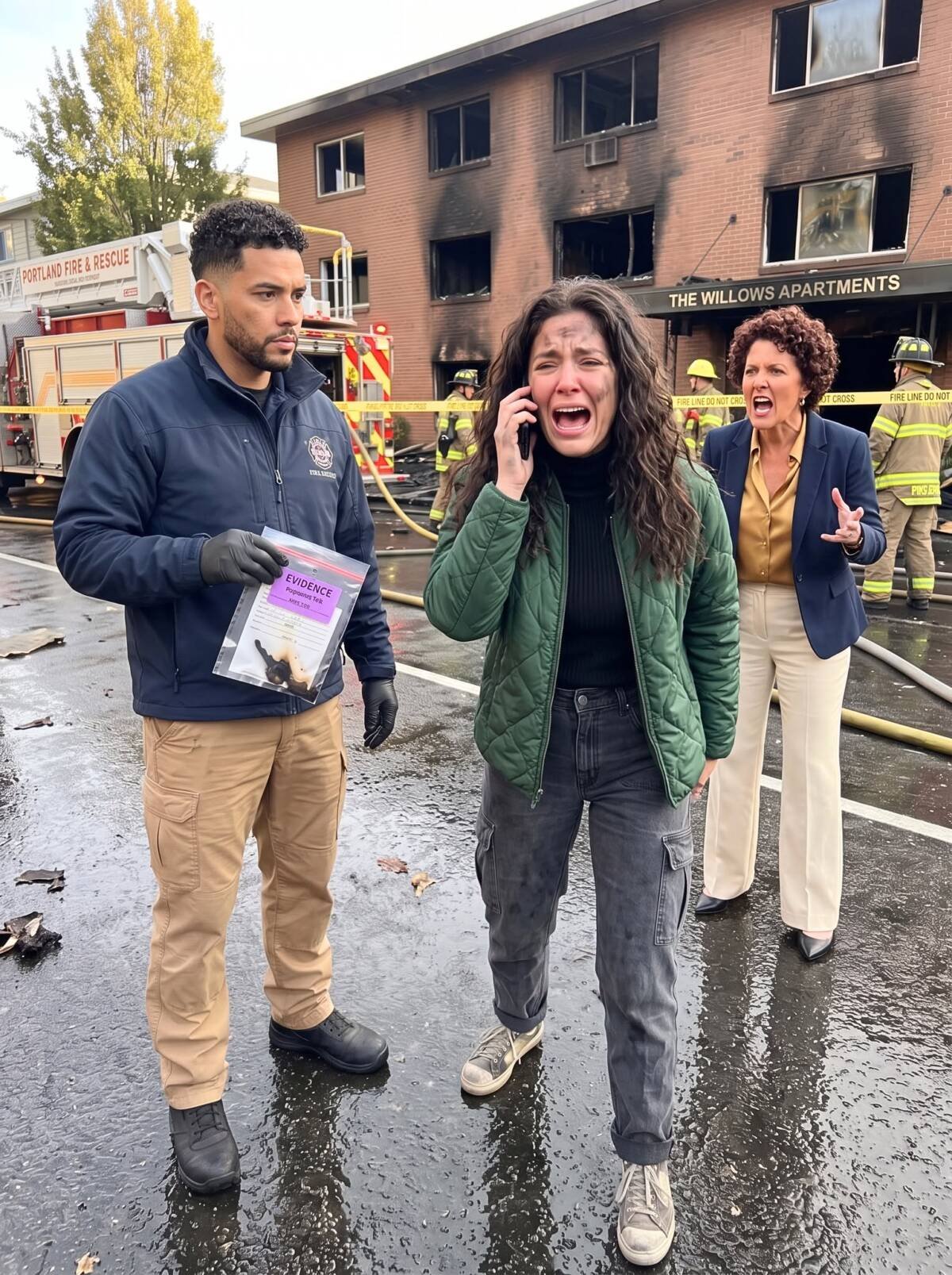
The wail of sirens cut through the quiet neighborhood minutes later. An ambulance pulled into the driveway, followed closely by two police cruisers. While paramedics rushed to Lily, a uniformed officer pulled on a pair of blue nitrile gloves and began carefully sifting through the second dumpster.
He lifted a ripped black garbage bag right next to where we had pulled Lily out. Something small rolled across the paper plates and hit the metal bottom with a hollow rattle.
It was a small orange prescription bottle. The officer picked it up, turned it toward the morning light, and read the label.
The name printed on it wasn’t Lily’s. It was Vanessa’s.
“I didn’t!” Vanessa blurted out instantly.
Nobody had accused her yet.
My father’s head snapped toward Vanessa, then toward my mother. For the first time in my entire life, the three people who had spent decades closing ranks to protect one another suddenly didn’t look like a united family. They looked like three suspects silently calculating who was going to take the fall.
The officer flipped open his small spiral notebook and looked up at the porch.
“Who put the child in the dumpster?”
And for the first time that morning, nobody had an answer.
Part 2: The Evidence Remembered Everything
As the paramedics worked over Lily on the gravel driveway, my family’s arrogance evaporated. The EMTs fired off rapid, clinical questions—how long had she been outside, what medication was she given, what was the exact dosage, who administered it—and my mother tried desperately to steer the narrative back into her control.
“This is being blown completely out of proportion,” she insisted from the porch steps.
The lead paramedic didn’t even glance in her direction. He just kept checking Lily’s pupils and securing an oxygen mask over her tiny nose and mouth. That quiet refusal to engage terrified my mother far more than an argument ever could. For once, she couldn’t talk her way out of a crisis or rewrite the story before outsiders saw the truth.
One police officer began taking Marcus’s statement while a second officer cordoned off the area around the dumpsters. My mother hurried partway down the steps, still convinced she could downgrade a felony into a private squabble.
“Officer, this is just a family misunderstanding,” she said, her voice tight.
“Ma’am, I need you to step back onto the porch,” the officer replied evenly.
When the orange prescription bottle surfaced, the atmosphere shifted from tense to ice-cold. My mother sank heavily onto the top porch step, her face draining of color. Beside her, Vanessa began to cry—not the jagged, helpless sobs of someone worried about a four-year-old girl, but the panicked tears of an adult realizing the walls were closing in.
The ambulance doors swung shut before I heard any of them answer the officer’s question. I climbed into the back beside Lily while Marcus stayed behind to finish giving his statement to the police.
“I’ll be right behind you,” he promised, squeezing my hand before the doors latched.
At the emergency room, a team of doctors and nurses immediately surrounded Lily. They asked the same barrage of questions the paramedics had, and I answered in a flat, mechanical voice. Sticking to the bare facts was the only thing keeping me from collapsing on the linoleum floor.
She is four years old. She was missing this morning. We found her unconscious in a dumpster. My mother admitted to giving her diphenhydramine, an unknown amount at an unknown time. A prescription bottle with my sister’s name on it was found next to her.
Marcus arrived twenty-one minutes later, carrying Lily’s stuffed rabbit sealed inside a clean plastic bag. Before leaving my parents’ house, he had already emailed and cloud-backed every single photograph I had taken in the driveway.
“Just in case,” he said quietly, sitting beside me.
I knew exactly why he had done it. My family had spent my entire life gaslighting me, rewriting cruel comments and denying things they had said five minutes earlier. You could argue with a memory, but you couldn’t argue with timestamps, hospital toxicology reports, 911 recordings, and high-resolution photographs.
We sat beneath the sterile fluorescent lights while the rest of the world carried on normally. Vending machines hummed down the hall, nurses called out names, and a toddler in the next bay complained loudly that he wanted apple juice. Meanwhile, Marcus and I held hands and prayed my daughter would wake up.
At 10:12 a.m., a detective arrived to take my formal statement. I laid everything out: the decorations for Emma’s birthday, the text messages proving everyone knew today was Lily’s day, my mother’s admission about the medication, Vanessa lunging for my phone, and the prescription bottle pulled from the trash.
Then the detective paused, his pen hovering over his notepad, and asked a question that caught me off guard.
“Has your family ever threatened Lily before?”
My first reflex was to say no. They had never explicitly said they were going to physically hurt her. Their cruelty had always been quieter, dressed up as politeness and family standards—the sharp eye rolls when she laughed, the accusations that she was “too dramatic” when she cried, the endless comparisons to Emma, and the subtle reminders that I should be grateful they allowed me to bring her to holiday dinners at all.
For four years, I had called it favoritism. Sitting in that hospital room, listening to the steady beep of my daughter’s heart monitor, I finally saw it for what it really was: they had been practicing treating Lily as disposable long before they literally threw her in the trash.
“Yes,” I told the detective.
Lily finally began to stir late that afternoon. Her heavy eyelids fluttered open, and her gaze drifted slowly until she found my face beside the bed. The first words out of her mouth shattered whatever composure I had left.
“Mommy?”
“I’m right here, baby.”
She blinked slowly, trying to focus. “Did I miss my birthday?”
Behind me, Marcus turned abruptly toward the window and pressed a hand over his mouth. I leaned carefully over the bedrail, mindful of the IV taped to her tiny hand, and kissed her forehead.
“No, sweetheart,” I whispered, fighting to keep my voice steady. “You didn’t miss it.”
Her eyes shifted toward Marcus. “Did I wear sunshine?”
He wiped his face quickly and forced a gentle smile as he stepped back to the bed. “Not yet, kiddo. But you still get to.”
While Lily rested, investigators were already piecing together a timeline my family couldn’t talk their way out of. A neighbor’s motion-activated security camera had captured grainy footage behind my parents’ property at 2:13 a.m. It clearly showed my father and Vanessa walking toward the dumpsters behind the garage—one of them carrying something small wrapped tightly in a blanket.
With warrants in hand, police also pulled a text message my mother had sent to Vanessa less than twenty minutes before that footage was recorded:
“She won’t stop crying. We need the house normal by morning.”
There were deleted texts recovered from their phones, partial fingerprints lifted from the dumpster lid, the prescription bottle with Vanessa’s name on it, Marcus’s 911 call, and the photos I had taken before anyone could sanitize the scene. Even the handwritten birthday checklist was still hanging on the refrigerator, obliterating my mother’s claim that she had simply “mixed up the dates.”
By nightfall, there was no engagement party. The pink balloons were deflated, the cupcakes were logged into evidence photos, and the glittering Happy Birthday, Emma banner was bagged by crime scene technicians.
My mother, father, and Vanessa were questioned in separate interrogation rooms for hours. I wasn’t there when their carefully rehearsed story finally imploded, but the detective later told me it didn’t take long. Vanessa blamed my mother first. My mother turned on my father. And my father insisted he had genuinely believed Lily would simply “sleep it off.”
“Nobody meant for her to get hurt,” they had all repeated in different ways.
That excuse burned itself into my mind. Even with a four-year-old in a hospital bed, they still believed their intentions should erase the consequences—as if leaving an unconscious child in a dumpster became a simple misunderstanding just because they hadn’t wanted the worst to happen.
Formal charges followed, though not with the instant, tidy resolution you see on television. There were toxicology screens, forensic downloads, witness interviews, and stacks of legal paperwork. Every single medical record documented a reality none of them could spin.
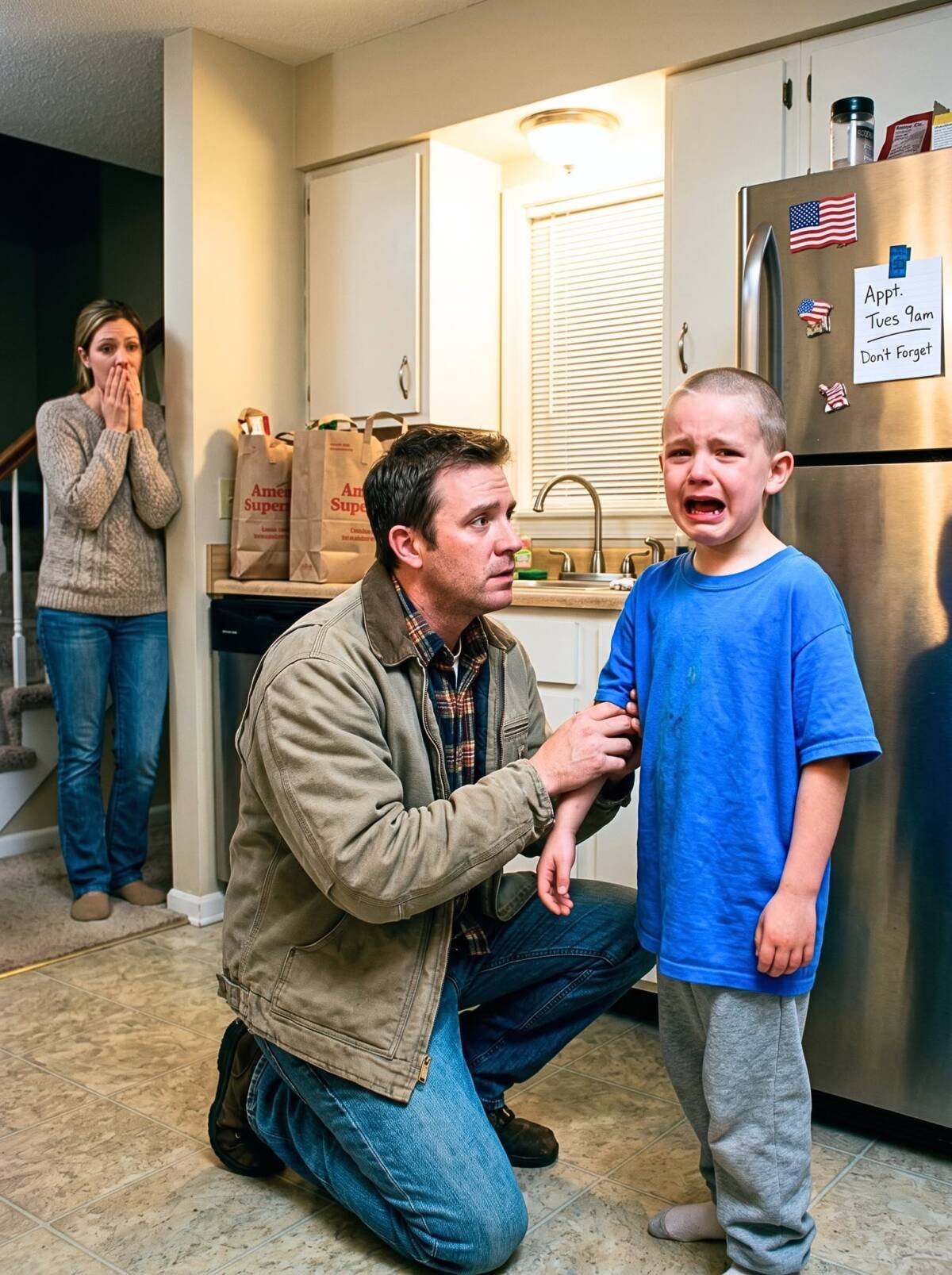
Two days after we brought Lily home, Marcus sat across from me at our kitchen table and quietly told me he had already started calling vendors to postpone our wedding. I opened my mouth to protest, but he reached across the table and covered my hand.
“We can get married any day of the year,” he said firmly. “She only gets one childhood.”
Looking at him, I finally understood what real, unconditional love looked like. It wasn’t a lavish engagement party hosted by people who resented my daughter. It was a man quietly canceling deposits, packing tiny toddler socks into an overnight bag, and sleeping on the floor beside a four-year-old’s bed because she was terrified to be alone in the dark.
The party was gone. The wedding could wait. My daughter came first.
Part 3: The Truth They Couldn’t Rewrite
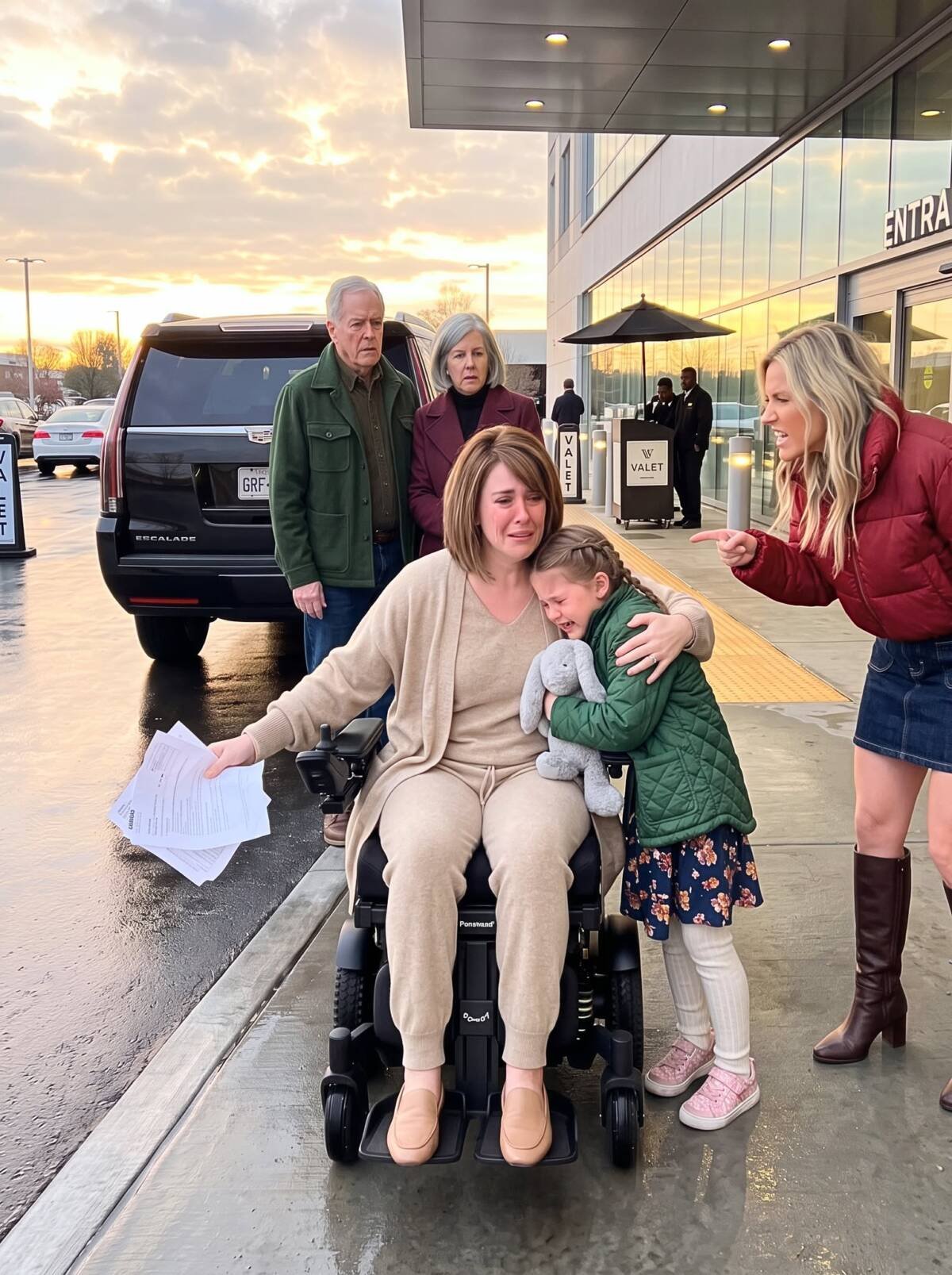
Bringing Lily home from the hospital didn’t mean life went back to normal. Marcus carried her through the front door while I followed with her discharge paperwork and prescriptions. Physically, the doctors assured us she would make a full recovery. Emotionally, she wouldn’t let either of us move more than a few feet out of her line of sight.
That first night, she slept wedged between us in our bed, her stuffed rabbit tucked tightly under her chin. Every time I shifted under the covers, her eyes popped open instantly, checking to make sure I hadn’t disappeared before she allowed herself to drift back to sleep.
The next morning, she asked for her yellow dress. I pulled it from the overnight bag Marcus had packed, and she stood remarkably still while I helped her slide her arms through the sleeves.
“Is it still my birthday?” she asked softly.
I knelt on the rug so we were eye to eye. “Your birthday belongs to you, Lily. Nobody can ever take it away.”
“Even Grandma?”
“Even Grandma.”
A moment later, Marcus appeared in the doorway holding a single vanilla cupcake with one lit candle flickering in the center. There were no banners, no balloons, and no crowd of relatives pretending to care—yet Lily’s entire face lit up when he set it on the table in front of her.
“Make a wish, sunshine,” Marcus said.
She squeezed her eyes shut for a long, serious moment before blowing out the flame. When I asked what she had wished for, she shook her head firmly; Marcus had taught her that birthday wishes only came true if you kept them a secret.
While we focused on helping Lily feel safe again, the investigation continued to peel back layers of a family I thought I knew. Detectives compared the separate statements my parents and Vanessa had given, and the contradictions were glaring.
My mother claimed Lily had become “hysterical” upon seeing Emma’s decorations and insisted she had only given her a tiny dose of medication to help her calm down. Vanessa swore the medication was entirely my mother’s idea. My father claimed he had gone to bed early and had barely been involved—a lie immediately shattered by the 2:13 a.m. security footage placing him right beside the dumpsters.
Then the forensic phone data came back, and the deleted messages were worse than I could have imagined.
One recovered text from Vanessa to my mother read:
“She’s going to ruin everything tomorrow if she keeps this up.”
My mother had replied four minutes later:
“Then make sure she sleeps.”
Reading those words on a printed page made my stomach heave. For years, they had accused Lily of being “too sensitive” whenever she reacted to their coldness. Now, in black and white, they had treated her heartbreak as a logistical nuisance that needed to be sedated and removed before their guests arrived.
There was another message, sent by my father earlier that evening while they were hanging Emma’s balloons:
“Why are we still pretending this day is about Lily?”
For four years, I had made excuses for my father. I told myself his distance was just generational awkwardness, that he wasn’t naturally affectionate with little kids, and that Lily would eventually win him over. That single text obliterated every excuse I had ever made for him. He didn’t struggle to love children—I had watched him dote on Emma from the day she was born. He had simply decided my daughter wasn’t worth the effort.
Marcus found me sobbing at the kitchen table after the detective left copies of the recovered messages. Lily was napping upstairs, and I kept staring at the screenshots as if reading them one more time would somehow change the words.
“I should have walked away years ago,” I choked out.
Marcus pulled a chair beside me and wrapped an arm around my shoulders. “You couldn’t have known they would do this.”
“I knew they treated her like she didn’t matter.”
“Knowing someone is unfair isn’t the same as knowing they’re capable of putting a child in a dumpster.”
I shook my head, wiping my face. “I kept giving them chances because I wanted her to have grandparents.”
Marcus was quiet for a beat. “She needs people who love her more than she needs titles.”
Those words settled deep into my bones. I had been so obsessed with the idea of Lily having grandparents, an aunt, and a cousin that I had ignored the difference between having family on paper and actually being safe with them.
The investigation also revealed that Emma had been awake for part of that night. She was only six, and the adults had assumed she was asleep in her room, but a child forensic specialist later interviewed her with Vanessa’s attorney present.
Emma remembered hearing Lily crying. She also remembered what my mother had said.
“Grandma said Lily needed to stop ruining my special weekend.”
When the specialist asked Emma if it was her birthday, the little girl shook her head honestly. “No. My birthday is later.”
Even the six-year-old they were supposedly celebrating knew the truth. Emma went on to describe how Lily had walked into the dining room and asked why everyone was putting up balloons for her cousin. According to Emma, Vanessa had snapped at Lily and called her selfish for crying.
“Lily said, ‘But today is mine.'”
I had to close the folder after reading that line. I pictured my four-year-old standing beneath another child’s banner on the morning she had been promised yellow dresses and sunshine. She hadn’t thrown a tantrum or demanded expensive toys; she had simply tried to understand why the people who were supposed to love her were handing her birthday to someone else.
Marcus gently slid the folder away from me. “You don’t have to read all of this tonight.”
“I need to know what they did.”
“You also need to be able to breathe,” he said softly.
We started Lily in child therapy the following week. Her therapist encouraged us to rebuild predictable, comforting routines rather than letting the trauma dominate every waking hour. So we went back to Saturday morning pancakes, coloring books, trips to the park, and long bedtime stories.
Some days, Lily seemed completely like her old self. Other days, she asked quiet questions that broke my heart all over again.
“Why does Grandma like Emma more?” she asked one afternoon while we sat on her bedroom floor.
“I don’t know, baby.”
“Is Emma better than me?”
“No. Never.”
“Am I bad?”
“No, Lily. You are wonderful.”
She twisted one of her stuffed rabbit’s ears between her small fingers. “Then why?”
There was no answer that could make sense to a four-year-old, because there was no rational excuse for it. Nothing had ever been wrong with Lily. The flaw belonged entirely to the adults who believed love was a limited resource to be handed out based on their own petty hierarchy.
“Sometimes grown-ups make very wrong, very unkind choices,” I told her, pulling her into my lap. “What they did was about them—never about you.”
Meanwhile, the extended family began closing ranks. An aunt called Marcus to warn him that criminal charges would “destroy everyone’s future.” A cousin sent me a long, guilt-ridden text asking if I really wanted Lily to grow up knowing she was the reason her grandparents went to court.
I blocked every single one of them. Not one of them had bothered to ask what it would do to Lily’s future if the adults who endangered her life walked away without consequences.
The hardest call came from Vanessa. Against her lawyer’s advice, she dialed me from an unknown number.
“Please, just listen to me,” she pleaded the second I answered.
“I have nothing to say to you, Vanessa.”
“It wasn’t supposed to happen like this!” she cried. “Mom just wanted her to sleep. Dad panicked when she wouldn’t wake up—”
“And then?” I asked coldly.
Silence stretched across the line.
“And then what, Vanessa?”
“I told them we should call somebody!”
“But you didn’t,” I said.
She began babbling about how fast everything had happened, how terrified they were. Then she said the one sentence that severed the last thread between us.
“You know how Mom gets when she’s embarrassed.”
I hung up the phone.
For my entire life, that single phrase had been used to excuse everything. We walked on eggshells around my mother’s pride, protected her reputation, and buried every ugly truth so she wouldn’t have to feel uncomfortable.
Not this time. This time, there was no one left to clean up her mess.
A week later, the prosecutor called to confirm the case was moving forward. When I hung up, Lily was sitting at the kitchen table with a yellow crayon gripped in her fist. She looked up and beamed at me.
“Mommy, look! I made sunshine.”
I sat down beside her. “It’s beautiful.”
She pushed a second yellow crayon across the table. “You make one too.”
So I did. For years, I had exhausted myself begging my family to let Lily belong. Sitting beside my daughter that afternoon, I realized I had been asking the wrong people for permission. She already belonged with me.
Part 4: I Stopped Calling Them Family
Once it became clear that the prosecutor wasn’t dropping the charges, my relatives shifted their strategy. Since they could no longer pretend nothing serious had happened, they began arguing that accountability was somehow crueler than the crime itself.
Calls trickled in from unfamiliar numbers. Relatives begged me to think about my parents’ age. Others reminded me that Vanessa was Emma’s mother, insisting that sending her to jail would punish an innocent child.
It was astonishing how quickly they weaponized Emma’s innocence while completely ignoring Lily’s. For four years, they had expected Lily to quietly absorb every slight, every rejection, and every cold shoulder without making anyone uncomfortable.
One afternoon, my aunt managed to reach Marcus while Lily and I were at therapy. She told him my mother couldn’t sleep and my father had stopped eating, then asked if watching them suffer made us feel better.
Marcus didn’t raise his voice. “This isn’t about making anyone suffer. It’s about what they did to Lily.”
“They’re her grandparents!”
“They stopped acting like grandparents a long time ago.”
When Marcus told me about the call, I realized how completely my definition of the word family had changed. Growing up, family was treated like a blank check—a magical word that meant forgiving people who never apologized, hiding ugly secrets behind closed doors, and accepting mistreatment because you shared DNA.
Lily’s therapist helped me see how deeply that conditioning had trapped me. I had kept dragging my daughter back into a toxic house because I feared cutting them off would leave her without a family. In reality, every visit had taught her that she had to beg for crumbs of affection from people who had already decided she wasn’t enough.
A few weeks later, the prosecutor invited Marcus and me to review a final batch of recovered messages. I dreaded opening the file, knowing every page would reveal another cruel conversation held behind my back.
One exchange was dated months before the engagement party. Vanessa had complained that Lily always wanted to play with whatever Emma had, and my mother had replied:
“She needs to understand Emma has grandparents who can actually enjoy her.”
Vanessa had answered seconds later:....