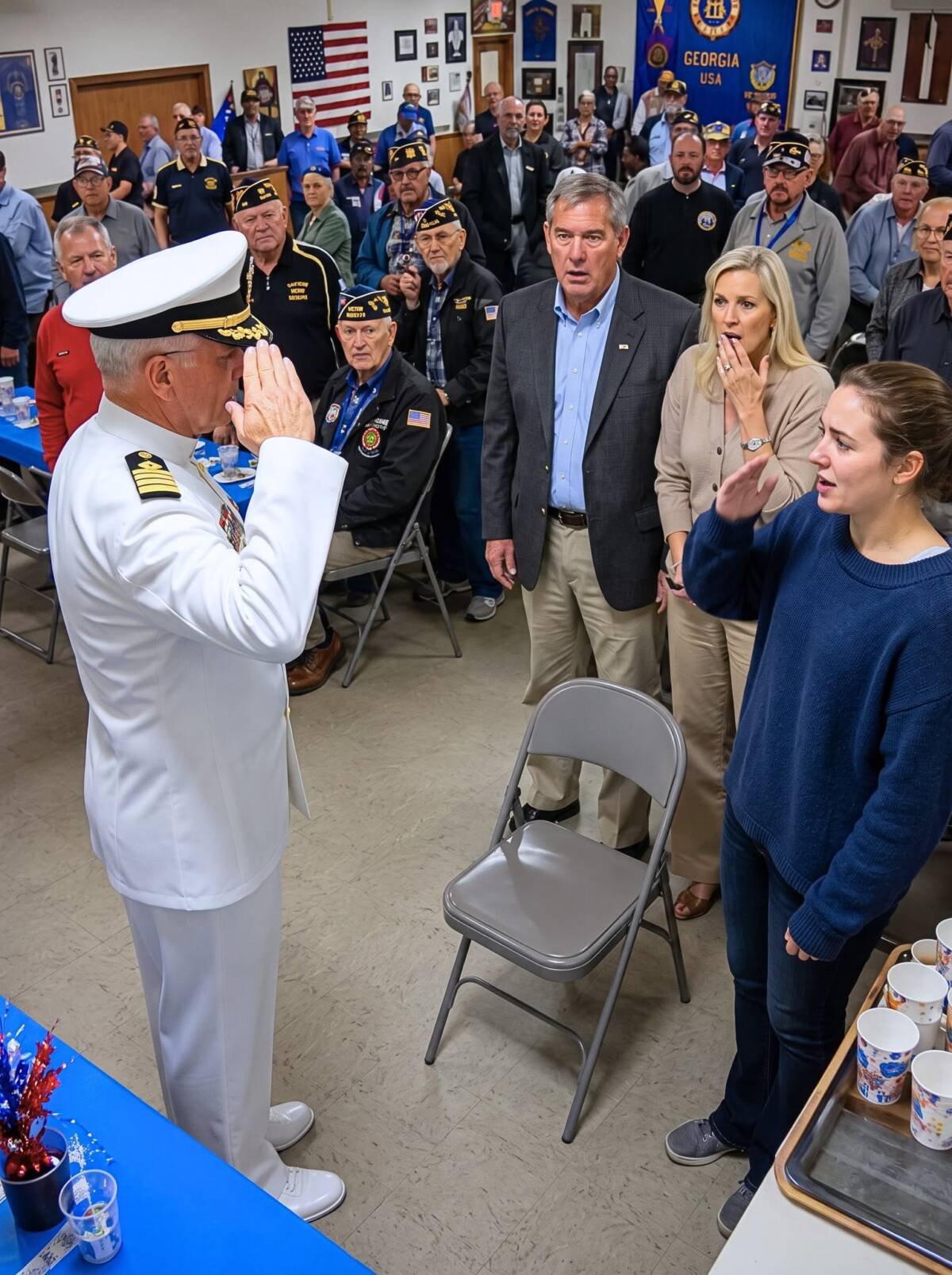
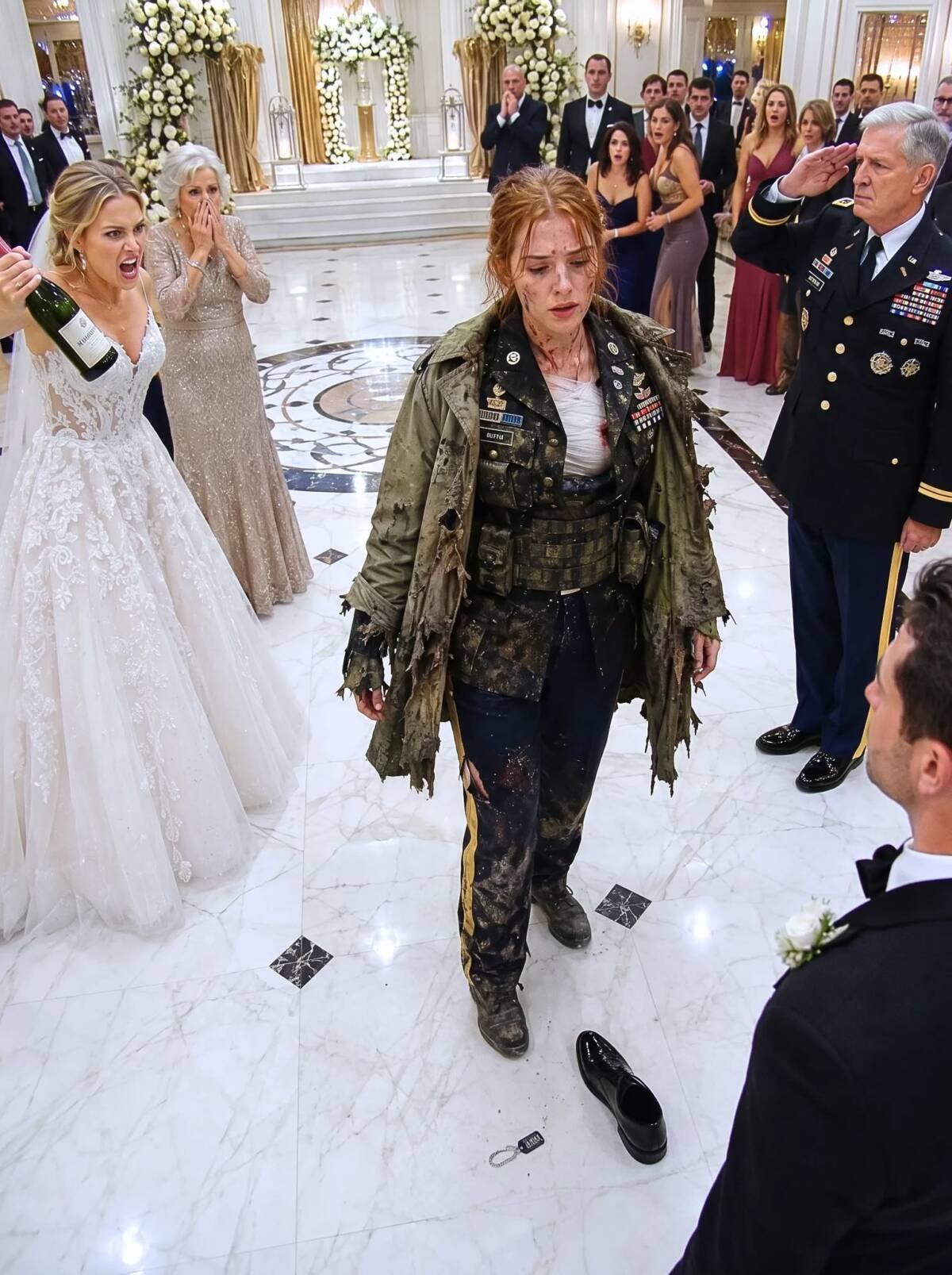
My thirty-first birthday was supposed to be a night of quiet pride. It happened to fall on the exact evening of our unit’s annual Army Ball—a rare occasion when the dust of Fort Liberty was traded for formal dress blues, polished brass, and an orchestra playing beneath ballroom chandeliers.
Instead, my mother-in-law waited for the band to pause between songs, crossed the polished floor in a navy sequined gown, and dropped a thick, cream-colored envelope beside my dinner plate in front of eighty-seven people I served alongside. Ten feet away, my husband stood with his phone raised, grinning as he recorded every second of what he believed would be the moment I finally broke.
They had spent weeks rehearsing the humiliation. They expected tears, a raised voice, or a desperate plea to save my marriage and my home. What neither of them realized was that I had been waiting for that envelope for twenty-one days—and by the time I calmly picked up the pen and signed my name, my husband had just captured the exact evidence the police needed to destroy everything they had built.
The House That Never Belonged to Them
To understand why my mother-in-law smiled so brightly when she dropped those papers beside my silverware, you have to understand the house in Raleigh.
It wasn’t a sprawling mansion or a designer showcase. It was a solid, two-story brick colonial on a quiet, tree-lined street with a wide front porch and a backyard shaded by old oaks. My grandfather had built much of it himself in the late 1960s, and when he passed away four years before I ever met Grant Keller, he left it to me outright. No mortgage. No liens. Just a deed with my name on it and a handwritten note telling me to always make sure I had a roof nobody could take away.
When Grant and I married three years later, moving into my Raleigh house made practical sense. I was stationed at Fort Liberty, about an hour south, and Grant was trying to get his small residential renovation company off the ground in Wake County. Because I didn’t have a mortgage payment, we were able to live comfortably while he poured his time—and, as I later learned, far too much borrowed money—into keeping his business afloat.
From the very beginning, my mother-in-law, Diane Keller, had a strange way of talking about my grandfather’s house.
She never called it Natalie’s house. She rarely even called it your house. Whenever she visited for Sunday dinners or holidays, she would run her hand along the hallway wainscoting or stand by the kitchen island and say things like, “Grant has such a good eye for property. This place is going to be a wonderful anchor for the Keller family.”
At first, I brushed it off as harmless maternal pride. Grant had, after all, replaced the outdated kitchen cabinets during our second year of marriage and painted the living room while I was away on a six-week training rotation. I thanked him for it, bought the materials out of my own savings, and thought nothing more of it.
I didn’t notice the shift until the last year of our marriage, when Grant’s renovation company began losing contracts. Suppliers started calling the house. Invoices went unpaid. Grant grew irritable, defensive, and increasingly secretive with his phone. Whenever I asked how business was going, he snapped that I wouldn’t understand because I collected a steady military paycheck.
And whenever Diane visited, her comments grew sharper. She began suggesting that it was “unfair” for a married man to live in a home where his name wasn’t on the deed. She implied that my refusal to add Grant to the title meant I didn’t truly trust my own husband.
I didn’t argue with her. I simply reminded her—politely, every time—that the house was my grandfather’s legacy, and it was staying in my name.
I had no idea how far she and her son were willing to go to change that.
The Phone Call at Fort Liberty
Three weeks before my thirty-first birthday, I was at Fort Liberty, buried in logistics spreadsheets and equipment checklists ahead of a major command inspection. My phone buzzed on the edge of my desk shortly after two in the afternoon. The caller ID showed the local Raleigh branch of the bank where I had held my accounts since college.
I almost let it go to voicemail. I was two hours behind schedule and had a briefing at three. Something made me pick it up anyway.
The woman on the line introduced herself as a senior loan compliance officer from the bank’s fraud department. Her voice was measured, professional, and just tense enough to make me set my pen down.
“Captain Keller,” she said, using my married name, “I’m calling to verify a home-equity transaction that was recently processed against your property in Raleigh. We’re doing a final audit before releasing the remaining balance, and I wanted to confirm a few details directly with you.”
I stared at my computer screen. “A home-equity transaction?”
“Yes, ma’am. A loan in the amount of $186,000, secured by the Raleigh residence.”
The room seemed to drop ten degrees. “I didn’t apply for a home-equity loan,” I said slowly. “I don’t have a mortgage on that house, and I haven’t authorized any borrowing against it.”
There was a brief pause on the other end of the line, followed by the soft click of a keyboard.
“That’s what I was afraid of,” the officer said quietly. “One of our branch employees flagged the file this morning. She was reviewing the closing packet and noticed that the signature on the loan application didn’t quite match the signature card we’ve had on file for your account since 2014. The loops were different. The slant was off. She brought it to my desk, and I placed an immediate freeze on the remaining funds.”
My heart was hammering against my ribs, but my voice stayed level. “How did it get processed at all if I wasn’t there?”
“The paperwork was submitted with a power of attorney,” she said. “Along with a quitclaim deed transferring fifty percent ownership of the Raleigh property to Grant Keller.”
For a full five seconds, I couldn’t breathe.
“I revoked Grant’s power of attorney two years ago,” I said. “Right after I came back from deployment. I have the notarized revocation in my safe.”
“I think you need to come in as soon as you can,” she replied. “And Captain? I wouldn’t mention this call to anyone at home until you’ve seen the paperwork.”
Twenty-One Days of Silence
I drove to Raleigh that evening, telling Grant I was staying late at Fort Liberty to finish inspection prep.
Sitting in a glass-walled conference room at the bank, I stared at the documents spread across the table. Seeing my own name forged at the bottom of a $186,000 loan agreement felt like watching someone steal my skin. The signature was a careful imitation—someone had clearly practiced it—but it was stiff, hesitant in the curves where my real handwriting moved fast.
Beside it lay the forged deed, supposedly transferring half of my grandfather’s house to Grant. And beside that was a scanned copy of the old power of attorney I had signed before my deployment years earlier. Someone had digitally altered the scan, cleanly cropping and editing out the expiration language so it looked open-ended and active.
The branch manager confirmed that Diane Keller had accompanied Grant during part of the process, explaining to the loan officer that I was “unavailable due to classified military obligations” and that Grant was handling the family finances while I was away.
Every instinct in my body screamed at me to drive straight home, throw those copies onto the kitchen counter, and demand an explanation.
Instead, I thought about what happens when you tip off a guilty person before the evidence is secured. Files get deleted. Money gets moved to cash. Stories get rehearsed.
Before I left the bank, I made two phone calls.
The first was to Claire Morgan, a sharp, no-nonsense family law and civil litigation attorney recommended by a friend in the JAG corps. The second was to the Wake County Sheriff’s Office, where my case was assigned to Detective Rebecca Shaw of the Financial Crimes Unit.
Over the next two weeks, I lived a double life.
By day, I prepared my unit for inspection at Fort Liberty and met privately with Claire and Detective Shaw during my lunch breaks. By night, I came home to the Raleigh house, ate dinner across from Grant, and listened to him complain about lumber prices while his mother texted him from down the road.
It was the hardest thing I had ever done. Every time Grant kissed my cheek before heading out to a “job site,” I knew Detective Shaw was subpoenaing bank records that traced where the $186,000 had gone.
The numbers came back faster than I expected.
Before the bank froze the remaining funds, the bulk of the money had already been moved. Ninety-four thousand dollars had been wired straight into Diane Keller’s personal account. Another $42,000 had been funneled into debts tied to Grant’s failing renovation company. Thirty-one thousand had gone toward paying off high-interest credit card balances in Grant’s name. The rest had been pulled out in cash withdrawals over a ten-day span.
Meanwhile, Claire Morgan quietly monitored the Wake County court filings. Five days before my thirty-first birthday, she called me.
“Grant filed for divorce this morning,” Claire said. “He’s asking for temporary possession of the Raleigh house, a division of marital accounts, and reimbursement for renovations. And Natalie—his process server hasn’t come to your house or your office. My guess? He’s waiting for a specific moment to serve you himself, or have someone close to him do it.”
I looked at the calendar on my desk. Five days until my birthday. Five days until the Army Ball.
“Grant insisted his mother come to the ball this year,” I said softly. “He’s been talking about it all month.”
Claire didn’t hesitate. “Then I’m coming as your guest. And I’ll let Detective Shaw know where Grant and Diane will be on Saturday night.”
The Ballroom Ambush
Saturday night arrived crisp and clear. The grand ballroom at the downtown hotel was glowing with warm light, packed with soldiers in dress blues, spouses in evening gowns, and white-clothed banquet tables lined with crystal glassware.
My battalion commander, Lieutenant Colonel Hayes, sat at my table along with six other officers from my unit. Claire Morgan sat two chairs down, dressed in an understated black cocktail dress, looking like any other civilian guest.
Grant spent the first hour of the evening oddly restless. He barely touched his dinner, kept checking his phone, and exchanged brief, unreadable glances with Diane, who was sitting at the next table over in a striking navy sequined gown.
When the band wrapped up a slow jazz set and the lead singer announced a brief intermission, the ballroom settled into a comfortable murmur of clinking forks and laughter.
That was Diane’s cue.
She stood up smoothly, lifted a cream-colored envelope from her clutch, and walked across the short stretch of carpet toward our table. Her posture was regal, her smile practiced, as if she were about to present an award.
Out of the corner of my eye, I saw Grant push his chair back and step about ten feet away. He raised his smartphone, angling the camera directly toward my seat. The little red recording light wasn’t visible from where I sat, but the way he braced his elbows and tilted the screen told everyone at the table exactly what he was doing.
Diane stopped right beside my chair and placed the cream-colored envelope neatly next to my dinner plate.
“Happy birthday, Natalie,” she said, her voice pitched loud enough to cut cleanly through the surrounding chatter. “Grant thought it was time you stopped pretending this marriage was still alive.”
The effect was immediate.
Conversations at our table died mid-sentence. Forks paused halfway to mouths. Across the table, Lieutenant Colonel Hayes stopped speaking, her gaze flicking from the envelope to Diane, and then to Grant standing ten feet away with his phone pointed at my face. I could see the cold realization settle into my commander’s eyes. She knew an ambush when she saw one.
Around us, heads turned. Eighty-seven people—officers, NCOs, spouses, and peers I had worked beside for years—watched in stunned silence.
Grant laughed, a loud, forced sound meant to break the tension in his favor.
“Come on, Natalie,” he called out, taking a half-step closer with the camera. “Open it. Don’t be shy.”
I looked at the envelope. Then I looked up at Diane, who was beaming down at me as if she had waited years for this exact expression of triumph.
I didn’t shake. I didn’t blush. I didn’t ask Grant to stop filming.
I simply reached over, slid my finger under the flap of the envelope, and pulled out the stack of legal papers.
I skimmed the first page. Petition for Dissolution of Marriage. There it was, in black and white: a demand for temporary possession of the Raleigh home, an equal split of all financial accounts, and reimbursement for renovations Grant claimed he had made to “jointly held property.”
Reading those words in front of my entire unit almost made me smile. They really thought I was completely in the dark.
Clipped to the front page was a black ballpoint pen and a standard acknowledgment of service—the simple form confirming that I had physically received the divorce petition.
I unclipped the pen, turned to the acknowledgment page, and calmly signed my name on the line.
I didn’t sign the proposed settlement. I didn’t agree to a single one of Grant’s demands. I only acknowledged that the papers had been handed to me.
Grant, however, clearly didn’t know the difference. Seeing my pen move across the paper, his grin widened. He stepped even closer, zooming in to capture my signature on video.
Diane let out a satisfied sigh, glancing around at the quiet officers at my table as if inviting them to share in her victory.
“See?” she said brightly. “That wasn’t so hard. Now the house can finally stay in the Keller family.”
The moment those words left her mouth, Lieutenant Colonel Hayes’s expression hardened. Diane had just announced—loudly, clearly, and on her own son’s video recording—that their goal was to take my inherited property.
I clicked the pen shut, set the papers neatly beside my plate, and stood up.
Grant kept the phone aimed right at my face, waiting for the tears, the anger, or the desperate defense he had promised himself.
“Thank you,” I said calmly.
Grant blinked. He lowered the phone by an inch, his smile faltering. “What?”
“Thank you for serving these in front of eighty-seven witnesses,” I said, my voice carrying effortlessly across the quiet tables. “And thank you for recording your mother explaining what you planned to do with my house.”
The color drained from Grant’s cheeks. Diane’s smile vanished, her eyes narrowing in confusion. For the first time all night, neither of them looked entertained.
Before Grant could find his voice, the heavy double doors at the far end of the ballroom swung open.
The Warrant and the Evidence Bag
A woman in a sharp, tailored gray suit walked into the room, flanked by two uniformed Wake County police officers. She didn’t pause to admire the chandeliers or scan the crowd. Detective Rebecca Shaw knew exactly where our table was, and she walked straight toward it.
She didn’t look at me.
She looked directly at Grant.
“Mr. Keller,” Detective Shaw said, her voice calm and unmistakable. “Please keep that phone right where it is. Do not lock it, do not delete anything, and do not put it in your pocket.”
The last trace of amusement evaporated from the ballroom. Grant froze, his hand hovering awkwardly in midair as Detective Shaw reached into her jacket and produced two folded documents.
“I have a warrant authorizing the immediate seizure of your mobile device as evidence in an ongoing felony financial-crimes investigation,” she said evenly. “And I have a second warrant authorizing investigators to collect financial records from the residence of Diane Keller.”
Diane’s composure cracked, though her instinct to bully her way out of trouble kicked in immediately. She stepped forward, her sequined gown catching the light.
“This is completely ridiculous!” she snapped, gesturing toward me. “What is she telling you people? This is a divorce! My son put years of sweat and money into that house!”
A cool, steady voice answered from just behind the two officers.
“Replacing kitchen cabinets does not make you an owner.”
Claire Morgan stepped smoothly into the circle, her posture relaxed, her eyes locked on Diane.
Grant’s head snapped from Claire to me, and in that single second, I watched the truth finally hit him. He hadn’t ambushed an unsuspecting wife. I hadn’t walked into that ballroom blind.
I had known the papers were coming.
What neither Claire nor I had anticipated was that Diane would hand us a recorded confession on a silver platter.
Detective Shaw didn’t raise her voice, but every word landed like a stone. She laid out what investigators had already confirmed: the bank’s preserved surveillance footage from the branch where the home-equity loan had been processed, the forged deed transferring half of my Raleigh property to Grant, and the digitally altered power of attorney that had been revoked two years earlier.
Then she read the numbers aloud.
“Of the $186,000 borrowed against Captain Keller’s inherited property,” Rebecca said, “$94,000 was transferred directly into an account belonging to Diane Keller. Forty-two thousand went toward debts connected to your renovation company. Thirty-one thousand paid off credit-card balances, and the remainder was withdrawn in cash.”
Grant stared at me, his jaw slack. “You’ve been investigating me?”
“No,” I replied evenly. “I reported a crime that was committed in my name.”
His voice shot up an octave, cracking slightly as nearby soldiers quietly pushed their chairs back and stepped away from the table. “I was your husband! I had power of attorney!”
“You had one,” I said. “It was revoked two years ago.”
One of the uniformed officers stepped forward, gently took the phone from Grant’s trembling hand, and dropped it into a clear plastic evidence bag, sealing the top with a sharp zip. The device Grant had brought to preserve my humiliation was now Exhibit A.
The Metadata That Ended Everything
Grant looked like he was already calculating how to spin the loan as a “marital misunderstanding.” What he had forgotten was the extra surprise he had tucked into the back of the cream-colored envelope.
Claire Morgan reached down, picked up the divorce petition from beside my plate, and flipped past the first few pages. She stopped at an attachment I had never seen before in my life.
“What is this?” Claire asked, holding the page up so Detective Shaw could see it.
It was a postnuptial agreement, dated eighteen months earlier. According to its neatly typed paragraphs, I had voluntarily agreed to convert my grandfather’s Raleigh house into joint marital property, and I had further agreed to waive any claim against debts Grant incurred during our marriage.
At the bottom of the page was another forged version of my signature, stamped beside an official North Carolina notary seal.
Claire read the notary’s name aloud. “Elaine Porter.”
Diane’s younger sister.
Detective Shaw didn’t look surprised. She reached into her leather folio, pulled out a single glossy eight-by-ten photograph, and laid it gently on the white tablecloth between the dinner plates.
It was a crisp still frame from an exterior security camera mounted outside Elaine Porter’s office building. The timestamp in the corner matched the exact date printed beside my forged signature on the postnuptial agreement.
There was just one massive problem with Grant’s timeline.
On that date, I had been two thousand miles away, sleeping in the desert during a month-long field training rotation at Fort Irwin, California—a fact documented by official Army orders, flight manifests, and eighty-seven witnesses.
In the photograph on the table, I was nowhere to be seen. Instead, the camera clearly showed Grant walking through the glass doors of Elaine’s office, with Diane right beside him carrying a thick manila folder.
For the first time since she had crossed the ballroom in her navy sequined gown, Diane Keller looked genuinely terrified. Her hand rose to her throat, her eyes darting between the photograph and the two uniformed officers.
Detective Shaw looked from the photo to Grant, delivering the final blow.
“There’s one more thing, Mr. Keller,” she said quietly. “When your attorney asked you to provide proof that this postnuptial agreement existed, you emailed him a PDF copy. We pulled the digital metadata from that file.”
She paused, letting the silence stretch.
“It wasn’t created eighteen months ago. It was created yesterday.”
Yesterday. The exact day Grant’s own lawyer had asked to see it.
Grant’s knees seemed to give out beneath him. He didn’t argue. He didn’t shout. He simply reached for the back of the nearest empty chair and sank slowly into it, staring blankly at the tablecloth.
Beside him, Diane stared at her son in absolute horror. Her hand flew to her mouth a split second too late, after a single, panicked whisper slipped out—loud enough for my battalion commander, my attorney, Detective Shaw, the two officers, and half the table to hear clearly.
“You told me nobody could trace that.”
Four Months of Unraveling
The police didn’t put Grant or Diane in handcuffs in the middle of the Army Ball. They didn’t need the spectacle. They executed the warrants, secured Grant’s phone, took statements from the witnesses at my table, and walked out the same doors they had entered—leaving Grant and Diane to exit the hotel in a silence far heavier than the one they had tried to force on me.
Over the next four months, Detective Shaw’s team methodically dismantled every piece of their story.
Once investigators knew where to look, the digital trail wasn’t even subtle. Grant had kept a PDF of my old deployment power of attorney on his laptop and used a basic editing program to scrub the revocation terms before printing it. The forged deed transferring half of my Raleigh house to his name had been generated through an online legal document service—paid for with Grant’s own debit card, leaving an IP address, a timestamp, and an email receipt.
The money trail was just as clear. Of the $94,000 wired into Diane’s account, investigators found that she had used a large portion to pay down her own mortgage and the rest as a massive down payment on a brand-new luxury SUV.
Because that alert bank employee had caught the signature discrepancy early and frozen the loan before the final disbursement, investigators were able to recover nearly $120,000 from Diane’s accounts and Grant’s business. The rest became part of court-ordered restitution.
Even during formal interviews with investigators, Grant tried to cling to the belief that a marriage certificate gave him a blank check to my life.
“I was her husband,” he insisted, leaning forward across the table. “I lived there. I helped improve that house.”
Claire Morgan, sitting beside me during the civil deposition, didn’t even blink.
“You were her husband, Grant,” she said evenly. “You were not her signature.”
Faced with the bank surveillance footage, the altered power of attorney, the online deed receipts, the Fort Irwin deployment records, the security photo outside Elaine’s office, and the metadata from the fabricated postnuptial agreement, Grant’s defense collapsed completely.
He pleaded guilty to felony forgery, identity theft, and obtaining property by false pretenses. The judge sentenced him to eighteen months in state prison, followed by supervised release and mandatory restitution for every dollar still owed.
Diane Keller also pleaded guilty to her role in the fraudulent transfer. Because she had no prior criminal record, cooperated with prosecutors once the evidence became undeniable, and surrendered the new SUV to help satisfy the recovery, she avoided prison time—receiving supervised probation, mandatory community service, and a restitution order of her own.
Elaine Porter didn’t walk away untouched, either. For stamping her official notary seal onto a document she had never witnessed me sign, she permanently lost her notary commission and faced state legal penalties for her role in validating the fraud.
Compared to the criminal investigation, the divorce itself was almost anticlimactic.
The moment the metadata was exposed, Grant’s attorney formally withdrew the forged postnuptial agreement. The family court judge confirmed what had been true from the very beginning: the Raleigh house my grandfather left me remained my sole, separate property.
Grant didn’t walk away with absolutely nothing. Our legitimate joint marital accounts and shared household belongings were divided fairly according to North Carolina law. I didn’t ask the court for vengeance, and I didn’t try to drag the proceedings out to punish him.
There were simply boundaries he was never allowed to cross.
He didn’t get my grandfather’s house. He didn’t keep a dime obtained through forged signatures. And he didn’t get to rewrite the truth into a story where I had willingly surrendered my life to him.
The Recording
After the criminal case closed and the final divorce decree was signed, I watched the video from Grant’s phone exactly once.
It was strange seeing myself from his angle. There was Diane in her navy sequined gown, smiling brightly as she set the cream-colored envelope beside my plate. There was the quiet, stunned table of officers behind me. And there was thirty-one-year-old me, sitting straight-backed in my dress blues, calmly picking up the pen and signing the acknowledgment of service while eighty-seven people watched to see if I would shatter.
For months after the Army Ball, I hated remembering that image. It brought back the cold, sharp sting of sitting under those bright lights while the man I had married tried to turn my humiliation into entertainment. I wondered if I had looked too calm—almost detached, as if I hadn’t cared that my marriage was ending in front of my entire unit.
Watching it a year later, I finally saw it differently.
I hadn’t stayed calm because the betrayal didn’t hurt. It hurt deeply. I stayed calm because before Diane ever crossed that ballroom floor, I already knew something they didn’t.
Their performance could embarrass me. It could end my marriage. It could turn my thirty-first birthday into a night I would never forget.
But it couldn’t change whose name legally belonged on my house.
Thirty-Two
My thirty-second birthday couldn’t have looked more different.
There was no hotel ballroom, no orchestra, no formal dress uniform, and no crowd waiting to watch a marriage collapse. I spent the evening in jeans and a sweater at my kitchen table in Raleigh with four close friends from my unit, eating grocery-store chocolate cake off paper plates.
Halfway through the evening, Lieutenant Colonel Hayes raised a plastic cup of sparkling cider and smiled across the table.
“To Natalie,” she said warmly. “Who taught all of us never to confuse composure with surrender.”
Everyone laughed, and this time, I laughed right along with them. There was no camera pointed at my face and nobody waiting for me to fall apart—just a handful of people who had stood quietly beside me when my private life became painfully public.
After everyone headed home, I washed the forks, wiped down the kitchen counter, and stood for a few minutes in the quiet house. The silence felt different now. It wasn’t tense. It wasn’t heavy. It was just peaceful. Grant was gone, the legal battles were over, and there was no longer anyone in my living room trying to convince me that my grandfather’s legacy belonged to the Keller family.
Before heading upstairs, I walked into the spare bedroom, opened a cardboard storage box from the divorce, and pulled out the cream-colored envelope Diane had dropped beside my plate a year earlier.
My signature was still there on the acknowledgment page, neat and steady in black ink.
Grant and Diane had looked at that signature and thought they had won. They had mistaken my silence for weakness, assuming that because I didn’t yell, cry, or refuse the envelope, I didn’t understand what was happening.
Standing alone in my own home on my thirty-second birthday, I tucked the papers back into the box and closed the lid.
On my thirty-first birthday, my husband believed he had filmed the moment I lost everything. A year later, I finally understood what that recording actually showed.
I had signed proof that I received his papers.
I had never signed away my home, my identity, or myself.
What would you have done if you were in Natalie’s shoes at that Army Ball? Would you have kept your composure and let the evidence speak for itself, or confronted them on the spot? Share your thoughts in the comments below—and if you know someone who appreciates a story about patience, integrity, and quiet justice, feel free to pass this along.