When Rick Dalton learned that his wife had secretly told his 74-year-old father not to attend Thanksgiving dinner, he faced a choice: protect his marriage from an uncomfortable confrontation or stand up for the man who had spent his entire life showing up whenever his family needed him. His decision took only ten minutes. The consequences lasted much longer.
Introduction: The Phone Call That Changed Thanksgiving
My name is Rick Dalton. I’m 52 years old, and I supervise a small HVAC crew in Fort Wayne, Indiana. I’ve spent most of my adult life working around furnaces, service trucks, ladders, and cramped crawl spaces. I’ve never been embarrassed by the work I do. My father taught me that an honest living is something to be proud of, regardless of what anyone else thinks.
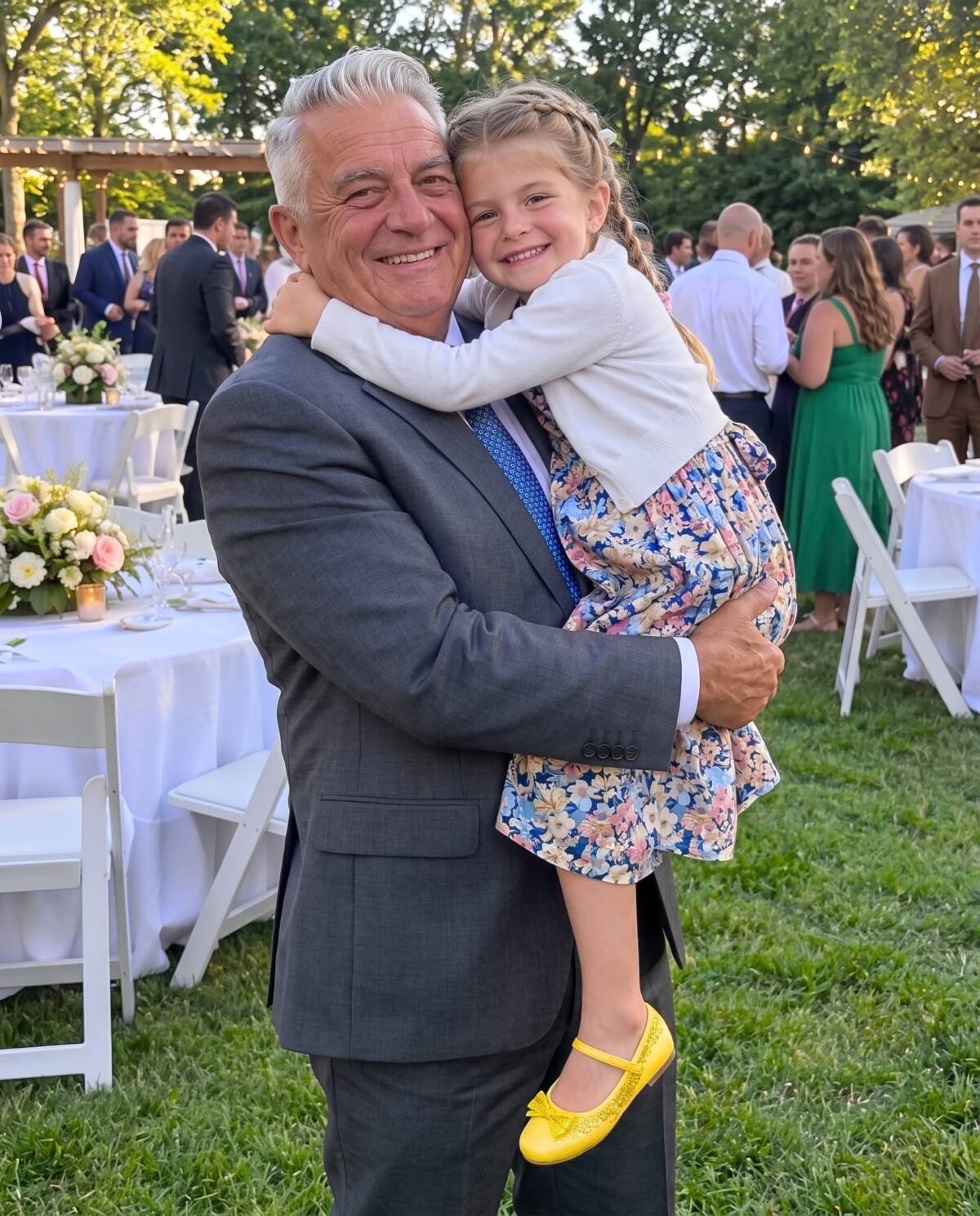
My father, Jack Dalton, is 74. He spent 50 years working at a General Motors plant in Anderson, Indiana, before retiring. Even now, he rarely goes a week without helping someone repair a lawn mower, fix an old pickup, or get a stubborn piece of machinery running again.
His garage has always smelled of motor oil, cold concrete, and old tools.
To me, that smell means something good. It means my father has spent his life being useful. It means that when something breaks, someone knows where to turn.
My wife, Karen, grew up in a very different world.
Her parents, Don and Margaret Whitfield, built their wealth in commercial real estate. They valued polished appearances, expensive clothing, carefully chosen words, and the kind of social standing that makes people pay attention when you enter a room.
They were never openly hostile toward my father. Instead, their disapproval came through tight smiles, distant greetings, and conversations that seemed to end whenever he approached.
For 12 years, I told myself that keeping the peace was more important than challenging their behavior.
I was wrong.
I learned just how wrong I was on Thanksgiving morning, while a turkey roasted in our oven and my father waited at home for a phone call that would determine whether he was welcome at his son’s house.
The Guest Who Was No Longer Welcome
Thanksgiving was one of the few holidays my father genuinely looked forward to.
He never expected expensive gifts or elaborate celebrations. He liked a full table, a football game playing in the background, and the chance to hear what everyone had been doing since the last family gathering.
That morning, I called him to confirm when I would pick him up.
Instead of his usual joke about whether my truck would survive another Indiana winter, he sounded unusually hesitant.
“Rick, I don’t think I’m coming over today.”
I stopped in the middle of the kitchen.
“What do you mean you’re not coming?”
There was a pause.
“Karen called last night. She said you were keeping Thanksgiving small this year and that there probably wouldn’t be enough room for everyone.”
I stared at the kitchen counter.
My father was not a man who struggled to make conversation. He had spent decades working alongside hundreds of people and could strike up a conversation with just about anyone. He also knew perfectly well that our dining table could seat eight people.
There was no shortage of room.
“Dad, stay there. I’ll call you back.”
I hung up and walked into the dining room.
Karen was arranging the good silverware beside the plates. She had spent the morning making sure everything looked exactly right. The tablecloth was spotless, the crystal glasses were polished, and the expensive napkins had been folded into neat triangles.
She looked up when I entered.
“Why did you call my father and tell him not to come?”
She didn’t look surprised.
Instead, she sighed as though I had asked an unnecessarily difficult question.
“Rick, you know what my parents are like.”
“What does that have to do with Dad?”
She placed another fork beside a plate.
“Your father always smells like an old repair shop. My mother notices things like that. I don’t want to spend the entire afternoon worrying about whether my parents are uncomfortable.”
For a moment, I said nothing.
I wanted to believe I had misunderstood her. I wanted there to be some explanation that would make the conversation less ugly than it sounded.
But she continued.
“My parents are coming to enjoy Thanksgiving, not to sit across from someone who smells like a mechanic. You know how particular they are.”
I looked at the dining table, then back at my wife.
I thought about the February morning when our furnace had stopped working during a bitter Indiana cold snap. The temperature inside our house had dropped, and we had no idea whether the problem was a failed component or something more serious.
My father had arrived before we had even figured out whom to call.
He had crawled into the utility room, inspected the system, and helped me identify the problem. He stayed until the heat was running again, then refused the money I offered him.
He hadn’t complained about being tired. He hadn’t asked for recognition.
He had simply helped his son.
Now, the smell of the garage he loved was apparently enough to make him unfit to sit at our Thanksgiving table.
Something inside me settled.
For years, I had treated my wife’s family’s judgment as an inconvenience I needed to manage. I changed subjects when they made dismissive comments. I avoided arguments when they spoke down to my father. I told myself that being a good husband meant preventing unnecessary conflict.
But there is a difference between maintaining peace and allowing someone you love to be humiliated.
“All right,” I said.
Karen glanced up.
“All right?”
“Yes.”
She seemed satisfied. She apparently believed I had accepted her decision.
I walked into the kitchen and opened the cabinet beneath the counter.
Ten minutes later, everything changed.
The Decision My Wife Never Expected
I began pulling out foil trays.
Karen followed me into the kitchen, watching as I lifted the turkey from the roasting pan and started preparing it for transport.
“What are you doing?”
“Packing dinner.”
She stared at me.
“Why?”
“Because I’m taking Thanksgiving to my father’s house.”
For a moment, she looked genuinely confused.
“Rick, my parents will be here in less than an hour.”
“I know.”
“You cannot be serious.”
I placed the turkey into a large tray and covered it with foil.
“You called my father and told him he wasn’t welcome at his son’s home on Thanksgiving because he smells like the work he spent 50 years doing. I’m not going to sit down at this table and pretend that’s acceptable.”
Her expression hardened.
“So you’re going to ruin Thanksgiving over this?”
“No. I’m going to have Thanksgiving with my father.”
She followed me from the kitchen to the dining room, arguing that I was being unreasonable. She reminded me how much effort she had put into preparing the meal and how embarrassed her parents would be if they arrived to find the house empty.
I listened without changing my mind.
The turkey went into the truck. Then came the mashed potatoes, stuffing, green bean casserole, sweet potatoes, gravy, rolls, and the pie Karen had baked the previous evening.
By the time I finished, the dining room table looked strangely bare.
Karen stood in the doorway with her arms crossed.
“If you leave with that food, don’t expect me to explain this to my parents.”
“You don’t have to explain anything. Just tell them what happened.”
I picked up my keys.
She stared at me as though she had never seen me before.
Perhaps, in some ways, she hadn’t.
For 12 years, I had been the man who absorbed the discomfort, smoothed over the arguments, and made sure everyone else could enjoy the holiday without confronting the things that were wrong.
That morning, I stopped doing it.
I drove away without another argument.
Thanksgiving at My Father’s Table
My father lived about 20 minutes away in a modest ranch house he had owned for decades.
When I pulled into the driveway, the porch light was on even though it was still daylight. Dad had always left it on whenever he expected someone to visit.
I carried the first tray to the front door and knocked.
He opened it wearing a faded flannel shirt and a pair of work pants.
His eyes moved from the food in my hands to the truck parked behind me.
“Rick? What in the world is all this?”
“Happy Thanksgiving, Dad.”
He stepped aside, still looking confused.
“You planning on standing out there all day with the turkey?”
I laughed despite myself.
“No. I was hoping you’d help me eat it.”
His kitchen smelled of fresh coffee, pine cleaner, and the faint trace of motor oil that seemed to follow him everywhere. It was a small, comfortable room with worn cabinets, a sturdy wooden table, and chairs that had seen better days.
Dad had built that table himself nearly 40 years earlier.
I placed the food on it while he watched.
“Karen know you’re here?”
“Yes.”
He looked down at the trays.
“Everything all right?”
I could have told him the entire story immediately. I could have explained exactly what Karen had said and how angry I was.
Instead, I took a breath.
“No, Dad. It isn’t. But I don’t want you worrying about it today.”
He studied me for a moment.
Then he nodded.
“All right. Get those potatoes over here before they get cold.”
That was my father. Even when something was wrong, he rarely demanded that anyone explain themselves before offering a little kindness.
We arranged the food across the kitchen table. The turkey was still warm, the gravy was thick, and the rolls had survived the drive better than I expected.
For the first time that day, I felt my shoulders relax.
We ate while a Thanksgiving parade played on television. Later, we switched to a football game neither of us cared much about, though Dad insisted that the referees were making questionable decisions.
We talked about my HVAC crew, the approaching winter, and an old Chevrolet Silverado he was restoring for a neighbor.
He told me about a stubborn carburetor that had been giving him trouble and described, in great detail, why the previous owner had probably made the problem worse by attempting a repair without understanding the underlying issue.
I listened.
For a few hours, the day felt almost normal.
But eventually, my father set down his fork.
“You didn’t have to bring all this over here.”
“Yes, I did.”
He shook his head.
“She’s your wife, Rick.”
“And you’re my father.”
He looked toward the television.
“I don’t want you fighting with Karen because of me.”
I felt something tighten in my chest.
That was the part that hurt most. Even after being deliberately excluded, he was still trying to protect me from the consequences of someone else’s behavior.
“Dad, you didn’t cause this.”
“I know.”
“Then stop acting like you did.”
He remained quiet.
I continued.
“You have spent your whole life showing up for people. You showed up for me when I needed help, when I was young, when I was broke, and when I didn’t know what I was doing. You never asked whether helping me would make you look good in front of anyone.”
Dad looked down at his plate.
“I just did what a father is supposed to do.”
“And I’m doing what a son is supposed to do.”
For a moment, neither of us spoke.
Then he reached for the pie.
“Good pie.”
I smiled.
“Karen made it.”
He cut himself another slice.
“She’s a good baker.”
I looked at him across the table and wondered how someone could be so generous toward a person who had just hurt him.
My father never seemed to need an audience to be decent. He didn’t need praise or recognition. He simply treated people the way he believed people ought to be treated.
That afternoon, I realized how much I had taken that quality for granted.
The Empty Dining Room
My phone vibrated throughout the afternoon.
Karen called repeatedly. I let the first few calls go unanswered because I wanted to spend the day with my father without turning every few minutes into another argument.
Eventually, I sent her a short message telling her that we were fine and that I would be home later.
Her father, Don, called twice.
I didn’t answer those calls either.
I had no interest in explaining myself to someone who had apparently been considered more deserving of a Thanksgiving seat than the man who raised me.
I stayed with Dad until the afternoon faded into evening.
Before I left, we packed some leftovers into containers. He insisted that I take extra turkey home for the next day’s lunch, and I promised to call him the following morning.
Then I drove back to my house.
When I opened the front door, Karen was sitting alone in the living room.
Her parents had already left.
Behind her, the dining room remained exactly as it had been that morning. Six place settings. Polished silverware. Crystal glasses. Folded napkins.
The table looked perfect.
Nobody had eaten from it.
Karen’s eyes were red, and she looked exhausted.
“Sit down,” she said.
I set my keys on the counter.
For 12 years, I had avoided the conversation that needed to happen between us.
Now, there was nowhere left to hide.
The Conversation We Should Have Had Years Earlier
I sat across from Karen.
For a while, neither of us spoke.
Finally, I looked toward the dining room.
“My father is not someone you manage around.”
Karen lowered her eyes.
“He is not an awkward situation you solve by making him disappear. He is not an inconvenience you move out of the way because your parents might disapprove.”
She started to respond, but I continued.
“My father worked for 50 years. He raised me. He taught me to work hard, keep my word, and help people when they need it. He has done more for this family than you seem willing to acknowledge.”
“That’s not fair,” she said quietly.
“What isn’t fair?”
“You’re acting like I hate your father.”
“I didn’t say you hate him.”
“Then why are you treating me like I’m a terrible person?”
I paused.
Because the truth was more complicated than that.
I didn’t believe Karen was incapable of kindness. I had seen her comfort friends, help relatives, and spend hours preparing thoughtful gifts. She could be generous and compassionate.
But she had also grown up in a family where appearances carried enormous weight.
She had learned to anticipate her parents’ preferences and organize her life around avoiding their disapproval. Over time, she had begun treating those preferences as rules everyone else was expected to follow.
When my father didn’t fit those rules, she decided it was easier to exclude him than to challenge them.
“I’m not saying you’re a terrible person,” I told her. “I’m saying what you did was wrong, and I’ve allowed too much of it to happen.”
She looked up.
“What do you mean?”
“I mean the little comments. The way your parents talk to Dad. The way I’ve changed the subject or laughed things off because I didn’t want an argument. I kept telling myself I was protecting our marriage, but I was leaving him to deal with the disrespect alone.”
Karen was quiet.
I continued.
“Do you remember when our furnace broke in February? Dad came over in the freezing cold and helped us get it running. He didn’t ask for money. He didn’t ask us to thank him. He didn’t ask whether your parents would approve of him being here.”
“I remember.”
“Then tell me why the smell of his garage suddenly matters more than the fact that he’s my father.”
She looked toward the dining room.
“I didn’t think you’d actually cancel dinner.”
“That isn’t an answer.”
She pressed her hands together.
“I thought my parents would be uncomfortable. I thought it would be easier if we kept things separate.”
“Separate from what? His clothes? His job? His entire life?”
She didn’t respond.
I leaned back in my chair.
“Karen, if my father had spent 50 years working in an office, would you have called him and told him not to come?”
“No.”
“If he had retired from a corporate job and spent his weekends restoring expensive cars, would you have done it?”
She shook her head.
“Then you understand the problem.”
Her eyes filled with tears.
For a moment, I felt the familiar urge to soften everything, to tell her that it was all right, that we could move on, that nobody had meant any harm.
But those words would have been dishonest.
I wasn’t ready to say everything was fine when it wasn’t.
“My father deserved a place at this table before today,” I said. “He deserves one next Thanksgiving, at Christmas, at Easter, and at every family gathering we host. If your parents don’t like that, they can decide for themselves whether they want to attend.”
Karen wiped her eyes.
“And what if they refuse?”
“Then they’ll have to live with that decision.”
The room fell silent.
For the first time in our marriage, I had drawn a boundary without apologizing for it.
Karen eventually admitted that she had spent so much of her life trying to satisfy her parents’ expectations that she had stopped questioning whether those expectations were fair.
She said she had thought she was preventing an uncomfortable afternoon.
I believed that she had convinced herself of that.
But intention did not erase the impact.
My father had spent Thanksgiving believing he was no longer welcome at his son’s house.
No explanation about social expectations could make that acceptable.
We talked for another hour. We discussed the years of small compromises, the resentment I had allowed to build, and the pressure she felt whenever her parents were involved.
It was not an easy conversation, and it did not solve everything.
But it was the first honest conversation we had had about the issue.
That night, the dining room remained untouched.
For once, I didn’t see the empty table as a failure.
I saw it as the consequence of a decision that needed to be made.
A Visit to the Garage
Two days later, I drove to my father’s house to help him with the Silverado.
When I called to tell him I was on my way, he answered immediately.
“Bring lunch worth eating this time.”
“I’ll stop at the deli.”
“Get turkey.”
I laughed.
“You just ate turkey on Thanksgiving.”
“And I’ve had time to think about it.”
I picked up sandwiches and drove over.
When I arrived, Dad was already in the garage, standing beside the old truck with a wrench in his hand.
The air smelled of oil, metal, and cold concrete. Tools hung along the walls, and small containers of bolts and screws covered a shelf above the workbench.
I had barely set down the lunch bag when I noticed Karen standing behind me.
She had come along without making a big announcement about it.
Dad looked at her.
“Well, look who came to supervise us.”
Karen offered a cautious smile.
“I was hoping I could help.”
Dad gestured toward an old stool.
“You can start by sitting there and telling Rick when he starts doing something stupid.”
I laughed.
“That’s a full-time job.”
Karen laughed too, and the tension eased slightly.
For the next hour, Dad worked on the Silverado while explaining what he was doing. Karen asked questions about the engine, the worn parts, and why he thought the truck was worth restoring.
What surprised me was that she seemed genuinely interested.
She wasn’t asking questions simply to fill the silence. She wanted to understand why my father enjoyed the work and what made the restoration worthwhile.
Dad answered patiently.
He explained how the original parts had been designed, how the engine responded to different adjustments, and why replacing everything with newer components would have destroyed some of the truck’s character.
Karen listened.
At one point, she picked up a small metal component from the workbench and asked how it fit into the larger assembly.
Dad showed her.
He didn’t mention Thanksgiving. He didn’t remind her that she had excluded him. He didn’t demand an apology or make her feel foolish for not knowing anything about engines.
He simply welcomed her into his world.
Later, we sat inside and ate our sandwiches at the kitchen table.
Karen looked around the room.
“This is a nice house, Jack.”
Dad shrugged.
“It keeps the rain off me.”
She smiled.
“I can see why you like it here.”
He nodded toward the garage.
“Most of what I need is out there.”
I watched them talk and realized that this was the first time in years Karen had spent an afternoon with my father without treating him as an extension of the social expectations she had inherited from her parents.
Nothing had been magically repaired.
But something had changed.
On the drive home, Karen was quiet for several minutes.
Finally, she spoke.
“Your father is a good man.”
I kept my eyes on the road.
“Yes, he is.”
“I should never have called him.”
“No,” I said. “You shouldn’t have.”
She nodded.
“I know.”
It wasn’t a grand apology, but it was an honest acknowledgment.
For the first time, she wasn’t explaining why she had done it.....