They promised Grandma Rose a special evening by the sea. Instead, they left her alone at a restaurant with a $412 bill she couldn’t afford. I paid it, took the itemized receipt, and made one decision that would change our family forever.
Introduction: The Night Everything Changed
Some people mistake kindness for weakness. They assume that because someone rarely complains, they can take advantage of that person’s generosity indefinitely. They borrow money without repaying it, accept favors without expressing gratitude, and gradually convince themselves that someone else’s kindness is something they deserve.
For years, my step-siblings, Alan and Daria, had treated our eighty-one-year-old grandmother, Rose, that way. She was the kind of woman who remembered every birthday, prepared homemade soup whenever someone felt unwell, and worried about whether everyone had eaten before thinking about herself.
She never asked for much in return.
Perhaps that was why they believed they could keep taking from her.
But one evening, their behavior crossed a line that even I could no longer ignore.
Alan and Daria had invited Grandma Rose to a seaside restaurant, supposedly to treat her to a special dinner. The evening ended with them disappearing when the bill arrived, leaving their elderly grandmother sitting alone at a candlelit table with a $412 check.
They had enjoyed lobster, steak, wine, cocktails, and desserts. Grandma had ordered tea, soup, and bread.
And when the waiter brought the bill, the two people who had promised to take care of her were nowhere to be found.
I learned what had happened when Grandma called me, her voice trembling with embarrassment.
I left work, drove to the restaurant, paid the bill, and brought her home. But before leaving, I asked the waiter for an itemized receipt.
At first, it was simply a way to understand exactly what had happened. By the time I returned home, however, I realized that the receipt represented something much bigger: a clear record of a pattern our family had tolerated for far too long.
That night, I decided I would no longer allow Alan and Daria to hide behind excuses, vague promises, or the assumption that Grandma would eventually forgive them.
They had called it just money.
I was about to show them why it was never just money.
The Dinner They Walked Away From
My relationship with my step-siblings had never been particularly close.
When my father married Linda five years earlier, her children, Alan, twenty-six, and Daria, twenty-three, technically became my siblings. We learned to be polite at family gatherings, exchanged occasional messages, and managed to maintain the appearance of a reasonably peaceful blended family.
From the outside, nothing seemed especially wrong.
We weren’t constantly arguing. We didn’t openly dislike one another. We simply existed in the same family without making much effort to become a real family.
The one person who connected us all was my father’s mother, Grandma Rose.
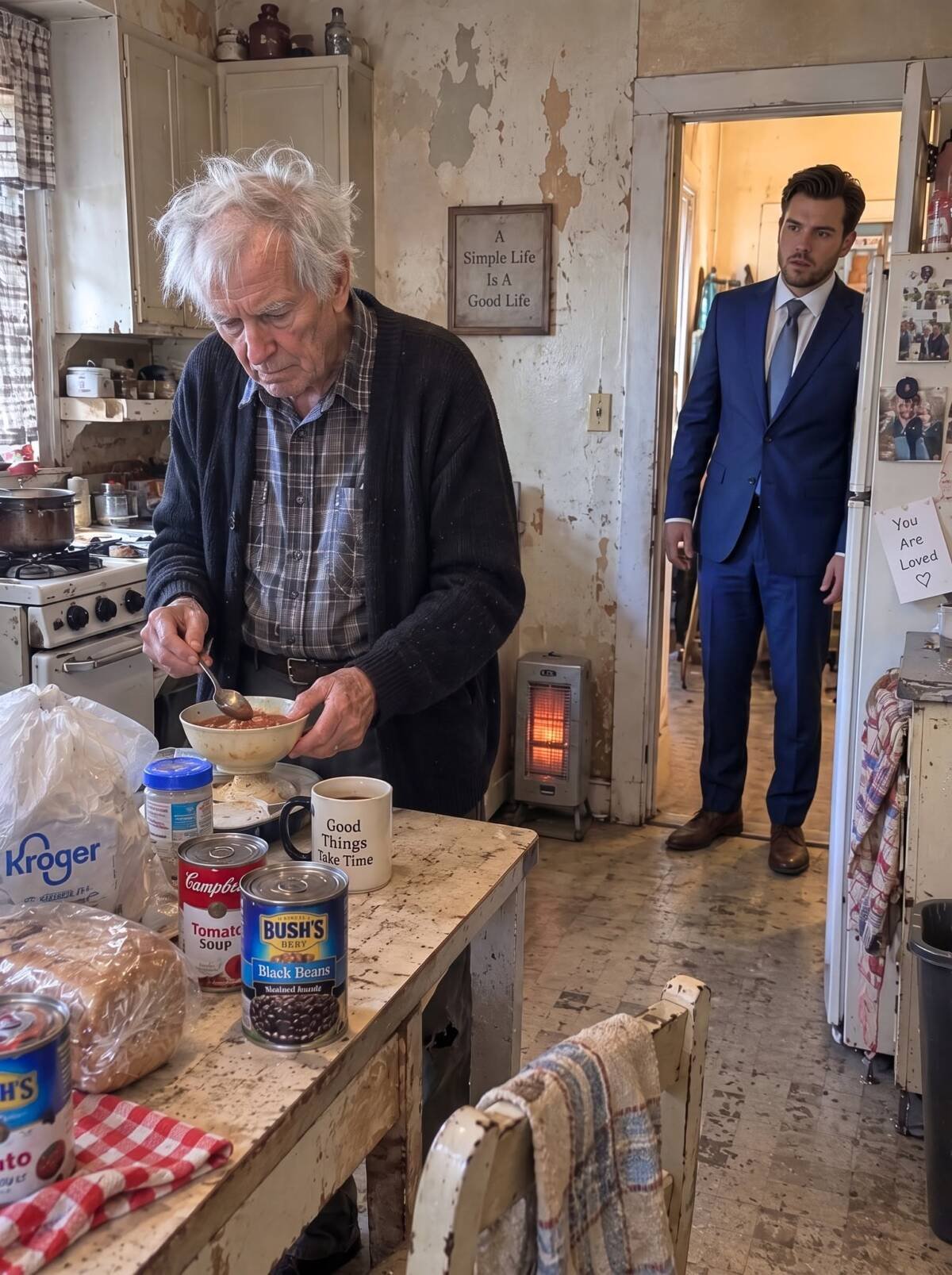
At eighty-one, she was small and slow-moving, with silver hair, a familiar gray cardigan, and a habit of worrying about everyone except herself. She called relatives on Sundays to ask how they were doing. She remembered birthdays that other people forgot. If someone mentioned having a difficult week, she would often appear with homemade soup, fresh bread, or a container of something she had prepared in her kitchen.
Her generosity was never loud or demanding.
She gave because she loved people.
Unfortunately, not everyone understood the difference between receiving love and being entitled to it.
Alan had borrowed $80 from Grandma for a car repair and never paid it back. Daria had allowed Grandma to cover her groceries twice during the previous winter, promising to make things right later.
Neither seemed particularly concerned about those unpaid amounts.
Grandma rarely complained. She didn’t like confrontation, and she certainly didn’t want to make anyone feel uncomfortable over money.
Once, while I was helping her organize her medication, she mentioned a few of these incidents.
She didn’t sound angry. If anything, she sounded embarrassed that she had brought them up.
I understood what was happening, but I made the mistake of convincing myself that it wasn’t my place to interfere.
Looking back, that was one of the earliest warning signs I ignored.
A few days later, Daria called me unexpectedly.
“We’re taking Grandma out to dinner,” she announced. “Somewhere nice by the water. She deserves a special evening.”
I was surprised.
Neither Daria nor Alan normally organized outings for Grandma. They visited occasionally, but the responsibility for checking on her, helping with practical matters, and making sure she was comfortable usually fell to other family members.
Still, I wanted to believe they were making an effort.
I had a work meeting scheduled for that evening and suggested moving the dinner to another day so I could join them.
Alan, who was apparently with Daria, immediately dismissed the idea.
“No, it’s fine. It’s just dinner. We’ve got it.”
Something about his confidence bothered me.
I couldn’t explain why, so I ignored the feeling and went back to my work.
That evening, halfway through my meeting, my phone rang.
It was Grandma.
I let the first call go unanswered because I was in the middle of a discussion. When she called again almost immediately, I excused myself and stepped into the hallway.
“Grandma? Is everything okay?”
For a moment, she didn’t answer.
Then I heard her take a shaky breath.
“Sweetheart, I don’t know what to do.”
My stomach tightened.
“What happened?”
“They left.”
“Who left?”
“Alan and Daria. They said they were going to the car. I thought they were coming back, but they never did.”
I stood so quickly that my chair nearly fell over.
“Where are you?”
“At the restaurant. The waiter brought the bill, and I don’t have that kind of money with me.”
She paused before telling me the amount.
“Four hundred and twelve dollars.”
I felt anger rising through me, but underneath it was something worse: the realization that I had seen this pattern before and done too little to stop it.
“Stay right there,” I told her. “Don’t worry about the bill. I’m coming.”
I ended the call, explained that I had an emergency, and left work.
The drive to the seaside restaurant felt longer than it should have. I kept imagining Grandma sitting alone, wondering whether she had somehow done something wrong.
By the time I arrived, I was furious.
But nothing prepared me for the sight of her sitting at that table.
The $412 Bill That Told the Whole Story
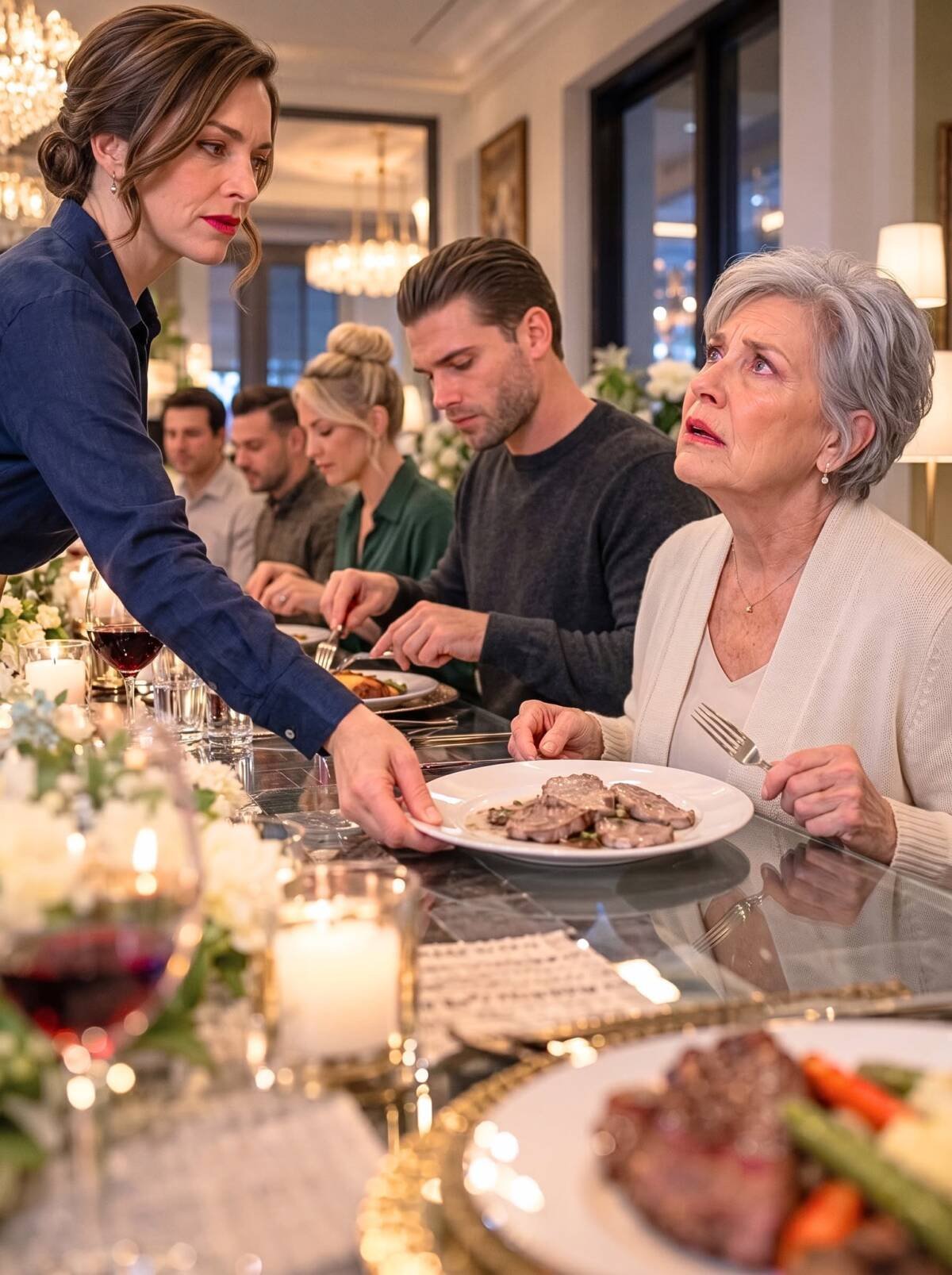
Grandma was seated beneath the warm glow of a candle, her purse resting in her lap. She looked small and uncomfortable, surrounded by the remnants of a dinner she had never intended to pay for.
Two empty places stood across from her.
One wineglass still carried a faint lipstick stain. A dessert plate was smeared with chocolate, and the table held the remains of an expensive meal.
The scene told its own story.
Grandma had been left behind after everyone else had finished eating.
I approached her, pulled out a chair, and sat beside her.
“I’m here now,” I said.
She looked at me with visible relief, but her first words were not an angry complaint about Alan and Daria.
“I’m sorry you had to leave work.”
That nearly broke my heart.
She was apologizing to me for being abandoned.
I assured her that she had nothing to apologize for, then went to speak with the waiter.
I paid the $412 bill immediately. I didn’t want Grandma sitting there for another minute, feeling as though she had to defend herself to strangers.
Before leaving, however, I asked for an itemized receipt.
“Could you separate everything that was ordered?” I asked. “I’d like to see the details.”
The waiter returned with the breakdown.
Alan had ordered lobster, wine, and dessert. Daria had chosen steak, a cocktail, and another dessert. Their combined orders accounted for more than $350 of the total.
Grandma’s tea, soup, and bread had cost less than $20.
I stared at the numbers.
They had chosen an expensive meal, enjoyed it together, and then disappeared when it was time to pay. Their eighty-one-year-old grandmother, who had ordered almost nothing, was left to deal with the consequences.
I folded the receipt and placed it in my bag.
I had no intention of allowing the incident to disappear into the usual family silence.
First, though, I needed to get Grandma home.
As we walked through the parking lot, she quietly offered to repay me.
“I can give you some money next month,” she said. “I just need a little time.”
I stopped beside the car.
“Grandma, listen to me. You are not paying me back for this.”
“But it’s a lot of money.”
“It isn’t your responsibility. You didn’t order that food, and you didn’t invite everyone to dinner. You have nothing to feel guilty about.”
She looked down at her purse.
“I don’t want there to be trouble in the family.”
That was the part I found hardest to hear.
Even after being abandoned, she was still worrying about the people who had done it.
I opened the passenger door and helped her into the car.
“We’ll talk about everything later,” I promised. “Right now, you’re going home.”
I drove her to my father’s house and walked her inside. My father was watching television and barely reacted when we arrived earlier than expected.
He didn’t ask many questions, and I didn’t explain what had happened.
I made Grandma a cup of tea, checked that she was comfortable, and reassured her that the money was taken care of.
Then I left.
I had paid the bill, but I knew that wasn’t enough.
If I simply confronted Alan and Daria privately, they could deny the details, minimize the incident, or apologize just long enough for everyone to move on.
I wanted the facts to speak for themselves.
And I had the receipt.
The Oversized Receipt That Changed Everything
I returned to my office and scanned the itemized receipt.
Then I enlarged it and printed it on the office plotter.
The result was enormous, nearly three feet tall, with every order and price displayed in black ink.
It looked ridiculous.
It also made the facts impossible to overlook.
I took the oversized printout, placed it carefully in my car, and drove to Alan and Daria’s apartment.
When they opened the door, they were laughing at something on television. Their expressions changed when they saw me standing there.
“What are you doing here?” Daria asked.
“I thought I’d stop by,” I replied. “Since you apparently had somewhere better to be than paying for dinner with Grandma.”
They exchanged a glance.
Daria immediately asked whether Grandma had made it home safely.
The question might have sounded caring under different circumstances. In that moment, it felt like an attempt to change the subject.
I walked to their kitchen table and placed the regular-sized receipt in front of them.
“We were going to come back,” Alan said.
“Grandma must have misunderstood,” Daria added.
I looked at them for a moment.
“Really? Because she called me from the restaurant, and both of you were gone. The bill was still sitting in front of her.”
Alan shrugged.
“It’s just food.”
Then he said the words that erased whatever remaining doubt I had about how seriously he understood the situation.
“It’s just money. Why are you making this a thing?”
I looked at him.
For years, I had watched him and Daria accept Grandma’s generosity without making much effort to repay it. I had told myself that they were young, that people made mistakes, and that family disagreements were best handled quietly.
Now I understood that silence had made their behavior easier.
I gave a small smile and tapped the receipt.
“You’re right about one thing. It’s money. That’s why I wanted to understand exactly where it went.”
Then I took the enormous receipt from my bag and unfolded it across their kitchen table.
The paper spread over nearly the entire surface.
Lobster.
Wine.
Steak.
Cocktails.
Desserts.
The individual prices were large enough to read from the other side of the room.
Daria stared at it.
Alan’s expression changed.
“What’s that supposed to be?” he asked.
“An enlarged copy of the bill. I thought it might help everyone remember what happened.”
I pointed to the separate orders.
“Grandma had tea, soup, and bread. You two ordered more than $350 worth of food and drinks. Then you left her alone with the bill.”
Daria folded her arms.
“This is completely unnecessary.”
“Maybe. But leaving an eighty-one-year-old woman alone with a bill she can’t pay was unnecessary, too.”
Neither of them offered a sincere apology.
Neither immediately offered to reimburse me.
They seemed more concerned about the fact that I had confronted them than about what they had done.
I gathered my things and headed toward the door.
“I’ve seen what I needed to see,” I said.
They had expected an argument. They had expected me to shout, accuse them of being selfish, and eventually leave without doing anything beyond expressing my anger.
Instead, I left with the receipt.
On the drive home, I realized that the problem wasn’t simply that Alan and Daria had abandoned Grandma at a restaurant.
It was that they had learned to rely on everyone else cleaning up after them.
I decided that was going to change.
The Family Group Chat Exposed a Much Bigger Problem
When I arrived home, I spread the enlarged receipt across my kitchen table.
I looked at it for several minutes.
The bill was straightforward. There was no complicated explanation, no unclear calculation, and no need to speculate about what had happened.
The restaurant had charged for the food and drinks ordered. I had paid the total. Grandma had been left behind.
I opened our extended family group chat.
It included relatives from both sides of the family: aunts, uncles, cousins, and other people who generally exchanged greetings during holidays and family celebrations.
I photographed the receipt carefully so the individual orders and prices could be read.
Then I uploaded it with a brief message.
“Just covered a $412 dinner after Alan and Daria left Grandma Rose alone at the restaurant with the bill.”
I pressed send.
For a few seconds, nothing happened.
Then the messages began.
One relative asked whether the situation was serious. Another wanted to know why Grandma had been expected to pay for everyone. Someone else asked whether Alan and Daria had actually left without settling the bill.
I answered the questions as calmly as I could.
I explained that Grandma had called me directly, that I had driven to the restaurant, and that I had paid the bill myself.
The itemized receipt showed what each person had ordered.
Within minutes, the conversation took a turn I hadn’t anticipated.
A cousin revealed that Daria had borrowed $300 from her the previous year and never repaid it.
Another relative said Alan had borrowed money for an expense and repeatedly postponed repayment.
Then more people began sharing their experiences.
There were stories about unpaid loans, dinners where Alan and Daria had expected others to cover their portions, and favors they had accepted without returning.
Some relatives had remained silent because they didn’t want to create conflict. Others had assumed their experiences were isolated incidents.
Now they were seeing a pattern.
The $412 restaurant bill had brought several years of private frustration into one conversation.
Alan finally responded.
“This isn’t what it looks like.”
Daria followed.
“There was a misunderstanding.”
I didn’t need to argue with either of them. The receipt was still visible in the chat, and the central question remained unanswered: why had they left Grandma alone with the bill?
Alan tried a different approach.
“This is getting blown out of proportion.”
Daria wrote:
“Can we not do this here?”
But the conversation had already moved beyond the restaurant.
Relatives began comparing experiences and asking direct questions. People who had once hesitated to speak were now explaining what they had been told, what they had lent, and what had never been repaid.
For the first time, Alan and Daria couldn’t easily convince each person that nothing unusual had happened.
My phone began filling with private messages.
“Take that down.”
“You’re making this worse.”
Then came the requests that sounded less confrontational.
“Okay, let’s talk.”
“We can fix this.”
“Just delete the post.”
I didn’t respond immediately.
My goal wasn’t to humiliate them for the sake of humiliation. I wanted the incident acknowledged and the behavior addressed.
But I also wasn’t going to erase the evidence simply because the people responsible had become uncomfortable.
By the following morning, the group chat contained more than a hundred messages.
What began as a discussion about one restaurant bill had become an informal record of years of unpaid debts and unreturned favors.
Then Daria called me.
Alan was listening on speakerphone.
“Please stop posting about this,” she said.
Her voice sounded different from the previous evening. The casual confidence had disappeared.
“We’ll pay you back,” Alan added.
“That’s a good start,” I replied.
“A start?” Daria asked. “What else do you want?”
I opened the notes I had made after speaking with Grandma.
There was Alan’s unpaid $80 car repair. There were the groceries Grandma had purchased for Daria twice during the previous winter. There were the other incidents relatives had described in the group chat.
“This isn’t only about one bill,” I said. “You both keep calling it just money. If that’s how you see it, then let’s be honest about all the money involved.”
Daria sounded irritated.
“Where are you getting all this?”
“Grandma told me some of it. Other relatives have shared their own experiences. And now everyone can see that this isn’t just one misunderstanding.”
Alan was quiet.
I continued.
“You want this to stop? Then take responsibility for what happened. Pay back the restaurant bill. Address the other debts you owe. And apologize to Grandma without making excuses.”
“How are we supposed to fix everything at once?” Daria asked.
“Start by acknowledging it. Then make a realistic plan and follow through.”
I paused before adding one more thing.
“Grandma has spent years helping you because she loves you. She shouldn’t have to wonder whether you’re going to leave her with a problem she never created.”
Neither of them answered immediately.
But for the first time, they seemed to understand that a quick excuse would no longer be enough.
The Condition That Mattered Most
Alan and Daria eventually agreed to repay the restaurant bill.
That was important, but I didn’t want the conversation to end with a simple transfer of money.
Returning the $412 would correct one financial loss. It wouldn’t automatically repair the trust they had damaged or change the way they treated Grandma.
I told them they needed to do three things.
First, they had to apologize directly to Grandma Rose. Not through another relative, not with a casual text, and not with a vague statement about a misunderstanding.
They needed to acknowledge that they had invited her to dinner, left her without a way to settle the bill, and placed her in an embarrassing and stressful situation.
Second, they needed to repay the money they owed to other relatives. If they couldn’t afford to settle every debt immediately, they needed to communicate honestly and establish realistic repayment schedules.
Third, I wanted them to begin contributing regularly toward Grandma’s needs, provided they could afford to do so.
She had helped them when they needed groceries, lent them money when they had expenses, and offered support without demanding repayment.
I wanted them to recognize that the relationship was supposed to work both ways.
“You don’t have to buy her affection,” I told them. “She’s already given you plenty of love. But if you’re going to keep accepting her help, you need to understand that her kindness doesn’t mean you can ignore your responsibilities.”
There was a long silence.
Finally, Alan spoke.
“Okay. We’ll do it.”
Daria agreed, though she sounded less enthusiastic.
I didn’t treat their promises as proof that everything had changed. Words were easy, especially when the consequences of remaining silent had become uncomfortable.
What mattered now was what they actually did.
Within an hour, messages from Alan and Daria began appearing in the family group chat.
This time, their explanations were more specific.
They acknowledged that they had left Grandma at the restaurant and accepted responsibility for the bill. They began identifying debts they needed to repay and discussing how they intended to make those payments.
Some relatives responded positively. Others remained skeptical, which was understandable.
A few apologies could not erase years of frustration.
Still, the conversation had changed. People were discussing actual obligations rather than arguing over whether the problem existed.
Then my phone displayed a payment notification.
$412 received.
Alan and Daria had split the restaurant bill between them and reimbursed me in full.
I looked at the notification, put my phone down, and made coffee.
I was relieved to have the money returned, but the payment wasn’t the most important part of the evening.
The important part was that the behavior had finally been acknowledged openly, and the family had stopped treating every incident as an unrelated misunderstanding.
Grandma Rose Received an Apology She Never Expected
Later that afternoon, Grandma called me.
She hadn’t been part of the family group chat and had no interest in following a long discussion about unpaid debts. She didn’t know that the restaurant incident had triggered a much wider conversation.
“I don’t know what you did,” she said, “but Alan and Daria called me.”
I sat down.
“What did they say?”
“They apologized. Properly, this time.”
Her voice sounded surprised.
“They said they were sorry for leaving me at the restaurant. They also talked about the money I had helped them with before.”
I listened as she explained that both had offered to contribute toward her expenses.
“They sent me two hundred dollars,” she said. “A hundred dollars each. They said they’d keep helping.”
There was a pause.
“What did you do?”
I glanced toward my kitchen table, where the enormous receipt remained spread across the surface.
“I helped them understand things a little better.”
Grandma laughed softly.
“Well, whatever you did, it seems to have worked.”
We talked for several more minutes.
She told me that one of the plants on her windowsill had finally bloomed after appearing lifeless for months. She mentioned a book she had started reading and asked whether I had been eating properly.
It was an ordinary conversation, the kind we had shared countless times.
But I noticed something important.
She wasn’t asking me to reassure her that she hadn’t caused a family dispute. She wasn’t apologizing for the restaurant bill or offering to repay me.
For once, the conversation had returned to the ordinary things she enjoyed discussing.
Before we hung up, she reminded me to bring a jacket if I planned to visit that weekend because the weather had been getting cooler.
That was Grandma Rose: even after everything, she was still thinking about whether someone else would be comfortable.
I hoped Alan and Daria had finally begun to understand how much that kind of care was worth.
What Happened in the Weeks That Followed
I didn’t expect Alan and Daria to become completely different people overnight.
Real change rarely happens that neatly, especially when a behavior has been repeated for years.
But over the following weeks, I began noticing small differences.
They called Grandma more frequently. Their Sunday conversations weren’t perfectly consistent, but they happened often enough that Grandma gradually stopped treating them as unexpected events.
One Saturday, Daria brought her groceries without being asked.
Grandma mentioned it to me later with a quiet happiness that made the gesture seem more significant than the shopping itself.
“She just showed up,” Grandma said. “She brought everything I needed.”
I was glad to hear it.
I also knew that one grocery delivery couldn’t erase the past. What mattered was whether Daria continued showing up after the immediate embarrassment of the restaurant incident had faded.
Alan began repaying other relatives as well.
The payments came in manageable amounts, sometimes $50 or $100 at a time. He started with the cousin who had spoken up in the family chat, then contacted another relative about a separate debt.
The progress wasn’t dramatic, but it was measurable.
Each repayment acknowledged that the money had belonged to someone else. Each conversation required him to recognize that an unpaid debt didn’t disappear simply because the person owed had stopped asking.
Daria also began addressing the money she owed.
Some relatives accepted the repayment plans immediately. Others wanted to see a few payments arrive before deciding whether to trust her again.
That was their choice.
I didn’t tell anyone they had to forgive Alan and Daria. I didn’t ask relatives to pretend that the restaurant incident had never happened.
An apology could be accepted without immediately restoring trust. Repayment could begin without erasing the memory of being taken advantage of.
The family had spent years avoiding uncomfortable conversations. It would take time to establish a different pattern.
And I remained cautious.
I couldn’t know whether the changes would last. Financial pressure, family disagreements, or another tempting opportunity might eventually lead Alan and Daria back to their old habits.
But I could see that something had changed.
They knew that relatives were paying attention. They knew their promises would be measured against their actions. And they knew that Grandma’s willingness to help did not mean everyone would remain silent when she was treated unfairly.
The incident had established a boundary that should have existed long before that evening.
The Receipt I Never Needed Again
Several weeks after the restaurant incident, I visited Grandma on a quiet Sunday afternoon.
She was in her kitchen when I arrived, with tea ready and homemade cookies arranged on a plate.
Two cups were already on the table.
She knew I was coming and had prepared for my visit in the same thoughtful way she had prepared for so many family gatherings throughout her life.
We sat together and talked.
She told me about the neighbor’s cat that had started sleeping in her garden. She described the book she was reading and showed me a scarf she was knitting for a great-niece she had never met.
None of those things would have seemed especially important to an outsider.
To me, they mattered.
Grandma was comfortable enough to talk about ordinary parts of her life without worrying that she was taking up too much time or asking too much of anyone.
She wasn’t discussing money. She wasn’t trying to explain what had happened at the restaurant. She wasn’t apologizing for needing help.
She was simply enjoying an afternoon with someone who wanted to be there.
At one point, she reached across the table and refilled my tea.
I held out my cup without protesting.
For years, Grandma had expressed love through small acts of care. She remembered birthdays, prepared meals, checked on relatives, and helped people when they were struggling.
Her generosity had never been the problem.
The problem was that some people had accepted it without recognizing its value.
I had made my own mistake by watching the pattern develop and convincing myself that it wasn’t my place to intervene.
The restaurant incident forced me to reconsider that decision.
Protecting Grandma didn’t mean telling her to stop being generous. It didn’t mean making every family interaction transactional or demanding that she keep a record of every favor she offered.
It meant ensuring that the people receiving her kindness understood that it was a gift, not an entitlement.
Later that evening, I returned home and opened the bottom drawer of my desk.
The oversized receipt was still there, folded beneath old tax returns and paperwork I rarely needed.
I took it out and looked at it one last time.
The paper was no longer a symbol of my anger. It was a record of what had happened on the night our family finally confronted a pattern it had allowed to continue for too long.
I considered throwing it away.
The restaurant bill had been reimbursed. Alan and Daria had apologized. Repayments to other relatives had begun, and Grandma was receiving more calls and visits.
For the moment, there was no reason to bring the receipt out again.
Still, I folded it carefully and returned it to the drawer.
I wasn’t keeping it as a trophy. I didn’t want to spend my life waiting for another opportunity to embarrass my step-siblings.
I kept it because it reminded me of something important: facts matter when people are accustomed to explaining away their behavior.
Without the receipt, the restaurant incident could easily have become another argument about competing memories. Alan and Daria might have described it as a misunderstanding. Someone might have suggested that Grandma had misheard them or that I had exaggerated the bill.
Instead, the receipt documented the amount, the individual orders, and the cost of a dinner that had been left for someone else to pay.
It gave the family a concrete starting point for a difficult conversation.
And that conversation exposed other problems that had remained hidden because everyone had dealt with them separately.
The receipt had not magically transformed Alan and Daria into perfect people. It had not guaranteed that they would never make another selfish decision.
What it did was make denial more difficult.
It showed that the problem was not simply the $412.
It was the assumption that someone else would always take responsibility.
Conclusion: Kindness Should Never Be Mistaken for Weakness
I still don’t know whether Alan and Daria will remember that evening for the rest of their lives.
Perhaps they will eventually forget the details of the restaurant, the enormous receipt, and the family group chat that exposed years of unpaid debts.
Perhaps they will remember only the embarrassment of being confronted.
But I hope they remember something more important.
Grandma Rose was eighty-one years old. She had accepted their invitation because she believed they wanted to spend time with her. She sat through a dinner she had not planned, ordered an inexpensive meal, and trusted the people across the table to do what they had promised.
When they left, she didn’t respond with anger.
She called someone she trusted and apologized for needing help.
That was the part I could never forget.
The person who had been abandoned was still worried about inconveniencing others. The people who had caused the problem had initially dismissed it as just money.
Those two reactions revealed everything that needed to change.
Grandma’s kindness had never been a weakness. Her willingness to help people was one of the things that made her special.
But kindness should not require someone to accept humiliation, financial pressure, or repeated disrespect.
Family relationships deserve patience and understanding, but they also require honesty, accountability, and boundaries.
Sometimes, protecting someone you love means having the uncomfortable conversation everyone else has avoided.
Sometimes, it means asking for evidence, naming the behavior, and refusing to accept another vague excuse.
And sometimes, it means holding on to a receipt.
The $412 bill was eventually paid. The apologies were made, and the repayments began. Whether those changes would last remained to be seen.
What mattered most was that Grandma could return to her ordinary life without believing she had somehow caused the trouble.
She could enjoy her garden, read her books, knit her scarves, and continue making soup for the people she loved.
And I could sit across from her at the kitchen table, listen to her stories, and accept another cup of tea without worrying that her generosity would once again be mistaken for permission to take advantage of her.
The receipt remained in my desk drawer.
I never needed to show it to Alan or Daria again.
But they knew it was there.
And so did I.
Because the lesson was never about the price of a lobster dinner. It was about the value of the person they had left behind.
What Would You Have Done?
Have you ever watched someone take advantage of a kind family member because they assumed that person would never speak up? Would you have confronted Alan and Daria privately, or would you have shared the receipt with the family as I did?
Share your thoughts in the comments, and pass this story along to someone who believes that kindness should always come with respect.