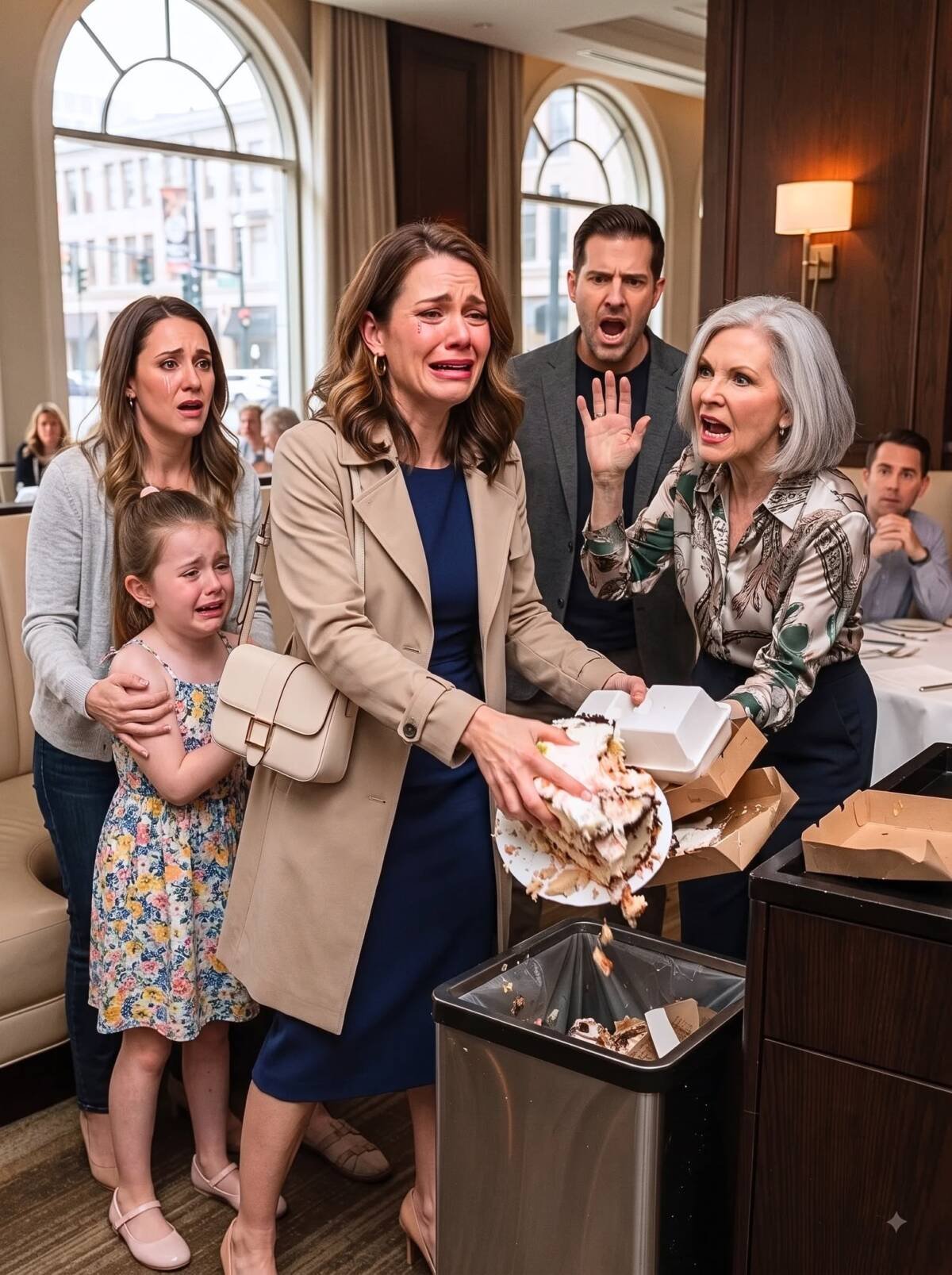
When 62-year-old Vera Mitchell discovered a red SOLD sign in her front yard, she had no idea her own son had arranged to sell the home she had lived in for 35 years. He and his wife were preparing for a three-month European vacation, while Vera was being sent to a senior living facility. They believed they had taken control of her future. But they had overlooked one crucial detail in the legal documents—and it would change everything.
Introduction: The Morning Everything Changed
At 62, Vera Mitchell believed she had earned the right to enjoy a peaceful life.
She had spent 35 years maintaining her home, caring for her family, and building a future alongside her late husband, Harold. She had survived heartbreak, raised a son, and learned to appreciate the simple comforts that made a house feel like home.
Her mornings followed a familiar routine. She woke early, brewed a pot of coffee, watered her roses, and settled into her favorite chair beside the living room window.
But one Thursday morning in October, everything changed.
When Vera looked outside, she noticed a bright red SOLD sign planted in the middle of her front yard.
At first, she thought she must have misunderstood what she was seeing. She had never listed her home for sale, contacted a real estate agent, or agreed to move.
Yet the sign stood there, unmistakable and impossible to ignore.
Moments later, her son Dominic arrived with a suitcase. His wife, Amber, followed behind him, dressed as though she were heading to an airport.
They were not there to ask permission.
They were there to tell Vera that her house had been sold, that her belongings would soon have to be moved, and that arrangements had already been made for her to live somewhere else.
While Dominic and Amber prepared to travel through Europe for three months, Vera was expected to surrender the home she had spent decades building.
They assumed she would be too shocked, too old, or too overwhelmed to fight back.
What they did not understand was that Vera remembered the legal documents she had signed years earlier. More importantly, she knew those documents had never given her son the unrestricted authority he now claimed to possess.
She did not scream.
She did not beg.
Instead, Vera made a decision that would eventually expose the truth, force her son to confront his actions, and give her something more valuable than the house itself.
Her independence.
The Red SOLD Sign in My Yard
I had always been an early riser.
At 62, I still woke before sunrise, even when I had nowhere particular to go. Years of working, raising a family, and managing a household had made early mornings feel natural.
That Thursday began like any other.
I made coffee, watered my roses, and sat beside the living room window, enjoying the quiet.
Then I noticed the sign.
A bright red SOLD sign stood in the middle of my front lawn.
I stared at it for several seconds, waiting for my mind to make sense of what my eyes were telling me.
My house had been sold?
I had lived there for 35 years. My late husband, Harold, and I had bought it when our son was still young. We had spent years repairing the roof, repainting the rooms, replacing old appliances, and turning an ordinary property into a home filled with memories.
Every room had a story.
The kitchen held the marks of countless family dinners. The hallway displayed photographs from birthdays and holidays. The garden was filled with roses Harold had planted with his own hands.
I had never agreed to sell any of it.
I hurried outside in my robe, barely noticing the cold concrete beneath my feet.
Before I could approach the sign, I heard a familiar voice.
“Mom, there you are.”
Dominic was walking up the driveway, pulling a large suitcase behind him. Amber followed with matching luggage and a handbag that looked more expensive than anything I had bought in years.
I looked from their suitcases to the sign.
“Dominic, what is this?”
He hesitated briefly.
Then his expression changed.
“We need to talk, Mom.”
Inside, Amber looked around the living room. Her eyes moved across my grandmother’s antique lamp, the photographs on the mantel, and the Persian rug Harold and I had saved for months to buy.
She did not look sentimental.
She looked as though she were evaluating things that would soon belong to someone else.
“Sit down, Vera,” she said.
I remained standing.
“Someone is going to explain why there is a SOLD sign in my yard.”
Dominic rubbed the back of his neck, a nervous habit he had inherited from his father.
“Mom, Amber and I think it’s time for you to make a transition.”
“A transition?”
“You’re getting older. This house is becoming too much for you.”
I almost laughed.
I maintained the property myself. I drove wherever I needed to go, managed my finances, cooked my meals, and volunteered at the local library twice a week.
I was not confused. I was not helpless. And I had never asked either of them to take over my life.
“I can take care of myself,” I told him.
Amber gave a small, dismissive laugh.
“That’s not really the point.”
“Then what is the point?”
Dominic finally looked me in the eye.
“The house sold yesterday.”
For a moment, the room seemed to tilt.
“What did you just say?”
“We received an offer for $250,000. The buyers are preparing to close next week.”
I could hardly believe what I was hearing.
“You cannot sell my house.”
Dominic opened his briefcase and removed a folder.
“Actually, Mom, I can. Remember the power of attorney you signed when Dad was sick?”
My stomach tightened.
I remembered those papers clearly.
Harold had been seriously ill, and our family had been under enormous emotional strain. Dominic had offered to help manage certain matters if I became overwhelmed with medical decisions, insurance paperwork, or household responsibilities.
He had told me the documents would make things easier.
I had trusted him.
“That authorization was limited,” I said. “It was not permission to sell my house.”
Dominic tapped the folder.
“You signed the documents.”
“I know what I signed.”
For a moment, neither of us spoke.
Then Amber stepped forward, seemingly eager to move past the uncomfortable details.
“We’re leaving for Europe today.”
I looked at her.
“What?”
“We’ve been planning this trip for months,” she said. “France, Italy, Spain. Maybe Monaco if we have time.”
Suddenly, the suitcases made sense.
So did their impatience.
They had not come to discuss my future. They had already decided it, and their own plans were waiting for them.
Dominic explained that selling the house would give everyone more flexibility. Amber wanted to start a business, and he had been considering returning to school.
They talked about their future as though the money were already theirs to spend.
Not once did they explain how I was supposed to replace the home they had taken from me.
“And where am I supposed to live?” I asked.
Amber reached into her handbag and handed me a glossy brochure.
The cover displayed a photograph of a cheerful building surrounded by neatly trimmed lawns.
Sunset Manor.
A senior living facility.
“I thought you might like it,” she said.
I looked at the brochure, then at my son.
“I’m not going.”
Dominic sighed as though I were being unreasonable.
“Mom, the arrangements have already been made.”
They had arranged six months of accommodation at Sunset Manor. The buyers were expecting to complete the purchase, and a taxi was scheduled to take me to the facility in ten minutes.
They had packed a small suitcase for me.
Their own luggage was large enough for three months of international travel.
I had spent 35 years building a life in that house. They had reduced it to a few dresses, some toiletries, and a framed photograph of Harold and me on our wedding day.
“Does Sarah know?” I asked.
My daughter lived in California and called me twice a week. She would never have agreed to such a plan without speaking to me.
Dominic and Amber exchanged a glance.
That brief silence told me everything.
They had deliberately kept my daughter out of the decision because they knew she would object.
A car horn sounded outside.
My ten minutes were nearly over.
I caught sight of myself in the hallway mirror. For one terrible moment, I saw the woman they expected me to become: frightened, defeated, and too overwhelmed to defend herself.
Then I looked into my own eyes.
I was still there.
“Dominic,” I said quietly.
He turned toward me.
“Your father would be ashamed of you.”
His expression briefly softened. I saw a glimpse of the little boy who had once climbed into our bed during thunderstorms.
Then Amber touched his arm, and his face hardened again.
I picked up my suitcase.
“Enjoy Europe.”
And I walked toward the taxi without looking back.
As the car pulled away, I did not yet know how I would recover my home or prove what my son had done.
But I knew something they did not.
I remembered exactly what I had signed.
And I intended to find out what Dominic had done with it.
Sunset Manor: The Place They Chose for Me
The smell of Sunset Manor reached me before I entered the building.
Disinfectant, cafeteria food, and industrial carpet cleaner filled the air. The grounds were tidy, the flower boxes were colorful, and the yellow exterior looked exactly like the photographs in the brochure.
Inside, the atmosphere felt different.
Residents sat in the common room, some watching television, others staring through the windows. A staff member pushed a cart down the hallway while the elevator groaned somewhere in the distance.
A woman in blue scrubs approached me with a clipboard.
“You must be Vera. I’m Nancy, the intake coordinator. Your son handled all the paperwork. Wasn’t that thoughtful?”
I nearly laughed.
Thoughtful was not the word I would have chosen.
Nancy led me to room 207.
It contained a bed, a dresser, one chair, and a window overlooking the parking lot. My name had already been printed beside the door.
Everything had been arranged as though I had willingly agreed to move.
After Nancy left, I opened my suitcase.
Three dresses. A few undergarments. Toiletries. A handful of personal items. One framed wedding photograph.
That was everything Dominic had decided I needed.
Sixty-two years of life, reduced to a suitcase.
I placed Harold’s photograph on the dresser and sat on the bed.
For the first time since leaving home, I allowed myself to cry.
I cried for the house, for the memories, and for the terrible realization that my own son had looked at his mother and seen an obstacle to his plans.
But grief eventually gave way to anger.
And anger helped me think clearly.
Dominic believed the power of attorney gave him authority to sell my property. Yet I remembered the document I had signed, and I knew it had been intended for a limited purpose.
I also knew that Harold and I had made financial arrangements that Dominic had never fully understood.
We had maintained a safe deposit box. I had separate savings, life-insurance proceeds, and records of the financial decisions I had managed throughout our marriage.
I had not spent decades building a life only to surrender every choice because someone else believed I was getting old.
The following morning, I met Dorothy.
She was sitting in the dining room with a romance novel beside her oatmeal. When I asked whether the book was any good, she looked over her glasses.
“Terrible,” she said.
Then she smiled.
“I love it.”
I sat across from her.
After a few minutes of conversation, Dorothy studied my face.
“You’re new here.”
“Is it that obvious?”
“Most people arrive looking defeated. You look angry.”
“I have a reason.”
“Good,” she replied. “Angry women are interesting.”
Over the next few days, Dorothy became my closest companion at Sunset Manor. She had worked as a paralegal for three decades and understood how legal paperwork could become a weapon when someone was determined to exploit another person’s trust.
When I finally explained what Dominic had done, she listened without interrupting.
Then she asked a simple question.
“Have you seen the original power of attorney?”
“No. He showed me a copy.”
“Then that’s where you start.”
I told her I remembered the document being limited to certain matters.
“Medical decisions and related responsibilities,” I explained. “I never agreed to give him unrestricted control of my finances.”
Dorothy nodded thoughtfully.
“If the version he used is materially different from the one you signed, that could be extremely serious. But you need a lawyer to examine it.”
For the first time since seeing the red sign, I felt something close to hope.
The next morning, I called my bank from the lobby telephone.
My private accounts were untouched.
That mattered. Dominic had not gained control of everything I owned, and I still had access to funds that could help me protect myself.
Then I contacted Margaret Peterson, an attorney Dorothy recommended.
“I need advice about possible financial exploitation,” I told the receptionist. “My son may have used altered legal documents to sell my house without my authorization.”
For the first time since Dominic had announced the sale, I was no longer simply reacting to his decisions.
I was taking action of my own.
The Document That Changed Everything
Margaret Peterson was direct, experienced, and unimpressed by family excuses.
During our first meeting, she asked me to describe exactly when I had signed the original document, what Dominic had told me, and whether I had ever given him written permission to sell the property.
I answered every question as carefully as I could.
Then I explained that the version he had shown me looked different from the document I remembered.
Margaret requested copies of the paperwork used in the transaction and the original authorization from the relevant records.
When she placed the documents side by side, her expression became serious.
“There are substantial differences here, Mrs. Mitchell.”
The version I had signed was limited in scope. The document used to justify the property sale appeared to contain broader language that had not been present in the original.
That did not automatically prove who had altered it or establish every detail of the transaction. Those questions would require further investigation.
But it gave us a clear reason to challenge the sale.
Margaret explained that a power of attorney does not automatically give someone unrestricted authority over another person’s assets. Its scope depends on the actual document and applicable law.
If Dominic had knowingly used an altered authorization, the consequences could extend beyond a dispute between family members.
We discussed the property’s title, the sales agreement, the status of the closing, and the legal options available to protect my interests.
Margaret also advised me to preserve every document, message, and financial record connected to the transaction.
I left her office with a list of tasks and a feeling I had not experienced in weeks.
I had a plan.
The legal process would take time, and no one could promise that my house would be returned immediately. But I was no longer alone, and the evidence was no longer limited to my memory of what had happened.
My next call was to Sarah.
When she answered, I tried to explain everything calmly.
I told her about the SOLD sign, Dominic’s claims about the power of attorney, the European vacation, and the move to Sunset Manor.
For several seconds, she said nothing.
Then I heard her voice break.
“Mom, why didn’t you call me?”
“I needed to understand what was happening first.”
“You should never have had to handle this alone.”
Sarah wanted to fly out immediately, but I asked her to help me gather records and communicate with the attorney instead.
I did not need another person making decisions for me, even with the best intentions.
I needed support while I made my own.
Over the following weeks, Margaret worked to challenge the transaction and determine whether the authorization had been misused. The buyers were notified that the sale was under legal dispute, and the relevant parties were asked to preserve the documents connected to it.
As the investigation progressed, the differences between the documents became increasingly important.
Dominic and Amber, meanwhile, were enjoying their trip.
Their social media accounts filled with photographs of European streets, hotel balconies, restaurants, and carefully arranged vacation pictures.
I saw one photograph of them standing in front of a beautiful building in Paris.
Amber had written a cheerful caption about living life to the fullest.
I looked at the picture for a long time.
Then I closed my phone.
I was not going to spend my days watching the people who had hurt me pretend that nothing had happened.
I had more important work to do.
Reclaiming My Independence
Sunset Manor was never meant to become my permanent home.
With Margaret’s guidance, I began exploring my options. I reviewed my finances, contacted people I trusted, and looked into temporary housing while the property dispute moved forward.
Dorothy encouraged me to keep a routine.
We walked through the grounds when the weather allowed, read in the common room, and talked about the lives we had built before arriving there.
She reminded me that losing control of one part of my life did not mean I had lost control of everything.
“Your son made a decision about your future,” she told me one afternoon. “That doesn’t mean he gets to decide the rest of it.”
Her words stayed with me.
I began attending activities at the facility, not because I had accepted the circumstances that brought me there, but because I refused to let anger consume every hour of my day.
I signed up for a painting class. I started reading books I had put aside for years. I called Sarah regularly and began reconnecting with friends I had not seen since Harold’s death.
Slowly, I began to feel like myself again.
The legal dispute continued, and there were difficult days when the uncertainty became exhausting. Every new letter or phone call brought the possibility of another delay.
But I kept going.
Margaret eventually secured a legal resolution that allowed the disputed property transaction to be unwound, subject to the terms of the settlement and the steps required to restore my ownership.
The process involved negotiations, documentation, and formal legal work. It was not as simple as discovering a mistake and immediately getting my keys back.
Still, the outcome was real.
I could return to my house.
When I finally stood in my own doorway again, I did not rush inside.
I rested my hand against the doorframe and closed my eyes.
I remembered Harold carrying boxes through that entrance when we first moved in. I remembered Dominic running through the hallway as a child. I remembered birthdays, family dinners, and quiet evenings when Harold and I sat together in the living room after the dishes had been washed.
The house was not merely a financial asset.
It was a part of my history.
And I had fought to protect it.
I walked through every room, touching familiar surfaces and opening windows that had remained closed for too long.
Then I went outside to the garden.
Some of the roses needed attention. The lawn required maintenance, and several flower beds had become overgrown.
But the garden was still there.
So was I.
For the first time in months, I could imagine a future that belonged to me.
The Welcome-Home Surprise
Dominic and Amber returned from Europe several weeks later, expecting to find the situation much as they had left it.
They believed I would still be living at Sunset Manor, dependent on the money they had arranged for my care.
They also believed the proceeds from the house sale would remain available for whatever plans they had made.
Instead, they discovered that the property transaction had been challenged, the legal documents were under scrutiny, and their plans were facing serious consequences.
When Dominic called, his voice sounded different.
“Mom, we need to talk.”
I was standing in the kitchen, making coffee.
“About what?”
“The house.”
“What about it?”
He hesitated.
“There’s a problem with the sale.”
“I know.”
“Can we come over?”
I agreed to meet them, but I made one thing clear: any discussion about the disputed transaction would remain subject to my attorney’s advice.
When they arrived, I opened the front door myself.
Dominic stopped on the porch.
Amber’s expression changed as she looked past me into the house.
The living room was intact. Harold’s photograph still stood on the mantel, the antique lamp remained beside the sofa, and the Persian rug was exactly where it had always been.
I was not sitting in a room at Sunset Manor.
I was standing in my own home.
“How is this possible?” Amber asked.
I stepped aside.
“Come in.”
They entered cautiously, looking around as though they expected someone to explain that they had walked into the wrong house.
Dominic stared at me.
“I thought you were still at the facility.”
“I was there because you arranged for me to be there.”
“But the sale—”
“Was challenged.”
I placed a folder on the dining table.
Inside were copies of the relevant legal documents, correspondence concerning the dispute, and the records showing how the transaction had been addressed.
I did not need to raise my voice.
The paperwork spoke for itself.
“The authorization I signed was limited,” I told them. “It did not give you the unrestricted power you claimed. The differences between the original document and the version used in the transaction became a central issue in the legal dispute.”
Dominic looked down at the folder.
Amber said nothing.
“The matter has been addressed through the legal process,” I continued. “My ownership has been restored, and I am making my own decisions about my property and my future.”
Dominic slowly pulled out a chair.
“Mom, I didn’t think it would end like this.”
I looked at him.
“That was the problem. You didn’t think about what it would mean for me at all.”
For the first time, I saw something beyond embarrassment in his expression.
He looked frightened.
Not because I was shouting or threatening him, but because he was finally confronting the consequences of a decision he had convinced himself was reasonable.
Amber tried to interrupt.
“We thought we were doing what was best—”
“No,” I said quietly. “You thought you were doing what was best for yourselves.”
The room fell silent.
I explained that my future would no longer be discussed without me. No one would decide where I lived, what happened to my belongings, or how my money was used without my informed consent.
I would continue working with my attorney to protect my interests, and any further financial discussions would take place through the appropriate legal channels.
Then I opened the front door.
“Your visit is over.”
Amber looked stunned.....