When my sister kissed my husband in front of our entire family, she laughed and told me not to take it seriously. I stood there in shock, unsure how to respond. But her husband wasn’t laughing. He had photographs, questions, and a secret that would soon turn their lives upside down.
The Kiss That Changed Everything
Some betrayals happen behind closed doors. Others unfold in front of an entire family, disguised as a joke until the truth becomes impossible to ignore.
For years, I believed my sister Rachel’s habit of competing with me was simply part of our complicated relationship. If I bought something new, she wanted something better. If I accomplished something, she found a way to compare it with her own achievements. And whenever I had something she admired, she seemed determined to prove she could have it, too.
I learned to live with it. Eventually, I stopped sharing certain details of my life with her because I wanted to protect the little peace I had managed to build.
Then I met Michael.
He was thoughtful, dependable, and affectionate in ways that made me feel genuinely valued. We fell in love, married, and eventually welcomed two children. After ten years together, I believed we had built the kind of marriage that could withstand the ordinary challenges of family life.
Rachel had married Tom, a patient and warmhearted man who appeared devoted to her. For a while, I convinced myself that our childhood rivalry had finally become a thing of the past.
I was wrong.
At Rachel and Tom’s anniversary celebration, my sister kissed my husband in front of our relatives, then laughed as if she had done nothing more serious than tell an embarrassing joke.
But the kiss wasn’t the most shocking part of that afternoon.
It was what happened when Tom stepped forward with an envelope of photographs—and what I discovered after I deliberately allowed my husband to believe I still trusted him.
What followed would reveal a secret relationship, expose a plan neither family had anticipated, and force me to reconsider everything I thought I knew about the people closest to me.
Part 1: A Lifetime of Competition
Rachel and I had never experienced sisterhood in quite the same way.
When we were children, I sometimes thought she saw life as a competition that nobody else had agreed to enter. If I received praise for a drawing, she wanted to show everyone a better one. If I joined a club, she wanted to join it, too. If I bought something I loved, she would find a way to compare it with something she owned or wanted.
At first, I tried to laugh it off. Sisters teased each other, I told myself. Siblings competed. It didn’t necessarily mean anything.
But as the years passed, the pattern became difficult to ignore.
Whenever I shared good news, Rachel often redirected the conversation toward herself. If I expressed excitement about a new opportunity, she seemed more interested in determining whether she could achieve something greater. Even ordinary purchases could become occasions for comparison.
Eventually, I began keeping certain things private.
I didn’t want to turn every accomplishment into a contest, and I didn’t want my relationship with my sister to become defined by resentment. I hoped that if I stopped giving her reasons to compare herself with me, we might finally enjoy a more peaceful relationship.
Then Michael entered my life.
The first time I brought him to a family dinner, he made a good impression on everyone. He was polite without being overly formal, comfortable around my relatives, and happy to help with the dishes after dinner.
Rachel noticed him immediately.
As Michael stood beside me in the kitchen, drying plates while I washed them, she watched us with a smile.
“You’re lucky,” she said. “I wish I could find a husband like yours.”
I laughed because I assumed she was teasing me.
At the time, the comment seemed harmless. Rachel was single, Michael was kind, and there was no reason to interpret a passing remark as anything more than an expression of admiration.
Still, I remembered it.
When Rachel eventually married Tom, I hoped she had found the happiness she wanted. Tom was patient, generous, and attentive. He seemed to appreciate Rachel’s personality, including the qualities that sometimes made her difficult for other people to understand.
I wanted her marriage to succeed.
I wanted our relationship to improve.
Most importantly, I wanted to believe that the things that had divided us as children no longer mattered.
For years, I assumed they didn’t.
Michael and I built a home together, raised our children, and established routines that made our family life feel secure. We celebrated birthdays, managed school schedules, attended family gatherings, and navigated the ordinary disagreements that come with sharing a life.
Our marriage was not perfect, but I had no reason to believe it was in danger.
Rachel and Tom appeared equally settled.
That was why I initially dismissed the small warning signs that began appearing before their anniversary party.
Looking back, I can see how easily familiar behavior can disguise something more troubling. When someone has spent years teasing, competing, and making provocative remarks, it becomes tempting to interpret every new incident as another example of the same old personality.
Sometimes, however, a pattern changes because the person has crossed a line they never crossed before.
And sometimes, the people closest to us notice the truth only after it has been placed directly in front of them.
Part 2: The Anniversary Dinner
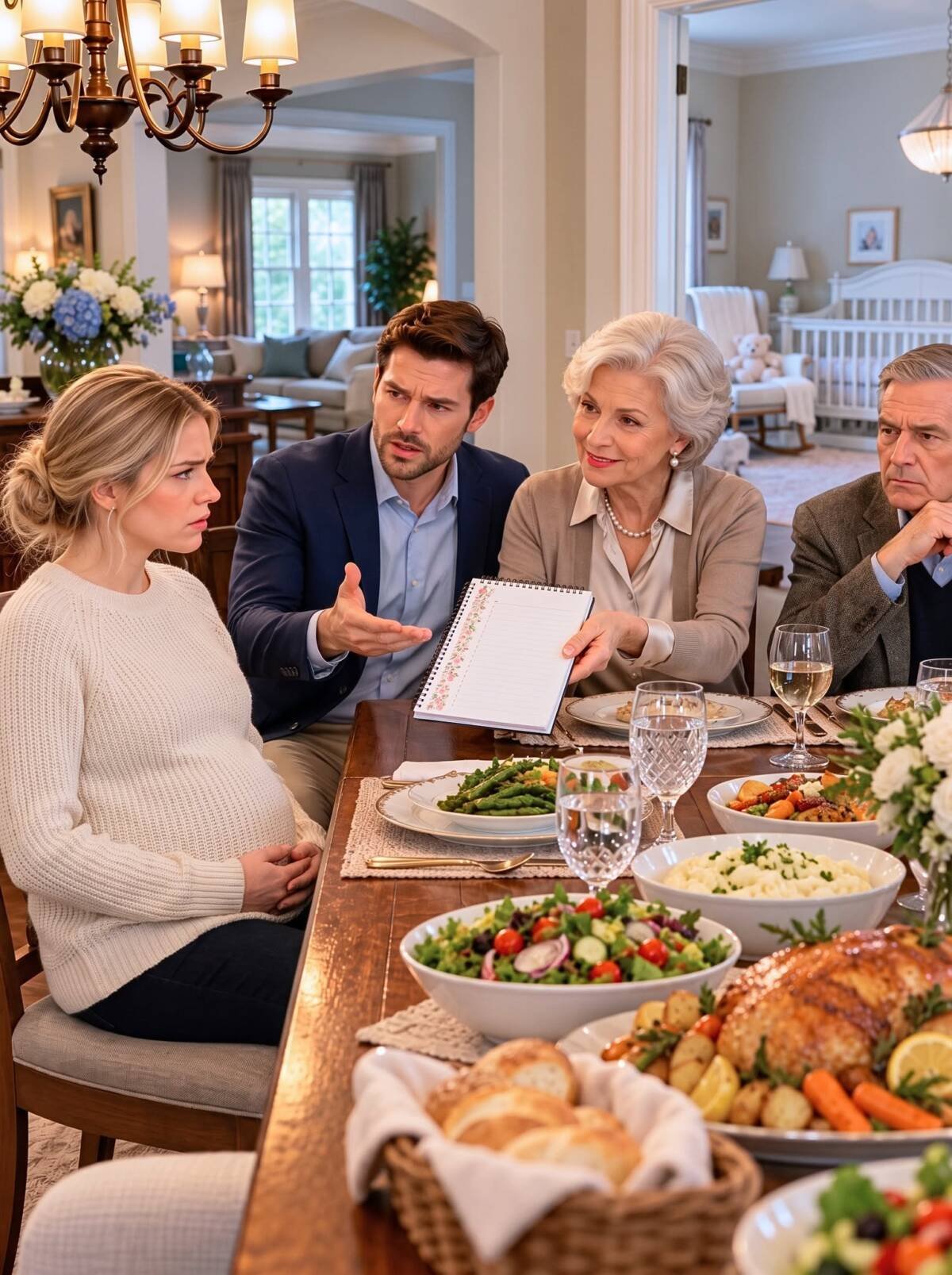
The trouble began during dinner at Rachel and Tom’s anniversary celebration.
Family members gathered around a large table, sharing food, exchanging stories, and congratulating the couple on another year of marriage. The atmosphere was warm and relaxed, and everyone seemed determined to make the evening special.
At first, Rachel’s attention toward Michael seemed merely excessive.
She laughed at nearly every story he told. She asked for his opinion on subjects that had little to do with him. When Tom tried to contribute to the conversation, Rachel sometimes interrupted him or turned her attention back to Michael.
I noticed it, but I tried not to overreact.
There was a difference between being overly friendly and behaving inappropriately, and I didn’t want to create tension during an anniversary celebration.
Then Michael pulled out a chair for Rachel.
It was an ordinary gesture, the kind of courtesy he regularly extended to family members.
Rachel sat down, looked up at him, and smiled.
“If I’d met you first, I might have picked a different husband.”
The conversation around us seemed to pause.
I nearly choked on my water.
Tom’s face reddened, and several relatives exchanged uncomfortable glances. Michael looked down at his glass with a small smile rather than directly addressing the remark.
I felt embarrassment turn into irritation.
“Rachel, please don’t say things like that,” I told her. “He’s my husband.”
She waved her hand dismissively.
“Oh, relax. You know I’m joking.”
That familiar explanation immediately appeared, as though labeling a comment a joke made it impossible for anyone to object.
I looked at Michael, expecting him to make it clear that the remark was inappropriate.
Instead, he remained strangely quiet.
His silence bothered me more than Rachel’s comment.
I could understand my sister being provocative. I had known her long enough to recognize the behavior. But Michael was my husband. He knew how uncomfortable her remark had made me, and he had every opportunity to establish a boundary without embarrassing anyone.
He didn’t.
The evening continued, but I struggled to regain my composure.
Rachel seemed pleased with herself. She continued directing her attention toward Michael, while Tom grew increasingly quiet. I wondered whether he had become accustomed to his wife’s teasing or whether he was simply trying to avoid an argument in front of the family.
I didn’t know.
What I did know was that something about the interaction had unsettled me.
Later that night, after we returned home, I asked Michael about it.
I didn’t accuse him of anything. I simply explained that Rachel’s comments had made me uncomfortable and that I expected him to take the situation seriously.
He took my hand.
“You’re my wife. I love you. I’ll talk to her.”
His words should have reassured me.
Instead, I found myself studying his expression, wondering why he seemed so calm about something that had clearly upset me.
Perhaps I was tired. Perhaps the awkwardness of the evening had made me overly sensitive. I tried to convince myself that there was a reasonable explanation for his reaction.
Eventually, Michael went to sleep.
I lay awake longer than I wanted to, replaying the conversation and wondering why I couldn’t shake the feeling that something was wrong.
The next afternoon, I would learn that my instincts had not been misplaced.
Part 3: The Kiss in the Backyard
The following day, relatives gathered at Rachel’s home for a larger anniversary party.
The house was full of conversation, food, and the familiar bustle of a family gathering. People moved between the kitchen and backyard, children played nearby, and our parents chatted with relatives who had come to celebrate Rachel and Tom.
For a while, I managed to put the previous evening behind me.
I helped carry food from the kitchen, spoke with relatives, and tried to enjoy the afternoon.
Tom was helping me move a few dishes when a sudden shout from the backyard caught our attention.
We hurried toward the door.
I stopped in the doorway.
Rachel was kissing Michael.
For a moment, my mind refused to process what I was seeing.
My sister had her arms around my husband, and his face was close to hers. Our parents and several relatives stood only a short distance away, watching the scene unfold.
Michael pulled back when he noticed me.
Rachel, however, looked almost amused.
I couldn’t move. I couldn’t speak. I stood there trying to understand how something so humiliating could be happening in front of the people who knew us best.
Then Rachel laughed.
“It was a dare.”
She glanced at me with the same careless expression she had worn during dinner.
“Sorry, sis, but he kisses better than Tom. I might not give him back! Just a joke.”
Her words landed harder than the kiss itself.
She had not only crossed a boundary with my husband; she had turned the moment into a public performance and expected everyone to accept her explanation.
I looked at Michael.
He appeared alarmed now, but his expression offered little comfort. I wanted him to explain what had happened, to tell Rachel that she had gone too far, and to make it clear that our marriage meant something to him.
Instead, I was left standing in front of our family, struggling to decide whether I was witnessing an impulsive mistake or something much more serious.
Then I heard Tom laugh quietly behind me.
It wasn’t the sound of someone amused by a joke.
It was the controlled, almost disbelieving laugh of someone who had reached the end of his patience.
Rachel’s smile disappeared.
Michael’s expression changed, too.
Tom stepped forward and removed an envelope from his pocket. He opened it and took out several photographs.
They showed Rachel and Michael together at a large estate. In one picture, they stood close together on a stone terrace. In another, they sat shoulder to shoulder on a bench, looking far more comfortable in each other’s company than I would have expected from two people who supposedly had nothing to hide.
Michael reacted immediately.
“I took Rachel there because I was looking for a gift for Sadie,” he explained. “I thought she might like the place. It’s a family home.”
Everyone turned toward me.
For a few seconds, the entire gathering seemed to wait for my reaction.
I could have shouted. I could have demanded answers. I could have asked Michael why he had taken my sister to an estate without telling me.
Instead, I rested my hand on his arm.
“I trust my husband,” I said. “Those pictures don’t prove anything, and the kiss was a prank.”
Relief crossed Michael’s face almost immediately.
Rachel looked relieved, too.
They believed me.
Or, more accurately, they believed that I had accepted their explanation.
Then I turned toward Tom.
“If you have questions about your relationship with Rachel, maybe we should take this outside.”
Tom followed me away from the gathering. He looked furious and confused, and I knew he wanted an explanation for why I had defended Michael.
The moment we were alone, I gave him one.
I didn’t believe Michael.
I didn’t believe Rachel.
And I had no intention of allowing either of them to escape the truth simply because they had prepared an explanation.
I wanted them to think their secret was still safe.
Part 4: What the Photographs Didn’t Reveal
Outside, Tom’s composure finally broke.
“Have you lost your mind?” he demanded. “You stood there and defended him after what you just saw.”
“I know what I said,” I replied.
“Then why would you say it?”
I took a breath before answering.
“Because if they think we’ve accepted their explanation, they may become careless again. If we confront them with those photographs alone, they’ll deny everything and make sure we never get another opportunity to find out what’s happening.”
Tom stared at me.
He was angry, but beneath that anger I could see something else: the same confusion I had been carrying since the previous evening.
He had seen his wife kiss another woman’s husband. He had photographs of them together at a secluded estate. And now the person whose marriage had been betrayed alongside his own was asking him to remain calm.
I understood why he was struggling to trust my judgment.
So I asked him a question.
“What do you actually know?”
Tom explained that Rachel had recently claimed she was visiting a friend. Her behavior had made him suspicious, so he followed her.
She drove to the estate shown in the photographs.
Michael was already there.
Tom stayed at a distance and watched them spend nearly an hour together. They stood close on the terrace, touched each other frequently, and behaved with a familiarity that made him uncomfortable enough to take photographs.
Eventually, he moved closer.
He couldn’t hear every word, but he caught enough of their conversation to understand that they were discussing the possibility of leaving their marriages and starting a life together.
He hadn’t recorded that part.
That was the problem.
The photographs established that Rachel and Michael had met secretly at the estate. They did not, by themselves, establish the full nature of their relationship or prove the details of what they had discussed.
If we confronted them with only those images, they could claim the meeting had been innocent. Michael could repeat his explanation about looking for a gift, and Rachel could insist that the photographs had been taken out of context.
They would have every reason to become more cautious.
“You think I’m calm?” I asked Tom. “I’m furious. But if we confront them with this and nothing more, they’ll deny it, hide everything, and we’ll have nothing useful.”
Tom looked down at the photographs.
For a long moment, neither of us spoke.
Then he told me something that changed the direction of our conversation.
“Rachel goes somewhere every Friday. She won’t tell me where.”
I immediately thought of Michael.
“Michael says he meets his friends at a bar every Friday.”
Tom’s expression hardened.
“You think they’re meeting?”
“I think we should find out.”
We didn’t need to make accusations based on suspicion. We needed to determine whether their explanations held up.
If they were meeting secretly, we would have an opportunity to establish what was happening. If they weren’t, we could reconsider our assumptions.
But neither of us believed that the kiss had been an isolated incident anymore.
We agreed to follow them the next Friday, keep our distance, and document whatever we could observe without creating a confrontation that might alert them.
Before returning to the party, we discussed how to behave around our spouses.
We would remain calm.
We would not argue in front of the family.
And we would not give Rachel or Michael any reason to suspect that we had begun comparing notes.
When we went back inside, we entered separately.....