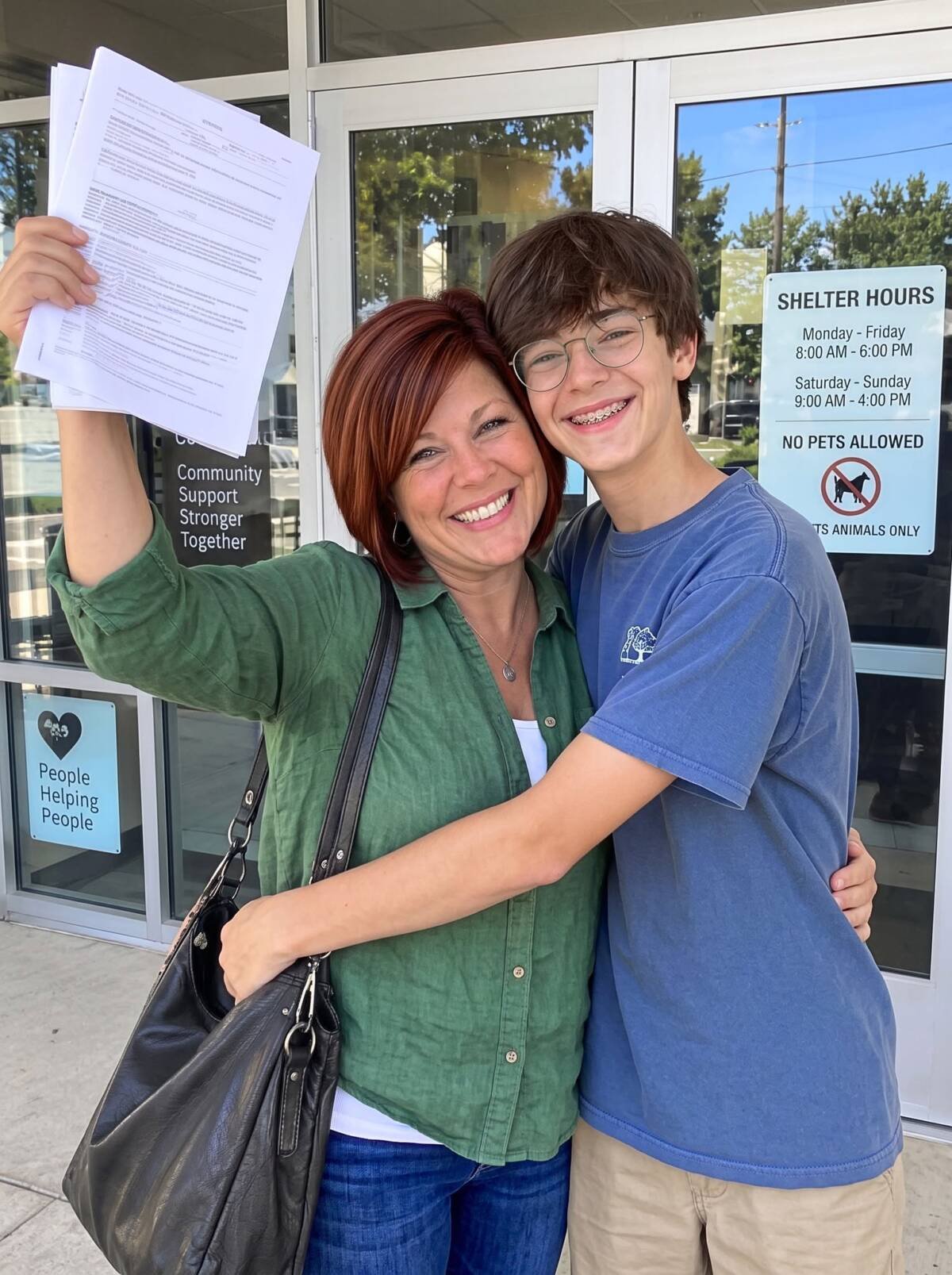
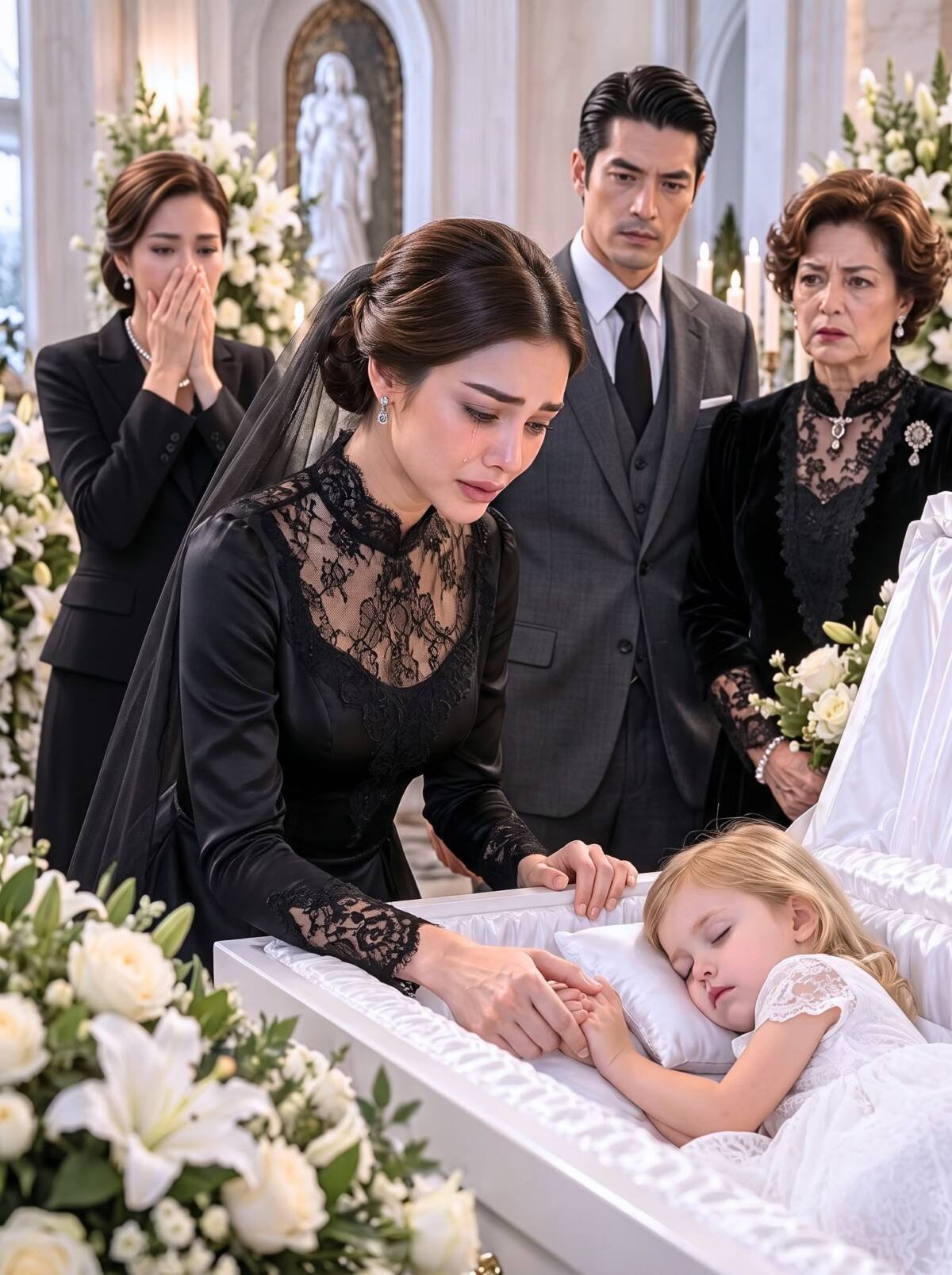
After working a 16-hour shift in the emergency room on Christmas Eve, I came home expecting to find my daughter asleep in her grandparents’ house. Instead, I found her curled up alone on our couch, wearing the same clothes she had left home in. When I asked what happened, her answer changed our family forever.
Christmas is supposed to be a time when families open their doors, pull up extra chairs, and make sure nobody feels forgotten.
But for my 16-year-old daughter, Abby, Christmas Eve became the night she learned that even the people she trusted most could make her feel like she didn’t belong.
While I spent the holiday caring for strangers in a crowded emergency room, my parents were hosting a large family gathering at their four-bedroom home. Twenty-eight guests had been invited. The dining table was set, the food was ready, and the house was filled with relatives celebrating the season.
There was only one person they apparently hadn’t made room for.
My daughter.
When Abby arrived at her grandparents’ house, my mother told her there was no space at the table. Nobody offered to rearrange the seating. Nobody suggested another place for her to eat. And nobody seemed concerned that a teenager had arrived expecting to spend Christmas with her family.
So Abby got back into her car and drove home alone.
Hours later, I found her curled beneath a thin blanket on the couch, trying to make herself as small as possible.
She had eaten toast and half a banana for dinner.
I was exhausted after a long shift, but the moment she told me what had happened, my exhaustion gave way to something else entirely.
I didn’t call my mother to argue. I didn’t threaten my father. I didn’t send an angry message to my sister.
Instead, I made a decision that would change the lives of everyone involved.
The next morning, an envelope was delivered to my parents’ front door.
When they opened it and read the papers inside, the phone calls began. So did the shouting.
What they had forgotten was one crucial detail: the house they had been living in belonged to me.
And this time, I wasn’t going to solve their problems at the expense of my daughter.
A Christmas Eve My Daughter Had Been Looking Forward To
By the time Christmas Eve arrived, I had already been at the hospital for fourteen hours.
I worked as a nurse in the emergency department, and the holiday season was often one of the busiest times of the year. Patients still arrived with broken bones, chest pain, breathing difficulties, and emergencies that couldn’t wait until the festivities were over.
I’d volunteered to work a double shift so a younger nurse with small children could spend Christmas at home with her family.
It seemed like the right thing to do.
My husband, Mark, was working his own shift at the fire station, so Abby had planned to attend our traditional Christmas Eve gathering at my parents’ house on her own.
She was sixteen and had recently become comfortable driving herself. For weeks, she’d been talking about the evening, planning what to wear, and asking whether she could bring a dessert.
It was a family tradition she’d grown up with. Every year, the house filled with relatives, the kitchen smelled of roasted turkey and holiday spices, and the adults stayed up talking long after dinner.
I knew how much the gathering meant to her.
Although I couldn’t be there that evening, I pictured her sitting with her cousins, laughing with her grandparents, and enjoying the kind of Christmas memories I wanted her to have.
I had no reason to believe anything would go wrong.
My parents had four bedrooms, a spacious living room, and years of experience hosting large gatherings. Our family had always found ways to accommodate extra guests, even when it meant bringing out folding chairs or setting up another place at the kitchen counter.
Making room for family had never seemed complicated.
At least, that’s what I believed.
When my shift finally ended at 11:15 p.m., I was physically and mentally drained. I wanted a shower, a quiet room, and a few uninterrupted hours of sleep.
I drove home expecting the house to be empty.
Instead, I found evidence that Abby had returned long before me.
Her snow-covered boots sat near the entrance. Her coat had been left across the sofa, and the overnight bag she’d carefully packed was still zipped on the floor.
Then I noticed the blanket.
Abby was curled up on the couch, her knees pulled toward her chest. She looked uncomfortable, as though she’d fallen asleep without ever really settling down.
Something about the scene immediately worried me.
I approached her and gently touched her shoulder.
“Abby? Sweetheart, wake up.”
She stirred and slowly opened her eyes.
When she recognized me, her expression changed. For a moment, she looked relieved. Then the sadness returned.
“Mom?”
I sat beside her.
“What are you doing here? I thought you were staying at Grandma and Grandpa’s.”
She looked down at the blanket.
“They said there wasn’t room.”
For a few seconds, I didn’t understand what she meant.
“What do you mean, there wasn’t room?”
She hesitated, as if she were trying to decide how much to tell me.
Then she began explaining what had happened.
“Grandma Said Everyone Was Already Seated”
According to Abby, the driveway was full of cars when she arrived at my parents’ house.
She’d parked, gathered her overnight bag, and walked to the front door expecting the familiar warmth of Christmas Eve.
My mother answered.
At first, she appeared surprised to see her granddaughter standing there.
Abby explained that she had come for dinner and planned to stay overnight, just as we’d discussed.
My mother looked toward the dining room.
Then she told Abby that everyone was already seated and the table had been arranged.
She said they hadn’t been expecting her.
And, apparently, there wasn’t a way to add another chair.
Abby knew there were plenty of people inside. She could hear voices and laughter coming from the house. She could see the lights and decorations through the windows.
She also knew the family had hosted larger gatherings before.
But she was sixteen. She wasn’t prepared to challenge her grandmother or accuse the adults inside of deliberately excluding her.
So she waited for someone to offer a solution.
Nobody did.
Abby told me that her aunt Janelle’s children had taken the place where she usually slept. My grandfather remained in the living room watching television. Other relatives continued enjoying the evening.
Nobody suggested that Abby sit somewhere else.
Nobody offered to rearrange the table.
Nobody asked whether she could stay in another room.
And nobody offered to drive her home.
Eventually, she realized that she wasn’t going to be welcomed inside.
She picked up her bag, returned to her car, and drove away.
I tried to imagine what that drive must have felt like.
She had arrived expecting to spend Christmas with people she loved. Instead, she had been turned away at the door, left to make her own way home while the celebration continued without her.
I asked the question that suddenly mattered more than anything else.
“Abby, what did you eat for dinner?”
She looked up at me.
“Toast. And half a banana.”
I stared at her, hoping I’d misunderstood.
“That’s all?”
She nodded.
Then she told me something that hurt even more.
“They made it feel like I was bothering them.”
I felt something inside me go quiet.
It wasn’t simply that my daughter had missed a meal. It wasn’t even that she had been excluded from a family gathering.
It was the fact that the adults responsible for making her feel safe had left her believing that her presence was an inconvenience.
Twenty-eight people had found a place at that gathering.
But somehow, there had been no place for my sixteen-year-old daughter.
I had spent fourteen hours caring for patients, trusting that Abby was safe with her grandparents. While I worked, she had been turned away by the very people I believed would look after her.
I pulled her into my arms.
She began to cry.
I held her while she trembled against me, listening as she described the evening in fragments. I didn’t interrupt her or tell her what she should have done differently.
She had done nothing wrong.
She had shown up where her family expected her to be.
And her family had rejected her.
That night, something changed in the way I saw my parents. For years, I had made excuses for their behavior, explained away their harsh comments, and tried to keep the peace whenever disagreements threatened to divide us.
But sitting beside my daughter, I could no longer convince myself that everything was normal.
I could no longer pretend that keeping the family together was more important than protecting the child who depended on me.
My Husband Asked One Question
Christmas morning arrived quietly.
There were no excited voices from the kitchen, no rush to open presents, and no family gathering to prepare for. The house felt unusually still.
Abby slept late, exhausted from the emotional strain of the previous night.
I made coffee and sat at the kitchen table, replaying everything she’d told me.
I kept thinking about the choices my parents had made.
They could have moved a chair.
They could have asked someone to make room.
They could have offered Abby a meal in the kitchen or found a place for her to sleep.
They could have called me at the hospital if there had been a genuine problem.
Instead, they had allowed a teenager to leave alone on Christmas Eve without making sure she had eaten or arrived home safely.
My husband, Mark, returned from his shift at the fire station later that morning.
I told him everything.
He listened without interrupting. His expression grew more serious as I explained how Abby had arrived, what my mother had said, and how our daughter had ended up alone on the couch.
When I finished, he remained silent for several seconds.
Then he asked a simple question.
“They made room for twenty-eight people, but not Abby?”
I nodded.
Mark leaned back in his chair.
“So what are we going to do?”
I had already begun thinking about the answer.
For years, I had helped my parents financially. I had stepped in whenever they faced a problem, often without asking questions or expecting anything in return.
I had convinced myself that helping them was part of being a good daughter.
But I had also allowed that responsibility to become a one-way arrangement in which my parents expected support without considering how their actions affected me or my family.
This time, I wasn’t going to make another excuse for them.
“I’m not making a scene,” I told Mark. “I’m taking action.”
He looked at me carefully.
I explained that I wanted to speak with an attorney, review our arrangement regarding my parents’ home, and determine the lawful steps available to me.
Mark didn’t try to talk me out of it.
He understood that this wasn’t simply about one dinner.
It was about a pattern of behavior that had gone unchallenged for too long.
And it was about making sure Abby never again felt she had to earn the right to be treated with basic kindness by her own family.
The House My Parents Had Forgotten Was Mine
Seven years earlier, my parents had faced serious financial trouble.
My father had made several poor investment decisions, and the consequences eventually threatened their housing situation. They were at risk of losing the home they had lived in for years.
I was in a position to help.
Rather than watch my parents struggle to find somewhere else to live, I purchased another property for them to occupy. The home was placed in my name, and I remained responsible for the mortgage and ownership-related expenses.
I paid the property taxes, insurance, and maintenance costs. I also covered other household expenses when necessary.
My parents lived there without making payments toward ownership.
At the time, I viewed the arrangement as a way to give them stability during a difficult period. I wasn’t trying to control them, and I didn’t expect them to spend their lives thanking me.
I simply wanted my parents to have a safe place to live.
Over the years, however, the arrangement became something everyone seemed to take for granted.
My parents began treating the house as though it were theirs in every meaningful sense. They spoke about it as their home, made their own plans, and appeared to assume that my financial support would continue indefinitely.
I rarely challenged that assumption.
There was always another reason to wait.
My father was getting older. My mother worried about money. My sister, Janelle, had her own responsibilities. I told myself that family members were supposed to help one another.
But I had never intended to surrender control of my property or commit to supporting my parents without limits.
And nothing in that arrangement required me to tolerate behavior that harmed my daughter.
When I contacted an attorney after Christmas, I explained both the property situation and what had happened to Abby.
I wanted to know my legal options, not act out of anger or take a step that could create unnecessary problems later.
The attorney reviewed the ownership documents and explained the process that would apply to my parents’ occupancy. Because the property was mine, I had legal options for ending the arrangement, but I needed to follow the applicable notice requirements and any procedures required by local law.
I agreed to proceed through the proper channels.
My attorney prepared the necessary notice requiring my parents to vacate within sixty days, subject to the applicable legal requirements.
I didn’t deliver the papers myself.
I wanted the process to be documented, clear, and handled professionally. A process server delivered the notice and obtained confirmation of delivery.
I knew my parents would be angry.
What I didn’t know was whether they would finally stop and consider why I had reached this point.
The envelope contained no insults, threats, or dramatic declarations.
It contained formal paperwork.
For the first time in years, I wasn’t asking my parents to understand how I felt before taking action.
I was establishing a boundary and following through.
The Morning the Envelope Arrived
My parents received the notice the following morning.
I wasn’t there when they opened it, but I learned what happened soon afterward.
My phone began ringing.
I let the first call go to voicemail.
Then another came in.
And another.
By the time I received the sixth call, I decided to answer.
My mother’s voice was already raised.
“How dare you do this to us? After everything we’ve done for you, you’re throwing your own parents out of their home?”
I could hear my father shouting in the background.
He was furious.
He insisted that I had no right to treat them this way and declared that if I went through with the notice, I would no longer be considered their daughter.
My mother continued talking over him.
Neither of them asked what had happened to Abby on Christmas Eve.
Neither asked whether she had been hurt by their decision.
Neither acknowledged that they had allowed their granddaughter to leave their home without a meal or a safe plan for the evening.
Their attention was entirely focused on the notice.
I waited until there was a pause.
Then I spoke calmly.
“The notice is legal. You have sixty days.”
My mother demanded an explanation.
I reminded her that she had refused to make room for Abby at Christmas. I explained that I was no longer willing to continue the arrangement as though nothing had happened.
She immediately began arguing that I was overreacting.
According to her, I was destroying the family over one dinner.
I listened for a moment.
Then I asked the question that had been sitting with me since Christmas Eve.
“Why didn’t you make room for Abby?”
There was no meaningful answer.
My mother began talking about the number of guests, the seating arrangements, and how difficult it had been to host so many people.
I reminded her that Abby was not a stranger who had arrived uninvited. She was her granddaughter.
My mother insisted that I should have understood the pressure she was under.
I told her that being overwhelmed did not explain why nobody had offered Abby another place to sit, another place to eat, or a safe alternative.
Most importantly, it did not explain why my parents had failed to contact me.
My mother returned to the notice.
I realized then that we were not having the same conversation.
I was talking about a child who had been made to feel unwanted.
She was talking about losing a house.
“You should have made room at the table,” I said.
Then I ended the call.
I didn’t block every number or send another message. I simply stopped participating in the argument.
For years, my parents had been able to turn difficult conversations into emotional confrontations that ended with me apologizing, explaining myself, or offering to fix whatever problem they had.
This time, there was nothing left to negotiate over the phone.
The legal process would continue through the proper channels.
And Abby would no longer be expected to pretend that what happened to her was acceptable.
My Aunt Arrived With Cookies and a Different Story
About two weeks later, my aunt Elaine came to visit.
She arrived carrying a container of homemade butter cookies and wearing the expression of someone who hoped a little kindness might repair a difficult family situation.
Elaine had always been the relative who tried to keep everyone talking. When disagreements arose, she encouraged people to forgive one another and move forward.
I understood why she wanted to help.
But I also knew that reconciliation meant very little if it required Abby to ignore what had happened.
Elaine sat down and carefully explained that my mother was devastated by the situation.
She suggested that Christmas Eve had been a misunderstanding.
My mother, she said, had been overwhelmed by the gathering and hadn’t realized how upset Abby would become.
I listened without interrupting.
When Elaine finished, I asked her a question.
“Did my mother tell you what happened?”
She nodded.
“She said Abby decided not to stay.”
I looked at her.
“That’s not what happened.”
I explained that Abby had arrived expecting to attend the family gathering. My mother had told her there was no room, and nobody had offered a reasonable alternative.
Elaine’s expression changed.
She hadn’t known the full story.
I told her that Abby had driven home alone, that she’d eaten toast and half a banana, and that I’d found her asleep on our couch after finishing my hospital shift.
Elaine became quiet.
Then she asked why my mother hadn’t told her that part.
I couldn’t answer for my mother.
But I could explain what the omission meant.
“They didn’t just exclude Abby,” I said. “They let everyone believe she chose to leave.”
Elaine looked down at her hands.
She had been told a story in which my daughter was responsible for the problem. That version had allowed my parents to avoid confronting their own decisions.
Once Elaine learned the facts, it became harder for her to defend the idea that everything had been a harmless misunderstanding.
She tried one more time to suggest that my mother might have been overwhelmed.
I reminded her that twenty-eight people had been welcomed into the house.
A few minutes of rearranging the seating could have changed the entire evening.
An offer of food or a safe place to sleep could have made Abby feel that she still mattered.
Instead, the adults had allowed her to leave.
Elaine didn’t argue after that.
Before she left, she apologized for not knowing what had happened sooner.
I appreciated that she had listened.
But the conversation also confirmed something important: my parents had already begun shaping the story to protect themselves.
I couldn’t control what they told other relatives.
I could, however, refuse to let their version become the only one people heard.
Sixty Days Passed, but My Parents Didn’t Pack
As the deadline approached, I expected my parents to begin preparing to move.
They knew the notice had been delivered. They had called repeatedly to protest it, and my attorney had made the requirements clear.
Still, there was little indication that they intended to leave.
There were no moving boxes stacked in the hallway. No truck appeared in the driveway. No one contacted me with a serious plan for finding another home.
My parents seemed convinced that I would eventually change my mind.
They knew the version of me who had always stepped in to help. They remembered the daughter who covered expenses, tolerated unpleasant comments, and accepted responsibility whenever the family faced a problem.
Perhaps they believed that my anger would fade once enough time passed.
Perhaps they assumed that I would feel guilty about the consequences and withdraw the notice.
For a while, I hoped they would surprise me.
I wanted them to recognize the seriousness of the situation, acknowledge what they had done to Abby, and make a genuine effort to change.
But as the deadline drew closer, it became increasingly clear that they were treating the notice as another argument they could outlast.
I returned to my attorney.
We reviewed the situation and discussed the lawful options available to me, including what would be required if the property were to be sold.
I made my decision after considering the financial and legal implications.
“List the house,” I said.
It wasn’t a decision I made because I wanted my parents to suffer.
I made it because I no longer wanted to remain financially responsible for a living arrangement that had become a source of conflict and resentment.
The property was mine. I was entitled to make decisions about its future, provided I followed the applicable legal requirements.
The house went on the market.
And my parents still hadn’t packed a single box.
The House Sold in Three Days
The property sold quickly.
I priced it fairly, and a young couple who had been searching for a home made an offer soon after it was listed.
The sale gave me a clear path forward.
I wasn’t interested in using the house to punish anyone or making a public spectacle of my parents’ situation. I wanted to close a chapter of my life and direct my energy toward my own household.
The legal process continued.
Because my parents were still occupying the property, the sale and transfer had to be handled in accordance with the applicable requirements. I relied on my attorney to make sure the necessary steps were followed rather than attempting to force them out myself.
My parents continued to resist.
They insisted that they had lived in the house for years and that this somehow gave them a right to remain indefinitely.
But living in a property and legally owning it are not the same thing.
The ownership documents were clear.
I had purchased the house. I had paid the expenses associated with it. And I had followed the required process to end the arrangement.
When my parents refused to cooperate with the move, the situation became more difficult. The remaining steps were handled through the appropriate legal channels.
I wasn’t present for the final removal of their belongings.
Later, my aunt Elaine told me that the situation had become heated. My mother had reportedly insisted that the house was hers because she had lived there for years, while my father continued arguing that I had no right to take it away.
I couldn’t verify every detail of what happened that day, and I didn’t need to.
The important fact was that the arrangement had ended.
My parents had lost the benefit of living in a property I owned and maintained.
They would now need to make their own housing arrangements.
For years, they had treated my financial support as a permanent guarantee. They had apparently assumed that I would continue providing it regardless of how they treated me or my daughter.
That assumption was no longer valid.
The irony was difficult to ignore.
At Christmas, my parents had told Abby there was no room for her in a house I owned.
Now they had to face the reality that their own place in that house had never been unconditional.
My Sister Offered to Help—Until She Had to Live With Them
After leaving the house, my parents moved in with my sister, Janelle.
She had been present at the Christmas gathering. She had seen Abby arrive and had not intervened when our daughter was turned away.
At the time, Janelle had apparently accepted our mother’s explanation that there wasn’t enough room.
Now, she wanted to demonstrate that she was the daughter willing to stand by our parents.
She took them in.
For a while, I heard very little from her.
I didn’t ask for updates, and I didn’t offer to intervene. My parents were adults, and Janelle had made her own decision about helping them.
Then, thirteen days later, I received a message from her.
“I can’t do this. They are impossible. You were right.”
I read it once.
Then I put my phone down.
There was a time when I would have called immediately. I would have listened to Janelle’s complaints, offered advice, and probably tried to find a solution that made everyone’s lives easier.
That was the role I’d played for years.
I was the person who fixed problems, paid bills, and absorbed the consequences when other family members refused to take responsibility.
But I no longer believed that every problem in my family was mine to solve.
Janelle had chosen to take our parents in. She was entitled to make that choice, just as I had been entitled to make mine.
I didn’t need to punish her or lecture her.
I simply allowed her to handle the situation she’d agreed to manage.
Her message didn’t erase what had happened on Christmas Eve, and it didn’t mean she had suddenly become an ally for Abby.
But it did show how differently people sometimes understand a situation when they are no longer watching from a distance.
My parents had expected me to accommodate their needs indefinitely.
When Janelle became responsible for helping them, the strain became more visible.
Eventually, they found a modest two-bedroom rental across town.
Their financial circumstances changed considerably without my assistance with housing costs.
My father had a limited pension, and my mother had grown accustomed to a lifestyle that depended partly on the support I provided.
Now they had to work within their own means.
They were angry with me.
They told relatives that I had abandoned them over a single Christmas dinner. My father described me as vindictive, while my mother suggested that I had destroyed the family.
Janelle rarely discussed Christmas Eve unless someone asked her directly.
But as more relatives learned what had actually happened, the story became harder to simplify.
Some began asking why Abby had been turned away if the gathering was simply too crowded.
Others questioned why my mother had told people that Abby had chosen not to stay.
Aunt Elaine stopped defending my mother once she understood the circumstances.
I didn’t go around trying to persuade everyone to take my side.
I had no interest in turning a painful family experience into a public campaign.
I wanted to move forward.
And I wanted Abby to understand that none of the adults’ choices had been her responsibility.
The Question My Daughter Kept Asking
Even after my parents had moved out, Abby continued struggling with what had happened.
She was still young enough to wonder whether she could have done something differently.
Maybe she should have called me sooner.
Maybe she should have asked more forcefully for a chair.
Maybe she should have stayed outside until someone changed their mind.
Maybe, she worried, the entire situation had somehow been her fault.
Each time she raised one of those questions, I gave her the same answer.
“You did nothing wrong.”
She had been sixteen years old. She had gone to a family gathering she had attended for years, expecting to be welcomed.
It was not her responsibility to rearrange a room full of adults or persuade her grandparents to treat her with basic consideration.
She had no obligation to argue her way into a place at the table.
I wanted her to understand that the adults were responsible for their choices.
Her grandmother could have made room.
Her grandfather could have intervened.
Her aunt could have offered an alternative.
Someone could have checked that she had eaten or made sure she got home safely.
None of those things happened.
Abby had responded to the situation by leaving and driving home. She had done what she believed was best under the circumstances.
She did not deserve to carry the shame of being rejected.
One evening, she asked me a question that revealed how deeply the experience had affected her.
“But they lost their house because of me, didn’t they?”
I sat beside her.
“No,” I said. “They lost access to a house I owned because of the choices they made.”
She looked at me carefully.
I explained that the decision was mine, not hers. I had chosen to end the housing arrangement because of the broader circumstances and because I no longer wanted to continue providing that support.
She had not asked me to do it.
She had not demanded that I sell the property.
She had simply told me what happened.
I made the decision as an adult, after consulting an attorney and considering the available options.
“You don’t have to feel guilty because I decided to set a boundary,” I told her.
She didn’t answer immediately.
But over time, I saw a change in her.
She stopped apologizing for bringing up Christmas Eve. She became more comfortable talking about what she’d experienced, and she began to recognize that the rejection she had felt did not reflect her worth.
That was more important to me than any apology my parents might eventually offer.
I couldn’t change the night they turned her away.
I could make sure she never believed she deserved it.
The Money From the Sale Became Part of Abby’s Future
After the house was sold and the legal and financial matters were resolved, Mark and I discussed what to do with the proceeds.
We could have used the money for a number of things. We could have invested it, put it toward our own home, or kept it as savings.
But the answer that made the most sense to us was Abby’s future.
We decided that the money would help support her education and give her greater financial flexibility as she moved into adulthood.
Abby had always been interested in animals. Since she was little, she’d talked about becoming a veterinarian.
We wanted her to have the opportunity to pursue that dream without feeling that she owed anything to the relatives who had made her feel unwanted.
The decision wasn’t about giving her a reward for what had happened.
It was about making a positive use of a difficult situation.
For years, I had directed a considerable amount of time, energy, and money toward maintaining my parents’ living arrangements.
Now, I wanted to invest in someone whose future I could help support without attaching conditions or expectations to that support.
The money would serve a purpose that mattered to our family.
It would help Abby build her own life.
And unlike the housing arrangement with my parents, it would not be used as leverage to demand loyalty or silence.
I wanted my daughter to know that support could be freely given.
She did not need to tolerate disrespect to deserve it.
She did not need to hide her feelings to keep it.
And she would never be expected to repay love by accepting humiliation.
The First Christmas We Celebrated Without Them
Months passed.
Then another Christmas approached.
For the first time in years, we didn’t plan our holiday around my parents’ expectations.
There were no discussions about who would host, no tense conversations about family obligations, and no anxiety about whether a relative might be offended if we arrived late or left early.
We stayed home.
Abby helped Mark prepare dinner. I worked a shorter hospital shift, and when I walked through the front door that evening, the house smelled of food and warm spices.
A plate was waiting for me at the table.
It was a small gesture.
But after everything that had happened, it meant more than I could explain.
There was no grand celebration. No elaborate decorations or crowded dining room.
There were simply three chairs and three people who wanted to be there together.
Abby smiled when she saw me.
“You’re finally home.”
I laughed and sat down.
For the first time in a long while, I wasn’t wondering whether I had done enough to keep everyone happy.
I wasn’t preparing for an argument or worrying about the next demand.
I was simply enjoying Christmas with my husband and daughter.
That evening, I realized how much emotional energy I’d spent trying to preserve a family dynamic that had never been as healthy as I’d wanted to believe.
I had mistaken obligation for closeness.
I had treated endurance as proof of love.
And I had assumed that because my parents were my parents, their behavior deserved an unlimited number of second chances.
But family relationships cannot survive on one person’s willingness to make sacrifices forever.
They require consideration, honesty, and a willingness to take responsibility when someone is hurt.
That Christmas, our home felt peaceful in a way I hadn’t experienced for years.
There was no pressure to pretend.
No one had to earn a chair.
No one had to wonder whether they were welcome.
We simply made room for one another.
And that was enough.
Two Years Later, My Daughter Had an Answer
By the time two years had passed, Abby was eighteen and home from college for fall break.
She was studying toward her dream of becoming a veterinarian.
The experience at Christmas had not defined her future. It had become one painful chapter in a much larger life, and she was learning to move forward without allowing it to determine how she viewed herself or others.
One quiet Friday afternoon, we sat together on the porch swing with glasses of iced tea.
There were no family obligations waiting for us. No urgent calls from my parents. No pressure to visit people who had made it clear that our presence was conditional.
For a while, we talked about college, her classes, and the animals she hoped to work with in the future.
Then Abby became quiet.
After a moment, she looked across the yard and said, “You know, I was thinking about Grandma and Grandpa the other day.”
I waited.
“I don’t miss them.”
There was no anger in her voice.
She wasn’t trying to hurt anyone or provoke a reaction. She simply seemed to have reached a point where she could acknowledge how she felt without apologizing for it.
I nodded.
“I understand.”
She took a sip of her tea.
For years, I had worried about what my daughter might lose by stepping away from her grandparents. I had wondered whether she would feel guilty, whether she would regret the distance, or whether she might eventually decide that the experience had been a misunderstanding after all.
But Abby had come to her own conclusion.
She didn’t miss the relationship she had once believed she had.
She didn’t miss feeling as though she had to prove that she belonged.
And she didn’t want to return to a situation in which her feelings could be dismissed whenever they became inconvenient.
I couldn’t blame her.
I didn’t miss the constant arguments, either. I didn’t miss the expectation that I would solve every problem or the guilt that followed whenever I tried to say no.
I didn’t miss my mother’s passive-aggressive comments or my father’s demands for loyalty.
And I no longer felt responsible for making my sister’s choices easier.
That didn’t mean I wished my parents harm.
It meant I had stopped believing that caring about someone required me to give them unlimited access to my life.
Aunt Elaine continued sending a Christmas card every year. Sometimes she included updates about my parents’ health and suggestions that perhaps time had softened everyone’s feelings.
I appreciated her concern.
But I didn’t respond to those suggestions.
Reconciliation is a personal decision, not an obligation that can be imposed simply because time has passed.
If my parents ever wanted to rebuild a relationship with me or Abby, it would require more than anger about the consequences of their actions.
It would require honesty about what happened.
It would require acknowledging the hurt they caused.
And it would require accepting that Abby’s well-being mattered just as much as their desire to maintain the family arrangement they had grown accustomed to.
I wasn’t going to promise reconciliation in advance.
For now, the distance was what our family needed.
What That Christmas Taught Me About Family
Looking back, I know the house was never the most important part of the story.
The property was something I owned. I had provided it to help my parents during a difficult period, and I eventually decided to end that arrangement through the appropriate legal process.
But the decision to sell it was only one consequence of a much larger change.
For years, I had believed that being a good daughter meant doing whatever I could to keep my parents comfortable.
I paid expenses. I helped solve problems. I ignored insults and accepted explanations that I might have questioned if they had come from anyone else.
Whenever conflict arose, I tried to make peace.
I told myself that families were complicated and that people sometimes behaved badly when they were stressed.
Those things can be true.
But understanding why someone behaves a certain way does not mean you must accept the behavior indefinitely.
And being related to someone does not give that person the right to humiliate your child.
My parents had welcomed twenty-eight guests into a home I owned, then told my sixteen-year-old daughter that there was no room for her.
She drove home alone.
She ate a small dinner by herself.
And she curled up on our couch, feeling unwanted, while I was still at work caring for patients.
I will never forget finding her there.
I also won’t forget the moment she looked at me and asked whether she had done something wrong.
That was the moment I knew what mattered most.
My daughter needed to understand that her value was not determined by whether her grandparents chose to make room for her.
She needed to know that she could tell me the truth without being blamed for the consequences.
She needed to learn that boundaries are not punishments, and that protecting yourself is not the same as being cruel.
Most of all, she needed to know that she would always have a place with me.
My parents eventually found another place to live. They adjusted to a different financial reality, and our family relationships changed in ways none of us could have predicted.
Some relatives understood my decision. Others criticized it. A few preferred to avoid discussing the matter altogether.
I accepted that I could not control everyone’s opinion.
I could only control my own choices.
And I chose to put my daughter first.
I did not make that decision because I wanted revenge.
I made it because I had spent too long confusing loyalty with silence and love with endless sacrifice.
I made it because Abby deserved to grow up knowing that the adults in her life would protect her, even when doing so meant disappointing other adults.
And I made it because the people who benefit from your generosity do not automatically earn the right to take it for granted.
Today, when I think about Christmas, I no longer picture the crowded house where my daughter was turned away.
I picture our own dining table.
I picture Mark cooking dinner, Abby laughing in the kitchen, and the simple comfort of knowing that nobody at home has to wonder whether they belong.
A house can have four bedrooms, a large dining room, and enough space for dozens of guests.
But none of that matters if the people inside refuse to show kindness to the person standing at the door.
The most important thing I learned was not that I had the power to sell a house.
It was that I had the responsibility to protect my daughter, even when doing so required me to change the relationships I had spent years trying to preserve.
My parents once told Abby there was no room for her at their Christmas table.
They could make that choice.
But they could not decide what it meant about her worth.
And they could not require me to keep supporting them as though nothing had happened.
When I finally had to choose between maintaining the peace and standing up for my daughter, the answer was clear.
I chose my daughter.
And if I faced that decision again, I would make the same choice without hesitation.
Because family is not measured by the number of people gathered around a table.
It is measured by the care, respect, and compassion those people show one another.
And no child should ever have to wonder whether there is room for them in the hearts of the people who are supposed to love them.
What Would You Have Done?
Imagine working through Christmas Eve, believing your daughter is safe with her grandparents, only to discover that she was turned away from the family gathering and sent home alone.
Would you have tried to repair the relationship, or would you have made the same decision to establish firm boundaries?
Share your thoughts in the comments, and if this story resonated with you, share it with someone who believes that protecting your child should always come first.
Editorial note: This is presented as a personal, narrative-style family story. Legal procedures and property rights vary by jurisdiction; the details of any real case should be independently verified before publication as factual news.