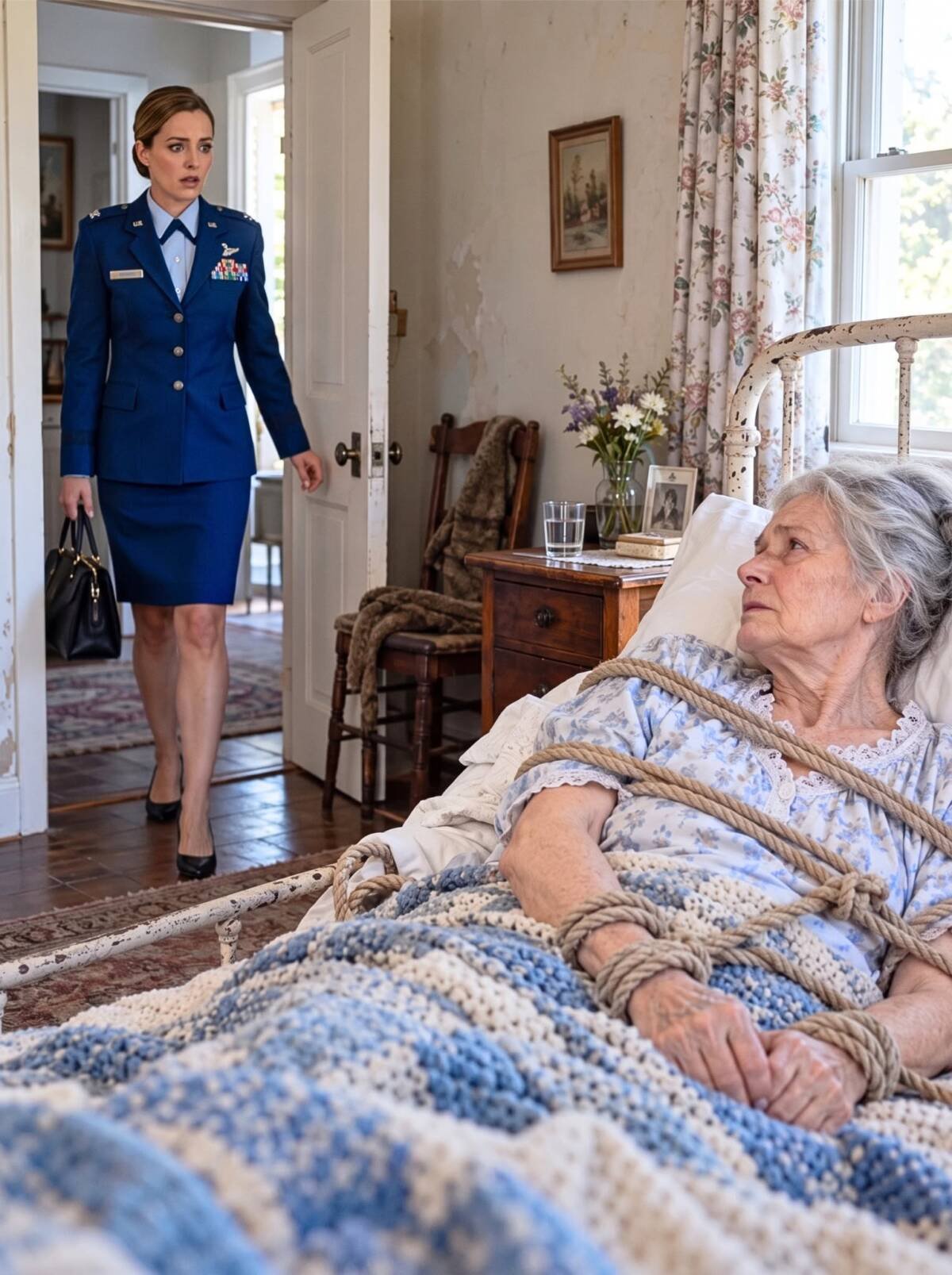
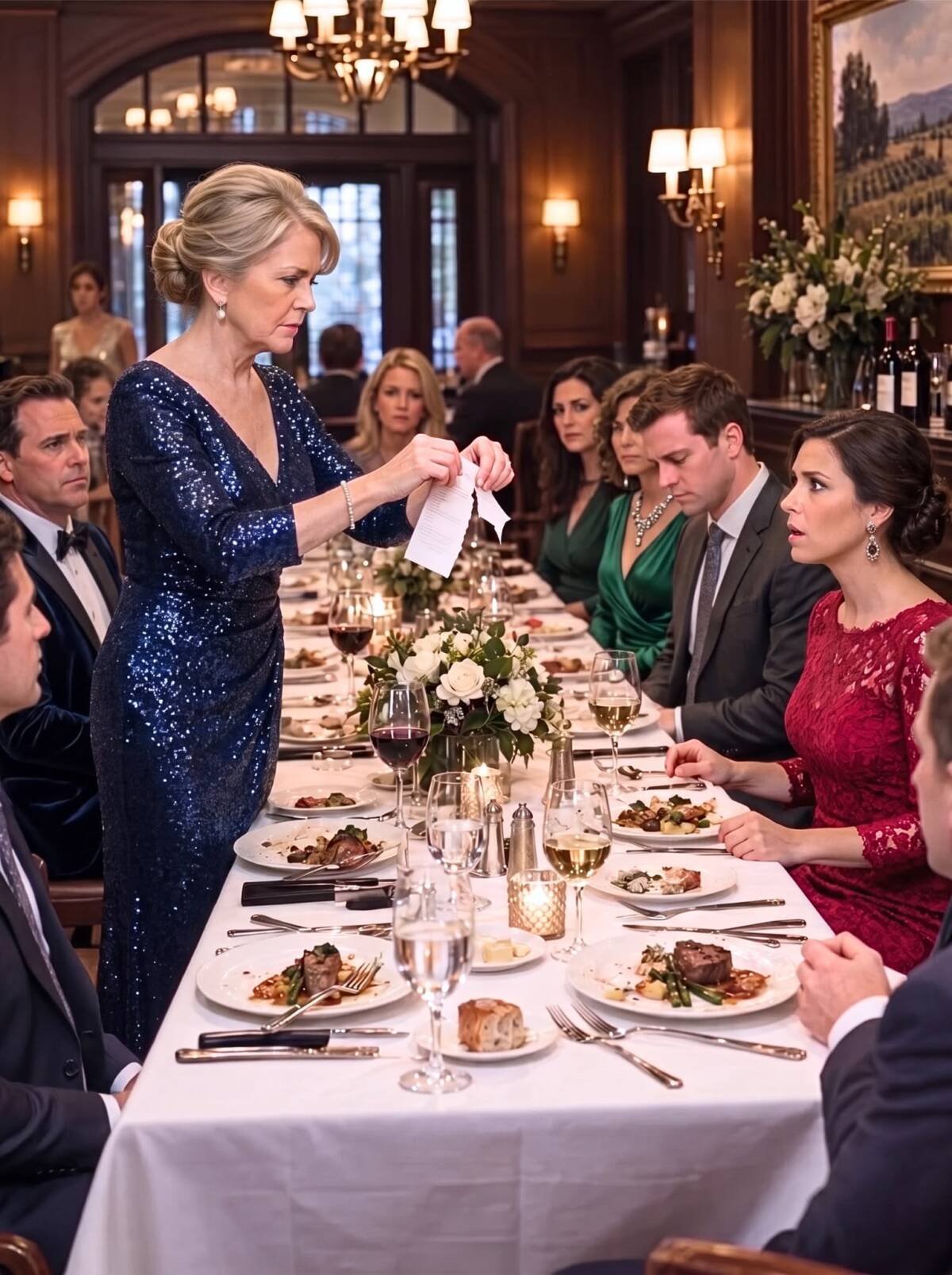
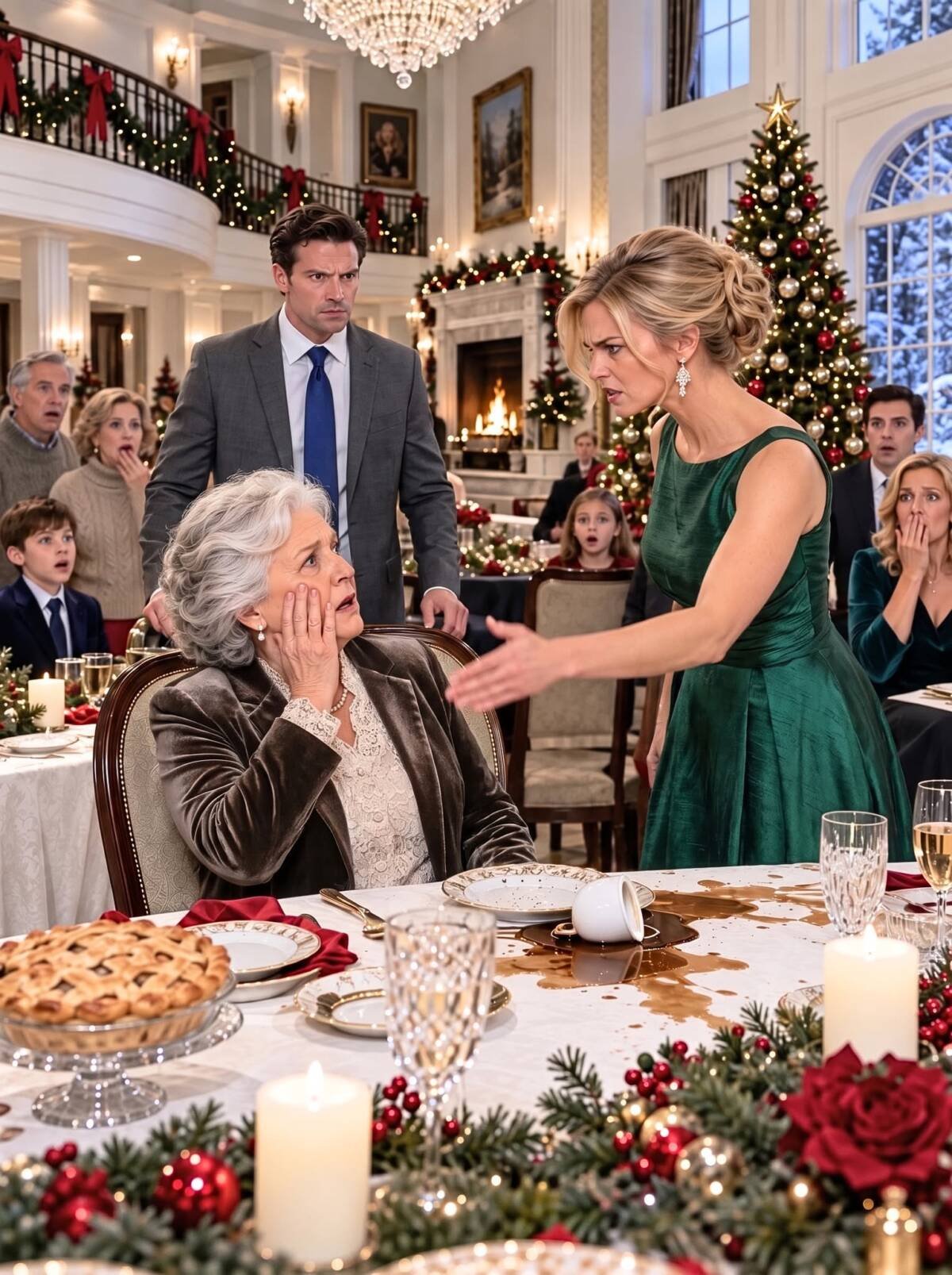
When my sister gave our parents an ultimatum, they chose her without hesitation. I left home with two suitcases and $60, believing I had lost my family forever. Ten years later, after building a life they knew nothing about, I received an unexpected visitor who wanted something money could buy—but forgiveness would be much harder to earn.
The Night My Family Chose Sides
My sister Vanessa stood in the middle of our parents’ kitchen with her arms folded, her chin raised, and an expression that suggested the decision had already been made.
“Mom, Dad, you need to decide,” she announced. “Either Claire leaves this house, or I do.”
I was twenty-two years old, recently unemployed, and temporarily living in my childhood bedroom while trying to figure out what to do next. Vanessa was twenty-six, newly engaged, and also living under our parents’ roof while she and her fiancé saved money for a house.
We were both adults trying to get our lives started. But only one of us was about to discover how little our parents valued her place in the family.
Mom looked at me first.
It was a brief glance, barely lasting a second, but I understood its meaning before she opened her mouth. Dad suddenly became fascinated with the papers scattered across the kitchen counter. Vanessa remained perfectly still, waiting for the answer she seemed certain she would receive.
“Claire,” Mom finally said, “maybe it would be better if you stayed somewhere else for a while.”
I stared at her.
“You’re serious?”
She pressed her lips together.
“I think everyone needs some space.”
“Everyone? Or just me?”
Nobody answered.
The argument that had brought us to that moment had started two days earlier, when I discovered that Vanessa had been using Dad’s credit card to pay for wedding deposits, expensive furniture, and even part of her fiancé Ryan’s truck payment.
At first, I assumed Dad had agreed to cover the expenses. Our parents were comfortable financially, and they had always helped Vanessa when she needed something.
But when I saw the statements, I realized the situation was different.
There were charges Vanessa had never mentioned, purchases Dad knew nothing about, and expenses that had nothing to do with the wedding.
I brought the statements to our parents because I believed they deserved to know what was happening with their money.
Instead of thanking me, Vanessa accused me of trying to sabotage her engagement.
“You’re jealous,” she said, tears filling her eyes. “You can’t stand the fact that something good is happening to me.”
“That’s not true,” I replied. “I’m asking why you’re using Dad’s credit card without telling him.”
Dad rubbed his forehead.
“We’ll deal with it.”
“When?” I asked. “Because these charges keep coming.”
Mom’s expression hardened.
“Claire, don’t make this worse than it needs to be.”
I remember looking at her, genuinely confused.
“How am I making anything worse? I didn’t spend the money.”
Vanessa shook her head dramatically.
“This is exactly what she always does. She finds a problem and turns it into a family crisis.”
I wanted someone to acknowledge what was right in front of us. I wanted Dad to look at the statements and ask Vanessa for an explanation. I wanted Mom to stop treating my questions as personal attacks.
Most of all, I wanted my parents to be fair.
Instead, Vanessa delivered her ultimatum.
And our parents accepted it.
Sixty Dollars and Two Suitcases
Forty minutes later, I was standing at the bottom of the staircase with two suitcases beside me.
I had packed my clothes, a few books, my laptop, and the small collection of photographs I kept on my dresser. I had no apartment, no savings worth mentioning, and no idea where I would sleep that night.
Mom stood near the front door holding a small envelope.
“Here,” she said.
I opened it.
Inside were three twenty-dollar bills.
Sixty dollars.
I looked up at her, waiting for some explanation that would make the situation seem less cruel.
“That’s everything?”
She looked uncomfortable.
“Vanessa needs help with the wedding right now.”
For a moment, I could not speak.
Our parents had enough money to help finance a country-club wedding, but their unemployed daughter was being sent away with less money than it would cost to fill a car with gas and buy groceries for a few days.
I turned toward Dad.
“Are you really going to let me leave like this?”
He stood in the hallway with his hands in his pockets.
“Claire, this is complicated.”
“No, Dad. It really isn’t. She gave you a choice, and you chose her.”
He opened his mouth, then closed it again.
I waited a few more seconds.
Neither parent asked me to stay.
Neither offered to help me find a place to live.
Neither promised to call the next morning.
I picked up my suitcases and walked out.
The door closed behind me with a quiet click.
I remember that sound more clearly than almost anything else from that night.
I had expected an argument. I had expected someone to change their mind. Some part of me believed that once I reached the driveway, Mom would run after me or Dad would call me back inside.
Nobody did.
I spent the next three nights sleeping in my car.
During the day, I drove around looking for work, filling out applications and trying to appear presentable despite barely sleeping. Before sunrise, I showered at a gym, changed clothes in a restroom, and tried to make myself look like someone who had a stable life.
I ate inexpensive sandwiches and skipped meals whenever my money ran low.
Eventually, a coworker from a temporary office job learned what had happened and offered to let me sleep on her couch.
I accepted without hesitation.
Her apartment was small, and she had her own problems, but she never made me feel as though my presence was an inconvenience.
That simple kindness stayed with me.
For weeks, I checked my phone every time it rang.
I told myself my parents needed time to calm down. Perhaps Vanessa had apologized. Perhaps Dad had finally examined the credit-card statements. Perhaps Mom had realized how dangerous it was to send her daughter away without a place to live.
I imagined dozens of possible explanations for their silence.
Then I learned that Vanessa and Ryan were getting married.
The ceremony was expensive, carefully planned, and paid for with substantial help from our parents.
I was not invited.
I found out through photographs shared by relatives.
Vanessa wore a beautiful wedding dress. Ryan stood beside her beneath a floral arch. Mom and Dad smiled proudly in pictures that looked as though nothing unpleasant had ever happened in their family.
I stared at those photographs for a long time.
It was not the wedding that hurt most.
It was the realization that my parents could celebrate their other daughter’s happiness without once checking whether I had somewhere safe to sleep.
About a year later, they transferred a rental duplex worth nearly $180,000 to Vanessa and Ryan to help them establish their life together.
I learned about that, too, through family conversations that reached me indirectly.
By then, I had stopped expecting fairness from people who had repeatedly demonstrated that their definition of fairness depended on which daughter was asking.
I stopped waiting for an apology.
I stopped checking my phone for their numbers.
And eventually, I stopped thinking of my life as something that had been interrupted.
It was something I had to build myself.
The Ten Years They Knew Nothing About
The first years were difficult in ways I rarely discussed with anyone.
I worked temporary office jobs, accepted extra shifts, and took whatever opportunities I could find. I learned how to stretch a paycheck, how to negotiate a bill, and how to remain calm when an unexpected expense threatened to undo months of progress.
I also enrolled in night classes.
Some evenings, I arrived at class after working a full day, exhausted and hungry, wondering whether I was wasting my time. Other nights, I sat in the library until it closed because studying was easier than returning to an empty room and thinking about the family I no longer had.
But I kept going.
Eventually, the temporary office job led to a permanent operations position. My supervisors noticed that I was organized, reliable, and unusually good at solving logistical problems before they became expensive mistakes.
I began managing schedules, coordinating deliveries, and improving processes that had been inefficient for years.
I learned how businesses actually worked.
More importantly, I learned how to make myself valuable without depending on anyone’s approval.
My business degree came slowly, one semester at a time. I paid for it as I went, taking fewer classes when money was tight and more when I could afford the tuition.
By the time I graduated, I had a clear understanding of the industry I wanted to enter.
I eventually moved across the country to Seattle, where I found better professional opportunities and began building relationships with people who valued my work.
My first consulting client was a small company struggling with inventory delays and unreliable shipping schedules. I spent weeks reviewing its operations, identifying bottlenecks, and creating a system that reduced unnecessary costs.
The owner was pleased with the results.
He recommended me to another business.
That business recommended me to another.
Before long, I had enough work to stop treating consulting as a side project and turn it into a company.
I started with one client, a borrowed desk, and a laptop that had already seen better days.
There was no dramatic breakthrough.
There were long nights, difficult negotiations, mistakes I had to correct, and months when I wondered whether I had taken on more responsibility than I could manage.
But each successful project gave me a little more confidence.
I hired my first employee, then another. Eventually, I moved into a proper office and began serving larger clients.
By the time I turned thirty-two, my logistics consulting company employed eighteen people.
I had a comfortable home, a reliable car, savings for emergencies, and a professional reputation I had built through years of consistent work.
For the first time in my adult life, I felt secure.
My family knew none of it.
They did not know where I lived. They did not know the name of my company. They did not know that I had graduated, hired employees, or built a life that no longer depended on their approval.
I had not hidden my success to punish them.
I simply stopped sharing my life with people who had shown so little interest in it.
Then, on a rainy Tuesday morning in Seattle, everything changed.
My receptionist, Maya, appeared in my office doorway with an uncertain expression.
“Claire, there’s a woman in reception who says she’s your sister.”
I looked up from my laptop.
“My sister?”
“Vanessa. She says she came all the way from Ohio.”
For a moment, I wondered whether I had heard correctly.
Then I looked through the glass wall.
A woman was sitting in the reception area with both hands wrapped around a paper coffee cup.
Her blond hair had dark roots. She wore a plain gray sweater and jeans. Her shoulders were slightly hunched, and she kept looking toward the elevator as though she might leave before anyone came to speak with her.
But I recognized her immediately.
Ten years had passed since Vanessa stood in our parents’ kitchen and demanded that I leave.
Now she had crossed the country to find me.
I had imagined many possible reasons for a visit like this.
An apology.
An explanation.
A confession that she had finally understood what happened that night.
But when I saw the expression on her face, I suspected she had come for something else.
I told Maya to bring her into my office.
And when Vanessa sat across from me, the first thing she said was not, “I’m sorry.”
It was, “So it’s true. You really own this company.”
My Sister’s Unexpected Request
Vanessa glanced around my office before looking back at me.
Her eyes lingered on the framed business certificates, the photographs of my team, and the view of Seattle through the windows.
She appeared surprised by what she saw.
I motioned toward the chair across from my desk.
“Why are you here, Vanessa?”
She lowered her gaze to the coffee cup.
“Dad had a stroke.”
The words hit harder than I expected.
For a few seconds, the office seemed unusually quiet. I had spent years convincing myself that I no longer cared what happened in my parents’ lives, but hearing that my father had suffered a serious medical emergency brought back feelings I had never completely resolved.
“How bad is it?”
“He’s home now. He’s improving, but his left side is weak, and he still needs therapy. Mom is taking care of him.”
“I’m sorry to hear that.”
Vanessa nodded, then began explaining the family’s financial situation.
Dad could not work while recovering. Mom was struggling to manage his care. Property taxes were overdue, medical bills were accumulating, and the money they had saved over the years was running out.
Then she mentioned the duplex.
“What happened to it?” I asked.
Vanessa shifted in her chair.
“Ryan borrowed against it to expand his construction company. When the business failed, everything fell apart.”
“Everything?”
“The duplex. Our house. Most of what we had.”
I studied her face.
“Where’s Ryan now?”
She stared at the coffee cup.
“Nevada.”
“With you?”
“No.”
The answer was quiet, but I understood.
“He left you?”
“He left me for someone else.”
For the first time since she entered my office, I felt something other than anger.
I remembered Vanessa standing in our parents’ kitchen, confident that she could force everyone to arrange their lives around her wishes. I remembered the wedding, the photographs, and the duplex our parents had handed her while I struggled to pay for groceries.
Now she was sitting in front of me with none of the security she had once taken for granted.
I did not feel happy about her situation.
But I also did not believe that her suffering automatically made me responsible for fixing it.
Vanessa reached into her purse and pulled out a folded sheet of paper.
She placed it on my desk.
At the bottom was a number written in blue ink.
$146,800.
I looked at it, then at her.
“What is this?”
“My debts.”
“You want me to pay them?”
“I need a loan.”
I leaned back in my chair.
“Why are you asking me?”
“Because the bank said no. I tried everywhere.”
“That still doesn’t answer my question.”
Her expression tightened.
“Mom said you would help.”
There it was.
Ten years had passed, but my family still seemed to believe that my life could be rearranged whenever Vanessa needed something.
I folded the paper and placed it back on the desk.
“Did Mom ever tell you what happened after I left?”
Vanessa frowned.
“We all know what happened.”
“No. You know the version where I was jealous and difficult. I’m asking whether anyone remembers that Mom gave me sixty dollars while you received a wedding and a duplex.”
Her cheeks reddened.
“That was ten years ago.”
“Yes,” I replied. “It was.”
“So you’re going to make Dad suffer because you’re still angry with me?”
“I never said that.”
“Then help me.”
I looked directly at her.
“I will speak to Mom and Dad. I’ll find out what they need, and I’ll see whether I can help with their medical expenses. But I’m not giving you $146,800.”
Vanessa’s expression changed immediately.
“You can’t be serious.”
“I am.”
“You have a successful company. You have employees. You have everything you need.”
“That doesn’t make your debts my responsibility.”
She stood so quickly that the chair scraped against the floor.
“You’re exactly the same as you were before.”
I remained seated.
“No, Vanessa. That’s the point. I’m not.”
She walked out without saying goodbye.
I watched her disappear down the hallway, then returned to the debt sheet she had left behind.
Something about the numbers bothered me.
If my parents were genuinely struggling to pay for Dad’s recovery, why had Vanessa asked me for nearly $150,000 instead of explaining exactly what they needed?
I decided I would not make a single financial commitment until I understood the full situation.
Ten years earlier, my family had made a life-changing decision without checking the facts.
I was not going to repeat their mistake.
The Phone Call I Never Thought I’d Make
That evening, I called my mother for the first time in almost nine years.
Her voice sounded thinner than I remembered.
“Hello?”
“Mom. It’s Claire.”
For several seconds, neither of us spoke.
Then she began crying.
I waited until she could talk again.
“How is Dad?”
She explained that the stroke had weakened his left side and affected his speech. He was receiving physical therapy and making gradual progress, but he needed help with everyday tasks.
Mom was doing most of the caregiving herself.
“I should have called you,” she said.
I stared at the desk in front of me.
“Yes,” I replied. “You should have.”
She cried harder.
I could have comforted her. A younger version of me probably would have rushed to reassure her that everything was all right.
But everything was not all right.
My father was ill. My mother was overwhelmed. And I had spent nearly a decade wondering how the people who raised me could send me away without ever checking whether I was safe.
I did not want to punish her.
I simply could not pretend that those years had never happened.
I asked about the overdue property taxes.
“We’re behind,” she admitted.
“How far?”
“Two years.”
“What about the mortgage?”
“There isn’t one. The house is paid off.”
That answer immediately caught my attention.
If the house was paid off, why was Vanessa asking me for nearly $150,000?
“Mom, what exactly did Vanessa tell you she was going to ask me for?”
She hesitated.
“She said she might ask for twenty thousand dollars to help us get through the next few months.”
“Twenty thousand?”
“Yes.”
I looked again at the figure on the paper Vanessa had left behind.
$146,800.
That was more than seven times the amount my mother had mentioned.
“Did she tell you about the other debts?”
“What other debts?”
I closed my eyes briefly.
There was the first inconsistency.
I asked Mom to send me every document she could find related to the property taxes, Dad’s medical expenses, the house, and the old duplex.
She was reluctant at first, perhaps embarrassed by the situation. But I explained that I could not responsibly help without knowing what needed to be paid and who was legally responsible for it.
Eventually, she agreed.
Before ending the call, she asked me a question I had been expecting.
“Will you come home?”
I looked out the window at the rain falling over Seattle.
“I’ll come when I understand what’s happening.”
It was not the answer she wanted.
But it was an honest one.
What the Financial Records Revealed
Over the following week, my parents sent me the documents they had available.
I hired an Ohio attorney and an accountant to review the financial records, verify the property information, and separate my parents’ obligations from Vanessa’s personal debts.
I did not send Vanessa any money.
I did not promise that I would.
I waited for the facts.
The results were revealing.
My parents owed approximately $13,400 in overdue property taxes and penalties. Dad’s remaining medical expenses were just under $18,000, although some costs could potentially qualify for hardship assistance or structured payment arrangements.
Those were serious problems, but they were not the same as the $146,800 Vanessa had presented to me.
The old duplex had indeed been lost after Ryan’s construction company failed. However, Vanessa had signed loan documents connected to the borrowing against the property.
She had not simply watched helplessly while someone else destroyed her finances.
She had participated in decisions that put the property at risk.
The remaining debts included credit-card balances, legal expenses connected to the end of her marriage, a private loan, and money borrowed from one of Ryan’s former business partners.
Most of the $146,800 belonged to Vanessa personally.
It was not a bill my parents owed.
It was not a medical emergency.
And it was not a debt that would disappear simply because her sister had built a successful business.
When I confronted her over the phone, she initially denied that she had misrepresented anything.
“I was going to pay you back,” she insisted.
“With what?”
“I’ll get a job.”
“You don’t have a job?”
“I’ve been helping Mom take care of Dad.”
I checked that claim, too.
Vanessa had been staying with our parents for less than two weeks. Before that, she had been living near Las Vegas and working only occasionally at a friend’s boutique.
I was not suggesting that caregiving had no value. Looking after a recovering parent could be exhausting, and I understood that Vanessa was facing a difficult period.
But her explanation did not justify asking me to assume responsibility for debts she had not clearly disclosed.
“You wanted me to pay off your personal debts,” I said. “And you made it sound as though Mom and Dad would lose everything if I refused.”
“That isn’t fair.”
“Then explain the numbers.”
She went quiet.
Finally, she said, “You have no idea what I’ve been through.”
I nearly responded immediately.
Then I stopped myself.
I had spent years learning that anger could make a person say things that felt satisfying in the moment but solved nothing.
So I answered carefully.
“Actually, Vanessa, I know exactly what it feels like to lose your home and have no idea where you’re going to sleep.”
She ended the call.
I sat in my office for a long time afterward.
I was angry, but beneath the anger was something more complicated.
Part of me still wanted to believe that my sister had changed. I wanted to think that ten years of living with the consequences of her decisions had taught her something about responsibility.
Instead, she seemed to be repeating the same pattern.
She had found a crisis, presented herself as the person most deserving of help, and expected everyone around her to absorb the consequences.
This time, however, I had the freedom to say no.
Two weeks later, I booked a flight to Ohio.
I had not seen my childhood home in ten years.
But I was no longer returning as the frightened young woman who had walked away with two suitcases and sixty dollars.
I was returning with a plan, professional advice, and a clear understanding of what I was—and was not—willing to do.
Returning to the House Where It All Began
When I arrived at my parents’ house, the first thing I noticed was how small it seemed.
The blue shutters had faded. The maple tree Dad had planted when Vanessa started kindergarten had grown enormous, its branches stretching across much of the front yard.
My old bedroom window still faced the street.
For years, I had imagined returning to that house and feeling an overwhelming wave of anger. I thought I might stand in the driveway and remember every detail of the night I left.
Instead, I felt strangely detached.
The house was familiar, but it no longer felt like the center of my world.
Mom opened the front door before I could knock a second time.
She looked older than I remembered, with deeper lines around her eyes and a tiredness that seemed to reach beyond the physical demands of caring for Dad.
For a moment, she simply stared at me.
Then she stepped forward and hugged me.
I hesitated before returning the embrace.
It was not because I wanted to hurt her. I simply did not know what kind of relationship we had anymore.
“I’m glad you’re here,” she whispered.
I nodded.
“Let’s see Dad.”
He was sitting in a recliner in the living room, a cane resting beside him. He had lost weight, and his movements were slower than I remembered.
When he saw me, his expression changed.
“Claire.”
I walked over and knelt beside his chair.
“Hi, Dad.”
He reached for my hand.
“I’m sorry.”
I had imagined that apology in dozens of different ways over the years.
Sometimes, in my imagination, I shouted at him. Sometimes, I walked away before he could finish speaking. Sometimes, I cried and asked why he had chosen Vanessa when I had done nothing wrong.
But now that the moment had arrived, I found myself surprisingly calm.
“For which part?” I asked.
He lowered his eyes.
“All of it.”
I waited.
He tried to explain that the situation had become overwhelming, that Vanessa had been upset, and that he and Mom had convinced themselves that asking me to leave would prevent a bigger family conflict.
None of those explanations changed what had happened.
“You were my parents,” I said quietly. “I needed you to protect me, too.”
Dad’s eyes filled with tears.
“I know.”
I squeezed his hand once.
Then I stood up.
I was not ready to tell him that everything was forgiven. I did not even know whether I could forgive him completely.
But I was willing to listen.
That was more than I had been willing to offer for a very long time.
The Money I Was Willing to Provide—and the Money I Wasn’t
We gathered around the dining table that afternoon.
I had brought copies of the financial records, along with a written outline of what I was prepared to do.
Mom looked nervous when she saw the papers.
Vanessa arrived about twenty minutes later.
She stopped in the doorway when she saw me sitting at the table with our parents.
“What are you doing here?”
“I came to deal with the actual problem.”
Mom explained that I had already arranged to pay the overdue property taxes directly to the county. I had also contacted the appropriate providers about reviewing Dad’s medical bills and identifying any available assistance.
My plan included setting aside enough money to cover six months of approved physical therapy expenses, with payments made directly to the providers rather than handed over as unrestricted cash.
I was not going to put my parents in a position where they had to choose between Dad’s recovery and keeping their home.
Vanessa stared at the documents.
“That’s all?”
Mom turned toward her.
“What do you mean, that’s all?”
Vanessa looked at me.
“You know my creditors are still calling.”
“I know.”
“And you’re just going to leave me to deal with that?”
I folded my hands on the table.
“Your debts are your responsibility, Vanessa.”
She gave a short, disbelieving laugh.
“You have more money than you could ever need.”
“That isn’t the point.”
“You’re acting like I’m some stranger who walked in off the street.”
I looked at her for several seconds.
“Ten years ago, you stood in this house and told our parents that either I left or you did. They chose you. Mom handed me sixty dollars, and I had nowhere to sleep.”
Vanessa rolled her eyes.
“Here we go again.”
“No. We’re going to discuss what actually happened.”
She started to speak, but I continued.
“You received help with your wedding. You received the duplex. You had our parents supporting you while I worked, studied, and tried to survive on my own. I’m not saying you never struggled. I’m saying you were given opportunities I wasn’t.”
“I didn’t force you to leave.”
“You gave them an ultimatum.”
“They could have said no!”
I looked toward Dad.
He did not defend her.
Mom slowly shook her head.
“We should have said no.”
Vanessa turned toward her.
“Are you seriously taking her side?”
Mom’s voice trembled, but she did not look away.
“I’m not taking sides. I’m acknowledging what we did.”
For a moment, nobody spoke.
Then I placed the financial documents in front of Vanessa.
“These records show what happened to the duplex. They show what your debts are. They show what Mom and Dad owe. I’m willing to help them with specific, verified expenses. I’m not going to pay off your personal debts.”
Vanessa’s expression hardened.
“You think you’re better than me because you own a company.”
“No.”
“Yes, you do. You came here with attorneys and accountants and demanded records like we’re strangers.”
“Because you weren’t honest with me.”
“I was desperate!”
“I understand that.”
“No, you don’t.”
I leaned forward slightly.
“Then help me understand why you told Mom you were asking me for twenty thousand dollars when you came to Seattle asking for almost $150,000.”
Her face went pale.
Mom turned toward her.
“You told me twenty thousand.”
Vanessa looked down.
“I didn’t know how she would react.”
“That doesn’t answer the question,” I said.
She rubbed her forehead.
“I was overwhelmed. I thought if I told you the whole amount, you wouldn’t even listen.”
“So you decided to tell me a story that would make it harder for me to say no?”
“I didn’t plan it like that.”
“Maybe not. But that’s what happened.”
Vanessa pushed back her chair.
“I can’t believe you’re doing this to me.”
I remained seated.
“I’m not doing this to you. I’m refusing to take responsibility for something I didn’t create.”
She looked toward our parents, clearly expecting them to intervene.
Neither of them rushed to defend her.
That silence was different from the one I remembered ten years earlier.
Back then, their silence had sent me out the door.
This time, it allowed the truth to remain in the room.
The Records That Changed My Parents’ Minds
The conversation did not end there.
Dad asked Vanessa about a private loan listed in the accountant’s report.
She initially said it had been used to cover legal expenses and basic living costs after Ryan left.
But the records showed that a substantial portion had gone toward other purchases, including a deposit on an expensive apartment, online shopping, and a used BMW.
Mom looked devastated.
“You told us you were sleeping on a friend’s couch.”
“I was, at first.”
“And the car?”
“I needed transportation.”
“You bought a BMW?”
Vanessa crossed her arms.
“I made mistakes.”
Dad took a slow breath.
“Did you borrow against the duplex without understanding what could happen if you couldn’t repay the loan?”
“I thought Ryan’s company would recover.”
“But you signed the documents?”
She did not answer immediately.
Finally, she nodded.
The accountant’s review had already made that clear, but hearing Vanessa acknowledge it in front of our parents changed the atmosphere around the table.
For years, they had treated her financial mistakes as evidence that she needed more help. They had treated my ability to survive without their support as evidence that I needed less.
The more responsible I became, the less they worried about me.
The more crises Vanessa created, the more they felt compelled to rescue her.
Somewhere along the way, our family had confused need with entitlement and independence with invulnerability.
I had learned to solve my own problems because I had no choice.
Vanessa had learned that if she presented her problems dramatically enough, someone else might solve them for her.
Neither of those patterns had been healthy.
But only one of us had been rewarded for it.
Dad finally looked at Vanessa.
“We can’t keep doing this.”
She stared at him.
“Doing what?”
“Paying for every mistake you make.”
Her expression crumpled.
“You’re my parents.”
“And we love you,” Mom said. “But loving you doesn’t mean we can keep pretending your decisions have no consequences.”
Vanessa turned toward me again.
“This is what you wanted, isn’t it? You wanted them to see me fail.”
I shook my head.
“If I wanted revenge, I could have ignored your visit to Seattle. I could have refused to help Mom and Dad with the house and medical bills. I could have let everyone deal with the consequences without getting involved.”
I paused.
“But I didn’t come here to destroy your life. I came here because Dad is sick, Mom needs help, and I wanted to know the truth.”
Vanessa looked away.
For the first time, she had no immediate answer.
The Will, the House, and the Decision My Parents Finally Made
Before I left Ohio, my parents told Vanessa that they were changing their will.
The house would eventually be sold, and whatever remained after legitimate expenses would be divided equally between us, rather than automatically going to her.
Vanessa stared at them in disbelief.
“But you said the house would be mine.”
Mom took a deep breath.
“We said many things we shouldn’t have.”
Dad spoke slowly, carefully choosing his words.
“We already gave you the duplex. You and Ryan lost it because of the loans you took out against it. We can’t keep promising you everything we have.”
Vanessa’s eyes filled with tears.
“It’s gone. I have nothing.”
“You still have a chance to rebuild your life,” Dad replied. “But we can’t keep sacrificing our future to protect you from every consequence.”
She turned toward me.
“Are you happy now?”
“No.”
“Then what do you want?”
I thought about that question for a long time.
I wanted the younger version of myself to have been treated fairly. I wanted my parents to have asked questions before believing Vanessa’s accusations. I wanted them to have offered me a safe place to stay rather than sending me into the night with sixty dollars.
But I could not return to that kitchen and change the decision they had made.
I could not recover the years we had lost.
And I did not want to spend the rest of my life trying to make Vanessa suffer for what she had done.
“I want you to take responsibility for your life,” I said. “I want Mom and Dad to stop believing that they have to rescue you every time something goes wrong. And I want all of us to stop pretending that what happened to me didn’t matter.”
Vanessa shook her head.
“You make it sound so simple.”
“It isn’t simple. It’s just necessary.”
The revised estate plan was a decision my parents had to make with independent legal advice. I did not tell them how to distribute their assets, and I did not demand a larger inheritance for myself.
I wanted them to make a decision based on their actual circumstances, not on pressure, guilt, or fear of Vanessa’s reaction.
For once, they seemed willing to do that.
The Conversation That Changed Our Relationship
I stayed in Ohio for four days.
During that time, Dad and I spoke more than we had in years.
We discussed his recovery, the business I had built, and the ordinary details of our lives that we had missed while we were estranged.
He asked about my employees. He wanted to know how I found clients and whether I enjoyed running my company.
I told him about the first consulting project that had turned into a full-time business. I described the difficult early years and the people who had helped me along the way.
At one point, he looked at me and said, “I wish I had known.”
I understood what he meant.
He wished he had known how hard I had worked. He wished he had known how much I had accomplished. Perhaps he also wished he had known how often I had been frightened, exhausted, or lonely.
But I could not help thinking that he had had ten years to find out.
“You could have called,” I said.
He nodded.
“I know.”
There was no point pretending that his regret erased the past.
But I could see that he was beginning to understand something he had never acknowledged before: my independence had not meant I didn’t need him.
It had meant I had learned to live without him.
On my final evening, Mom brought me a cardboard box from the back of a closet.
Inside were old photographs, school certificates, birthday cards, and the silver bracelet my grandmother had given me when I was sixteen.
I had assumed those things had been thrown away years earlier.
“I kept everything,” Mom said.
I picked up the bracelet.
“Why?”
She looked down.
“Because I knew I had hurt you. I didn’t know how to fix it, but I couldn’t bring myself to get rid of your things.”
I sat on the edge of my old bed, holding the box.
For a long time, I had imagined that my parents had erased me from their lives as easily as they had allowed me to leave their house.
Discovering that they had kept my belongings did not undo what happened.
But it reminded me that people could make terrible decisions while still having complicated feelings about the people they hurt.
Mom sat beside me.
“I should have stopped you from leaving that night.”
“Yes,” I replied.
She winced.
I could have softened my answer, but I had spent too many years protecting other people’s feelings at the expense of my own.
“I kept thinking you would call,” I told her.
Her eyes filled with tears.
“I kept thinking you would.”
We sat quietly for several minutes.
Then I put the bracelet back in the box.
“I can’t promise everything will go back to the way it was.”
“I understand.”
“And I’m not going to take responsibility for Vanessa’s debts.”
“I understand that, too.”
I looked at her.
“Do you?”
She nodded.
“I think I’m beginning to.”
It was not a perfect reconciliation.
It was simply the first honest conversation we had managed to have in years.
The Boundaries I Set Before Returning to Seattle
Before leaving Ohio, I made my position clear.
I would continue helping with approved medical expenses and necessary property costs, provided the arrangements remained transparent and sustainable.
Payments would go directly to the relevant providers or agencies. My parents would not be expected to hand over money to Vanessa on my behalf, and I would not agree to any arrangement that allowed the house to be transferred or used as collateral without independent legal advice.
If Vanessa moved back into the house, she would eventually need to contribute to its expenses according to an arrangement my parents freely accepted.
These were not punishments.
They were safeguards designed to ensure that help actually reached the people and expenses it was intended to support.
I also made one other decision.
I would not allow my relationship with my parents to become a competition with Vanessa.
If they wanted to rebuild their relationship with me, they would have to do it because they genuinely wanted to know me—not because they hoped I would pay for something.
And if Vanessa wanted a relationship with me, she would have to learn that being sisters did not mean I owed her unlimited financial assistance.
I returned to Seattle with no guarantee that any of those boundaries would be respected.
But for the first time in my life, I was comfortable stating them.
Seven Months Later, My Sister Began Rebuilding Her Life
Seven months passed before Vanessa and I spoke again.
During that time, she filed for bankruptcy, sold the BMW, rented a modest apartment in Dayton, and found steady work managing a dental office.
Her circumstances were still difficult.
Bankruptcy did not erase every obligation, and rebuilding financial stability required patience and discipline. She had to adjust to living within her means, making regular payments where required, and accepting that some of the opportunities she once expected would not return.
But she was working.
She was paying her own bills.
And she was no longer asking me to solve everything.
My parents also began calling me every Sunday.
At first, our conversations were awkward.
Mom apologized repeatedly, sometimes bringing up the night I left even when we were discussing something unrelated. Dad occasionally became emotional when he talked about how much time we had lost.
I learned to accept their apologies without feeling obligated to declare that everything was forgiven.
Trust did not return simply because they were sorry.
It returned gradually, through ordinary actions.
They called when they said they would. They asked about my work and listened to the answers. They stopped assuming that I could always manage on my own, and they became more careful about making promises to Vanessa.
Over time, our conversations began to feel less like attempts to repair a broken family and more like the conversations a family should have been having all along.
We discussed weather, work, television shows, and the small inconveniences of everyday life.
Those ordinary conversations mattered more than I expected.
They showed me that a relationship did not have to be repaired in one dramatic moment. Sometimes, it was rebuilt through a series of small decisions to show up, tell the truth, and keep showing up again.
One Year Later, Vanessa Finally Told Me the Truth
A year after Vanessa first appeared in my Seattle office, I returned to Ohio for Thanksgiving.
Dinner was quieter than the family gatherings I remembered from childhood. Dad was still recovering, although he had regained some strength. Mom seemed less overwhelmed, and Vanessa arrived carrying a homemade dessert rather than expecting everyone else to organize the evening around her.
After dinner, she followed me into the backyard.
The air was cold, and the leaves had mostly fallen from the trees.
For a while, we stood without speaking.
Then Vanessa said, “I thought I won ten years ago.”
I turned toward her.
“Won what?”
“Everything.”
She looked toward the house.
“Mom and Dad gave me the wedding, the duplex, whatever I asked for. You left, and I thought that meant I mattered more.”
I did not interrupt.
“Every time something went wrong, they helped me. I started believing that was just how things worked. If I was upset enough, they would fix it. If I told them I couldn’t manage something, they would step in.”
She paused.
“Then everything fell apart. Ryan left, the duplex was gone, and I couldn’t keep pretending I had everything under control.”
I listened as she continued.
“When I came to Seattle, I thought you’d still be desperate to have your family back. I thought you’d want Mom and Dad to be proud of you, and that if I told you they needed help, you’d give me the money because you wouldn’t want to be the person who abandoned them.”
Her words hurt because they were honest.
For years after leaving home, I had wanted my parents to call so badly that I sometimes imagined accepting any apology they offered. In the early days, Vanessa might have been right about me.
But time had changed the way I understood love.
I no longer believed that belonging to a family required me to sacrifice my security whenever someone else demanded it.
“Do you regret what happened?” I asked.
Vanessa took a long breath.
“I regret believing love was something you could force people to prove by making them choose sides.”
She looked directly at me.
“And I’m sorry I pushed things until you had to leave. I knew you didn’t have anywhere to go, and I told myself you would figure it out because you always did.”
For a moment, I could not speak.
That was the part I had needed her to understand.
My ability to survive had never made what happened to me acceptable.
I had figured it out because I had no other choice.
Not because it had been easy. Not because I had deserved to be abandoned. And certainly not because my parents’ decision had been harmless.
“I believe you mean that now,” I finally said.
Vanessa nodded.
“That isn’t forgiveness, is it?”
“No.”
She looked down at her hands.
“Maybe someday?”
I thought about the ten years we had lost, the life I had built, and the relationship we might still have if we were both willing to approach it differently.
“Maybe,” I said.
It was the most honest answer I could give her.
I was not ready to pretend that the past no longer mattered. But I was willing to leave room for the possibility that our future could be different.
We walked back inside together.
Nothing became perfect after that Thanksgiving.
Vanessa and I did not suddenly become inseparable sisters. There were still uncomfortable conversations, disagreements, and moments when old habits threatened to return.
But we learned how to speak without turning every disagreement into a contest.
My parents learned to stop organizing their lives around whichever daughter created the biggest emergency.
And I learned that I could care about my family without surrendering the life I had worked so hard to build.
The Sixty Dollars That Changed Everything
Looking back, I sometimes think about that night in our parents’ kitchen.
Vanessa stood with her arms folded and gave our parents an ultimatum.
They chose her.
Mom handed me sixty dollars, and I walked out with two suitcases, believing that the people who were supposed to love me had decided I was expendable.
For years, I thought the greatest loss was the family I had left behind.
I missed the ordinary things: Sunday dinners, birthday calls, holiday traditions, and the comfort of knowing that if something went wrong, there would be someone I could turn to.
I also missed the parents I had believed I had.
But time taught me something I could not have understood at twenty-two.
Being rejected by the people you love does not mean you are unworthy of love.
Being forced to start over does not mean your life is over.
And surviving without help does not mean you never needed it.
I built my company because I wanted a stable future. I worked hard because I wanted choices. I learned to stand on my own because no one else was going to guarantee my security.
Those achievements were not revenge.
They were the result of a life I built one decision at a time.
When Vanessa walked into my office ten years later, she expected money to solve her problems. Perhaps she also expected me to prove that I still wanted to belong to the family by agreeing to whatever she requested.
Instead, she discovered that I had become someone who could offer help without surrendering her boundaries.
I paid my parents’ verified property taxes and helped arrange support for Dad’s medical care because I chose to do so.
I did not pay Vanessa’s personal debts because I was not responsible for them.
And I did not promise forgiveness before I was ready.
Eventually, my sister began to understand that accountability was not the same as abandonment. My parents began to understand that loving one daughter did not require neglecting the other.
We could not recover the ten years we had lost.
But we could decide what to do with the years that remained.
The sixty dollars Mom gave me lasted only three days.
The lessons I learned after leaving that house lasted much longer.
I learned that family should not require you to compete for basic respect. I learned that forgiveness cannot be demanded, and trust cannot be restored by a single emotional conversation. Most importantly, I learned that helping someone does not mean allowing them to control your life.
My sister’s ultimatum once convinced me that I had lost everything.
In reality, I had lost a version of family that expected me to accept less so someone else could always receive more.
And when Vanessa finally returned, I possessed something neither she nor my parents could demand, borrow against, inherit, or take away.
A life that belonged entirely to me.
What Would You Have Done?
If your family chose your sibling over you, then returned years later asking for help, would you offer them a second chance—or protect the life you worked so hard to build?
Share your thoughts in the comments, and share this story with someone who needs a reminder that setting boundaries does not mean you have stopped caring.