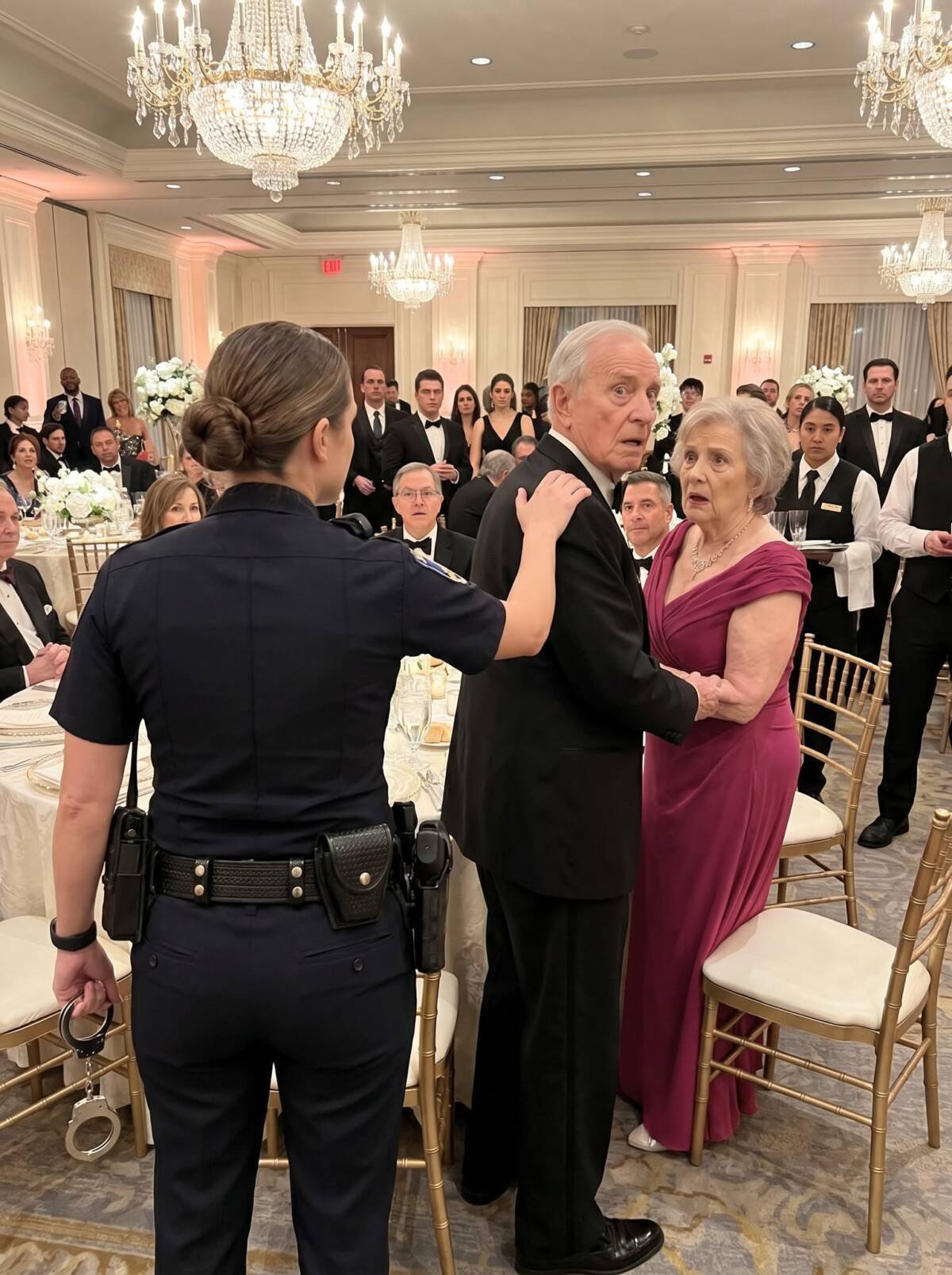
My husband stood barefoot on the marble floor of our brand-new Bel Air mansion, opened a beer from the refrigerator, and casually announced that his parents and recently divorced sister were moving in.
He did not ask me.
He did not suggest it.
He did not even pretend it was a decision we needed to make together.
“They’re moving in today,” Ethan said.
I stared at him, waiting for the punchline.
There wasn’t one.
The house had cost $18 million. I had purchased it with my own money, using the proceeds from the sale of the cybersecurity company I had spent a decade building. The property was held through my trust, and Ethan had signed documents acknowledging that it was separate property.
We had barely spent two nights in the mansion.
Yet Ethan was already assigning bedrooms to his parents and his divorced sister as though he were the owner.
When I reminded him that I had paid for the property, he became visibly irritated.
Then he looked me directly in the eyes.
“No, Claire,” he said. “This house is mine.”
That sentence changed everything.
What Ethan did not know was that I had already begun looking at the financial records he thought I would never examine closely.
And while he was preparing to drive to LAX to pick up his family, I was preparing something else.
By the time Ethan returned to the mansion with his parents and Lily, his sister, the locks had changed, his access had been revoked, his belongings had been removed, and the gates were under manual security control.
When he demanded that I open them, I gave him the only answer that mattered.
No.
And when the gates finally opened, they opened in only one direction.
Out.
The House He Thought He Could Claim
For thirty-six hours, the Bel Air mansion felt like freedom.
It sat high in the hills overlooking Los Angeles, surrounded by pale stone walls, bronze-framed windows, wide terraces, and sweeping city views. The property had six bedrooms, eight bathrooms, a library, gym, screening room, wine room, and a guesthouse large enough to function as a separate residence.
I had dreamed about a house like that for years.
But the dream was never about the size.
It was about what the house represented.
I had built Arden Systems from nothing. For ten brutal years, I had worked through long nights, difficult negotiations, technical problems, business setbacks, and the constant pressure of proving that I belonged in rooms where people often underestimated me.
When the company was eventually acquired, I suddenly had something I had never had before: financial freedom on a scale I had never imagined.
I paid for the Bel Air property in full.
There was no mortgage.
No outside investor.
No contribution from Ethan.
The money came from my own trust account after the acquisition closed.
I remember sitting alone in my car after signing the final paperwork and crying.
Not because of the money.
Because for the first time in my life, I had purchased something beautiful without wondering whether I could afford to survive afterward.
Then Ethan walked into the kitchen.
He opened a beer.
He leaned against the marble island.
And he told me his family was moving in.
“Your parents?” I asked.
“And Lily.”
I stared at him.
“Lily just got divorced.”
“She needs somewhere to start over.”
“And your parents?”
“They’re getting older.”
I almost laughed.
His father still went skiing every winter, and his mother spent more time at luxury spas than most people spent at work.
“There are plenty of rooms,” Ethan said.
“That isn’t the point.”
He looked annoyed.
“Then what is the point?”
“The point is that you don’t get to move three people into my home without asking me.”
The expression on his face changed.
Until that moment, Ethan had apparently believed this was merely a formality. In his mind, the decision had already been made.
He had told his family they could move in days earlier.
Before we had even spent our first night in the house.
“When exactly did you tell them?” I asked.
“A few days ago.”
“You told them before we moved in?”
He shrugged.
“They needed certainty.”
I looked around the kitchen.
There were still unopened boxes against the walls. The dining room wasn’t finished. My office shelves were empty. We hadn’t even decided where to hang the first piece of artwork.
And Ethan had already promised rooms to his family.
“You made this decision before I even slept one night in the house I bought.”
He rolled his eyes.
Then he said something that revealed far more than he probably intended.
“The ‘I bought it’ thing is getting old.”
I looked at him.
“You mean the truth?”
Ethan laughed.
He said I was being overly literal.
But something inside me went cold.
Because this was not the first time.
For years, Ethan had slowly inserted himself into my achievements.
After the sale of Arden Systems, he referred to the transaction as “our exit.”
He told people that “we timed the market perfectly.”
He spoke about “our vision.”
The problem was that Ethan had not built Arden Systems.
He hadn’t helped create it.
He hadn’t developed the technology.
He hadn’t negotiated the acquisition.
He hadn’t spent a decade building the company.
He had simply been married to me when the money arrived.
At first, I thought his language was harmless.
Marriage, I told myself, meant sharing success.
But over time, I began to recognize a pattern.
He didn’t merely want to share my success.
He wanted to rewrite it.
“This House Is Mine”
I looked directly at him.
“This is my house.”
Ethan put his beer down.
His expression became colder.
“Claire,” he said, “this house is mine.”
For several seconds, I genuinely thought he was joking.
He wasn’t.
“I paid for it.”
“You bought it after we were married.”
“So?”
“So we’re married.”
He began talking about our life, our future, our assets and our marriage as though those words automatically erased every legal boundary between us.
I reminded him that the property was held separately and that the deed and trust documents were in my name.
He smiled.
“Prove it.”
That was the moment something changed.
I stopped trying to convince him.
Because I realized he wasn’t confused.
He knew exactly what he was doing.
He simply believed I would eventually give in.
Ethan had learned something about me over the years.
I hated conflict.
I often chose peace over confrontation.
I had forgiven things that deserved consequences because I believed preserving relationships was worth the emotional cost.
He had mistaken that tendency for weakness.
That mistake would become very expensive.
“I’m leaving at eleven-thirty,” he said.
“To do what?”
“Pick up my parents and Lily from LAX.”
He walked away as though the conversation were finished.
He genuinely believed that by the time he returned, I would have accepted the new reality.
That night, Ethan slept peacefully.
I didn’t.
I stared at the ceiling as memories from our marriage came back one after another.
His mother had once told me I was lucky to have a husband who “allowed” me to stay so busy with work.
Ethan had never corrected her.
Lily had joked after her divorce that at least someone in the family had successfully married rich.
Again, Ethan said nothing.
His father had asked whether Ethan’s interests had been protected after the Arden Systems acquisition, as though my husband automatically deserved a portion of something I had built long before meeting him.
Then I remembered something else.
Shortly before we moved into the mansion, Ethan had asked for access to a temporary household account.
He claimed he needed it to make vendor payments easier during the relocation.
I had agreed.
I had been overwhelmed with acquisition obligations, moving arrangements, escrow paperwork, interviews, and everything else that came with the transition.
Now I opened my laptop.
I reviewed the account.
At first, everything looked normal.
Furniture deliveries.
Landscaping deposits.
Installation fees.
Moving expenses.
Then I noticed the transfers.
$20,000 labeled “family support.”
$43,000 marked “emergency.”
Another $16,000 listed as “help for Lily.”
I traced the transactions.
Every transfer originated from Ethan’s login credentials.
The money had gone directly to accounts belonging to his parents or sister.
I sat there staring at the screen.
The move-in announcement had not been spontaneous.
Ethan had already been extracting money from me.
And he had apparently expected me never to notice.
The Decision I Made Before Sunrise
By sunrise, I had made my decision.
I wasn’t going to fight Ethan emotionally.
I was going to document everything.
I had spent years in the technology industry. I understood something Ethan had forgotten:
Documentation matters.
Evidence matters.
Records matter.
And panic is expensive.
When Ethan walked into the closet around 7:15 the next morning, he expected to see tears.
Instead, he found me sitting calmly at the vanity in a white robe, drinking coffee.
“You look calmer,” he said.
“I am.”
He studied me.
Then he apparently decided that my calmness meant surrender.
“I knew you’d understand.”
I wished him a safe drive to the airport.
The moment he left, I called my attorney, Marissa Chen.
Marissa had represented me during the sale of Arden Systems. She had also insisted that I establish a separate-property agreement before my marriage.
At the time, Ethan used to joke that I trusted lawyers more than romance.
I had laughed.
Now I wasn’t laughing.
I explained everything to Marissa.
The mansion.
The family move-in plan.
The transfers.
Ethan’s claim that the house belonged to him.
His access to the temporary account.
His plan to bring his parents and Lily to the property.
Marissa listened without interrupting.
Then she told me to send every document I had.
The deed.
The trust records.
The purchase documents.
The account permissions.
The transaction history.
The transfer records.
Everything.
Within an hour, she had reviewed the material.
Her assessment was direct.
The mansion belonged to the Arden Trust.
I was the sole trustee and beneficiary.
Ethan had signed documents acknowledging the property’s separate status.
His ability to live there existed through my permission.
And, according to Marissa, that permission could be revoked.
The financial transfers were a separate issue.
The temporary account had been created for specific household purposes.
The transfers to family members were outside those stated purposes and required further legal review.
I didn’t hesitate.
“Do it.”
Then I contacted the private security company responsible for the property.
By midday, Ethan’s biometric access had been suspended.
His phone credentials were revoked.
Temporary entry codes were canceled.
The gates were placed under manual approval.
A locksmith arrived shortly afterward.
I wanted physical certainty.
Not just digital certainty.
Betrayal changes the way you think about doors.
Ethan Came Home With His Family
At 5:42 p.m., my security system sent an alert.
A black SUV had entered the driveway.
I opened the live camera feed.
Ethan stepped out first.
He was wearing sunglasses.
Behind him were his mother, Diane, his father, Gerald, and Lily.
Lily was holding a tiny designer dog.
All three looked at the mansion as if they had arrived at a hotel where they already had reservations.
Ethan walked directly toward the front door.
He placed his thumb against the biometric scanner.
Nothing happened.
He tried again.
Nothing.
He pulled out his phone.
The security application rejected his access.
Then my phone rang.
“What did you do?”
“I fixed a security problem.”
“Open the door.”
“No.”
His voice changed.
“You can’t lock me out of my own house.”
“It isn’t your house.”
He laughed.
Then he started talking about family.
About Lily’s divorce.
About his parents.
About how much space the mansion had.
About how unreasonable I was being.
I listened.
Then I told him about the transfers.
The $20,000.
The $43,000.
The $16,000.
His mother stopped smiling.
His father stepped closer.
Lily suddenly looked frightened.
Ethan insisted the money had been for family emergencies.
I told him the account records would speak for themselves.
Then I explained that his access to the property and my financial accounts had been terminated.
Lily immediately began asking questions.
Apparently, she had believed Ethan when he told her everything had already been approved.
She had arrived expecting a new beginning after her divorce.
Instead, she had walked directly into a legal dispute.
Ethan kept insisting the mansion was his home.
I walked onto the terrace overlooking Los Angeles.
“You spent years pretending my success belonged to you,” I told him. “Eventually, you started believing your own story.”
His father grabbed the phone.
He tried intimidating me.
He spoke to me like an angry patriarch disciplining a difficult daughter-in-law.
I told him that his son appeared to view marriage as a business acquisition.
Ethan finally sounded frightened.
“Claire, don’t do this publicly.”
That sentence told me everything.
He wasn’t afraid of what he had done.
He was afraid people would find out.
I opened the security panel.
Pressed one command.
Behind them, the exterior gates slowly opened.
Not to welcome them in.
To let them leave.
“This house was never ours, Ethan,” I said. “It was mine. You were just living in it.”
Then I ended the call.
The Lawsuit Begins
Ethan’s first legal response arrived the following morning.
His attorney accused me of unlawfully removing my husband from the marital residence, destabilizing him emotionally, interfering with his family relationships, and damaging his reputation.
I forwarded everything to Marissa.
She reviewed the letter.
Then she reviewed the trust documents.
The postnuptial acknowledgment.
The purchase records.
The transfer logs.
The security records.
The evidence of the unauthorized transactions.
Within hours, Ethan’s attorney had the documentation.
The argument changed immediately.
The legal dispute moved forward, and a temporary injunction hearing was scheduled.
At the courthouse, Ethan arrived in a charcoal suit with what appeared to be a carefully constructed expression of heartbreak.
His parents attended as well.
Inside the courtroom, his attorney emphasized family stability and the importance of preserving the marital home.
Without the underlying documents, the argument might have sounded persuasive.
Then Marissa stood.
She walked the judge through the timeline.
The property belonged to the Arden Trust.
Ethan had acknowledged that status.
He had no ownership interest in the residence.
He had arranged for his parents and sister to move into the property without Claire’s authorization.
He had made questionable transfers from a restricted household account.
And his occupancy had subsequently been revoked.
Then Marissa presented the security recording.
The courtroom heard Ethan shouting that he could not be locked out of “his own house.”
Then came my response.
“This house was never ours. It was mine. You were just living in it.”
The judge asked Ethan whether he had signed the postnuptial acknowledgment confirming the separate-property status of the Bel Air residence.
He admitted that he had signed documents but claimed he had been under emotional pressure.
The judge asked a simple question:
“Pressure from whom?”
Ethan had no convincing answer.
The court also questioned him about the financial transfers.
When asked whether those expenses were authorized under the account restrictions, Ethan stopped talking.
By the end of the hearing, I was granted temporary exclusive use of the property.
Contested financial accounts were frozen.
Ethan was ordered to provide an accounting of the transferred funds.
He was prohibited from entering the Bel Air residence without written authorization.
For the first time, the reality of the situation seemed to reach him.
The Courthouse Incident
Outside the courtroom, Diane approached me.
She was angry.
She told me I had destroyed the family.
I looked at her.
“No,” I said. “I stopped funding its fantasy.”
Her expression hardened.
Then she slapped me.
The sound echoed through the courthouse hallway.
For a moment, everyone froze.
Security immediately approached.
Marissa remained remarkably calm.
She told Diane that the incident would now become part of the legal record.
Diane suddenly realized that she had physically attacked me in a courthouse filled with people and cameras.
The incident resulted in separate legal proceedings and ultimately became part of the broader settlement.
But something else happened that day.
Ethan looked at his mother differently.
For the first time, he appeared to recognize where some of his own sense of entitlement came from.
The Evidence Kept Getting Worse
The divorce filing followed the next morning.
I restored my full legal name as Claire Arden.
Ethan continued fighting.
He challenged the separate-property designation.
He disputed the financial claims.
He resisted the occupancy ruling.
But every deposition seemed to produce more evidence.
During his deposition, Marissa asked when he first promised his parents the guest wing.
Ethan initially said the discussions began after we moved into the house.
Marissa produced a text message dated ten days before closing.
“Guest wing will be yours by summer. Claire just needs time to adjust.”
Diane had replied:
“Don’t give her too much time. She’ll overthink.”
Ethan eventually admitted the conversation was about the Bel Air mansion.
Then came Lily’s messages.
She had discussed the possibility of moving into the guest suite permanently.
One message indicated that she was relieved she would not need to rent an apartment after her divorce because Ethan had promised she could live at the mansion.
Marissa asked Ethan why he believed I would never refuse.
His answer was painfully simple.
“Claire always avoided family conflict.”
That sentence exposed the entire strategy.
They had never needed my consent.
They believed they could pressure me until I surrendered.
Lily’s Deposition
Several weeks later, Lily was deposed.
Without the designer sunglasses and confidence she had displayed at the mansion, she appeared much younger and far less certain.
She initially claimed Ethan had told her I had already approved the arrangement.
Marissa produced emails.
One of them showed Lily discussing ways to pressure me into giving her parents additional space.
Another line stood out:
“If Claire didn’t want family around, why buy such a huge place?”
That sentence changed how I saw her.
Lily wasn’t simply confused.
She had convinced herself that my wealth existed as a resource available to the family.
She wanted the house because she needed somewhere to go after her divorce.
But needing something did not create ownership.
Gerald’s deposition was even more revealing.
He admitted he planned to use the library as a workspace.
Diane was expected to have permanent access to the guest wing.
They had even ordered monogrammed towels for what they referred to as “their suite.”
Marissa asked Gerald whether he or Diane had contributed financially to the property’s purchase, taxes, furnishing, insurance, or maintenance.
He answered no to every category.
Then she asked why he believed he was entitled to live there.
His answer was completely sincere.
“Because Ethan is my son.”
That one sentence explained everything.
In their minds, access flowed through family.
Ethan was their son.
Ethan was my husband.
Therefore, they believed my property should become their property.
It was not confusion over ownership.
It was entitlement disguised as family values.
The Conversation Ethan Had Been Avoiding
By the time mediation began, the legal situation was clear.
The mansion remained mine.
The trust assets remained protected.
Ethan faced repayment obligations connected to the unauthorized transfers.
During mediation, Ethan asked for five minutes alone with me.
Marissa objected.
I agreed.
I wanted to hear what he would say without lawyers speaking for him.
We stood in a private conference room.
Ethan looked exhausted.
“You could have just talked to me,” he said.
I almost laughed.
“You told me my home belonged to you.”
“I was angry.”
“You planned to move your family into the house without asking me.”
“Our house.”
Even then, he used the same words.
Our house.
I asked him what exactly he was apologizing for.
He struggled to answer.
Eventually, he admitted he was sorry for taking the money.
He admitted he had promised the house to his family.
He admitted he had claimed ownership over something he had not built.
Then he said something that was more honest than anything else he had said throughout the entire dispute.
“I hated feeling like everything was yours.”
The room became quiet.
Ethan admitted that my success made him feel overlooked.
Instead of building an identity of his own, he had gradually tried to reduce the distinction between my achievements and his.
He wanted my success to become communal because that made him feel less separate from it.
“You thought making me smaller would make you bigger,” I told him.
He looked down.
“It didn’t work.”
That was the closest Ethan ever came to genuine understanding.
Nine Months Later
The final settlement took nine exhausting months.
Ethan repaid a substantial portion of the unauthorized transfers through asset liquidation and structured repayment obligations.
Diane’s courthouse assault resulted in a separate civil resolution requiring a formal written apology.
Ethan ultimately waived any claims connected to the Bel Air mansion, the Arden Trust, my company proceeds, and related accounts.
The divorce decree restoring my full legal name was signed on a rainy morning in downtown Los Angeles.
Afterward, Marissa took me to lunch.
She raised a glass of sparkling water.
“To freedom.”
I raised mine.
“To documentation.”
Because paperwork had protected me long before emotions ever could.
The Mansion Became Something More
For months after the divorce, I avoided the mansion.
The property carried too many memories.
Eventually, I returned.
The gate recognized my car.
The security system displayed:
“Welcome, Claire.”
For the first time, the house felt reclaimed.
I began inviting friends over.
Then women I knew from the technology industry.
Then founders.
Then women who had experienced financial manipulation, hidden debts, coercive relationships, business disputes, or family members who treated their money as communal property.
The conversations started around the kitchen table.
Eventually, they became organized workshops.
That was how the Arden House Initiative began.
Its purpose was simple:
To provide legal and financial education for women experiencing sudden wealth events, major business exits, inheritance transitions, or coercive financial control within marriages and families.
The message was not complicated.
Protect what you build.
Understand your documents.
Know who has access to your accounts.
Understand your ownership structure.
And do not confuse generosity with surrender.
At the first workshop, I stood in the living room facing twenty women.
Some wore designer clothing.
Others wore jeans and sneakers.
But almost all carried the same uncertainty.
They wanted to know how to protect what they had built without feeling selfish.
I told them something I wished someone had told me years earlier.
“You are not cruel for locking a door someone planned to walk through without permission.”
The room went silent.
Many of them recognized themselves immediately.
From a Mansion to a Mission
Over time, the Bel Air house changed.
The guest wing that Ethan had promised to his parents became temporary residency space for women attending Arden House programs.
The library became a legal resource center.
The screening room became a classroom.
The kitchen became the center of long conversations about contracts, boundaries, business ownership, trusts, marriage, and financial independence.
The mansion was no longer a symbol of the marriage that collapsed there.
It became a place where women learned to protect their futures.
About a year after the divorce, I received a handwritten letter from Lily.
She admitted that Ethan had lied to her about my approval.
But she also acknowledged that she had wanted to believe him.
One sentence stayed with me.
“I treated your success like available shelter.”
I appreciated the honesty.
I did not respond immediately.
Months later, I thanked her for telling the truth and encouraged her to continue doing so.
Lily eventually rebuilt her life independently.
She found stable work managing operations for a nonprofit housing organization.
Diane never offered more than the formal apology required through the settlement.
Gerald disappeared into silence.
That suited me.
Ethan eventually moved to Austin and remarried.
Two years after our divorce, he contacted me through LinkedIn.
His message said he had reflected on everything and hoped we could eventually speak again without lawyers.
Then came the phrase that immediately ended any possibility of reconciliation:
“We both made mistakes.”
I replied once.
“My mistake was trusting you. Yours was exploiting that trust. Those are not equal.”
Then I blocked him.
What the House Meant in the End
Years passed.
The Bel Air mansion became warmer.
Books piled up near windows.
Shoes appeared beside terrace doors.
People laughed in the kitchen.
Women came with laptops, children, business plans, legal questions, and fears they had spent years hiding.
The house became lived-in.
Real.
Mine.
One afternoon, I found the framed family photograph Ethan had placed near the kitchen before his parents ever arrived.
I considered throwing it away.
Instead, I removed the photograph and kept the silver frame.
I replaced it with a picture of the women who had attended the first Arden House retreat.
They stood on the terrace laughing beneath the Los Angeles sunset.
The same frame.
A different story.
That mattered.
Because the people Ethan’s family once expected to occupy the house through entitlement had been replaced by women learning to reclaim their names, finances, boundaries, and futures.
Five years after the divorce, Arden House officially launched a national legal fund supporting women facing financial coercion after major wealth events, business exits, inheritances, or marriages involving hidden financial abuse.
Some media outlets attempted to portray the organization as revenge philanthropy directed at Ethan.
I rejected that interpretation.
Revenge is about making one person suffer.
Infrastructure is about making sure someone else doesn’t have to survive the same situation without preparation.
What I built was not punishment.
It was protection.
The Final Lesson
Ten years after the divorce, I woke before sunrise.
I walked barefoot through the mansion.
Then I stopped in the kitchen.
I remembered Ethan standing there with a beer in his hand.
I remembered him saying:
“This house is mine.”
But I no longer felt the anger I once had.
Instead, I felt gratitude toward the woman I had been.
She had opened the laptop.
She had checked the records.
She had called her attorney.
She had trusted documentation when emotions were trying to confuse her.
Most importantly, she had closed the door.
People sometimes ask whether I regret buying the Bel Air mansion.
I don’t.
The house wasn’t responsible for what happened.
The property protected me.
It had the security systems.
The cameras.
The records.
The documents.
The doors.
The gates.
The real danger was never the house.
The danger was believing that love required me to remain unprotected.
Healthy love respects what you built before asking to share it.
Healthy love does not require legal confusion to prove emotional commitment.
Healthy love asks before entering.
It does not assume access.
Today, the mansion stands for something completely different from what Ethan imagined.
It is a place where women learn that protecting their work does not make them selfish.
That documentation is not distrust.
That boundaries are not cruelty.
And that family does not automatically create ownership.
I once believed that keeping the peace meant leaving every door open.
I learned that sometimes peace begins when you finally close one.
And when someone stands inside your home and says, “This is mine,” while really talking about your life, your money, your work, and your future, there comes a moment when explaining yourself is no longer necessary.
You stop arguing.
You stop apologizing.
You secure the doors.
You open the gates.
And you let them leave.
Then you stay.
And finally, completely, you belong to yourself.
Final Takeaway
Claire’s story ultimately became less about an $18 million mansion and more about ownership, boundaries, documentation, and the difference between love and entitlement.
The house Ethan believed he could claim became the place where Claire rebuilt her identity and created something that helped other women protect what they had built.
The lesson was simple:
You can love people without giving them ownership of your life.
If this story resonated with you, share it with someone who may need the reminder that boundaries are not selfish—and that protecting what you built is not something you should have to apologize for.