“You and Leo Won’t Starve in Three Days”
The last thing my husband said before leaving for what he called a business trip was something I would never forget.
“You and Leo won’t starve in three days.”
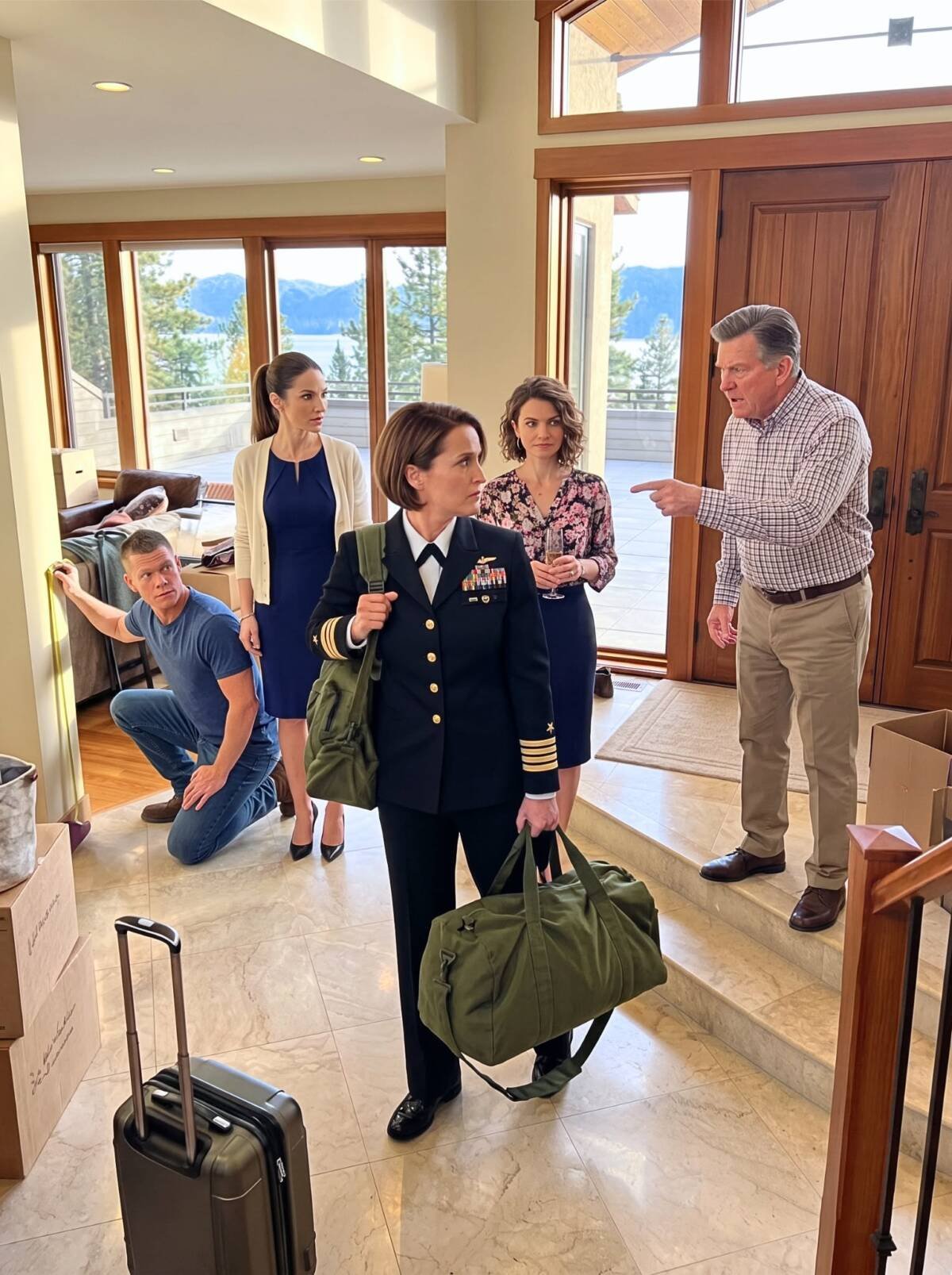
He smiled as he said it, adjusted the cuffs of his navy suit, picked up his overnight bag, and walked out the front door. Our three-year-old son, Leo, was standing beside me, excitedly asking whether his father would bring him a dinosaur when he returned.
I laughed.
I even kissed my husband goodbye.
I had no idea that within minutes, I would discover that the man I had shared a home with for years had deliberately turned it into a prison.
The front door would not open. The windows were sealed behind iron bars. The pantry was empty, my phone had been blocked, and the water would soon stop running.
Then Leo developed a fever.
With no way to call for help and no clear path to escape, I began to understand what my husband had meant when he promised that we would survive three days.
He had planned to leave us trapped inside our own home.
But the most shocking moment came forty-eight hours later, when my mother-in-law appeared outside carrying a sledgehammer.
She did not arrive to defend her son.
She came to break us out.
And what she told me that night would change everything I thought I knew about my husband, his childhood, and the family I had married into.
Part 1: The Morning Our Home Became a Prison
Michael had always been particular about appearances.
He liked expensive suits, polished shoes, carefully arranged schedules, and a home that looked perfect whenever anyone visited. To our neighbors, he was a successful executive and a devoted father. He knew how to smile at the right moments, remember people’s names, and make everyone around him feel that he had everything under control.
At home, however, things had been changing for months.
He had become increasingly distant, impatient, and controlling. Small disagreements could turn into hours of accusations. Questions about his whereabouts were treated as personal attacks, and whenever I challenged his behavior, he accused me of being paranoid.
Still, I had never imagined he would do something so calculated.
That morning, I stood in the hallway holding Leo while Michael checked his reflection in the mirror.
“You and Leo won’t starve in three days,” he repeated. “Be good while I’m gone, and I’ll bring back a surprise.”
Leo immediately brightened.
“Daddy, dinosaur?”
Michael smiled at him.
“If you’re good, buddy.”
Then he picked up his bag and left.
I heard the front door close. A second later, I heard a metallic click, followed by another heavier sound.
I initially assumed he had locked the door out of habit.
When I tried the handle, it would not move.
I tried again, pulling harder.
Nothing.
“Mommy, door stuck?” Leo asked.
“Maybe Daddy locked it by accident,” I told him.
I wanted to believe that explanation. It was easier than considering anything worse.
I checked the back door.
It had been secured from the outside with a padlock.
The laundry-room exit was blocked, and the windows were fitted with iron security bars that prevented them from opening far enough for an adult to squeeze through.
I moved from room to room, testing every possible exit.
The more I checked, the more obvious the truth became.
Michael had not simply locked the front door.
He had made sure we could not leave.
The Empty Pantry
I grabbed my phone and called him.
The call would not connect.
I opened WhatsApp and discovered that he had blocked me. When I tried calling my mother, the attempt failed as well. My cellular service had been disconnected, and the landline was dead.
For the first time, I felt genuine fear.
Then Leo tugged at my shirt.
“Mommy, cereal?”
I walked into the kitchen and opened the refrigerator.
Inside were half a carton of milk, two bottles of water, some butter, and a bottle of mustard. The freezer held little more than ice.
I opened the pantry.
It was completely empty.
No cereal. No pasta. No rice. No crackers. No canned food. Not even a bag of flour.
The shelves had been cleared deliberately.
I stood there staring at them, trying to convince myself that there had to be some reasonable explanation.
Then Michael’s words returned to me.
You and Leo won’t starve in three days.
He had known exactly what he was doing.
I searched every cabinet, drawer, and storage box in the house. Eventually, I found half a sleeve of stale crackers, a bruised apple, a crushed granola bar, and three peppermint candies.
It was almost nothing.
I cut the apple into small pieces and gave Leo a few crackers with a little milk. I tried to make the food seem like an ordinary snack rather than the beginning of a desperate struggle to survive.
“Mommy not eating?” he asked.
“I’m okay, baby.”
He looked at his cracker, broke it in half, and held one piece toward me.
“Share.”
I turned away before he could see my tears.
My three-year-old son was trying to make sure I had enough to eat, while the man who had promised to protect us had deliberately deprived us of food.
That was the moment something inside me changed.
I stopped looking for excuses for Michael.
I began looking for a way out.
The Bars on the Windows
I dragged a chair beneath the living-room window and examined the iron bars.
One section of the frame appeared slightly loose where the plaster had cracked. Behind the television, I found an old golf club and used it to push against the metal, hoping I could loosen the fittings.
I pushed until my hands hurt.
The bars barely moved.
I tried again, changing the angle and using my weight to force the weakened section outward.
Eventually, one part shifted just enough to give me a little hope. But there was no opening large enough for me to escape, much less carry Leo through it.
I was trapped.
I began thinking about the months leading up to that morning.
Michael had recently reconnected with Valerie Harlow, a woman he had known at university. At first, I thought their renewed friendship was harmless. Then I noticed hotel receipts, private calls, and conversations that abruptly stopped whenever I entered the room.
Whenever I asked him about Valerie, he accused me of inventing problems.
“You’re always suspicious,” he would say. “You turn everything into a crisis.”
Eventually, I learned to question my own instincts before questioning him.
Now, standing inside a house he had deliberately turned into a cage, I understood how much of my life had been shaped by that pattern.
I had spent years worrying about whether I was overreacting.
I no longer had that luxury.
When the Water Stopped
By late afternoon, the kitchen faucet stopped running.
At first, I assumed there was a plumbing problem. I checked the bathroom sink, the shower, and the laundry-room faucet.
Nothing.
I tried turning the handles several times, but no water came out.
The house was silent except for Leo’s voice and the occasional creak of the floorboards.
I had no working phone, no reliable way to contact anyone, and almost no drinking water.
Then I touched Leo’s forehead.
It was hot.
He was becoming feverish, and I had no medicine available.
I held him against my chest and tried to stay calm. I told myself that I needed to think clearly, that panic would not help either of us.
But how was I supposed to remain calm when my child was sick and I could not get him out of the house?
I returned to the window and began striking the bars again.
I shouted for help until my voice grew hoarse.
No one answered.
As darkness settled over the house, I realized that Michael had not simply abandoned us.
He had created a situation in which our survival depended on the amount of food, water, and time he had decided to leave us.
And I had no idea whether he intended to return.
Part 2: The Night I Begged Someone to Hear Us
By midnight, Leo was restless and uncomfortable.
I had given him what little water remained and tried to keep him cool, but his fever frightened me. Every time he whimpered, I felt another wave of panic.
I needed someone outside to hear us.
The golf club was still beside the window.
I wrapped my hands around it and struck the glass.
The first blow produced a sharp crack.
The second shattered the window.
Glass fell across the floor, and I immediately pulled Leo away from the opening to keep him from being cut.
For one brief moment, I thought we might finally have a way out.
Then I looked at the iron bars.
They were still there.
The broken glass had created an opening through which my voice could escape, but the metal remained firmly attached to the frame.
I leaned toward the opening and screamed.
“Help! Please! My son is sick! Somebody help us!”
I shouted until my throat burned.
Then I listened.
At first, there was nothing.
I called out again, louder this time, desperately hoping that someone might hear us through the night.
Eventually, I thought I heard a car approaching.
I pressed my face near the opening and looked outside.
Headlights swept across the lawn.
A vehicle stopped abruptly near the driveway, and a woman climbed out wearing pajama pants and house slippers.
It was Carol, my mother-in-law.
She was carrying a sledgehammer.
For a moment, I could not understand what I was seeing.
Carol was not a woman who usually rushed into situations without thinking. She preferred to avoid arguments, and for most of my marriage, she had tried to remain neutral whenever Michael and I disagreed.
But that night, she moved with a determination I had never seen before.
She ran toward the window, looked at the bars, and examined the bolts securing them to the frame.
Then she raised the hammer.
The first strike echoed across the yard.
The second loosened one of the anchors.
The third sent a piece of damaged masonry falling onto the ground.
I pressed Leo against my chest and watched through the broken window.
“Carol!” I shouted. “We’re inside!”
“I know!” she called back.
Then she looked directly at me.
“How long have you been trapped?”
“Since this morning!”
Something changed in her expression.
It was not surprise.
It was confirmation.
“He Locked Us In.”
I could barely hear my own voice over the pounding of the hammer.
“He locked us inside. He took the food. The water stopped. I can’t call anyone.”
Carol lowered the hammer for a moment.
“I know.”
Those two words frightened me more than anything else she could have said.
“What do you mean, you know?”
She looked toward the house, then back at me.
“I’ve been trying to reach Michael since yesterday. He blocked my number, too.”
She explained that she had called him repeatedly. When he stopped answering, she checked the schedule he had given the family and discovered that there was no business conference.
There had never been a conference.
Michael was with Valerie Harlow.
The woman whose name had haunted our marriage for months was now part of a much larger betrayal.
I had suspected an affair, but I had never imagined that Michael would leave his wife and child imprisoned while disappearing with another woman.
Carol raised the hammer again.
“I knew something was wrong,” she said. “I just didn’t realize he had gone this far.”
A few minutes later, one of the lower bolts finally broke loose.
I heard sirens in the distance.
Police vehicles arrived outside as Carol continued working on the damaged frame. Officers rushed toward the house, assessed the situation, and helped create an opening large enough for us to escape.
A paramedic reached Leo first.
I followed as quickly as I could, stumbling over broken glass and loose debris.
The moment my feet touched the grass, my knees buckled.
I had spent nearly two days trying to remain strong for my son. Now that someone had finally arrived to help us, my body seemed to surrender all at once.
An officer caught my arm before I fell completely.
“Ma’am, we’ve got you. You’re safe now.”
I wanted to believe him.
But when I looked back at the house, all I could think about was how easily Michael had turned a place that was supposed to protect us into something we had needed to escape.
The Truth Carol Had Been Afraid to Say
Paramedics examined Leo immediately.
He was dehydrated, feverish, and exhausted. Thankfully, the medical team believed we had escaped before his condition became critical.
I sat beside him while the paramedics worked, holding his hand and answering questions as best I could.
An officer approached and asked me to explain what had happened.
Before I could speak, Carol stepped forward.
“My son intentionally imprisoned his wife and child.”
The officer studied her.
“You believe this was deliberate?”
Carol looked toward the house.
“He removed the food. He disabled their communication. He shut off the water and blocked the exits. What part of that sounds accidental?”
For the first time that night, I saw an expression of anger on her face that had nothing to do with embarrassment or family reputation.
She was angry because she understood what Michael had done.
The police began treating the house as a potential crime scene. Officers photographed the locks, examined the damaged windows, and documented the condition of the kitchen and pantry.
Inside, they discovered something that made the situation even more disturbing.
Michael had prepared documents before leaving.
There were divorce papers, custody documents, property transfer forms, and financial records arranged in a folder.
Then Officer Daniels found a handwritten note.
It contained a single sentence:
Three days alone should help Emily understand cooperation.
I read it twice.
I could hardly believe that a person who had once held me while I cried could write something so cold about me and our child.
Carol sat beside me on the ambulance step.
For several seconds, neither of us spoke.
Then she said something I would never forget.
“He did this to me, too.”
I turned toward her.
“What?”
“Not exactly this. But the control. The punishments. The isolation.”
And for the first time, Carol began telling me the truth about the family I had married into.
Part 3: The Secret That Had Followed Michael Since Childhood
Carol explained that Michael’s father, Richard, had been a controlling man who believed obedience was the foundation of a successful family.
In public, Richard was charming, confident, and widely respected. He knew how to make people laugh and could persuade almost anyone that he was reasonable.
At home, however, he treated privacy as a privilege and disagreement as disrespect.
When Michael was eleven, Richard removed his bedroom door for two months because Michael had forgotten to lock the garage.
Carol remembered arguing against the punishment, but Richard insisted that it was necessary discipline.
She had tried to protect her son from the worst of his father’s behavior. Yet she now believed that Michael had absorbed more of those lessons than she had understood.
“I thought I could shield him from it,” she said quietly. “I thought that if I kept the worst of it away from him, he wouldn’t become like his father.”
She looked down at her hands.
“I was wrong.”
Her confession did not excuse Michael’s actions. Nothing about his childhood could justify deliberately depriving a woman and a three-year-old child of food, water, and freedom.
But her words helped me understand why the family had spent so many years treating controlling behavior as something to endure rather than confront.
Richard had taught Michael that control was strength.
Michael had carried that belief into adulthood.
And when he began losing control over his marriage, he had escalated.
Carol told me that she had recognized familiar patterns in the way Michael spoke about me. He criticized my reactions, dismissed my concerns, and portrayed himself as the victim whenever I challenged him.
She had noticed the similarities to Richard, but she had hoped that Michael would eventually change.
“I kept thinking he would grow out of it,” she admitted.
Then she shook her head.
“He didn’t grow out of it. He became better at hiding it.”
I thought about the neighbors who considered Michael an ideal husband, the colleagues who praised his professionalism, and the friends who believed he was a devoted father.
None of them had seen what happened behind our front door.
For years, I had struggled to explain why I felt increasingly anxious in a marriage that looked perfectly normal from the outside.
Now I understood why my explanations had always sounded inadequate.
I had been trying to describe a pattern that rarely left visible evidence until it became impossible to ignore.
The Call at 3:47 A.M.
That night, police arranged emergency accommodation for Leo and me.
I could not sleep.
Every time I closed my eyes, I saw the empty pantry, the iron bars, and Leo’s frightened face when he asked why the door would not open.
At 3:47 a.m., my phone rang.
The number was unfamiliar.
I answered.
Michael’s voice came through the speaker, calm and almost amused.
“Well. I guess my mother found you.”
For a moment, I could not speak.
“You locked us inside,” I finally said.
“For three days,” he replied. “You act like I buried you alive.”
I gripped the phone so tightly that my fingers hurt.
“Leo was sick. We had almost no food or water. I couldn’t call anyone.”
There was a brief silence.
Then I asked the question that had been tearing through my mind since the morning he left.
“Why?”
His answer came without hesitation.
“Because I needed leverage.”
I stared at the wall.
Leverage.
That was how he described what he had done to his wife and child.
Not fear. Not danger. Not a terrible mistake.
Leverage.
I had spent years believing that Michael’s behavior was driven by anger, insecurity, or an inability to control his emotions.
But in that moment, I understood something far more frightening.
He had not lost control.
He had planned everything.
And he believed that planning it made it reasonable.
I ended the call and handed the phone to the officer who was helping us.
For the first time, I stopped wondering whether Michael understood the damage he had caused.
The question was no longer whether he knew what he was doing.
The question was how much further he was willing to go.
Part 4: The Documents That Revealed His Plan
By the following afternoon, the story had begun spreading through local news sites and neighborhood groups.
People were shocked that a respected executive could allegedly lock his wife and young son inside their own home, leave them without adequate food or water, and disappear while his family struggled to escape.
Some expressed outrage.
Others questioned the details.
A few suggested that there must be another side to the story.
I read those comments even though Officer Daniels advised me not to.
I wondered how many people would have believed me if the police had not found the locks, the empty pantry, and the documents Michael had prepared before leaving.
I also wondered how many years I had spent trying to convince myself that my marriage was not as dangerous as it had begun to feel.
Abuse had not entered my life as one dramatic event.
It had arrived through smaller restrictions that gradually became normal.
Michael questioned where I went, criticized whom I spoke to, monitored our finances, and sometimes took my car keys after arguments. He checked my messages and accused me of being dishonest whenever I asked for privacy.
When I objected, he told me that I was too sensitive.
When I became upset, he used my reaction as evidence that I was the problem.
Over time, I began measuring my words, changing my behavior, and avoiding conversations that might provoke another argument.
I had mistaken the absence of obvious physical violence for the absence of abuse.
The events at Briar Glen had shattered that illusion.
The Evidence Inside the House
Investigators continued examining the property.
Records suggested that the water service had been scheduled to stop during the period Michael planned to be away. The timing, combined with the exterior locks and the other evidence, supported the suspicion that the confinement had been deliberate.
Officers also documented the food that remained in the house and the condition of the windows.
The handwritten note about making me understand cooperation became another important part of the investigation.
Michael’s preparations had been extensive.
He had not simply left in anger after an argument.
He had arranged the circumstances in advance.
The prosecutor later explained the significance of that distinction: the evidence suggested that Michael had intended to restrict our freedom and use the resulting fear and dependence to influence me.
Meanwhile, Leo began recovering physically.
His fever eventually subsided, and he was able to eat and drink more comfortably. But emotionally, he remained unusually quiet.
Loud noises startled him.
Whenever someone knocked on the hotel door, he immediately looked at me.
“Daddy here?”
Each time, I reassured him that he was safe.
I did not know how to explain that the person he was afraid of was also the person he had once run toward with excitement whenever he heard the front door open.
I could only hold him close and remind him that no one was going to lock us inside again.
The Folder Carol Had Kept for Years
A few days later, Carol arrived carrying a large storage container.
Inside were documents she had preserved for almost twenty years: old letters, photographs, school reports, medical records, newspaper clippings, and handwritten notes related to Richard and the family’s past.
“You kept all of this?” I asked.
“I kept evidence,” she replied.
Among the papers was an old newspaper article describing Richard’s death after a fraud investigation destroyed much of his company.
Michael had been nineteen when his father died.
Carol explained that Richard had built his public identity around success and authority. When the investigation threatened that identity, the man who had always seemed so powerful became increasingly isolated.
The article could not explain everything about Michael, and it certainly did not excuse his actions.
But it showed how much of the family’s history had been shaped by secrecy, control, and the fear of appearing weak.
Carol had spent years trying to protect Michael from the consequences of his father’s behavior.
She had believed that keeping the family together was the best way to protect her son.
Now she wondered whether that silence had allowed harmful patterns to continue.
“I thought surviving quietly protected him,” she said.
Then she looked at me.
“But children absorb what silence teaches.”
I thought about Leo hiding behind me whenever he heard a strange sound.
I thought about the empty pantry and the handwritten note.
I realized that whatever had happened in Michael’s childhood, the responsibility for what he had done belonged to him.
His history might explain the pattern.
It did not absolve him of the choice.
Part 5: The Courtroom Where Michael Finally Heard the Word “No”
Three weeks after our escape, Michael and I faced each other at a custody hearing.
He arrived wearing a tailored gray suit, his hair neatly arranged, and the same composed expression he had worn on the morning he left us trapped inside the house.
Valerie sat several rows behind him.
She did not look toward me.
The courtroom was crowded with attorneys, court staff, and people who had followed the case. I sat beside my attorney, holding a folder of documents while trying not to look at Michael.
Judge Eleanor Ruiz reviewed the evidence, including photographs of the exterior padlocks, the barred windows, and the conditions inside the house.
The prosecutor also presented records concerning the water service and the handwritten note.
Then the audio recording of Michael’s late-night call was played.
Three days alone should help Emily understand cooperation.
Hearing his voice in the courtroom was almost surreal.
The man who had once persuaded me to trust him now sounded like a stranger.
Michael’s attorney argued that the incident had occurred during a difficult separation and had been intended to establish boundaries.
The judge listened before responding.
“You imprisoned them.”
Michael shifted in his seat.
“With respect, Your Honor, that characterization is emotional.”
Judge Ruiz looked directly at him.
“No. It is factual.”
For the first time since the day he left the house, Michael appeared uncertain.
His usual confidence seemed to disappear when the court refused to accept his explanation.
Then Carol was called to testify.
A Mother’s Decision to Tell the Truth
Michael stared at his mother as she approached the witness stand.
I could see that he had expected her to remain loyal to him, regardless of what had happened.
Carol described arriving at Briar Glen with the sledgehammer. She explained how she had tried to contact Michael, how she discovered the business trip was not what he had claimed, and how she found us trapped behind the bars.
She did not exaggerate.
She did not speculate about what might have happened if we had remained inside longer.
She simply described what she had seen.
Then she explained why she believed her son had deliberately endangered his family.
When the prosecutor asked whether she was concerned about the consequences of testifying against Michael, she paused before answering.
“I spent twenty-three years surviving one controlling man,” she said. “I will not spend the rest of my life protecting another simply because I gave birth to him.”
The courtroom fell silent.
I looked at her and felt something I had not expected to feel so soon after the worst experience of my life.
Gratitude.
Carol could not change what Michael had done, and she could not erase the years she had spent trying to preserve the family at any cost.
But she had made a choice.
She had chosen to tell the truth.
The Custody Decision
After hours of testimony and arguments, the court granted me temporary sole custody of Leo while the criminal case continued.
Any future contact would be subject to the applicable court orders and safety requirements.
The decision did not erase the fear Leo had experienced or restore the life I thought we had been living.
But it gave us something we desperately needed: a legal framework designed to protect us while we rebuilt our lives.
As I gathered my papers and prepared to leave, Michael spoke from the other side of the courtroom.
“You ruined everything.”
For years, those words would have sent me into a spiral of guilt.
I would have wondered whether I had been too demanding, too emotional, or too unwilling to forgive.
This time, I stopped walking.
I turned toward him.
“No,” I said. “You did.”
Then I left.
Outside the courthouse, Leo tugged at my sleeve.
“Mommy, are we going home?”
I looked at him and realized that I could not take him back to Briar Glen. The house where he had once played with toy dinosaurs was now associated with hunger, fear, and locked doors.
Before I could answer, Carol stepped beside us.
She was holding a folded piece of paper.
She told me that she had sold Richard’s old lake cabin and wanted to help us put a down payment on a new place.
“You and Leo need somewhere safe,” she said. “Not a perfect house. Just a safe one.”
I looked at her, unable to speak for a moment.
The woman who had once tried to preserve a troubled family was now helping me leave it behind.
And I finally understood something I had never expected to learn from my mother-in-law.
Family is not always the person who asks you to protect them from the consequences of their actions.
Sometimes, family is the person who helps you break the bars.
Part 6: A House With No Bars
Three months after the custody hearing, Leo and I moved into a small blue rental house outside Asheville.
It was not impressive.
The kitchen tiles were uneven, the bathroom faucet occasionally leaked, and the porch steps creaked whenever someone walked across them.
But the windows were ordinary, wide, and free of bars.
I could open them whenever I wanted.
I could step outside without asking permission.
I could lock the front door at night knowing that I held the key.
For the first time in years, those simple things felt extraordinary.
Learning to Feel Safe Again
The first night, Leo slept on a mattress on the floor because our furniture had not yet arrived.
Around two in the morning, I woke from a nightmare.
For a few seconds, I was convinced I could hear metal locks sliding into place.
My heart raced.
I sat up, struggling to breathe, until I recognized the blue walls, the moonlight coming through the windows, and the soft sound of rain outside.
There were no bars.
There was no one standing outside the door.
We were safe.
But knowing that we were safe did not immediately make my body believe it.
I began therapy two weeks later.
My therapist, Dr. Naomi Bennett, helped me understand that escaping an abusive situation and recovering from it were different processes.
One afternoon, I tried to explain why I still felt guilty.
“Michael never really hit me,” I said.
Dr. Bennett listened before answering.
“Emily, he deliberately deprived you and your child of food, water, communication, and the ability to leave.”
The simplicity of her words was painful.
I had spent so long trying to determine whether my experiences were serious enough to justify my fear that I had overlooked what they actually meant.
Michael had taken away our ability to make basic decisions about our own safety.
That was not a misunderstanding.
It was not an ordinary marital disagreement.
And it was not my fault.
Therapy helped me understand how controlling relationships can develop gradually, making it difficult to recognize the danger until the behavior becomes extreme.
I had not stayed because I wanted to be hurt.
I had stayed because I had hoped the person I loved would return to being the person I believed he was.
Learning the difference helped me begin forgiving myself.
The Food Hidden Behind the Dresser
Carol visited regularly.
She brought groceries, medicine, clothing, and whatever else Leo and I needed. She helped with school pickups and watched Leo when I had appointments.
Her support was steady rather than dramatic.
She did not demand that I forgive Michael.
She did not tell me to move on before I was ready.
She simply showed up.
Over time, Leo became more comfortable in the new house. He began playing outside, asking questions about school, and sleeping for longer stretches.
Then one afternoon, I discovered several juice boxes hidden behind his dresser.
I sat beside him and asked why he had put them there.
He lowered his head.
“In case food goes away again.”
For a moment, I could not speak.
I understood that Leo’s fear had survived the circumstances that created it.
He was no longer trapped inside Briar Glen, but part of him still believed that food could disappear without warning.
I hugged him and explained that he did not need to hide anything.
“There will be food here tomorrow,” I told him. “And the day after that. You can always ask me for something to eat.”
He listened carefully.
Then he asked whether he could keep one juice box beside his bed anyway.
I told him that he could.
I did not want him to feel ashamed of the things that helped him feel safe.
After he went to sleep, I cried alone in the kitchen.
Our new house had wide windows, open doors, and enough food in the pantry.
But healing was not as simple as moving somewhere else.
We had to rebuild our sense of safety one ordinary day at a time.
Carol’s Own Regrets
As winter approached, Carol began talking more openly about her marriage to Richard.
She admitted that she had spent years believing that silence could prevent conflict from becoming worse.
When Richard criticized her, she tried to remain calm.
When he restricted her choices, she found ways to work around his demands.
When Michael witnessed those moments, she hoped he would understand that his father’s behavior was wrong.
Instead, she feared he had learned that control was simply part of family life.
“I thought surviving quietly protected him,” she told me one evening.
She looked through the kitchen window while Leo colored dinosaurs at the table.
“But children absorb what silence teaches.”
I reminded her that she had eventually spoken up.
She had risked her relationship with her son to help us escape, and she had testified against him when the court needed the truth.
Still, she carried guilt.
“I should have done more sooner,” she said.
I did not try to tell her that everything had been fine.
It had not.
But I told her that she had made a different choice when it mattered most.
She had refused to let the pattern continue without challenge.
That did not change the past.
It changed what happened next.
Part 7: The Dinosaur Michael Finally Brought Home
Michael eventually accepted a plea agreement that included psychiatric treatment and left domestic abuse findings on his record. Any future visitation with Leo would have to be requested through supervised channels and handled according to the applicable court orders.
Eight months after Carol helped us escape, Michael was permitted a supervised visit.
I had spent days preparing Leo for the meeting.
I explained that he would see his father in a room with another adult present, that he could speak if he wanted to, and that he did not have to hug anyone.
I wanted him to understand that his feelings mattered.
When we arrived, Michael was already sitting in the visitation room.
He looked older than I remembered.
He wore a plain shirt instead of one of his expensive suits, and his expression was less confident than it had been during the custody hearing.
Leo immediately hid behind my legs.
Michael crouched several feet away.
“Hi, buddy.”
Leo did not answer.
Michael reached into his pocket and pulled out a small green dinosaur.
It was the same toy he had promised to bring home on the morning he locked us inside the house.
“I brought your dinosaur,” he said gently.
Leo stared at it.
For a moment, I thought he might reach for the toy.
Instead, he looked up at his father and asked a question that made the entire room go quiet.
“Daddy make us thirsty again?”
Michael closed his eyes briefly.
“No,” he answered.
Leo remained behind me.
The dinosaur stayed in Michael’s hand.
I watched the realization settle over my husband as he confronted a consequence that no courtroom ruling could fully explain.
His son no longer associated him only with bedtime stories, playful promises, or exciting surprises.
Leo also remembered the locked doors.
He remembered being thirsty.
He remembered asking his mother why she was not eating.
And he remembered that the adults he trusted had not been able to make the fear stop.
The visit ended early when Leo began crying and asked to leave.
Outside, Michael called my name.
I stopped but did not approach him.
“I didn’t think it would go that far,” he said.
I had heard variations of that explanation throughout our marriage.
He had not meant to upset me.
He had not intended for an argument to become serious.
He had not expected me to react so strongly.
But this time, the consequences had reached our child.
I looked at him.
“That was the problem, Michael. You thought you could control everything without considering what it would do to us.”
He looked away.
I continued.
“You decided how long we would be trapped, how much food we would have, and whether we could call for help. You made those decisions for us.”
He did not answer.
I took Leo’s hand and walked toward the parking lot.
For the first time, I did not need Michael to understand my pain before I could leave it behind.
Part 8: The Sound of an Unlocked Door
A year after Michael locked us inside Briar Glen, Leo finally learned to sleep with his bedroom door closed again.
For most families, that would have been an ordinary milestone.
For us, it felt like a victory.
For months, Leo had insisted that doors remain open while he slept. We adapted by leaving hallway lights on, checking the locks together before bed, and keeping snacks visible in the kitchen.
We never laughed at his fears.
We never told him he was being silly.
We knew that his small rituals were helping him understand that his new home was different from the one we had left.
One spring evening, I finished reading his favorite dinosaur book and stood to leave his bedroom.
Leo looked toward the half-open door.
“Mommy?”
“Yes, baby?”
“You can close it.”
I paused.
“Are you sure?”
He nodded.
“It’s okay now.”
I pulled the door closed gently.
Then I stood in the hallway for several seconds, listening to the quiet inside his room.
Healing had not arrived through one dramatic moment.
It had appeared through small changes: a child sleeping peacefully, a meal eaten without anxiety, a window opened to let in the morning air.
For the first time since the confinement, a closed door did not automatically mean danger.
Building a Life Beyond Fear
By then, our little blue house outside Asheville no longer felt temporary.
Leo planted tomatoes in crooked pots on the porch. We adopted an elderly golden retriever named June, who quickly became part of our small family.
I returned to school part-time and enrolled in an early childhood education program I had abandoned years earlier.
Sitting in a classroom again at thirty felt strange.
At first, I worried that I had lost too much time, that the years I spent trying to hold my marriage together had left me too far behind.
But I gradually discovered that I could still learn, make plans, and imagine a future that did not revolve around managing someone else’s moods.
Working with children gave me a sense of purpose I had almost forgotten.
One afternoon, a professor asked why I had chosen the field.
I thought about Leo.
I thought about the way children learned to understand the world through the adults around them.
Then I answered honestly.
“Because safe adults change everything.”
After class, the professor stopped me near the door.
“You probably are one,” she said.
I cried in my car afterward.
For years, Michael had made me feel that fear was a weakness and dependence was proof that I could not manage on my own.
Now I was learning that surviving a frightening experience did not have to define the rest of my life.
I could become someone who helped children feel safe.
I could build a future that was not simply an escape from my past.
The Woman Who Finally Left the Past Behind
Carol remained a steady presence in our lives.
She never tried to erase what had happened through grand gestures or emotional speeches. Instead, she helped with ordinary things.
She picked Leo up from preschool.
She brought soup when we were sick.
She watched him when I had classes.
She listened when I needed to talk about the past, and she respected my silence when I did not.
Over time, I began to understand that our relationship had become something neither of us could have predicted.
We were connected by a terrible experience, but we were no longer defined only by it.
One evening, Carol invited us to dinner at her new condo near Hendersonville.
She had sold the old property associated with Richard because she was tired of living around memories that no longer deserved so much space in her life.
Later that night, after Leo fell asleep beside June, Carol and I sat outside overlooking the lake.
She was quiet for a long time.
Then she asked a question that everyone else seemed afraid to ask.
“Do you ever miss him?”
I knew she meant Michael.
I thought carefully before answering.
“I miss who I thought he was.”
Carol nodded slowly.
“That version existed,” she said. “Just not strongly enough.”
I admitted that I still wondered why I had not recognized the danger sooner.
Why had I ignored my instincts?
Why had I accepted so many explanations that made me question myself?
Why had I believed that if I could just find the right words, Michael would finally understand what he was doing to us?
Carol listened.
Then she said something that stayed with me.
“Confusion is part of the trap.”
She explained that controlling people can make their behavior sound reasonable while portraying everyone else’s reactions as irrational. Over time, the person being controlled may begin to question their own judgment more than the actions of the person hurting them.
I had lived that experience without knowing how to describe it.
For years, I had thought that if I could only become calmer, more patient, and less demanding, our marriage would improve.
I had mistaken my ability to endure for evidence that things were getting better.
Carol reached for my hand.
“You survived Michael faster than I survived Richard.”
I did not know whether that was true.
But I understood what she meant.
She had spent years believing that keeping the family together was the same as protecting it.
I had spent years believing that loving Michael meant finding ways to live with his behavior.
Both of us had needed to learn that silence could not make a dangerous situation safe.
Sometimes, the only way to interrupt a harmful pattern was to stop protecting the person responsible for it.
One Last Drive Past Briar Glen
A few months later, Leo and I drove past the old Briar Glen house one final time.
I had avoided that road for nearly a year.
I was not sure why I had chosen that particular afternoon, but something about the approaching anniversary made me want to see the place without having to imagine it.
The bars had been removed.
The shutters had been painted green.
Flowers grew beside the mailbox.
Someone had repaired the damaged window frame and planted fresh shrubs along the front walkway.
The house looked ordinary again.
I expected anger to rise when I saw it.
Instead, I felt grief.
I grieved for the woman I had been inside those walls.
She had spent years apologizing for asking reasonable questions. She had learned to measure her words, anticipate someone else’s reactions, and confuse endurance with love.
She had believed that if she tried hard enough, she could preserve the family she wanted for her son.
I wished I could reach back through time and tell her what I knew now.
That she was not imagining things.
That she did not have to prove her suffering to deserve help.
That love did not require her to surrender her freedom.
That her son’s safety mattered more than anyone’s reputation.
But I could not return to that morning.
I could only keep moving forward.
From the back seat, Leo noticed the tears on my face.
“Mommy, you crying?”
I wiped my cheek.
“Just remembering something.”
He thought about that for a moment.
“Bad thing over now?”
I looked at the house one last time.
Then I turned toward my son.
“Yes, baby,” I said. “The bad thing is over now.”
For the first time since Michael locked those doors, I believed it.
Conclusion: Sometimes, Freedom Begins With Someone Breaking the Door
I once believed that the hardest part of leaving an abusive relationship would be finding the courage to walk away.
I was wrong.
The hardest part was accepting that the person I loved had deliberately made us unsafe. It was understanding that the home I had spent years trying to preserve had become a place where my son and I could no longer trust the simplest things: a door, a glass of water, or a promise.
Michael’s actions changed our lives, but they did not get to determine how the story ended.
Leo and I found a new home.
I returned to school.
I learned to trust my instincts again.
And Carol, a woman who had spent years trying to protect her family through silence, found the courage to speak when the truth mattered most.
Her decision did not erase the past, but it helped us escape it.
Today, I understand that a safe home is not defined by expensive furniture, perfect windows, or an impressive address.
It is defined by freedom.
It is the freedom to open a door, call someone you love, ask a question without fear, and know that your child will never have to beg for something as basic as food or water.
Most importantly, I learned that a person’s childhood may help explain their behavior, but it does not excuse the harm they choose to inflict on others.
Michael had inherited a pattern of control.
He could have chosen to break it.
Instead, he repeated it.
Carol eventually chose differently.
And Leo and I are learning to do the same.
The little blue house outside Asheville is not perfect. The porch steps still creak, the kitchen tiles remain uneven, and the bathroom faucet occasionally leaks.
But every window opens.
Every door can be unlocked.
And when my son asks whether he is safe, I no longer have to search for the right words.
I can simply tell him the truth.
He is home.
He is loved.
And he is free.
Because sometimes, the person who saves you is not the one who promises to protect you. Sometimes, it is the person who finally finds the courage to break the bars.
What Would You Have Done?
If you discovered that someone you trusted had deliberately trapped you and your child inside your own home, would you have recognized the warning signs sooner—or would you have struggled to believe that someone you loved could do something so cruel?
Share your thoughts in the comments, and share this story with someone who may need the reminder that love should never require fear, silence, or the surrender of freedom.
Editorial note: This is a dramatized narrative presented for storytelling purposes. The events and characters should not be treated as independently verified news without supporting evidence.