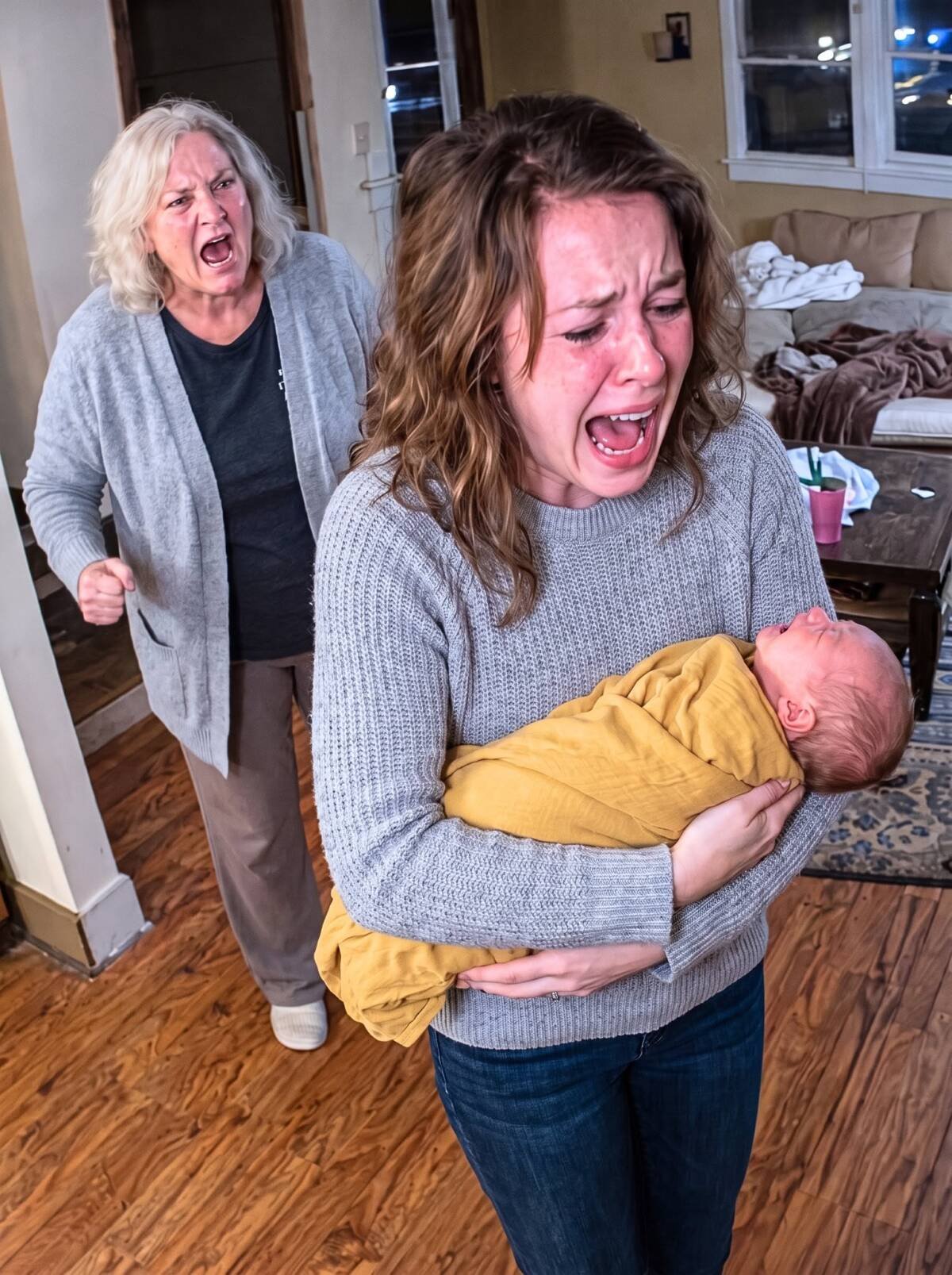
After fourteen years of brutal night shifts in a Charlotte cardiac unit, Arden Voss finally bought a quiet lake house on Lake Norman—a sanctuary paid for entirely with her own sweat and savings. She had no idea her parents had secretly copied her keys, hosted hidden getaways behind her back, and promised her home to twenty relatives—or that her younger brother had just used her property as collateral for an $18,000 debt.
The 3:00 A.M. Notification
I was twelve hours into a grueling double shift in the cardiac step-down unit when my phone buzzed silently beneath a stack of patient charts. It was 3:08 in the morning. In my line of work, a vibration at that hour usually means a staffing emergency or a family crisis. Instead, the glowing screen revealed a truth about my own family that I could no longer pretend not to see.
My father had tagged me in our main family group chat.
“We’re using Arden’s lake house this weekend. Twenty guests. Friday through Tuesday. Everyone bring towels. Arden, get the place ready.”
I stood behind the nurses’ station in Charlotte, the hum of heart monitors echoing down the dim hallway, and read the message three times. Fourteen years as a registered nurse had taught me never to trust my first reaction at three in the morning—exhaustion has a way of distorting things. Yet no matter how many times I blinked and reread the words, they didn’t change.
My name is Arden Voss. I am thirty-six, single, perpetually short on sleep, and the sole legal owner of a modest three-bedroom lake house on Lake Norman. I hadn’t inherited it. Nobody had co-signed for it. I bought that house after nine years of holiday shifts, meal-prepped lunches, discounted scrubs, and driving the dented silver Honda Civic my relatives loved mocking at Thanksgiving.
There was nothing communal about that property. My name was the only one on the deed. Every mortgage payment came directly out of my checking account. I paid the property taxes, the dock repairs, the landscaping, the roof replacement, and the paint I had rolled onto the living room walls myself on my rare days off. I had bought that house for one simple reason: I needed one square mile on this earth where nobody could walk in and assign me a role.
Before I could even lock my phone, my mother replied beneath Dad’s message.
“Stock the fridge, sweetheart. Aunt Liora likes fresh flowers in the main bedroom. Don’t make this awkward.”
Within minutes, the chat lit up with thumbs-up icons and heart reactions. My cousin Hollis chimed in that the house “finally needed some real family energy.” My younger brother, Keaton, added that it was “about time Arden shared something with the rest of us.”
Then someone casually asked: “Is the Wi-Fi password still the same?”
My fingers froze against the glass of my phone.
I had never given a single member of my family the Wi-Fi password.
The cardiac unit was quiet around me, punctuated only by the rhythmic beep of telemetry monitors. When my charge nurse walked past and noticed the color draining from my face, she paused. “Everything okay, Arden?”
“Yes,” I said automatically. It was the first lie I told that morning.
Instead of putting the phone away, I began scrolling backward through months of group chat history. Nursing trains you to hunt for the missing detail—the one irregular beat on a strip that explains the whole collapse. Buried back in late May, right around Memorial Day weekend, I found it.
A message from my mother, sent while I had been working four consecutive twelve-hour shifts:
“We’re at Arden’s lake place. She doesn’t know, so don’t post any photos yet.”
Forty-three relatives had seen that message. Not a single one of them had picked up the phone to warn me.
I stared at the screen as a cold, sickening clarity settled into my chest. While I was on my feet saving strangers’ lives, my parents had been letting themselves into my home, sleeping in my sheets, eating my food, and treating the one sanctuary I had built for myself like an unpaid family resort. Somehow, my mother had gotten her hands on a key I had never given her.
I scrolled back to the bottom of the chat and typed a single word.
“No.”
No apology. No excuse about my work schedule. No softening emoji to make my boundary easier for them to swallow.
My mother replied in less than ten seconds, followed by a row of laughing emojis.
“You actually think you can keep us out? Arden, we are your parents.”
My father chimed in right behind her. “Don’t start drama at your age.”
More laughing reactions popped up from aunts and cousins. I set my phone facedown on the counter and went back to my patients.
Around five in the morning, while I was checking the vitals of a seventy-eight-year-old man recovering from triple-bypass surgery, he started talking softly about his late wife and the family he had spent decades trying to please. Before I left his room, he looked up at me and said something that lodged straight into my ribs.
“Regret gets heavier,” he murmured, “when you keep carrying people who wouldn’t carry you back.”
“Save for Next Time”
My shift ended at 7:19 a.m. I drove north through the gray morning fog toward Lake Norman, his words echoing over the hum of my Civic’s tires.
The first proof was waiting before I even turned off the ignition. Faint tire tracks cut across the edge of my side lawn where someone had parked a large vehicle. Two crushed cigarette butts lay near the front steps. When I bent down to lift the welcome mat, I found a crumpled gas station receipt dated three weeks earlier—a weekend I had spent working in Charlotte.
Inside, nothing was broken, yet the violation was unmistakable. A heavy floral perfume lingered in the living room. The throw blanket on my couch was folded in neat, unfamiliar thirds. A single wineglass sat drying beside the kitchen sink, even though I don’t drink wine.
Then I pulled open the refrigerator door.
Sitting on the middle shelf was a half-empty jar of dill pickles. Stuck to the glass was a yellow sticky note in my mother’s sharp handwriting:
“Save for next time.”
I didn’t cry. I didn’t scream. I simply sat down on the cool kitchen tile in my wrinkled navy scrubs and stared at that jar of pickles. For thirty-six years, I had mistaken my own patience for peace, while my family had mistaken it for ownership.
After five minutes, I stood up, washed my hands, opened my laptop at the kitchen island, and created three separate lists: Legal, Logistical, and Personal.
At the very top of the page, I typed one sentence:
This house is mine, and they are about to learn what “mine” means.
The Paper That Doesn’t Get Guilt-Tripped
The old version of me would have called my mother immediately, trying to find the exact combination of gentle words that would make unreasonable people suddenly respect my boundaries. That woman had died somewhere between the nurses’ station and the pickle jar.
Instead, at 8:04 a.m., I called Soraya Flint—a high school friend who now ran a sharp civil law practice in Davidson. Two years earlier, after listening to me vent over coffee about my parents, she had slid her business card across the table with a half-joking warning: “When they finally push you too far, call me before you call them.”
Soraya listened in complete silence as I laid out the group chat, the secret Memorial Day trip, the Wi-Fi password, the cigarette butts, and the twenty-person invasion planned for Friday.
“Arden,” she said when I finished, “I need you to answer one question before I advise you. Do you want to scare them, or do you want to end this?”
I looked out the kitchen window at the glassy, quiet surface of Lake Norman. “I want to end it. No screaming match. No family intervention. I want this to be the last weekend they ever assume they own me.”
“Good,” Soraya said. “Then do not argue with them. Do not threaten them. Do not block them. Let them keep talking.”
“Why?”
“Because entitled people will put their entitlement in writing if you give them enough silence.”
By noon, I was sitting across from Soraya’s desk with my deed, mortgage statements, insurance policies, and printed screenshots. When she reached the Memorial Day text—“She doesn’t know, so don’t post yet”—she tapped it with her pen.
“That’s gold,” she said.
“It feels humiliating.”
“It can be both.”
Soraya’s strategy was surgical. That afternoon, her office sent certified, registered letters to my parents, Keaton, and every adult relative in the chat. The notices formally stated that I was the sole legal owner of the Lake Norman property, that no one had permission to enter, occupy, or invite guests onto the premises, and that any unauthorized entry would be prosecuted as criminal trespassing.
“Let the paper do the talking,” Soraya told me. “Paper doesn’t get tired. Paper doesn’t cry. And paper doesn’t get guilt-tripped by its mother.”
On the drive home, I stopped at a hardware store and bought smart deadbolts, motion-activated floodlights, an indoor-outdoor security camera system, and a monitored alarm. By four o’clock, a locksmith named Roman was on my front porch drilling out the old brass cylinders.
“Most folks think a lock is just to keep strangers out,” Roman remarked as he fitted the new smart keypad. “That’s only half true.”
“What’s the other half?”
“A lock reminds people they need permission.”
When he finished, he handed me four new keys—front door, back patio, side entry, and boathouse. “Only you?” he asked.
“Only me.”
“No spare under the flowerpot? No extra copy for Mom?”
I stared at him. Roman offered a knowing, weathered smile. “I’ve worked with families before, ma’am.”
That night, with the faint blue glow of the new alarm panel illuminating my hallway, I sat down with twelve years of bank statements. I tallied every bailout I had ever handed over: the $4,200 I gave Keaton when his truck was about to be repossessed, the mortgage help I sent my parents during the pandemic, the surprise anniversary dinner I paid for—only to hear later that Mom had complained about the menu.
The final number sat blinking on my calculator: $26,740.
Every dollar was documented. Looking at that total, I realized I hadn’t been helping my family. I had been training them. Every time I said yes, they learned another yes was owed.
The Spreadsheet and the $18,000 Secret
My silence drove them into a frenzy. On Wednesday morning, my mother created a brand-new group chat called Lake Weekend Crew and deliberately left me out. It lasted less than an hour before my nineteen-year-old cousin, Elowen, quietly added me and sent screenshots.
“Arden, I don’t think they realize you meant no. Or they don’t care. You need to see this.”
My mother had built an actual color-coded spreadsheet. There were tabs for meal rotations, bedroom assignments, airport pickups, and an entire column titled Arden Duties. It instructed me to stock groceries for twenty people, wash all guest linens, fuel the pontoon boat, pick up relatives from Charlotte Douglas Airport, and put fresh hydrangeas in the primary suite.
Then I read the bolded note at the bottom:
“Stay out of the main bedroom and main bathroom during the visit.”
My own mother was banishing me from my own bedroom inside a house I paid for alone. I forwarded the spreadsheet straight to Soraya. “Excellent evidence,” she texted back. “Stay silent.”
By Wednesday night, six voicemails were waiting on my phone. The first was syrupy sweet—“Arden, honey, we’re not mad, just call me about the groceries.” By the fourth, the mask had dropped completely.
“Arden, listen to me carefully,” my mother hissed on the recording. “This weekend is happening whether you like it or not. Your father has the spare key. We will be there Friday at noon. If that house isn’t ready, you will humiliate us in front of everyone, and I promise you will regret it. We gave you life. We taught you how to work. That house exists because of us. Do not test me.”
I saved the audio file and emailed it to Soraya.
Then, on Thursday evening, the situation took a much darker turn. Keaton called four times in a row before I finally picked up. After five minutes of ranting about how selfish I was, his anger suddenly cracked into genuine panic.
“Arden, please,” he whispered. “I need this weekend.”
“For what, Keaton?”
“I told some people they could use the lake house.”
“Relatives?”
Silence stretched over the line.
“Keaton,” I said sharply. “Who?”
“Guys connected to some money I owe.”
My stomach dropped. “How much?”
“Eighteen thousand.”
Suddenly, the pieces clicked into a horrifying picture. This wasn’t just about entitled parents wanting a free vacation. My brother had offered my home to creditors—or worse—to buy himself time on an $18,000 debt.
“Are they coming tomorrow?” I asked, my voice ice-cold.
“Maybe.”
“Then hear me clearly,” I said. “They are not stepping foot on my property. You are not stepping foot on my property. Mom and Dad are not stepping foot on my property.”
“Arden, please—”
“Keaton, I love you. I have loved you since you were a kid hiding dry cereal under your bed because Mom forgot to go grocery shopping. But I am not your bank. I am not your shield. And my house is not a poker chip you get to throw on a table when you’re scared.”
Keaton snapped. He called me cold, bitter, and lonely, screaming that I would die alone in my precious lake house and nobody would find me for weeks. I waited until he ran out of breath.
“Keaton, I want you to know this call is being documented for my attorney. Good night.”
The line went dead. By late Thursday night, as the certified letters began hitting mailboxes, the Lake Weekend Crew chat imploded. Relatives suddenly developed flu symptoms, work conflicts, and car trouble.
My father, however, refused to fold. At 11:38 p.m., he posted one final decree: “Trip is still on. Noon tomorrow. No more discussion.”
Friday at Noon
At 11:42 a.m. on Friday, I sat at my kitchen island with my laptop open to the live security camera feed.
A glossy black SUV with Ohio license plates rolled slowly up my gravel driveway. Two broad-shouldered men stepped out. Neither carried a duffel bag, a cooler, or a beach towel. One of them walked straight up my porch steps and twisted the front doorknob.
When the smart deadbolt held, he rang the bell twice, scowled at the camera mounted above the doorframe, and pulled out his phone. Thirty seconds later, Keaton’s name flashed on my screen. I sent him straight to voicemail.
The two men walked back to their SUV, backed down to the mouth of my driveway, and parked sideways across the entrance, blocking it completely.
I didn’t hesitate. I dialed the county sheriff’s non-emergency line, gave my address, and explained that two unidentified men invited by an unauthorized relative were blocking my private driveway.
“Do you feel unsafe, ma’am?” the dispatcher asked.
“I feel prepared,” I said calmly. “But yes, I want a deputy here.”....