The Day My Father Lost Control
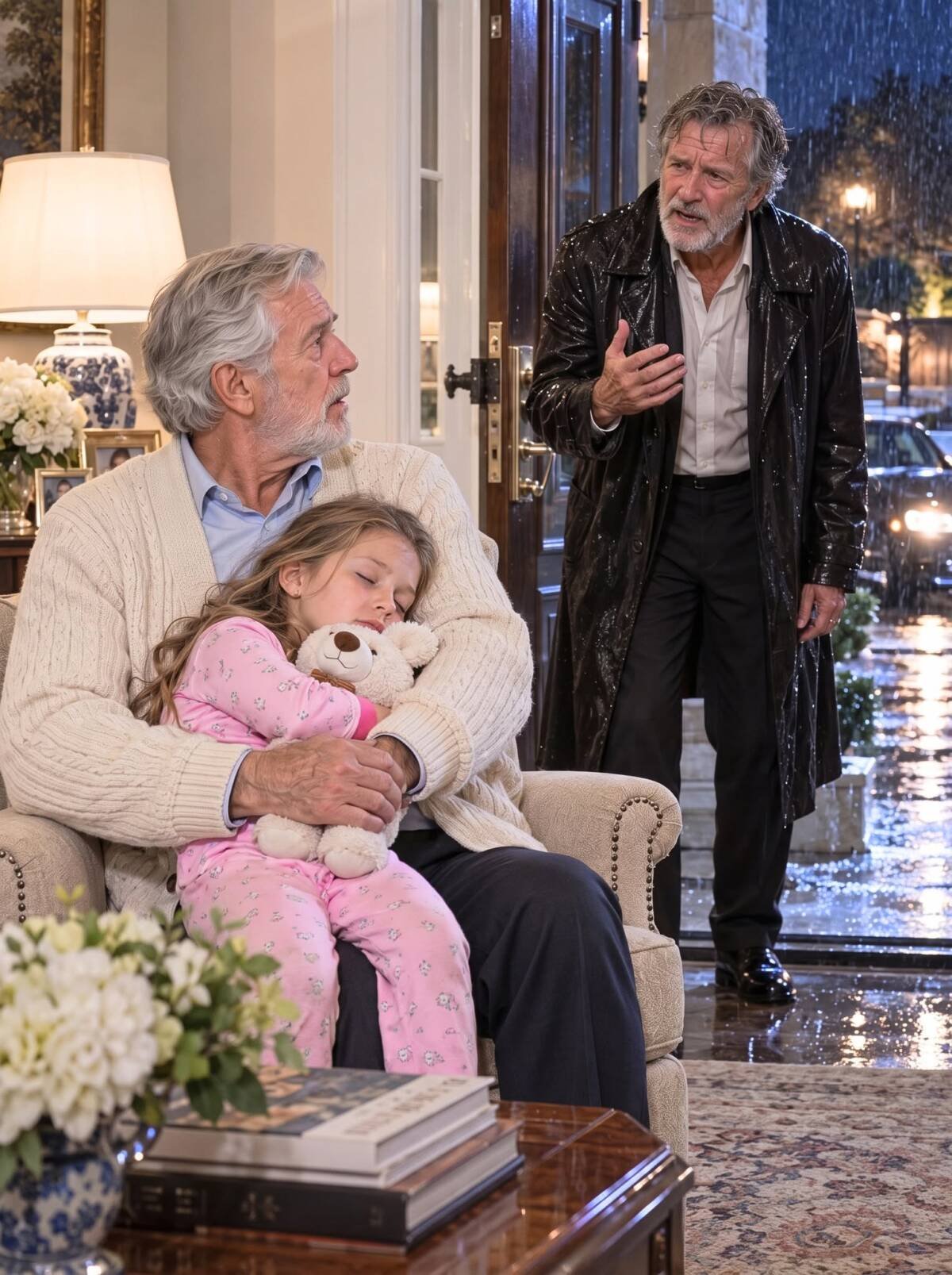
My father smirked before my grandmother’s attorney had even opened the will.
Twenty-two years after disowning me, he still believed he could control every room, every conversation, and every person unfortunate enough to stand in his way.
“This has nothing to do with you,” he announced, loud enough for everyone seated around the conference table to hear.
My cousins suddenly became fascinated by their phones. My stepmother hid a smile behind her coffee cup, and my younger half-brother, Blake, leaned back in his chair with the confidence of someone who believed the inheritance had already been decided.
I was sitting at the far end of the mahogany table, my hands folded over my purse.
I did not argue. I did not raise my voice. And I did not remind my father of the night he changed the locks and left his eighteen-year-old daughter with nowhere to go.
Instead, I reached into my purse and removed a thin folder.
Blake glanced at it and laughed.
“What is that supposed to be? Your apology letter?”
“No,” I replied. “It’s Grandma’s court-certified appointment.”
My father’s smile faltered.
“What appointment?”
I turned toward the attorney sitting beside the window. He gave me a small nod, then placed his briefcase on the table.
I looked back at my father, the man who had spent more than two decades convincing our family that I was selfish, ungrateful, and undeserving of a place in his life.
“Actually,” I said, “there’s someone I’d like you all to meet.”
I opened the folder.
“Meet the executor.”
For the first time in twenty-two years, my father had nothing to say.
The color drained from his face as the attorney began explaining what my grandmother had arranged before her death.
What followed was not simply a family dispute over an inheritance. It was the beginning of an investigation into years of financial transactions, questionable property transfers, and decisions my father had insisted nobody had the right to question.
And the most damaging evidence had been preserved by the one person he believed he could control forever.
My grandmother.
1. The Night My Father Threw Me Out
I was eighteen when my father decided I no longer belonged in his house.
At the time, I did not understand how much of my future he had already planned to control. I was young, financially dependent on my family, and still believed that parents who said they loved their children would eventually choose their children over money.
I was wrong.
The conflict began over my grandmother’s lake cottage, a property that had belonged to her family for decades.
My father, Robert, wanted the cottage transferred into one of his companies. He described the move as a practical business arrangement, insisting that placing the property under his management would protect the family’s interests.
But he wanted me to sign documents relinquishing any claim I might have to the property.
I refused.
I had no interest in taking something that did not belong to me. I simply did not want to sign away rights without understanding what the documents meant or why the transfer was necessary.
My father interpreted my refusal as a personal attack.
“You think you know better than everyone else,” he told me.
“I just want to understand what I’m signing.”
“You either trust your family or you don’t.”
That was how he framed every disagreement. If I questioned him, I was disloyal. If I asked for an explanation, I was disrespectful. If I refused to do what he wanted, I was supposedly proving that I cared more about money than family.
The argument escalated over several days.
Then, one evening, I came home and discovered that the locks had been changed.
My belongings were no longer where I had left them. My father had made his decision, and he had no intention of discussing it further.
He had disowned me.
I was eighteen, with no stable income, no place of my own, and no real understanding of what I would do next.
For a while, I slept in my best friend’s laundry room. I used folded towels as a pillow and tried to keep my belongings organized in a small bag. I was embarrassed by my circumstances and terrified of what would happen if I could not find a way to support myself.
My father, meanwhile, told relatives that I had left because I was too stubborn to follow family rules.
He did not mention the cottage.
He did not mention the documents.
And he certainly did not tell anyone that he had changed the locks after I refused to sign them.
To hear him explain it, I was simply a rebellious teenager who had abandoned her family.
For years, I believed that if I worked hard enough, stayed quiet enough, and proved myself responsible enough, he might eventually reconsider.
That hope kept me tied to him long after I should have stopped expecting an apology.
But my grandmother saw what was happening long before I understood it myself.
2. The One Person Who Never Asked Me to Apologize
My grandmother, Eleanor Whitman, found me two weeks after I was thrown out.
She arrived at my friend’s house carrying groceries and a prepaid phone. She did not demand an explanation, criticize my decisions, or tell me that I needed to return home and make peace with my father.
She simply sat beside me and asked whether I had eaten.
That small question nearly broke me.
For weeks, I had been trying to convince myself that I was fine. I told everyone I could manage on my own, even when I had no idea where I would sleep the following month.
Grandma did not pretend that everything would be easy.
She told me to find work, continue my education if possible, protect my documents, and learn to manage my money. She also told me that I did not have to surrender my judgment simply because someone older or wealthier demanded it.
One afternoon, while we sat together at her kitchen table, she gave me a piece of advice that stayed with me for the next twenty-two years.
“Powerful people hate paperwork when it belongs to someone else.”
At eighteen, I thought she was talking about the cottage.
I would eventually learn that she was talking about much more than property.
Over the following years, I gradually rebuilt my life. I found work, learned to support myself, and stopped waiting for my father to decide whether I deserved a place in the family.
But the damage did not disappear.
My father continued to influence family decisions, control information, and present himself as the person everyone depended on.
He took control of my college fund and the car I had used before leaving home. He also interfered with access to the bank account Grandma had opened for me when I was a child.
Whenever I challenged his version of events, he accused me of being greedy.
When relatives asked why I was no longer close to him, I heard the same explanation repeated: I had made my choices, and I was unwilling to accept responsibility for them.
My stepmother supported his account. Blake, who was younger than me, grew up believing that our father was a strict but responsible man who had been forced to make difficult decisions.
I stopped trying to correct everyone.
Instead, I focused on building a life that did not depend on my father’s approval.
Grandma remained one of the few people who understood the difference between independence and abandonment.
She never asked me to pretend that the past had not happened. She never made affection conditional on obedience.
And when her health began to decline, I made sure she knew that she could count on me.
Every Wednesday, I visited her.
Sometimes we talked about ordinary things. Sometimes she asked about my work, my friends, or the small decisions that made up my life. Other days, she wanted to discuss the properties, old family documents, or financial arrangements that my father had always insisted were none of my business.
She was careful about what she said and when she said it.
At the time, I thought she was simply trying to organize her affairs.
I did not realize she was preparing for a confrontation that might happen after she was gone.
3. The Family Gathering My Father Thought He Controlled
When Grandma died, the family gathered at the office of her longtime attorney, Mr. Ellis, for the formal review of her estate documents.
My father arrived as though he were attending a business meeting he had already won.
He greeted relatives confidently, discussed the properties, and spoke about how the estate should be managed. He repeatedly referred to Grandma’s wishes, although he had not yet heard the full contents of her will.
Blake appeared equally relaxed.
My stepmother sat beside him, occasionally whispering something that made him smile.
I took a seat at the opposite end of the conference table.
I had spent the previous weeks gathering documents Grandma had asked me to preserve. I brought the folder because Mr. Ellis had instructed me to bring the relevant paperwork to the meeting.
My father noticed it but did not appear concerned.
“This will be simple,” he said. “Mother wanted the estate to remain under proper management.”
I looked up.
“Proper management?”
He gave me a dismissive glance.
“Anna, you were removed from this family a long time ago. Whatever happened between you and your grandmother does not change that.”
The room became uncomfortable.
Nobody challenged him.
For most of my life, that had been the pattern. My father made an accusation, everyone waited for the conversation to end, and the person he targeted was expected to accept the humiliation without making matters worse.
But this time, I was not there to argue about my place in the family.
I was there because Grandma had made a legal appointment that required my presence.
When Blake asked what was inside my folder, I told him it contained documents related to the estate.
He laughed.
My father joined him.
“You should be careful about making this into something it isn’t,” he warned.
I looked at Mr. Ellis.
He opened his briefcase and removed a certified copy of the appointment.
Then he addressed the room.
“Before we proceed with the distribution of assets, I need to clarify the legal authority established by Mrs. Whitman.”
My father shifted in his chair.
Mr. Ellis continued.
“Six months before her death, Mrs. Eleanor Whitman appointed Anna as independent executor of her estate. The appointment was reviewed and confirmed through the applicable legal process following an assessment of Mrs. Whitman’s capacity.”
My stepmother put down her coffee.
“That cannot be right.”
“It is,” Mr. Ellis replied.
My father stood.
“My mother was confused. She was ill. Someone must have influenced her.”
Mr. Ellis did not raise his voice.
“The appointment was properly documented. If you wish to challenge it, you may do so through the appropriate legal process.”
My father looked at me.
“You manipulated her.”
“No,” I replied. “She made her own decision.”
For a moment, nobody spoke.
Then I opened my folder and placed the first set of documents on the table.
“Grandma also asked that the financial records be reviewed.”
My father’s expression changed.
And when Mr. Ellis turned on his laptop, the first transaction appeared on the screen.
4. The Financial Records That Changed the Room
The documents did not reveal a single dramatic transaction that explained everything.
Instead, they showed a pattern.
There were payments connected to timber harvested from Grandma’s property. There were records of rental income from her guesthouse. There were transfers from accounts intended to cover her care and expenses, as well as payments connected to businesses operated by people close to my father.
Some entries had explanations attached.
Others did not.
One payment immediately attracted attention: a $90,000 consulting fee paid to my stepmother’s interior design company.
She leaned forward.
“You have no authority to examine our private finances.”
I kept my voice level.
“I have authority to review transactions involving Grandma’s estate.”
Mr. Ellis explained that the purpose of the review was to determine whether the transactions had been properly authorized and recorded. The presence of a payment did not, by itself, establish wrongdoing, but the records raised questions that required documentation.
My father began interrupting.
He described the payments as management expenses, business arrangements, and family decisions. He insisted that the properties had required substantial attention and that he had been the person responsible for keeping everything running.
But each explanation led to another question.
Where were the supporting invoices?
Why did some rental payments not appear in Grandma’s accounts?
What services had been provided in exchange for the consulting fees?
And why had money from an account intended to cover Grandma’s care been transferred to Blake’s struggling dealership?
Blake stopped smiling.
“Dad, what is this?”
My father turned toward him.
“It’s private family accounting.”
Mr. Ellis looked at the documents.
“No. These are estate transactions that require an accounting.”
The distinction was important.
My father had spent years treating his authority over family properties as though it gave him unlimited discretion. But managing an estate did not mean he could avoid explaining how its money had been used.
The documents were not proof that every transaction was improper. They were evidence that the estate needed a thorough review before any assets could be distributed.
Grandma had anticipated that possibility.
She had kept bank statements, contracts, correspondence, and records that allowed the transactions to be examined rather than dismissed as misunderstandings.
Then Mr. Ellis opened another file.
It contained the deed to the lake cottage.
My father stared at it.
“She left that to Blake,” he said.
“No,” Mr. Ellis replied. “The property was placed in a trust under the arrangements established by Mrs. Whitman.”
He explained that the trust documents governed the cottage’s ownership and that my father’s personal preferences could not override those legal arrangements.
I looked at my father.
“The cottage is protected by the trust.”
His jaw tightened.
For the first time, the property he had tried to take from me at eighteen was no longer something he could control simply by making demands.
But the cottage was only one part of Grandma’s plan.
Mr. Ellis reached into his briefcase and removed a sealed envelope.
Three words were written on the front in Grandma’s handwriting.
For my son.
My father reached for it.
His fingers trembled slightly as he opened the letter.
Mr. Ellis explained that Grandma had specifically requested that the letter be read in front of witnesses.
Then he unfolded the page.
“Robert, you disowned Anna for refusing to steal from me. Then you spent twenty-two years proving she was the only honest person I raised.”
The room fell silent.
My father lowered his eyes.
Blake looked at him with an expression I had never seen before: uncertainty.
My stepmother did not move.
The letter continued with instructions concerning the estate. Transactions that could not be adequately documented were to be reviewed before distribution. Amounts found to have been improperly transferred would need to be addressed through the appropriate legal procedures.
Blake’s inheritance was subject to the conditions established by the estate documents, including the resolution of outstanding amounts connected to his dealership.
The consulting payments to my stepmother’s company would receive an independent review.
And my father would no longer manage the estate.
Mr. Ellis then turned toward me.
Grandma had left me the lake cottage, her main house, and responsibility for administering the family trust, subject to the governing documents and applicable law.
I had not walked into that office seeking revenge.
I had walked in carrying the records Grandma had entrusted to me.
My father finally looked up.
“Anna, you cannot do this to your own father.”
I closed the folder.
“I’m not doing it.”
I paused.
“Grandma made these arrangements.”
Mr. Ellis placed another stack of documents on the table.
The first page was labeled Forensic Review: Historical Estate Transactions.
My father stared at the heading.
The will reading was over.
The accounting had only just begun.
5. The Lake Cottage and the Signature That Wasn’t Mine
The financial review continued over the following weeks.
My father questioned the scope of the investigation and objected to requests for additional records. He argued that some documents were private business materials and that the estate was being subjected to unnecessary scrutiny.
The professionals conducting the review continued requesting the information needed to reconcile the accounts.
Gradually, more records became available.
The timber company produced payment histories showing how much had been paid for wood harvested from Grandma’s land. Those records did not fully match the amounts reflected in her accounts.
Rental records from the guesthouse provided another set of figures that needed to be reconciled.
The assisted living facility also supplied documents concerning Grandma’s relocation.
My father had repeatedly told relatives that Grandma had decided to leave her home because she could no longer manage it.
The paperwork showed that he had signed the relocation documents himself.
That fact alone did not establish that the move had been improper. But it raised a difficult question: why had my father consistently described the decision as Grandma’s personal choice without explaining his own role?
When I asked him about it, he gave the same answer he had used for years.
“She needed care. Someone had to make decisions.”
I looked at him.
“That doesn’t explain why you told everyone it was her decision.”
“She was old, Anna. I was trying to help.”
I did not argue further.
The review needed evidence, not another family confrontation.
Then, several weeks into the process, Mr. Ellis contacted me about a document that had been discovered among the old property records.
It was a copy of paperwork apparently intended to transfer the lake cottage when I was eighteen.
At the bottom was a signature bearing my name.
I stared at it.
“I never signed this.”
Mr. Ellis nodded.
“That is why we are examining it.”
The signature did not appear to match the verified examples available for comparison. The document was referred for further examination, including a review by a handwriting specialist.
The initial findings raised serious questions about whether the signature was genuine.
If the document had been submitted or relied upon to support a property transfer, the circumstances surrounding its preparation and use would need to be investigated.
I felt a coldness settle in my chest.
For twenty-two years, I had believed my father threw me out because I refused to sign away the cottage.
Now there was evidence that paperwork bearing my name might have been created without my authorization.
I asked Mr. Ellis who had witnessed the signature.
He turned the page toward me.
My stepmother’s name appeared in the witness section.
I read it twice.
She had been there on the night my father demanded that I sign the documents. She had heard the argument and watched him tell me that I had chosen property over family.
Now her name appeared on a document that I said I had never signed.
The discovery did not establish who had prepared the paperwork or whether my stepmother knew of any alleged irregularity. Those questions required further investigation.
But it changed the direction of the review.
The issue was no longer limited to whether my father had managed Grandma’s money appropriately.
It now included the circumstances surrounding an attempted property transfer and the use of a signature I did not recognize as my own.
For the first time, I understood why Grandma had been so careful to preserve the records.
She had not simply wanted to leave me a house.
She had wanted to make sure the truth could be examined after she was no longer there to explain it.
6. Four Months That Changed the Family Forever
The review lasted approximately four months.
During that time, my father continued to challenge requests for records, question the executor’s authority, and insist that his decisions had been made for the family’s benefit.
But the more documents the reviewers obtained, the harder it became to reconcile his explanations with the financial history.
The timber company’s records showed payments that required further accounting.
The guesthouse records documented rental income that had not been fully reflected in Grandma’s accounts.
The payments to my stepmother’s business required supporting invoices and evidence of the services provided.
And the transfers connected to Blake’s dealership had to be examined to determine whether they had been properly authorized and recorded.
Each issue was assessed on its own evidence.
My father wanted everyone to see a family argument.
The documents showed that the estate needed a formal accounting.
Eventually, the court overseeing the matter warned that continued failure to provide required records could have legal consequences.....