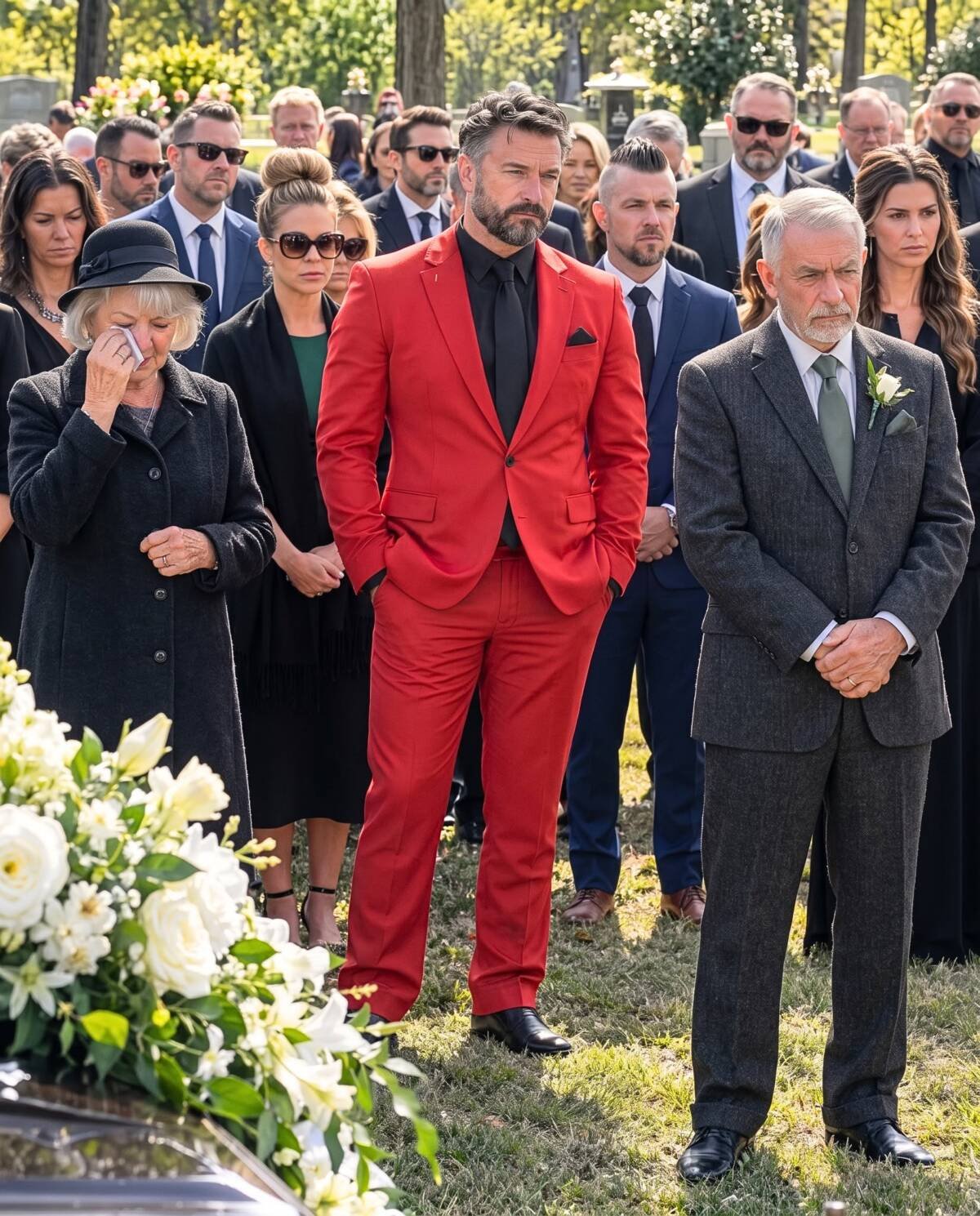
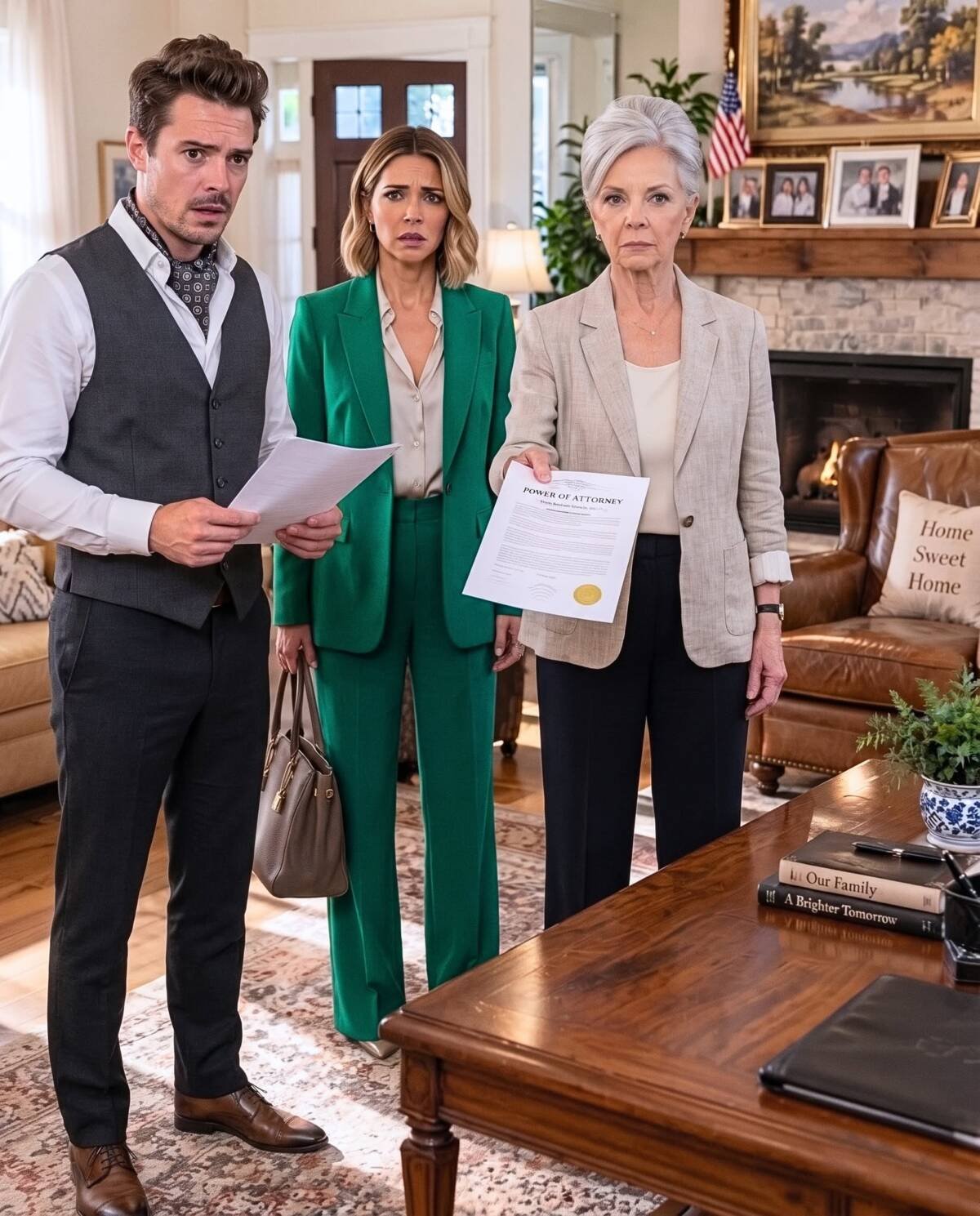
A father’s accidental phone call revealed a painful family secret. But when he discovered that the people excluding him still expected him to pay the bills, he made a decision that changed the wedding—and his relationship with his daughter—forever.
Introduction: The Call That Changed Everything
The call came on an ordinary afternoon, while I was sitting at my desk in my construction office, reviewing paperwork from a job site.
My daughter, Emily, had called me by accident. I could hear voices in the background, but she hadn’t realized the line was still open.
Then I heard her future mother-in-law say something I will never forget.
“I hope he isn’t coming to the wedding. There’s no place beside our family for a man built like a truck.”
I stopped what I was doing.
For a moment, I considered announcing myself and making it clear that I had heard every word. But before I could speak, I heard my daughter laugh.
“Your wish is my command,” Emily replied.
Those five words hurt more than the insult itself.
I’m 52 years old, and I’ve spent most of my life working in construction. My shoulders are broad, my hands are rough, and my build reflects decades of lifting lumber, carrying materials, and working long days on job sites.
I’m not the kind of man who looks like he belongs in a fashion magazine. I’ve never pretended to be.
But I am Emily’s father.
I raised her, paid for her education, helped her buy her first car, and contributed to the home she shared with her fiancé. When she and Matt began planning their wedding, I offered to help because I wanted them to start their married life without unnecessary financial pressure.
I paid the venue deposit. I covered the catering deposit. I paid for the photographer.
Apparently, my money was welcome.
My presence was not.
I stayed silent on that call. When Emily finally realized she had accidentally dialed me, she immediately began discussing wedding cakes, seating arrangements, and other details as if nothing had happened.
“Dad? Are you there?”
“Yeah,” I answered. “I’m here.”
She continued talking. I listened, responded politely, and ended the call a few minutes later.
I didn’t confront her.
I didn’t send an angry message.
I simply sat at my desk, staring at an unfinished wall across the office, trying to understand how the little girl who once thought I could fix anything had become a woman who could laugh while someone insulted her father.
For the next several days, I waited for her to acknowledge what had happened.
She never did.
And that silence was only the beginning.
Part 1: A Father Who Was Welcome to Pay, but Not to Belong
My name is Noah. I own a construction company, and most of my adult life has been devoted to building things that last.
I’ve built houses, repaired damaged foundations, managed crews, and worked through difficult seasons when every dollar mattered. Construction taught me that a strong structure depends on what holds it together, not on how impressive it looks from the street.
I thought family worked the same way.
Emily is my only child. Her mother and I had been separated for years, and I did my best to make sure Emily never felt that she had to navigate life alone.
When she went to college, I helped cover the expenses. When she needed a car, I helped her buy one. When she and Matt found a house, I contributed toward the down payment because I wanted them to have a stable place to build their future.
I never considered those things investments that entitled me to control her decisions. I did them because I was her father.
When the wedding planning began, I offered financial help again.
I wanted Emily to have a beautiful day. I wanted her to remember the ceremony, the people who loved her, and the moment she began a new chapter of her life.
I didn’t expect to be treated like a guest of honor.
I certainly didn’t expect to be treated like an embarrassment.
A few days after the accidental call, Emily sent me a picture of the wedding seating chart.
Matt’s relatives were arranged near the head table. Their names appeared in elegant calligraphy, carefully positioned near the center of the reception room.
My relatives and I had been assigned a table near the far edge.
I studied the image before replying.
“Looks nice.”
I hoped she might notice the short response and ask whether something was wrong.
She didn’t.
Instead, she continued sending updates about flowers, table decorations, and the reception schedule.
I answered when necessary, but I stopped offering opinions.
Then Emily came to my shop.
For a brief moment, I thought she had come to talk about the phone call. She smiled, asked how business was going, and climbed onto the edge of my workbench as she used to do when she was younger.
Then she made another request.
“Dad, could you help us with another two thousand dollars for a string quartet?”
I put down the piece of wood I had been sanding.
“Another two thousand?”
“Matt’s mom thinks a DJ might look tacky. She wants something more elegant.”
I looked at her.
“I’ve already paid for the venue, the catering deposit, and the photographer.”
“I know,” she said quickly. “But Matt’s parents are paying for the upgraded bar. I don’t want them thinking we’re cheap.”
I heard the familiar pattern in her words.
Her future mother-in-law’s opinions mattered. Her future in-laws’ expectations mattered. The appearance of the wedding mattered.
And somehow, I was still expected to make up the difference.
“I’ll think about it,” I told her.
Emily smiled, thanked me, and left.
She didn’t ask whether I was all right.
She didn’t mention the seating chart.
She didn’t apologize for the call.
A few days later, the family group chat turned to the rehearsal dinner. Someone asked where I would be sitting, and Patricia, Matt’s mother, suggested that I might be “more comfortable” arriving after dinner, just in time for the toast.
Nobody challenged her.
Not Matt.
Not Emily.
That evening, my daughter called me.
“Dad, please don’t take this personally. Patricia is just very particular about photographs and symmetry.”
I sat at my kitchen table, holding the phone against my ear.
“And where exactly do I fit into that symmetry?” I asked.
She went quiet.
I waited for her to say that I was her father and that I deserved to be there from the beginning.
She didn’t.
That was when I finally understood what the seating chart, the rehearsal dinner, and the accidental call had all been telling me.
They wanted my involvement.
They wanted my financial support.
They just didn’t seem to want me taking up space.
Part 2: The Wedding Photographs That Mattered More Than Family
Two weeks before the wedding, Emily invited me to a final planning dinner.
Despite everything, I stopped at her favorite bakery and bought the cinnamon coffee cake she had loved since she was a teenager.
Old habits are difficult to abandon. Even when someone hurts you, you can still remember the things that make them happy.
When I arrived, Matt and Patricia were already seated at the dining table.
After a few minutes of small talk, Matt pulled out a stack of papers and pushed them toward me.
“We wanted to go over a few remaining expenses,” he said.
The list included upgraded chairs, a champagne fountain, a horse-drawn carriage, and several other additions. Together, the items represented thousands of dollars in extra costs.
I read through the figures and looked at Emily.
“You expect me to pay for these, too?”
She shifted in her seat.
“I just want everything to be perfect, Dad.”
Before I could respond, Patricia leaned forward.
“There is one more issue we should discuss.”
I waited.
“The processional.”
“What about it?”
She folded her hands on the table.
“We’re concerned that having you walk Emily down the aisle could make the photographs look unbalanced. Matt’s father is considerably taller, and the symmetry might look strange.”
For several seconds, I couldn’t find the words to answer.
I had heard her insult my appearance over the phone, but I had hoped that perhaps she had been speaking carelessly or that the comment had been taken out of context.
Now she was explaining it directly to me.
I turned toward Emily.
“You don’t want me walking you down the aisle?”
She immediately shook her head.
“Dad, that’s not what she means.”
“Yes, it is.”
Patricia didn’t deny it.
“It’s simply about the photographs,” she said.
I looked around the table.
Matt seemed uncomfortable, but he didn’t tell his mother to stop. Emily looked down at her hands.
I had spent years trying to make life easier for my daughter. I had worked long hours, paid bills when she needed help, and supported decisions that weren’t always easy for me to understand.
Now, at the moment when she was supposed to begin a new life, I was being told that my appearance might spoil the pictures.
Matt raised his hands.
“Noah, come on. Everyone is just trying to make the day special.”
“For whom?” I asked.
Nobody answered.
I stood and picked up my jacket.
“What hurts isn’t that Patricia doesn’t like me,” I said. “She’s entitled to her opinion. What hurts is that you heard someone talk about your father as though he were an embarrassment, and you laughed.”
Emily’s face changed.
“You heard that call?” she whispered.
“Yes.”
She looked as though she wanted to explain, but I continued.
“You laughed, Emily. Then you kept asking me for money. And now we’re sitting here discussing whether I’m attractive enough to walk my own daughter down the aisle.”
Nobody said anything.
I left the house without raising my voice.
I didn’t slam the door.
I didn’t tell Emily that she was no longer my daughter.
I simply walked away because I had finally realized that continuing to argue for a place in her life would not make anyone respect me.
That night, I sat at my kitchen table and opened the folder containing the wedding contracts.
For the first time, I read every document carefully—not as a father trying to make his daughter’s wedding perfect, but as a businessman reviewing agreements he had signed.
The venue contract listed me as the primary contact.
The catering agreement identified me as the primary payer.
The photography package included my name beside the billing information.
Several major expenses remained unpaid, and some of the upgrades had been added after the original agreements were signed.
I had been so focused on helping Emily that I hadn’t stopped to consider how much of the wedding depended on my continued financial support.
Now I did.
I began making calls.
First, I contacted the venue manager and asked which changes I was authorized to make under the contract. I asked about payment deadlines, cancellation terms, and the consequences of reducing the guest count.
Then I contacted the caterer.
Finally, I called the photographer.
I didn’t threaten anyone, and I didn’t ask for anything outside the terms of the agreements.
I simply wanted to understand my obligations.
By the time I finished, I had a much clearer picture of what I had agreed to fund—and what I had never promised to pay for.
I had not canceled the wedding.
I had not demanded that anyone return a deposit.
I had simply stopped assuming that every new expense was automatically my responsibility.
For the first time in weeks, I felt calm.
They had spent so much time deciding whether I looked good enough to appear in their wedding photographs that they had forgotten something important.
I was not obligated to keep paying for a celebration in which my own place remained uncertain.
Part 3: The Day I Stopped Paying for Their Expectations
After the planning dinner, I stopped chasing Emily for reassurance.
I didn’t ask where I would sit.
I didn’t ask whether I would be included in the processional.
I didn’t ask whether Patricia had changed her mind about my appearance.
When Emily sent updates, I answered politely. When she asked questions about the wedding, I responded when I could.
But I no longer volunteered to cover expenses.
Then Patricia posted another message in the family group chat.
“Formal attire only. No jeans. Let’s keep this classy.”
I read the message twice before putting my phone down.
For years, I had worked in muddy boots and worn-out jeans. I had spent entire days covered in sawdust, cement, and dirt so that other people could live in comfortable homes.
I wasn’t ashamed of my work.
I wasn’t ashamed of my build.
And I wasn’t going to start apologizing for either one because someone had decided that appearances mattered more than character.
Three days before the wedding, I woke before sunrise and made coffee. My dog, Max, settled beside my chair as I spread the contracts across the kitchen table.
At eight o’clock, I called the venue.
“Good morning, Noah,” the manager said.
“Good morning. I need to discuss some changes to Saturday’s wedding.”
She asked what I had in mind.
“First, I’d like to review the guest count and reduce the portion of the event covered by my payment.”
There was a pause.
“How many guests are we talking about?”
“Nearly half of the current number, depending on the revised arrangement and the contract terms.”
Her tone became more cautious.
“Are you certain you want to proceed?”
“Yes. Please send me an updated invoice showing the costs covered by my existing commitment. Any additional expenses will need to be paid by the people who requested them.”
I also asked her to explain the consequences if the remaining balance was not paid by the deadline.
I wanted everything handled properly, in writing, and according to the contract.
After that, I called the caterer.
I requested a revised estimate based on the agreed budget and asked that any optional upgrades be removed unless someone else agreed to pay for them.
Then I contacted the photographer.
I reviewed the package, removed optional upgrades that I had never personally agreed to finance, and asked for written confirmation of the remaining balance.
Three calls changed the financial situation.
There was no shouting. No dramatic confrontation. No attempt to humiliate anyone.
I simply stopped treating my financial assistance as an unlimited obligation.
Within hours, my phone began ringing.
Emily called first.
Then Matt.
Then Patricia.
I let the calls go unanswered while I finished my work.
For weeks, they had been comfortable making decisions about my place in the wedding without consulting me. They had assumed I would continue paying because I always had.
Now, for the first time, they had to confront the actual cost of the celebration they wanted.
And they weren’t happy.
Part 4: “You’re Going to Embarrass Me in Front of Everyone”
Emily arrived at my house that afternoon with swollen eyes and her phone clutched in one hand.
She barely waited for me to open the door.
“Dad, what did you do?”
I stepped aside and let her enter.
She explained that the venue had contacted her about the revised guest count and that the caterer was asking which upgrades would be retained. The plans she had discussed with Patricia were suddenly changing.
I led her to the kitchen table, where the contracts were still spread out.
“I stopped paying for things I never agreed to pay for,” I said.
She stared at the paperwork.
“The wedding is in three days!”
“I know.”
“You’re going to embarrass me in front of everyone.”
I looked at her for a moment.
“You were comfortable embarrassing me when you thought I would keep paying quietly.”
Her expression hardened.
She accused me of punishing her over the seating chart and the disagreement about the processional.
I shook my head.
“I haven’t canceled your wedding. I’ve made changes to the expenses I’m responsible for. You and Matt can still have the celebration you choose, as long as you decide what you can afford and arrange payment for the rest.”
She looked away.
Before she could answer, another car pulled into the driveway.
Matt and Patricia arrived a few minutes later.
Patricia walked into the kitchen wearing the composed expression I had come to recognize. It was the expression she used when she wanted to sound reasonable while asking someone else to accommodate her.
“Surely we can put our personal differences aside for Emily’s sake,” she said.
I leaned against the counter.
“Does putting family first include allowing me to walk my daughter down the aisle?”
She hesitated.
Matt spoke before she could answer.
“We can revisit that.”
I looked at him.
“If I walk Emily down the aisle, it will be because I’m her father. Not because I paid an invoice.”
Patricia’s composure began to slip.
She reminded me that nearly two hundred people had been invited. She said relatives were expecting a horse-drawn carriage, upgraded seating, and an elaborate reception.
She asked whether I understood how embarrassing it would be if those arrangements suddenly disappeared.
I nodded slowly.
“Now we finally agree on what this has always been about,” I said. “How it looks.”
Matt turned toward his mother.
“Mom, stop.”
The room fell silent.
It was the first time I had heard him challenge her directly.
I looked at him and asked a question that had been on my mind for weeks.
“How much have your parents actually contributed?”
Patricia immediately objected.
“That is none of your business.”
Matt looked uncomfortable.
After a long pause, he admitted that his parents had paid for part of the upgraded bar and several smaller deposits. Most of the major expenses, however, still depended on the money I had provided.
Emily slowly turned toward Patricia.
“You told me your family was covering almost half.”
Patricia began explaining that she had meant her family would contribute in other ways.
It was a vague answer to a very specific question.
The woman who had insisted on expensive additions had apparently assumed that the money would somehow appear.
Matt looked at the papers on the table.
“We need to figure this out ourselves,” he said.
Patricia left angrily. Matt followed after telling Emily that he would call her later.
For several minutes, my daughter and I sat across from each other without speaking.
Then she said something that changed the conversation.
“I knew you heard us on that call.”
I looked up.
“Then why did you pretend you hadn’t?”
Her eyes filled with tears.
“Because I was ashamed.”
“Of me?”
She shook her head.
“Of myself.”
Emily explained that she had been trying desperately to gain Patricia’s approval. Every disagreement with Matt’s mother had become exhausting, and she had begun choosing the easiest response rather than the right one.
When Patricia mocked me, Emily had laughed because she wanted to be accepted.
She had made me the easiest person to hurt.
I listened without interrupting.
I understood why she had done it. I understood the pressure she felt and the fear of beginning a marriage with conflict between families.
But understanding the reason did not erase the damage.
“Why did you laugh?” I asked.
She wiped her face.
“I wanted her to accept me.”
I sat back in my chair.
“So you made me the easier person to hurt.”
Emily began crying harder.
I wanted to comfort her. She was my daughter, and seeing her in pain was never easy.
But loving someone does not mean removing every consequence of their decisions.
After a while, she asked the question I had been waiting for.
“Will you still come to my wedding?”
“If you want your father there, yes.”
She swallowed.
“Will you walk me down the aisle?”
I looked at her for a long moment.
“That depends.”
“On what?”
“On whether you’re asking because I’m your father or because the venue sent you another invoice.”
She lowered her eyes.
For the first time since the accidental call, neither of us tried to make the silence disappear.
Part 5: The Wedding They Had to Pay For Themselves
The wedding did not collapse.
Instead, Emily and Matt spent the next two days reviewing their budget and deciding which expenses they could cover themselves.
The horse-drawn carriage was removed.
The champagne fountain was canceled.
The upgraded chairs and several optional extras disappeared from the plan.
The guest list became smaller, and the reception package was adjusted to match the money they could actually afford to spend.
It was not the extravagant celebration Patricia had envisioned.
But it was still a wedding.
The ceremony could go ahead, and Emily and Matt could begin their married life without pretending that every expensive addition was essential.
The experience forced them to make decisions they should have made from the beginning.
For the first time, they had to distinguish between what they wanted and what they could afford.
Matt called me the day before the ceremony.
He sounded tired, but calmer than he had during the earlier arguments.
“I finally told my mother she doesn’t get to control the processional, the seating arrangements, or the photographs,” he said.
“What did she say?”
“She said she might not come.”
I waited.
“What did you tell her?”
“That it was her choice.”
I didn’t offer congratulations, but I appreciated the answer.
Matt was beginning to understand that setting a boundary did not require another person’s approval.
That evening, Emily visited my construction shop alone.
She didn’t bring invoices, contracts, or a list of last-minute expenses.
Instead, she carried an old photograph.
It showed the two of us at a county fair when she was six years old. She was sitting on my shoulders, holding a stuffed animal while I held her ankles to keep her steady.
She placed the photograph on my workbench.
“I want the man in this picture to walk me down the aisle,” she said.
I studied her face.
“Even if he’s built like a truck?”
She laughed through her tears.
“Especially then.”
For the first time in weeks, her response sounded like her own.
I told her I would walk with her.
But I also told her that one apology would not erase everything that had happened.
“I am sorry I made you feel like I was ashamed of you,” she said.
I nodded.
“Don’t apologize with words tomorrow. Be different the day after.”
She agreed.
We didn’t hug immediately. We didn’t pretend the past few weeks had never happened.
We simply sat together for a while, talking about the wedding and remembering the little girl in the photograph.
Sometimes, the first step toward repairing a relationship isn’t a dramatic reconciliation.
Sometimes, it’s an honest conversation in which nobody tries to escape responsibility.
Part 6: The Photograph That Finally Mattered
The following afternoon, I arrived at the venue wearing the dark suit I had bought years earlier for Emily’s college graduation.
The venue looked different from the elaborate event originally planned. There were fewer decorations, no horse-drawn carriage, and no champagne fountain.
But the place was still beautiful.
Guests arrived, relatives greeted one another, and the staff prepared for the ceremony.
Patricia noticed me shortly after I entered.
She gave me a stiff smile and turned away.
I didn’t approach her.
I had no interest in another argument, and I had nothing left to prove to her.
The first real test came during the family photographs.
The photographer began arranging relatives near the garden terrace. People moved into position while the photographer adjusted the lighting and asked everyone to stand closer together.
Then Patricia stepped forward.
“Perhaps Noah could stand a little farther toward the edge,” she suggested. “It might make the heights look more balanced.”
Emily heard her.
“No. My dad stands beside me.”
Patricia frowned.
“I’m only thinking about the photographs.”
Emily held her ground.
“Then take the photographs with my dad beside me.”
Patricia looked as though she intended to argue.
Emily continued before she could.
“If the pictures aren’t perfectly symmetrical, that’s fine. He’s my father, and I want him there.”
I stood quietly, watching my daughter make a choice she should have made weeks earlier.
This time, she wasn’t laughing to gain someone’s approval.
She wasn’t looking to Matt or Patricia to tell her what she was allowed to say.
She was standing beside me because she believed I belonged there.
That mattered more than the photographs themselves.
A few minutes later, the ceremony coordinator told us it was time to line up.
Emily hooked her arm through mine.
“Ready, Dad?”
I squeezed her hand.
“Whenever you are.”
The music began, and the doors opened.
We walked down the aisle together.
I looked at my daughter as we moved toward the front of the room. She was smiling, but I could see tears in her eyes.
For a moment, I remembered the little girl who used to sit on my shoulders at the county fair, certain that I could carry her anywhere.
I realized that I had spent years believing my responsibility as a father was to make every road easier for her.
But there are some roads a parent cannot walk on a child’s behalf.
There are decisions a child must make independently, even when those decisions lead to difficult consequences.
And there are moments when a father must stand firm, not because he loves his child any less, but because he wants that child to understand what respect means.
When we reached the front, Emily turned toward me and whispered, “Thank you.”
I nodded.
Then I took my seat.
It was beside my daughter.
Not at the edge of the room.
Not behind the guests.
Not somewhere out of sight.
Beside her.
Part 7: What Happened After the Wedding
The reception was quieter than Patricia had originally planned, but the atmosphere felt more relaxed.
Without the pressure of maintaining an extravagant event, Emily and Matt were able to focus on their guests and the beginning of their marriage.
Nobody seemed devastated by the missing champagne fountain.
The absence of the carriage did not prevent people from celebrating.
And the photographs were beautiful, even without the carefully engineered symmetry Patricia had insisted upon.
Later that evening, Patricia approached me near the bar.
“I suppose you made your point,” she said.
I shook my head.
“I wasn’t trying to make a point. I was trying to stop paying for my own humiliation.”
She stared at me for a moment but didn’t respond.
I didn’t expect an apology, and I didn’t need her approval.
Matt found me a little later.
“I should have stopped my mother much earlier,” he said.
“Yes, you should have.”
He nodded, accepting the answer without trying to defend himself.
Then he said something I appreciated.
“I’ll make sure Emily never has to feel that way about me.”
I hoped he meant it.
But I also knew that one conversation could not guarantee the future. Respect is demonstrated through decisions made consistently over time, particularly when those decisions are inconvenient.
The same was true of my relationship with Emily.
Over the following months, we began rebuilding it slowly.
She started visiting my shop without asking for money or bringing another wedding expense that needed to be covered. Sometimes, she simply brought coffee and sat beside me while I worked.
We talked about ordinary things.
She told me about her job, her new routines, and the adjustments she and Matt were making as a married couple.
I told her about my construction projects, the problems I was trying to solve, and the people I worked with.
There were still difficult conversations. Occasionally, the wedding came up, and we had to acknowledge that the damage had not disappeared simply because the ceremony was over.
But Emily began showing me something I had wanted to see for a long time.
She was willing to take responsibility for her choices.
She stopped treating my financial help as an automatic solution to every problem. She began making decisions with Matt based on what they could afford, rather than what they thought other people expected.
And she stopped pretending that keeping everyone happy was more important than standing up for someone she loved.
One afternoon, several months after the wedding, a package arrived at my office.
Inside was a framed photograph.
It wasn’t one of the carefully posed family portraits.
It showed Emily holding my arm as we walked down the aisle.
Her wedding dress was bright against the darker suit I was wearing, and she was looking up at me with a smile that seemed entirely natural.
There were no elaborate decorations in the frame.
No champagne fountain.
No carriage.
No carefully arranged line of relatives.
Just a father and his daughter, walking together.
I turned the frame over.
On the back, Emily had written a sentence.
“For the record, this was the only photograph that mattered.”
I placed it on my desk.
Every day, I looked at that picture and remembered how close I had come to believing that my appearance made me less worthy of a place in my daughter’s life.
It had taken a painful phone call, a series of humiliating conversations, and a difficult confrontation to understand that I had been measuring my worth by the wrong standard.
I had spent years believing that being a good father meant providing whatever my daughter needed, even when doing so required sacrificing my own comfort.
I had assumed that if I worked hard enough, helped enough, and gave enough, the people she loved would naturally respect me.
But respect cannot be purchased.
It cannot be demanded through financial support.
And it cannot be secured by making yourself endlessly available to people who only value what you can provide.
I could help Emily build a future.
I could support her when life became difficult.
I could offer advice, share experience, and stand beside her when she needed me.
But I could not make her choices for her.
And I could not continue paying for the privilege of being treated like someone who didn’t belong.
Conclusion: Sometimes, Love Means Saying No
Looking back, the most painful part of that experience wasn’t Patricia’s comment about my build.
People will always have opinions about how others look, dress, speak, and live. I have spent enough time in the world to know that I cannot control every person’s judgment.
What hurt was hearing my own daughter laugh.
It hurt to realize that she had been willing to make me the target of a joke because she wanted someone else’s approval.
And it hurt to discover that, while my presence was being questioned, my financial support was still expected without hesitation.
But the experience taught me something I wish I had understood earlier.
Being a good parent does not mean saying yes to everything.
It doesn’t mean paying every bill, preventing every disappointment, or protecting an adult child from the consequences of every decision.
Sometimes, loving your child means allowing them to face the choices they have made.
Sometimes, it means refusing to let financial help become a substitute for respect.
And sometimes, it means stepping back long enough for the people you love to understand that your presence is a gift, not an obligation.
Emily and I are still rebuilding our relationship. We don’t pretend that the wedding never happened or that a single apology erased the hurt.
But we are learning to speak honestly, and she is learning that love should never require someone to be ashamed of the people who helped them become who they are.
As for me, I still own my construction company. I still wear work boots, still spend long days on job sites, and still have the broad shoulders that once became the subject of a cruel joke.
I haven’t changed my appearance to fit someone else’s idea of elegance.
I no longer believe I need to.
The photograph on my desk reminds me that the most important moments in life rarely depend on perfect lighting, expensive decorations, or carefully arranged appearances.
They depend on who stands beside you when it matters.
And when I look at that photograph, I know that I didn’t need to be the most polished man in the room.
I only needed to be a father who understood his worth.
Because the people who truly love you shouldn’t need you to disappear so they can look good in the picture.
Sometimes, the strongest thing a parent can do is stop paying for everyone else’s expectations—and start making room for their own dignity.
What do you think? Should a parent continue supporting an adult child financially after being treated with disrespect, or is setting firm boundaries sometimes the most loving choice? Share your thoughts in the comments, and pass this story along to someone who may need the reminder that love and self-respect can exist side by side.