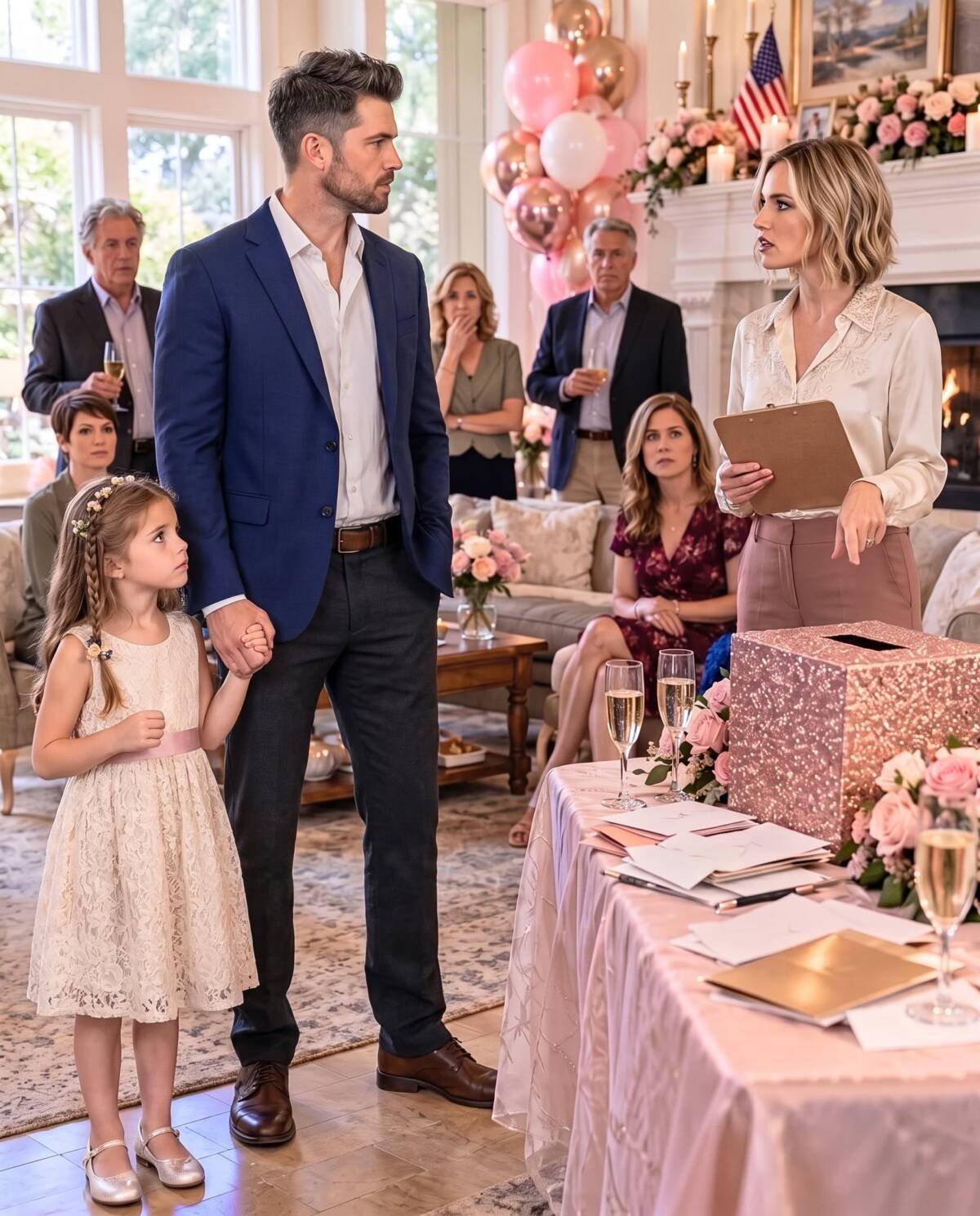
A family dinner turned into a painful confrontation when my daughter’s fiancé ordered me to pay the bill and leave if I disliked his mother’s remarks. I did exactly what he asked. But what happened over the next three days revealed a hidden family secret, an inheritance they had already counted on, and a truth that would change our lives forever.
Introduction: The Night I Finally Stopped Keeping the Peace
The moment my daughter’s fiancé looked across the dinner table and told me to pay the bill and leave if I didn’t like what his mother was saying, I understood that something in our family had gone terribly wrong.
I was sixty-one years old, six years widowed, and sitting in a restaurant with the people who were supposed to become my family. Instead of defending me, my daughter stared at her plate while her fiancé waited for me to do what he had demanded.
So I paid the entire bill.
I left a generous tip, collected my purse, stood up, and walked out without raising my voice or starting an argument.
What they didn’t know was that the dinner had finally forced me to recognize something I had spent years trying to ignore: my generosity had become an expectation, my silence had become permission, and my own daughter had started treating my future as though it were already hers to arrange.
Three days later, a discovery involving an old property deed and a letter from my late husband would reveal that the house my daughter and her fiancé had been planning to renovate was not the inheritance they had always assumed it would be.
And the truth behind that house would uncover a family secret that had remained hidden for decades.
The House They Had Already Claimed
My name is Claire Bennett, and for nearly twenty years, my home in Connecticut had been the center of my family’s life.
My husband, David, and I bought the house when our daughter, Natalie, was still young. It was a four-bedroom colonial with a wide front porch, a long driveway, and a backyard large enough for birthday parties, summer cookouts, and the occasional neighborhood gathering.
David loved the house. He spent weekends repairing things that weren’t broken, planting flowers he insisted would survive the winter, and finding new projects whenever the rest of us thought the house was finished.
When he died six years ago, I stayed.
The house was filled with memories, but it also gave me a sense of stability during the loneliest period of my life. I knew every creaking floorboard, every stubborn window, and every place where David had patched a wall after one of his ambitious home improvement projects went wrong.
I never imagined living anywhere else.
Natalie was twenty-nine when she became engaged to Preston Hale, a commercial real estate broker who seemed, at first, to possess all the qualities a mother might want in a future son-in-law.
He was articulate, confident, well dressed, and comfortable in almost any social setting. He knew how to make conversation with strangers and seemed to understand exactly what people wanted to hear.
Initially, I was happy for Natalie.
She had always been ambitious, and Preston appeared equally determined to build a successful future. I believed they would make a good team.
Over time, however, his attitude toward my house began to change.
At first, the comments seemed harmless.
He would stand in the living room and discuss how much brighter it would look with different windows. He would point out that the kitchen could be opened into the dining room. He once spent nearly twenty minutes explaining how removing a wall might improve the flow between the main living areas.
I assumed he was simply interested in real estate.
Then I began noticing that he rarely asked whether I liked the house as it was.
Instead, he spoke as though the renovations were inevitable.
One afternoon, I walked into the kitchen and heard him talking to Natalie.
“If we open this wall, the whole downstairs changes,” he said.
Natalie leaned against the counter.
“And Mom barely uses the dining room anyway.”
“What about the study?”
“That could be the nursery.”
I stopped just outside the doorway.
They were speaking casually, as though I were discussing a hypothetical property with them rather than listening to two people plan changes to the home in which I still lived.
Preston continued describing where furniture might go and how they could use the upstairs bedrooms.
Neither of them asked whether I intended to move.
Neither of them asked whether I wanted a nursery built in my study.
I could have walked into the kitchen and challenged them. Instead, I backed away quietly.
I told myself they were young, excited about their future, and simply imagining what their lives might look like someday.
Perhaps Natalie had always assumed she would inherit the house. David had occasionally spoken about wanting to provide her with security, and I knew that she remembered those conversations.
But imagining a future inheritance was not the same as having permission to plan my disappearance from the present.
Still, I remained silent.
For most of my life, I had believed that keeping the peace was one of the most important responsibilities a mother could have.
I was about to discover how expensive that belief could become.
The Dinner That Changed Everything
The confrontation happened during a dinner with Preston’s mother, Deborah Hale.
We met at an upscale steakhouse where the lighting was soft, the tables were closely spaced, and the prices were high enough that nobody ordered casually.
Deborah arrived wearing an expensive coat and carrying herself with the confidence of someone accustomed to being listened to.
She greeted me politely, but within minutes, her comments began to take on a familiar edge.
She asked whether I still worked part-time, then remarked that retirement must be easier for people who had no children at home.
She commented on my clothes, asked whether I ever felt lonely, and eventually turned the conversation toward my house.
“Four bedrooms,” she said, glancing at me over her menu. “That seems like an awful lot of space for one person.”
I smiled politely.
“I’ve lived there for a long time.”
“Of course,” she replied. “But things change. Children grow up, get married, and need room to build their own lives.”
Natalie looked uncomfortable, but she said nothing.
Deborah continued.
“Sometimes mothers have trouble knowing when to step aside. They want to help, which is understandable, but they can end up making it difficult for their children to become independent.”
The implication was unmistakable.
She was talking about me.
I set down my fork.
“Deborah, I understand that Natalie and Preston are building a future together. But I still have a life of my own, and I don’t think that’s unreasonable.”
Deborah gave me a thin smile.
“Nobody said it was unreasonable. We’re simply talking about priorities.”
I turned toward Natalie, hoping she would acknowledge what was happening.
Instead, she sighed.
“Mom, she doesn’t mean anything by it.”
That response hurt more than Deborah’s comments.
My daughter knew how the conversation sounded. She knew I had never asked to be involved in their relationship, and she knew I had never prevented her from making her own decisions.
Yet she was treating my discomfort as an inconvenience.
Before I could answer, Preston leaned forward.
“If you don’t appreciate my mother’s remarks, pay the check and leave.”
For a moment, the entire table seemed to go silent.
I stared at him, waiting for a sign that he understood how disrespectful his words had been.
He didn’t apologize.
He didn’t soften his tone.
He simply waited.
I looked at Natalie.
She kept her eyes on the table.
That was the moment I realized the problem was no longer just Preston’s behavior or Deborah’s criticism. My daughter was allowing them to treat me this way because she had grown accustomed to believing that I would tolerate almost anything to avoid a family disagreement.
I didn’t argue.
I didn’t ask for an explanation.
I picked up the check, paid for the entire table, and left a generous tip.
Then I stood, collected my purse, and walked out.
Behind me, nobody called my name.
Nobody followed me.
Nobody asked whether I was all right.
I drove home in silence.
At first, I was angry. Then, as the miles passed, the anger began to settle into something clearer.
I thought about all the things I had been doing for Natalie and Preston.
I was still making Natalie’s car payment, even though the arrangement had supposedly been temporary. I had offered to help her during a difficult period three years earlier, but the payments had quietly become part of my monthly budget.
I was also paying for Preston’s storage unit. He had asked me to cover it while he moved some business equipment, promising that he would reimburse me once a particular transaction closed.
That had been eighteen months earlier.
I had never received the money.
Somewhere along the way, my willingness to help had become an assumption that I would continue helping indefinitely.
The dinner had not created that problem.
It had simply made it impossible for me to ignore.
Three Days Later, They Realized Something Had Changed
The next morning, I opened my laptop and reviewed the automatic payments coming out of my bank account.
There they were: Natalie’s car payment and Preston’s storage bill.
I canceled both arrangements.
I didn’t send an angry message or demand reimbursement. I simply stopped paying expenses that were no longer my responsibility.
Then I sat at the kitchen table and considered the larger issue.
My home.
I remembered Preston discussing the downstairs renovation. I remembered Natalie suggesting that my study could become a nursery. I remembered Deborah’s comments about how much space one woman needed.
The more I thought about it, the more uncomfortable I became.
I had never promised Preston the house.
I had never told Natalie she could move into it.
Yet they had been discussing its future as though my continued presence were a temporary inconvenience.
I decided I needed professional advice.
I contacted a real estate attorney named Margaret Ellis and explained that I wanted to review the ownership and estate arrangements for my home.
Margaret listened carefully.
“Are you planning to sell?” she asked.
“No. I want to understand exactly where I stand.”
She arranged a meeting and asked me to bring whatever property records, wills, trusts, and estate documents I could find.
That evening, Natalie called.
“Mom, what happened to the car payment?”
“I stopped it.”
“What do you mean, you stopped it?”
“I mean you’re responsible for your own car payment now.”
She sounded shocked.
I explained that the arrangement had been temporary and that I had continued helping long after it was reasonable.
She immediately brought up Preston’s storage account.
“His card was declined.”
“Then he needs to update his payment information.”
“Mom, you could have told us.”
I paused.
“You could also have thanked me for paying those bills for as long as I did.”
She became defensive.
“This is all because of dinner, isn’t it?”
“No. Dinner helped me recognize a pattern. It didn’t create one.”
Then I told her something I had never said so directly before.
“I love you, Natalie. But loving you doesn’t mean I’m responsible for financing every decision you make.”
She went quiet.
Eventually, she said that Preston and Deborah had only been trying to help her build a future.
I asked what that future looked like.
She didn’t answer.
Instead, she said she needed to go and ended the call.
For the first time in years, I didn’t immediately call her back to smooth things over.
I let the silence remain.
Three days after the dinner, Preston and Natalie learned that the financial support they had taken for granted was no longer available. They were upset, but their reaction was only the beginning.
The discovery waiting in my late husband’s filing cabinet would change the situation in a way none of us could have anticipated.
The Blue Folder in David’s Filing Cabinet
Margaret’s first meeting with me was straightforward.
She explained that, in general, an adult child does not automatically own a parent’s property simply because the parent has discussed leaving it to them. The actual ownership documents, estate plan, and applicable law determine what happens.
Then she asked whether David had ever maintained separate documents concerning the house.
I assumed everything had passed directly to me after his death.
Still, her question bothered me.
That evening, I opened the old filing cabinet in David’s study. It contained years of tax returns, mortgage statements, insurance policies, and other documents I had not reviewed in years.
I sorted through the folders until I found a thin blue file tucked behind a stack of old property records.
Inside was a deed dated 1998.
Only one name appeared on the document.
David Bennett.
I read it twice.
The property had always been our family home, and I had assumed I understood its legal history. Yet the document suggested there was more to the arrangement than I had realized.
I called Margaret the next morning and arranged to bring her the file.
When she reviewed it, she found an additional document that appeared to reference an older family trust.
Then she discovered an envelope.
It was yellowed around the edges, and my name was written across the front in David’s handwriting.
CLAIRE: ONLY IF SOMETHING HAPPENS WITH THE HOUSE.
My hands went cold.
David had been dead for six years.
Why had he written that?
What had he expected me to discover?
I held the envelope for several minutes before opening it.
The letter inside began with a warning.
David wrote that if I was reading it, something had probably gone wrong involving the house, Natalie, or both.
He explained that he had once promised Natalie the property because he wanted her to feel secure about her future.
At the time, he had been worried about her financial decisions. During college, she had accumulated more than $40,000 in private debt through credit cards, personal loans, and money borrowed from friends.
David had quietly helped her pay several of those obligations.
He hadn’t told me because he feared that I would worry unnecessarily or lose confidence in our daughter.
Two years later, he discovered that she was facing financial problems again.
This time, Preston was involved in what David described as a speculative property arrangement.
David had apparently believed that promising Natalie the house would give her something stable to look forward to.
Then he discovered that the promise had begun influencing the decisions she and Preston were making.
One sentence in the letter stopped me cold.
“I told Natalie the house would be hers because I thought security might stop her from chasing risky promises. Instead, Preston began treating the promise like collateral.”
I read that line several times.
Preston had been discussing renovations for months. Natalie had been talking about a nursery. Deborah had been suggesting that I should step aside.
Had all of them begun treating my house as an asset that would eventually be available to them?
David’s letter continued.
He admitted that he had made mistakes by hiding Natalie’s financial problems and failing to explain the situation to me.
He also warned me not to let guilt or family pressure influence decisions about my own home.
“The house was never meant to cost you your dignity,” he wrote.
I cried as I finished the letter.
I was grieving David all over again, but this time the grief was tangled with anger. He had tried to protect our daughter from consequences, and he had tried to protect me from painful information.
In doing so, he had left me with questions I should have been able to ask him directly.
I had no idea that the letter contained only the first part of the story.
Margaret was still reviewing the original property records when she found something even more extraordinary.
The house had not simply been David’s property to leave to Natalie.
Its legal history went back another generation.
And the documents identified someone I had never heard of.
The Daughter David Never Told Me About
Margaret called me after completing a more detailed review of the old records.
Her voice was careful.
“Claire, the land originally belonged to David’s mother, Eleanor Bennett.”
I knew Eleanor’s name. She had died before David and I married, and I had heard stories about her from my husband over the years.
But I had never known that she had placed the property into a private family trust.
According to the documents Margaret was reviewing, David had controlled the house and held the right to live there. The trust also contained provisions protecting the surviving spouse’s right to remain in the property for life.
That was important.
But the next part was even more surprising.
The house was not automatically designated to pass to Natalie after my death.
“Then who receives it?” I asked.
Margaret paused.
“A woman named Rebecca Dawson.”
I had never heard that name.
“Who is Rebecca Dawson?”
Margaret took a breath.
“According to the original trust documents, Rebecca Dawson is David’s daughter.”
For several seconds, I couldn’t speak.
“That’s impossible.”
David and I had been married for thirty-eight years. We had shared a home, raised a daughter, celebrated anniversaries, endured illness, and built what I believed was a life grounded in trust.
He had never told me he had another daughter.
Margaret explained that the documents identified Rebecca as Eleanor Bennett’s granddaughter and David’s biological child. She recommended that we verify the underlying records and speak with Rebecca before drawing conclusions about the family’s legal position.
I agreed.
Then an old memory surfaced.
Years earlier, I had found a photograph of David standing beside a young woman. He had been about nineteen, and the woman appeared to be around the same age.
When I asked who she was, David casually described her as an old high school friend.
I had accepted his answer without thinking much about it.
Now I wondered whether that photograph had been a glimpse of a truth I had never known to look for.
Margaret arranged a meeting.
When Rebecca Dawson walked into her office, she was fifty-seven years old and visibly nervous.
She had a quiet manner and held her purse tightly as she sat down across from me.
Then she looked directly at me.
I recognized David in her face immediately.
She had his hazel eyes, the same expression around the mouth, and the same slight creases at the corners of her eyes when she tried to smile.
I stared at her.
“You’re David’s daughter?”
Rebecca nodded.
“Yes.”
I wanted to ask a hundred questions, but the first one came out before I could stop myself.
“Why didn’t he tell me?”
Rebecca looked down at her hands.
“I asked him that once.”
“What did he say?”
She took a breath.
“He said he was ashamed he’d waited so long that he no longer knew how to begin.”
It sounded painfully like David.
He was a man who could solve practical problems with extraordinary patience, yet when a conversation frightened him, he sometimes chose silence instead.
I sat quietly for a moment, trying to understand how much of my life had been built around information I had never been given.
Then I asked Rebecca whether she knew about Natalie.
She nodded.
“Yes. I thought she knew about me, too.”
Her next words changed the conversation again.
“Natalie contacted me about five years ago, not long after David died.”
I turned toward Margaret.
Rebecca reached into her purse and produced copies of several documents.
Natalie had asked her to sign paperwork supposedly connected to David’s estate. She had described the documents as a simple waiver that would prevent complications because the house had always been intended for her.
“Did you sign them?” I asked.
Rebecca shook her head.
“No. Your husband warned me never to sign anything involving the property without consulting an attorney.”
That warning had protected her from making a decision she did not fully understand.
It also revealed something deeply troubling.
Natalie had known Rebecca existed.
She had known another person might have rights involving the property.
And she had never told me.
The Conversation I Never Expected to Have With My Daughter
I called Natalie that evening.
“Come over tomorrow. Alone.”
She arrived the following morning and walked into the kitchen with the cautious expression of someone who suspected she was about to have a difficult conversation.
Her eyes went immediately to the blue folder on the table.
I didn’t need to ask whether she recognized it.
I placed David’s letter beside Rebecca’s unsigned waiver.
“Who is Rebecca Dawson?”
Natalie closed her eyes.
“You already know.”
The admission hurt more than I expected.
She sat down and explained that David had told her about Rebecca while he was dying from pancreatic cancer.
He had asked Natalie not to tell me.
She said she had obeyed his wishes because he had been frightened, ashamed, and too ill to explain everything himself.
I understood that grief could make people desperate to protect one another.
But it could not explain why Natalie had later contacted Rebecca about the house without telling me.
“Why did you ask her to sign those documents?”
Natalie rubbed her forehead.
“Preston said we needed to protect everything.”
“Protect what?”
“Our future.”
I waited.
She explained that Preston believed Rebecca’s potential claim could create legal complications. He worried that an unresolved ownership dispute might interfere with their financial plans.
Instead of telling me about the situation, they had apparently hoped to settle it quietly.
I looked at my daughter.
“You were planning renovations to a house that might not even become yours.”
“Mom, Dad promised me.”
“Your father made a promise without explaining the legal arrangement. That doesn’t mean you can treat the house as though it belongs to you.”
Natalie’s eyes filled with tears.
“You don’t understand.”
“Then help me understand.”
She stood up abruptly, walked toward the window, and remained silent for several seconds.
Finally, she said something I hadn’t expected.
“We have debt.”
I asked how much.
She avoided the question until I pressed her for an answer.
“Almost $300,000.”
I felt the room shift around me.
Preston’s real estate investments had failed. Their financial problems had spread across private loans, credit-card balances, vehicle payments, and other obligations.
They had been trying to maintain a lifestyle they could no longer afford.
Then Natalie explained the detail that connected their financial problems to my home.
Three months before the steakhouse dinner, Preston had borrowed money based partly on an expected future inheritance.
“Did he use my house as collateral?”
“Not exactly.”
“Then what does that mean?”
“He listed expected family assets.”
I stared at her.
Even if he had not legally pledged my property as collateral, he had apparently presented an anticipated inheritance as part of his financial picture.
That was serious enough to warrant further review.
For months, he had been discussing renovations, measuring rooms, and allowing his mother to suggest that I occupied too much space.
Now I understood why their plans had seemed so settled.
They had begun building a financial future around money they did not own and property they had no present right to control.
My home was not simply a place where they hoped to live someday.
It had become part of a plan designed to make their financial situation appear more secure than it was.
I stood up.
“You need to leave.”
Natalie began crying.
“What are we supposed to do?”
I looked at her and saw the little girl I had carried upstairs after she fell asleep watching movies. I remembered sewing the hem of her prom dress and sitting beside her during difficult nights when she believed the world had turned against her.
I still loved her.
But love did not erase what had happened.
“I don’t know,” I said. “But you are not going to solve this by planning your future around my absence.”
Natalie left without another word.
For the first time in our relationship, I did not chase after her to make sure she was comfortable with the conversation.
I had finally said what needed to be said.
When Their Financial Plans Began to Collapse
The wedding was postponed two weeks later.
I didn’t demand that Natalie end the engagement. I didn’t contact Preston’s business partners or attempt to interfere in his professional life.
The consequences of his financial decisions were already unfolding.
One business partner filed a lawsuit. Another creditor came forward. As more details emerged, the business Preston had presented as successful began to unravel.
The future he and Natalie had imagined became increasingly difficult to maintain.
Deborah called me several times.
During one conversation, she demanded to know why I had stopped helping financially.
“You could rescue them,” she said.
“I’ve helped them for years.”
“They’re family.”
“Then they need to start treating family members with respect.”
She insisted that I was punishing Natalie because of one uncomfortable dinner.
I explained that the dinner had been only one part of a much larger problem. I had been paying expenses that were not mine, tolerating conversations about my house as though I had no say in its future, and allowing people to mistake my generosity for an obligation.
Deborah did not agree.
She told me I was making a difficult situation worse.
I told her I was no longer willing to make my own life worse to protect someone else from the consequences of their choices.
Then I ended the call.
Three months passed.
Natalie moved into a small apartment. Preston returned to Deborah’s house while attempting to address his financial problems.
I heard very little from my daughter during that period.
I missed her, but I resisted the temptation to solve her problems for her.
I knew that if I immediately resumed paying her bills, we would return to the same pattern without addressing what had caused it.
Then, one Sunday morning, my phone rang.
It was Natalie.
“I gave the ring back,” she said.
I closed my eyes.
For a moment, neither of us spoke.
I had complicated feelings about Preston, but I knew that ending an engagement was a painful decision. I also knew Natalie had to make that choice herself.
“I’m sorry,” I finally said.
She began to cry.....