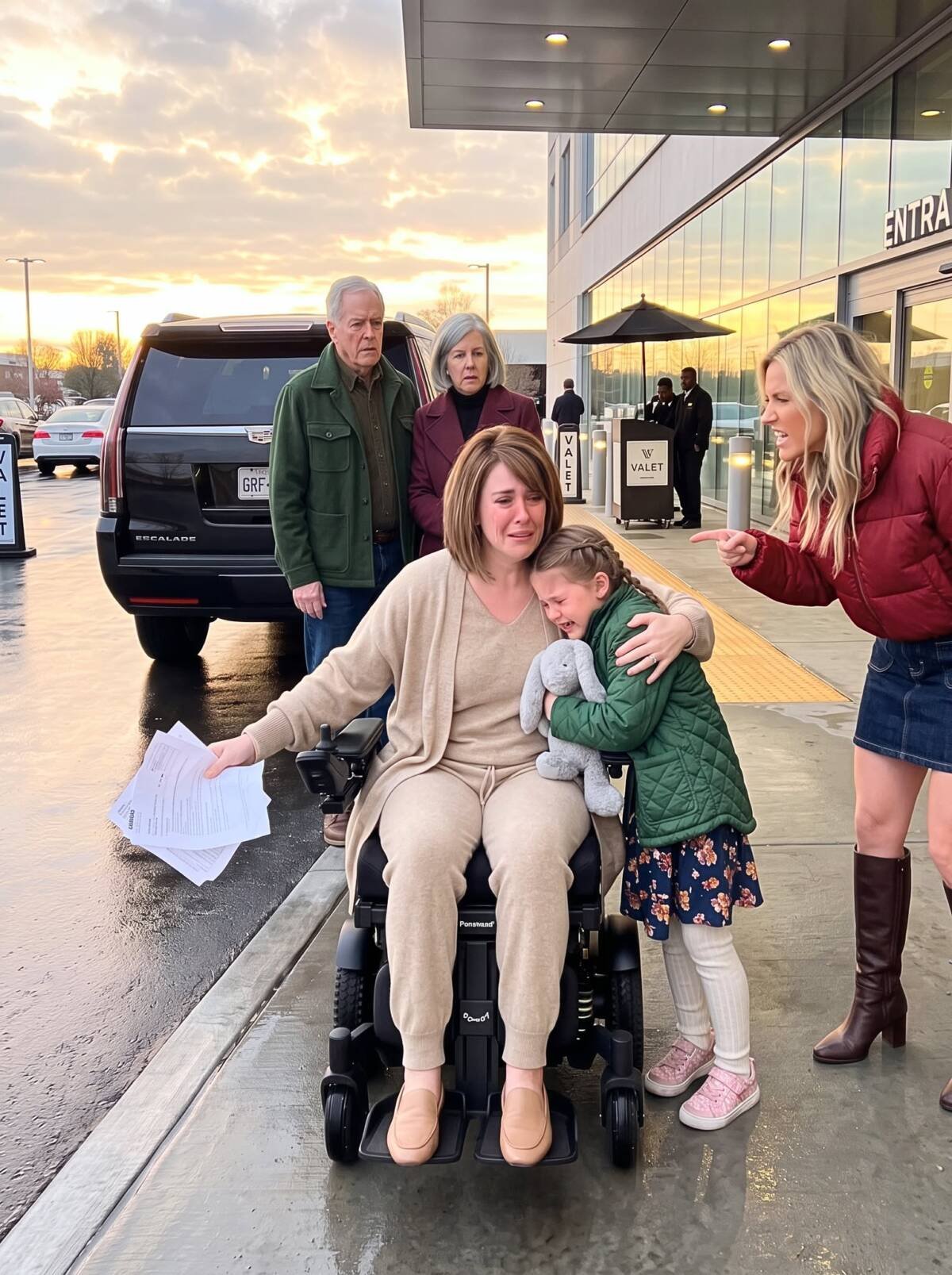
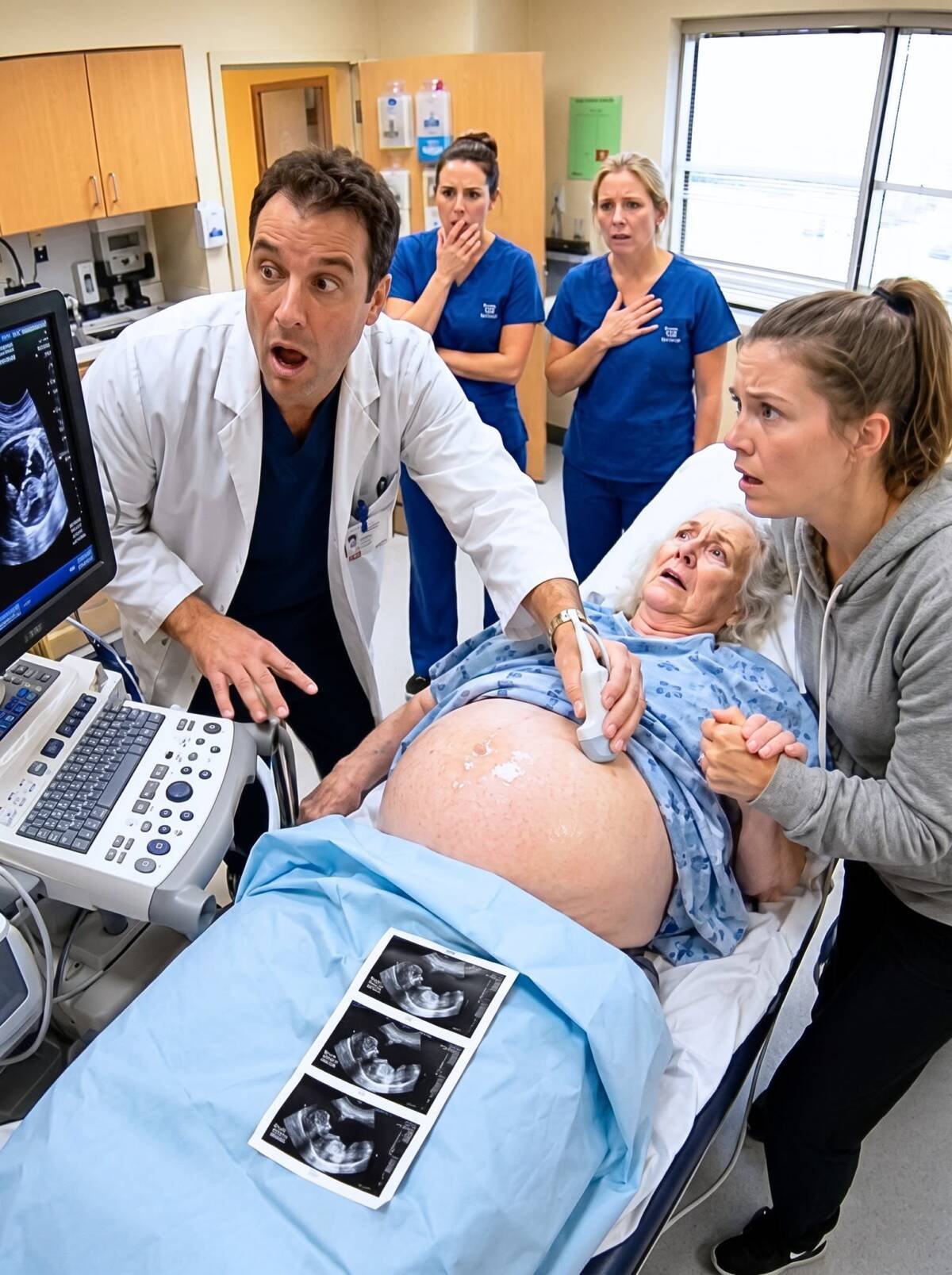
When I woke up from open-heart surgery, the first thing I looked for wasn’t the doctor or the monitors—it was my three children. Before I was wheeled into the operating room, they had all promised to be right there waiting when I opened my eyes. Instead, I woke up to the cold hum of fluorescent lights and three completely empty chairs.
When I asked the nurse where they were, she hesitated, lowered her eyes, and delivered a sentence that broke my heart all over again: “They left about an hour ago, Mrs. Davis. They said the parking was getting too expensive.”
I thought that was the cruelest thing I would learn that day. I had no idea that minutes later, a stranger in a dark tailored suit would walk into my room, pull a faded yellow lunch card from his briefcase, and hand me a manila folder that would expose the terrifying truth about what my children were really doing while I was under anesthesia.
The Empty Chairs
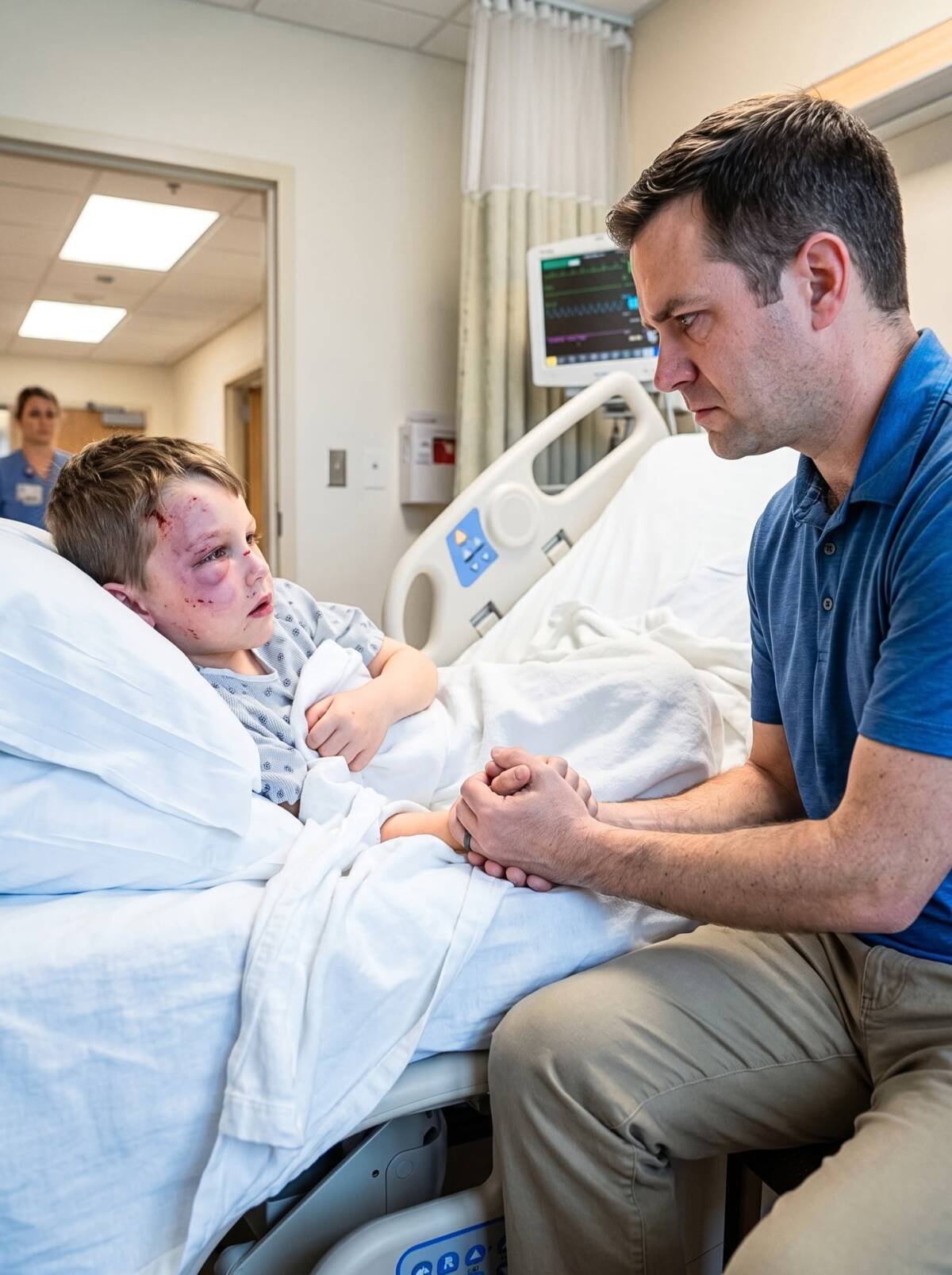
The recovery room smelled sharply of antiseptic and cold air. Every shallow breath I took sent a dull, heavy ache radiating across my sternum, a reminder of the blocked artery surgeons had just spent hours repairing. I was sixty-four years old, exhausted, and still swimming through the thick, disorienting fog of general anesthesia.
I turned my head slowly against the crisp hospital pillow, expecting to see familiar faces. David, my oldest, had sworn he was taking the entire day off from his accounting firm. Sarah had texted me the night before promising to bring fresh lilies from the florist down the street. Even Michael, who rarely paused his sales calls for anything, had assured me he’d rearranged his schedule.
There were three vinyl chairs lined up against the pale blue wall beside my bed. Every single one of them was empty. No coat draped over a backrest. No handbag on the floor. No flowers on the bedside table.
I told myself they had probably stepped down to the cafeteria for coffee. Just as I was trying to swallow the dryness in my throat, a nurse walked in to check my IV line and jot down the readings from my heart monitor.
“Excuse me,” I whispered, my voice raspy from the breathing tube. “My children. Where are they?”
The nurse’s hand paused on the clipboard. A flicker of something—pity, maybe, or discomfort—crossed her face before she schooled her expression back into professional calm.
“They were here during your surgery, Mrs. Davis,” she said gently.
“Then where are they now?”
She looked down at my chart, avoiding my eyes. “They left about an hour ago.”
The anesthesia fog vanished in an instant, replaced by a cold, sharp clarity. “Why?”
She shifted her weight, clearly wishing she didn’t have to be the one to tell me. “Someone at the front desk overheard them talking by the elevators. They said the hospital parking fees were getting too expensive, and that they’d check on you later.”
For several long seconds, I simply stared at her, convinced my medication was making me mishear her. I had just undergone major heart surgery. I had spent the last four decades putting those three children ahead of my own comfort, my own savings, and my own peace of mind. And they had decided that another twenty dollars in hospital parking wasn’t worth waiting for their mother to wake up.
The tears came before I could stop them, hot and silent, sliding down my temples into my hair. The nurse didn’t say a word; she simply pulled a handful of tissues from the box on the counter and placed them gently in my hand.
“Is there anyone else I can call for you, Mrs. Davis?” she asked softly. “A sister? A close friend?”
I shook my head. After my divorce thirty years ago, I had poured everything I had into raising David, Sarah, and Michael. I had worked double shifts, skipped vacations, and dipped into my own retirement whenever one of them hit a rough patch. I had built my entire world around being there when they needed me—and lying in that hospital bed, I realized with a crushing ache that I couldn’t think of a single person who would drop everything to be there simply because I needed them.
A Stranger in a Tailored Suit
Ten minutes later, a quiet knock sounded at the half-open door.
I wiped my cheeks quickly, expecting a cardiologist or a hospital administrator. Instead, a tall man in his late forties stepped into the room. He wore a charcoal tailored suit, a crisp white shirt, and carried a worn leather briefcase. There was something calm and commanding about the way he carried himself, though I was certain I had never met him.
“Mrs. Davis?” he asked, his voice warm and measured. “My name is Malcolm Chen. You probably don’t remember me.”
I squinted at him, searching his face for any hint of familiarity—a former coworker, a neighbor, one of David’s colleagues—but came up completely blank. “I’m sorry, Mr. Chen. I don’t think we’ve met.”
A faint, nostalgic smile touched the corners of his eyes. “You bought my lunch every day when I was in third grade.”
The words hung in the quiet room, and suddenly, the decades fell away. I was sixteen years old again, working part-time as a teacher’s aide at Franklin Elementary School to help my own parents pay the bills. I remembered the noisy, linoleum-floored cafeteria, the smell of tomato soup and grilled cheese, and a thin, quiet boy with oversized hand-me-down shirts who always sat at the very end of the bench with an empty tray, staring down at his hands and insisting he wasn’t hungry.
“Little Malcolm?” I breathed.
His eyes immediately glistened. “You remember.”
“Of course I remember,” I said, my voice catching. “You used to fold your napkin into little paper cranes so nobody would notice you weren’t eating.”
I had started buying extra lunch tickets out of my small paycheck, slipping them to the cafeteria cashier and telling Malcolm that the kitchen had made too much food and needed someone to help finish it so it wouldn’t go to waste. I had done it for two years, just so a proud little boy could eat without feeling embarrassed. To me, it had been such a small, ordinary thing that I hadn’t thought about it in forty years.
Just then, the same nurse stepped back into the room, glancing at the wall clock. “Excuse me, sir, I’m sorry, but post-op visiting hours are strictly limited to immediate family right now.”
Malcolm turned to her with a polite, unassuming nod. “I understand, thank you. I’m Malcolm Chen. I own this hospital.”
The nurse froze, her eyes widening slightly before she murmured an apology and quietly stepped back out, pulling the door partially shut behind her.
I stared at him in absolute disbelief. “You own this hospital?”
“Four of them, actually,” Malcolm said softly, pulling one of the empty vinyl chairs closer to my bed and sitting down. “When I saw the name Adrienne Davis on the surgical roster this morning, I had to check the records to be sure it was you.”
He set his briefcase on his lap, snapped the brass latches open, and reached inside. Carefully, as if handling a fragile heirloom, he pulled out a small laminated rectangle and placed it on the edge of my blanket.
It was a faded yellow Franklin Elementary lunch card. The edges were frayed, the ink barely legible, but it had been preserved with extraordinary care.
“I’ve carried this for more than forty years,” he said quietly.
“Why on earth would you keep that?”
“Because there were years when I felt completely invisible,” Malcolm said, his voice steady. “When I felt like nobody in the world noticed whether I was hungry, or tired, or even there. This card reminded me that one person did.”
He told me the rest of his story in a few humble sentences—how he had eventually been adopted by a loving family, worked his way through medical school to become a pediatrician, transitioned into hospital administration, and built a regional healthcare network. Along the way, he had funded meal programs across dozens of low-income schools and pediatric wards, determined that no child would ever sit in a cafeteria pretending not to be hungry.
“All of that,” he said, gesturing around the room, “started because of you.”
I shook my head, overwhelmed. “Malcolm, it was just school lunches.”
“No, Adrienne,” he replied gently. “It was kindness. And kindness changes the trajectory of a life.”
For the first time since waking up, the hollow ache in my chest eased. Then Malcolm’s gaze drifted past me to the two remaining empty chairs against the wall. His brow furrowed slightly.
“If you don’t mind me asking,” he said, “where is your family? Your chart lists three adult children.”
The humiliation rushed back, hot and sharp. I looked down at my hands. “They left. They told the front desk the parking was getting too expensive.”
Malcolm went completely still. For a long moment, the only sound in the room was the rhythmic beep of my heart monitor.
“Well,” he said finally, his voice dropping an octave, “then I’m very glad I found you today.”
The Plan They Made Behind My Back
Malcolm stayed with me through dinner, insisting on having a light, heart-healthy meal brought up from the executive kitchen. As we talked, I realized he already knew a surprising amount about my life. He had been trying to locate me for years, and in the process, he had learned that I had raised three children alone after my divorce, worked multiple jobs to put them through college, and continued stepping in financially long after they were adults—covering Sarah’s credit card debt, helping Michael with a down payment, lending David money when he was starting his practice.
Eventually, Malcolm set his water glass down and asked a question I had spent years avoiding.
“Adrienne, before today, when was the last time one of them came to your house just to visit you?”
I opened my mouth to answer, then hesitated. “I… I’m not sure. A few months ago, maybe.”
“Six months,” Malcolm said quietly.
I looked away, automatically reaching for the excuse I had worn like a shield for a decade. “They’re busy, Malcolm. They have careers, mortgages, their own lives.”
“I know you want to believe that,” he said. His tone had shifted. The warmth was still there, but now it was edged with a quiet, serious resolve. He reached back into his briefcase and pulled out a thick manila folder, placing it gently on the tray table beside my bed.
“There are some things I discovered while my team was trying to locate you,” he said. “Things I debated whether to tell you today. Given what just happened, I think you need to know before they come back.”
My pulse ticked upward on the monitor. “What is in there?”
Malcolm opened the folder and looked straight into my eyes. “Three weeks ago, your son David met with an elder-law attorney.”
I frowned, confused. “An elder-law attorney? Why?”
Malcolm paused, giving me a moment to brace myself. “He asked about the legal process for having an elderly parent declared mentally incompetent.”
The room seemed to tilt. I stared at him, waiting for the punchline, waiting for him to say it was a misunderstanding. David was the responsible one. The accountant. The one who always told me he just wanted to make sure I was “taken care of.”
Malcolm turned the folder toward me. Inside were copies of correspondence and notes. David hadn’t been asking about memory care or medical support. He had specifically inquired about how quickly a conservatorship could be established if an aging parent was being “financially irresponsible” and “excessively generous” in ways that might deplete the family’s estate.
“He thinks my charity donations mean I’m losing my mind?” I whispered.
“There’s more,” Malcolm said gently.
He showed me screenshots of text messages Sarah had sent to a mutual acquaintance—someone who happened to work in one of Malcolm’s clinics—complaining bitterly that I had donated five hundred dollars to a local animal shelter while she was struggling with her own bills. One line made my fingers tremble: “David says we need to step in before Mom gives everything away.”
Beneath that was a printout showing that an inquiry had been pulled on my credit profile through David’s firm. Beside my recurring monthly donations to the shelter and a local food pantry, someone had penciled a note in the margin: Unnecessary spending—redirect.
“He’s been tracking my bank habits,” I said, my voice hollow.
“Adrienne,” Malcolm said softly, “parking wasn’t the reason they left today.”
He explained that hospital security had reviewed the courtyard cameras near the parking garage after the front desk noted a minor dispute at the pay station. The audio had picked up my three children talking just outside the entrance.
Malcolm offered to put it away, but I shook my head. “Play it. I’m done pretending.”
David’s voice came through the small speaker first, brisk and impatient. “She’s fine. The surgeon said the artery is clear. There’s no point sitting in a waiting room paying twenty dollars for parking when she’s going to be groggy all afternoon.”
Sarah sounded faintly uneasy. “I still feel a little weird leaving before she wakes up.”
Michael’s laugh was casual, dismissive. “Come on, Sarah. She’s always alone anyway. She’s not even going to notice.”
I closed my eyes, absorbing the sting, only for David’s next words to freeze the blood in my veins.
“Look, we showed up for the surgery. That’s on the record. It establishes a history that we’re actively involved in her care. Give it a year or two—maybe less. We just need to document a clear pattern that she’s making erratic financial decisions.”
“Like giving money to stray dogs?” Michael asked.
“Exactly,” David replied.
“She’s not confused, David,” Sarah protested weakly. “She’s just generous.”
“She’s generous with our inheritance,” David snapped.
When Malcolm paused the recording, the silence in the room felt absolute. In a single afternoon, the illusion I had spent thirty years protecting had shattered. My children didn’t see my house, my pension, or my modest savings as mine. They had already divided it up in their heads, and every dollar I spent on my own terms was something I was stealing from them.
“Where did they go when they left the hospital?” I asked, my voice surprisingly steady.
“Another appointment,” Malcolm said. “With a second attorney. They’re shopping for someone willing to build a guardianship case.”
I leaned back against the pillows, staring up at the acoustic tiles on the ceiling. For the first time in my life, I didn’t feel like crying for them. I didn’t feel the urge to make excuses for their stress or their busy schedules. I just felt a profound, quiet clarity.
“What do I do now?” I asked.
“That,” Malcolm said, “depends entirely on what you want your life to look like.”
He reached into his briefcase one more time and pulled out a crisp, cream-colored letterhead. Across the top, in understated navy print, were the words: The Adrienne Davis Foundation.
I blinked at it. “You named a foundation after me?”
“I started it five years ago,” Malcolm said. “It funds school meal programs and provides grants to older adults who spent their lives supporting others. So far, we’ve provided meals to more than ten thousand children. I always hoped I’d find you one day and ask for your blessing.”
Before I could even process that, he slid a formal employment contract across the tray.
“I’d like to offer you the position of Executive Director,” he said.
I let out a startled, breathless laugh. “Malcolm, I’m a sixty-four-year-old retired bookkeeper recovering from heart surgery.”
“You’re sharp, compassionate, and you understand what it means to stretch a dollar for people who actually need it,” he countered. “The salary is $125,000 a year. My administrative team handles the accounting and legal compliance. Your job would be to guide the mission, visit the schools, and decide which communities get funded.”
He paused, letting the deeper implication sink in. “And legally? It is nearly impossible for anyone to convince a judge that the active executive director of a multi-million-dollar foundation is mentally incompetent.”
He wasn’t just offering me a job. He was handing me my armor.
Then he showed me a set of photographs—a sunlit, single-story home with a wide wrap-around porch overlooking a quiet lake in Sunset Gardens, an upscale community for independent older adults.
“It’s fully paid for,” Malcolm said. “It’s yours, if you want it.”
“Malcolm, I can’t accept a house,” I protested immediately. “That is far too much.”
He leaned forward, resting his forearms on his knees. “Adrienne, when you fed me for two years in that cafeteria, did you expect anything in return?”
“Of course not.”
“Then why is it so hard to believe that I want to take care of you the exact same way?”
Before I could answer, the nurse poked her head back into the room. “Mrs. Davis, your three children just arrived at the desk. They’re asking to come in.”
My heart monitor gave a quick, sharp chirp—not from fear this time, but from resolve.
Malcolm stood immediately. “Would you like me to stay?”
“No,” I said, meeting his eyes. “Wait just outside the door. And if I ring the call button, come in.”
He gathered the folders, gave my hand a brief, reassuring squeeze, and stepped out. Seconds later, I heard the familiar cadence of David’s dress shoes coming down the hall.
They thought they were walking back into the room of a frightened, vulnerable woman. They had no idea they were about to meet someone else entirely.
The Changes They Never Expected
David walked in first, wearing his best navy suit and a practiced expression of solemn concern. Sarah followed behind him holding a cellophane-wrapped bouquet from the hospital gift shop, and Michael trailed last, his thumb still scrolling across his phone screen.
“Mom!” Sarah exclaimed, rushing to the side of the bed. “How are you feeling? We’ve been sick with worry.”
“I’m fine, Sarah,” I said calmly.
David stepped to the foot of the bed, resting his hands on the metal rail. “We spoke to the surgical team earlier. They said everything went smoothly. You’re going to be just fine.”
“That’s what I heard.”
They spent five minutes making stiff, polite conversation about the hospital food and the weather, never once mentioning why they had vanished for four hours. Then David cleared his throat and exchanged a brief glance with Sarah.
“Mom,” he began, adopting the gentle, patronizing tone he usually reserved for difficult clients, “while you were in surgery, the three of us had a long talk. We’re really worried about you living alone in that big house after a procedure like this.”
Sarah nodded eagerly. “We actually started looking at some wonderful places nearby.”
“What kind of places?” I asked, keeping my face completely neutral.
“Assisted-living communities,” Sarah said. “Places where you wouldn’t have to worry about cooking or stairs or managing bills.”
“I don’t need assisted living,” I replied evenly. “I’m sixty-four, and my doctor expects a full recovery.”
“Independence is great while you’re healthy, Mom,” Michael chimed in, finally glancing up from his phone. “You just had heart surgery. We have to be realistic.”
David stepped seamlessly into the financial pitch, just as Malcolm had predicted. “Medical care isn’t cheap, Mom. Maintaining a house on a fixed income isn’t practical anymore. If you sell the house now, we can use the proceeds to get you into a nice facility.”
“And when the money from my house runs out?” I asked quietly.
David gave a small, dismissive shrug. “Then Medicaid steps in. That’s what it’s there for.”
There it was. Sell my home, lock me into a facility they chose, drain my savings, and put me on government assistance—all while ensuring my assets stayed safely out of my own hands.
“How long have you been planning this?” I asked.
“We’ve just been doing some preliminary research,” David said smoothly.
“With elder-law attorneys?”
The air in the room went instantly cold. David’s jaw tightened, a flash of alarm crossing his eyes. “Why on earth would you ask that?”
Before I could answer, a polite knock sounded at the door. Malcolm stepped inside.
David immediately straightened his tie, assuming he was a senior specialist. “Ah, Doctor—thank you for stopping by. Are you one of Mom’s cardiologists?”
Malcolm extended his hand, his smile polite and impenetrable. “Malcolm Chen. I own this hospital.”
The transformation in my children was almost comical. Michael’s phone vanished into his pocket. Sarah sat up straight, smoothing her skirt. David’s face broke into a wide, charming smile as he shook Malcolm’s hand enthusiastically.
“Mr. Chen! It’s an honor. We are so grateful for the extraordinary care our mother has received here.”
“Your mother is an extraordinary woman,” Malcolm replied, his eyes flicking briefly to me.
“She really is,” David agreed smoothly, seizing the moment. “In fact, Mr. Chen, perhaps you could offer us a bit of professional perspective. We’re trying to convince Mom that transitioning into an assisted-living community is the safest choice for her recovery.”
Malcolm looked directly at me. “And what does Mrs. Davis want?”
David hesitated. “Well, she’s a little resistant right now. You know how it is after anesthesia.”
“Actually,” Malcolm said calmly, “clinical data consistently shows that patients recover significantly faster when they retain full autonomy over their own lives and decisions.”
Sarah jumped in immediately, eager to look supportive in front of the hospital owner. “Oh, absolutely! We want her completely involved in every decision.”
“I’m glad to hear it,” Malcolm said. He turned back to me. “Mrs. Davis, do you feel fully capable of making decisions about your own recovery and your future?”
“More capable than I have in years,” I said clearly.
“Excellent. Call my direct line if you need anything at all.”
After Malcolm left, David stared at the closed door, his brow furrowed in deep suspicion. “Why is the owner of this hospital personally checking in on you?”
“Maybe he just values his patients,” I said lightly.
I let the silence stretch for a few seconds, watching the three of them exchange uneasy glances. They still believed I was completely in the dark.
“You know,” I said softly, “maybe you’re right. I probably do need to start making some major changes.”
David’s shoulders visibly relaxed. A triumphant smile tugged at his mouth. “That’s all we’ve been trying to say, Mom. We just want what’s best for you.”
“I know,” I said, smiling back.
He had no idea that the changes I was about to make had nothing to do with surrendering my independence—and everything to do with reclaiming it.....