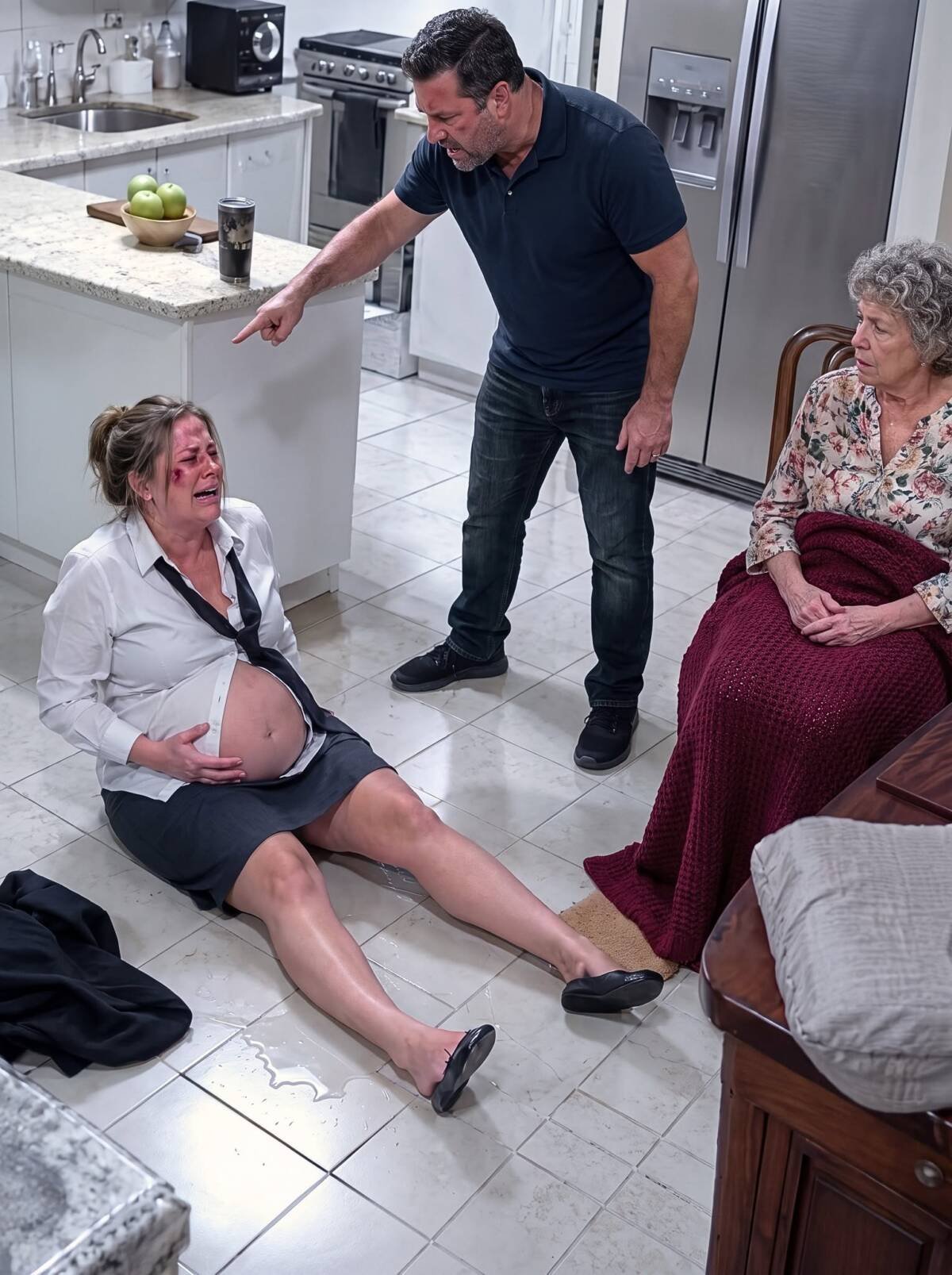
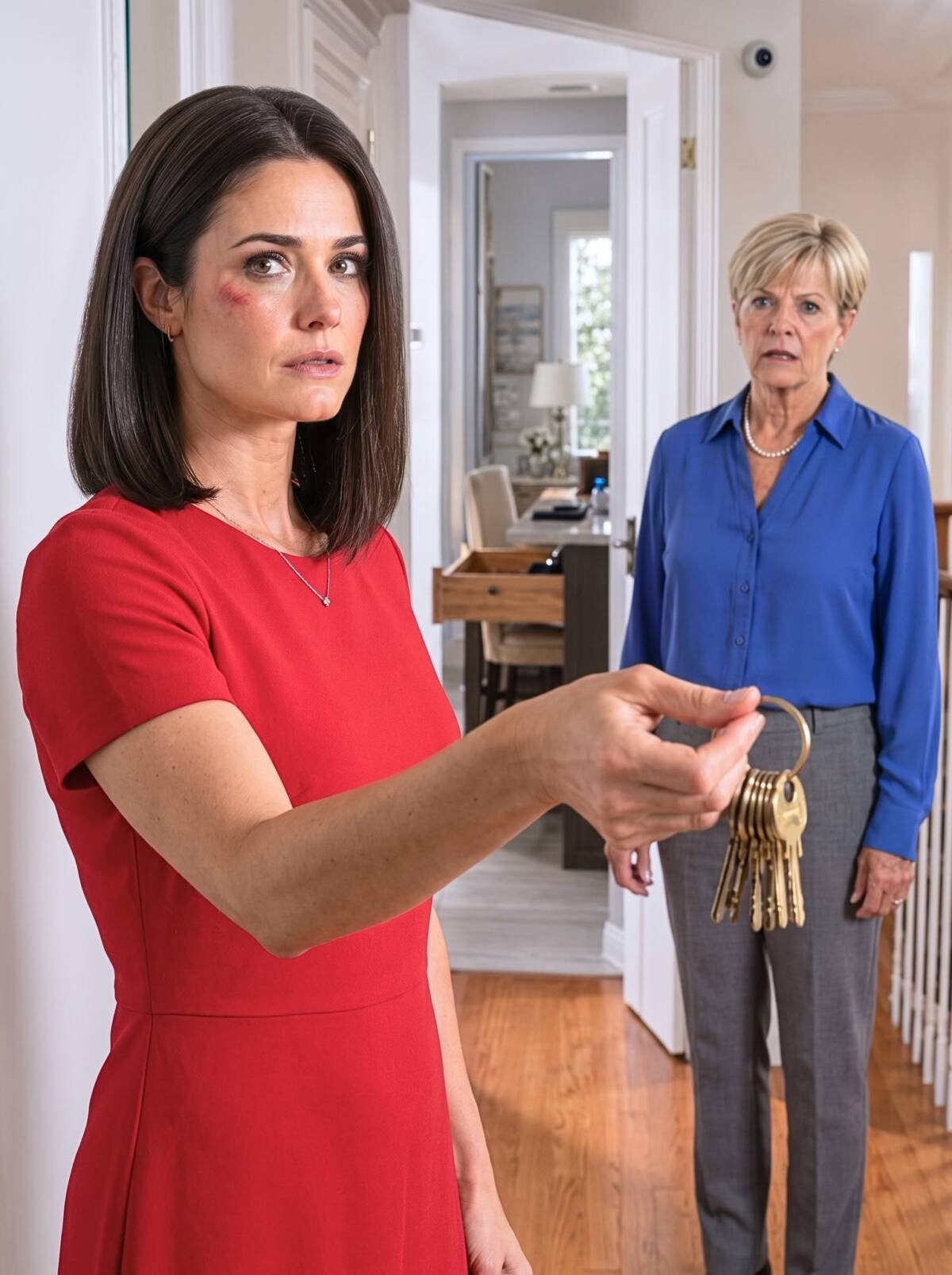
I came home from work on a Tuesday evening and found my wife standing outside our own front gate with a small paper grocery bag hanging from her hand, looking as though someone had just evicted her from her own life.
“Your son says the house is his now,” she whispered, her voice barely audible over the hum of my idling truck. “He told me to leave.”
My entire body went cold. I took the bag from her trembling fingers, walked her back inside through a door my son had completely forgotten existed, and made a quiet promise: Tonight, he learns who this house truly belongs to.
The Evening Everything Changed
At first, when I pulled up the driveway after a ten-hour shift at the hardware warehouse, I assumed Linda was just waiting for me. She had a habit of lingering near the front gate in the early evenings, especially when the climbing roses along the iron fence were in bloom. For nearly forty years, those roses had been her pride and joy.
This time, however, she wasn’t looking at the flowers.
She was standing completely still on the concrete apron outside the locked wrought-iron gate, staring through the bars at our front porch as though she were a stranger peering into someone else’s yard. Something in the slope of her shoulders made my stomach drop before I even shifted the truck into park.
I stepped out, left the door half-shut, and hurried toward her.
“Linda? What are you doing out here?”
When she turned to face me, the expression in her eyes stopped me in my tracks. After thirty-eight years of marriage, I knew every shade of my wife’s emotions. I had seen her exhausted, I had seen her furious, and I had held her through grief. What I saw on her face that evening was something I had never seen before, and something I never wanted to see again: deep, quiet humiliation.
In her left hand, she held a small brown paper bag from the corner market. I could see the edge of a loaf of bread, a half-gallon of milk, and the familiar white prescription bag from the pharmacy containing her heart medication. Her purse hung heavily over her shoulder, and in her right hand, she was gripping her house keys so tightly her knuckles had turned white.
“Tom,” she whispered, her eyes darting nervously toward the house. “Ethan changed the code.”
My chest tightened. “What?”
She swallowed hard, struggling to force the words out. “He said this house belongs to him now. He said I should leave before you got home because I’ve been ‘living off his future’ long enough.”
For several seconds, I simply stared at her, unable to make sense of what I had just heard.
Ethan was our only son. He was thirty-two years old, employed as a regional sales manager, and married for four years to Ashley—a woman who had never once offered to help clear a dinner table in our home, yet somehow found time at every holiday gathering to discuss what “we” were going to renovate once Linda and I were gone.
I stepped past Linda, walked up to the electronic keypad mounted on the brick pillar, and punched in the six-digit access code we had used for the last decade.
A sharp, red beep echoed in the quiet street. Access Denied.
I frowned and entered it again, slower this time, certain my fingers had slipped.
Access Denied.
Behind me, Linda’s eyes began to brim with tears. “He told me not to make a scene in front of the neighbors,” she said softly.
That was the moment the shock gave way to something much colder and far more focused. I turned back to my wife, gently lifted the grocery bag from her hand, and held out my other hand to her.
“Come with me,” I said.
She hesitated, glancing back toward the front windows where the warm kitchen lights were glowing. “Tom, please. Don’t fight him.”
“I’m not going to fight him,” I told her, my voice steady. “I’m going to remind him.”
The Door He Forgot About
I led Linda around the perimeter of the yard toward the narrow gravel path running alongside the detached garage.
Ethan had grown up in this house, but he had forgotten one crucial detail: I had built it with my own hands and my own sweat long before smart locks, smartphone security apps, and digital keypads were ever invented. When we upgraded the front gate years ago, I had never trusted technology enough to get rid of every old-fashioned backup.
I stepped into the wooden tool shed behind the garage, reached into the back corner, and pulled out an old pair of leather work boots I hadn’t worn in fifteen years. Inside the left boot sat a heavy brass key.
We walked up to the side service door leading into the mudroom. I slid the brass key into the deadbolt, turned it, and felt the familiar, solid click of the manual lock releasing.
When Linda and I stepped into the kitchen, the smell of fresh coffee hung in the air. Ethan and Ashley were standing near the breakfast nook. Ethan was holding a yellow tape measure stretched against the drywall while Ashley tapped notes into her phone, speaking as casually as if they had just closed on the property that morning.
“If we knock this wall out, the island can go right here,” Ashley was saying. “It’ll open up the whole floor plan—”
Ethan’s eyes caught the movement in the doorway. He froze. The tape measure snapped back into its plastic casing with a loud metallic slap.
“Dad,” he said quickly, trying to recover his composure. “We need to talk.”
I walked past him without a word and carefully set Linda’s grocery bag on the granite countertop—the same countertop she had wiped down every night for thirty years. Then I turned to face the son who had apparently decided his parents’ home was already part of his personal portfolio.
“No,” I said quietly. “Tonight, you listen.”
Before Ethan could open his mouth, Ashley stepped forward and crossed her arms. Her expression wasn’t guilty or apologetic; it was the irritated look of someone who felt she was being unfairly interrupted by unreasonable people.
“Tom, this is getting uncomfortable,” she said, her tone clipped. “We were only trying to make practical decisions.”
I stared at her. “Locking my wife out of her own home is practical?”
Ethan immediately stepped in front of her, raising his hands as if he were calming down a difficult client. “Mom was being emotional, Dad. She wouldn’t listen to reason.”
Linda stood quietly behind my shoulder, saying nothing. Watching her shrink into the background of the very kitchen she had decorated, cleaned, and filled with Sunday dinners for nearly four decades made Ethan’s words hit harder than any insult he could have thrown at me.
I looked straight into his eyes. “What exactly did she refuse to listen to, Ethan?”
He let out a long, theatrical sigh—the kind of sigh reserved for someone who genuinely believes they are the only responsible adult in the room.
“Dad, be realistic,” he said. “You and Mom aren’t getting any younger. This house is too much property for you to maintain. Ashley and I talked it over. It makes way more sense for us to move in now, take over the house, and start updating it. You and Mom can stay in the downstairs guest room for a few months until we figure out a nice senior living community for you.”
A soft, broken sound escaped Linda’s throat behind me.
My anger didn’t boil over. I didn’t yell, and I didn’t slam my fist on the counter. Instead, a strange, frightening calm settled over me. Standing there in my own kitchen, I realized my son and his wife had already mapped out the end of our independence—and hadn’t even bothered to invite us to the meeting.
“You talked it over,” I repeated slowly. “Without us.”
Ashley lifted her chin. “Someone in this family has to think ahead.”
I ignored her and kept my eyes locked on Ethan. “And you told your mother to leave?”
He looked down at the floor. “I told her to go cool off.”
I pointed toward the brown paper bag sitting on the counter. “She was standing outside our gate with her heart medication in a grocery bag, Ethan.”
He didn’t answer. He couldn’t.
And that silence told me everything I needed to know.
The Study and the Phone Call
I turned on my heel and walked down the hallway toward my home office. Ethan followed immediately, his footsteps heavy behind me. The confidence he had worn in the kitchen was already beginning to crack, because he knew exactly what was inside that room.
“Dad,” he called out, his voice rising slightly. “Come on. Don’t overreact.”
I didn’t respond. I walked behind my oak desk, knelt beside the credenza, and spun the dial on the floor safe. When the heavy steel door swung open, I pulled out a thick accordion folder and dropped it onto the center of the desk.
Inside were the original deed to the house, our wills, our revocable living trust documents, life insurance policies, and the succession files for the commercial hardware supply company I had built from a single pickup truck and a rented garage thirty years ago.
Until that evening, I had always assumed Ethan would eventually inherit the lion’s share of what those papers represented.
Someday.
But someday had just died on the front porch.
I rested my hands on top of the folder and looked at my son.
“This house does not belong to you,” I said, my voice even and clear. “It belongs to your mother and me. The company does not belong to you either. Neither do our savings, our retirement accounts, or the future you and Ashley have apparently already started spending.”
Ashley appeared in the doorway behind Ethan. The smug certainty she had carried in the kitchen vanished instantly. Her face went pale as her eyes darted from my face to the legal folders spread across the desk.....