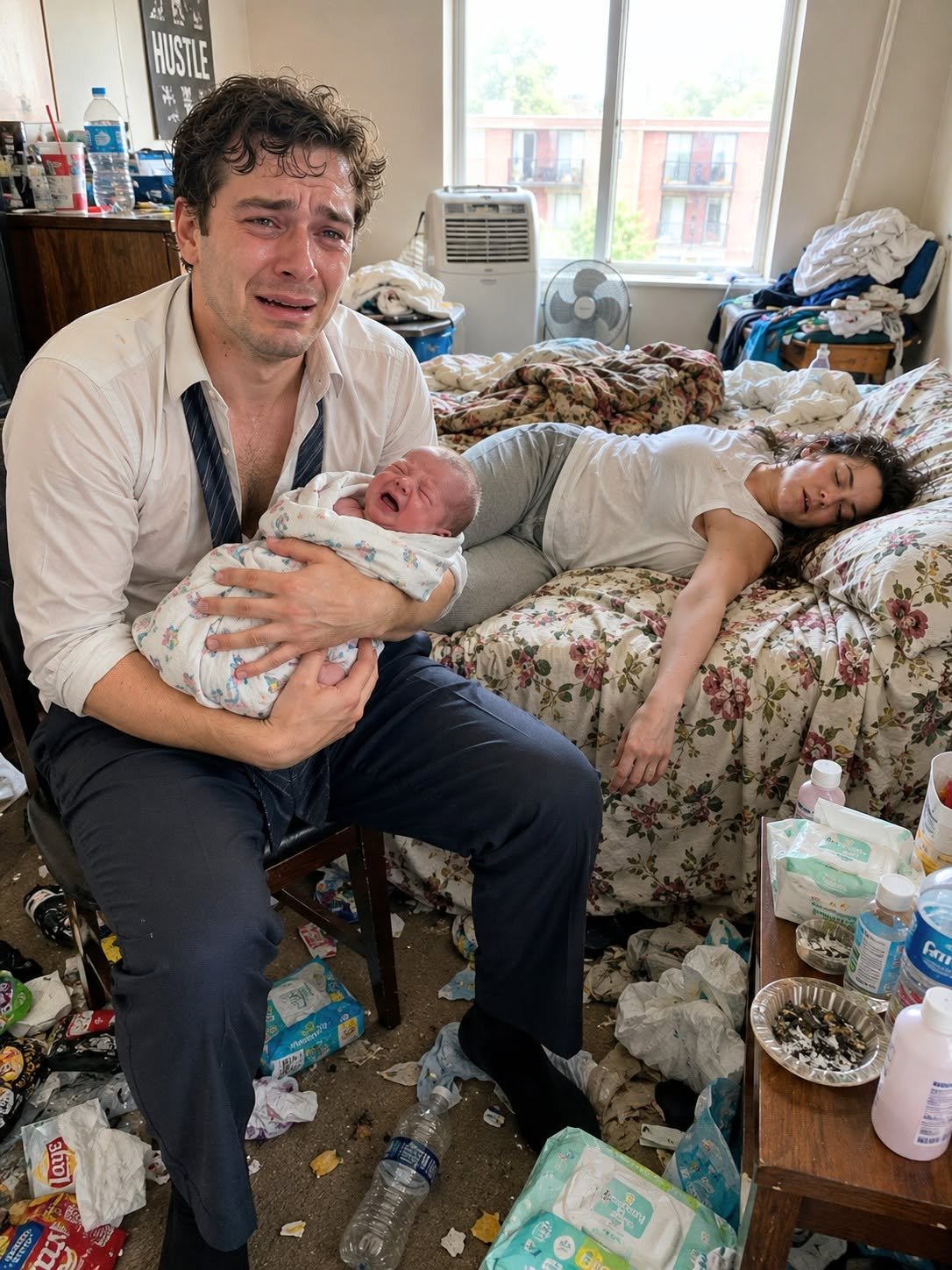
I had spent forty years caring for other people’s families.
I had watched parents sit helplessly beside hospital beds. I had held the hands of frightened patients. I had comforted families after accidents, illnesses, and losses that changed their lives forever.
But nothing prepared me for what I saw on a cold Sunday morning outside a church in Puebla.
My daughter was sleeping on a park bench.
And curled tightly against her was my six-year-old granddaughter.
They were covered by an old blanket that was far too thin for the winter air.
For several seconds, I simply stood there.
I could not understand what I was seeing.
My daughter, Lucía, had a home. At least, that was what I believed. She had an apartment I had spent years helping her afford. She had a car I had helped purchase after she married. She had a job, a child, and what I thought was a stable family.
Yet there she was, sleeping outside with her little girl.
When Lucía opened her eyes and recognized me, she did not immediately speak.
She only stared.
Then her lips began to tremble.
“Mom.”
It was barely a whisper.
I sat beside her and pulled the blanket higher around Sofía’s shoulders.
“Lucía,” I asked, trying to keep my voice calm, “what happened?”
My daughter looked down at the ground.
Then she looked at me through tears.
“They took everything from us.”
At that moment, I still did not know how much those words would change all of our lives.
The Morning I Found Them
My name is Mercedes Rojas.
I am a retired nurse, and for most of my adult life, I worked for the Mexican Social Security Institute. I retired after four decades of service, believing that the hardest chapters of my life were finally behind me.
I was wrong.
That Sunday morning, I had attended Mass at a parish in San José, Puebla. The weather had turned unusually cold, and I remember thinking about getting home quickly because I had groceries waiting in my kitchen.
I walked through the plaza carrying a shopping bag when something caught my attention near the old kiosk.
At first, I thought the figures on the bench were homeless strangers.
Then I recognized my daughter’s hair.
I stopped walking.
“Lucía?”
She moved beneath the blanket.
My heart dropped.
Beside her was Sofía.
My granddaughter was six years old.
The little girl who normally woke up early, complained about wearing socks, and ran into my kitchen asking for hot chocolate was lying curled against her mother on a freezing bench.
Her shoes were dirty.
Her lips were dry and cracked.
Her hair was tangled.
She looked exhausted.
Lucía looked worse.
I immediately sat down.
“What happened to your apartment?”
She said nothing.
“And where is your car?”
Still nothing.
I looked at her carefully.
“Lucía, where have you been sleeping?”
She swallowed.
“Here.”
“For how long?”
She hesitated.
“Four nights.”
Four nights.
I looked at Sofía.
Four nights in the cold.
Four nights while I had been going about my normal routine, believing my daughter and granddaughter were safely inside the apartment I had worked decades to help secure.
I felt something inside me break.
I had spent forty years caring for patients, but I had failed to notice that my own daughter was in danger.
I reached for Lucía’s hand.
“Tell me everything.”
And finally, she did.
The Apartment I Had Spent My Life Paying For
When Lucía married Adrián, I wanted to give my daughter something I had never had myself: financial security.
I had worked double shifts.
I had worked nights.
I had missed holidays.
I had postponed vacations.
There were years when I barely bought anything for myself because every extra peso went toward helping Lucía build a stable life.
Eventually, I helped her purchase an apartment.
It was modest but comfortable.
Two bedrooms.
A small kitchen.
A balcony overlooking the street.
It was not a mansion, but it belonged to her.
Or so I believed.
Lucía explained that after her marriage, Adrián and his mother, Beatriz Robles, gradually became involved in her financial affairs.
At first, it seemed harmless.
Beatriz was a lawyer.
She constantly reminded Lucía that she understood legal and financial matters better than anyone else in the family.
Whenever Lucía questioned something, Beatriz would tell her she was being overly suspicious.
Then came the paperwork.
They told Lucía she needed to sign several documents connected to a banking procedure.
According to them, the paperwork was routine.
Lucía trusted her husband.
She trusted her mother-in-law.
She signed.
Only later did she discover what those documents actually did.
They transferred ownership of her apartment to Adrián.
Lucía had not knowingly agreed to sell her home.
She had not received a fair purchase price.
She had not intended to give the apartment away.
She had been deceived.
And the apartment was only the beginning.
Her savings account had been drained.
Her car had been sold.
Her access to important financial documents had disappeared.
Then, when she started asking questions, the family changed tactics.
They began portraying her as unstable.
Aggressive.
Unreasonable.
Difficult.
Every protest became evidence against her.
Every emotional reaction was used to support their story.
By the time Lucía realized what was happening, she had almost nothing left.
Then Adrián changed the locks.
He told her she had no legal right to enter the apartment.
Lucía took Sofía and tried to find somewhere to stay.
For a few nights, they moved between temporary arrangements.
Then those options disappeared.
And they ended up on the bench where I found them.
“He Wants Full Custody”
I took Lucía and Sofía to a nearby restaurant.
I ordered hot broth, sandwiches, and hibiscus water.
Sofía ate quickly.
Too quickly.
She kept looking at the door as though someone might come in and take the food away.
That frightened me more than anything.
Children should not eat like that.
They should not wonder whether tomorrow’s meal is guaranteed.
Lucía barely touched her food.
Finally, she told me why.
“Adrián wants custody.”
I stared at her.
“What?”
“He says I’m homeless. He says I can’t provide stability for Sofía.”
I felt my hands tighten around the edge of the table.
The same people who had taken her apartment were now planning to use the loss of that apartment against her.
Lucía explained that Adrián’s family had lawyers, money, and connections.
She believed the court would see only the surface.
A mother without a home.
A mother without savings.
A mother who had recently been arrested during a dispute.
A father with an established residence and financial resources.
She was terrified.
“They have everything, Mom.”
I looked directly at her.
“No.”
She shook her head.
“They do.”
“You still have me.”
Her eyes filled with tears.
“What if they use your age against us?”
I almost laughed.
Not because it was funny.
Because the idea was absurd.
I had spent forty years caring for people.
I had worked through emergencies, epidemics, overnight shifts, and difficult family situations.
I knew exactly what responsibility meant.
And I knew something else.
Money does not automatically make someone a better parent.
A large house does not automatically make a child feel safe.
And a powerful family does not automatically own the truth.
That afternoon, I took Lucía and Sofía home with me.
Sofía took a hot bath.
I found an old teddy bear that Lucía had owned when she was a child.
Sofía hugged it tightly.
That night, for the first time in four days, my granddaughter slept in a warm bed.
Lucía cried in the kitchen until there were no tears left.
Then she told me something that made my stomach turn.
Adrián had already moved another woman into the apartment.
Her name was Camila.
And Camila had been posting photographs online.
The kitchen.
The living room.
The bedroom.
Even Lucía’s car.
They were showing off the life they had taken from her.
Then Lucía’s phone buzzed.
A message from Adrián.
She handed it to me.
The message was short.
He wanted her to sign a custody agreement voluntarily.
If she refused, he warned, she would “learn what it really means to lose everything.”
I read it twice.
Then I looked at my daughter.
Something inside me became very calm.
The fear was beginning to disappear.
What remained was determination.
The Old Address Book
The next morning, I opened an old notebook.
I had kept it for decades.
Inside were telephone numbers of former colleagues, social workers, hospital administrators, community advocates, investigators, and people whose lives had once crossed mine during my years in nursing.
I had never expected to use most of those numbers again.
That changed that morning.
The first person I called was Don Julián, a retired social worker.
When I explained what happened, he became silent.
Then he asked me for the names.
“Adrián Robles.”
“Beatriz Robles.”
“Ernesto.”
“Diego.”
“Camila.”
There was another pause.
“I know that family,” he said.
My stomach tightened.
“What do you know?”
“They have a reputation.”
“For what?”
“Winning disputes.”
That was all he said.
But I understood what he meant.
The second person I called was Tomás, a retired private investigator.
He had once spent months beside his dying wife in the same hospital where I worked.
I had brought him coffee during countless overnight shifts.
He remembered.
When I explained the situation, he agreed to look into the documents.
“People who believe they’re untouchable eventually make mistakes,” he told me.
He was right.
Within days, those mistakes began appearing.
The Signature That Changed Everything
Tomás obtained copies of the apartment transfer documents.
Something immediately stood out.
The paperwork stated that Lucía had signed the transfer on March 12 at 11:00 in the morning.
But Lucía remembered that date.
She had been at the hospital.
Sofía had been sick.
Her daughter had suffered a severe throat infection and needed medical attention.
Lucía had spent hours in the emergency room.
She still had the hospital records.
She still had the receipts.
She still had the messages from Sofía’s teacher asking why the child had missed school.
There was no reasonable way she could have been at the location listed on the transfer documents at the time stated.
Tomás examined the signature.
Then he looked at Lucía.
“They forged it.”
For several seconds, nobody spoke.
Lucía stared at the papers.
Then something changed in her face.
The fear was still there.
But beneath it was anger.
“They stole my home,” she whispered.
“Yes,” Tomás said.
“And they made me think it was my fault.”
That sentence stayed with me.
Because financial abuse does more than take money.
It can make victims question their own judgment.
It can make them ashamed.
It can convince them that fighting back is pointless.
But now we had something we did not have before.
Evidence.
Renata Martínez
Through an old professional connection, I was introduced to Renata Martínez, a young attorney who agreed to review the case.
She spent hours examining the documents.
She compared signatures.
She reviewed hospital records.
She studied the financial transfers.
She read the messages.
When she finally closed the file, she looked at Lucía.
“This is much more serious than a family dispute.”
Lucía lowered her eyes.
“What does that mean?”
“It means we may be looking at fraud, document manipulation, financial abuse, and potentially false testimony.”
For the first time, Lucía seemed to believe there was a path forward.
But Adrián was not finished.
A few days later, he appeared outside my house.
He was driving Lucía’s car.
He wore expensive clothes and sunglasses.
In his hand was another legal envelope.
He offered Lucía money if she agreed to surrender custody of Sofía.
Fifty thousand pesos.
In exchange, she would give up nearly all parental rights.
Lucía stared at the document.
Then she tore it in half.
Adrián’s expression changed.
“You’re making a mistake,” he said.
“No,” Lucía replied. “I made one mistake already. I trusted you.”
He stepped closer.
“You don’t understand what Beatriz can do.”
Lucía looked at him.
“Maybe I don’t.”
Then she pointed toward the house.
“But I know what a mother can do for her child.”
Before Adrián could respond, Sofía appeared in the doorway.
She looked at her father.
She did not run to him.
She stood behind her mother.
Then she asked:
“Why did you change the locks?”
Adrián froze.
Sofía continued.
“You made us leave.”
He looked around nervously.
He tried to blame Lucía.
But Sofía interrupted.
“I saw you.”
There were neighbors nearby.
Adrián suddenly had nothing to say.
He returned to the car and drove away.
That night, another person contacted us.
Her name was Patricia.
She had worked for Beatriz.
And she had something that could change everything.
The Secretary Who Finally Spoke
Patricia agreed to meet us at a small coffee shop.
She arrived carrying a folder.
Her hands were shaking.
She told us Beatriz had ordered her to alter contracts, prepare documents, and manipulate paperwork connected to Lucía.
She had also been instructed to scan Lucía’s signature onto documents.
Then came the most disturbing part.
Patricia said Beatriz wanted Lucía portrayed as mentally unstable so the family could strengthen its custody argument.
“Why?” Lucía asked.
Patricia looked down.
“Because Beatriz believed Adrián deserved someone better.”
“Better?”
“Someone from a family she considered more appropriate.”
Then Patricia named Camila.
The woman now living in Lucía’s apartment.
The woman appearing in photographs with Lucía’s possessions.
The woman who seemed to have stepped directly into the life Lucía had spent years building.
Patricia handed us copies of emails.
Original documents.
Instructions.
Messages.
Evidence.
We finally had a direct connection between Beatriz’s office and the documents used against Lucía.
But before we could present everything to the authorities, Beatriz made another move.
The Night My Daughter Was Arrested
It happened late one evening.
Two police vehicles stopped outside my house.
Sofía was already asleep.
Lucía opened the door.
The officers told her there was an order accusing her of violating a restraining order near the apartment.
Lucía was stunned.
“I haven’t been there.”
She tried to explain.
It did not matter.
They placed her in handcuffs.
Sofía woke up.
She came running into the hallway.....