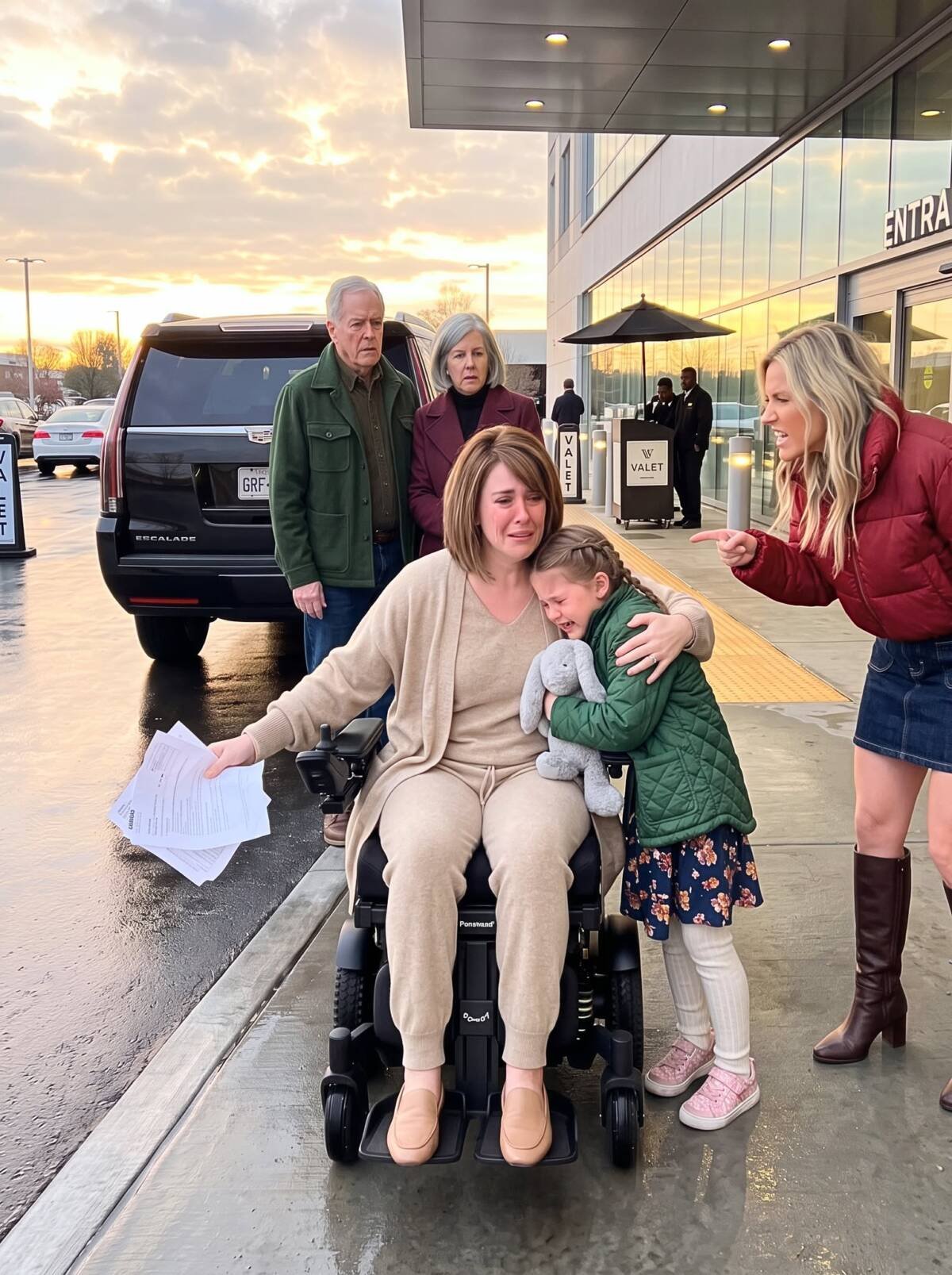
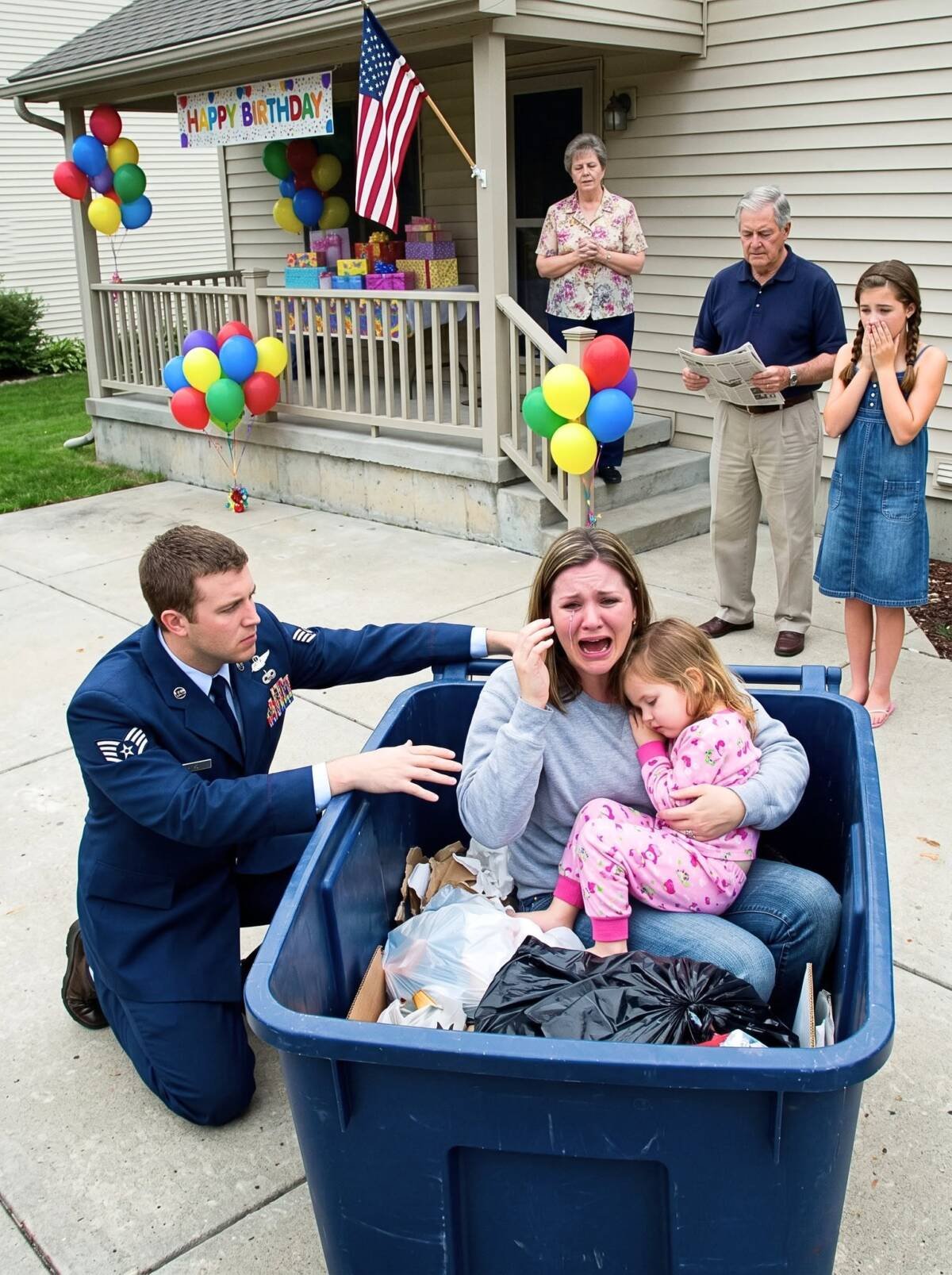
For nine months, I believed carrying my twin brother’s child was the greatest gift I could ever give him. Then came the delivery room—the moment all the color drained from his face, he handed his newborn daughter back to me, and walked out the door. Days later, the real reason behind what he did came out, and it shattered everything I thought I knew about him.
A Promise Between Twins
There are certain questions you don’t need time to think about. When my twin brother, Ryan, and his wife, Melissa, sat across from me at my kitchen table on a rainy Sunday afternoon, I knew what they were going to ask before Ryan could even get the words out.
For six years, I had watched the two of them quietly break. I had been there through the endless fertility appointments, the hormone injections that left Melissa bruised and exhausted, two failed rounds of IVF, and a devastating second-trimester pregnancy loss that left a permanent shadow in their eyes. Every holiday, every baby shower invitation they received, every quiet dinner where Melissa smiled through tears—I had witnessed all of it.
When Ryan finally took a shaky breath, reached across the table for Melissa’s hand, and looked at me, his voice barely held together.
“Ivy,” he said, “we know this is too much to ask. We wouldn’t even bring it up if we had any other option left, but—”
“Yes,” I interrupted.
Ryan blinked, staring at me in disbelief. “Ivy, you didn’t even let me finish. You don’t have to—”
“I know I don’t have to,” I said softly. “But yes.”
Melissa covered her mouth, her shoulders trembling as the first sob broke free.
For me, the decision was simple. I already had my seven-year-old son, Gabriel, and I knew firsthand how completely loving a child could anchor a life. More than that, Ryan wasn’t just my brother. He was my twin, my closest friend, and the man who had held my world together when it fell apart. After our parents passed away in our early twenties, Ryan was the one who stepped up. When Gabriel’s father walked out before my son’s first birthday, it was Ryan who sat on my living room floor assembling cribs, helping with groceries, and showing up every single weekend so I never felt alone.
Carrying his daughter didn’t feel like a sacrifice. It felt like finally giving a piece of that grace back to him.
The Quiet Shift
For the first six months, the pregnancy felt like a dream we were all sharing.
Ryan and Melissa came to every single appointment. Melissa carried a thick spiral notebook everywhere she went, documenting every measurement, every heartbeat count, and every piece of advice the OB-GYN offered. Ryan, who still remembered how much I hated needles from when we were kids, sat beside me during every blood draw, cracking terrible jokes until the nurse finished taping the cotton ball to my arm.
The day we found out they were having a daughter, Melissa pressed her palm gently against my stomach, tears streaming down her cheeks.
“Thank you, Ivy,” she whispered. “You have no idea what you’re giving us.”
I smiled, believing that the hardest part of their journey was finally behind them.
Then, somewhere in the third trimester, something in Ryan changed.
At first, the signs were small enough to dismiss. During our prenatal appointments, he stopped asking questions. Instead of watching the ultrasound monitor, his eyes kept drifting down to his phone. He would step out into the hallway to take calls, returning with tight shoulders and a forced smile.
“Everything’s fine,” he always said whenever I asked if work was stressful. “Just a busy quarter.”
Then came the afternoon Melissa proudly gave me a tour of the nursery. She had poured her heart into that room. The walls were painted a soft, warm cream. A white wooden crib stood beneath a handmade mobile of tiny felt stars. Stacks of folded pastel blankets, tiny socks, and picture books lined the shelves.
“Isn’t it perfect?” Melissa beamed, turning toward the hallway. “Ryan, come show Ivy the rocking chair you put together.”
Ryan stood just outside the doorframe, his hands shoved deep into his pockets. He didn’t step inside. He barely even looked at the crib.
“I’ve got to grab something from the car,” he muttered, turning away before either of us could respond.
I told myself it was just nerves. After six years of heartbreak, maybe he was terrified to let himself believe it was really happening until the baby was safely in his arms. Even during our final ultrasound—when the technician paused a fraction of a second too long while scanning the lower curve of the baby’s spine, and Ryan went completely silent for the entire drive home—I pushed the uneasy knot in my stomach aside.
I wanted so badly for their story to have a simple, joyful ending.
The Delivery Room
Labor was long and exhausting, stretching through the night and into the pale gray light of early morning. When the room finally filled with the sharp, strong cry of a newborn girl, relief washed over me so heavily I could barely breathe.
The nurse lifted the tiny baby and placed her briefly against my chest. Melissa was already crying, laughing through her tears as she reached out to touch her daughter’s damp dark hair. I turned my head toward Ryan, waiting to see the look of pure, overwhelming joy I had imagined for nine months.
“Go meet your daughter,” I whispered, smiling through my exhaustion.
The nurse gently wrapped the baby in a striped hospital blanket and placed her into Ryan’s arms.
The moment he held her, the air in the room changed.
Ryan didn’t smile. He didn’t cry. He went completely rigid, as if someone had turned him to stone. Slowly, he shifted the blanket slightly to adjust his grip, and his eyes locked onto the base of the baby’s spine. There, against her pale newborn skin, was a small, reddish, raised area.
All the color drained from my brother’s face.
“Ryan?” I asked, my voice tightening. “What’s wrong?”
He lifted his eyes to mine, and what I saw there wasn’t confusion or concern. It was sheer, unfiltered panic.
“I can’t take her home,” he whispered.
For a second, I was sure the exhaustion and medication were making me mishear him. Beside him, Melissa’s smile vanished.
“What did you just say?” she asked, stepping closer.
“I can’t do this,” Ryan said, his voice cracking. Before Melissa could reach for the baby, Ryan stepped over to my bedside and placed his newborn daughter—the child he had spent six years praying for—directly back into my arms.
“Ryan, stop!” I gasped, instinctively cradling the baby against my chest. “She’s your daughter!”
Melissa grabbed his sleeve, her face pale and trembling. “What do you mean you can’t take her? Ryan, look at me. Explain yourself!”
Ryan refused to meet her eyes. He stared at the floor, his jaw clenched. “Look at her back.”
My heart hammered against my ribs as I carefully peeled back the edge of the blanket. Seeing the small raised abnormality near the base of her spine, a single medical term flashed through my mind.
“Spina bifida,” I breathed.
Melissa let out a broken sound, backing away a step. “No. No, they told us everything was fine. They said she was healthy!”
Immediately, the nurses moved in, calling for the neonatologist and trying to calm the room. Amid the sudden rush of voices and monitors, Ryan stood frozen for one more terrible second. Then, without looking at his wife, without looking at me, and without saying a single word to his daughter, my twin brother turned around and walked out of the delivery room.
The door clicked shut behind him.
I looked down at the tiny girl nestled against my chest. She was completely unaware of the chaos around her, her little fists curled beneath her chin, breathing softly. A fierce, protective wave rose inside me, drowning out my shock and exhaustion.
Whatever medical road lay ahead for her, I swore silently that the first thing she learned about this world would not be that she was unwanted the moment she wasn’t perfect.
“You aren’t being abandoned,” I whispered against her forehead. “Not while I’m here.”
Three Days of Silence—and a Shattering Confession
For the next three days, I stayed with the little girl I quietly began calling Hope. While doctors ran ultrasounds, MRIs, and neurological evaluations to determine the exact severity of her condition, Melissa sat in a daze, torn between terror for her daughter and the shock of watching her husband vanish. She barely spoke to Ryan, who hadn’t answered most of her calls since leaving the hospital.
When I was finally discharged and brought Hope home to my house while Melissa tried to pull herself together, I was running on fumes—recovering from childbirth, caring for a newborn, and keeping seven-year-old Gabriel reassured.
Then, on the third evening, a knock sounded at my front door.
It was Ryan. He looked hollowed out, his eyes bloodshot, wearing the same wrinkled shirt he had worn at the hospital.
I didn’t step aside to let him in. “You don’t get to walk into my house like nothing happened.”
“I know,” he said quietly.
“No, Ryan, I don’t think you do,” I snapped, keeping my voice low so I wouldn’t wake the baby. “I’ve been up every two hours feeding and holding the daughter you spent six years begging for, because you handed her to me and walked out the door.”
He stepped inside slowly when I finally moved back, leaning against my kitchen counter as if his legs couldn’t hold him. At first, he tried to say what I expected him to say—that hearing the nurses mention specialists, possible surgery, physical therapy, and braces had terrified him.
It only made my anger burn hotter.
“You held her for seconds, Ryan. Seconds. And you acted like someone handed you a package you didn’t order.”
“That wasn’t why,” he whispered.
I froze. “Then tell me why.”
Ryan stared down at his hands for a long, agonizing moment. When he finally looked up, his face looked ten years older.
“I lost my job,” he said.
I stared at him. “What?”
“Four months ago. Right after the second-trimester scan. My department was downsized.”
My mind raced, piecing together the last few months in a sickening rush. “Melissa doesn’t know.”
“No.”
Every single morning for four months, Ryan had put on his button-down shirt, kissed his wife goodbye, and driven away from their house. Instead of going to an office, he had spent eight hours a day sitting in the back corners of coffee shops, refreshing job boards and sending out resumes. He had landed two interviews. Neither had turned into an offer.
“What about the nursery?” I asked, my voice barely a whisper. “The crib, the rocking chair, the clothes?”
“Credit cards,” he admitted.
“She thinks you still have your savings.”
“It’s gone, Ivy. All of it.”
Suddenly, every strange moment from the third trimester clicked into sharp, painful focus. He hadn’t been ignoring the ultrasound because he didn’t care; he had been staring at his phone praying for a callback from a recruiter. He hadn’t been able to step inside the nursery under those tiny felt stars because every single item in that room was a reminder of the mountain of debt his wife didn’t know existed.
And then I understood what had happened in the delivery room.
“When you saw her back,” I said slowly, “and you heard the nurses talking about specialists…”
“All I heard was money,” Ryan choked out. “Hospital bills. Surgery. Therapy. Copays. Everything I couldn’t pay for. Everything I was supposed to provide.”
“And that made you abandon your own daughter?”
Ryan shook his head, a tear finally spilling down his cheek. “No. It made me see a way out.”
A chill ran straight down my spine. That confession was far worse than the lost job or the debt.
Ryan admitted that in that panicked split second in the delivery room, a terrible calculation had flashed through his mind: if everyone believed he was a monster who rejected his daughter because of a birth defect, Melissa would hate him and leave him—but she would never find out he had been lying to her for four months about being unemployed and broke.
“I thought I was protecting her,” he said weakly.
“From what?”
“From me. From watching everything collapse.”
I stared at my twin brother—the man who had taught me that family meant staying when life got ugly—and felt my heart break all over again.
“No, Ryan,” I said, my voice trembling. “You weren’t protecting Melissa. You were protecting your own pride. You used a newborn baby as a shield so you wouldn’t have to admit you failed.”
From the living room, Hope let out a tiny, soft whimper in her bassinet. Both of us turned toward the sound.
“You used your daughter as an exit,” I whispered.
“Ivy, please—”
“Say it,” I demanded. “Say out loud what you actually did.”
For several seconds, Ryan couldn’t speak. Then his shoulders collapsed, and he buried his face in his hands.
“I used Hope to run away,” he sobbed. “Because I was drowning, and I was too ashamed to tell my wife.”
It was ugly. It was selfish. And for the first time in four months, it was the truth.
I walked over to the counter and picked up my car keys. “You’re telling Melissa. Tonight.”
Ryan’s head snapped up in terror. “She’ll leave me.”
“Maybe she will,” I said evenly. “But you don’t get to make that choice for her anymore. You’re going to tell her about the job, the savings, the credit cards, the coffee shops, and what really happened in that hospital room.”
Ryan stared at me, then slowly nodded. “Okay.”
“I’m coming with you,” I said, walking over to lift Hope gently from her bassinet. “I carried her for nine months, Ryan. I’m not carrying your secret for one more hour.”
The Night the Truth Came Out
Walking up the front path to Ryan and Melissa’s house that evening was nothing like the homecoming I had pictured during my pregnancy. There were no balloons, no joyful photos on the porch, no celebration. Just the quiet crunch of gravel beneath our shoes and the heavy weight of a marriage hanging by a thread.
Melissa was sitting alone on the living room sofa when we walked in. The moment her eyes landed on Hope cradled in my arms, her entire posture softened—grief, longing, and fierce love washing over her face all at once.
Before Ryan could stall, I looked at him. “Tell her.”
Ryan sat on the edge of the armchair across from his wife. His hands shook as he forced the words out. He told her everything—the layoff four months ago, the fake commutes, the hours spent in coffee shops, the drained savings account, and the maxed-out credit cards that had paid for the nursery upstairs.
Melissa didn’t scream. She didn’t interrupt. She simply stared at him, the color draining from her face.
“You lied to me for four months,” she said, her voice eerily quiet.
“Yes.”
“Every single morning?”
Ryan nodded. Then, his voice breaking, he told her the hardest part: what had gone through his mind in the delivery room when he saw Hope’s spine and realized he couldn’t afford the medical bills. How he had let everyone believe he was rejecting his daughter because it felt easier than admitting he was broke.
Melissa stood up slowly, her hands trembling at her sides.
“You thought I would rather lose my daughter than find out you lost your job?” she whispered.
“Melissa, I was ashamed—”
“We could have sold the car!” her voice finally broke, tears spilling over. “We could have sold the furniture, moved into a smaller apartment, asked Ivy for help! I don’t care about the money, Ryan. I would have worked two jobs if I had to!”
She stepped closer, her eyes blazing through her tears. “We could have started over. But you didn’t give me a choice. You didn’t trust me enough to fail beside me.”
That sentence hit Ryan harder than anything I had said. He bowed his head, completely defeated. His betrayal had never really been about unemployment; it had been about deciding his wife wasn’t strong enough to handle the truth.
Melissa took a shaky breath, wiped her cheeks, and turned toward me.
“Can I hold her?”
I stepped forward immediately and placed Hope into her mother’s arms. Melissa pulled her daughter tightly against her chest, burying her face in the baby’s soft hair as she wept. “My baby,” she whispered over and over. “I’m so sorry. Mama’s right here.”
Quietly, I shared the news the pediatric specialist had given me earlier that afternoon. Hope’s form of spina bifida was mild. She would need a corrective procedure and regular follow-up care as she grew, but the doctors were overwhelmingly optimistic—she had every chance of living a full, healthy, active life.
Across the room, Ryan buried his face in his hands and wept.
After several long, quiet minutes, Melissa looked back at her husband. There was no easy forgiveness in her eyes, and I was glad for it. Four months of deception and one devastating abandonment couldn’t be erased in a single night.
“I need time,” Melissa said firmly. “I can understand panic, Ryan. I can understand being terrified. What I cannot live with is silence like this ever again.”
She held his gaze, making her boundary unmistakably clear. If their marriage had any chance of surviving, there would be no more hidden bills, no more fake workdays, and no more lies disguised as protection.
“And never again,” she added softly, “do you use our daughter as an excuse to run from something you’re afraid to face.”
“I won’t,” Ryan whispered. “I swear to you, I won’t.”
Slowly, Melissa shifted Hope in her arms and held her out toward Ryan. My brother stared at his daughter, his hands trembling. Then, for the first time since the delivery room, he reached out and took her.
Learning How to Stay
Ryan held Hope as if she were made of spun glass, studying her tiny face while Melissa watched silently from the couch.....